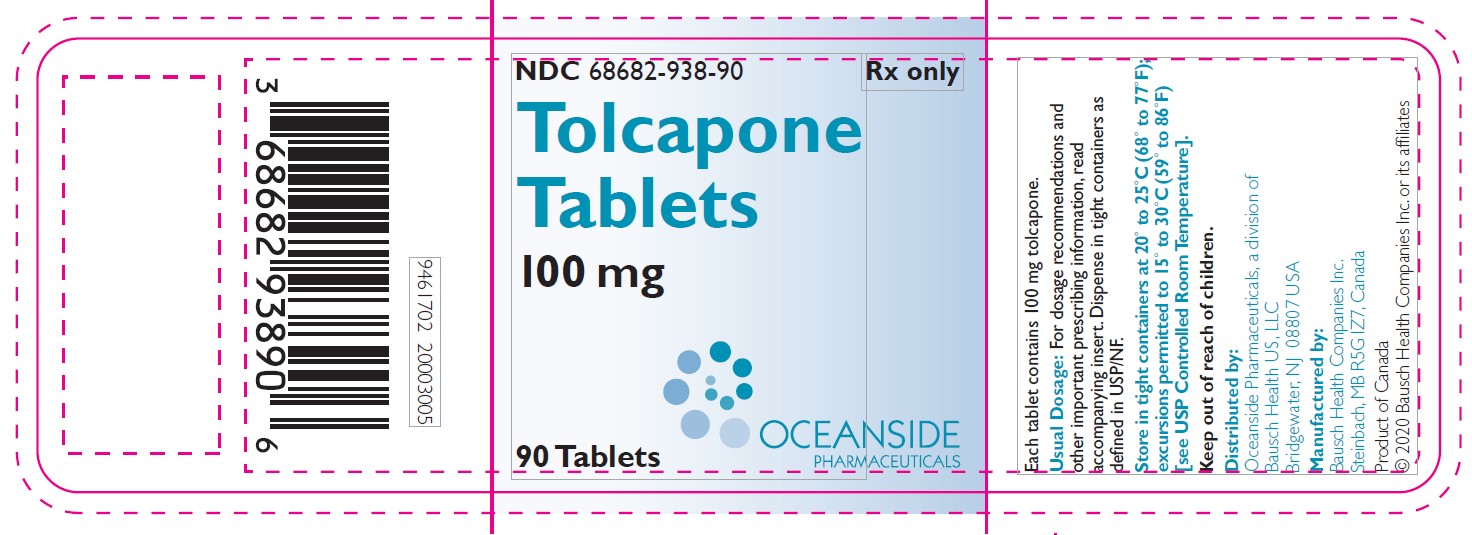
Tolcapone — Catechol-O-Methyltransferase Inhibitor [EPC]. INDICATIONS: TASMAR is indicated as an adjunct to levodopa and carbidopa for the treatment of the signs and symptoms of idiopathic Parkinson's…
Boxed warning
WARNING Because of the risk of potentially fatal, acute fulminant liver failure, TASMAR (tolcapone) should ordinarily be used in patients with Parkinson's disease on l-dopa/carbidopa who are experiencing symptom fluctuations and are not responding satisfactorily to or are not appropriate candidates for other adjunctive therapies (see INDICATIONS and DOSAGE AND ADMINISTRATION sections). Because of the risk of liver injury and because TASMAR, when it is effective, provides an observable symptomatic benefit, the patient who fails to show substantial clinical benefit within 3 weeks of initiation of treatment, should be withdrawn from TASMAR. TASMAR therapy should not be initiated if the patient exhibits clinical evidence of liver disease or two SGPT/ALT or SGOT/AST values greater than the upper limit of normal. Patients with severe dyskinesia or dystonia should be treated with caution (see PRECAUTIONS: Rhabdomyolysis ). PATIENTS WHO DEVELOP EVIDENCE OF HEPATOCELLULAR INJURY WHILE ON TASMAR AND ARE WITHDRAWN FROM THE DRUG FOR ANY REASON MAY BE AT INCREASED RISK FOR LIVER INJURY IF TASMAR IS REINTRODUCED. ACCORDINGLY, SUCH PATIENTS SHOULD NOT ORDINARILY BE CONSIDERED FOR RETREATMENT. Cases of severe hepatocellular injury, including fulminant liver failure resulting in death, have been reported in postmarketing use. As of May 2005, three cases of fatal fulminant hepatic failure have been reported from more than 40,000 patient years of worldwide use. This incidence may be 10- to 100-fold higher than the background incidence in the general population. Underreporting of cases may lead to significant underestimation of the increased risk associated with the use of TASMAR. All three cases were reported within the first six months of initiation of treatment with TASMAR. Analysis of the laboratory monitoring data in over 3,400 TASMAR-treated patients participating in clinical trials indicated that increases in SGPT/ALT or SGOT/AST, when present, generally occurred within the first 6 months of treatment with TASMAR. A prescriber who elects to use TASMAR in face of the increased risk of liver injury is strongly advised to monitor patients for evidence of emergent liver injury. Patients should be advised of the need for self-monitoring for both the classical signs of liver disease (e.g., clay colored stools, jaundice) and the nonspecific ones (e.g., fatigue, loss of appetite, lethargy). Although a program of periodic laboratory monitoring for evidence of hepatocellular injury is recommended, it is not clear that periodic monitoring of liver enzymes will prevent the occurrence of fulminant liver failure. However, it is generally believed that early detection of drug-induced hepatic injury along with immediate withdrawal of the suspect drug enhances the likelihood for recovery. Accordingly, the following liver monitoring program is recommended. Before starting treatment with TASMAR, the physician should conduct appropriate tests to exclude the presence of liver disease. In patients determined to be appropriate candidates for treatment with TASMAR, serum glutamic-pyruvic transaminase (SGPT/ALT) and serum glutamic-oxaloacetic transaminase (SGOT/AST) levels should be determined at baseline and periodically (i.e., every 2 to 4 weeks) for the first 6 months of therapy. After the first six months, periodic monitoring is recommended at intervals deemed clinically relevant. Although more frequent monitoring increases the chances of early detection, the precise schedule for monitoring is a matter of clinical judgment. If the dose is increased to 200 mg tid (see DOSAGE AND ADMINISTRATION section), liver enzyme monitoring should take place before increasing the dose and then be conducted every 2 to 4 weeks for the following 6 months of therapy. After six months, periodic monitoring is recommended at intervals deemed clinically relevant. TASMAR should be discontinued if SGPT/ALT or SGOT/AST levels exceed 2 times the upper limit of normal or if clinical signs and symptoms suggest the onset of hepatic dysfunction (persistent nausea, fatigue, lethargy, anorexia, jaundice, dark urine, pruritus, and right upper quadrant tenderness).
INDICATIONS: TASMAR is indicated as an adjunct to levodopa and carbidopa for the treatment of the signs and symptoms of idiopathic Parkinson's disease. Because of the risk of potentially fatal, acute fulminant liver failure, TASMAR (tolcapone) should ordinarily be used in patients with Parkinson's disease on l-dopa/carbidopa who are experiencing symptom fluctuations and are not responding satisfactorily to or are not appropriate candidates for other adjunctive therapies. Because of the risk of liver injury and because TASMAR, when it is effective, provides an observable symptomatic benefit, the patient who fails to show substantial clinical benefit within 3 weeks of initiation of treatment, should be withdrawn from TASMAR. The effectiveness of TASMAR was demonstrated in randomized controlled trials in patients receiving concomitant levodopa therapy with carbidopa or another aromatic amino acid decarboxylase inhibitor who experienced end of dose wearing-off phenomena as well as in patients who did not experience such phenomena (see CLINICAL PHARMACOLOGY: Clinical Studies ).
Dosage
DOSAGE AND ADMINISTRATION: Because of the risk of potentially fatal, acute fulminant liver failure, TASMAR (tolcapone) should ordinarily be used in patients with Parkinson's disease on l-dopa/carbidopa who are experiencing symptom fluctuations and are not responding satisfactorily to or are not appropriate candidates for other adjunctive therapies (see INDICATIONS and DOSAGE AND ADMINISTRATION sections). BECAUSE OF THE RISK OF LIVER INJURY AND BECAUSE TASMAR WHEN IT IS EFFECTIVE PROVIDES AN OBSERVABLE SYMPTOMATIC BENEFIT, THE PATIENT WHO FAILS TO SHOW SUBSTANTIAL CLINICAL BENEFIT WITHIN 3 WEEKS OF INITIATION OF TREATMENT, SHOULD BE WITHDRAWN FROM TASMAR. TASMAR therapy should not be initiated if the patient exhibits clinical evidence of liver disease or two SGPT/ALT or SGOT/AST values greater than the upper limit of normal. Patients with severe dyskinesia or dystonia should be treated with caution (see PRECAUTIONS: Rhabdomyolysis ). Patients who develop evidence of hepatocellular injury while on TASMAR and are withdrawn from the drug for any reason may be at increased risk for liver injury if TASMAR is reintroduced. These patients should not ordinarily be considered for retreatment with TASMAR. Only prescribe TASMAR for patients taking concomitant carbidopa levodopa therapy. The initial dose of TASMAR is always 100 mg three times per day. The recommended daily dose of TASMAR is also 100 mg tid. In clinical trials, elevations in ALT occurred more frequently at the dose of 200 mg tid. While it is unknown whether the risk of acute fulminant liver failure is increased at the 200-mg dose, it would be prudent to use 200 mg only if the anticipated incremental clinical benefit is justified (see BOXED WARNING , WARNINGS , and PRECAUTIONS: Laboratory Tests ). If a patient fails to show the expected incremental benefit on the 200-mg dose after a total of 3 weeks of treatment (regardless of dose), TASMAR should be discontinued. In clinical trials, the first dose of the day of TASMAR was always taken together with the first dose of the day of levodopa/carbidopa, and the subsequent doses of TASMAR were given approximately 6 and 12 hours later. In clinical trials, the majority of patients required a decrease in their daily levodopa dose if their daily dose of levodopa was >600 mg or if patients had moderate or severe dyskinesias before beginning treatment. To optimize an individual patient's response, reductions in daily levodopa dose may be necessary. In clinical trials, the average reduction in daily levodopa dose was about 30% in those patients requiring a levodopa dose reduction. (Greater than 70% of patients with levodopa doses above 600 mg daily required such a reduction.) TASMAR can be combined with both the immediate and sustained release formulations of levodopa/carbidopa. TASMAR may be taken with or without food (see CLINICAL PHARMACOLOGY ). Patients With Impaired Hepatic Function: TASMAR therapy should not be initiated in any patient with liver disease or two SGPT/ALT or SGOT/AST values greater than the upper limit of normal. (see BOXED WARNING , WARNINGS , and CLINICAL PHARMACOLOGY .) Patients With Impaired Renal Function: No dose adjustment of TASMAR is recommended for patients with mild to moderate renal impairment. However, patients with severe renal impairment should be treated with caution. The safety of tolcapone has not been examined in subjects who had creatinine clearance less than 25 mL/min (see CLINICAL PHARMACOLOGY ). Withdrawing Patients From TASMAR: As with any dopaminergic drug, withdrawal or abrupt reduction in the TASMAR dose may lead to emergence of signs and symptoms of Parkinson's disease or Hyperpyrexia and Confusion, a syndrome complex resembling the neuroleptic malignant syndrome (see PRECAUTIONS: Events Reported With Dopaminergic Therapy ). If a decision is made to discontinue treatment with TASMAR, then it is recommended to closely monitor the patient and adjust other dopaminergic treatments as needed. This syndrome should be considered in the differential diagnosis for any patient who develops a high fever or severe rigidity. Tapering TASMAR has not been systematically evaluated. As the duration of COMT inhibition with TASMAR is generally 5 to 6 hours on average, decreasing the frequency of dosage to twice or once a day may not in itself prevent withdrawal effects.
Warnings
WARNINGS: (see BOXED WARNING ) Because of the risk of potentially fatal, acute fulminant liver failure, TASMAR (tolcapone) should ordinarily be used in patients with Parkinson's disease on l-dopa/carbidopa who are experiencing symptom fluctuations and are not responding satisfactorily to or are not appropriate candidates for other adjunctive therapies (see INDICATIONS and DOSAGE AND ADMINISTRATION sections). Because of the risk of liver injury and because TASMAR, when it is effective, provides an observable symptomatic benefit, the patient who fails to show substantial clinical benefit within 3 weeks of initiation of treatment, should be withdrawn from TASMAR. TASMAR therapy should not be initiated if the patient exhibits clinical evidence of liver disease or two SGPT/ALT or SGOT/AST values greater than the upper limit of normal. Patients with severe dyskinesia or dystonia should be treated with caution (see PRECAUTIONS: Rhabdomyolysis ). Patients who develop evidence of hepatocellular injury while on TASMAR and are withdrawn from the drug for any reason may be at increased risk for liver injury if TASMAR is reintroduced. Accordingly, such patients should not ordinarily be considered for retreatment. In controlled Phase 3 trials, increases to more than 3 times the upper limit of normal in ALT or AST occurred in approximately 1% of patients at 100 mg tid and 3% of patients at 200 mg tid. Females were more likely than males to have an increase in liver enzymes (approximately 5% vs 2%). Approximately one third of patients with elevated enzymes had diarrhea. Increases to more than 8 times the upper limit of normal in liver enzymes occurred in 0.3% at 100 mg tid and 0.7% at 200 mg tid. Elevated enzymes led to discontinuation in 0.3% and 1.7% of patients treated with 100 mg tid and 200 mg tid, respectively. Elevations usually occurred within 6 weeks to 6 months of starting treatment. In about half the cases with elevated liver enzymes, enzyme levels returned to baseline values within 1 to 3 months while patients continued TASMAR treatment. When treatment was discontinued, enzymes generally declined within 2 to 3 weeks but in some cases took as long as 1 to 2 months to return to normal. Monoamine oxidase (MAO) and COMT are the two major enzyme systems involved in the metabolism of catecholamines. It is theoretically possible, therefore, that the combination of TASMAR and a non-selective MAO inhibitor (e.g., phenelzine and tranylcypromine) would result in inhibition of the majority of the pathways responsible for normal catecholamine metabolism. For this reason, patients should ordinarily not be treated concomitantly with TASMAR and a non-selective MAO inhibitor. Tolcapone can be taken concomitantly with a selective MAO-B inhibitor (e.g., selegiline). Falling Asleep During Activities of Daily Living and Somnolence Tolcapone (TASMAR) increases plasma levels of levodopa in patients taking concomitant carbidopa levodopa products (see DOSAGE AND ADMINISTRATION ). Patients taking carbidopa levodopa products alone or with other dopaminergic medications have reported suddenly falling asleep without prior warning of sleepiness while engaged in activities of daily living (includes the operation of motor vehicles). Some of these episodes resulted in automobile accidents. Although many of these patients reported somnolence while on TASMAR, some did perceive that they had no warning signs, such as excessive drowsiness, and believed that they were alert immediately prior to the event. Some patients reported these events one year after the initiation of treatment. The risk for somnolence was increased with TASMAR treatment (TASMAR 100 mg-18%, 200 mg-14%, vs placebo-13%) compared to placebo treatment. In clinical trials, discontinuation due to somnolence occurred in 1% of patients treated with 200 mg TASMAR and 0% of patients treated with 100 mg TASMAR or placebo. Falling asleep while engaged in activities of daily living usually occurs in patients experiencing pre-existing somnolence, although some patients may not give such a history. For this reason, prescribers should continually reassess patients for drowsiness or sleepiness especially since some of the events occur well after the start of treatment. Prescribers should be aware that patients may not acknowledge drowsiness or sleepiness until directly questioned about drowsiness or sleepiness during specific activities. Patients who have already experienced somnolence or an episode of sudden sleep onset should not participate in these activities during treatment with TASMAR. Before initiating treatment with TASMAR, advise patients about the potential to develop drowsiness and ask specifically about factors that may increase the risk for somnolence with TASMAR such as the use of concomitant sedating medications and the presence of sleep disorders. Consider discontinuing TASMAR in patients who report significant daytime sleepiness or episodes of falling asleep during activities that require active participation (e.g., conversations, eating, etc.). If treatment with TASMAR continues, patients should be advised not to drive and to avoid other potentially dangerous activities that might result in harm if patients become somnolent. There is insufficient information to establish that dose reduction will eliminate episodes of falling asleep while engaged in activities of daily living.
Contraindications
CONTRAINDICATIONS: TASMAR tablets are contraindicated in patients with liver disease, in patients who were withdrawn from TASMAR because of evidence of TASMAR-induced hepatocellular injury or who have demonstrated hypersensitivity to the drug or its ingredients. TASMAR is also contraindicated in patients with a history of nontraumatic rhabdomyolysis or hyperpyrexia and confusion possibly related to medication (see PRECAUTIONS: Events Reported With Dopaminergic Therapy ).
Drug interactions
Drug Interactions: See PRECAUTIONS: Drug Interactions . Drug Interactions: Protein Binding: Although tolcapone is highly protein bound, in vitro studies have shown that tolcapone at a concentration of 50 mcg/mL did not displace other highly protein-bound drugs from their binding sites at therapeutic concentrations. The experiments included warfarin (0.5 to 7.2 mcg/mL), phenytoin (4.0 to 38.7 mcg/mL), tolbutamide (24.5 to 96.1 mcg/mL) and digitoxin (9.0 to 27.0 mcg/mL). Drugs Metabolized by Catechol-O-Methyltransferase (COMT): Tolcapone may influence the pharmacokinetics of drugs metabolized by COMT. However, no effects were seen on the pharmacokinetics of the COMT substrate carbidopa. The effect of tolcapone on the pharmacokinetics of other drugs of this class such as α-methyldopa, dobutamine, apomorphine, and isoproterenol has not been evaluated. A dose reduction of such compounds should be considered when they are co-administered with tolcapone. Effect of Tolcapone on the Metabolism of Other Drugs: In vitro experiments have been performed to assess the potential of tolcapone to interact with isoenzymes of cytochrome P450 (CYP). No relevant interactions with substrates for CYP 2A6 (warfarin), CYP 1A2 (caffeine), CYP 3A4 (midazolam, terfenadine, cyclosporine), CYP 2C19 (S-mephenytoin) and CYP 2D6 (desipramine) were observed in vitro. The absence of an interaction with desipramine, a drug metabolized by cytochrome P450 2D6, was also confirmed in an in vivo study where tolcapone did not change the pharmacokinetics of desipramine. Due to its affinity to cytochrome P450 2C9 in vitro, tolcapone may interfere with drugs, whose clearance is dependent on this metabolic pathway, such as tolbutamide and warfarin. However, in an in vivo interaction study, tolcapone did not change the pharmacokinetics of tolbutamide. Therefore, clinically relevant interactions involving cytochrome P450 2C9 appear unlikely. Similarly, tolcapone did not affect the pharmacokinetics of desipramine, a drug metabolized by cytochrome P450 2D6, indicating that interactions with drugs metabolized by that enzyme are unlikely. Since clinical information is limited regarding the combination of warfarin and tolcapone, coagulation parameters should be monitored when these two drugs are co-administered. Drugs That Increase Catecholamines: Tolcapone did not influence the effect of ephedrine, an indirect sympathomimetic, on hemodynamic parameters or plasma catecholamine levels, either at rest or during exercise. Since tolcapone did not alter the tolerability of ephedrine, these drugs can be co-administered. When TASMAR was given together with levodopa/carbidopa and desipramine, there was no significant change in blood pressure, pulse rate and plasma concentrations of desipramine. Overall, the frequency of adverse events increased slightly. These adverse events were predictable based on the known adverse reactions to each of the three drugs individually. Therefore, caution should be exercised when desipramine is administered to Parkinson's disease patients being treated with TASMAR and levodopa/carbidopa. In clinical trials, patients receiving TASMAR/levodopa preparations reported a similar adverse event profile independent of whether or not they were also concomitantly administered selegiline (a selective MAO-B inhibitor).
Adverse reactions
ADVERSE REACTIONS: Cases of severe hepatocellular injury, including fulminant liver failure resulting in death, have been reported in postmarketing use. As of May 2005, three cases of fatal fulminant hepatic failure have been reported from more than 40,000 patient years of worldwide use. This incidence may be 10- to 100-fold higher than the background incidence in the general population. All three cases were reported within the first six months of initiation of treatment with TASMAR. Analysis of the laboratory monitoring data in over 3,400 TASMAR-treated patients participating in clinical trials indicated that increases in SGPT/ALT or SGOT/AST, when present, generally occurred within the first 6 months of treatment with TASMAR. The imprecision of the estimated increase is due to uncertainties about the base rate and the actual number of cases occurring in association with TASMAR. The incidence of idiopathic potentially fatal fulminant hepatic failure (i.e., not due to viral hepatitis or alcohol) is low. One estimate, based upon transplant registry data, is approximately 3/1,000,000 patients per year in the United States. Whether this estimate is an appropriate basis for estimating the increased risk of liver failure among TASMAR users is uncertain. TASMAR users, for example, differ in age and general health status from candidates for liver transplantation. Similarly, underreporting of cases may lead to significant underestimation of the increased risk associated with the use of TASMAR. During the premarketing development of tolcapone, two distinct patient populations were studied, patients with end-of-dose wearing-off phenomena and patients with stable responses to levodopa therapy. All patients received concomitant treatment with levodopa preparations, however, and were similar in other clinical aspects. Adverse reactions are shown for these two populations combined. The most commonly observed adverse reactions in the double-blind, placebo-controlled trials (N=892), with a difference in incidence (TASMAR minus Placebo) of at least 5% or greater in the 100 mg or 200 mg TASMAR-treated groups compared to placebo, were dyskinesia, nausea, diarrhea, anorexia, sleep disorder, vomiting, urine discoloration, somnolence, hallucination, dystonia, and sweating. Approximately 16% of the 592 patients who participated in the double-blind, placebo-controlled trials discontinued treatment due to adverse reactions compared to 10% of the 298 patients who received placebo. Diarrhea was by far the most frequent cause of discontinuation (approximately 6% in tolcapone patients vs. 1% on placebo). Adverse Reaction Incidence in Controlled Clinical Studies: Table 4 lists treatment emergent adverse reactions that occurred in at least 1% of patients treated with tolcapone participating in the double-blind, placebo-controlled studies and were numerically more common in at least one of the tolcapone groups. In these studies, either tolcapone or placebo was added to levodopa/carbidopa (or benserazide). The prescriber should be aware that these figures cannot be used to predict the incidence of adverse reactions in the course of usual medical practice where patient characteristics and other factors differ from those that prevailed in the clinical studies. Similarly, the cited frequencies cannot be compared with figures obtained from other clinical investigations involving different treatments, uses, and investigators. However, the cited figures do provide the prescriber with some basis for estimating the relative contribution of drug and nondrug factors to the adverse reactions incidence rate in the population studied. Table 4. Summary of Patients With Adverse Reactions After Start of Trial Drug Administration (At Least 1% in TASMAR Group and at Least One TASMAR Dose Group Greater Than Placebo) Placebo Tolcapone tid 100 mg 200 mg N = 298 N = 296 N = 298 Adverse Reactions (%) (%) (%) Dyskinesia 20 42 51 Nausea 18 30 35 Sleep Disorder 18 24 25 Dystonia 17 19 22 Dreaming Excessive 17 21 16 Anorexia 13 19 23 Cramps Muscle 17 17 18 Orthostatic Complaints 14 17 17 Somnolence 13 18 14 Diarrhea 8 16 18 Confusion 9 11 10 Dizziness 10 13 6 Headache 7 10 11 Hallucination 5 8 10 Vomiting 4 8 10 Constipation 5 6 8 Fatigue 6 7 3 Upper Respiratory Tract Infection 3 5 7 Falling 4 4 6 Sweating Increased 2 4 7 Urinary Tract Infection 4 5 5 Xerostomia 2 5 6 Abdominal Pain 3 5 6 Syncope 3 4 5 Urine Discoloration 1 2 7 Dyspepsia 2 4 3 Influenza 2 3 4 Dyspnea 2 3 3 Balance Loss 2 3 2 Flatulence 2 2 4 Hyperkinesia 1 3 2 Chest Pain 1 3 1 Hypotension 1 2 2 Paresthesia 2 3 1 Stiffness 1 2 2 Arthritis 1 2 1 Chest Discomfort 1 1 2 Hypokinesia 1 1 3 Micturition Disorder 1 2 1 Pain Neck 1 2 2 Burning 0 2 1 Sinus Congestion 0 2 1 Agitation 0 1 1 Bleeding Dermal 0 1 1 Irritability 0 1 1 Mental Deficiency 0 1 1 Hyperactivity 0 1 1 Malaise 0 1 0 Panic Reaction 0 1 0 Tumor Skin 0 1 0 Cataract 0 1 0 Euphoria 0 1 0 Fever 0 0 1 Alopecia 0 1 0 Eye Inflamed 0 1 0 Hypertonia 0 0 1 Tumor Uterus 0 1 0 Effects of Gender on Adverse Reactions: Female patients may be more likely to develop somnolence than males. Other Adverse Events Observed During All Trials in Patients With Parkinson's Disease: During these trials, all adverse events were recorded by the clinical investigators using terminology of their own choosing. To provide a meaningful estimate of the proportion of individuals having adverse events, similar types of adverse events were grouped into a smaller number of standardized categories using COSTART dictionary terminology. These categories are used in the listing below. All reported events that occurred at least twice (or once for serious or potentially serious events), except those already listed above, trivial events and terms too vague to be meaningful are included, without regard to determination of a causal relationship to TASMAR. Events are further classified within body system categories and enumerated in order of decreasing frequency using the following definitions: frequent adverse events are defined as those occurring in at least 1/100 patients; infrequent adverse events are defined as those occurring in between 1/100 and 1/1000 patients; and rare adverse events are defined as those occurring in fewer than 1/1000 patients. Nervous System — frequent: depression, hypesthesia, tremor, speech disorder, vertigo, emotional lability; infrequent: neuralgia, amnesia, extrapyramidal syndrome, hostility, libido increased, manic reaction, nervousness, paranoid reaction, cerebral ischemia, cerebrovascular accident, delusions, libido decreased, neuropathy, apathy, choreoathetosis, myoclonus, psychosis, thinking abnormal, twitching; rare: antisocial reaction, delirium, encephalopathy, hemiplegia, meningitis. Digestive System — frequent: tooth disorder; infrequent: dysphagia, gastrointestinal hemorrhage, gastroenteritis, mouth ulceration, increased salivation, abnormal stools, esophagitis, cholelithiasis, colitis, tongue disorder, rectal disorder; rare: cholecystitis, duodenal ulcer, gastrointestinal carcinoma, stomach atony. Body as a Whole — frequent: flank pain, accidental injury, abdominal pain, infection; infrequent: hernia, pain, allergic reaction, cellulitis, infection fungal, viral infection, carcinoma, chills, infection bacterial, neoplasm, abscess, face edema; rare: death. Cardiovascular System — frequent: palpitation; infrequent: hypertension, vasodilation, angina pectoris, heart failure, atrial fibrillation, tachycardia, migraine, aortic stenosis, arrhythmia, arteriospasm, bradycardia, cerebral hemorrhage, coronary artery disorder, heart arrest, myocardial infarct, myocardial ischemia, pulmonary embolus; rare: arteriosclerosis, cardiovascular disorder, pericardial effusion, thrombosis. Musculoskeletal System — frequent: myalgia; infrequent: tenosynovitis, arthrosis, joint disorder. Urogenital System — frequent: urinary incontinence, impotence; infrequent: prostatic disorder, dysuria, nocturia, polyuria, u
Mechanism of action
Mechanism of Action: Tolcapone is a selective and reversible inhibitor of catechol- O -methyltransferase (COMT). In mammals, COMT is distributed throughout various organs. The highest activities are in the liver and kidney. COMT also occurs in the heart, lung, smooth and skeletal muscles, intestinal tract, reproductive organs, various glands, adipose tissue, skin, blood cells and neuronal tissues, especially in glial cells. COMT catalyzes the transfer of the methyl group of S-adenosyl-L-methionine to the phenolic group of substrates that contain a catechol structure. Physiological substrates of COMT include dopa, catecholamines (dopamine, norepinephrine, epinephrine) and their hydroxylated metabolites. The function of COMT is the elimination of biologically active catechols and some other hydroxylated metabolites. In the presence of a decarboxylase inhibitor, COMT becomes the major metabolizing enzyme for levodopa catalyzing the metabolism to 3-methoxy-4-hydroxy-L-phenylalanine (3-OMD) in the brain and periphery. The precise mechanism of action of tolcapone is unknown, but it is believed to be related to its ability to inhibit COMT and alter the plasma pharmacokinetics of levodopa. When tolcapone is given in conjunction with levodopa and an aromatic amino acid decarboxylase inhibitor, such as carbidopa, plasma levels of levodopa are more sustained than after administration of levodopa and an aromatic amino acid decarboxylase inhibitor alone. It is believed that these sustained plasma levels of levodopa result in more constant dopaminergic stimulation in the brain, leading to greater effects on the signs and symptoms of Parkinson's disease in patients as well as increased levodopa adverse effects, sometimes requiring a decrease in the dose of levodopa. Tolcapone enters the CNS to a minimal extent, but has been shown to inhibit central COMT activity in animals.