Sodium Chloride, Sodium Gluconate, Sodium Acetate, Potassium Chloride, and Magnesium Chloride
Managing this medication for someone you care for? Eleplan keeps diagnoses, medications and appointments in one plan.
Start free with EleplanMedication reference
Sodium Chloride, Sodium Gluconate, Sodium Acetate, Potassium Chloride, and Magnesium Chloride
IRRIGATION · INTRAVENOUS
Sodium Chloride, Sodium Gluconate, Sodium Acetate, Potassium Chloride, and Magnesium Chloride. INDICATIONS AND USAGE Physiolyte™ (A Physiological Irrigating Solution) is indicated for all general irrigation, washing, and rinsing purposes which…
Brand names
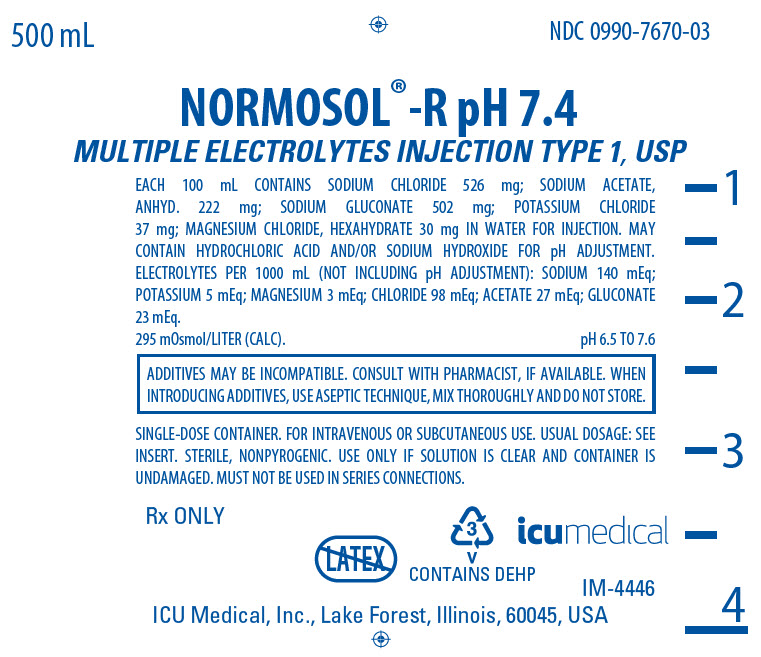
PhysiolytePlasma-Lyte AIsolyte SMultiple Electrolytes pH 7.4
Active ingredients
MAGNESIUM CHLORIDEPOTASSIUM CHLORIDESODIUM ACETATESODIUM CHLORIDESODIUM GLUCONATE
Indications
INDICATIONS AND USAGE Physiolyte™ (A Physiological Irrigating Solution) is indicated for all general irrigation, washing, and rinsing purposes which permit use of a sterile, nonpyrogenic electrolyte solution.
Dosage
DOSAGE AND ADMINISTRATION Important Administration Instructions • PLASMA-LYTE A Injection pH 7.4 (Multiple Electrolytes Injection, Type 1, USP) is intended for intravenous administration using sterile equipment. • Do not connect flexible plastic containers in series in order to avoid air embolism due to possible residual air contained in the primary container. • Set the vent to the closed position on a vented intravenous administration set to prevent air embolism. • Use a dedicated line without any connections to avoid air embolism. • Do not pressurize intravenous solutions contained in flexible plastic containers to increase flow rates in order to avoid air embolism due to incomplete evacuation of residual air in the container. • Prior to infusion, visually inspect the solution for particulate matter and discoloration. The solution should be clear and there should be no precipitates. Do not administer unless solution is clear, and container is undamaged. • PLASMA-LYTE A Injection pH 7.4 (Multiple Electrolytes Injection, Type 1, USP) is compatible with blood or blood components. It may be administered prior to or following the infusion of blood through the same administration set (i.e., as a priming solution), added to or infused concurrently with blood components, or used as a diluent in the transfusion of packed erythrocytes. PLASMA-LYTE A Injection and 0.9% Sodium Chloride Injection, USP are equally compatible with blood or blood components. Dosing Information The choice of product, dosage, volume, rate, and duration of administration is dependent upon the age, weight and clinical condition of the patient and concomitant therapy, and administration should be determined by a physician experienced in intravenous fluid therapy. Introduction of Additives Additives may be incompatible. Evaluate all additions to the plastic container for compatibility and stability of the resulting preparation. Consult with a pharmacist, if available. If, in the informed judgment of the physician, it is deemed advisable to introduce additives, use aseptic technique. Mix thoroughly when additives have been introduced. After addition, if there is a discoloration and/or the appearance of precipitates, insoluble complexes or crystals, do not use. Do not store solutions containing additives. Discard any unused portion.
Warnings
WARNINGS Hypersensitivity Reactions Hypersensitivity and infusion reactions have been reported with PLASMA-LYTE A Injection pH 7.4 (Multiple Electrolytes Injection, Type 1, USP). See ADVERSE REACTIONS . Stop the infusion immediately if signs or symptoms of a hypersensitivity reaction develop, such as tachycardia, chest pain, dyspnea and flushing. Appropriate therapeutic countermeasures must be instituted as clinically indicated. Electrolyte Imbalances Fluid Overload Depending on the volume and rate of infusion, the intravenous administration of PLASMA-LYTE A Injection pH 7.4 (Multiple Electrolytes Injection, Type 1, USP) can cause electrolyte disturbances such as overhydration, and congested states, including pulmonary congestion and edema. Avoid PLASMA-LYTE A Injection pH 7.4 (Multiple Electrolytes Injection, Type 1, USP) in patients with or at risk for fluid and/or solute overloading. If use cannot be avoided, monitor fluid balance, electrolyte concentrations, and acid base balance, as needed and especially during prolonged use. Hyponatremia PLASMA-LYTE A Injection pH 7.4 (Multiple Electrolytes Injection, Type 1, USP) may cause hyponatremia. Hyponatremia can lead to acute hyponatremic encephalopathy characterized by headache, nausea, seizures, lethargy, and vomiting. Patients with brain edema are at particular risk of severe, irreversible and life-threatening brain injury. The risk of hospital-acquired hyponatremia is increased in patients with cardiac or pulmonary failure, and in patients with non-osmotic vasopressin release (including SIADH) treated with high volume of hypotonic PLASMA-LYTE A Injection pH 7.4 (Multiple Electrolytes Injection, Type 1, USP). Avoid PLASMA-LYTE A Injection pH 7.4 (Multiple Electrolytes Injection, Type 1, USP) in hypervolemic or overhydrated patients. If use cannot be avoided, monitor serum sodium concentrations. Hypernatremia Hypernatremia may occur with PLASMA-LYTE A Injection pH 7.4 (Multiple Electrolytes Injection, Type 1, USP)). Conditions that may increase the risk of hypernatremia, fluid overload and edema (central and peripheral), include patients with: primary hyperaldosteronism; secondary hyperaldosteronism associated with, for example, hypertension, congestive heart failure, liver disease (including cirrhosis), renal disease (including renal artery stenosis, nephrosclerosis); and pre-eclampsia. Certain medications, such as corticosteroids or corticotropin, may also increase risk of sodium and fluid retention, see PRECAUTIONS . Avoid PLASMA-LYTE A Injection pH 7.4 (Multiple Electrolytes Injection, Type 1, USP) in patients with, or at risk for, hypernatremia. If use cannot be avoided, monitor serum sodium concentrations. Hypermagnesemia Avoid solutions containing magnesium including PLASMA-LYTE A Injection pH 7.4 (Multiple Electrolytes Injection, Type 1, USP) in patients with or predisposed to hypermagnesemia, including patients with severe renal impairment and those patients receiving magnesium therapy (e.g., treatment of eclampsia and myasthenia gravis). PLASMA-LYTE A Injection pH 7.4 (Multiple Electrolytes Injection, Type 1, USP) is not indicated for the treatment of hypomagnesemia. Acidosis PLASMA-LYTE A Injection pH 7.4 (Multiple Electrolytes Injection, Type 1, USP) is not for use for the treatment of lactic acidosis or severe metabolic acidosis in patients with severe liver and/or renal impairment. Alkalosis Excess administration of PLASMA-LYTE A Injection pH 7.4 (Multiple Electrolytes Injection, Type 1, USP) can result in metabolic alkalosis. Avoid PLASMA-LYTE A Injection pH 7.4 (Multiple Electrolytes Injection, Type 1, USP) in patients with alkalosis or at risk for alkalosis. PLASMA-LYTE A Injection pH 7.4 (Multiple Electrolytes Injection, Type 1, USP) is not indicated for the treatment of hypochloremic hypokalemic alkalosis. Avoid use in patients with hypochloremic hypokalemic alkalosis. Hypocalcemia PLASMA-LYTE A Injection pH 7.4 (Multiple Electrolytes Injection, Type 1, USP) contains no calcium, and an increase in plasma pH due to its alkalinizing effect may lower the concentration of ionized (not protein-bound) calcium. Avoid PLASMA-LYTE A Injection pH 7.4 (Multiple Electrolytes Injection, Type 1, USP) in patients with hypocalcemia. Hyperkalemia Potassium-containing solutions, including PLASMA-LYTE A Injection pH 7.4 (Multiple Electrolytes Injection, Type 1, USP) may increase the risk of hyperkalemia. Patient’s at increased risk of developing hyperkalemia include those: • With conditions predisposing to hyperkalemia and/or associated with increased sensitivity to potassium, such as patients with severe renal impairment, acute dehydration, extensive tissue injury or burns, certain cardiac disorders such as congestive heart failure. • Treated concurrently or recently with agents or products that cause or increase the risk of hyperkalemia (see PRECAUTIONS ). Avoid PLASMA-LYTE A Injection pH 7.4 (Multiple Electrolytes Injection, Type 1, USP) in patients with, or at risk for hyperkalemia. If use cannot be avoided, monitor serum potassium concentrations. Although PLASMA-LYTE A Injection pH 7.4 (Multiple Electrolytes Injection, Type 1, USP) has a potassium concentration in plasma, it is insufficient to produce a useful effect in case of severe potassium deficiency; therefore, it is not indicated for correction of severe potassium deficiency.
Contraindications
CONTRAINDICATIONS PLASMA-LYTE A Injection pH 7.4 (Multiple Electrolytes Injection, Type 1, USP) is contraindicated in patients with a known hypersensitivity to the product. See WARNINGS .
Drug interactions
Drug Interactions Other Products that Affect Fluid and/or Electrolyte Balance Administration of PLASMA-LYTE A Injection pH 7.4 (Multiple Electrolytes Injection, Type 1, USP) to patients treated concomitantly with drugs associated with sodium and fluid retention, may increase the risk of hypernatremia and volume overload. Avoid use of PLASMA-LYTE A Injection pH 7.4 (Multiple Electrolytes Injection, Type 1, USP) in patients receiving such products, such as corticosteroids or corticotropin. If use cannot be avoided, monitor serum electrolytes, fluid balance and acid-base balance. Other Drugs that Increase the Risk of Hyponatremia Administration of PLASMA-LYTE A Injection pH 7.4 (Multiple Electrolytes Injection, Type 1, USP) in patients treated concomitantly with medications associated with hyponatremia may increase the risk of developing hyponatremia. Avoid use of PLASMA-LYTE A Injection pH 7.4 (Multiple Electrolytes Injection, Type 1, USP) in patients receiving products, such as diuretics, and certain antiepileptic and psychotropic medications. Drugs that increase the vasopressin effect reduce renal electrolyte free water excretion and may also increase the risk of hyponatremia following treatment with intravenous fluids. If use cannot be avoided, monitor serum sodium concentrations. Lithium Renal clearance of lithium may be increased during administration of PLASMA-LYTE A Injection pH 7.4 (Multiple Electrolytes Injection, Type 1, USP). Monitor serum lithium concentrations during concomitant use. Other Products that Increase the Risk of Hyperkalemia Because of its potassium content, avoid use of PLASMA-LYTE A Injection pH 7.4 (Multiple Electrolytes Injection, Type 1, USP) in patients receiving products that can cause hyperkalemia or increase the risk of hyperkalemia, such as potassium sparing diuretics, ACE inhibitors, angiotensin II receptor antagonists, or the immunosuppressants tacrolimus and cyclosporine. If use cannot be avoided, monitor serum potassium concentrations. Drugs with pH Dependent Renal Elimination Due to its alkalinizing effect (formation of bicarbonate), PLASMA-LYTE A Injection pH 7.4 (Multiple Electrolytes Injection, Type 1, USP) may interfere with the elimination of drugs with pH dependent renal elimination. Renal clearance of acidic drugs may be increased. Renal clearance of alkaline drugs may be decreased.
Adverse reactions
ADVERSE REACTIONS Reactions which may occur because of the solution or the technique of administration include febrile response, infection at the site of injection, venous thrombosis or phlebitis extending from the site of injection, extravasation and hypervolemia. Symptoms may result from an excess or deficit of one or more of the ions present in the solution; therefore, frequent monitoring of electrolyte levels is essential. Hypernatremia may be associated with edema and exacerbation of congestive heart failure due to the retention of water, resulting in an expanded extracellular fluid volume. Reactions reported with the use of potassium-containing solutions include nausea, vomiting, abdominal pain and diarrhea. The signs and symptoms of potassium intoxication include paresthesias of the extremities, areflexia, muscular or respiratory paralysis, mental confusion, weakness, hypotension, cardiac arrhythmias, heart block, electrocardiographic abnormalities and cardiac arrest. Potassium deficits result in disruption of neuromuscular function, and intestinal ileus and dilatation. If infused in large amounts, chloride ions may cause a loss of bicarbonate ions, resulting in an acidifying effect. Abnormally high plasma levels of magnesium can result in flushing, sweating, hypotension, circulatory collapse, and depression of cardiac and central nervous system function. Respiratory depression is the most immediate threat to life. Magnesium deficits can result in tachycardia, hypertension, hyperirritability and psychotic behavior. The physician should also be alert to the possibility of adverse reactions to drug additives. Prescribing information for drug additives to be administered in this manner should be consulted. If an adverse reaction does occur, discontinue the infusion, evaluate the patient, institute appropriate therapeutic countermeasures and save the remainder of the fluid for examination if deemed necessary.
Mechanism of action
CLINICAL PHARMACOLOGY Physiolyte exerts a mechanical cleansing action for sterile irrigation of body cavities, tissues or wounds, indwelling urethral catheters and surgical drainage tubes, and for washing, rinsing or soaking surgical dressings, instruments and laboratory specimens. It also serves as a vehicle for drugs used for irrigation or other pharmaceutical preparations. Physiolyte provides an isotonic calcium-free balanced electrolyte irrigation with the same ionic composition as Isolyte ® S (Multi-Electrolyte Solution) a multiple electrolyte solution for IV replacement of acute extracellular fluid losses. Physiological irrigation solutions are considered generally compatible with living tissues and organs. Sodium, the major cation of the extracellular fluid, functions primarily in the control of water distribution, fluid balance, and osmotic pressure of body fluids. Sodium is also associated with chloride and bicarbonate in the regulation of the acid-base equilibrium of body fluid. Potassium, the principal cation of intracellular fluid, participates in carbohydrate utilization and protein synthesis, and is critical in the regulation of nerve conduction and muscle contraction, particularly in the heart. Chloride, the major extracellular anion, closely follows the metabolism of sodium, and changes in the acid-base balance of the body are reflected by changes in the chloride concentration. Magnesium, a principal cation of soft tissue, is primarily involved in enzyme activity associated with the metabolism of carbohydrates and protein. Magnesium is also involved in neuromuscular and cardiac conduction and irritability. Gluconate and acetate are organic ions which are hydrogen ion acceptors and contribute bicarbonate during their metabolism to carbon dioxide and water, and serve as alkalinizing agents. Water is an essential constituent of all body tissues and accounts for approximately 70% of total body weight. Average normal adult daily requirement ranges from two to three liters (1.0 to 1.5 liters each for insensible water loss by perspiration and urine production). Water balance is maintained by various regulatory mechanisms. Water distribution depends primarily on the concentration of electrolytes in the body compartments and sodium (Na + ) plays a major role in maintaining physiologic equilibrium.
NDC examples
0264-22050338-02210264-770365219-389
Source: openFDA + RxNorm · 2026
Look up another medication