Retifanlimab
Managing this medication for someone you care for? Eleplan keeps diagnoses, medications and appointments in one plan.
Start free with EleplanMedication reference
Retifanlimab
Programmed Death Receptor-1 Blocking Antibody [EPC] — INTRAVENOUS
Retifanlimab — Programmed Death Receptor-1 Blocking Antibody [EPC]. INDICATIONS AND USAGE ZYNYZ is a programmed death receptor-1 (PD-1)–blocking antibody indicated: Squamous Cell Carcinoma of the Anal Canal (SCAC) in…
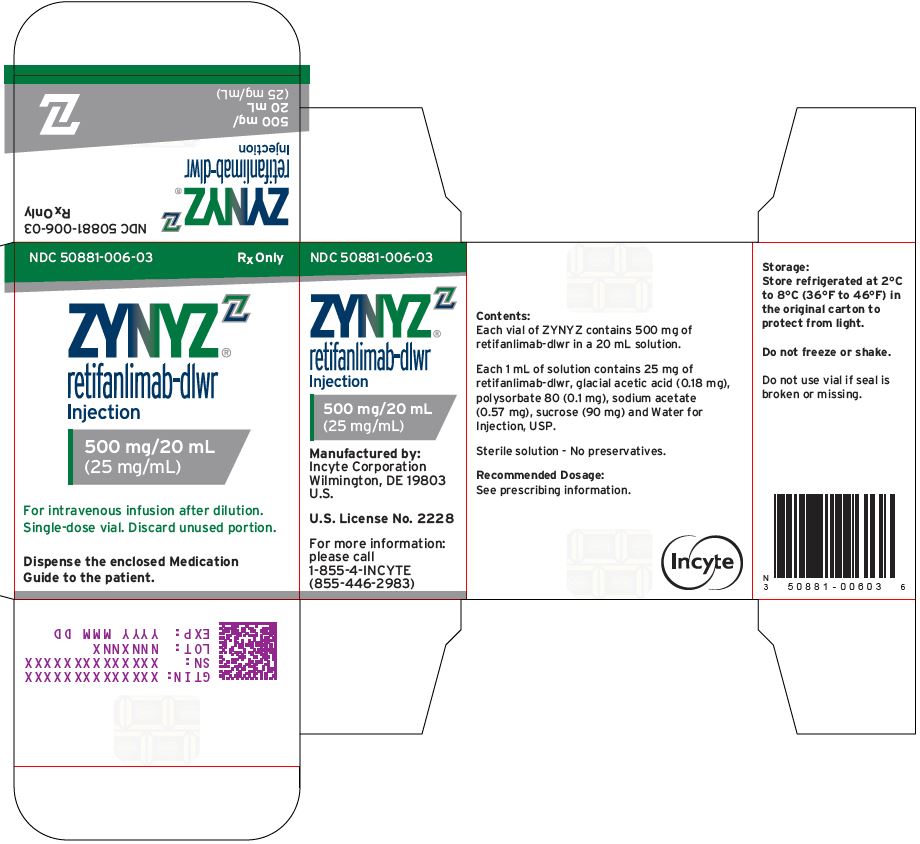
Brand names
ZYNYZ
Active ingredients
RETIFANLIMAB
Indications
INDICATIONS AND USAGE ZYNYZ is a programmed death receptor-1 (PD-1)–blocking antibody indicated: Squamous Cell Carcinoma of the Anal Canal (SCAC) in combination with carboplatin and paclitaxel for the first-line treatment of adult patients with inoperable locally recurrent or metastatic squamous cell carcinoma of the anal canal (SCAC). ( 1.1 ) as a single agent for the treatment of adult patients with locally recurrent or metastatic SCAC with disease progression on or intolerance to platinum-based chemotherapy. ( 1.1 ) Merkel Cell Carcinoma (MCC) for the treatment of adult patients with metastatic or recurrent locally advanced Merkel cell carcinoma (MCC). ( 1.2 ) 1.1 Squamous Cell Carcinoma of the Anal Canal ZYNYZ, in combination with carboplatin and paclitaxel, is indicated for the first-line treatment of adult patients with inoperable locally recurrent or metastatic squamous cell carcinoma of the anal canal (SCAC). ZYNYZ, as a single agent, is indicated for the treatment of adult patients with locally recurrent or metastatic SCAC with disease progression on or intolerance to platinum‑based chemotherapy. 1.2 Merkel Cell Carcinoma ZYNYZ is indicated for the treatment of adult patients with metastatic or recurrent locally advanced Merkel cell carcinoma (MCC).
Dosage
DOSAGE AND ADMINISTRATION Administer ZYNYZ as an intravenous infusion over 30 minutes after dilution ( 2.3 ): For Squamous Cell Carcinoma of the Anal Canal (SCAC), in combination with carboplatin and paclitaxel, or as a single agent ( 2.1 ): 500 mg every 4 weeks, or 375 mg every 3 weeks For Merkel Cell Carcinoma (MCC) ( 2.1 ): 500 mg every 4 weeks See full prescribing information for dosage modifications for adverse reactions ( 2.2 ) and preparation and administration instructions. ( 2.3 ) 2.1 Recommended Dosage The recommended dosages of ZYNYZ are provided in Table 1. Administer ZYNYZ as an intravenous infusion after dilution, over 30 minutes, as recommended [see Dosage and Administration ( 2.3 )] . Table 1: Recommended Dosage of ZYNYZ Indication Recommended Dosage of ZYNYZ Duration of Treatment Combination Therapy Refer to the Prescribing Information for the agents administered in combination with ZYNYZ for recommended dosing information, as appropriate. Adult patients with inoperable locally recurrent or metastatic SCAC in combination with carboplatin and paclitaxel 500 mg every 4 weeks or 375 mg every 3 weeks Until disease progression, unacceptable toxicity, or up to 12 months Monotherapy Adult patients with locally recurrent or metastatic SCAC with disease progression on or intolerance to platinum-based chemotherapy 500 mg every 4 weeks or 375 mg every 3 weeks Until disease progression, unacceptable toxicity, or up to 24 months Adult patients with metastatic or recurrent locally advanced MCC 500 mg every 4 weeks Until disease progression, unacceptable toxicity, or up to 24 months 2.2 Dosage Modifications for Adverse Reactions No dose reduction of ZYNYZ is recommended. In general, withhold ZYNYZ for severe (Grade 3) immune-mediated adverse reactions. Permanently discontinue ZYNYZ for life‑threatening (Grade 4) immune-mediated adverse reactions, recurrent severe (Grade 3) immune-mediated reactions that require systemic immunosuppressive treatment, or an inability to reduce corticosteroid dose to 10 mg or less of prednisone equivalent per day within 12 weeks of initiating steroids. Dosage modifications for ZYNYZ for adverse reactions that require management different from these general guidelines are summarized in Table 2. Table 2: Recommended Dosage Modifications for Adverse Reactions AST = aspartate aminotransferase; ALT = alanine aminotransferase; DRESS = drug rash with eosinophilia and systemic symptoms; SJS = Stevens-Johnson syndrome; TEN = toxic epidermal necrolysis; ULN = upper limit of normal. Adverse Reaction Severity Toxicity graded per National Cancer Institute (NCI) Common Terminology Criteria for Adverse Events (CTCAE) v5. ZYNYZ Dosage Modifications Immune-Mediated Adverse Reactions [see Warnings and Precautions ( 5.1 )] Pneumonitis Grade 2 Withhold Resume in patients with complete or partial resolution (Grade 0-1) after corticosteroid taper. Permanently discontinue if no resolution within 12 weeks of initiating steroids or inability to reduce prednisone to less than 10 mg/day (or equivalent) within 12 weeks of initiating steroids. Grade 3 or 4 Permanently discontinue Colitis Grade 2 or 3 Withhold Grade 4 Permanently discontinue Hepatitis with no tumor involvement of the liver AST or ALT greater than 3 but no more than 8 times ULN OR Total bilirubin increases to more than 1.5 and up to 3 times ULN Withhold AST or ALT increases to more than 8 times ULN OR Total bilirubin greater than 3 times ULN Permanently discontinue Hepatitis with tumor involvement of the liver If AST and ALT are less than or equal to ULN at baseline in patients with liver involvement, withhold or permanently discontinue ZYNYZ based on recommendations for hepatitis with no liver involvement. Baseline AST or ALT is more than 1 and up to 3 times ULN and increases more than 5 and up to 10 times ULN OR Baseline AST or ALT is more than 3 and up to 5 times ULN and increases more than 8 and up to 10 times ULN Withhold AST or ALT increases to more than 10 times ULN OR Total bilirubin increases to more than 3 times ULN Permanently discontinue Endocrinopathies Depending on clinical severity, consider withholding for Grade 2 endocrinopathy until symptom improvement with hormone replacement. Resume once acute symptoms have resolved. Grade 3 or 4 Withhold until clinically stable or permanently discontinue depending on severity Nephritis with renal dysfunction Grade 2 or 3 increased blood creatinine Withhold Grade 4 increased blood creatinine Permanently discontinue Exfoliative dermatologic conditions Grade 3 or suspected SJS, TEN, or DRESS Withhold Grade 4 or confirmed SJS, TEN, or DRESS Permanently discontinue Myocarditis Grade 2, 3, or 4 Permanently discontinue Neurological toxicities Grade 2 Withhold Grade 3 or 4 Permanently discontinue Other Adverse Reactions Infusion-related reactions [see Warnings and Precautions ( 5.2 )] Grade 1 or 2 Interrupt or slow the rate of infusion Grade 3 or 4 Permanently discontinue 2.3 Preparation and Administration Visually inspect the vial for particulate matter and discoloration prior to administration. ZYNYZ is a clear to slightly opalescent, colorless to pale yellow solution and is free of particles. Discard the vial if the solution is cloudy, discolored, or contains particulate matter. Do not shake the vial. Preparation Withdraw the appropriate volume from a vial of ZYNYZ: 20 mL for the 500 mg dose 15 mL for the 375 mg dose Discard the vial with any unused portion. Each vial is for one-time use in only one patient. Dilute ZYNYZ with either 0.9% Sodium Chloride Injection or 5% Dextrose Injection to a final concentration between 1.4 mg/mL and 10 mg/mL. Use polyvinylchloride (PVC) and di-2-ethylhexyl phthalate (DEHP), polyolefin copolymer, polyolefin with polyamide, or ethylene vinyl acetate infusion bags. Mix diluted solution by gentle inversion. Do not shake. Visually inspect the infusion bag for particulate matter and discoloration prior to administration. Discard if the solution is discolored or contains particulate matter. Storage of diluted ZYNYZ solution Protect the diluted ZYNYZ solution from light during storage. Store diluted ZYNYZ solution: At room temperature [up to 25°C (77°F)] for no more than 8 hours from the time of preparation to the end of the infusion. OR Under refrigeration at 2°C to 8°C (36°F to 46°F) for no more than 24 hours from the time of preparation to the end of the infusion. If refrigerated, allow the diluted solution to come to room temperature prior to administration. The diluted solution must be administered within 4 hours (including infusion time) once it is removed from the refrigerator. Do not freeze or shake diluted solution. Administration Administer diluted ZYNYZ solution by intravenous infusion over 30 minutes through a polyethylene, polyurethane, or PVC with DEHP intravenous line containing a sterile, non‑pyrogenic, low-protein binding polyethersulfone, polyvinylidene fluoride, or cellulose acetate 0.2 micron to 5 micron in-line or add-on filter or 15 micron mesh in-line or add-on filter. Do NOT administer ZYNYZ as an intravenous push or bolus injection. Do not co‑administer other drugs through the same infusion line.
Warnings
WARNINGS AND PRECAUTIONS Immune-Mediated Adverse Reactions ( 5.1 ) Immune-mediated adverse reactions, which may be severe or fatal, can occur in any organ system or tissue, including the following: immune-mediated pneumonitis, immune-mediated colitis, immune‑mediated hepatitis, immune-mediated endocrinopathies, immune-mediated nephritis with renal dysfunction, and immune‑mediated dermatologic adverse reactions, and solid organ transplant rejection. Monitor for early identification and management. Evaluate liver enzymes, creatinine, and thyroid function at baseline and periodically during treatment. Withhold or permanently discontinue ZYNYZ and administer corticosteroids based on the severity of reaction. ( 2.2 ) Infusion-Related Reactions: Interrupt, slow the rate of infusion, or permanently discontinue ZYNYZ based on severity of reaction. ( 2.2 , 5.2 ) Complications of Allogeneic HSCT: Fatal and other serious complications can occur in patients who receive allogeneic HSCT before or after being treated with a PD‑1/PD‑L1–blocking antibody. ( 5.3 ) Embryo-Fetal Toxicity: Can cause fetal harm. Advise females of reproductive potential of the potential risk to a fetus and use of effective contraception. ( 5.4 , 8.1 , 8.3 ) 5.1 Severe and Fatal Immune-Mediated Adverse Reactions ZYNYZ is a monoclonal antibody that belongs to a class of drugs that binds to either the programmed death receptor-1 (PD-1) or the PD-ligand 1 (PD-L1), blocking the PD-1/PD-L1 pathway, thereby removing inhibition of the immune response with the potential for breaking of peripheral tolerance and induction of immune-mediated adverse reactions. Important immune‑mediated adverse reactions listed under Warnings and Precautions may not be inclusive of all possible severe and fatal immune-mediated reactions. Immune-mediated adverse reactions, which may be severe or fatal, can occur in any organ system or tissue. Immune-mediated adverse reactions can occur at any time after starting treatment with a PD-1/PD-L1–blocking antibody. While immune-mediated adverse reactions usually manifest during treatment with PD-1/PD-L1–blocking antibodies, immune-mediated adverse reactions can also manifest after discontinuation of PD-1/PD-L1–blocking antibodies. Immune-mediated adverse reactions affecting more than one body system can occur simultaneously. Early identification and management of immune‐mediated adverse reactions are essential to ensure safe use of PD-1/PD-L1–blocking antibodies. Monitor patients closely for symptoms and signs that may be clinical manifestations of underlying immune-mediated adverse reactions. Evaluate liver enzymes, creatinine, and thyroid function at baseline and periodically during treatment. In cases of suspected immune-mediated adverse reactions, initiate appropriate workup to exclude alternative etiologies, including infection. Institute medical management promptly, including specialty consultation as appropriate. Withhold or permanently discontinue ZYNYZ depending on severity [see Dosage and Administration ( 2.2 )] . In general, if ZYNYZ requires interruption or discontinuation, administer systemic corticosteroid therapy (1 to 2 mg/kg/day prednisone or equivalent) until improvement to Grade 1 or less. Upon improvement to Grade 1 or less, initiate corticosteroid taper and continue to taper over at least 1 month. Consider administration of other systemic immunosuppressants in patients whose immune-mediated adverse reactions are not controlled with corticosteroids. Toxicity management guidelines for adverse reactions that do not necessarily require systemic steroids (e.g., endocrinopathies and dermatologic reactions) are discussed below. Immune-Mediated Pneumonitis ZYNYZ can cause immune-mediated pneumonitis. In patients treated with other PD-1/PD-L1–blocking antibodies, the incidence of pneumonitis is higher in patients who have received prior thoracic radiation. Immune-mediated pneumonitis occurred in 3.1% (14/452) of patients receiving ZYNYZ, including 1 (0.2%) patient with fatal pneumonitis, Grade 3 (0.9%), and Grade 2 (1.3%). Pneumonitis led to permanent discontinuation of ZYNYZ in 1 patient and withholding of ZYNYZ in 1.1% of patients. Systemic corticosteroids were required in 71% (10/14) of patients with pneumonitis. Pneumonitis resolved in 11 of the 14 patients. Of the 5 patients in whom ZYNYZ was withheld for pneumonitis, 4 reinitiated ZYNYZ after symptom improvement; of these, 1 had recurrence of pneumonitis. Immune-Mediated Colitis ZYNYZ can cause immune-mediated colitis. Cytomegalovirus infection/reactivation have occurred in patients with corticosteroid-refractory immune-mediated colitis treated with PD-1/PD-L1–blocking antibodies. In cases of corticosteroid-refractory colitis, consider repeating infectious workup to exclude alternative etiologies. ZYNYZ as a Single Agent: Immune-mediated colitis occurred in 2.7% (12/452) of patients receiving ZYNYZ, including Grade 4 (0.2%), Grade 3 (0.4%), and Grade 2 (1.1%). Colitis led to permanent discontinuation of ZYNYZ in 0.9% of patients and withholding of ZYNYZ in 1.3% of patients. Systemic corticosteroids were required in 75% (9/12) of patients. Colitis resolved in 8 of the 12 patients. Of the 6 patients in whom ZYNYZ was withheld for colitis, 1 reinitiated ZYNYZ after symptom improvement; this patient did not have recurrence of colitis. ZYNYZ in Combination with Carboplatin and Paclitaxel: Immune-mediated colitis occurred in 10% (16/154) of patients receiving ZYNYZ in combination with carboplatin and paclitaxel, including Grade 4 (0.6%), Grade 3 (2.6%), and Grade 2 (3.2%). Colitis led to permanent discontinuation of ZYNYZ in 2 patients and withholding of ZYNYZ in 2 patients. Systemic corticosteroids were required in 94% (15/16) of patients. Colitis resolved in 15 of the 16 patients. Of the 2 patients in whom ZYNYZ was withheld for colitis, both reinitiated ZYNYZ after symptom improvement; neither patient had a recurrence of colitis. Immune-Mediated Hepatitis ZYNYZ can cause immune-mediated hepatitis. Immune-mediated hepatitis occurred in 3.5% (16/452) of patients receiving ZYNYZ, including Grade 4 (0.2%), Grade 3 (2.4%), and Grade 2 (0.9%). Hepatitis led to permanent discontinuation of ZYNYZ in 1.5% of patients and withholding of ZYNYZ in 1.1% of patients. Systemic corticosteroids were required in 81% (13/16) of patients. Hepatitis resolved in 9 of the 16 patients. Of the 5 patients in whom ZYNYZ was withheld for hepatitis, 3 reinitiated ZYNYZ after symptom improvement; of these, 1 had recurrence of hepatitis. Immune-Mediated Endocrinopathies Adrenal Insufficiency ZYNYZ can cause primary or secondary adrenal insufficiency. For Grade 2 or higher adrenal insufficiency, initiate symptomatic treatment per institutional guidelines, including hormone replacement as clinically indicated. Withhold or permanently discontinue ZYNYZ depending on severity [see Dosage and Administration ( 2.2 )] . ZYNYZ as a Single Agent: Adrenal insufficiency occurred in 0.9% (4/452) of patients receiving ZYNYZ, including Grade 3 (0.4%) and Grade 2 (0.4%). Adrenal insufficiency did not lead to permanent discontinuation of ZYNYZ. ZYNYZ was withheld for 1 patient with adrenal insufficiency. All patients required systemic corticosteroids. Adrenal insufficiency resolved in 1 of the 4 patients. ZYNYZ in Combination with Carboplatin and Paclitaxel: Adrenal insufficiency occurred in 5.8% (9/154) of patients receiving ZYNYZ in combination with carboplatin and paclitaxel, including Grade 3 and Grade 2 (1.9% each). Adrenal insufficiency led to permanent discontinuation of ZYNYZ in 1 patient and withholding of ZYNYZ in 3 patients. All patients required systemic corticosteroids. Adrenal insufficiency resolved in 4 of the 9 patients. Hypophysitis ZYNYZ can cause immune-mediated hypophysitis. Hypophysitis can present with acute symptoms associated with mass effect such as headache, photophobia, or visual field cuts. Hypophysitis can cause hypopituitarism.
Contraindications
CONTRAINDICATIONS None. None. ( 4 )
Adverse reactions
ADVERSE REACTIONS The following adverse reactions are described elsewhere in the labeling. Severe and Fatal Immune-Mediated Adverse Reactions [see Warnings and Precautions ( 5.1 )] Infusion-Related Reactions [see Warnings and Precautions ( 5.2 )] Complications of Allogeneic HSCT [see Warnings and Precautions ( 5.3 )] ZYNYZ in Combination with Carboplatin and Paclitaxel In patients with SCAC, the most common (≥ 20%) adverse reactions are fatigue, peripheral neuropathy, nausea, alopecia, diarrhea, musculoskeletal pain, constipation, hemorrhage, rash, vomiting, decreased appetite, pruritus, and abdominal pain. ( 6.1 ) ZYNYZ as a Single Agent In patients with SCAC, the most common (≥ 10%) adverse reactions are fatigue, musculoskeletal pain, diarrhea, non-urinary tract infections, perineal pain, hemorrhage, urinary tract infection, rash, nausea, decreased appetite, constipation, abdominal pain, dyspnea, pyrexia, vomiting, cough, pruritus, hypothyroidism, headache, and decreased weight. ( 6.1 ) In patients with MCC, the most common (≥ 10%) adverse reactions are musculoskeletal pain, fatigue, pruritus, diarrhea, rash, pyrexia, nausea, and constipation. ( 6.1 ) To report SUSPECTED ADVERSE REACTIONS, contact Incyte Corporation at 1-855-463-3463 or FDA at 1-800-FDA-1088 or www.fda.gov/medwatch . 6.1 Clinical Trial Experience Because clinical trials are conducted under widely varying conditions, adverse reaction rates observed in the clinical trials of a drug cannot be directly compared to rates in the clinical trials of another drug and may not reflect the rates observed in practice. The safety population described in Warnings and Precautions reflects exposure to ZYNYZ 500 mg as an intravenous infusion every 4 weeks in combination with carboplatin and paclitaxel in 154 patients with SCAC enrolled in the POD1UM-303 trial, and as a single agent in 94 patients with SCAC in the POD1UM-202 trial, 107 patients with MCC in the POD1UM-201 trial, and 251 patients with other solid tumors. All patients received ZYNYZ until disease progression or unacceptable toxicity; those in the POD1UM-202 and POD1UM-201 trials received ZYNYZ for up to 24 months and those in the POD1UM-303 trial received ZYNYZ for up to 12 months. The median duration of exposure of the pooled monotherapy population was 5.4 months (range: 1 day to 27 months). Squamous Cell Carcinoma of the Anal Canal (SCAC) Inoperable Locally Recurrent or Metastatic SCAC: ZYNYZ in Combination with Carboplatin and Paclitaxel The safety of ZYNYZ in patients with inoperable locally recurrent or metastatic SCAC was evaluated in 154 patients enrolled in the POD1UM-303 trial [see Clinical Studies ( 14.1 )] . Patients received ZYNYZ 500 mg or placebo intravenously every 4 weeks in combination with carboplatin and paclitaxel for 6 cycles followed by ZYNYZ 500 mg or placebo every 4 weeks until disease progression or unacceptable toxicity. Among patients who received ZYNYZ, the median duration of exposure was 7.4 months (range: 1 day to 14.6 months). Serious adverse reactions occurred in 47% of patients receiving ZYNYZ in combination with carboplatin and paclitaxel. The most frequent serious adverse reactions (≥ 2% of patients) were sepsis (3.2%), pulmonary embolism (3.2%), diarrhea (2.6%), and vomiting (2.6%). In patients receiving ZYNYZ in combination with carboplatin and paclitaxel, ZYNYZ was permanently discontinued due to an adverse reaction in 11% of patients. Adverse reactions that resulted in permanent discontinuation of ZYNYZ included immune-mediated enterocolitis (2 patients), warm autoimmune hemolytic anemia, hepatitis, adrenal insufficiency, blood bilirubin increased, AST increased, blood alkaline phosphatase increased, arthritis, encephalopathy, peripheral sensorimotor neuropathy, hypothyroidism, immune‑mediated cholangitis, pruritus, malaise, and rash (1 patient each). Dosage interruptions due to an adverse reaction, excluding temporary interruptions due to infusion-related reactions, occurred in 55% of patients who received ZYNYZ in combination with carboplatin and paclitaxel. Adverse reactions that resulted in dosage interruptions in ≥ 2% of patients were neutropenia, anemia, thrombocytopenia, leukopenia, fatigue, COVID-19, and urinary tract infection. The most common (≥ 20%) adverse reactions were fatigue, peripheral neuropathy, nausea, alopecia, diarrhea, musculoskeletal pain, constipation, hemorrhage, rash, vomiting, decreased appetite, pruritus, and abdominal pain. Table 3 and Table 4 summarize adverse reactions and laboratory abnormalities, respectively, that occurred in POD1UM-303. Table 3: Adverse Reactions in ≥ 10% of Patients with Inoperable Locally Recurrent or Metastatic SCAC Receiving ZYNYZ in Combination with Carboplatin and Paclitaxel with a Difference Between Arms of ≥ 5% for All Grades or ≥ 2% for Grades 3 or 4 vs Placebo in Combination with Carboplatin and Paclitaxel in POD1UM-303 ZYNYZ in Combination with Carboplatin and Paclitaxel (N = 154) Placebo in Combination with Carboplatin and Paclitaxel (N = 152) Adverse Reaction All Grades (%) Grades 3-4 (%) All Grades (%) Grades 3-4 (%) Gastrointestinal disorders Diarrhea Includes diarrhea, colitis, and frequent bowel movements. 49 5 41 7 Stomatitis Includes stomatitis, aphthous ulcer, cheilitis, mouth ulceration, and mucosal inflammation. 18 0 11 0 Nervous system disorders Peripheral neuropathy Includes peripheral neuropathy, paresthesia, peripheral sensory neuropathy, neuralgia, hypoesthesia, peripheral sensorimotor neuropathy, dysesthesia, peripheral motor neuropathy, and hyperesthesia. 56 5 52 2.6 Musculoskeletal and connective tissue disorders Musculoskeletal pain Includes arthralgia, arthritis, back pain, bone pain, musculoskeletal chest pain, musculoskeletal discomfort, musculoskeletal stiffness, myalgia, neck pain, non-cardiac chest pain, pain in extremity, and spinal pain. 40 2.6 34 0 Vascular disorders Hemorrhage Includes hemorrhage, anal hemorrhage, anal ulcer hemorrhage, conjunctival hemorrhage, epistaxis, gastrointestinal hemorrhage, genital hemorrhage, hematuria, hemoptysis, hemorrhoidal hemorrhage, lower gastrointestinal hemorrhage, lymph node hemorrhage, rectal hemorrhage, stoma site hemorrhage, tumor hemorrhage, urinary bladder hemorrhage, uterine hemorrhage, vaginal hemorrhage, and wound hemorrhage. 29 3.2 21 0 Skin and subcutaneous tissue disorders Rash Includes rash, eczema, dermatitis acneiform, dermatitis, rash erythematous, rash maculo-papular, rash papular, rash pustular, and rash pruritic. 29 1.3 16 0.7 Pruritus 24 0.6 7 0 Endocrine disorders Hypothyroidism 14 0.6 3.3 0 Graded according to NCI CTCAE v5.0. Table 4: Laboratory Abnormalities that Worsened from Baseline to Grade 3 or 4 Occurring in ≥ 1% of Patients with Inoperable Locally Recurrent or Metastatic SCAC Receiving ZYNYZ in Combination with Carboplatin and Paclitaxel in POD1UM-303 ZYNYZ in Combination with Carboplatin and Paclitaxel The denominator used to calculate the rate varied from 142 to 153 based on the number of patients with a baseline value and at least one post-treatment value. Placebo in Combination with Carboplatin and Paclitaxel Laboratory abnormality All Grades (%) Grades 3-4 (%) All Grades (%) Grades 3-4 (%) Hematology Decreased hemoglobin 91 20 92 24 Decreased leukocytes 88 44 90 40 Decreased neutrophils 79 52 78 39 Decreased lymphocytes 77 40 69 38 Decreased platelets 55 6 52 4 Chemistry Decreased albumin 37 2 29 1.3 Increased alanine aminotransferase 35 3.9 23 0.7 Increased aspartate aminotransferase 26 3.9 16 0 Increased alkaline phosphatase 26 2 25 0 Decreased potassium 24 5 16 2.6 Increased calcium 23 2 20 1.3 Increased lipase 18 4.9 15 0.7 Increased bilirubin 10 1.3 4.6 1.3 Graded according to NCI CTCAE v5.0. Platinum-refractory Intolerant Locally Recurrent or Metastatic SCAC: ZYNYZ as a Single Agent The safety of ZYNYZ in patients with platinum-refractory intolerant locally recurrent or metastatic SCAC was evaluated in 94 patients in the POD1UM
Mechanism of action
Mechanism of Action Binding of the PD-1 ligands, PD-L1 and PD-L2, to the PD-1 receptor found on T cells, inhibits T-cell proliferation and cytokine production. Upregulation of PD-1 ligands occurs in some tumors, and signaling through this pathway can contribute to inhibition of active T-cell immune surveillance of tumors. Retifanlimab-dlwr binds to the PD-1 receptor, blocks interaction with its ligands PD-L1 and PD‑L2, and potentiates T-cell activity.
NDC examples
50881-006
Indicated ICD-10 codes
Treats these conditions
Source: openFDA + RxNorm · 2026
Look up another medication