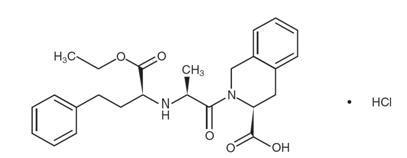
Quinapril Hcl and Hydrochlorothiazide — Thiazide Diuretic [EPC]. INDICATIONS AND USAGE Hypertension : Quinapril and Hydrochlorothiazide Tablets is indicated for the treatment of hypertension, to lower blood…
Boxed warning
WARNING: FETAL TOXICITY When pregnancy is detected, discontinue Quinapril and Hydrochlorothiazide Tablets as soon as possible. Drugs that act directly on the renin-angiotensin system can cause injury and death to the developing fetus. See WARNINGS : Fetal Toxicity
INDICATIONS AND USAGE Hypertension : Quinapril and Hydrochlorothiazide Tablets is indicated for the treatment of hypertension, to lower blood pressure. Lowering blood pressure reduces the risk of fatal and nonfatal cardiovascular events, primarily strokes and myocardial infarctions. These benefits have been seen in controlled trials of antihypertensive drugs from a wide variety of pharmacologic classes including the class to which this drug principally belongs. There are no controlled trials demonstrating risk reduction with Quinapril and Hydrochlorothiazide Tablets. Control of high blood pressure should be part of comprehensive cardiovascular risk management, including, as appropriate, lipid control, diabetes management, antithrombotic therapy, smoking cessation, exercise, and limited sodium intake. Many patients will require more than one drug to achieve blood pressure goals. For specific advice on goals and management, see published guidelines, such as those of the National High Blood Pressure Education Program's Joint National Committee on Prevention, Detection, Evaluation, and Treatment of High Blood Pressure (JNC). Numerous antihypertensive drugs, from a variety of pharmacologic classes and with different mechanisms of action, have been shown in randomized controlled trials to reduce cardiovascular morbidity and mortality, and it can be concluded that it is blood pressure reduction, and not some other pharmacologic property of the drugs, that is largely responsible for those benefits. The largest and most consistent cardiovascular outcome benefit has been a reduction in the risk of stroke, but reductions in myocardial infarction and cardiovascular mortality also have been seen regularly. Elevated systolic or diastolic pressure causes increased cardiovascular risk, and the absolute risk increase per mmHg is greater at higher blood pressures, so that even modest reductions of severe hypertension can provide substantial benefit. Relative risk reduction from blood pressure reduction is similar across populations with varying absolute risk, so the absolute benefit is greater in patients who are at higher risk independent of their hypertension (for example, patients with diabetes or hyperlipidemia), and such patients would be expected to benefit from more aggressive treatment to a lower blood pressure goal. Some antihypertensive drugs have smaller blood pressure effects (as monotherapy) in black patients, and many antihypertensive drugs have additional approved indications and effects (e.g., on angina, heart failure, or diabetic kidney disease). These considerations may guide selection of therapy. This fixed combination is not indicated for the initial therapy of hypertension (see DOSAGE AND ADMINISTRATION ). In using Quinapril and Hydrochlorothiazide Tablets, consideration should be given to the fact that another angiotensin- converting enzyme inhibitor, captopril, has caused agranulocytosis, particularly in patients with renal impairment or collagen-vascular disease. Available data are insufficient to show that quinapril does not have a similar risk (see WARNINGS: Neutropenia/Agranulocytosis ). Angioedema in Black Patients : Black patients receiving ACE inhibitor monotherapy have been reported to have a higher incidence of angioedema compared to non-blacks. It should also be noted that in controlled clinical trials, ACE inhibitors have an effect on blood pressure that is less in black patients than in non-blacks.
Dosage
DOSAGE AND ADMINISTRATION As individual monotherapy, quinapril is an effective treatment of hypertension in once- daily doses of 10 to 80 mg and hydrochlorothiazide is effective in doses of 12.5 to 50 mg. In clinical trials of quinapril/hydrochlorothiazide combination therapy using quinapril doses of 2.5 to 40 mg and hydrochlorothiazide doses of 6.25 to 25 mg, the antihypertensive effects increased with increasing dose of either component. The side effects (see WARNINGS ) of quinapril are generally rare and apparently independent of dose; those of hydrochlorothiazide are a mixture of dose-dependent phenomena (primarily hypokalemia) and dose-independent phenomena (e.g., pancreatitis), the former much more common than the latter. Therapy with any combination of quinapril and hydrochlorothiazide will be associated with both sets of dose-independent side effects, but regimens that combine low doses of hydrochlorothiazide with quinapril produce minimal effects on serum potassium. In clinical trials of Quinapril and Hydrochlorothiazide Tablets, the average change in serum potassium was near zero in subjects who received HCTZ 6.25 mg in the combination, and the average subject who received 10 to 40/12.5 to 25 mg experienced a milder reduction in serum potassium than that experienced by the average subject receiving the same dose of hydrochlorothiazide monotherapy. To minimize dose-independent side effects, it is usually appropriate to begin combination therapy only after a patient has failed to achieve the desired effect with monotherapy. Therapy Guided by Clinical Effect Patients whose blood pressures are not adequately controlled with quinapril monotherapy may instead be given Quinapril and Hydrochlorothiazide Tablets 10/12.5 or 20/12.5. Further increases of either or both components could depend on clinical response. The hydrochlorothiazide dose should generally not be increased until 2 to 3 weeks have elapsed. Patients whose blood pressures are adequately controlled with 25 mg of daily hydrochlorothiazide, but who experience significant potassium loss with this regimen, may achieve blood pressure control with less electrolyte disturbance if they are switched to Quinapril and Hydrochlorothiazide Tablets 10/12.5 or 20/12.5. Replacement Therapy For convenience, patients who are adequately treated with 20 mg of quinapril and 25 mg of hydrochlorothiazide and experience no significant electrolyte disturbances may instead wish to receive Quinapril and Hydrochlorothiazide Tablets 20/25. Use in Renal Impairment Regimens of therapy with Quinapril and Hydrochlorothiazide Tablets need not take account of renal function as long as the patient's creatinine clearance is >30 mL/min/1.73 m2 (serum creatinine roughly ≤3 mg/dL or 265 µmol/L). In patients with more severe renal impairment, loop diuretics are preferred to thiazides. Therefore, Quinapril and Hydrochlorothiazide Tablets is not recommended for use in these patients
Warnings
WARNINGS Anaphylactoid and Possibly Related Reactions: Presumably because angiotensin converting inhibitors affect the metabolism of eicosanoids and polypeptides, including endogenous bradykinin, patients receiving ACE inhibitors (including quinapril) may be subject to a variety of adverse reactions, some of them serious. Head and Neck Angioedema: Angioedema of the face, extremities, lips, tongue, glottis, and larynx has been reported in patients treated with ACE inhibitors and has been seen in 0.1% of patients receiving quinapril. In two similarly sized US postmarketing quinapril trials that, combined, enrolled over 3,000 black patients and over 19,000 non-blacks, angioedema was reported in 0.30% and 0.55% of blacks (in Study 1 and 2, respectively) and 0.39% and 0.17% of non-blacks. Angioedema associated with laryngeal edema can be fatal. If laryngeal stridor or angioedema of the face, tongue, or glottis occurs, treatment with Quinapril and Hydrochlorothiazide Tablets should be discontinued immediately, the patient treated in accordance with accepted medical care, and carefully observed until the swelling disappears. In instances where swelling is confined to the face and lips, the condition generally resolves without treatment; antihistamines may be useful in relieving symptoms. Where there is involvement of the tongue, glottis, or larynx likely to cause airway obstruction, emergency therapy including, but not limited to, subcutaneous epinephrine solution 1:1000 (0.3 to 0.5 mL) should be promptly administered (see PRECAUTIONS and ADVERSE REACTIONS ). Patients taking concomitant mammalian target of rapamycin (mTOR inhibitor) (e.g., temsirolimus) therapy or a neprilysin inhibitor may be at increased risk for angioedema. Intestinal Angioedema: Intestinal angioedema has been reported in patients treated with ACE inhibitors. These patients presented with abdominal pain (with or without nausea or vomiting); in some cases there was no prior history of facial angioedema and C-1 esterase levels were normal. The angioedema was diagnosed by procedures including abdominal CT scan or ultrasound, or at surgery, and symptoms resolved after stopping the ACE inhibitor. Intestinal angioedema should be included in the differential diagnosis of patients on ACE inhibitors presenting with abdominal pain. Patients With a History of Angioedema: Patients with a history of angioedema unrelated to ACE inhibitor therapy may be at increased risk of angioedema while receiving an ACE inhibitor (see also CONTRAINDICATIONS ). Anaphylactoid Reactions During Desensitization: Two patients undergoing desensitizing treatment with Hymenoptera venom while receiving ACE inhibitors sustained life- threatening anaphylactoid reactions. In the same patients, these reactions were avoided when ACE inhibitors were temporarily withheld, but they reappeared upon inadvertent challenge. Anaphylactoid Reactions During Membrane Exposure: Anaphylactoid reactions have been reported in patients dialyzed with high-flux membranes and treated concomitantly with an ACE inhibitor. Anaphylactoid reactions have also been reported in patients undergoing low-density lipoprotein apheresis with dextran sulfate absorption. Hepatic Failure: Rarely, ACE inhibitors have been associated with a syndrome that starts with cholestatic jaundice and progresses to fulminant hepatic necrosis and (sometimes) death. The mechanism of this syndrome is not understood. Patients receiving ACE inhibitors who develop jaundice or marked elevations of hepatic enzymes should discontinue the ACE inhibitor and receive appropriate medical follow-up. Hypotension: Quinapril and Hydrochlorothiazide Tablets can cause symptomatic hypotension, probably not more frequently than either monotherapy. It was reported in 1.2% of 1,571 patients receiving Quinapril and Hydrochlorothiazide Tablets during clinical trials. Like other ACE inhibitors, quinapril has been only rarely associated with hypotension in uncomplicated hypertensive patients. Symptomatic hypotension sometimes associated with oliguria and/or progressive azotemia, and rarely acute renal failure and/or death, include patients with the following conditions or characteristics: heart failure, hyponatremia, high dose diuretic therapy, recent intensive diuresis or increase in diuretic dose, renal dialysis or severe volume and/or salt depletion of any etiology. Volume and/or salt depletion should be corrected before initiating therapy with Quinapril and Hydrochlorothiazide Tablets. Quinapril and Hydrochlorothiazide Tablets should be used cautiously in patients receiving concomitant therapy with other antihypertensives. The thiazide component of Quinapril and Hydrochlorothiazide Tablets may potentiate the action of other antihypertensive drugs, especially ganglionic or peripheral adrenergic- blocking drugs. The antihypertensive effects of the thiazide component may also be enhanced in the post sympathectomy patients. In patients at risk of excessive hypotension, therapy with Quinapril and Hydrochlorothiazide Tablets should be started under close medical supervision. Such patients should be followed closely for the first 2 weeks of treatment and whenever the dosage of quinapril or diuretic is increased. Similar considerations may apply to patients with ischemic heart or cerebrovascular disease in whom an excessive fall in blood pressure could result in myocardial infarction or cerebrovascular accident. If excessive hypotension occurs, the patient should be placed in a supine position and, if necessary, treated with intravenous infusion of normal saline. Quinapril and Hydrochlorothiazide Tablets treatment usually can be continued following restoration of blood pressure and volume. If symptomatic hypotension develops, a dose reduction or discontinuation of Quinapril and Hydrochlorothiazide Tablets may be necessary. Impaired Renal Function: Quinapril and Hydrochlorothiazide Tablets should be used with caution in patients with severe renal disease. Thiazides may precipitate azotemia in such patients, and the effects of repeated dosing may be cumulative. When the renin-angiotensin-aldosterone system is inhibited by quinapril, changes in renal function may be anticipated in susceptible individuals. In patients with severe congestive heart failure, whose renal function may depend on the activity of the renin-angiotensin- aldosterone system, treatment with angiotensin-converting enzyme inhibitors (including quinapril) may be associated with oliguria and/or progressive azotemia and (rarely) with acute renal failure and/or death. In clinical studies in hypertensive patients with unilateral renal artery stenosis, treatment with ACE inhibitors was associated with increases in blood urea nitrogen and serum creatinine; these increases were reversible upon discontinuation of ACE inhibitor, concomitant diuretic, or both. When such patients are treated with Quinapril and Hydrochlorothiazide Tablets, renal function should be monitored during the first few weeks of therapy. Some quinapril-treated hypertensive patients with no apparent preexisting renal vascular diseases have developed increases in blood urea nitrogen and serum creatinine, usually minor and transient, especially when quinapril has been given concomitantly with a diuretic. This is more likely to occur in patients with pre-existing renal impairment. Dosage reduction of Quinapril and Hydrochlorothiazide Tablets may be required. Evaluation of the hypertensive patients should also include assessment of the renal function (see DOSAGE AND ADMINISTRATION ). Neutropenia/Agranulocytosis: Another ACE inhibitor, captopril, has been shown to cause agranulocytosis and bone marrow depression rarely in patients with uncomplicated hypertension, but more frequently in patients with renal impairment, especially if they also have a collagen vascular disease, such as systemic lupus erythematosus or scleroderma. Agranulocytosis did occur during quinapril treatment in one
Contraindications
CONTRAINDICATIONS Quinapril and Hydrochlorothiazide Tablets are contraindicated in patients who are hypersensitive to quinapril or hydrochlorothiazide and in patients with a history of angioedema related to previous treatment with an ACE inhibitor. Quinapril and Hydrochlorothiazide Tablets are contraindicated in combination with a neprilysin inhibitor (e.g., sacubitril). Do not administer Quinapril and Hydrochlorothiazide Tablets within 36 hours of switching to or from sacubitril/valsartan, a neprilysin inhibitor (see WARNINGS and PRECAUTIONS ). Because of the hydrochlorothiazide components, this product is contraindicated in patients with anuria or hypersensitivity to other sulfonamide-derived drugs. Do not co-administer Quinapril and Hydrochlorothiazide Tablets with aliskiren: in patients with diabetes. in patients with diabetes
Adverse reactions
ADVERSE REACTIONS Quinapril and Hydrochlorothiazide Tablets has been evaluated for safety in 1571 patients in controlled and uncontrolled studies. Of these, 498 were given quinapril plus hydrochlorothiazide for at least 1 year, with 153 patients extending combination therapy for over 2 years. In clinical trials with Quinapril and Hydrochlorothiazide Tablets, no adverse experience specific to the combination has been observed. Adverse experiences that have occurred have been limited to those that have been previously reported with quinapril or hydrochlorothiazide. Adverse experiences were usually mild and transient, and there was no relationship between side effects and age, sex, race, or duration of therapy. Discontinuation of therapy because of adverse effects was required in 2.1% in patients in controlled studies. The most common reasons for discontinuation of therapy with Quinapril and Hydrochlorothiazide Tablets were cough (1.0%; see PRECAUTIONS ) and headache (0.7%). Adverse experiences probably or possibly related to therapy or of unknown relationship to therapy occurring in 1% or more of the 943 patients treated with quinapril plus hydrochlorothiazide in controlled trials are shown below. Percent of Patients in Controlled Trials Quinapril/HCTZ N = 943 Placebo N = 100 Headache 6.7 30.0 Dizziness 4.8 4.0 Coughing 3.2 2.0 Fatigue 2.9 3.0 Myalgia 2.4 5.0 Viral Infection 1.9 4.0 Rhinitis 2.0 3.0 Nausea and/or Vomiting 1.8 6.0 Abdominal Pain 1.7 4.0 Back Pain 1.5 2.0 Diarrhea 1.4 1.0 Upper Respiratory Infection 1.3 4.0 Insomnia 1.2 2.0 Somnolence 1.2 0.0 Bronchitis 1.2 1.0 Dyspepsia 1.2 2.0 Asthenia 1.1 1.0 Pharyngitis 1.1 2.0 Vasodilatation 1.0 1.0 Vertigo 1.0 2.0 Chest Pain 1.0 2.0 Clinical adverse experiences probably, possibly, or definitely related or of uncertain relationship to therapy occurring in ≥0.5% to <1.0% (except as noted) of the patients treated with quinapril/HCTZ in controlled and uncontrolled trials (N=1571) and less frequent, clinically significant events seen in clinical trials or postmarketing experience (the rarer events are in italics) include (listed by body system): BODY AS A WHOLE: Asthenia, Malaise CARDIOVASCULAR: Palpitation, Tachycardia, Heart Failure, Hyperkalemia, Myocardial Infarction, Cerebrovascular Accident, Hypertensive Crisis, Angina Pectoris, Orthostatic Hypotension, Cardiac Rhythm Disturbance GASTROINTESTINAL: Mouth or Throat Dry, Gastrointestinal Hemorrhage, Pancreatitis, Abnormal Liver Function Tests NERVOUS/PSYCHIATRIC: Nervousness, Vertigo, Paresthesia RESPIRATORY: Sinusitis, Dyspnea INTEGUMENTARY: Pruritus, Sweating Increased, Erythema Multiforme, Exfoliative Dermatitis, Photosensitivity Reaction, Alopecia, Pemphigus UROGENITAL SYSTEM: Acute Renal Failure, Impotence OTHER: Agranulocytosis, Thrombocytopenia, Arthralgia Angioedema: Angioedema has been reported in 0.1% of patients receiving quinapril (0.1%) (see WARNINGS ). Postmarketing Experience The following serious nonfatal adverse events, regardless of their relationship to quinapril and HCTZ combination tablets, have been reported during extensive postmarketing experience: Non-melanoma Skin Cancer: Hydrochlorothiazide is associated with an increased risk of non-melanoma skin cancer. In a study conducted in the Sentinel System, increased risk was predominantly for squamous cell carcinoma (SCC) and in white patients taking large cumulative doses. The increased risk for SCC in the overall population was approximately 1 additional case per 16,000 patients per year, and for white patients taking a cumulative dose of ≥50,000 mg the risk increase was approximately 1 additional SCC case for every 6,700 patients per year. BODY AS A WHOLE: Shock, accidental injury, neoplasm, cellulitis, ascites, generalized edema, hernia and anaphylactoid reaction. CARDIOVASCULAR SYSTEM: Bradycardia, cor pulmonale, vasculitis, and deep vein thrombosis. DIGESTIVE SYSTEM: Gastrointestinal carcinoma, cholestatic jaundice, hepatitis, esophagitis, vomiting, and diarrhea. EYE DISORDERS: Acute myopia and acute angle closure glaucoma (see WARNINGS ). HEMIC SYSTEM: Anemia. METABOLIC AND NUTRITIONAL DISORDERS: Weight loss. MUSCULOSKELETAL SYSTEM: Myopathy, myositis, and arthritis. NERVOUS SYSTEM: Paralysis, hemiplegia, speech disorder, abnormal gait, meningism, and amnesia. RESPIRATORY SYSTEM: Pneumonia, asthma, respiratory infiltration, and lung disorder. SKIN AND APPENDAGES: Urticaria, macropapular rash, and petechiases. SPECIAL SENSES: Abnormal vision. UROGENITAL SYSTEM: Kidney function abnormal, albuminuria, pyuria, hematuria, and nephrosis. Quinapril monotherapy has been evaluated for safety in 4960 patients. In clinical trials adverse events which occurred with quinapril were also seen with Quinapril and Hydrochlorothiazide Tablets. In addition, the following were reported for quinapril at an incidence >0.5%: depression, back pain, constipation, syncope, and amblyopia. Hydrochlorothiazide has been extensively prescribed for many years, but there has not been enough systematic collection of data to support an estimate of the frequency of the observed adverse reactions. Within organ-system groups, the reported reactions are listed here in decreasing order of severity, without regard to frequency BODY AS A WHOLE: Weakness. CARDIOVASCULAR: Orthostatic hypotension (may be potentiated by alcohol, barbiturates, or narcotics). DIGESTIVE: Pancreatitis, jaundice (intrahepatic cholestatic), sialadenitis, vomiting, diarrhea, cramping, nausea, gastric irritation, constipation, and anorexia. NEUROLOGIC: Vertigo, lightheadedness, transient blurred vision, headache, paresthesia, xanthopsia, weakness, and restlessness. MUSCULOSKELETAL: Muscle spasm. HEMATOLOGIC: Aplastic anemia, agranulocytosis, leukopenia, thrombocytopenia, and hemolytic anemia. RENAL: Renal failure, renal dysfunction, interstitial nephritis (see WARNINGS ). METABOLIC: Hyperglycemia, glycosuria, and hyperuricemia. HYPERSENSITIVITY: Necrotizing angiitis, Stevens-Johnson syndrome, respiratory distress (including pneumonitis and pulmonary edema), purpura, urticaria, rash, and photosensitivity. Clinical Laboratory Test Findings Serum Electrolytes : See PRECAUTIONS. Creatinine, Blood Urea Nitrogen: Increases (>1.25 times the upper limit of normal) in serum creatinine and blood urea nitrogen were observed in 3% and 4%, respectively, of patients treated with Quinapril and Hydrochlorothiazide Tablets. Most increases were minor and reversible, which can occur in patients with essential hypertension but most frequently in patients with renal artery stenosis ( see PRECAUTIONS ). PBI and Tests of Parathyroid Function: See PRECAUTIONS . Hematology: See WARNINGS . Other (causal relationships unknown): Other clinically important changes in standard laboratory tests were rarely associated with Quinapril and Hydrochlorothiazide Tablets administration. Elevations in uric acid, glucose, magnesium, cholesterol, triglyceride, and calcium (see PRECAUTIONS ) have been reported. To report SUSPECTED ADVERSE REACTIONS, contact Lupin Pharmaceuticals, Inc. at 1-866-403-7592 or FDA at 1-800-FDA-1088 or http://www.fda.gov/medwatch.
Mechanism of action
CLINICAL PHARMACOLOGY Mechanism of Action : The principal metabolite of quinapril, quinaprilat, is an inhibitor of ACE activity in human subjects and animals. ACE is peptidyl dipeptidase that catalyzes the conversion of angiotensin I to the vasoconstrictor, angiotensin II. The effect of quinapril in hypertension appears to result primarily from the inhibition of circulating and tissue ACE activity, thereby reducing angiotensin II formation. Quinapril inhibits the elevation in blood pressure caused by intravenously administered angiotensin I, but has no effect on the pressor response to angiotensin II, norepinephrine, or epinephrine. Angiotensin II also stimulates the secretion of aldosterone from the adrenal cortex, thereby facilitating renal sodium and fluid reabsorption. Reduced aldosterone secretion by quinapril may result in a small increase in serum potassium. In controlled hypertension trials, treatment with quinapril alone resulted in mean increases in potassium of 0.07 mmol/L (see PRECAUTIONS ). Removal of angiotensin II negative feedback on renin secretion leads to increased plasma renin activity (PRA). While the principal mechanism of antihypertensive effect is thought to be through the renin-angiotensin-aldosterone system, quinapril exerts antihypertensive actions even in patients with low renin hypertension. Quinapril was an effective antihypertensive in all races studied, although it was somewhat less effective in blacks (usually a predominantly low renin group) than in non-blacks. ACE is identical to kininase II, an enzyme that degrades bradykinin, a potent peptide vasodilator; whether increased levels of bradykinin play a role in the therapeutic effect of quinapril remains to be elucidated. Hydrochlorothiazide is a thiazide diuretic. Thiazides affect the renal tubular mechanisms of electrolyte reabsorption, directly increasing excretion of sodium and chloride in approximately equivalent amounts. Indirectly, the diuretic action of hydrochlorothiazide reduces plasma volume, with consequent increases in plasma renin activity, increases in aldosterone secretion, increases in urinary potassium loss, and decreases in serum potassium. The renin-aldolsterone link is mediated by angiotensin, so coadministration of an ACE inhibitor tends to reverse the potassium loss associated with these diuretics. The mechanism of the antihypertensive effect of thiazides is unknown. Pharmacokinetics and Metabolism : The rate and extent of absorption of quinapril and hydrochlorothiazide from Quinapril and Hydrochlorothiazide Tablets are not different, respectively, from the rate and extent of absorption of quinapril and hydrochlorothiazide from immediate-release monotherapy formulations, either administered concurrently or separately. Following oral administration of quinapril monotherapy tablets, peak plasma quinapril concentrations are observed within 1 hour. Based on recovery of quinapril and its metabolites in urine, the extent of absorption is at least 60%. The absorption of hydrochlorothiazide is somewhat slower (1 to 2.5 hours) and more complete (50% to 80%). The rate of quinapril absorption was reduced by 14% when Quinapril and Hydrochlorothiazide tablets were administered with a high-fat meal as compared to fasting, while the extent of absorption was not affected. The rate of hydrochlorothiazide absorption was reduced by 12% when Quinapril and Hydrochlorothiazide Tablets were administered with a high-fat meal, while the extent of absorption was not significantly affected. Therefore, Quinapril and Hydrochlorothiazide Tablets may be administered without regard to food. Following absorption, quinapril is deesterified to its major active metabolite, quinaprilat (about 38% of oral dose), and to other minor inactive metabolites. Following multiple oral dosing of quinapril, there is an effective accumulation half-life of quinaprilat of approximately 3 hours, and peak plasma quinaprilat concentrations are observed approximately 2 hours postdose. Approximately 97% of either quinapril or quinaprilat circulating in plasma is bound to proteins. Hydrochlorothiazide is not metabolized. Its apparent volume of distribution is 3.6 to 7.8 L/kg, consistent with measured plasma protein binding of 67.9%. The drug also accumulates in red blood cells, so that whole blood levels are 1.6 to 1.8 times those measured in plasma. Some placental passage occurred when quinapril was administered to pregnant rats. Studies in rats indicate that quinapril and its metabolites do not cross the blood-brain barrier. Hydrochlorothiazide crosses the placenta freely but not the blood-brain barrier. Quinaprilat is eliminated primarily by renal excretion, up to 96% of an IV dose, and has an elimination half-life in plasma of approximately 2 hours and a prolonged terminal phase with a half-life of 25 hours. Hydrochlorothiazide is excreted unchanged by the kidney. When plasma levels have been followed for at least 24 hours, the plasma half-life has been observed to vary between 4 to 15 hours. At least 61% of the oral dose is eliminated unchanged within 24 hours. In patients with renal insufficiency, the elimination half-life of quinaprilat increases as creatinine clearance decreases. There is a linear correlation between plasma quinaprilat clearance and creatinine clearance. In patients with end-stage renal disease, chronic hemodialysis or continuous ambulatory peritoneal dialysis have little effect on the elimination of quinapril and quinaprilat. Elimination of quinaprilat is reduced in elderly patients (≥65 years) and in those with heart failure; this reduction is attributable to decrease in renal function (see DOSAGE AND ADMINISTRATION ). Quinaprilat concentrations are reduced in patients with alcoholic cirrhosis due to impaired deesterification of quinapril. In a study of patients with impaired renal function (mean creatinine clearance of 19 mL/min), the half-life of hydrochlorothiazide elimination was lengthened to 21 hours. The pharmacokinetics of quinapril and quinaprilat are linear over a single-dose range of 5- to 80-mg doses and 40- to 160-mg in multiple daily doses. Pharmacodynamics and Clinical Effects: Single doses of 20 mg of quinapril provide over 80% inhibition of plasma ACE for 24 hours. Inhibition of the pressor response to angiotensin I is shorter-lived, with a 20-mg dose giving 75% inhibition for about 4 hours, 50% inhibition for about 8 hours, and 20% inhibition at 24 hours. With chronic dosing, however, there is substantial inhibition of angiotensin II levels at 24 hours by doses of 20 to 80 mg. Administration of 10 to 80 mg of quinapril to patients with mild to severe hypertension results in a reduction of sitting and standing blood pressure to about the same extent with minimal effect on heart rate. Symptomatic postural hypotension is infrequent, although it can occur in patients who are salt- and/or volume-depleted (see WARNINGS ). Antihypertensive activity commences within 1 hour with peak effects usually achieved by 2 to 4 hours after dosing. During chronic therapy, most of the blood pressure lowering effect of a given dose is obtained in 1 to 2 weeks. In multiple-dose studies, 10 to 80 mg per day in single or divided doses lowered systolic and diastolic blood pressure throughout the dosing interval, with a trough effect of about 5 to 11/3 to 7 mm Hg. The trough effect represents about 50% of the peak effect. While the dose-response relationship is relatively flat, doses of 40 to 80 mg were somewhat more effective at trough than 10 to 20 mg, and twice-daily dosing tended to give a somewhat lower trough blood pressure than once-daily dosing with the same total dose. The antihypertensive effect of quinapril continues during long-term therapy, with no evidence of loss of effectiveness. Hemodynamic assessments in patients with hypertension indicate that blood pressure reduction produced by quinapril is accompanied by a reduction in total peripheral resistance and renal vas