venetoclax 10 MG Oral Tablet
Managing this medication for someone you care for? Eleplan keeps diagnoses, medications and appointments in one plan.
Start free with EleplanClinical drug
venetoclax 10 MG Oral Tablet
10 MG · Oral Tablet · oral
A form of venetoclax →
venetoclax 10 MG Oral Tablet — Other antineoplastic agents. INDICATIONS AND USAGE VENCLEXTA is a BCL-2 inhibitor indicated: For the treatment of adult patients with chronic lymphocytic leukemia (CLL) or small…
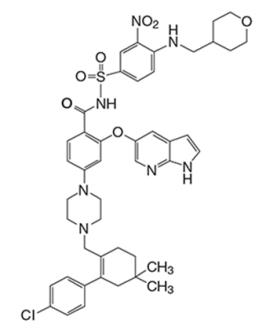
Active ingredient
Classification
Other antineoplastic agentsBCL-2 Inhibitor
Drug interactions
Venetoclax has several significant interactions with other drugs, particularly those affecting CYP3A and P-gp pathways.
- majorstrong or moderate CYP3A inhibitors — increases venetoclax C max and AUC, which may increase toxicities including the risk of TLS
- majorstrong CYP3A inducers — decreases venetoclax C max and AUC, which may decrease efficacy
- moderatewarfarin — increases warfarin C max and AUC, which may increase the risk of bleeding
- majorP-gp substrates — increases C max and AUC of P-gp substrates, which may increase toxicities
- majorgrapefruit products, Seville oranges, starfruit — may increase venetoclax toxicities
Indications
INDICATIONS AND USAGE VENCLEXTA is a BCL-2 inhibitor indicated: For the treatment of adult patients with chronic lymphocytic leukemia (CLL) or small lymphocytic lymphoma (SLL). ( 1.1 ) In combination with azacitidine, or decitabine, or low-dose cytarabine for the treatment of newly diagnosed acute myeloid leukemia (AML) in adults 75 years or older, or who have comorbidities that preclude use of intensive induction chemotherapy. ( 1.2 ) 1.1 Chronic Lymphocytic Leukemia/Small Lymphocytic Lymphoma VENCLEXTA is indicated for the treatment of adult patients with chronic lymphocytic leukemia (CLL) or small lymphocytic lymphoma (SLL). 1.2 Acute Myeloid Leukemia VENCLEXTA is indicated in combination with azacitidine, or decitabine, or low-dose cytarabine for the treatment of newly diagnosed acute myeloid leukemia (AML) in adults 75 years or older, or who have comorbidities that preclude use of intensive induction chemotherapy.
Dosage
DOSAGE AND ADMINISTRATION See Full Prescribing Information for recommended VENCLEXTA dosages. ( 2.2 , 2.3 ) Take VENCLEXTA tablets orally once daily with a meal and water. ( 2.8 ) Provide prophylaxis for tumor lysis syndrome. ( 2.1 , 2.4 ) 2.1 Important Safety Information Assess patient-specific factors for level of risk of tumor lysis syndrome (TLS) and provide prophylactic hydration and anti-hyperuricemics to patients prior to first dose of VENCLEXTA to reduce risk of TLS [see Dosage and Administration ( 2.4 ) and Warnings and Precautions ( 5.1 )]. 2.2 Recommended Dosage for Chronic Lymphocytic Leukemia/Small Lymphocytic Lymphoma VENCLEXTA dosing begins with a 5-week ramp-up. The 5-week ramp-up dosing schedule is designed to gradually reduce tumor burden (debulk) and decrease the risk of TLS. VENCLEXTA 5-week Dose Ramp-Up Schedule Administer VENCLEXTA according to the 5-week ramp-up dosing schedule to the recommended dosage of 400 mg orally once daily as shown in Table 1 . Table 1. Dosing Schedule for 5-Week Ramp-up Phase for Patients with CLL/SLL VENCLEXTA Oral Daily Dose Week 1 20 mg Week 2 50 mg Week 3 100 mg Week 4 200 mg Week 5 and beyond 400 mg The CLL/SLL Starting Pack provides the first 4 weeks of VENCLEXTA according to the ramp-up schedule [see How Supplied/Storage and Handling ( 16 )] . In Combination with Acalabrutinib Cycle 1 Day 1: Start acalabrutinib 100 mg orally approximately every 12 hours until disease progression, unacceptable toxicity or completion of 14 cycles of treatment. Each cycle is 28 days. Refer to the acalabrutinib prescribing information for additional dosing information. Cycle 3 Day 1: start VENCLEXTA according to the 5-week ramp-up dosing schedule (see Table 1 ). After completing the ramp-up phase, continue VENCLEXTA at a dose of 400 mg orally once daily until disease progression, unacceptable toxicity, or until the last day of Cycle 14. In Combination with Obinutuzumab Start obinutuzumab administration at 100 mg on Cycle 1 Day 1, followed by 900 mg on Cycle 1 Day 2. Administer 1,000 mg on Days 8 and 15 of Cycle 1 and on Day 1 of each subsequent 28-day cycle for a total of 6 cycles. Refer to the obinutuzumab prescribing information for additional dosing information. On Cycle 1 Day 22, start VENCLEXTA according to the 5-week ramp-up dosing schedule (see Table 1 ). After completing the ramp-up phase on Cycle 2 Day 28, continue VENCLEXTA at a dose of 400 mg orally once daily from Cycle 3 Day 1 until the last day of Cycle 12. In Combination with Rituximab Start rituximab administration after the patient has completed the 5-week ramp-up dosing schedule for VENCLEXTA (see Table 1 ) and has received VENCLEXTA at the recommended dosage of 400 mg orally once daily for 7 days. Administer rituximab on Day 1 of each 28-day cycle for 6 cycles, at a dose of 375 mg/m 2 intravenously for Cycle 1 and 500 mg/m 2 intravenously for Cycles 2-6. Continue VENCLEXTA 400 mg orally once daily for 24 months from Cycle 1 Day 1 of rituximab. Refer to the rituximab prescribing information for additional dosing information. Monotherapy The recommended dosage of VENCLEXTA is 400 mg once daily after completion of the 5-week ramp-up dosing schedule (see Table 1 ). Continue VENCLEXTA until disease progression or unacceptable toxicity. 2.3 Recommended Dosage for Acute Myeloid Leukemia The recommended dosage and ramp-up of VENCLEXTA depends upon the combination agent. Follow the dosing schedule, including the 3-day or 4-day dose ramp-up, as shown in Table 2. Start VENCLEXTA administration on Cycle 1 Day 1 in combination with: Azacitidine 75 mg/m 2 intravenously or subcutaneously once daily on Days 1-7 of each 28-day cycle; OR Decitabine 20 mg/m 2 intravenously once daily on Days 1-5 of each 28-day cycle; OR Cytarabine 20 mg/m 2 subcutaneously once daily on Days 1-10 of each 28-day cycle. Table 2. Dosing Schedule for 3- or 4-Day Ramp-up Phase in Patients with AML VENCLEXTA Oral Daily Dose Day 1 100 mg Day 2 200 mg Day 3 400 mg Days 4 and beyond 400 mg orally once daily of each 28-day cycle in combination with azacitidine or decitabine 600 mg orally once daily of each 28-day cycle in combination with low-dose cytarabine Continue VENCLEXTA, in combination with azacitidine or decitabine or low-dose cytarabine, until disease progression or unacceptable toxicity. Refer to Clinical Studies ( 14.2 ) and Prescribing Information for azacitidine, decitabine, or cytarabine for additional dosing information. 2.4 Risk Assessment and Prophylaxis for Tumor Lysis Syndrome Patients treated with VENCLEXTA may develop tumor lysis syndrome (TLS). Refer to the appropriate section below for specific details on management. Assess patient-specific factors for level of risk of TLS and provide prophylactic hydration and anti-hyperuricemics to patients prior to first dose of VENCLEXTA to reduce risk of TLS. Chronic Lymphocytic Leukemia/Small Lymphocytic Lymphoma VENCLEXTA can cause rapid reduction in tumor and thus poses a risk for TLS in the initial 5-week ramp-up phase. Changes in blood chemistries consistent with TLS that require prompt management can occur as early as 6 to 8 hours following the first dose of VENCLEXTA and at each dose increase. TLS can also occur upon resumption of VENCLEXTA following a dosage interruption. See Table 4 , Table 5 , and Table 6 for dose modifications of VENCLEXTA after interruption. The risk of TLS is a continuum based on multiple factors, particularly reduced renal function (creatinine clearance [CLcr] <80 mL/min) and tumor burden; splenomegaly may also increase the risk of TLS. Perform tumor burden assessments, including radiographic evaluation (e.g., CT scan), assess blood chemistry (potassium, uric acid, phosphorus, calcium, and creatinine) in all patients and correct pre-existing abnormalities prior to initiation of treatment with VENCLEXTA. The risk may decrease as tumor burden decreases [see Warnings and Precautions ( 5.1 ) and Use in Specific Populations ( 8.6 )] . Table 3 below describes the recommended TLS prophylaxis and monitoring during VENCLEXTA treatment based on tumor burden determination from clinical trial data. Consider all patient comorbidities before final determination of prophylaxis and monitoring schedule. Reassess the risk of TLS when reinitiating VENCLEXTA after a dosage interruption lasting more than 1 week during the ramp-up phase, or more than 2 weeks after completion of ramp-up. Institute prophylaxis and monitoring as needed. Table 3. Recommended TLS Prophylaxis Based on Tumor Burden in Patients with CLL/SLL Tumor Burden Prophylaxis Blood Chemistry Monitoring c,d Hydration a Anti- hyperuricemics b Setting and Frequency of Assessments Low All LN <5 cm AND ALC <25 x10 9 /L Oral (1.5 to 2 L) Allopurinol Outpatient For first dose of 20 mg and 50 mg: Pre-dose, 6 to 8 hours, 24 hours For subsequent ramp-up doses: Pre-dose Medium Any LN 5 to <10 cm OR ALC ≥25 x10 9 /L Oral (1.5 to 2 L) and consider additional intravenous Allopurinol Outpatient For first dose of 20 mg and 50 mg: Pre-dose, 6 to 8 hours, 24 hours For subsequent ramp-up doses: Pre-dose For first dose of 20 mg and 50 mg: Consider hospitalization for patients with CLcr <80ml/min; see below for monitoring in hospital High Any LN ≥10 cm OR ALC ≥25 x10 9 /L AND any LN ≥5 cm Oral (1.5 to 2 L) and intravenous (150 to 200 mL/hr as tolerated) Allopurinol; consider rasburicase if baseline uric acid is elevated In hospital For first dose of 20 mg and 50 mg: Pre-dose, 4, 8, 12, and 24 hours Outpatient For subsequent ramp-up doses: Pre-dose, 6 to 8 hours, 24 hours ALC = absolute lymphocyte count; CLcr = creatinine clearance; LN = lymph node. a Administer intravenous hydration for any patient who cannot tolerate oral hydration. b Start allopurinol or xanthine oxidase inhibitor 2 to 3 days prior to initiation of VENCLEXTA. c Evaluate blood chemistries (potassium, uric acid, phosphorus, calcium, and creatinine); review in real time. d For patients at risk of TLS, monitor bl
Warnings
WARNINGS AND PRECAUTIONS Tumor Lysis Syndrome (TLS): Anticipate TLS; assess risk in all patients. Premedicate with anti-hyperuricemics and ensure adequate hydration. Employ more intensive measures (intravenous hydration, frequent monitoring, hospitalization) as overall risk increases. ( 2.4 , 5.1 ) Neutropenia: Monitor blood counts. Interrupt dosing and resume at same or reduced dose. Consider supportive care measures. ( 2.5 , 5.2 ) Infections: Monitor for signs and symptoms of infection and treat promptly. Withhold for Grade 3 and 4 infection until resolution and resume at same or reduced dose. ( 2.5 , 5.3 ) Immunization: Do not administer live attenuated vaccines prior to, during, or after treatment with VENCLEXTA until B-cell recovery. ( 5.4 ) Embryo-Fetal Toxicity: May cause embryo-fetal harm. Advise females of reproductive potential of the potential risk to a fetus and to use effective contraception. ( 5.5 ) Treatment of patients with multiple myeloma with VENCLEXTA in combination with bortezomib plus dexamethasone is not recommended outside of controlled clinical trials. ( 5.6 ) 5.1 Tumor Lysis Syndrome Tumor lysis syndrome (TLS), including fatal events and renal failure requiring dialysis, has occurred in patients treated with VENCLEXTA [see Adverse Reactions ( 6.1 )]. VENCLEXTA can cause rapid reduction in tumor and thus poses a risk for TLS at initiation and during the ramp-up phase in all patients, and during reinitiation after dosage interruption in patients with CLL/SLL. Changes in blood chemistries consistent with TLS that require prompt management can occur as early as 6 to 8 hours following the first dose of VENCLEXTA and at each dose increase. TLS, including fatal cases, has been reported after a single 20 mg dose of VENCLEXTA. In patients with CLL/SLL who followed the current (5-week) dose ramp-up and the TLS prophylaxis and monitoring measures, the rate of TLS was 2% in the VENCLEXTA CLL/SLL monotherapy trials. The rate of TLS remained consistent with VENCLEXTA in combination with obinutuzumab or rituximab. With a 2- to 3-week dose ramp-up and higher starting dose in patients with CLL/SLL, the TLS rate was 13% and included deaths and renal failure [see Adverse Reactions ( 6.1 )] . In patients with AML who followed the current 3-day ramp-up dosing schedule and the TLS prophylaxis and monitoring measures, the rate of TLS was 1.1% in patients who received VENCLEXTA in combination with azacitidine (VIALE-A). In patients with AML who followed a 4-day ramp-up dosing schedule and the TLS prophylaxis and monitoring measures, the rate of TLS was 5.6% and included deaths and renal failure in patients who received VENCLEXTA in combination with low-dose cytarabine (VIALE-C) [see Adverse Reactions ( 6.1 )]. The risk of TLS is a continuum based on multiple factors, particularly reduced renal function, tumor burden, and type of malignancy. Splenomegaly may also increase the risk of TLS in patients with CLL/SLL. Assess all patients for risk and provide appropriate prophylaxis for TLS, including hydration and anti-hyperuricemics. Monitor blood chemistries and manage abnormalities promptly. Employ more intensive measures (intravenous hydration, frequent monitoring, hospitalization) as overall risk increases. Interrupt dosing if needed; when restarting VENCLEXTA, follow dose modification guidance [see Dosage and Administration ( 2.1 , 2.2 , 2.3 , 2.4 ) and Use in Specific Populations ( 8.6 )]. Concomitant use of VENCLEXTA with P-gp inhibitors or strong or moderate CYP3A inhibitors increases venetoclax exposure, which may increase the risk of TLS at initiation and during the ramp-up phase of VENCLEXTA. For patients with CLL/SLL, coadministration of VENCLEXTA with strong CYP3A inhibitors at initiation and during the 5-week ramp-up phase is contraindicated [see Contraindications ( 4 )]. For patients with AML, reduce the dose of VENCLEXTA when coadministered with strong CYP3A inhibitors at initiation and during the 3- or 4-day ramp-up phase. For patients with CLL/SLL or AML, reduce the dose of VENCLEXTA when coadministered with moderate CYP3A4 inhibitors or P-gp inhibitors [see Dosage and Administration ( 2.6 ) and Drug Interactions ( 7.1 )]. 5.2 Neutropenia In patients with CLL, Grade 3 or 4 neutropenia developed in 63% to 64% of patients and Grade 4 neutropenia developed in 31% to 33% of patients when treated with VENCLEXTA in monotherapy studies and in combination studies with obinutuzumab or rituximab. Febrile neutropenia occurred in 4% to 6% of patients treated with VENCLEXTA in monotherapy studies and in combination studies with obinutuzumab or rituximab [see Adverse Reactions ( 6.1 )] . In patients with CLL, Grade 3 or 4 neutropenia developed in 38% of patients and Grade 4 neutropenia developed in 15% of patients when treated with VENCLEXTA in combination with acalabrutinib. Febrile neutropenia occurred in 2% of patients treated with VENCLEXTA in combination with acalabrutinib [see Adverse Reactions ( 6.1 )] . In patients with AML, baseline neutrophil counts worsened in 95% to 100% of patients treated with VENCLEXTA in combination with azacitidine, decitabine, or low-dose cytarabine. Neutropenia can recur with subsequent cycles. Monitor complete blood counts throughout the treatment period. For interruption and dose resumption of VENCLEXTA for severe neutropenia, see Table 5 and Table 6 for CLL and Table 7 for AML [see Dosage and Administration ( 2.5 )]. Consider supportive measures, including antimicrobials and growth factors (e.g., G-CSF). 5.3 Infections Fatal and serious infections, such as pneumonia and sepsis, have occurred in patients treated with VENCLEXTA [see Adverse Reactions ( 6.1 )] . Monitor patients for signs and symptoms of infection and treat promptly. Withhold VENCLEXTA for Grade 3 and 4 infection until resolution. For dose resumptions, see Table 5 and Table 6 for CLL and Table 7 for AML [see Dosage and Administration ( 2.5 )] . In AMPLIFY, a randomized study in patients with previously untreated CLL/SLL, serious or grade 3 or higher infections occurred in 14% of patients who received VENCLEXTA in combination with acalabrutinib (VEN+A), most commonly due to COVID-19. In an additional cohort of patients receiving VENCLEXTA in combination with acalabrutinib and obinutuzumab (AVO) (an unapproved regimen for previously untreated CLL/SLL in AMPLIFY), serious or Grade 3 or higher infections occurred in 25% receiving AVO compared to 14% in patients receiving VEN+A. Fatal infections occurred in 6% receiving AVO compared to 3.1% of patients receiving VEN+A, most commonly due to COVID-19. The safety and effectiveness of AVO has not been established in patients with previously untreated CLL/SLL [see Clinical Studies ( 14.1 )] . 5.4 Immunization Do not administer live attenuated vaccines prior to, during, or after treatment with VENCLEXTA until B-cell recovery occurs. The safety and efficacy of immunization with live attenuated vaccines during or following VENCLEXTA therapy have not been studied. Advise patients that vaccinations may be less effective. 5.5 Embryo-Fetal Toxicity Based on findings in animals and its mechanism of action, VENCLEXTA may cause embryo-fetal harm when administered to a pregnant woman. In an embryo-fetal study conducted in mice, administration of venetoclax to pregnant animals at exposures equivalent to that observed in patients at a dose of 400 mg daily resulted in post-implantation loss and decreased fetal weight. Advise pregnant women of the potential risk to a fetus. Advise females of reproductive potential to use effective contraception during treatment with VENCLEXTA and for 30 days after the last dose [see Use in Specific Populations ( 8.1 , 8.3 )] . 5.6 Increased Mortality in Patients with Multiple Myeloma when VENCLEXTA is Added to Bortezomib and Dexamethasone In a randomized trial (BELLINI; NCT02755597) in patients with relapsed or refractory multiple myeloma, the addition of VENCLEXTA to bortezomib plus de
Contraindications
CONTRAINDICATIONS Concomitant use of VENCLEXTA with strong CYP3A inhibitors at initiation and during the ramp-up phase is contraindicated in patients with CLL/SLL due to the potential for increased risk of tumor lysis syndrome [see Dosage and Administration ( 2.6 ) and Drug Interactions ( 7.1 )] . Concomitant use with strong CYP3A inhibitors at initiation and during ramp-up phase in patients with CLL/SLL is contraindicated. ( 2.6 , 4 , 7.1 )
Mechanism of action
Mechanism of Action Venetoclax is a selective and orally bioavailable small-molecule inhibitor of BCL-2, an anti-apoptotic protein. Overexpression of BCL-2 has been demonstrated in CLL and AML cells where it mediates tumor cell survival and has been associated with resistance to chemotherapeutics. Venetoclax helps restore the process of apoptosis by binding directly to the BCL-2 protein, displacing pro-apoptotic proteins like BIM, triggering mitochondrial outer membrane permeabilization and the activation of caspases. In nonclinical studies, venetoclax has demonstrated cytotoxic activity in tumor cells that overexpress BCL-2.
Source: RxNorm + openFDA + RxClass + FAERS · 2026
Look up another medication