trofinetide 5000 MG Powder for Oral Solution
Managing this medication for someone you care for? Eleplan keeps diagnoses, medications and appointments in one plan.
Start free with EleplanClinical drug
trofinetide 5000 MG Powder for Oral Solution
5000 MG · Powder for Oral Solution · oral
A form of trofinetide →
trofinetide 5000 MG Powder for Oral Solution — Other nervous system drugs. INDICATIONS AND USAGE DAYBUE and DAYBUE STIX are indicated for the treatment of Rett syndrome in adults and pediatric patients 2 years of age and…
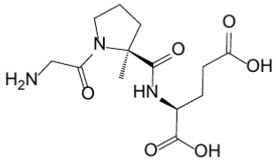
Active ingredient
Classification
Other nervous system drugs
Drug interactions
Trofinetide may increase the plasma concentrations of certain CYP3A and/or P-gp substrates, necessitating close monitoring for adverse reactions.
- moderateCYP3A and/or P-gp sensitive substrates — increased risk of adverse reactions
Indications
INDICATIONS AND USAGE DAYBUE and DAYBUE STIX are indicated for the treatment of Rett syndrome in adults and pediatric patients 2 years of age and older. DAYBUE and DAYBUE STIX are indicated for the treatment of Rett syndrome in adults and pediatric patients 2 years of age and older. ( 1 )
Dosage
DOSAGE AND ADMINISTRATION Recommended dosage is twice daily, morning and evening, according to patient weight. DAYBUE or DAYBUE STIX can be given with or without food. ( 2.1 ) Patient Weight Recommended Dosage 9 kg to less than 12 kg 5,000 mg twice daily 12 kg to less than 20 kg 6,000 mg twice daily 20 kg to less than 35 kg 8,000 mg twice daily 35 kg to less than 50 kg 10,000 mg twice daily 50 kg or more 12,000 mg twice daily Can be given orally or via gastrostomy (G) tube; doses administered via gastrojejunal (GJ) tubes must be administered through the G-port. ( 2.1 ) See Full Prescribing Information for instruction on dissolving DAYBUE STIX for oral solution powder. ( 2.3 ) See Full Prescribing Information for dosage recommendations in patients with renal impairment. ( 2.6 , 8.6 ) 2.1 Recommended Dosage The recommended dosage of DAYBUE or DAYBUE STIX is based on patient weight as shown in Table 1 . Administer DAYBUE or DAYBUE STIX orally or via gastrostomy (G) tube twice daily, in the morning and evening, with or without food. Doses administered via gastrojejunal (GJ) tubes must be administered through the G-port. Table 1 Recommended Dosage of DAYBUE or DAYBUE STIX in Patients 2 Years of Age and Older Patient Weight Recommended Dosage 9 kg to less than 12 kg 5,000 mg twice daily 12 kg to less than 20 kg 6,000 mg twice daily 20 kg to less than 35 kg 8,000 mg twice daily 35 kg to less than 50 kg 10,000 mg twice daily 50 kg or more 12,000 mg twice daily 2.2 DAYBUE Oral Solution Preparation Table 2 includes the volume of DAYBUE oral solution to administer for the corresponding recommended dosage [see Dosage and Administration (2.1 , 2.6) ] . A calibrated measuring device, such as an oral syringe or oral dosing cup, should be obtained from the pharmacy to measure and deliver the prescribed dose accurately. A household measuring cup, teaspoon, or tablespoon is not an adequate measuring device. Table 2 Recommended Volume of DAYBUE Oral Solution for Administration Dosage DAYBUE Oral Solution Volume 2,500 mg twice daily Dosage for patients with moderate renal impairment [see Dosage and Administration (2.6) ] 12.5 mL twice daily 3,000 mg twice daily 15 mL twice daily 4,000 mg twice daily 20 mL twice daily 5,000 mg twice daily 25 mL twice daily 6,000 mg twice daily 30 mL twice daily 8,000 mg twice daily 40 mL twice daily 10,000 mg twice daily 50 mL twice daily 12,000 mg twice daily 60 mL twice daily Discard any unused DAYBUE oral solution after 14 days of first opening the bottle [see How Supplied/Storage and Handling (16.2) ] . 2.3 DAYBUE STIX for Oral Solution Preparation Prior to administration, DAYBUE STIX for oral solution powder must be dissolved in a cold to room temperature water or water-based beverage (juice, tea, lemonade, limeade, or liquid hydration). Preparation of DAYBUE STIX Determine the correct dosage as shown in Table 1 or Table 4 (for patients with moderate renal impairment). Select the appropriate packet strength and number of packets required for each dose, as shown in Table 3 . Determine the appropriate volume of liquid within the recommended volume range as shown in Table 3 , based on individual patient factors (e.g., age, palatability). Measure the volume of liquid determined in Step 3 by using a calibrated measuring device obtained from the pharmacy. Empty the entire contents of the DAYBUE STIX packet(s) into the measured liquid. Do not attempt to use partial packets to prepare a dose. Stir until the powder is completely dissolved. Administer the prepared oral solution immediately; do not store for future use. Discard any prepared oral solution that is not immediately administered. Table 3 Preparation Instructions for DAYBUE STIX for Oral Solution Powder Dose DAYBUE STIX Packet(s) Needed to Prepare Each Dose Volume of Liquid Required to Dissolve Entire Dose Liquid types include water or water-based beverage. , Volume should be selected within the recommended range based on individual patient factors. 5,000 mg One 5,000 mg packet 15 mL to 60 mL 6,000 mg One 6,000 mg packet 15 mL to 60 mL 8,000 mg One 8,000 mg packet 25 mL to 120 mL 10,000 mg Two 5,000 mg packets 30 mL to 120 mL (each packet requires 15 mL to 60 mL) 12,000 mg Two 6,000 mg packets 30 mL to 120 mL (each packet requires 15 mL to 60 mL) 2.4 Dose Modification for Diarrhea or Weight Loss Advise patients to stop laxatives before starting DAYBUE or DAYBUE STIX. Interrupt, reduce dose, or discontinue DAYBUE or DAYBUE STIX if severe diarrhea occurs, if dehydration is suspected, or if significant weight loss occurs [see Warnings and Precautions (5.1 , 5.2) ]. 2.5 Dose Modification for Vomiting After Administration If vomiting occurs after DAYBUE or DAYBUE STIX administration, an additional dose should not be taken. Instead, continue with the next scheduled dose. Interrupt, reduce dose, or discontinue DAYBUE or DAYBUE STIX if vomiting is severe or occurs despite medical management [see Warnings and Precautions (5.3) ] . 2.6 Dosage Recommendations in Patients with Renal Impairment No dosage adjustment is recommended for patients with mild renal impairment (estimated glomerular filtration rate [eGFR] 60 to 89 mL/min for adult patients or 60 to 89 mL/min/1.73 m 2 for pediatric patients). The recommended dosage of DAYBUE or DAYBUE STIX for patients with moderate renal impairment (eGFR 30 to 59 mL/min for adult patients or 30 to 59 mL/min/1.73 m 2 for pediatric patients) is described in Table 4 [see Use in Specific Populations (8.6) , Clinical Pharmacology (12.3) ]. DAYBUE and DAYBUE STIX are not recommended for patients with severe renal impairment (eGFR less than 30 mL/min for adult patients or less than 30 mL/min/1.73 m 2 for pediatric patients). For patients with moderate renal impairment who require a dose less than 5,000 mg, DAYBUE oral solution is recommended. Do not attempt to use partial packets of DAYBUE STIX to prepare a dose. Table 4 Recommended Dosage of DAYBUE or DAYBUE STIX in Patients with Moderate Renal Impairment Patient Weight Recommended Dosage 9 kg to less than 12 kg 2,500 mg twice daily Use DAYBUE oral solution to administer this dosage. 12 kg to less than 20 kg 3,000 mg twice daily 20 kg to less than 35 kg 4,000 mg twice daily 35 kg to less than 50 kg 5,000 mg twice daily 50 kg or more 6,000 mg twice daily 2.7 Missed Dose If a dose of DAYBUE or DAYBUE STIX is missed, the next dose should be taken as scheduled. Doses should not be doubled.
Warnings
WARNINGS AND PRECAUTIONS Diarrhea: Most patients experience diarrhea during treatment with DAYBUE. Advise patients to stop laxatives before starting DAYBUE or DAYBUE STIX. If diarrhea occurs, patients should start antidiarrheal treatment, increase oral fluids, and notify their healthcare provider. Interrupt, reduce dose, or discontinue DAYBUE or DAYBUE STIX if severe diarrhea occurs or if dehydration is suspected. ( 2.4 , 5.1 ) Weight Loss: Weight loss may occur in patients treated with DAYBUE or DAYBUE STIX. Monitor weight and interrupt, reduce dose, or discontinue DAYBUE or DAYBUE STIX if significant weight loss occurs. ( 2.4 , 5.2 ) Vomiting: Aspiration and aspiration pneumonia have occurred after vomiting in patients treated with DAYBUE. Interrupt, reduce dose, or discontinue DAYBUE or DAYBUE STIX if vomiting is severe or occurs despite medical management. ( 2.5 , 5.3 ) 5.1 Diarrhea In Study 1 [see Clinical Studies (14) ] and in long-term studies, 85% of patients treated with DAYBUE experienced diarrhea. In those treated with DAYBUE, 49% either had persistent diarrhea or recurrence after resolution despite dose interruptions, reductions, or concomitant antidiarrheal therapy. Diarrhea severity was of mild or moderate severity in 96% of cases. In Study 1, antidiarrheal medication was used in 51% of patients treated with DAYBUE. Advise patients to stop laxatives before starting DAYBUE or DAYBUE STIX. If diarrhea occurs, patients should notify their healthcare provider, consider starting antidiarrheal treatment, and monitor hydration status and increase oral fluids, if needed. Interrupt, reduce dose, or discontinue DAYBUE or DAYBUE STIX if severe diarrhea occurs or if dehydration is suspected [see Dosage and Administration (2.4) ] . 5.2 Weight Loss In Study 1, 12% of patients treated with DAYBUE experienced weight loss of greater than 7% from baseline, compared to 4% of patients who received placebo. In long-term studies, 2.2% of patients discontinued treatment with DAYBUE due to weight loss. Monitor weight and interrupt, reduce dose, or discontinue DAYBUE or DAYBUE STIX if significant weight loss occurs [see Dosage and Administration (2.4) ] . 5.3 Vomiting In Study 1, vomiting occurred in 29% of patients treated with DAYBUE and in 12% of patients who received placebo [see Adverse Reactions (6.1) ]. Patients with Rett syndrome are at risk for aspiration and aspiration pneumonia. Aspiration and aspiration pneumonia have been reported following vomiting in patients being treated with DAYBUE. Interrupt, reduce dose, or discontinue DAYBUE or DAYBUE STIX if vomiting is severe or occurs despite medical management [see Dosage and Administration (2.5) ] .
Contraindications
CONTRAINDICATIONS None. None. ( 4 )
Mechanism of action
Mechanism of Action The mechanism by which trofinetide exerts therapeutic effects in patients with Rett syndrome is unknown.
Indicated ICD-10 codes
Source: RxNorm + openFDA + RxClass + FAERS · 2026
Look up another medication