tranylcypromine 10 MG Oral Tablet

Managing this medication for someone you care for? Eleplan keeps diagnoses, medications and appointments in one plan.

Start free with Eleplan

Clinical drug

tranylcypromine 10 MG Oral Tablet

10 MG · Oral Tablet · oral

A form of tranylcypromine →

tranylcypromine 10 MG Oral Tablet — Monoamine oxidase inhibitors, non-selective. INDICATIONS & USAGE Tranylcypromine sulfate tablets are indicated for the treatment of major depressive disorder (MDD) in adult patients who have…
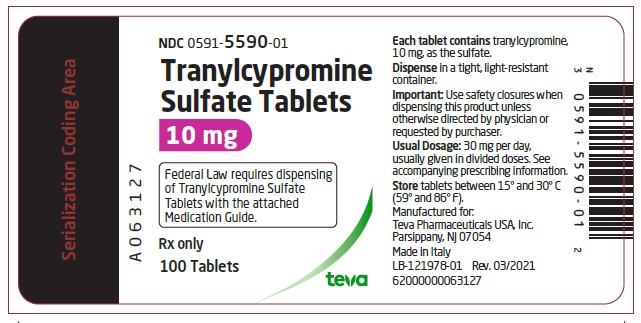
tranylcypromine 10 MG Oral Tablet

Boxed warning

WARNING:SUICIDAL THOUGHTS AND BEHAVIORS and HYPERTENSIVE CRISIS WITH SIGNIFICANT TYRAMINE USE Suicidal Thoughts and Behaviors Antidepressants increased the risk of suicidal thoughts and behaviors in pediatric and young adult patients in short-term studies. Closely monitor all antidepressant-treated patients for clinical worsening, and for emergence of suicidal thoughts and behaviors [see Warnings and Precautions (5.1)] . Tranylcypromine sulfate tablets are not approved for use in pediatric patients [see Use in Specific Populations (8.4)]. Hypertensive Crisis with Significant Tyramine Use Excessive consumption of foods or beverages with significant tyramine content or the use of certain drugs with tranylcypromine sulfate tablets or after tranylcypromine sulfate tablets discontinuation can precipitate hypertensive crisis. Monitor blood pressure and allow for medication-free intervals between administration of tranylcypromine sulfate tablets and interacting drugs. Instruct patients to avoid ingestion of foods and beverages with high tyramine content [see Warnings and Precautions (5.2) and Drug Interactions (7.1, 7.2)]. WARNING: SUICIDAL THOUGHTS AND BEHAVIORS AND HYPERTENSIVE CRISIS WITH SIGNIFICANT TYRAMINE USE See full prescribing information for complete boxed warning. Increased risk of suicidal thoughts and behavior in pediatric and young adult patients taking antidepressants. Closely monitor all antidepressant-treated patients for clinical worsening and emergence of suicidal thoughts and behaviors. Tranylcypromine sulfate tablets are not approved for use in pediatric patients. ( 5.1 , 8.4) Excessive consumption of foods or beverages with significant tyramine content or certain drugs can precipitate hypertensive crisis. Monitor blood pressure, allow for medication free intervals, and advise patients to avoid foods and beverages with high tyramine content. ( 5.2 , 7.1 , 7.2 ) MEDICATION GUIDE TRANYLCYPROMINE SULFATE (tran-ill-SIP-row-meen SULL-fate) TABLETS What is the most important information I should know about tranylcypromine sulfate tablets? Tranylcypromine sulfate tabletscan cause serious side effects including: Increase in suicidal thoughts or actions in some children, teenagers, and young adults within the first few months of treatment and when the tranylcypromine sulfate tablet dose is changed. Depression and other serious mental illnesses are the most important causes of suicidal thoughts and actions. Some people may have a particularly high risk of having suicidal thoughts or actions. These include people who have, or have a family history of, bipolar illness (also called manic-depressive illness) or suicidal thoughts or actions. Tranylcypromine sulfate tablets are not for use in children. How can I watch for and try to prevent suicidal thoughts and actions? Pay close attention to any changes, especially sudden changes, in mood, behaviors, thoughts, or feelings. This is very important when an antidepressant medicine is started or when the dose is changed. Call the healthcare provider right away to report new or sudden changes in mood, behavior, thoughts, or feelings. Keep all follow-up visits with your healthcare provider as scheduled. Call the healthcare provider between visits as needed, especially if you have concerns about symptoms Call a healthcare provider right away if you have any of the following symptoms, especially if they are new, worse, or worry you: thoughts about suicide or dying attempts to commit suicide new or worse depression new or worse anxiety feeling agitated, restless, angry or irritable panic attacks trouble sleeping new or worse irritability acting aggressive, being angry or violent acting on dangerous impulses an extreme increase in activity or talking (mania) other unusual changes in behavior or mood A sudden, severe increase in blood pressure (hypertensive crisis). A hypertensive crisis can happen when you eat certain foods and drinks certain beverages during or after tranylcypromine sulfate tablets treatment. A hypertensive crisis can lead to stroke and death. People who have thyroid problems (hyperthyroidism) may have a higher chance of having a hypertensive crisis. Symptoms of a hypertensive crisis may include: sudden, severe headache nausea vomiting stiff or sore neck a fast heartbeat (palpitations) or a change in the way your heart beats excessive sweating, sometimes with fever or cold, clammy skin the pupils in your eyes increase in size light bothers your eyes fast or slow heart beat with chest pain bleeding in your brain A hypertensive crisis can also happen if you take tranylcypromine sulfate tablets with certain other medicines. See, “Who should not take tranylcypromine sulfate tablets?” Avoid foods and drinks with a lot of tyramine while taking tranylcypromine sulfate tabletsand for 2 weeks after you stop taking it. For a list of some of the foods and drinks you should avoid during treatment with tranylcypromine sulfate tablets see, “What should I avoid while taking tranylcypromine sulfate tablets?” What are tranylcypromine sulfate tablets? Tranylcypromine sulfate tablets are a prescription medicine used to treat adults with a certain type of depression called major depressive disorder (MDD) who have not responded well to treatment with other medicines used to treat depression (antidepressants). Tranylcypromine sulfate tablets belong to a class of medicines called monoamine oxidase inhibitors (MAOIs) It is important to talk with your healthcare provider about the risks of treating depression and the risk of not treating it. Talk with your healthcare provider about all your treatment choices. Tranylcypromine sulfate tablets are not for use as the first medicine to treat MDD. It is not known if tranylcypromine sulfate tablets are safe and effective for use in children. Who should not take tranylcypromine sulfate tablets? Taking tranylcypromine sulfate tablets with certain antidepressants and certain pain, allergy symptom, and cold and cough symptom medicines may cause a potentially life-threatening hypertensive crisis or a problem called serotonin syndrome. See, “What is the most important information I should know about tranylcypromine sulfate tablets?” and “What are the possible side effects of tranylcypromine sulfate tablets?” Do not take tranylcypromine sulfate tablets if you: take certain medicines, including: antidepressants, such as: other monoamine oxidase inhibitors (MAOIs) selective serotonin reuptake inhibitors (SSRIs) and serotonin and norepinephrine reuptake inhibitors (SNRIs) tricyclic antidepressants other antidepressants, such as amoxapine, bupropion, maprotiline, nefazodone, trazodone, vilazodone, vortioxetine amphetamines and methylphenidates medicines that can raise blood pressure (sympathomimetic medicine), such as pseudoephedrine, phenylephrine and ephedrine. These medicines are in some cold, hay fever or weight-loss medicines. sympathomimetic herbal medicines or dietary supplements antihistamines (allergy medicines) triptans buspirone carbamazepine dextromethorphan dopamine hydroxytryptophan and tryptophan levodopa and methyldopa meperidine rasagline resperine s-adenosyl-L-methionine (SAM-e) tapentadol tetrabenazin Ask your healthcare provider or pharmacist if you are not sure if you take any of these medicines. have a tumor on your adrenal gland called a pheochromocytoma or a type of tumor called a paraganglioma. Before taking tranylcypromine sulfate tablets, tell your healthcare provider about all your medical conditions, including if you: have high or low blood pressure have heart problems have cerebrovascular problems or have had a stroke have headaches have, or have a family history of, bipolar disorder, mania, or hypomania plan to have surgery have liver or thyroid problems have or have had seizures or convulsions have diabetes are pregnant or plan to become pregnant. Tranylcypromine sulfate tablets may harm your unborn baby. are breastfeeding or plan to breastfeed. Trany

Active ingredient

Classification

Monoamine oxidase inhibitors, non-selectiveMonoamine Oxidase Inhibitor

Drug interactions

Tranylcypromine has several clinically significant drug interactions that may lead to serious adverse reactions, including hypertensive reactions and serotonin syndrome.

  • majorother MAOIs (e.g., linezolid, intravenous methylene blue) — increased MAO inhibition and risk of adverse reactions
  • majorSSRIs and SNRIs — risk of serotonin syndrome
  • majortricyclic antidepressants — risk of serotonin syndrome
  • majoramphetamines and methylphenidates — hypertensive reaction
  • majorsympathomimetic drugs (e.g., pseudoephedrine, phenylephrine, ephedrine) — hypertensive reaction; risk of intracerebral hemorrhage
  • majortriptans — risk of serotonin syndrome
  • moderateCNS depressant agents (including opioids, alcohol, sedatives, hypnotics) — increased CNS depression
  • moderateblood glucose-lowering agents — excessive reduction of blood glucose
  • majornon-selective H1 receptor antagonists — increased anticholinergic effects
  • moderatebeta-adrenergic blockers — more pronounced bradycardia, postural hypotension
  • majordietary supplements containing sympathomimetics — risk of hypertensive reactions

Indications

INDICATIONS & USAGE Tranylcypromine sulfate tablets are indicated for the treatment of major depressive disorder (MDD) in adult patients who have not responded adequately to other antidepressants. Tranylcypromine sulfate tablets are not indicated for the initial treatment of MDD due to the potential for serious adverse reactions and drug interactions, and the need for dietary restrictions [see Contraindications (4), Warnings and Precautions (5) , and Drug Interactions (7)]. Tranylcypromine sulfate tablets are a monoamine oxidase inhibitor (MAOI) indicated for the treatment of major depressive disorder (MDD) in adult patients who have not responded adequately to other antidepressants ( 1 ) Tranylcypromine sulfate tablets are not indicated for the initial treatment of MDD due to the potential for serious adverse reactions and drug interactions, and the need for dietary restrictions ( 1 , 4 , 5 , 7 )

Dosage

DOSAGE & ADMINISTRATION Recommended daily dosage is 30 mg in divided doses (2.1) If no adequate response, increase dosage in increments of 10 mg per day every 1 to 3 weeks to a maximum dosage of 30 mg twice daily (60 mg per day).Consider more gradual dosage increases in patients at risk for hypotension (2.1) Consider discontinuing tranylcypromine sulfate tablets therapy gradually because of the risk for withdrawal effects ( 2.3 , 5.8 , 9.3 ) Switching from or to other MAOIs or other antidepressants: See full prescribing information for instructions ( 2.2 , 7.1 ) 2.1 Recommended Dosage Tranylcypromine sulfate tablets are for oral use. The recommended dosage is 30 mg per day (in divided doses). If patients do not have an adequate response, increase the dosage in increments of 10 mg per day every 1 to 3 weeks to a maximum 30 mg twice daily (60 mg per day). Dosage increases should be made more gradually in patients at risk for hypotension (e.g., geriatric patients) [see Warnings and Precautions (5.5)]. 2.2 Switching to or from Other Antidepressants Switching from Contraindicated Antidepressants to Tranylcypromine Sulfate Tablets After stopping treatment with contraindicated antidepressants, a time period of 4 to 5 half-lives of the other antidepressant or any active metabolite should elapse before starting treatment with tranylcypromine sulfate tablets. After stopping treatment with an MAO inhibitor antidepressant, a time period of at least one week or 4 to 5 half-lives of the other MAO inhibitor (whichever is longer) should elapse before starting treatment with tranylcypromine sulfate tablets to reduce the risk of additive effects [see Contraindications (4.1) and Drug Interactions (7.1)]. Switching from Tranylcypromine Sulfate Tablets to Other MAOIs or Contraindicated Antidepressants After stopping tranylcypromine sulfate tablets treatment, at least one week should elapse before starting another MAOI (intended to treat MDD) or other contraindicated antidepressants.Refer to the prescribing information of the subsequently used drug for product-specific advice on a medication-free interval [ see Contraindications (4.1) and Drug Interactions (7.1)]. 2.3 Discontinuing Treatment Withdrawal effects, including delirium, have been reported with abrupt discontinuation of tranylcypromine sulfate tablets therapy. Higher daily doses and longer duration of use appear to be associated with a higher risk of withdrawal effects. Consider discontinuing tranylcypromine sulfate tablets therapy by slow, gradual dosage reduction [see Warnings and Precautions (5.8) and Drug Abuse and Dependence (9.3)]. 2.4 Screen for Bipolar Disorder and Elevated Blood Pressure Prior to Starting Tranylcypromine Sulfate Tablets Prior to initiating treatment with tranylcypromine sulfate tablets: Screen patients for a history of mania [see Warnings and Precautions(5.4)]. Measure blood pressure [see Warnings and Precautions (5.2, 5.5)].

Warnings

WARNINGS AND PRECAUTIONS • Activation of Mania/Hypomania : May be precipitated by antidepressant treatment in patients with bipolar disorder. Screen patients prior to treatment ( 5.4 ) • Hypotension (including syncope) : Monitor patients and adjust tranylcypromine tablets dosage or concomitant medication as necessary ( 5.5 ) • Hypotension and Hypertension during Anesthesia and Perioperative Care : If possible, discontinue tranylcypromine tablets prior to elective surgery ( 5.6 ) • Hepatitis and Elevated Liver Enzymes : Monitor accordingly ( 5.10 ) 5.1 Suicidal Thoughts and Behaviors in Adolescents and Young Adults In pooled analyses of placebo-controlled trials of antidepressant drugs (SSRIs and other antidepressant classes) that included approximately 77,000 adult patients and 4,500 pediatric patients, the incidence of suicidal thoughts and behaviors in antidepressant-treated patients age 24 years and younger was greater than in placebo-treated patients. There was considerable variation in risk of suicidal thoughts and behaviors among drugs, but there was an increased risk identified in young patients for most drugs studied. There were differences in absolute risk of suicidal thoughts and behaviors across the different indications, with the highest incidence in patients with MDD. The drug-placebo differences in the number of cases of suicidal thoughts and behaviors per 1000 patients treated are provided in Table 2. Table 2: Risk Differences of the Number of Patients of Suicidal Thoughts and Behavior in the Pooled Placebo-Controlled Trials of Antidepressants in Pediatric and Adult Patients Age Range Drug-Placebo Difference in Number of Patients of Suicidal Thoughts or Behaviors per 1000 Patients Treated Increases Compared to Placebo <18 years old 14 additional patients 18-24 years old 5 additional patients Decreases Compared to Placebo 25-64 years old 1 fewer patient ≥65 years old 6 fewer patients It is unknown whether the risk of suicidal thoughts and behaviors in children, adolescents, and young adults extends to longer-term use, i.e., beyond four months. However, there is substantial evidence from placebo-controlled maintenance trials in adults with MDD that antidepressants delay the recurrence of depression and that depression itself is a risk factor for suicidal thoughts and behaviors. Monitor all antidepressant-treated patients for any indication for clinical worsening and emergence of suicidal thoughts and behaviors, especially during the initial few months of drug therapy, and at times of dosage changes. Counsel family members or caregivers of patients to monitor for changes in behavior and to alert the healthcare provider. Consider changing the therapeutic regimen, including possibly discontinuing tranylcypromine tablets, in patients whose depression is persistently worse, or who are experiencing emergent suicidal thoughts or behaviors. 5.2 Hypertensive Crisis and Hypertension Hypertensive Crisis MAOIs, including tranylcypromine tablets, have been associated with hypertensive crises caused by the ingestion of foods or beverages with a high concentration of tyramine. In addition, hypertensive reactions and crises may occur with concomitant use of other drugs [see Drug Interactions (7.1) ] . Patients with hyperthyroidism may be at greater risk of hypertensive crisis. Signs, Symptoms, and Complications of Hypertensive Crisis: In some patients a hypertensive crisis constitutes a hypertensive emergency, which requires immediate attention to prevent serious complications or fatal outcome. These emergencies are characterized by severe hypertension (e.g., with a blood pressure of more than 180/120 mm Hg) and evidence of organ dysfunction. Symptoms may include occipital headache (which may radiate frontally), palpitations, neck stiffness or soreness, nausea or vomiting, sweating (sometimes with fever or cold, clammy skin), dilated pupils, photophobia, shortness of breath, or confusion. Either tachycardia or bradycardia may be present and may be associated with constricting chest pain. Seizures may also occur. Intracranial bleeding, sometimes fatal, has been reported in association with the increase in blood pressure. Strategies to Reduce the Risk of Hypertensive Crisis: Instruct patients to avoid foods and beverages with high tyramine content while being treated with tranylcypromine tablets and for 2 weeks after stopping tranylcypromine tablets [see Drug Interactions (7.2) ] . Careful evaluation of the benefits and risks of tranylcypromine tablets therapy is necessary in patients with: • Hypertension or confirmed or suspected cerebrovascular or cardiovascular disorders that constitute an increased risk for complications from severe hypertension, and • A history of headaches that can mask the occurrence of headaches as prodromal of a hypertensive crisis. In all patients taking tranylcypromine tablets, monitor blood pressure closely to detect evidence of increased blood pressure. Full reliance should not be placed on blood pressure readings. The patient should also be observed for other signs and symptoms of hypertensive crisis. Treatment of Hypertensive Crisis: Therapy should be interrupted with symptoms that may be prodromal or a manifestation of a hypertensive crisis, such as palpitations or headaches, and patients should be evaluated immediately. Discontinue tranylcypromine tablets, other drugs, foods or beverages suspected to contribute to the hypertensive crisis immediately [see Drug Interactions (7.1 , 7.2) ] . Patients with severe elevations in blood pressure (e.g., more than 180/120 mm Hg) with evidence of organ dysfunction require immediate blood pressure reduction. Fever should be managed by means of external cooling. However, additional measures to control the causes of hyperthermia (psychomotor agitation, increased neuromuscular activity, persistent seizures) may be required. Hypertension Clinically significant increases in blood pressure have also been reported after the administration of MAOIs, including tranylcypromine tablets, in patients not ingesting tyramine-rich foods or beverages. Assess blood pressure before prescribing tranylcypromine tablets and closely monitor blood pressure in all patients taking tranylcypromine tablets. 5.3 Serotonin Syndrome The development of a potentially life-threatening serotonin syndrome has been reported with MAOIs when used concomitantly with other serotonergic drugs. Such drugs include SSRIs, SNRIs, tricyclic antidepressants, triptans, fentanyl, lithium, tramadol, tryptophan, buspirone, St. John's wort, S-adenosyl-L-methionine (SAM-e), and other MAOIs used to treat nonpsychiatric disorders (such as linezolid or intravenous methylene blue). Manifestations of the serotonin syndrome may include mental status changes (e.g., agitation, hallucinations, delirium, coma), autonomic instability (e.g., tachycardia, labile blood pressure, dizziness, diaphoresis, flushing, hyperthermia; with possible rapid fluctuations of vital signs), neuromuscular symptoms (e.g., tremor, rigidity, myoclonus, hyperreflexia, incoordination), seizures, and/or gastrointestinal symptoms (e.g., nausea, vomiting, diarrhea). Fatal outcome of serotonin syndrome has been reported, including in patients who had been treated with tranylcypromine tablets. In some cases of an interaction between tranylcypromine tablets and SSRIs or SNRIs, the features of the syndrome resembled neuroleptic malignant syndrome. The concomitant use, or use in rapid succession, of tranylcypromine tablets with other serotonergic drugs is contraindicated. However, there may be circumstances when treatment with other serotonergic substances (such as linezolid or intravenous methylene blue) is necessary and cannot be delayed. In such cases, tranylcypromine tablets must be discontinued as soon as possible before initiating treatment with the other agent. Treatment with tranylcypromine tablets and any concomitant serotonergic agents should be discontinued immediatel

Contraindications

CONTRAINDICATIONS Concomitant use or use in rapid succession with other MAOIs; selective serotonin reuptake inhibitors; serotonin and norepinephrine reuptake inhibitors; tricyclic antidepressants; sympathomimetic drugs; and numerous other drugs. See Full Prescribing Information for the full list of contraindicated products ( 4.1 , 7.1 ) Pheochromocytoma, other catecholamine-releasing paraganglioma ( 4.2 ) 4.1 Combination with Certain Drugs Concomitant use of tranylcypromine sulfate tablets or use in rapid succession with the products in Table 1 is contraindicated. Such use may cause severe or life-threatening reactions such as hypertensive crises or serotonin syndrome [see Drug Interactions (7.1)]. Medication-free periods between administration of tranylcypromine sulfate tablets and contraindicated agents are recommended [ see Dosage and Administration (2.2) and Drug Interactions (7.1) ]. Table 1: Products Contraindicated with the Use of Tranylcypromine Sulfate Tablets Drug Classes Non-selective H1 receptor antagonists Antidepressants including but not limited to: Other monoamine oxidase inhibitors (MAOIs) Selective serotonin reuptake inhibitors (SSRIs) and serotonin and norepinephrine reuptake inhibitors (SNRIs) Tricyclic antidepressants Other antidepressants (e.g., amoxapine, bupropion, maprotiline, nefazodone, trazodone, vilazodone, vortioxetine) Amphetamines and methylphenidates and derivatives Sympathomimetic products (e.g., cold, hay fever or weight reducing products that contain vasoconstrictors such as pseudoephedrine, phenylephrine, and ephedrine; or dietary supplements that contain sympathomimetics) Triptans Individual Drugs (not included in the above classes) buspirone levodopa s-adenosyl-L-methionine (SAM-e) carbamazepine meperidine tapentadol cyclobenzaprine methyldopa tetrabenazine dextromethorphan milnacipran tryptophan dopamine rasagiline hydroxytryptophan reserpine 4.2 Pheochromocytoma and Catecholamine-Releasing Paragangliomas Tranylcypromine sulfate tablets are contraindicated in the presence of pheochromocytoma or other catecholamine-releasing paragangliomas because such tumors secrete pressor substances and can lead to hypertensive crisis [see Warnings and Precautions (5.3)].

Mechanism of action

Mechanism of Action The mechanism of action of tranylcypromine sulfate tablets as an antidepressant is not fully understood, but is presumed to be linked to potentiation of monoamine neurotransmitter activity in the central nervous system (CNS) resulting from its irreversible inhibition of the enzyme monoamine oxidase (MAO).

Indicated ICD-10 codes

Source: RxNorm + openFDA + RxClass + FAERS · 2026

Look up another medication

Powered by Eleplan

A drug lookup is just the start. Eleplan keeps the whole care plan in one place.

Medications, diagnoses, documents, appointments, and the whole care team — organized and always in sync, with Ellie, your AI care assistant, on top of it. Free to start.