sulfasalazine 500 MG Rectal Suppository
Managing this medication for someone you care for? Eleplan keeps diagnoses, medications and appointments in one plan.
Start free with EleplanClinical drug
sulfasalazine 500 MG Rectal Suppository
500 MG · Rectal Suppository · rectal
A form of sulfasalazine →
sulfasalazine 500 MG Rectal Suppository — Aminosalicylic acid and similar agents. INDICATIONS AND USAGE Sulfasalazine delayed release tablets are indicated: a) in the treatment of mild to moderate ulcerative colitis, and as…
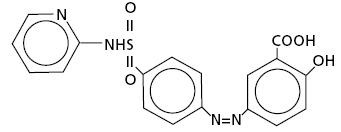
Active ingredient
Classification
Aminosalicylic acid and similar agentsAminosalicylate
Drug interactions
Sulfasalazine has been reported to reduce the absorption of folic acid and digoxin when administered together.
- moderatefolic acid — reduced absorption
- moderatedigoxin — reduced absorption
- moderatemethotrexate — increased incidence of gastrointestinal adverse events
Indications
INDICATIONS AND USAGE Sulfasalazine delayed release tablets are indicated: a) in the treatment of mild to moderate ulcerative colitis, and as adjunctive therapy in severe ulcerative colitis; b) for the prolongation of the remission period between acute attacks of ulcerative colitis; c) in the treatment of patients with rheumatoid arthritis who have responded inadequately to salicylates or other nonsteroidal anti-inflammatory drugs (e.g., an insufficient therapeutic response to, or intolerance of, an adequate trial of full doses of one or more nonsteroidal anti-inflammatory drugs); and d) in the treatment of pediatric patients with polyarticular-course 1 juvenile rheumatoid arthritis who have responded inadequately to salicylates or other nonsteroidal anti-inflammatory drugs. Sulfasalazine delayed release tablets are particularly indicated in patients with ulcerative colitis who cannot take uncoated sulfasalazine tablets because of gastrointestinal intolerance, and in whom there is evidence that this intolerance is not primarily the result of high blood levels of sulfapyridine and its metabolites, e.g., patients experiencing nausea and vomiting with the first few doses of the drug, or patients in whom a reduction in dosage does not alleviate the adverse gastrointestinal effects. In patients with rheumatoid arthritis or juvenile rheumatoid arthritis, rest and physiotherapy as indicated should be continued. Unlike anti-inflammatory drugs, sulfasalazine delayed release tablets do not produce an immediate response. Concurrent treatment with analgesics and/or nonsteroidal anti-inflammatory drugs is recommended at least until the effect of sulfasalazine delayed release tablets is apparent.
Dosage
DOSAGE AND ADMINISTRATION The dosage of sulfasalazine delayed release tablets should be adjusted to each individual's response and tolerance. Patients should be instructed to take sulfasalazine delayed release tablets in evenly divided doses, preferably after meals, and to swallow the tablets whole. Ulcerative Colitis Initial Therapy: Adults: 3 to 4 g daily in evenly divided doses with dosage intervals not exceeding eight hours. It may be advisable to initiate therapy with a lower dosage, e.g., 1 to 2 g daily, to reduce possible gastrointestinal intolerance. If daily doses exceeding 4 g are required to achieve the desired therapeutic effect, the increased risk of toxicity should be kept in mind. Children, six years of age and older: 40 to 60 mg/kg of body weight in each 24-hour period, divided into 3 to 6 doses. Maintenance Therapy: Adults: 2 g daily. Children, six years of age and older: 30 mg/kg of body weight in each 24-hour period, divided into 4 doses. The response of acute ulcerative colitis to sulfasalazine delayed release tablets can be evaluated by clinical criteria, including the presence of fever, weight changes, and degree and frequency of diarrhea and bleeding, as well as by sigmoidoscopy and the evaluation of biopsy samples. It is often necessary to continue medication even when clinical symptoms, including diarrhea, have been controlled. When endoscopic examination confirms satisfactory improvement, dosage of sulfasalazine delayed release tablets should be reduced to a maintenance level. If diarrhea recurs, dosage should be increased to previously effective levels. Sulfasalazine delayed release tablets are particularly indicated in patients who cannot take uncoated sulfasalazine tablets because of gastrointestinal intolerance (e.g., anorexia, nausea). If symptoms of gastric intolerance (anorexia, nausea, vomiting, etc.) occur after the first few doses of sulfasalazine delayed release tablets, they are probably due to increased serum levels of total sulfapyridine, and may be alleviated by halving the daily dose of sulfasalazine delayed release tablets and subsequently increasing it gradually over several days. If gastric intolerance continues, the drug should be stopped for 5 to 7 days, then reintroduced at a lower daily dose. Adult Rheumatoid Arthritis: 2 g daily in two evenly divided doses. It is advisable to initiate therapy with a lower dosage of sulfasalazine delayed release tablets, e.g., 0.5 to 1.0 g daily, to reduce possible gastrointestinal intolerance. A suggested dosing schedule is given below. In rheumatoid arthritis, the effect of sulfasalazine delayed release tablets can be assessed by the degree of improvement in the number and extent of actively inflamed joints. A therapeutic response has been observed as early as 4 weeks after starting treatment with sulfasalazine delayed release tablets, but treatment for 12 weeks may be required in some patients before clinical benefit is noted. Consideration can be given to increasing the daily dose of sulfasalazine delayed release tablets to 3 g if the clinical response after 12 weeks is inadequate. Careful monitoring is recommended for doses over 2 g per day. Suggested Dosing Schedule for Adult Rheumatoid Arthritis: Number of sulfasalazine delayed release tablets Week of Treatment Morning Evening 1 - One 2 One One 3 One Two 4 Two Two Juvenile Rheumatoid Arthritis - polyarticular course Children, six years of age and older: 30 to 50 mg/kg of body weight daily in two evenly divided doses. Typically, the maximum dose is 2 g per day. To reduce possible gastrointestinal intolerance, begin with a quarter to a third of the planned maintenance dose and increase weekly until reaching the maintenance dose at one month. Some patients may be sensitive to treatment with sulfasalazine. Various desensitization-like regimens have been reported to be effective in 34 of 53 patients, 8 7 of 8 patients, 9 and 19 of 20 patients. 10 These regimens suggest starting with a total daily dose of 50 to 250 mg sulfasalazine initially, and doubling it every 4 to 7 days until the desired therapeutic level is achieved. If the symptoms of sensitivity recur, sulfasalazine delayed release tablets should be discontinued. Desensitization should not be attempted in patients who have a history of agranulocytosis, or who have experienced an anaphylactoid reaction while previously receiving sulfasalazine.
Warnings
WARNINGS Hepatic, Renal, and Hematologic Toxicity or Other Conditions Only after critical appraisal should sulfasalazine delayed release tablets be given to patients with hepatic or renal damage or blood dyscrasias. Deaths associated with the administration of sulfasalazine have been reported from hypersensitivity reactions, agranulocytosis, aplastic anemia, other blood dyscrasias, renal and liver damage, irreversible neuromuscular and central nervous system changes, and fibrosing alveolitis. The presence of clinical signs such as sore throat, fever, pallor, purpura, or jaundice may be indications of serious blood disorders or hepatotoxicity. Complete blood counts, as well as urinalysis with careful microscopic examination, should be done frequently in patients receiving sulfasalazine delayed release tablets (see PRECAUTIONS, Laboratory Tests ). Discontinue treatment with sulfasalazine while awaiting the results of blood tests. Discontinue sulfasalazine delayed release tablets if renal function deteriorates while on therapy. Oligospermia and Infertility Oligospermia and infertility have been observed in men treated with sulfasalazine; however, withdrawal of the drug appears to reverse these effects. Serious Infections Serious infections, including fatal sepsis and pneumonia, have been reported. Some infections were associated with agranulocytosis, neutropenia, or myelosuppression. Discontinue sulfasalazine delayed release tablets if a patient develops a serious infection. Closely monitor patients for the development of signs and symptoms of infection during and after treatment with sulfasalazine delayed release tablets. For a patient who develops a new infection during treatment with sulfasalazine delayed release tablets, perform a prompt and complete diagnostic workup for infection and myelosuppression. Caution should be exercised when considering the use of sulfasalazine in patients with a history of recurring or chronic infections or with underlying conditions or concomitant drugs which may predispose patients to infections. Hypersensitivity Reactions Severe hypersensitivity reactions may include internal organ involvement, such as hepatitis, nephritis, myocarditis, mononucleosis-like syndrome (i.e., pseudomononucleosis), hematological abnormalities (including hematophagic histiocytosis), and/or pneumonitis including eosinophilic infiltration. Severe Cutaneous Adverse Reactions Drug Reactions with Eosinophilia and Systemic Symptoms (DRESS) Severe, life-threatening, systemic hypersensitivity reactions such as drug reaction with eosinophilia and systemic symptoms (DRESS) have been reported in patients taking sulfasalazine. Early manifestations of hypersensitivity, such as fever or lymphadenopathy, may be present even though rash is not evident. If such signs or symptoms are present, evaluate the patient immediately. Discontinue sulfasalazine delayed release tablets if an alternative etiology for the signs or symptoms cannot be established. Other Severe Cutaneous Adverse Reactions Other severe cutaneous adverse reactions, including exfoliative dermatitis, Stevens-Johnson syndrome (SJS) and toxic epidermal necrolysis (TEN), and acute generalized exanthematous pustulosis (AGEP) have been reported in association with the use of sulfasalazine (see ADVERSE REACTIONS ). Severe cutaneous adverse reactions can be serious and are sometimes fatal. Patients are at highest risk for these events early in therapy, with most events occurring within the first month of treatment. Discontinue sulfasalazine delayed release tablets at the first appearance of signs or symptoms of severe cutaneous adverse reactions or other signs of hypersensitivity and consider further evaluation.
Contraindications
CONTRAINDICATIONS Sulfasalazine delayed release tablets are contraindicated in: Hypersensitivity to sulfasalazine, its metabolites, sulfonamides or salicylates, Patients with intestinal or urinary obstruction, Patients with porphyria, as the sulfonamides have been reported to precipitate an acute attack.
Mechanism of action
CLINICAL PHARMACOLOGY Pharmacodynamics The mode of action of sulfasalazine (SSZ) or its metabolites, 5-aminosalicylic acid (5-ASA) and sulfapyridine (SP), may be related to the anti-inflammatory and/or immunomodulatory properties that have been observed in animal and in vitro models, to its affinity for connective tissue, and/or to the relatively high concentration it reaches in serous fluids, the liver and intestinal walls, as demonstrated in autoradiographic studies in animals. In ulcerative colitis, clinical studies utilizing rectal administration of SSZ, SP and 5-ASA have indicated that the major therapeutic action may reside in the 5-ASA moiety. The relative contribution of the parent drug and the major metabolites in rheumatoid arthritis is unknown. Pharmacokinetics In vivo studies have indicated that the absolute bioavailability of orally administered SSZ is less than 15% for parent drug. In the intestine, SSZ is metabolized by intestinal bacteria to SP and 5-ASA. Of the two species, SP is relatively well absorbed from the intestine and highly metabolized, while 5-ASA is much less well absorbed. Absorption: Following oral administration of 1 g of SSZ to 9 healthy males, less than 15% of a dose of SSZ is absorbed as parent drug. Detectable serum concentrations of SSZ have been found in healthy subjects within 90 minutes after the ingestion. Maximum concentrations of SSZ occur between 3 and 12 hours post-ingestion, with the mean peak concentration (6 µg/mL) occurring at 6 hours. In comparison, peak plasma levels of both SP and 5-ASA occur approximately 10 hours after dosing. This longer time to peak is indicative of gastrointestinal transit to the lower intestine, where bacteria-mediated metabolism occurs. SP apparently is well absorbed from the colon, with an estimated bioavailability of 60%. In this same study, 5-ASA is much less well absorbed from the gastrointestinal tract, with an estimated bioavailability of from 10% to 30%. Distribution: Following intravenous injection, the calculated volume of distribution (Vdss) for SSZ was 7.5 ± 1.6 L. SSZ is highly bound to albumin (>99.3%), while SP is only about 70% bound to albumin. Acetylsulfapyridine (AcSP), the principal metabolite of SP, is approximately 90% bound to plasma proteins. Metabolism: As mentioned above, SSZ is metabolized by intestinal bacteria to SP and 5 ASA. Approximately 15% of a dose of SSZ is absorbed as parent and is metabolized to some extent in the liver to the same two species. The observed plasma half-life for intravenous sulfasalazine is 7.6 ± 3.4 hrs. The primary route of metabolism of SP is via acetylation to form AcSP. The rate of metabolism of SP to AcSP is dependent upon acetylator phenotype. In fast acetylators, the mean plasma half-life of SP is 10.4 hrs, while in slow acetylators it is 14.8 hrs. SP can also be metabolized to 5-hydroxy-sulfapyridine (SPOH) and N-acetyl-5-hydroxy-sulfapyridine. 5-ASA is primarily metabolized in both the liver and intestine to N-acetyl-5-aminosalicylic acid via a non-acetylation phenotype dependent route. Due to low plasma levels produced by 5-ASA after oral administration, reliable estimates of plasma half-life are not possible. Excretion: Absorbed SP and 5-ASA and their metabolites are primarily eliminated in the urine either as free metabolites or as glucuronide conjugates. The majority of 5-ASA stays within the colonic lumen and is excreted as 5-ASA and acetyl-5-ASA with the feces. The calculated clearance of SSZ following intravenous administration was 1 L/hr. Renal clearance was estimated to account for 37% of total clearance. Special Populations Elderly : Elderly patients with rheumatoid arthritis showed a prolonged plasma half-life for SSZ, SP, and their metabolites. The clinical impact of this is unknown. Pediatric: Small studies have been reported in the literature in children down to the age of 4 years with ulcerative colitis and inflammatory bowel disease. In these populations, relative to adults, the pharmacokinetics of SSZ and SP correlated poorly with either age or dose. To date, comparative pharmacokinetic trials have not been conducted to determine whether or not significant pharmacokinetic differences exist between children with juvenile rheumatoid arthritis and adults with rheumatoid arthritis. Acetylator Status: The metabolism of SP to AcSP is mediated by polymorphic enzymes such that two distinct populations of slow and fast metabolizers exist. Approximately 60% of the Caucasian population can be classified as belonging to the slow acetylator phenotype. These subjects will display a prolonged plasma half-life for SP (14.8 hrs vs. 10.4 hrs) and an accumulation of higher plasma levels of SP than fast acetylators. The clinical implication of this is unclear; however, in a small pharmacokinetic trial where acetylator status was determined, subjects who were slow acetylators of SP showed a higher incidence of adverse events. Gender: Gender appears not to have an effect on either the rate or the pattern of metabolites of SSZ, SP, or 5-ASA.
Source: RxNorm + openFDA + RxClass + FAERS · 2026
Look up another medication