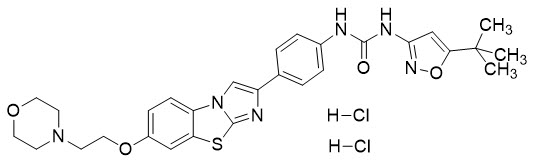
quizartinib 26.5 MG Oral Tablet [Vanflyta] — Other protein kinase inhibitors. INDICATIONS AND USAGE VANFLYTA is indicated in combination with standard cytarabine and anthracycline induction and cytarabine consolidation, and as…
Boxed warning
WARNING: QT PROLONGATION, TORSADES DE POINTES, and CARDIAC ARREST VANFLYTA prolongs the QT interval in a dose- and concentration-related manner [see Clinical Pharmacology (12.2) ] . Prior to VANFLYTA administration and periodically, monitor for hypokalemia or hypomagnesemia, and correct deficiencies. Perform ECGs to monitor the QTc at baseline, weekly during induction and consolidation therapy, weekly for at least the first month of maintenance, and periodically thereafter [see Dosage and Administration (2.3) and Warnings and Precautions (5.1) ]. Torsades de pointes and cardiac arrest have occurred in patients receiving VANFLYTA. Do not administer VANFLYTA to patients with severe hypokalemia, severe hypomagnesemia, or long QT syndrome [see Contraindications (4) and Warnings and Precautions (5.1) ] . Do not initiate treatment with VANFLYTA or escalate the VANFLYTA dose if the QT interval corrected by Fridericia's formula (QTcF) is greater than 450 ms [see Dosage and Administration (2.3) and Warnings and Precautions (5.1) ] . Monitor ECGs more frequently if concomitant use of drugs known to prolong the QT interval is required [see Dosage and Administration (2.3) and Warnings and Precautions (5.1) ] . Reduce the VANFLYTA dose when used concomitantly with strong CYP3A inhibitors, as they may increase quizartinib exposure [see Dosage and Administration (2.4) and Warnings and Precautions (5.1) ] . Because of the risk of QT prolongation, VANFLYTA is available only through a restricted program under a Risk Evaluation and Mitigation Strategy (REMS) called the VANFLYTA REMS [see Warnings and Precautions (5.2) ] . WARNING: QT PROLONGATION, TORSADES DE POINTES, and CARDIAC ARREST See full prescribing information for complete boxed warning. VANFLYTA prolongs the QT interval. ( 12.2 ) Prior to VANFLYTA administration and periodically, perform electrocardiograms (ECGs), monitor for hypokalemia or hypomagnesemia, and correct deficiencies. ( 2.3 , 5.1 ) Torsades de pointes and cardiac arrest have occurred in patients receiving VANFLYTA. Do not administer VANFLYTA to patients with severe hypokalemia, severe hypomagnesemia, or long QT syndrome. ( 4 , 5.1 ) Do not initiate treatment with VANFLYTA or escalate the VANFLYTA dose if the QT interval corrected by Fridericia's formula (QTcF) is greater than 450 ms. ( 2.3 , 5.1 ) Monitor ECGs more frequently if concomitant use of drugs known to prolong the QT interval is required. ( 2.3 , 5.1 ) Reduce the VANFLYTA dose when used concomitantly with strong CYP3A inhibitors, as they may increase quizartinib exposure. ( 2.4 , 5.1 ) VANFLYTA is available only through a restricted program called the VANFLYTA Risk Evaluation and Mitigation Strategy (REMS). ( 5.2 )
Quizartinib has several drug interactions that can affect its efficacy and safety.
majorstrong CYP3A inhibitors — increases quizartinib systemic exposure, which may increase the risk of adverse reactions
majorstrong or moderate CYP3A inducers — decreases quizartinib systemic exposure, which may reduce efficacy
majorQT prolonging drugs — may further increase the incidence of QT prolongation
moderateBCRP substrates — may increase the risk of BCRP substrate-associated adverse reactions
Indications
INDICATIONS AND USAGE VANFLYTA is indicated in combination with standard cytarabine and anthracycline induction and cytarabine consolidation, and as maintenance monotherapy following consolidation chemotherapy, for the treatment of adult patients with newly diagnosed acute myeloid leukemia (AML) that is FLT3 internal tandem duplication (ITD)-positive as detected by an FDA-approved test [see Dosage and Administration (2.1) and Clinical Studies (14) ] . VANFLYTA is a kinase inhibitor indicated in combination with standard cytarabine and anthracycline induction and cytarabine consolidation, and as maintenance monotherapy following consolidation chemotherapy, for the treatment of adult patients with newly diagnosed acute myeloid leukemia (AML) that is FLT3 internal tandem duplication (ITD)-positive as detected by an FDA-approved test. ( 1 ) Limitations of Use: VANFLYTA is not indicated as maintenance monotherapy following allogeneic hematopoietic stem cell transplantation (HSCT); improvement in overall survival with VANFLYTA in this setting has not been demonstrated. ( 1 ) Limitations of Use VANFLYTA is not indicated as maintenance monotherapy following allogeneic hematopoietic stem cell transplantation (HSCT); improvement in overall survival with VANFLYTA in this setting has not been demonstrated [see Clinical Studies (14) ] .
Dosage
DOSAGE AND ADMINISTRATION Take VANFLYTA tablets orally once daily with or without food at approximately the same time each day. ( 2.2 ) See Full Prescribing Information for recommended VANFLYTA dosage regimen and dosage modifications. ( 2.2 , 2.3 , 2.4 ) 2.1 Patient Selection Select patients for the treatment of AML with VANFLYTA based on the presence of FLT3-ITD mutation positivity [see Clinical Studies (14) ] . Information on FDA-approved tests for the detection of FLT3-ITD mutation in AML is available at: http://www.fda.gov/CompanionDiagnostics. 2.2 Recommended Dosage A treatment course consists of up to 2 cycles of VANFLYTA in combination with induction cytarabine and anthracycline, up to 4 cycles of VANFLYTA in combination with high-dose cytarabine consolidation, and up to 36 cycles of VANFLYTA as maintenance therapy [see Clinical Studies (14) ] or until disease progression or unacceptable toxicity. VANFLYTA maintenance therapy should be initiated following consolidation chemotherapy upon blood count recovery of absolute neutrophil count >500/mm 3 and platelet count >50,000/mm 3 . See Table 1 for the recommended dosage of VANFLYTA by phase of therapy . Table 1: VANFLYTA Dosage Regimen VANFLYTA Initiation Induction Patients can receive up to 2 cycles of induction. Consolidation Patients can receive up to 4 cycles of consolidation. Maintenance Starting on Day 8 (for 7 + 3 regimen) For 5 + 2 regimen as the second induction cycle, VANFLYTA will be given on Days 6 to 19. Starting on Day 6 Starting on Day 1 Dose 35.4 mg orally once daily 35.4 mg orally once daily Administer 26.5 mg orally once daily Days 1 through 14 of the first cycle if QTcF is less than or equal to 450 ms. Increase the dose to 53 mg once daily on Day 15 of the first cycle if QTcF is less than or equal to 450 ms. Maintain the 26.5 mg once daily dose if QTcF greater than 500 ms was observed during induction or consolidation. Duration (28-day cycles) Two weeks in each cycle (Days 8 to 21) Two weeks in each cycle (Days 6 to 19) Once daily with no break between cycles for up to 36 cycles For patients who proceed to hematopoietic stem cell transplantation (HSCT), VANFLYTA should be stopped 7 days before the start of a conditioning regimen. Administer VANFLYTA orally with or without food at approximately the same time each day. Swallow tablets whole. Do not cut, crush, or chew the tablets. If a dose of VANFLYTA is vomited, do not administer a replacement dose; wait until the next scheduled dose is due. If a dose of VANFLYTA is missed or not taken at the usual time, administer the dose as soon as possible on the same day and return to the usual schedule the following day. The patient should not take two doses on the same day. 2.3 Monitoring and Dosage Modifications for Adverse Reactions Initiate VANFLYTA only if QTcF is less than or equal to 450 ms [see Warnings and Precautions (5.1) ]. During induction and consolidation, perform ECGs prior to initiation and then once weekly during VANFLYTA treatment or more frequently as clinically indicated [see Warnings and Precautions (5.1) ]. During maintenance, perform ECGs prior to initiation, once weekly for at least the first month following dose initiation and escalation, and thereafter as clinically indicated. Escalate the dose only if QTcF is less than or equal to 450 ms [see Dosage and Administration (2.2) and Warnings and Precautions (5.1) ]. Correct electrolyte abnormalities (hypokalemia and hypomagnesemia), and if possible, avoid concomitant administration of drugs that prolong the QT interval [see Warnings and Precautions (5.1) ]. For recommended dosage modifications due to adverse reactions, see Table 2 . For dosage adjustments due to adverse reactions, see Table 3 . Table 2: Recommended Dosage Modifications for Adverse Reactions [see Warnings and Precautions (5.1) and Adverse Reactions (6.1) ] Adverse Reaction Recommended Action Grades are in accordance with National Cancer Institute Common Terminology Criteria for Adverse Events version 4.03 (NCI CTCAE v4.03). QTcF between 450 ms and 480 ms (Grade 1) Continue VANFLYTA dose. QTcF between 481 ms and 500 ms (Grade 2) Reduce the dose of VANFLYTA (see Table 3 ) without interruption. Resume VANFLYTA at the previous dose in the next cycle if QTcF has decreased to less than 450 ms. Monitor the patient closely for QT prolongation during the first cycle at the increased dose. QTcF greater than 500 ms (Grade 3) Interrupt VANFLYTA. Resume VANFLYTA at a reduced dose (see Table 3 ) when QTcF returns to less than 450 ms. Maintain the 26.5 mg once daily dose during maintenance if QTcF greater than 500 ms was observed during induction or consolidation. Recurrent QTcF greater than 500 ms (Grade 3) Permanently discontinue VANFLYTA if QTcF greater than 500 ms recurs despite appropriate dose reduction and correction/elimination of other risk factors (e.g., serum electrolyte abnormalities, concomitant QT prolonging medications). Torsades de pointes, polymorphic ventricular tachycardia, signs/symptoms of life-threatening arrhythmia (Grade 4) Permanently discontinue VANFLYTA. Grade 3 or 4 non-hematologic adverse reactions Interrupt VANFLYTA. Resume treatment at the previous dose if adverse reaction improves to Grade 1 or less. Resume treatment at a reduced dose (see Table 3 ) if adverse reaction improves to Grade 2. Discontinue if Grade 3 or 4 adverse reaction persists beyond 28 days. Grade 3 or 4 hypokalemia (<3 mmol/L) or hypomagnesemia (<0.4 mmol/L or <0.9 mg/dL) Interrupt VANFLYTA. Correct hypokalemia and hypomagnesemia according to institutional guidelines. VANFLYTA may be restarted at the previous dose when the adverse reaction improves to Grade 2 or less without symptoms. Grade 4 neutropenia or thrombocytopenia after achieving remission Recommend bone marrow evaluation. Reduce VANFLYTA dose (see Table 3 ). Table 3: Recommended Dosage Adjustments for Adverse Reactions for VANFLYTA Current Dosage Modified Dosage 53 mg once daily 35.4 mg once daily 35.4 mg once daily 26.5 mg once daily 26.5 mg once daily Interrupt 17.7 mg once daily Interrupt 2.4 Dosage Modifications for Strong CYP3A Inhibitors Reduce the dosage of VANFLYTA when used concomitantly with strong CYP3A inhibitors as shown in Table 4. If the current dosage is 17.7 mg once daily, interrupt VANFLYTA treatment for the duration of strong CYP3A inhibitor use. After discontinuation of a strong CYP3A inhibitor for 5 half-lives, resume the VANFLYTA dose that was taken before initiating the strong inhibitor [see Drug Interactions (7) ] . Table 4: Dosage Adjustments for Concomitant Use with Strong CYP3A Inhibitors Current Dosage Modified Dosage 53 mg once daily 26.5 mg once daily 35.4 mg once daily 17.7 mg once daily 26.5 mg once daily 17.7 mg once daily
Warnings
WARNINGS AND PRECAUTIONS QT Prolongation, Torsades de Pointes, and Cardiac Arrest: Monitor electrocardiograms and levels of serum electrolytes. Reduce, interrupt, or permanently discontinue VANFLYTA as appropriate. ( 2.3 , 5.1 ) Embryo-Fetal Toxicity: VANFLYTA can cause fetal harm. Advise females of reproductive potential and males with female partners of reproductive potential of potential risk to a fetus and to use effective contraception. ( 5.3 , 8.1 , 8.3 ) 5.1 QT Prolongation, Torsades de Pointes, and Cardiac Arrest VANFLYTA prolongs the QT interval in a dose- and concentration-dependent manner. The mechanism of QTc interval prolongation is via inhibition of the slow delayed rectifier potassium current, I Ks , as compared to all other medications that prolong the QTc interval, which is via the rapid delayed rectifier potassium current, I Kr . Therefore, the level of QTc prolongation with VANFLYTA that predicts the risk of cardiac arrhythmias is unclear. Inhibition of I Ks and I Kr may leave patients with limited reserve leading to a higher risk of QT prolongation and serious cardiac arrhythmias, including fatal outcomes [see Clinical Pharmacology (12.2) ] . Torsades de pointes, ventricular fibrillation, cardiac arrest, and sudden death have occurred in patients treated with VANFLYTA. Of the 1,081 patients with AML treated with VANFLYTA in clinical trials, torsades de pointes occurred in approximately 0.2% of patients, cardiac arrest occurred in 0.6%, including 0.4% with a fatal outcome, and 0.1% of patients experienced ventricular fibrillation [see Adverse Reactions (6.1) ] . These severe cardiac arrhythmias occurred predominantly during the induction phase. Of the 265 patients with newly diagnosed FLT3-ITD-positive AML treated with VANFLYTA in combination with chemotherapy in the clinical trial, 2.3% were found to have a QTcF greater than 500 ms and 10% of patients had an increase from baseline QTcF greater than 60 ms. The clinical trial excluded patients with a QTcF ≥450 ms or other factors that increased the risk of QT prolongation or arrhythmic events (e.g., NYHA Class III or IV congestive heart failure, hypokalemia, family history of long QT interval syndrome). Therefore, avoid use in patients who are at significant risk of developing torsades de pointes, including uncontrolled or significant cardiac disease, recent myocardial infarction, heart failure, unstable angina, bradyarrhythmias, tachyarrhythmias, uncontrolled hypertension, high-degree atrioventricular block, severe aortic stenosis, or uncontrolled hypothyroidism. Do not initiate treatment with VANFLYTA if the QTcF interval is greater than 450 ms. Do not use VANFLYTA in patients with severe hypokalemia, severe hypomagnesemia, long QT syndrome, or in patients with a history of ventricular arrhythmias or torsades de pointes [see Contraindications (4) ] . Perform an ECG and correct electrolyte abnormalities prior to initiation of treatment with VANFLYTA. During induction and consolidation, perform an ECG prior to initiation and then once weekly during VANFLYTA treatment or more frequently as clinically indicated. During maintenance, perform ECGs prior to initiation, once weekly for at least the first month following dose initiation and escalation, and as clinically indicated thereafter. Do not escalate the dose if QTcF is greater than 450 ms [see Dosage and Administration (2.3) ] . Perform ECG monitoring of the QT interval more frequently in patients who are at significant risk of developing QT interval prolongation and torsades de pointes, or following dose escalation. Monitor and correct hypokalemia and hypomagnesemia prior to and during treatment with VANFLYTA. Maintain electrolytes in the normal range. Monitor electrolytes and ECGs more frequently in patients who experience diarrhea or vomiting. Monitor patients more frequently with ECGs if coadministration of VANFLYTA with drugs known to prolong the QT interval is required [see Drug Interactions (7) ] . Reduce the VANFLYTA dose when used concomitantly with strong CYP3A inhibitors, as they may increase quizartinib exposure [see Dosage and Administration (2.4) ] . Reduce VANFLYTA if QTc increases to greater than 480 ms and less than 500 ms. Interrupt and reduce VANFLYTA if QTc increases to greater than 500 ms. Permanently discontinue VANFLYTA in patients who develop recurrent QTc greater than 500 ms or QTc interval prolongation with signs or symptoms of life-threatening arrhythmia [see Dosage and Administration (2.3) ] . VANFLYTA is available only through a restricted program under a REMS [see Warnings and Precautions (5.2) ] . 5.2 VANFLYTA REMS VANFLYTA is available only through a restricted distribution program under a REMS called the VANFLYTA REMS because of the serious risk of QT prolongation, torsades de pointes, and cardiac arrest [see Warnings and Precautions (5.1) ] . Notable requirements of the VANFLYTA REMS include the following: Prescribers must be certified in the VANFLYTA REMS by enrolling and completing training. Prescribers must counsel patients receiving VANFLYTA about the risk of QT prolongation, torsades de pointes, and cardiac arrest, and provide patients with a Patient Wallet Card. Pharmacies that dispense VANFLYTA must be certified with the VANFLYTA REMS and must verify prescribers are certified through the VANFLYTA REMS. Further information about the VANFLYTA REMS is available at www.VANFLYTAREMS.com or by telephone at 1-855-212-6670. 5.3 Embryo-Fetal Toxicity Based on findings in animals and its mechanism of action, VANFLYTA can cause fetal harm when administered to a pregnant woman. In animal reproduction studies, administration of quizartinib to pregnant rats during organogenesis at exposures 3 times the maximum recommended human dose (MRHD) of 53 mg/day caused structural abnormalities and alterations to growth. Advise pregnant women of the potential risk to a fetus. Advise females of reproductive potential to use effective contraception during treatment with VANFLYTA and for 7 months after the last dose. Advise males with female partners of reproductive potential to use effective contraception during treatment with VANFLYTA and for 4 months after the last dose [see Use in Specific Populations (8.1 , 8.3) ] .
Contraindications
CONTRAINDICATIONS VANFLYTA is contraindicated in patients with severe hypokalemia, severe hypomagnesemia, long QT syndrome, or in patients with a history of ventricular arrhythmias or torsades de pointes [see Warnings and Precautions (5.1) ]. Contraindicated in patients with severe hypokalemia, severe hypomagnesemia, long QT syndrome, or in patients with a history of ventricular arrhythmias or torsades de pointes. ( 4 , 5.1 )
Mechanism of action
Mechanism of Action Quizartinib is a small molecule inhibitor of the receptor tyrosine kinase FLT3. Quizartinib and its major active metabolite AC886 bind to the adenosine triphosphate (ATP) binding domain of FLT3 with comparable affinity, and both had 10-fold lower affinity towards FLT3-ITD mutation compared to FLT3 in a binding assay. Quizartinib and AC886 inhibited FLT3 kinase activity, preventing autophosphorylation of the receptor, thereby inhibiting downstream FLT3 receptor signaling and blocking FLT3-ITD-dependent cell proliferation. Quizartinib showed antitumor activity in a mouse model of FLT3-ITD-dependent leukemia.
A drug lookup is just the start. Eleplan keeps the whole care plan in one place.
Medications, diagnoses, documents, appointments, and the whole care team — organized and always in sync, with Ellie, your AI care assistant, on top of it. Free to start.