pitolisant 4.45 MG Oral Tablet [Wakix]
Managing this medication for someone you care for? Eleplan keeps diagnoses, medications and appointments in one plan.
Start free with EleplanClinical drug
pitolisant 4.45 MG Oral Tablet [Wakix]
4.45 MG · Oral Tablet · oral
A form of pitolisant →
pitolisant 4.45 MG Oral Tablet [Wakix] — Other nervous system drugs. INDICATIONS AND USAGE WAKIX is indicated for the treatment of excessive daytime sleepiness (EDS) or cataplexy in patients 6 years of age and older…
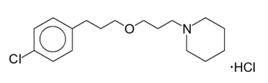
Active ingredient
Classification
Other nervous system drugsHistamine-3 Receptor Antagonist/Inverse Agonist
Drug interactions
Pitolisant has several clinically significant drug interactions that may affect its efficacy and safety.
- majorstrong CYP2D6 inhibitors — Increased exposure of WAKIX
- majorstrong CYP3A4 inducers — Decreased exposure of WAKIX
- majorsensitive CYP3A4 substrates (including hormonal contraceptives) — Reduced effectiveness of sensitive CYP3A4 substrates
- moderateH1 receptor antagonists — Reduced effectiveness of WAKIX
- majordrugs that prolong the QT interval — Increased risk of cardiac arrhythmia
Indications
INDICATIONS AND USAGE WAKIX is indicated for the treatment of excessive daytime sleepiness (EDS) or cataplexy in patients 6 years of age and older with narcolepsy. WAKIX is a histamine-3 (H3) receptor antagonist/inverse agonist indicated for the treatment of excessive daytime sleepiness (EDS) or cataplexy patients 6 years of age and older with narcolepsy ( 1 )
Dosage
DOSAGE AND ADMINISTRATION See Full Prescribing Information for complete dosage instructions ( 2.2 , 2.3 ) Administer orally once daily in the morning upon wakening ( 2.2 , 2.3 ) Dosage Recommendations: Adults ( 2.2 ) Week 1 Initiate with a dosage of 8.9 mg once daily Week 2 Increase dosage to 17.8 mg once daily Week 3 May increase to the maximum recommended dosage of 35.6 mg once daily Pediatric Patients (6 years and older) ( 2.3 ) Week 1 Initiate with a dosage of 4.45 mg once daily Week 2 Increase dosage to 8.9 mg once daily Week 3 Increase dosage to 17.8 mg once daily, the maximum recommended dosage for patients weighing <40 kg Week 4 For patients weighing ≥40 kg, may increase to the maximum recommended dosage of 35.6 mg once daily Hepatic impairment ( 2.4 , 8.6 , 12.3 ): Moderate hepatic impairment (Child-Pugh Class B): Adults: Initial dosage is 8.9 mg once daily. Increase to a maximum dosage of 17.8 mg once daily after 14 days Pediatric Patients: Initial dosage is 4.45 mg once daily. Increase to 8.9 mg once daily after 14 days; for patients weighing ≥40 kg, may increase to 17.8 mg once daily after another 14 days Renal impairment (eGFR less than 60 mL/minute/1.73 m 2 ) ( 2.5 , 8.7 , 12.3 ): Adults: Initial dosage is 8.9 mg once daily. Increase to a maximum dosage of 17.8 mg once daily after 7 days Pediatric Patients: Initial dosage is 4.45 mg once daily.Increase to 8.9 mg once daily after 7 days; for patients weighing ≥40 kg, may increase to 17.8 mg once daily after another 7 days End-stage renal disease (ESRD): Not recommended Poor Metabolizers of CYP2D6 ( 2.7 ): Adults: Maximum recommended dosage is 17.8 mg once daily Pediatric Patients: Maximum recommended dosage is 8.9 mg once daily for patients weighing <40 kg and 17.8 mg for patients weighing ≥40 kg 2.1 Recommendations Prior to WAKIX Initiation Consider genotyping patients for CYP2D6 metabolizer status to determine the maximum recommended dosage [see Dosage and Administration ( 2.7 )]. 2.2 Recommended Dosage in Adult Patients The recommended dosage range for WAKIX for the treatment of EDS or cataplexy in adult patients is 17.8 mg to 35.6 mg administered orally once daily in the morning upon wakening. Titrate dosage as follows: Week 1: Initiate with a dosage of 8.9 mg (two 4.45 mg tablets) once daily Week 2: Increase dosage to 17.8 mg (one 17.8 mg tablet) once daily Week 3: May increase to the maximum recommended dosage of 35.6 mg (two 17.8 mg tablets) once daily Dose may be adjusted based on tolerability.If a dose is missed, patients should take the next dose the following day in the morning upon wakening.It may take up to 8 weeks for some patients to achieve a clinical response. 2.3 Recommended Dosage in Pediatric Patients 6 Years and Older The recommended starting dosage of WAKIX for the treatment of EDS or cataplexy in pediatric patients 6 years and older is 4.45 mg administered orally once daily in the morning upon wakening. Titrate dosage as follows: Week 1: Initiate with a dosage of 4.45 mg (one 4.45 mg tablet) once daily Week 2: Increase dosage to 8.9 mg (two 4.45 mg tablets) once daily Week 3: Increase dosage to 17.8 mg (one 17.8 mg tablet) once daily, which is the maximum recommended dosage for patients weighing <40 kg Week 4: For patients weighing ≥40 kg, may increase to the maximum recommended dosage of 35.6 mg (two 17.8 mg tablets) once daily Dose may be adjusted based on tolerability. If a dose is missed, patients should take the next dose the following day in the morning upon wakening. It may take up to 8 weeks for some patients to achieve a clinical response. 2.4 Dosage Recommendations in Patients with Hepatic Impairment Adult Patients with Moderate (Child-Pugh Class B) Hepatic Impairment Initiate WAKIX at 8.9 mg once daily and increase after 14 days to a maximum recommended dosage of 17.8 mg once daily [see Warnings and Precautions ( 5.1 ), Use in Specific Populations ( 8.6 ), Clinical Pharmacology ( 12.3 )] . Pediatric Patients (6 years and older) with Moderate (Child-Pugh Class B) Hepatic Impairment Pediatric patients weighing <40 kg: Initiate WAKIX at 4.45 mg once daily and increase after 14 days to a maximum recommended dosage of 8.9 mg once daily [see Warnings and Precautions ( 5.1 ), Use in Specific Populations ( 8.6 ), Clinical Pharmacology ( 12.3 )] . Pediatric patients weighing ≥40 kg: Initiate WAKIX at 4.45 mg once daily and increase after 14 days to 8.9 mg once daily. May increase after another 14 days to a maximum recommended dosage of 17.8 mg once daily [see Warnings and Precautions ( 5.1 ), Use in Specific Populations ( 8.6 ), Clinical Pharmacology ( 12.3 )] . WAKIX is contraindicated in patients with severe hepatic impairment. WAKIX has not been studied in patients with severe hepatic impairment [see Contraindications ( 4 ), Warnings and Precautions ( 5.1 ), Use in Specific Populations ( 8.6 ), Clinical Pharmacology ( 12.3 )] . 2.5 Dosage Recommendations in Patients with Renal Impairment and End-Stage Renal Disease Adult Patients with eGFR <60 mL/minute/1.73 m 2 Initiate WAKIX at 8.9 mg once daily and increase after 7 days to a maximum recommended dosage of 17.8 mg once daily [see Warnings and Precautions ( 5.1 ), Use in Specific Populations ( 8.7 ), Clinical Pharmacology ( 12.3 )] . Pediatric Patients (6 years and older) with eGFR <60 mL/minute/1.73 m 2 (using the Schwartz equation, eGFR (mL/min/1.73 m2)=(0.413*height in cm)/serum creatinine in mg/dL) Pediatric patients weighing <40 kg: Initiate WAKIX at 4.45 mg once daily and increase after 7 days to a maximum recommended dosage of 8.9 mg once daily [see Warnings and Precautions ( 5.1 ), Use in Specific Populations ( 8.7 ), Clinical Pharmacology ( 12.3 )] . Pediatric patients weighing ≥40 kg: Initiate WAKIX at 4.45 mg once daily and increase after 7 days to 8.9 mg once daily. May increase after another 7 days to a maximum recommended dosage of 17.8 mg once daily [see Warnings and Precautions ( 5.1 ), Use in Specific Populations ( 8.7 ), Clinical Pharmacology ( 12.3 )] . WAKIX is not recommended in patients with eGFR less than 15 mL/minute/1.73 m 2 [see Warnings and Precautions ( 5.1 ), Use in Specific Populations ( 8.7 ), Clinical Pharmacology ( 12.3 )] . 2.6 Dosage Modifications for Concomitant Use with Strong CYP2D6 Inhibitors and Strong CYP3A4 Inducers Coadministration with Strong CYP2D6 Inhibitors Adult patients: Initiate WAKIX at 8.9 mg once daily and increase after 7 days to a maximum recommended dosage of 17.8 mg once daily [see Drug Interactions ( 7.1 ), Clinical Pharmacology ( 12.3 )] . Pediatric patients (6 years and older) weighing <40 kg: Initiate WAKIX at 4.45 mg once daily and increase after 7 days to a maximum recommended dosage of 8.9 mg once daily [see Drug Interactions ( 7.1 ), Clinical Pharmacology ( 12.3 )] . Pediatric patients (6 years and older) weighing ≥40 kg: Initiate WAKIX at 4.45 mg once daily and increase after 7 days to 8.9 mg once daily. May increase after another 7 days to a maximum recommended dosage of 17.8 mg once daily [see Drug Interactions ( 7.1 ), Clinical Pharmacology ( 12.3 )] . Adult and pediatric patients on a stable dose of WAKIX: Reduce the WAKIX dose by half upon initiating strong CYP2D6 inhibitors [see Drug Interactions ( 7.1 ), Clinical Pharmacology ( 12.3 )] . Coadministration with Strong CYP3A4 Inducers Concomitant use of WAKIX with strong CYP3A4 inducers decreases pitolisant exposure by 50%. Assess for loss of efficacy after initiation of a strong CYP3A4 inducer. For adult and pediatric patients stable on WAKIX 8.9 mg or 17.8 mg once daily, increase the dose of WAKIX to double the original daily dose (i.e., 17.8 mg or 35.6 mg, respectively) over 7 days. If concomitant dosing of a strong CYP3A4 inducer is discontinued, decrease WAKIX dosage by half [see Drug Interactions ( 7.1 ), Clinical Pharmacology ( 12.3 )] . 2.7 Dosage Recommendations in Patients Who Are CYP2D6 Poor Metabolizers Adult Patients Initiate WAKIX at 8.9 mg once daily and increase after 7 day
Warnings
WARNINGS AND PRECAUTIONS QT Interval Prolongation : Increases in QT interval. Avoid use with drugs that also increase the QT interval and in patients with risk factors for prolonged QT interval. Monitor patients with hepatic or renal impairment for increased QTc ( 5.1 ) 5.1 QT Interval Prolongation WAKIX prolongs the QT interval. The use of WAKIX should be avoided in patients with known QT prolongation or in combination with other drugs known to prolong the QT interval [see Drug Interactions ( 7.1 )]. WAKIX should also be avoided in patients with a history of cardiac arrhythmias, as well as other circumstances that may increase the risk of the occurrence of torsade de pointes or sudden death, including symptomatic bradycardia, hypokalemia or hypomagnesemia, and the presence of congenital prolongation of the QT interval [see Clinical Pharmacology ( 12.2 )]. The risk of QT prolongation may be greater in patients with higher concentrations of pitolisant (e.g., patients with hepatic or renal impairment). Monitor patients with hepatic or renal impairment for increased QTc. Dosage modification is recommended in patients with moderate hepatic impairment and moderate or severe renal impairment [see Dosage and Administration ( 2.4 , 2.5 )] . WAKIX is contraindicated in patients with severe hepatic impairment [see Contraindications ( 4 )] . WAKIX is not recommended in patients with end-stage renal disease (ESRD) [see Dosage and Administration ( 2.5 ), Use in Specific Populations ( 8.7 ), Clinical Pharmacology ( 12.3 )] .
Contraindications
CONTRAINDICATIONS WAKIX is contraindicated in patients with: known hypersensitivity to pitolisant or any component of the formulation. Anaphylaxis has been reported in patients treated with WAKIX [see Adverse Reactions ( 6.2 )] . severe hepatic impairment. WAKIX is extensively metabolized by the liver and there is a significant increase in WAKIX exposure in patients with moderate hepatic impairment [see Use in Specific Populations ( 8.6 )] . Known hypersensitivity to pitolisant or any component of the formulation ( 4 ) Severe hepatic impairment ( 4 )
Mechanism of action
Mechanism of Action The mechanism of action of pitolisant in excessive daytime sleepiness (EDS) or cataplexy in patients 6 years and older with narcolepsy is unclear. However, its efficacy could be mediated through its activity as an antagonist/inverse agonist at histamine-3 (H3) receptors.
Indicated ICD-10 codes
Source: RxNorm + openFDA + RxClass + FAERS · 2026
Look up another medication