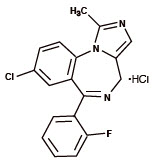
midazolam 15 MG Oral Tablet — Benzodiazepine derivatives. INDICATIONS AND USAGE Midazolam hydrochloride injection is indicated: intramuscularly or intravenously for preoperative sedation/anxiolysis/amnesia…
Boxed warning
WARNING: RISKS FROM CONCOMITANT USE WITH OPIOIDS; ABUSE, MISUSE, AND ADDICTION; and DEPENDENCE AND WITHDRAWAL REACTIONS Concomitant use of benzodiazepines and opioids may result in profound sedation, respiratory depression, coma, and death . Reserve concomitant prescribing of these drugs for patients for whom alternative treatment options are inadequate. Limit dosages and durations to the minimum required. Follow patients for signs and symptoms of respiratory depression and sedation [see Warnings and Precautions (5.1) and Drug Interactions (7.2) ] . The use of benzodiazepines, including NAYZILAM, exposes users to risks of abuse, misuse, and addiction, which can lead to overdose or death. Abuse and misuse of benzodiazepines commonly involve concomitant use of other medications, alcohol, and/or illicit substances, which is associated with an increased frequency of serious adverse outcomes. Before prescribing NAYZILAM and throughout treatment, assess each patient's risk for abuse, misuse, and addiction [see Warnings and Precautions (5.2) ]. The continued use of benzodiazepines may lead to clinically significant physical dependence. The risks of dependence and withdrawal increase with longer treatment duration and higher daily dose. Although NAYZILAM is indicated only for intermittent use [see Indications and Usage (1) and Dosage and Administration (2) ] , if used more frequently than recommended abrupt discontinuation or rapid dosage reduction of NAYZILAM may precipitate acute withdrawal reactions, which can be life-threatening. For patients using NAYZILAM more frequently than recommended, to reduce the risk of withdrawal reactions, use a gradual taper to discontinue NAYZILAM [see Warnings and Precautions (5.3) ]. WARNING: RISKS FROM CONCOMITANT USE WITH OPIOIDS; ABUSE, MISUSE, AND ADDICTION; and DEPENDENCE AND WITHDRAWAL REACTIONS See full prescribing information for complete boxed warning. Concomitant use of benzodiazepines and opioids may result in profound sedation, respiratory depression, coma, and death ( 5.1 , 7.2 ) The use of benzodiazepines, including NAYZILAM, exposes users to risks of abuse, misuse, and addiction, which can lead to overdose or death. Before prescribing NAYZILAM and throughout treatment, assess each patient's risk for abuse, misuse, and addiction ( 5.2 ). Although NAYZILAM is indicated only for intermittent use ( 1 , 2 ), if used more frequently than recommended, abrupt discontinuation or rapid dosage reduction of NAYZILAM may precipitate acute withdrawal reactions, which can be life-threatening. For patients using NAYZILAM more frequently than recommended, to reduce the risk of withdrawal reactions, use a gradual taper to discontinue NAYZILAM ( 5.3 ).
Midazolam has several significant interactions with other drugs, particularly CNS depressants and P450-3A4 inhibitors, which can lead to increased sedation and respiratory depression.
majoropioids — increased risk of respiratory depression
majorCYP450-3A4 inhibitors — prolonged sedation due to decreased plasma clearance of midazolam
moderatethiopental — reduction in induction dosage requirements
moderatehalothane — decreased minimum alveolar concentration required for general anesthesia
unknownpancuronium — no clinically significant change in dosage, onset or duration
unknownsuccinylcholine — no clinically significant change in dosage, onset or duration
Real-world adverse events (FAERS)
Drug Ineffective3,424Off Label Use2,556Seizure1,609Hypotension1,553Drug Interaction1,238Death1,102Pyrexia977Toxicity to Various Agents933
Indications
INDICATIONS AND USAGE Midazolam hydrochloride injection is indicated: intramuscularly or intravenously for preoperative sedation/anxiolysis/amnesia; intravenously as an agent for sedation/anxiolysis/amnesia prior to or during diagnostic, therapeutic or endoscopic procedures, such as bronchoscopy, gastroscopy, cystoscopy, coronary angiography, cardiac catheterization, oncology procedures, radiologic procedures, suture of lacerations and other procedures either alone or in combination with other CNS depressants; intravenously for induction of general anesthesia, before administration of other anesthetic agents. With the use of narcotic premedication, induction of anesthesia can be attained within a relatively narrow dose range and in a short period of time. Intravenous midazolam can also be used as a component of intravenous supplementation of nitrous oxide and oxygen (balanced anesthesia); continuous intravenous infusion for sedation of intubated and mechanically ventilated patients as a component of anesthesia or during treatment in a critical care setting.
Dosage
DOSAGE AND ADMINISTRATION Note: CONTAINS BENZYL ALCOHOL (see WARNINGS and PRECAUTIONS , Pediatric Use ) Midazolam hydrochloride injection is a potent sedative agent that requires slow administration and individualization of dosage. Clinical experience has shown midazolam hydrochloride to be 3 to 4 times as potent per mg as diazepam. BECAUSE SERIOUS AND LIFE-THREATENING CARDIORESPIRATORY ADVERSE EVENTS HAVE BEEN REPORTED, PROVISION FOR MONITORING, DETECTION AND CORRECTION OF THESE REACTIONS MUST BE MADE FOR EVERY PATIENT T0 WHOM MIDAZOLAM HYDROCHLORIDE INJECTION IS ADMINISTERED, REGARDLESS OF AGE OR HEALTH STATUS. Excessive single doses or rapid intravenous administration may result in respiratory depression, airway obstruction and/or arrest. The potential for these latter effects is increased in debilitated patients, those receiving concomitant medications capable of depressing the CNS, and patients without an endotracheal tube but undergoing a procedure involving the upper airway such as endoscopy or dental (see Boxed WARNING and WARNINGS ). Reactions such as agitation, involuntary movements, hyperactivity and combativeness have been reported in adult and pediatric patients. Should such reactions occur, caution should be exercised before continuing administration of midazolam hydrochloride (see WARNINGS ). Midazolam hydrochloride injection should only be administered IM or IV (see WARNINGS ). Care should be taken to avoid intra-arterial injection or extravasation (see WARNINGS ). Midazolam Hydrochloride Injection may be mixed in the same syringe with the following frequently used premedications: morphine sulfate, meperidine, atropine sulfate or scopolamine. Midazolam, at a concentration of 0.5 mg/mL, is compatible with 5% dextrose in water and 0.9% sodium chloride for up to 24 hours and with lactated Ringer's solution for up to 4 hours. Both the 1 mg/mL and 5 mg/mL formulations of midazolam may be diluted with 0.9% sodium chloride or 5% dextrose in water. Monitoring: Patient response to sedative agents, and resultant respiratory status, is variable. Regardless of the intended level of sedation or route of administration, sedation is a continuum; a patient may move easily from light to deep sedation, with potential loss of protective reflexes. This is especially true in pediatric patients. Sedative doses should be individually titrated, taking into account patient age, clinical status and concomitant use of other CNS depressants. Continuous monitoring of respiratory and cardiac function is required (i.e., pulse oximetry). Adults and Pediatrics: Sedation guidelines recommend a careful presedation history to determine how a patient's underlying medical conditions or concomitant medications might affect their response to sedation/analgesia as well as a physical examination including a focused examination of the airway for abnormalities. Further recommendations include appropriate presedation fasting. Titration to effect with multiple small doses is essential for safe administration. It should be noted that adequate time to achieve peak central nervous system effect (3 to 5 minutes) for midazolam should be allowed between doses to minimize the potential for oversedation. Sufficient time must elapse between doses of concomitant sedative medications to allow the effect of each dose to be assessed before subsequent drug administration. This is an important consideration for all patients who receive intravenous midazolam. Immediate availability of resuscitative drugs and age- and size-appropriate equipment and personnel trained in their use and skilled in airway management should be assured (see WARNINGS ). Pediatrics: For deeply sedated pediatric patients a dedicated individual, other than the practitioner performing the procedure, should monitor the patient throughout the procedure. Intravenous access is not thought to be necessary for all pediatric patients sedated for a diagnostic or therapeutic procedure because in some cases the difficulty of gaining IV access would defeat the purpose of sedating the child; rather, emphasis should be placed upon having the intravenous equipment available and a practitioner skilled in establishing vascular access in pediatric patients immediately available. USUAL ADULT DOSE INTRAMUSCULARLY For preoperative sedation/anxiolysis/ amnesia (induction of sleepiness or drowsiness and relief of apprehension and to impair memory of perioperative events). For intramuscular use, midazolam hydrochloride should be injected deep in a large muscle mass. The recommended premedication dose of midazolam for good risk (ASA Physical Status I & II) adult patients below the age of 60 years is 0.07 to 0.08 mg/kg IM (approximately 5 mg IM) administered up to 1 hour before surgery. The dose must be individualized and reduced when IM midazolam is administered to patients with chronic obstructive pulmonary disease, other higher risk surgical patients, patients 60 or more years of age, and patients who have received concomitant narcotics or other CNS depressants (see ADVERSE REACTIONS ). In a study of patients 60 years or older, who did not receive concomitant administration of narcotics, 2 to 3 mg (0.02 to 0.05 mg/kg) of midazolam produced adequate sedation during the preoperative period. The dose of 1 mg IM midazolam hydrochloride may suffice for some older patients if the anticipated intensity and duration of sedation is less critical. As with any potential respiratory depressant, these patients require observation for signs of cardiorespiratory depression after receiving IM midazolam. Onset is within 15 minutes, peaking at 30 to 60 minutes. It can be administered concomitantly with atropine sulfate or scopolamine hydrochloride and reduced doses of narcotics. INTRAVENOUSLY Sedation/anxiolysis/amnesia for procedures (See INDICATIONS AND USAGE ): Narcotic premedication results in less variability in patient response and a reduction in dosage of midazolam. For peroral procedures, the use of an appropriate topical anesthetic is recommended. For bronchoscopic procedures, the use of narcotic premedication is recommended. Midazolam hydrochloride 1 mg/mL formulation is recommended for sedation/anxiolysis/amnesia for procedures to facilitate slower injection. Both the 1 mg/mL and the 5 mg/mL formulations may be diluted with 0.9% sodium chloride or 5% dextrose in water. When used for sedation/anxiolysis/amnesia for a procedure, dosage must be individualized and titrated. Midazolam hydrochloride should always be titrated slowly; administer over at least 2 minutes and allow an additional 2 or more minutes to fully evaluate the sedative effect. Individual response will vary with age, physical status and concomitant medications, but may also vary independent of these factors. (See WARNINGS concerning cardiac/respiratory arrest/airway obstruction/ hypoventilation.) Healthy Adults Below the Age of 60: Titrate slowly to the desired effect, (e.g., the initiation of slurred speech). Some patients may respond to as little as 1 mg. No more than 2.5 mg should be given over a period of at least 2 minutes. Wait an additional 2 or more minutes to fully evaluate the sedative effect. If further titration is necessary, continue to titrate, using small increments, to the appropriate level of sedation. Wait an additional 2 or more minutes after each increment to fully evaluate the sedative effect. A total dose greater than 5 mg is not usually necessary to reach the desired endpoint. If narcotic premedication or other CNS depressants are used, patients will require approximately 30% less midazolam than unpremedicated patients. Patients Age 60 or Older, and Debilitated or Chronically Ill Patients: Because the danger of hypoventilation, airway obstruction, or apnea is greater in elderly patients and those with chronic disease states or decreased pulmonary reserve, and because the peak effect may take longer in these patients, increments should be smaller and the rate of inje
Warnings
WARNINGS Personnel and Equipment for Monitoring and Resuscitation Prior to the intravenous administration of midazolam in any dose, the immediate availability of oxygen, resuscitative drugs, age- and size-appropriate equipment for bag/valve/mask ventilation and intubation, and skilled personnel for the maintenance of a patent airway and support of ventilation should be ensured. Patients should be continuously monitored for early signs of hypoventilation, airway obstruction, or apnea with means readily available (e.g., pulse oximetry). Hypoventilation, airway obstruction, and apnea can lead to hypoxia and/or cardiac arrest unless effective countermeasures are taken immediately. The immediate availability of specific reversal agents (flumazenil) is highly recommended. Vital signs should continue to be monitored during the recovery period. Because intravenous midazolam can depress respiration (see CLINICAL PHARMACOLOGY ), especially when used concomitantly with opioid agonists and other sedatives (see DOSAGE AND ADMINISTRATION ), it should be used for sedation/anxiolysis/amnesia only in the presence of personnel skilled in early detection of hypoventilation, maintaining a patent airway, and supporting ventilation. When used for sedation/anxiolysis/amnesia, midazolam should always be titrated slowly in adult or pediatric patients. Adverse hemodynamic events have been reported in pediatric patients with cardiovascular instability; rapid intravenous administration should also be avoided in this population (see DOSAGE AND ADMINISTRATION for complete information). Risks from Concomitant Use With Opioids Concomitant use of benzodiazepines, including midazolam, and opioids may result in profound sedation, respiratory depression, coma, and death. If a decision is made to use midazolam concomitantly with opioids, monitor patients closely for respiratory depression and sedation (see PRECAUTIONS ; Drug Interactions ). Risk of Respiratory Adverse Events Serious cardiorespiratory adverse events have occurred after administration of midazolam. These have included respiratory depression, airway obstruction, oxygen desaturation, apnea, respiratory arrest and/or cardiac arrest, sometimes resulting in death or permanent neurologic injury. There have also been rare reports of hypotensive episodes requiring treatment during or after diagnostic or surgical manipulations particularly in adult or pediatric patients with hemodynamic instability. Hypotension occurred more frequently in the sedation studies in patients premedicated with a narcotic. Individualization of Dosage Midazolam must never be used without individualization of dosage particularly when used with other medications capable of producing central nervous system depression. See DOSAGE AND ADMINISTRATION for complete information. Other Adverse Events Reactions such as agitation, involuntary movements (including tonic/clonic movements and muscle tremor), hyperactivity and combativeness have been reported in both adult and pediatric patients. These reactions may be due to inadequate or excessive dosing or improper administration of midazolam hydrochloride; however, consideration should be given to the possibility of cerebral hypoxia or true paradoxical reactions. Should such reactions occur, the response to each dose of midazolam hydrochloride and all other drugs, including local anesthetics, should be evaluated before proceeding. Reversal of such responses with flumazenil has been reported in pediatric patients. Concomitant Use of Central Nervous System Depressants Concomitant use of barbiturates, alcohol or other central nervous system depressants may increase the risk of hypoventilation, airway obstruction, desaturation, or apnea and may contribute to profound and/or prolonged drug effect. Narcotic premeditation also depresses the ventilatory response to carbon dioxide stimulation. Debilitation and Comorbid Considerations Higher risk adult and pediatric surgical patients, elderly patients and debilitated adult and pediatric patients require lower dosages, whether or not concomitant sedating medications have been administered. Adult or pediatric patients with COPD are unusually sensitive to the respiratory depressant effect of midazolam hydrochloride. Pediatric and adult patients undergoing procedures involving the upper airway such as upper endoscopy or dental care, are particularly vulnerable to episodes of desaturation and hypoventilation due to partial airway obstruction. Adult and pediatric patients with chronic renal failure and patients with congestive heart failure eliminate midazolam more slowly (see CLINICAL PHARMACOLOGY ). Because elderly patients frequently have inefficient function of one or more organ systems and because dosage requirements have been shown to decrease with age, reduced initial dosage of midazolam hydrochloride is recommended, and the possibility of profound and/or prolonged effect should be considered. Injectable midazolam should not be administered to adult or pediatric patients in shock or coma, or in acute alcohol intoxication with depression of vital signs. Particular care should be exercised in the use of intravenous midazolam in adult or pediatric patients with uncompensated acute illnesses, such as severe fluid or electrolyte disturbances. Risk of Intra-arterial Injection There have been limited reports of intra-arterial injection of midazolam hydrochloride. Adverse events have included local reactions, as well as isolated reports of seizure activity in which no clear causal relationship was established. Precautions against unintended intra-arterial injection should be taken. Extravasation should also be avoided. The safety and efficacy of midazolam following nonintravenous and nonintramuscular routes of administration have not been established. Midazolam hydrochloride should only be administered intramuscularly or intravenously. Return to Full Cognitive Function Midazolam is associated with a high incidence of partial or complete impairment of recall for the next several hours. The decision as to when patients who have received injectable midazolam, particularly on an outpatient basis, may again engage in activities requiring complete mental alertness, operate hazardous machinery or drive a motor vehicle must be individualized. Gross tests of recovery from the effects of midazolam (see CLINICAL PHARMACOLOGY) cannot be relied upon to predict reaction time under stress. It is recommended that no patient operate hazardous machinery or a motor vehicle until the effects of the drug, such as drowsiness, have subsided or until 1 full day after anesthesia and surgery, whichever is longer. For pediatric patients, particular care should be taken to assure safe ambulation. Neonatal Sedation and Withdrawal Syndrome Use of Midazolam Injection, USP late in pregnancy can result in sedation (respiratory depression, lethargy, hypotonia) and/or withdrawal symptoms (hyperreflexia, irritability, restlessness, tremors, inconsolable crying, and feeding difficulties) in the neonate (see PRECAUTIONS: Pregnancy). Monitor neonates exposed to Midazolam Injection, USP during pregnancy or labor for signs of sedation and monitor neonates exposed to Midazolam Injection, USP during pregnancy for signs of withdrawal; manage these Neonatal accordingly. Exposure to excessive amounts of benzyl alcohol has been associated with toxicity (hypotension, metabolic acidosis), particularly in neonates, and an increased incidence of kernicterus, particularly in small preterm infants. There have been rare reports of deaths, primarily in preterm infants, associated with exposure to excessive amounts of benzyl alcohol. The amount of benzyl alcohol from medications is usually considered negligible compared to that received in flush solutions containing benzyl alcohol. Administration of high dosages of medications (including midazolam hydrochloride) containing this preservative must take into account the total amount of be
Contraindications
CONTRAINDICATIONS Injectable midazolam hydrochloride is contraindicated in patients with a known hypersensitivity to the drug. Benzodiazepines are contraindicated in patients with acute narrow-angle glaucoma. Benzodiazepines may be used in patients with open-angle glaucoma only if they are receiving appropriate therapy. Measurements of intraocular pressure in patients without eye disease show a moderate lowering following induction with midazolam hydrochloride; patients with glaucoma have not been studied. Midazolam hydrochloride is not intended for intrathecal or epidural administration due to the presence of the preservative benzyl alcohol in the dosage form. Midazolam hydrochloride is contraindicated for use in premature infants because the formulation contains benzyl alcohol (see WARNINGS and PRECAUTIONS , Pediatric Use ).
Mechanism of action
CLINICAL PHARMACOLOGY Midazolam is a short-acting benzodiazepine central nervous system (CNS) depressant. Pharmacodyncamics: The effects of midazolam on the CNS are dependent on the dose administered, the route of administration, and the presence or absence of other medications. Onset time of sedative effects after IM administration in adults is 15 minutes, with peak sedation occurring 30 to 60 minutes following injection. In one adult study, when tested the following day, 73% of the patients who received midazolam hydrochloride intramuscularly had no recall of memory cards shown 30 minutes following drug administration; 40% had no recall of the memory cards shown 60 minutes following drug administration. Onset time of sedative effects in the pediatric population begins within 5 minutes and peaks at 15 to 30 minutes depending upon the dose administered. In pediatric patients, up to 85% had no recall of pictures shown after receiving intramuscular midazolam compared with 5% of the placebo controls. Sedation in adult and pediatric patients is achieved within 3 to 5 minutes after intravenous (IV) injection; the time of onset is affected by total dose administered and the concurrent administration of narcotic premedication. Seventy-one percent of the adult patients in endoscopy studies had no recall of introduction of the endoscope; 82% of the patients had no recall of withdrawal of the endoscope. In one study of pediatric patients undergoing lumbar puncture or bone marrow aspiration, 88% of patients had impaired recall vs 9% of the placebo controls. In another pediatric oncology study, 91% of midazolam treated patients were amnestic compared with 35% of patients who had received fentanyl alone. When midazolam hydrochloride is given IV as an anesthetic induction agent, induction of anesthesia occurs in approximately 1.5 minutes when narcotic premedication has been administered and in 2 to 2.5 minutes without narcotic premeditation or other sedative premedication. Some impairment in a test of memory was noted in 90% of the patients studied. A dose response study of pediatric patients premedicated with 1 mg/kg intramuscular (IM) meperidine found that only 4 out of 6 pediatric patients who received 600 mcg/kg IV midazolam lost consciousness, with eye closing at 108 ± 140 seconds. This group was compared with pediatric patients who were given thiopental 5 mg/kg IV; 6 out of 6 closed their eyes at 20 ± 3.2 seconds. Midazolam did not dependably induce anesthesia at this dose despite concomitant opioid administration in pediatric patients. Midazolam, used as directed, does not delay awakening from general anesthesia in adults. Gross tests of recovery after awakening (orientation, ability to stand and walk, suitability for discharge from the recovery room, return to baseline Trieger competency) usually indicate recovery within 2 hours but recovery may take up to 6 hours in some cases. When compared with patients who received thiopental, patients who received midazolam generally recovered at a slightly slower rate. Recovery from anesthesia or sedation for procedures in pediatric patients depends on the dose of midazolam administered, coadministration of other medications causing CNS depression and duration of the procedure. In patients without intracranial lesions, induction of general anesthesia with IV midazolam hydrochloride is associated with a moderate decrease in cerebrospinal fluid pressure (lumbar puncture measurements), similar to that observed following IV thiopental. Preliminary data in neurosurgical patients with normal intracranial pressure but decreased compliance (subarachnoid screw measurements) show comparable elevations of intracranial pressure with midazolam and with thiopental during intubation. No similar studies have been reported in pediatric patients. The usual recommended intramuscular premedicating doses of midazolam hydrochloride do not depress the ventilatory response to carbon dioxide stimulation to a clinically significant extent in adults. Intravenous induction doses of midazolam hydrochloride depress the ventilatory response to carbon dioxide stimulation for 15 minutes or more beyond the duration of ventilatory depression following administration of thiopental in adults. Impairment of ventilatory response to carbon dioxide is more marked in adult patients with chronic obstructive pulmonary disease (COPD). Sedation with IV midazolam does not adversely affect the mechanics of respiration (resistance, static recoil, most lung volume measurements); total lung capacity and peak expiratory flow decrease significantly but static compliance and maximum expiratory flow at 50% of awake total lung capacity (V max ) increase. In one study of pediatric patients under general anesthesia, intramuscular midazolam (100 or 200 mcg/kg) was shown to depress the response to carbon dioxide in a dose-related manner. In cardiac hemodynamic studies in adults, IV induction of general anesthesia with midazolam hydrochloride was associated with a slight to moderate decrease in mean arterial pressure, cardiac output, stroke volume and systemic vascular resistance. Slow heart rates (less than 65/minute), particularly in patients taking propranolol for angina, tended to rise slightly; faster heart rates (e.g., 85/minute) tended to slow slightly. In pediatric patients, a comparison of IV midazolam (500 mcg/kg) with propofol (2.5 mg/kg) revealed a mean 15% decrease in systolic blood pressure in patients who had received IV midazolam vs a mean 25% decrease in systolic blood pressure following propofol. Pharmacokinetics: Midazolam's activity is primarily due to the parent drug. Elimination of the parent drug takes place via hepatic metabolism of midazolam to hydroxylated metabolites that are conjugated and excreted in the urine. Six single-dose pharmacokinetic studies involving healthy adults yield pharmacokinetic parameters for midazolam in the following ranges: volume of distribution (Vd), 1.0 to 3.1 L/kg; elimination half-life, 1.8 to 6.4 hours (mean approximately 3 hours); total clearance (Cl), 0.25 to 0.54 L/hr/kg. In a parallel group study, there was no difference in the clearance, in subjects administered 0.15 mg/kg (n=4) and 0.3 mg/kg (n=4) IV doses indicating linear kinetics. The clearance was successively reduced by approximately 30% at doses of 0.45 mg/kg (n=4) and 0.6 mg/kg (n=5) indicating non-linear kinetics in this dose range. Absorption : The absolute bioavailability of the intramuscular route was greater than 90% in a cross-over study in which healthy subjects (n=17) were administered a 7.5 mg IV or IM dose. The mean peak concentration (C max ) and time to peak (T max ) following the IM dose was 90 ng/mL (20% CV) and 0.5 hr (50% CV). C max for the 1-hydroxy metabolite following the IM dose was 8 ng/mL (T max =1.0 hr). Following IM administration, C max for midazolam and its 1-hydroxy metabolite were approximately one-half of those achieved after intravenous injection. Distribution : The volume of distribution (Vd) determined from six single-dose pharmacokinetic studies involving healthy adults ranged from 1.0-3.1 L/kg. Female gender, old age, and obesity are associated with increased values of midazolam Vd. In humans, midazolam has been shown to cross the placenta and enter into fetal circulation and has been detected in human milk and CSF (see CLINICAL PHARMACOLOGY, Special Populations ). In adults and children older than 1 year, midazolam is approximately 97% bound to plasma protein, principally albumin. Metabolism : In vitro studies with human liver microsomes indicate that the biotransformation of midazolam is mediated by cytochrome P450-3A4. This cytochrome also appears to be present in gastrointestinal tract mucosa as well as liver. Sixty to seventy percent of the biotransformation products is 1-hydroxy-midazolam (also termed alpha-hydroxymidazolam) while 4-hydroxy-midazolam constitutes 5% or less. Small amounts of a dihydroxy derivative hav
Source: RxNorm + openFDA + RxClass + FAERS · 2026
Look up another medication
Powered by Eleplan
A drug lookup is just the start. Eleplan keeps the whole care plan in one place.
Medications, diagnoses, documents, appointments, and the whole care team — organized and always in sync, with Ellie, your AI care assistant, on top of it. Free to start.