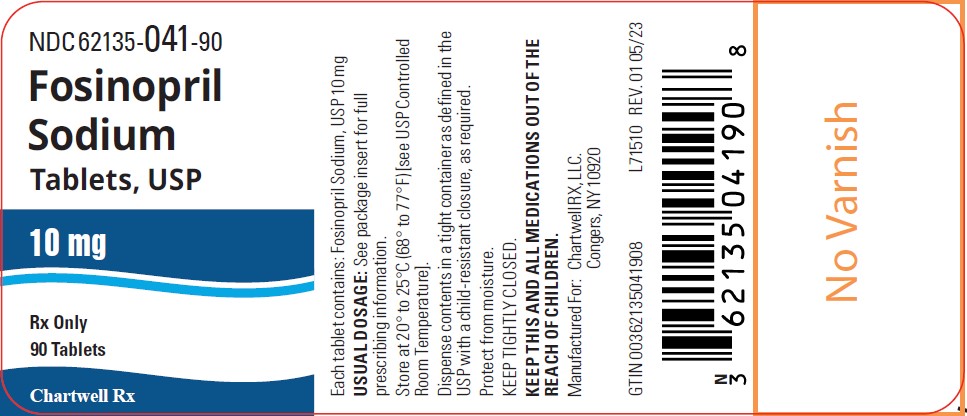
fosinopril sodium 40 MG Oral Tablet — ACE inhibitors, plain. INDICATIONS AND USAGE Fosinopril sodium tablets are indicated for the treatment of hypertension. It may be used alone or in combination with…
Boxed warning
WARNING: FETAL TOXICITY • When pregnancy is detected, discontinue fosinopril sodium tablets as soon as possible. • Drugs that act directly on the renin-angiotensin system can cause injury and death to the developing fetus. See WARNINGS, Fetal TOXICITY
majorNSAIDs, including selective COX-2 inhibitors — deterioration of renal function, including possible acute renal failure
moderatemTOR inhibitors (e.g. temsirolimus) — increased risk for angioedema
majoraliskiren — increased risks of hypotension, hyperkalemia, and changes in renal function
Indications
INDICATIONS AND USAGE Fosinopril sodium tablets are indicated for the treatment of hypertension. It may be used alone or in combination with thiazide diuretics. Fosinopril sodium tablets are indicated in the management of heart failure as adjunctive therapy when added to conventional therapy including diuretics with or without digitalis (see DOSAGE AND ADMINISTRATION ). In using fosinopril sodium tablets, consideration should be given to the fact that another angiotensin-converting enzyme inhibitor, captopril, has caused agranulocytosis, particularly in patients with renal impairment or collagen-vascular disease. Available data are insufficient to show that fosinopril sodium tablets do not have a similar risk (see WARNINGS ). In considering use of fosinopril sodium tablets, it should be noted that in controlled trials ACE inhibitors have an effect on blood pressure that is less in black patients than in non-blacks. In addition, ACE inhibitors (for which adequate data are available) cause a higher rate of angioedema in black than in non-black patients (see WARNINGS: Head and Neck Angioedema and Intestinal Angioedema ).
Dosage
DOSAGE AND ADMINISTRATION Hypertension Adults The recommended initial dose of fosinopril sodium tablets USP is 10 mg once a day, both as monotherapy and when the drug is added to a diuretic. Dosage should then be adjusted according to blood pressure response at peak (2 to 6 hours) and trough (about 24 hours after dosing) blood levels. The usual dosage range needed to maintain a response at trough is 20 to 40 mg but some patients appear to have a further response to 80 mg. In some patients treated with once daily dosing, the antihypertensive effect may diminish toward the end of the dosing interval. If trough response is inadequate, dividing the daily dose should be considered. If blood pressure is not adequately controlled with fosinopril sodium tablets USP alone, a diuretic may be added. Concomitant administration of fosinopril sodium tablets USP with potassium supplements, potassium salt substitutes, or potassium-sparing diuretics can lead to increases of serum potassium (see PRECAUTIONS ). In patients who are currently being treated with a diuretic, symptomatic hypotension occasionally can occur following the initial dose of fosinopril sodium tablets USP. To reduce the likelihood of hypotension, the diuretic should, if possible, be discontinued 2 to 3 days prior to beginning therapy with fosinopril sodium tablets USP (see WARNINGS ). Then, if blood pressure is not controlled with fosinopril sodium tablets USP alone, diuretic therapy should be resumed. If diuretic therapy cannot be discontinued, an initial dose of 10 mg of fosinopril sodium tablets USP should be used with careful medical supervision for several hours and until blood pressure has stabilized (see WARNINGS and PRECAUTIONS , Information for Patients and Drug Interactions ). Since concomitant administration of fosinopril sodium tablets USP with potassium supplements, or potassium-containing salt substitutes or potassium-sparing diuretics may lead to increases in serum potassium, they should be used with caution (see PRECAUTIONS ). Pediatrics In children, doses of fosinopril sodium tablets between 0.1 and 0.6 mg/kg have been studied and shown to reduce blood pressure to a similar extent (see CLINICAL PHARMACOLOGY , Pharmacodynamics and Clinical Effects ). Based on this, the recommended dose of fosinopril sodium tablets USP in children weighing more than 50 kg is 5 to 10 mg once per day as monotherapy. An appropriate dosage strength is not available for children weighing less than 50 kg. Heart Failure Digitalis is not required for fosinopril sodium tablets USP to manifest improvements in exercise tolerance and symptoms. Most placebo-controlled clinical trial experience has been with both digitalis and diuretics present as background therapy. The usual starting dose of fosinopril sodium tablets USP should be 10 mg once daily. Following the initial dose of fosinopril sodium tablets USP, the patient should be observed under medical supervision for at least 2 hours for the presence of hypotension or orthostasis, and if present, until blood pressure stabilizes. An initial dose of 5 mg is preferred in heart failure patients with moderate to severe renal failure or those who have been vigorously diuresed. Dosage should be increased, over a several week period, to a dose that is maximal and tolerated but not exceeding 40 mg once daily. The usual effective dosage range is 20 to 40 mg once daily. The appearance of hypotension, orthostasis, or azotemia early in dose titration should not preclude further careful dose titration. Consideration should be given to reducing the dose of concomitant diuretic. For Hypertensive or Heart Failure Patients With Renal Impairment In patients with impaired renal function, the total body clearance of fosinoprilat is approximately 50% slower than in patients with normal renal function. Since hepatobiliary elimination partially compensates for diminished renal elimination, the total body clearance of fosinoprilat does not differ appreciably with any degree of renal insufficiency (creatinine clearances < 80 mL/min/1.73 m 2 ), including end-stage renal failure (creatinine clearance < 10 mL/min/1.73 m 2 ). This relative constancy of body clearance of active fosinoprilat, resulting from the dual route of elimination, permits use of the usual dose in patients with any degree of renal impairment (see WARNINGS , Anaphylactoid Reactions During Membrane Exposure and PRECAUTIONS , Hemodialysis ).
Warnings
WARNINGS Anaphylactoid and Possibly Related Reactions Presumably because angiotensin-converting enzyme inhibitors affect the metabolism of eicosanoids and polypeptides, including endogenous bradykinin, patients receiving ACE inhibitors (including fosinopril sodium) may be subject to a variety of adverse reactions, some of them serious. Head and Neck Angioedema Angioedema involving the extremities, face, lips, mucous membranes, tongue, glottis, or larynx has been reported in patients treated with ACE inhibitors. If angioedema involves the tongue, glottis, or larynx, airway obstruction may occur and be fatal. If laryngeal stridor or angioedema of the face, lips, mucous membranes, tongue, glottis, or extremities occurs, treatment with fosinopril sodium should be discontinued and appropriate therapy instituted immediately. Where there is involvement of the tongue, glottis, or larynx, likely to cause airway obstruction, appropriate therapy, e.g., subcutaneous epinephrine solution 1:1000 (0.3 mL to 0.5 mL) should be promptly administered (see PRECAUTIONS , Information for Patients and ADVERSE REACTIONS ). Patients taking concomitant mTOR inhibitor (e.g. temsirolimus) therapy may be at increased risk for angioedema. Intestinal Angioedema Intestinal angioedema has been reported in patients treated with ACE inhibitors. These patients presented with abdominal pain (with or without nausea or vomiting); in some cases there was no prior history of facial angioedema and C-1 esterase levels were normal. The angioedema was diagnosed by procedures including abdominal CT scan or ultrasound, or at surgery, and symptoms resolved after stopping the ACE inhibitor. Intestinal angioedema should be included in the differential diagnosis of patients on ACE inhibitors presenting with abdominal pain. Anaphylactoid Reactions During Desensitization Two patients undergoing desensitizing treatment with hymenoptera venom while receiving ACE inhibitors sustained life-threatening anaphylactoid reactions. In the same patients, these reactions were avoided when ACE inhibitors were temporarily withheld, but they reappeared upon inadvertent rechallenge. Anaphylactoid Reactions During Membrane Exposure Anaphylactoid reactions have been reported in patients dialyzed with high-flux membranes and treated concomitantly with an ACE inhibitor. Anaphylactoid reactions have also been reported in patients undergoing low-density lipoprotein apheresis with dextran sulfate absorption. Hypotension Fosinopril sodium can cause symptomatic hypotension. Like other ACE inhibitors, fosinopril has been only rarely associated with hypotension in uncomplicated hypertensive patients. Symptomatic hypotension is most likely to occur in patients who have been volume- and/or salt-depleted as a result of prolonged diuretic therapy, dietary salt restriction, dialysis, diarrhea, or vomiting. Volume and/or salt depletion should be corrected before initiating therapy with fosinopril sodium. In patients with heart failure, with or without associated renal insufficiency, ACE inhibitor therapy may cause excessive hypotension, which may be associated with oliguria or azotemia, and rarely with acute renal failure and death. In such patients, fosinopril sodium therapy should be started under close medical supervision; they should be followed closely for the first 2 weeks of treatment and whenever the dose of fosinopril or diuretic is increased. Consideration should be given to reducing the diuretic dose in patients with normal or low blood pressure who have been treated vigorously with diuretics or who are hyponatremic. If hypotension occurs, the patient should be placed in a supine position, and, if necessary, treated with intravenous infusion of physiological saline. Fosinopril sodium treatment usually can be continued following restoration of blood pressure and volume. Neutropenia/Agranulocytosis Another angiotensin-converting enzyme inhibitor, captopril, has been shown to cause agranulocytosis and bone marrow depression, rarely in uncomplicated patients, but more frequently in patients with renal impairment, especially if they also have a collagen-vascular disease such as systemic lupus erythematosus or scleroderma. Available data from clinical trials of fosinopril are insufficient to show that fosinopril does not cause agranulocytosis at similar rates. Monitoring of white blood cell counts should be considered in patients with collagen-vascular disease, especially if the disease is associated with impaired renal function. Fetal Toxicity Pregnancy Category D Use of drugs that act on the renin-angiotensin system during the second and third trimesters of pregnancy reduces fetal renal function and increases fetal and neonatal morbidity and death. Resulting oligohydramnios can be associated with fetal lung hypoplasia and skeletal deformations. Potential neonatal adverse effects include skull hypoplasia, anuria, hypotension, renal failure, and death. When pregnancy is detected, discontinue fosinopril as soon as possible. These adverse outcomes are usually associated with use of these drugs in the second and third trimester of pregnancy. Most epidemiologic studies examining fetal abnormalities after exposure to antihypertensive use in the first trimester have not distinguished drugs affecting the renin-angiotensin system from other antihypertensive agents. Appropriate management of maternal hypertension during pregnancy is important to optimize outcomes for both mother and fetus. In the unusual case that there is no appropriate alternative to therapy with drugs affecting the renin-angiotensin system for a particular patient, apprise the mother of the potential risk to the fetus. Perform serial ultrasound examinations to assess the intra-amniotic environment. If oligohydramnios is observed, discontinue fosinopril, unless it is considered life-saving for the mother. Fetal testing may be appropriate, based on the week of pregnancy. Patients and physicians should be aware, however, that oligohydramnios may not appear until after the fetus has sustained irreversible injury. Closely observe infants with histories of in utero exposure to fosinopril for hypotension, oliguria, and hyperkalemia (see PRECAUTIONS, Pediatric Use ). No teratogenic effects of fosinopril were seen in studies of pregnant rats and rabbits. On a mg/kg basis, the doses used were up to 180 times (in rats) and one time (in rabbits) the maximum recommended human dose. When fosinopril was given to pregnant rats at doses about 80 to 250 times (on a mg/kg basis) the maximum recommended human dose, three similar orofacial malformations and one fetus with situs inversus were observed among the offspring. No teratogenic effects of fosinopril were seen in studies in pregnant rabbits at doses up to 25 times (on a mg/kg basis) the maximum recommended human dose. Hepatic Failure Rarely, ACE inhibitors have been associated with a syndrome that starts with cholestatic jaundice and progresses to fulminant hepatic necrosis and (sometimes) death. The mechanism of this syndrome is not understood. Patients receiving ACE inhibitors who develop jaundice or marked elevations of hepatic enzymes should discontinue the ACE inhibitor and receive appropriate medical follow-up.
Contraindications
CONTRAINDICATIONS Fosinopril sodium tablets are contraindicated in patients who are hypersensitive to this product or to any other angiotensin-converting enzyme inhibitor (e.g., a patient who has experienced angioedema with any other ACE inhibitor therapy). Do not co-administer fosinopril sodium tablets with aliskiren in patients with diabetes.
Mechanism of action
CLINICAL PHARMACOLOGY Mechanism of Action In animals and humans, fosinopril sodium is hydrolyzed by esterases to the pharmacologically active form, fosinoprilat, a specific competitive inhibitor angiotensin-converting enzyme (ACE). ACE is a peptidyl dipeptidase that catalyzes the conversion of angiotensin I to the vasoconstrictor substance, angiotensin II. Angiotensin II also stimulates aldosterone secretion by the adrenal cortex. Inhibition of ACE results in decreased plasma angiotensin II, which leads to decreased vasopressor activity and to decreased aldosterone secretion. The latter decrease may result in a small increase of serum potassium. In 647 hypertensive patients treated with fosinopril alone for an average of 29 weeks, mean increases in serum potassium of 0.1 mEq/L were observed. Similar increases were observed among all patients treated with fosinopril, including those receiving concomitant diuretic therapy. Removal of angiotensin II negative feedback on renin secretion leads to increased plasma renin activity. ACE is identical to kininase, an enzyme that degrades bradykinin. Whether increased levels of bradykinin, a potent vasodepressor peptide, play a role in the therapeutic effects of fosinopril sodium remains to be elucidated. While the mechanism through which fosinopril sodium lowers blood pressure is believed to be primarily suppression of the renin-angiotensin-aldosterone system, fosinopril sodium has an antihypertensive effect even in patients with low-renin hypertension. Although fosinopril sodium was antihypertensive in all races studied, black hypertensive patients (usually a low-renin hypertensive population) had a smaller average response to ACE inhibitor monotherapy than non-black patients. In patients with heart failure, the beneficial effects of fosinopril sodium are thought to result primarily from suppression of the renin-angiotensin-aldosterone system; inhibition of the angiotensin-converting enzyme produces decreases in both preload and afterload. Pharmacokinetics and Metabolism Following oral administration, fosinopril (the prodrug) is absorbed slowly. The absolute absorption of fosinopril averaged 36% of an oral dose. The primary site of absorption is the proximal small intestine (duodenum/jejunum). While the rate of absorption may be slowed by the presence of food in the gastrointestinal tract, the extent of absorption of fosinopril is essentially unaffected. Fosinoprilat is highly protein-bound (approximately 99.4%), has a relatively small volume of distribution, and has negligible binding to cellular components in blood. After single and multiple oral doses, plasma levels, areas under plasma concentration-time curves (AUCs), and peak concentrations (C maxs ) are directly proportional to the dose of fosinopril. Times to peak concentrations are independent of dose and are achieved in approximately 3 hours. After an oral dose of radiolabeled fosinopril, 75% of radioactivity in plasma was present as active fosinoprilat, 20 to 30% as a glucuronide conjugate of fosinoprilat, and 1 to 5% as a p -hydroxy metabolite of fosinoprilat. Since fosinoprilat is not biotransformed after intravenous administration, fosinopril, not fosinoprilat, appears to be the precursor for the glucuronide and p -hydroxy metabolites. In rats, the p -hydroxy metabolite of fosinoprilat is as potent an inhibitor of ACE as fosinoprilat; the glucuronide conjugate is devoid of ACE inhibitory activity. After intravenous administration, fosinoprilat was eliminated approximately equally by the liver and kidney. After oral administration of radiolabeled fosinopril, approximately half of the absorbed dose is excreted in the urine and the remainder is excreted in the feces. In two studies involving healthy subjects, the mean body clearance of intravenous fosinoprilat was between 26 and 39 mL/min. In healthy subjects, the terminal elimination half-life (t ½ ) of an intravenous dose of radiolabeled fosinoprilat is approximately 12 hours. In hypertensive patients with normal renal and hepatic function, who received repeated doses of fosinopril, the effective t ½ for accumulation of fosinoprilat averaged 11.5 hours. In patients with heart failure, the effective t ½ was 14 hours. In patients with mild to severe renal insufficiency (creatinine clearance 10 to 80 mL/min/1.73 m 2 ), the clearance of fosinoprilat does not differ appreciably from normal, because of the large contribution of hepatobiliary elimination. In patients with end-stage renal disease (creatinine clearance <10 mL/min/1.73 m 2 ), the total body clearance of fosinoprilat is approximately one-half of that in patients with normal renal function. (See DOSAGE AND ADMINISTRATION .) Fosinopril is not well dialyzed. Clearance of fosinoprilat by hemodialysis and peritoneal dialysis averages 2% and 7%, respectively, of urea clearances. In patients with hepatic insufficiency (alcoholic or biliary cirrhosis) , the extent of hydrolysis of fosinopril is not appreciably reduced, although the rate of hydrolysis may be slowed; the apparent total body clearance of fosinoprilat is approximately one-half of that in patients with normal hepatic function. In elderly (male) subjects (65 to 74 years old) with clinically normal renal and hepatic function, there appear to be no significant differences in pharmacokinetic parameters for fosinoprilat compared to those of younger subjects (20 to 35 years old). In pediatric patients , (N=20) age 6 to 16 years, with glomerular filtration rate ≥25 mL/min, given a single dose of fosinopril (0.3 mg/kg given as solution), the mean AUC and C max values of fosinoprilat (the active form of fosinopril) were similar to those seen in healthy adults receiving 20 mg (about 0.3 mg/kg for a 70 kg adult) of fosinopril as a solution. The terminal elimination half-life of fosinoprilat in pediatric patients was 11 to 13 hours, also similar to that observed in adults. Fosinoprilat was found to cross the placenta of pregnant animals. Studies in animals indicate that fosinopril and fosinoprilat do not cross the blood-brain barrier. Pharmacodynamics and Clinical Effects Serum ACE activity was inhibited by ≥90% at 2 to 12 hours after single doses of 10 to 40 mg of fosinopril. At 24 hours, serum ACE activity remained suppressed by 85%, 93%, and 93% in the 10, 20, and 40 mg dose groups, respectively. Hypertension Adult Administration of fosinopril sodium tablets to patients with mild to moderate hypertension results in a reduction of both supine and standing blood pressure to about the same extent with no compensatory tachycardia. Symptomatic postural hypotension is infrequent, although it can occur in patients who are salt- and/or volume-depleted (see WARNINGS ). Use of fosinopril sodium in combination with thiazide diuretics gives a blood pressure-lowering effect greater than that seen with either agent alone. Following oral administration of single doses of 10 to 40 mg, fosinopril sodium lowered blood pressure within 1 hour, with peak reductions achieved 2 to 6 hours after dosing. The antihypertensive effect of a single dose persisted for 24 hours. Following 4 weeks of monotherapy in placebo-controlled trials in patients with mild to moderate hypertension, once daily doses of 20 to 80 mg lowered supine or seated systolic and diastolic blood pressures 24 hours after dosing by an average of 8 to 9/6 to 7 mmHg more than placebo. The trough effect was about 50 to 60% of the peak diastolic response and about 80% of the peak systolic response. In most trials, the antihypertensive effect of fosinopril sodium increased during the first several weeks of repeated measurements. The antihypertensive effect of fosinopril sodium has been shown to continue during long-term therapy for at least 2 years. Abrupt withdrawal of fosinopril sodium has not resulted in a rapid increase in blood pressure. Limited experience in controlled and uncontrolled trials combining fosinopril with a calcium channel blocker or a loo
A drug lookup is just the start. Eleplan keeps the whole care plan in one place.
Medications, diagnoses, documents, appointments, and the whole care team — organized and always in sync, with Ellie, your AI care assistant, on top of it. Free to start.