cyclopentolate hydrochloride 10 MG/ML Ophthalmic Solution
Managing this medication for someone you care for? Eleplan keeps diagnoses, medications and appointments in one plan.
Start free with EleplanClinical drug
cyclopentolate hydrochloride 10 MG/ML Ophthalmic Solution
10 MG/ML · Ophthalmic Solution · ophthalmic
A form of cyclopentolate →
cyclopentolate hydrochloride 10 MG/ML Ophthalmic Solution — Anticholinergics. INDICATIONS AND USAGE Cyclopentolate hydrochloride ophthalmic solution is used to produce mydriasis and cycloplegia.
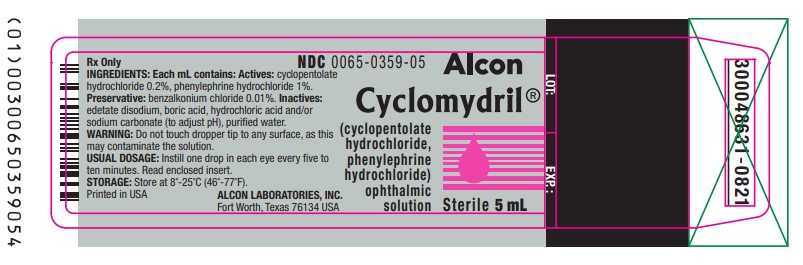
Active ingredient
Classification
Anticholinergics
Drug interactions
Cyclopentolate may interfere with the effects of certain ocular anti-hypertensive medications.
- unknowncarbachol — interference with ocular anti-hypertensive action
- unknownpilocarpine — interference with ocular anti-hypertensive action
- unknownophthalmic cholinesterase inhibitors — interference with ocular anti-hypertensive action
Indications
INDICATIONS AND USAGE Cyclopentolate hydrochloride ophthalmic solution is used to produce mydriasis and cycloplegia.
Dosage
DOSAGE AND ADMINISTRATION: Adults: Instill one or two drops of 0.5%, 1% or 2% solution in the eye which may be repeated in five to ten minutes if necessary. Complete recovery usually occurs in 24 hours. Complete recovery from mydriasis in some individuals may require several days. Children: Instill one or two drops of 0.5%, 1% or 2% solution in the eye which may be repeated five to ten minutes later by a second application of 0.5% or 1% solution if necessary. Small Infants: A single instillation of one drop of 0.5% in the eye. To minimize absorption, apply pressure over the nasolacrimal sac for two to three minutes. Observe infant closely for at least 30 minutes following instillation. Individuals with heavily pigmented irides may require higher strengths.
Warnings
WARNINGS: FOR TOPICAL OPHTHALMIC USE ONLY . NOT FOR INJECTION. This preparation may cause Central Nervous System (CNS) disturbances. This is especially true in younger age groups, but may occur at any age, especially with the stronger solutions. Infants are especially prone to CNS and cardiopulmonary side effects from cyclopentolate. To minimize absorption, use only 1 drop of 0.5% CYCLOGYL solution per eye, followed by pressure applied over the nasolacrimal sac for two to three minutes. Observe infants closely for at least 30 minutes following instillation. Mydriatics may produce a transient elevation of intraocular pressure. Therefore, patients with untreated narrow angle glaucoma or anatomically narrow angles may be susceptible to angle closure following administration.
Contraindications
CONTRAINDICATIONS: Should not be used if the patient is hypersensitive to any component of this preparation.
Mechanism of action
CLINICAL PHARMACOLOGY: This anticholinergic preparation blocks the responses of the sphincter muscle of the iris and the accommodative muscle of the ciliary body to cholinergic stimulation, producing pupillary dilation (mydriasis) and paralysis of accommodation (cycloplegia). It acts rapidly, but has a shorter duration than atropine. Maximal cycloplegia occurs within 25 to 75 minutes after instillation. Complete recovery of accommodation usually takes 6 to 24 hours. Complete recovery from mydriasis in some individuals may require several days. Heavily pigmented irides may require more doses than lightly pigmented irides.
Source: RxNorm + openFDA + RxClass + FAERS · 2026
Look up another medication