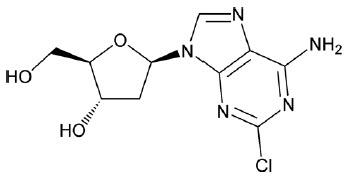
cladribine 10 MG Oral Tablet — Purine analogues. INDICATIONS AND USAGE MAVENCLAD is indicated for the treatment of relapsing forms of multiple sclerosis (MS), to include relapsing-remitting disease…
Boxed warning
WARNING: MALIGNANCIES AND RISK OF TERATOGENICITY Malignancies Treatment with MAVENCLAD may increase the risk of malignancy. MAVENCLAD is contraindicated in patients with current malignancy. In patients with prior malignancy or with increased risk of malignancy, evaluate the benefits and risks of the use of MAVENCLAD on an individual patient basis. Follow standard cancer screening guidelines in patients treated with MAVENCLAD [see Contraindications (4) and Warnings and Precautions (5.1) ] . Risk of Teratogenicity MAVENCLAD is contraindicated for use in pregnant women and in females and males of reproductive potential who do not plan to use effective contraception because of the potential for fetal harm. Malformations and embryolethality occurred in animals. Exclude pregnancy before the start of treatment with MAVENCLAD in females of reproductive potential. Advise females and males of reproductive potential to use effective contraception during MAVENCLAD dosing and for 6 months after the last dose in each treatment course for females, and 14 weeks for males. Stop MAVENCLAD if the patient becomes pregnant [see Contraindications (4) , Warnings and Precautions (5.2) , and Use in Specific Populations (8.1 , 8.3) ] . WARNING: MALIGNANCIES and RISK OF TERATOGENICITY See full prescribing information for complete boxed warning. Malignancies MAVENCLAD may increase the risk of malignancy. MAVENCLAD is contraindicated in patients with current malignancy; evaluate the benefits and risks on an individual basis for patients with prior or increased risk of malignancy. ( 5.1 ) Risk of Teratogenicity MAVENCLAD is contraindicated for use in pregnant women and in women and men of reproductive potential who do not plan to use effective contraception because of the risk of fetal harm. ( 5.2 )
Cladribine has several drug interactions that may increase the risk of adverse reactions or alter its efficacy.
majorimmunomodulatory, immunosuppressive, or myelosuppressive drugs — increased risk of adverse reactions due to additive effects on the immune system
moderateinterferon-beta — increased risk of lymphopenia
majorhematotoxic drugs — increased risk of adverse reactions due to additive hematological effects
majorlamivudine, zalcitabine, ribavirin, stavudine, zidovudine — interference with intracellular phosphorylation and activity of cladribine
majorpotent ENT1, CNT3, and BCRP transporter inhibitors (e.g., ritonavir, eltrombopag, curcumin, cyclosporine, dilazep, nifedipine, nimodipine, cilostazol, sulindac, dipyridamole, reserpine) — altered bioavailability, intracellular distribution, and renal elimination of cladribine
moderatepotent BCRP and P-gp transporter inducers (e.g., corticosteroids, rifampicin, St. John's Wort) — possible decrease in cladribine exposure
Indications
INDICATIONS AND USAGE MAVENCLAD is indicated for the treatment of relapsing forms of multiple sclerosis (MS), to include relapsing-remitting disease and active secondary progressive disease, in adults. Because of its safety profile, use of MAVENCLAD is generally recommended for patients who have had an inadequate response to, or are unable to tolerate, an alternate drug indicated for the treatment of MS [see Warnings and Precautions (5) ]. Limitations of Use MAVENCLAD is not recommended for use in patients with clinically isolated syndrome (CIS) because of its safety profile [see Warnings and Precautions (5) ]. MAVENCLAD is a purine antimetabolite indicated for the treatment of relapsing forms of multiple sclerosis (MS), to include relapsing-remitting disease and active secondary progressive disease, in adults. Because of its safety profile, use of MAVENCLAD is generally recommended for patients who have had an inadequate response to, or are unable to tolerate, an alternate drug indicated for the treatment of MS . ( 1 , 5 ) Limitations of Use MAVENCLAD is not recommended for use in patients with clinically isolated syndrome (CIS) because of its safety profile . ( 1 , 5 )
Dosage
DOSAGE AND ADMINISTRATION: Usual Dosage The recommended dose and schedule of cladribine injection for active Hairy Cell Leukemia is as a single course given by continuous infusion for seven consecutive days at a dose of 0.09 mg/kg/day. Deviations from this dosage regimen are not advised. If the patient does not respond to the initial course of cladribine injection for Hairy Cell Leukemia, it is unlikely that they will benefit from additional courses. Physicians should consider delaying or discontinuing the drug if neurotoxicity or renal toxicity occurs (see WARNINGS ). Specific risk factors predisposing to increased toxicity from cladribine injection have not been defined. In view of the known toxicities of agents of this class, it would be prudent to proceed carefully in patients with known or suspected renal insufficiency or severe bone marrow impairment of any etiology. Patients should be monitored closely for hematologic and non-hematologic toxicity (see WARNINGS and PRECAUTIONS ). Preparation and Administration of Intravenous Solutions Cladribine injection must be diluted with the designated diluent prior to administration. Since the drug product does not contain any antimicrobial preservative or bacteriostatic agent, aseptic technique and proper environmental precautions must be observed in preparation of cladribine injection solutions . To prepare a single daily dose Cladribine injection should be passed through a sterile 0.22 μ m disposable hydrophilic syringe filter prior to introduction into the infusion bag, prior to each daily infusion. Add the calculated dose (0.09 mg/kg or 0.09 mL/kg) of cladribine injection through the sterile filter to an infusion bag containing 500 mL of 0.9% Sodium Chloride Injection, USP. Infuse continuously over 24 hours. Repeat daily for a total of seven consecutive days. The use of 5% dextrose as a diluent is not recommended because of increased degradation of cladribine. Admixtures of cladribine injection are chemically and physically stable for at least 24 hours at room temperature under normal room fluorescent light in Baxter Viaflex ® PVC infusion containers. Since limited compatibility data are available, adherence to the recommended diluents and infusion systems is advised. Dose of Cladribine Injection Recommended Diluent Quantity of Diluent 24-hour infusion method 1 (day) x 0.09 mg/kg 0.9% Sodium Chloride Injection, USP 500 mL To prepare a 7-day infusion The seven-day infusion solution should only be prepared with Bacteriostatic 0.9% Sodium Chloride Injection, USP (0.9% benzyl alcohol preserved). In order to minimize the risk of microbial contamination, both cladribine injection and the diluent should be passed through a sterile 0.22 μ m disposable hydrophilic syringe filter as each solution is being introduced into the infusion reservoir. First add the calculated dose of cladribine injection (7 days x 0.09 mg/kg or mL/kg) to the infusion reservoir through the sterile filter. Then add a calculated amount of Bacteriostatic 0.9% Sodium Chloride Injection, USP (0.9% benzyl alcohol preserved) also through the filter to bring the total volume of the solution to 100 mL. After completing solution preparation, clamp off the line, disconnect and discard the filter. Aseptically aspirate air bubbles from the reservoir as necessary using the syringe and a dry second sterile filter or a sterile vent filter assembly. Reclamp the line and discard the syringe and filter assembly. Infuse continuously over seven days. Solutions prepared with Bacteriostatic Sodium Chloride Injection for individuals weighing more than 85 kg may have reduced preservative effectiveness due to greater dilution of the benzyl alcohol preservative. Admixtures for the seven-day infusion have demonstrated acceptable chemical and physical stability for at least seven days in the SIMS Deltec MEDICATION CASSETTE™ Reservoir. Dose of Cladribine Injection Recommended Diluent Quantity of Diluent 7-day infusion method (use sterile 0.22 μ m filter when preparing infusion solution 7 (days) x 0.09 mg/kg Bacteriostatic 0.9% Sodium Chloride Injection, USP (0.9% benzyl alcohol) q.s. to 100 mL Since limited compatibility data are available, adherence to the recommended diluents and infusion systems is advised. Solutions containing cladribine injection should not be mixed with other intravenous drugs or additives or infused simultaneously via a common intravenous line, since compatibility testing has not been performed. Preparations containing benzyl alcohol should not be used in neonates (see WARNINGS ). Care must be taken to assure the sterility of prepared solutions. Once diluted, solutions of cladribine injection should be administered promptly or stored in the refrigerator (2° to 8°C) for no more than eight hours prior to start of administration. Vials of cladribine injection are for single-use only. Any unused portion should be discarded in an appropriate manner (see Handling and Disposal ). Parenteral drug products should be inspected visually for particulate matter and discoloration prior to administration, whenever solution and container permit. A precipitate may occur during the exposure of cladribine injection to low temperatures; it may be resolubilized by allowing the solution to warm naturally to room temperature and by shaking vigorously. DO NOT HEAT OR MICROWAVE. Chemical Stability of Vials When stored in refrigerated conditions between 2° to 8°C (36° to 46°F) and protected from light, unopened vials of cladribine injection are stable until the expiration date indicated on the package. Freezing does not adversely affect the solution. If freezing occurs, thaw naturally to room temperature. DO NOT heat or microwave. Once thawed, the vial of cladribine injection is stable until expiry if refrigerated. DO NOT refreeze. Once diluted, solutions containing cladribine injection should be administered promptly or stored in the refrigerator (2° to 8°C) for no more than 8 hours prior to administration. Handling and Disposal The potential hazards associated with cytotoxic agents are well established and proper precautions should be taken when handling, preparing, and administering cladribine injection. The use of disposable gloves and protective garments is recommended. If cladribine injection contacts the skin or mucous membranes, wash the involved surface immediately with copious amounts of water. Several guidelines on this subject have been published. (2-8) There is no general agreement that all of the procedures recommended in the guidelines are necessary or appropriate. Refer to your Institution’s guidelines and all applicable state/local regulations for disposal of cytotoxic waste. Usual Dosage The recommended dose and schedule of cladribine injection for active Hairy Cell Leukemia is as a single course given by continuous infusion for seven consecutive days at a dose of 0.09 mg/kg/day. Deviations from this dosage regimen are not advised. If the patient does not respond to the initial course of cladribine injection for Hairy Cell Leukemia, it is unlikely that they will benefit from additional courses. Physicians should consider delaying or discontinuing the drug if neurotoxicity or renal toxicity occurs (see WARNINGS ). Specific risk factors predisposing to increased toxicity from cladribine injection have not been defined. In view of the known toxicities of agents of this class, it would be prudent to proceed carefully in patients with known or suspected renal insufficiency or severe bone marrow impairment of any etiology. Patients should be monitored closely for hematologic and non-hematologic toxicity (see WARNINGS and PRECAUTIONS ). Preparation and Administration of Intravenous Solutions Cladribine injection must be diluted with the designated diluent prior to administration. Since the drug product does not contain any antimicrobial preservative or bacteriostatic agent, aseptic technique and proper environmental precautions must be observed in prepa
Warnings
WARNINGS AND PRECAUTIONS Lymphopenia: Monitor lymphocyte counts before, during and after treatment. ( 5.3 ) Infections: Serious, including life-threatening and fatal infections, have occurred. Screen patients for active and latent infections; delay treatment until infection is fully resolved or controlled. Vaccination of patients seronegative to varicella zoster virus (VZV) is recommended prior to treatment. Vaccination of patients seropositive to VZV with zoster vaccine recombinant, adjuvanted, is recommended prior to or during treatment. Administer anti-herpes prophylaxis in patients with lymphocyte counts less than 200 cells per microliter. Monitor for infections. ( 5.4 ) Hematologic toxicity: Monitor complete blood count before, during and after treatment. ( 5.5 ) Graft-versus-host-disease with blood transfusion: Irradiation of cellular blood components is recommended. ( 5.6 ) Liver injury: Clinically significant liver injury has occurred. Obtain tests prior to treatment. Discontinue if clinically significant injury is suspected. ( 5.7 ) 5.1 Malignancies Treatment with MAVENCLAD may increase the risk of malignancy. In controlled and extension clinical studies worldwide, malignancies occurred more frequently in MAVENCLAD-treated patients [10 events in 3,754 patient-years (0.27 events per 100 patient-years)], compared to placebo patients [3 events in 2,275 patient-years (0.13 events per 100 patient-years)]. Malignancy cases in MAVENCLAD patients included metastatic pancreatic carcinoma, malignant melanoma (2 cases), ovarian cancer, compared to malignancy cases in placebo patients, all of which were curable by surgical resection [basal cell carcinoma, cervical carcinoma in situ (2 cases)]. The incidence of malignancies in United States MAVENCLAD clinical study patients was higher than the rest of the world [4 events in 189 patient-years (2.21 events per 100 patient-years) compared to 0 events in United States placebo patients]; however, the United States results were based on a limited amount of patient data. After the completion of 2 treatment courses, do not administer additional MAVENCLAD treatment during the next 2 years [see Dosage and Administration (2.2) ]. In clinical studies, patients who received additional MAVENCLAD treatment within 2 years after the first 2 treatment courses had an increased incidence of malignancy [7 events in 790 patient-years (0.91 events per 100 patient-years) calculated from the start of cladribine treatment in Year 3]. The risk of malignancy with reinitiating MAVENCLAD more than 2 years after the completion of 2 treatment courses has not been studied. MAVENCLAD is contraindicated in patients with current malignancy. In patients with prior malignancy or with increased risk of malignancy, evaluate the benefits and risks of the use of MAVENCLAD on an individual patient basis. Follow standard cancer screening guidelines in patients treated with MAVENCLAD. 5.2 Risk of Teratogenicity MAVENCLAD may cause fetal harm when administered to pregnant women. Malformations and embryolethality occurred in animals [see Use in Specific Populations (8.1) ]. Advise women of the potential risk to a fetus during MAVENCLAD dosing and for 6 months after the last dose in each treatment course. In females of reproductive potential, pregnancy should be excluded before initiation of each treatment course of MAVENCLAD and prevented by the use of effective contraception during MAVENCLAD dosing and for at least 6 months after the last dose of each treatment course. Women who become pregnant during treatment with MAVENCLAD should discontinue treatment [see Use in Specific Populations (8.1 , 8.3) ]. MAVENCLAD is contraindicated for use in pregnant women and in women and men of reproductive potential who do not plan to use effective contraception. 5.3 Lymphopenia MAVENCLAD causes a dose-dependent reduction in lymphocyte count. In clinical studies, 87% of MAVENCLAD-treated patients experienced lymphopenia. The lowest absolute lymphocyte counts occurred approximately 2 to 3 months after the start of each treatment course and were lower with each additional treatment course. In patients treated with a cumulative dose of MAVENCLAD 3.5 mg per kg over 2 courses as monotherapy, 26% and 1% had nadir absolute lymphocyte counts less than 500 and less than 200 cells per microliter, respectively. At the end of the second treatment course, 2% of clinical study patients had lymphocyte counts less than 500 cells per microliter; median time to recovery to at least 800 cells per microliter was approximately 28 weeks. Additive hematological adverse reactions may be expected if MAVENCLAD is administered prior to or concomitantly with other drugs that affect the hematological profile [see Drug Interactions (7.3) ]. The incidence of lymphopenia less than 500 cells per microliter was higher in patients who had used drugs to treat relapsing forms of MS prior to study entry (32.1%), compared to those with no prior use of these drugs (23.8%). Obtain complete blood count (CBC) with differential including lymphocyte count prior to, during, and after treatment with MAVENCLAD. See Dosage and Administration (2.1 , 2.5) and Warnings and Precautions (5.4) for timing of CBC measurements and additional instructions based on the patient's lymphocyte counts and clinical status (e.g., infections). 5.4 Infections Serious, including life-threatening or fatal, bacterial, viral, parasitic, and fungal infections have been reported in patients receiving MAVENCLAD. MAVENCLAD reduces the body's immune defense, and an increased risk of infections has been observed in patients receiving MAVENCLAD. Infections occurred in 49% of MAVENCLAD-treated patients compared to 44% of placebo patients in clinical studies; serious or severe infections occurred in 2.4% of MAVENCLAD-treated patients and 2.0% of placebo-treated patients. The most frequent serious infections in MAVENCLAD-treated patients included herpes zoster and pyelonephritis (see Herpes Virus Infections ). Fungal infections were observed, including cases of coccidioidomycosis. In the postmarketing setting, serious infections have been reported, including nocardiosis, varicella zoster, histoplasmosis, cryptococcosis, and toxoplasmosis. The majority of patients with these infections who had an available absolute lymphocyte count at the time of the event had concurrent lymphopenia, consistent with the mechanism of action of MAVENCLAD [see Warnings and Precautions (5.3) ] . HIV infection, active tuberculosis, and active hepatitis must be excluded before initiation of each treatment course of MAVENCLAD [see Contraindications (4) ]. Delay initiation of MAVENCLAD in patients with an acute infection until the infection is fully resolved or controlled. Initiation of MAVENCLAD in patients currently receiving immunosuppressive or myelosuppressive therapy is not recommended [see Drug Interactions (7.1) ]. Concomitant use of MAVENCLAD with these therapies could increase the risk of immunosuppression. Tuberculosis Three of 1,976 (0.2%) cladribine-treated patients in the clinical program developed tuberculosis. All three cases occurred in regions where tuberculosis is endemic. One case of tuberculosis was fatal, and two cases resolved with treatment. Perform tuberculosis screening prior to initiation of the first and second treatment course of MAVENCLAD. Latent tuberculosis infections may be activated with use of MAVENCLAD. In patients with tuberculosis infection, delay initiation of MAVENCLAD until the infection has been adequately treated. Hepatitis One clinical study patient died from fulminant hepatitis B infection. Perform screening for hepatitis B and C prior to initiation of the first and second treatment course of MAVENCLAD. Latent hepatitis infections may be activated with use of MAVENCLAD. Patients who are carriers of hepatitis B or C virus may be at risk of irreversible liver damage caused by virus reactivation. In patients with hepatitis infe
Contraindications
CONTRAINDICATIONS MAVENCLAD is contraindicated: in patients with current malignancy [see Warnings and Precautions (5.1) ]. in pregnant women and in females and males of reproductive potential who do not plan to use effective contraception during MAVENCLAD dosing and for 6 months after the last dose in each treatment course for females, and 14 weeks for males. May cause fetal harm [see Warnings and Precautions (5.2) and Use in Specific Populations (8.1 , 8.3) ] . in patients infected with the human immunodeficiency virus (HIV ) [see Warnings and Precautions (5.4) ]. in patients with active chronic infections (e.g., hepatitis or tuberculosis) [see Warnings and Precautions (5.4) ]. in patients with a history of hypersensitivity to cladribine [see Warnings and Precautions (5.8) ]. in females intending to breastfeed on a MAVENCLAD treatment day and for 10 days after the last dose [see Use in Specific Populations (8.2) ]. Patients with current malignancy. ( 4 ) Pregnant women, and females and males of reproductive potential who do not plan to use effective contraception during MAVENCLAD dosing and for 6 months after the last dose in each treatment course for females, and 14 weeks for males. ( 4 , 8.3 ) HIV infection. ( 4 ) Active chronic infections (e.g., hepatitis or tuberculosis). ( 4 ) History of hypersensitivity to cladribine. ( 4 , 5.8 ) Females intending to breastfeed on a MAVENCLAD treatment day and for 10 days after the last dose. ( 4 , 8.2 )
Mechanism of action
CLINICAL PHARMACOLOGY: Cellular Resistance and Sensitivity The selective toxicity of 2-chloro-2’-deoxy-ß-D-adenosine towards certain normal and malignant lymphocyte and monocyte populations is based on the relative activities of deoxycytidine kinase and deoxynucleotidase. Cladribine passively crosses the cell membrane. In cells with a high ratio of deoxycytidine kinase to deoxynucleotidase, it is phosphorylated by deoxycytidine kinase to 2-chloro-2’-deoxy-ß-D-adenosine monophosphate (2-CdAMP). Since 2-chloro-2’-deoxy-ß-D-adenosine is resistant to deamination by adenosine deaminase and there is little deoxynucleotide deaminase in lymphocytes and monocytes, 2-CdAMP accumulates intracellularly and is subsequently converted into the active triphosphate deoxynucleotide,2-chloro-2’-deoxy-ß-D-adenosine triphosphate (2-CdATP). It is postulated that cells with high deoxycytidine kinase and low deoxynucleotidase activities will be selectively killed by 2-chloro-2’-deoxy-ß-D-adenosine as toxic deoxynucleotides accumulate intracellularly. Cells containing high concentrations of deoxynucleotides are unable to properly repair single-strand DNA breaks. The broken ends of DNA activate the enzyme poly (ADP-ribose) polymerase resulting in NAD and ATP depletion and disruption of cellular metabolism. There is evidence, also, that 2-CdATP is incorporated into the DNA of dividing cells, resulting in impairment of DNA synthesis. Thus, 2-chloro-2’-deoxy-ß-D-adenosine can be distinguished from other chemotherapeutic agents affecting purine metabolism in that it is cytotoxic to both actively dividing and quiescent lymphocytes and monocytes, inhibiting both DNA synthesis and repair. Pharmacokinetics In a clinical investigation, 17 patients with Hairy Cell Leukemia (HCL) and normal renal function were treated for seven days with the recommended treatment regimen of cladribine injection (0.09 mg/kg/day) by continuous intravenous infusion. The mean steady-state serum concentration was estimated to be 5.7 ng/mL with an estimated systemic clearance of 663.5 mL/h/kg when cladribine injection was given by continuous infusion over seven days. In Hairy Cell Leukemia patients, there does not appear to be a relationship between serum concentrations and ultimate clinical outcome. In another study, eight patients with hematologic malignancies received a two (2) hour infusion of cladribine injection (0.12 mg/kg). The mean end-of-infusion plasma cladribine injection concentration was 48 ± 19 ng/mL. For five of these patients, the disappearance of cladribine injection could be described by either a biphasic or triphasic decline. For these patients with normal renal function, the mean terminal half-life was 5.4 hours. Mean values for clearance and steady-state volume of distribution were 978 ± 422 mL/h/kg and 4.5 ± 2.8 L/kg, respectively. Cladribine plasma concentration after intravenous administration declines multi-exponentially with an average half-life of 6.7 +/- 2.5 hours. In general, the apparent volume of distribution of cladribine is approximately 9 L/kg, indicating an extensive distribution in body tissues. Cladribine penetrates into cerebrospinal fluid. One report indicates that concentrations are approximately 25% of those in plasma. Cladribine injection is bound approximately 20% to plasma proteins. Except for some understanding of the mechanism of cellular toxicity, no other information is available on the metabolism of cladribine injection in humans. An average of 18% of the administered dose has been reported to be excreted in urine of patients with solid tumors during a five-day continuous intravenous infusion of 3.5 to 8.1 mg/m 2 /day of cladribine injection. The effect of renal and hepatic impairment on the elimination of cladribine has not been investigated in humans. Cellular Resistance and Sensitivity The selective toxicity of 2-chloro-2’-deoxy-ß-D-adenosine towards certain normal and malignant lymphocyte and monocyte populations is based on the relative activities of deoxycytidine kinase and deoxynucleotidase. Cladribine passively crosses the cell membrane. In cells with a high ratio of deoxycytidine kinase to deoxynucleotidase, it is phosphorylated by deoxycytidine kinase to 2-chloro-2’-deoxy-ß-D-adenosine monophosphate (2-CdAMP). Since 2-chloro-2’-deoxy-ß-D-adenosine is resistant to deamination by adenosine deaminase and there is little deoxynucleotide deaminase in lymphocytes and monocytes, 2-CdAMP accumulates intracellularly and is subsequently converted into the active triphosphate deoxynucleotide,2-chloro-2’-deoxy-ß-D-adenosine triphosphate (2-CdATP). It is postulated that cells with high deoxycytidine kinase and low deoxynucleotidase activities will be selectively killed by 2-chloro-2’-deoxy-ß-D-adenosine as toxic deoxynucleotides accumulate intracellularly. Cells containing high concentrations of deoxynucleotides are unable to properly repair single-strand DNA breaks. The broken ends of DNA activate the enzyme poly (ADP-ribose) polymerase resulting in NAD and ATP depletion and disruption of cellular metabolism. There is evidence, also, that 2-CdATP is incorporated into the DNA of dividing cells, resulting in impairment of DNA synthesis. Thus, 2-chloro-2’-deoxy-ß-D-adenosine can be distinguished from other chemotherapeutic agents affecting purine metabolism in that it is cytotoxic to both actively dividing and quiescent lymphocytes and monocytes, inhibiting both DNA synthesis and repair. Pharmacokinetics In a clinical investigation, 17 patients with Hairy Cell Leukemia (HCL) and normal renal function were treated for seven days with the recommended treatment regimen of cladribine injection (0.09 mg/kg/day) by continuous intravenous infusion. The mean steady-state serum concentration was estimated to be 5.7 ng/mL with an estimated systemic clearance of 663.5 mL/h/kg when cladribine injection was given by continuous infusion over seven days. In Hairy Cell Leukemia patients, there does not appear to be a relationship between serum concentrations and ultimate clinical outcome. In another study, eight patients with hematologic malignancies received a two (2) hour infusion of cladribine injection (0.12 mg/kg). The mean end-of-infusion plasma cladribine injection concentration was 48 ± 19 ng/mL. For five of these patients, the disappearance of cladribine injection could be described by either a biphasic or triphasic decline. For these patients with normal renal function, the mean terminal half-life was 5.4 hours. Mean values for clearance and steady-state volume of distribution were 978 ± 422 mL/h/kg and 4.5 ± 2.8 L/kg, respectively. Cladribine plasma concentration after intravenous administration declines multi-exponentially with an average half-life of 6.7 +/- 2.5 hours. In general, the apparent volume of distribution of cladribine is approximately 9 L/kg, indicating an extensive distribution in body tissues. Cladribine penetrates into cerebrospinal fluid. One report indicates that concentrations are approximately 25% of those in plasma. Cladribine injection is bound approximately 20% to plasma proteins. Except for some understanding of the mechanism of cellular toxicity, no other information is available on the metabolism of cladribine injection in humans. An average of 18% of the administered dose has been reported to be excreted in urine of patients with solid tumors during a five-day continuous intravenous infusion of 3.5 to 8.1 mg/m 2 /day of cladribine injection. The effect of renal and hepatic impairment on the elimination of cladribine has not been investigated in humans.
A drug lookup is just the start. Eleplan keeps the whole care plan in one place.
Medications, diagnoses, documents, appointments, and the whole care team — organized and always in sync, with Ellie, your AI care assistant, on top of it. Free to start.