Ponesimod
Managing this medication for someone you care for? Eleplan keeps diagnoses, medications and appointments in one plan.
Start free with EleplanMedication reference
Ponesimod
Sphingosine 1-phosphate Receptor Modulator [EPC] — ORAL
Ponesimod — Sphingosine 1-phosphate Receptor Modulator [EPC]. INDICATIONS AND USAGE PONVORY is indicated for the treatment of relapsing forms of multiple sclerosis (MS), to include clinically isolated syndrome…
Brand names
PONVORY
Active ingredients
PONESIMOD
Indications
INDICATIONS AND USAGE PONVORY is indicated for the treatment of relapsing forms of multiple sclerosis (MS), to include clinically isolated syndrome, relapsing-remitting disease, and active secondary progressive disease, in adults. PONVORY is a sphingosine 1-phosphate receptor modulator indicated for the treatment of relapsing forms of multiple sclerosis (MS), to include clinically isolated syndrome, relapsing-remitting disease, and active secondary progressive disease, in adults. ( 1 )
Dosage
DOSAGE AND ADMINISTRATION Assessments are required prior to initiating PONVORY ( 2.1 ) Titration is required for treatment initiation ( 2.2 ) The recommended maintenance dosage is 20 mg taken orally once daily ( 2.2 ) First-dose monitoring is recommended for patients with sinus bradycardia, first- or second-degree [Mobitz type I] atrioventricular (AV) block, or a history of myocardial infarction or heart failure ( 2.3 ) 2.1 Assessments Prior to First Dose of PONVORY Before initiation of treatment with PONVORY, assess the following: Cardiac Evaluation Obtain an electrocardiogram (ECG) to determine whether preexisting conduction abnormalities are present. In patients with certain preexisting conditions, advice from a cardiologist should be sought and first-dose monitoring is recommended [see Dosage and Administration ( 2.3 ) and Warnings and Precautions ( 5.2 )] . Complete Blood Count Obtain a recent (i.e., within the last 6 months or after discontinuation of prior MS therapy) complete blood count (CBC), including lymphocyte count [see Warnings and Precautions ( 5.1 )] . Determine whether patients are taking drugs that could slow heart rate or atrioventricular (AV) conduction [see Warnings and Precautions ( 5.2 ) and Drug Interactions ( 7.2 , 7.3 )] . Liver Function Tests Obtain recent (i.e., within the last 6 months) transaminase and bilirubin levels [see Warnings and Precautions ( 5.4 )] . Ophthalmic Evaluation Obtain a baseline evaluation of the fundus, including the macula, near the start of treatment with PONVORY [see Warnings and Precautions ( 5.8 )] . Skin Examination Obtain a baseline skin examination prior to or shortly after initiation of PONVORY. If a suspicious skin lesion is observed, it should be promptly evaluated [see Warnings and Precautions ( 5.6 )] . Current or Prior Medications with Immune System Effects If patients are taking anti-neoplastic, immunosuppressive, or immune-modulating therapies, or if there is a history of prior use of these drugs, consider possible unintended additive immunosuppressive effects before initiating treatment with PONVORY [see Warnings and Precautions ( 5.1 , 5.10 ) and Drug Interactions ( 7.1 )] . Vaccinations Test patients for antibodies to varicella zoster virus (VZV) before initiating PONVORY; VZV vaccination of antibody-negative patients is recommended prior to commencing treatment with PONVORY [see Warnings and Precautions ( 5.1 )] . If live attenuated vaccine immunizations are required, administer at least 1 month prior to initiation of PONVORY. 2.2 Recommended Dosage Maintenance Dosage After dose titration is complete (see Treatment Initiation) , the recommended maintenance dosage of PONVORY is 20 mg taken orally once daily starting on Day 15. Administer PONVORY orally once daily. Swallow the tablet whole. PONVORY can be taken with or without food. Treatment Initiation A starter pack must be used for patients initiating treatment with PONVORY [see How Supplied/Storage and Handling ( 16.1 )] . Initiate PONVORY treatment with a 14-day titration; start with one 2 mg tablet orally once daily and progress with the titration schedule as shown in Table 1 [see Warnings and Precautions ( 5.2 )] . Table 1: Dose Titration Regimen Titration Day Daily Dose Days 1 and 2 2 mg Days 3 and 4 3 mg Days 5 and 6 4 mg Day 7 5 mg Day 8 6 mg Day 9 7 mg Day 10 8 mg Day 11 9 mg Days 12, 13, and 14 10 mg Maintenance Daily Dose Day 15 and thereafter 20 mg If dose titration is interrupted, missed dose instructions must be followed [see Dosage and Administration ( 2.4 )] . 2.3 First Dose Monitoring in Patients with Certain Preexisting Cardiac Conditions Because initiation of PONVORY treatment results in a decrease in heart rate, first-dose 4-hour monitoring is recommended for patients with sinus bradycardia [heart rate less than 55 beats per minute (bpm)], first- or second-degree [Mobitz type I] AV block, or a history of myocardial infarction or heart failure occurring more than 6 months prior to treatment initiation and in stable condition [see Warnings and Precautions ( 5.2 ) and Clinical Pharmacology ( 12.2 )] . First Dose 4-Hour Monitoring Administer the first dose of PONVORY in a setting where resources to appropriately manage symptomatic bradycardia are available. Monitor patients for 4 hours after the first dose for signs and symptoms of bradycardia with a minimum of hourly pulse and blood pressure measurements. Obtain an ECG in these patients prior to dosing and at the end of the 4-hour observation period. Additional Monitoring After 4-Hour Monitoring If any of the following abnormalities are present after 4 hours (even in the absence of symptoms), continue monitoring until the abnormality resolves: The heart rate 4 hours post-dose is less than 45 bpm The heart rate 4 hours post-dose is at the lowest value post-dose, suggesting that the maximum pharmacodynamic effect on the heart may not have occurred The ECG 4 hours post-dose shows new onset second-degree or higher AV block If post-dose symptomatic bradycardia, bradyarrhythmia, or conduction related symptoms occur, or if ECG 4 hours post-dose shows new onset second degree or higher AV block or QTc greater than or equal to 500 msec, initiate appropriate management, begin continuous ECG monitoring, and continue monitoring until the symptoms have resolved if no pharmacological treatment is required. If pharmacological treatment is required, continue monitoring overnight and repeat 4-hour monitoring after the second dose. Advice from a cardiologist should be sought to determine the most appropriate monitoring strategy (which may include overnight monitoring) during treatment initiation, if treatment with PONVORY is considered in patients: With some preexisting heart and cerebrovascular conditions [see Warnings and Precautions ( 5.2 )] With a prolonged QTc interval before dosing or during the 4-hour observation, or at additional risk for QT prolongation, or on concurrent therapy with QT prolonging drugs with a known risk of torsades de pointes [see Warnings and Precautions ( 5.2 ) and Drug Interactions ( 7.2 )] Receiving concurrent therapy with drugs that slow heart rate or AV conduction [see Drug Interactions ( 7.2 , 7.3 )] 2.4 Reinitiation of PONVORY After Treatment Interruption Interruption during treatment, especially during titration, is not recommended; however: If fewer than 4 consecutive doses are missed: during titration: resume treatment with the first missed titration dose and resume the titration schedule at that dose and titration day. during maintenance: resume treatment with the maintenance dosage. If 4 or more consecutive doses are missed during titration or maintenance: treatment should be reinitiated with Day 1 of the titration regimen (new starter pack). If treatment needs to be reinitiated with Day 1 of the titration regimen (new starter pack), complete first-dose monitoring in patients for whom it is recommended [see Dosage and Administration ( 2.3 )] .
Warnings
WARNINGS AND PRECAUTIONS Infections : PONVORY may increase the risk of infections. Obtain a complete blood count (CBC) before initiating treatment. Monitor for infection during treatment and for 1-2 weeks after discontinuation. Do not start PONVORY in patients with active infection. ( 5.1 ) Bradyarrhythmia and Atrioventricular Conduction Delays : PONVORY may result in a transient decrease in heart rate; titration is required for treatment initiation. Check an electrocardiogram (ECG) to assess for preexisting cardiac conduction abnormalities before starting PONVORY. Consider cardiology consultation for conduction abnormalities or concomitant use with other drugs that decrease heart rate. ( 5.2 , 7.2 , 7.3 ) Respiratory Effects : May cause a decline in pulmonary function. Assess pulmonary function (e.g., spirometry) if clinically indicated. ( 5.3 ) Liver Injury : Discontinue if significant liver injury is confirmed. Obtain liver function tests before initiating PONVORY. ( 5.4 ) Increased Blood Pressure (BP) : Monitor BP during treatment. ( 5.5 ) Cutaneous Malignancies : Skin examination prior to or shortly after the start of treatment and periodically is recommended. Suspicious skin lesions should be evaluated. ( 5.6 ) Fetal Risk : Women of childbearing potential should use effective contraception during and for 1 week after stopping PONVORY. ( 5.7 ) Macular Edema : Increases the risk of macular edema. Obtain a baseline evaluation of the fundus, including the macula, near the start of treatment with PONVORY. Conduct an evaluation of the fundus, including the macula, periodically while on therapy and any time there is a change in vision. Consider discontinuing PONVORY if macular edema develops. Diabetes mellitus and uveitis increase the risk. ( 5.8 ) 5.1 Infections Risk of Infections PONVORY causes a dose-dependent reduction in peripheral lymphocyte count to 30-40% of baseline values because of reversible sequestration of lymphocytes in lymphoid tissues [see Clinical Pharmacology ( 12.2 )] . PONVORY may therefore increase the susceptibility to infections. Life-threatening and rare fatal infections have been reported in association with other sphingosine 1-phosphate (S1P) receptor modulators. In Study 1 [see Clinical Studies ( 14 )] , the overall rate of infections was comparable between the PONVORY-treated patients and those receiving teriflunomide 14 mg (54.2% vs 52.1%, respectively). PONVORY increased the risk of upper respiratory tract infections. Serious or severe infections occurred in 1.6% of PONVORY-treated patients compared to 0.9% of patients receiving teriflunomide 14 mg. Before initiating treatment with PONVORY, results from a recent (i.e., within 6 months or after discontinuation of prior therapy) complete blood count including lymphocyte count should be reviewed. Initiation of treatment with PONVORY should be delayed in patients with active infection until resolution. Lymphocyte counts returned to the normal range in 90% of patients within 1 week of stopping therapy in modeling studies [see Clinical Pharmacology ( 12.2 )] . In Study 1, peripheral lymphocyte counts returned to normal range within 2 weeks after discontinuation of PONVORY, which was the first timepoint evaluated. Because residual pharmacodynamic effects, such as lowering effects on peripheral lymphocyte count, may persist for 1 to 2 weeks after discontinuation of PONVORY, vigilance for infection should be continued for 1 to 2 weeks after PONVORY is discontinued [see Warnings and Precautions ( 5.12 )] . In Study 1, the proportion of patients who experienced lymphocyte counts less than 0.2x10 9 /L was 3.2%. Effective diagnostic and therapeutic strategies should be employed in patients with symptoms of infection while on therapy. Consider interruption of treatment with PONVORY if a patient develops a serious infection. Herpes Viral Infections Cases of herpes viral infection have been reported in the development program of PONVORY; herpes simplex encephalitis and varicella zoster meningitis have been reported with other S1P receptor modulators. In Study 1, the rate of herpetic infections was 4.8% for both PONVORY-treated patients and those receiving teriflunomide 14 mg. Patients without a healthcare professional confirmed history of varicella (chickenpox) or without documentation of a full course of vaccination against VZV should be tested for antibodies to VZV before initiating PONVORY (see Vaccinations ) . Cryptococcal Infections Cases of fatal cryptococcal meningitis (CM) and disseminated cryptococcal infections have been reported with other S1P receptor modulators. Physicians should be vigilant for clinical symptoms or signs of CM. Patients with symptoms or signs consistent with a cryptococcal infection should undergo prompt diagnostic evaluation and treatment. PONVORY treatment should be suspended until a cryptococcal infection has been excluded. If CM is diagnosed, appropriate treatment should be initiated. Progressive Multifocal Leukoencephalopathy Progressive multifocal leukoencephalopathy (PML) is an opportunistic viral infection of the brain caused by the JC virus (JCV) that typically only occurs in patients who are immunocompromised, and that usually leads to death or severe disability. Typical symptoms associated with PML are diverse, progress over days to weeks, and include progressive weakness on one side of the body or clumsiness of limbs, disturbance of vision, and changes in thinking, memory, and orientation leading to confusion and personality changes. PML has been reported in patients treated with S1P receptor modulators and other multiple sclerosis (MS) therapies and has been associated with some risk factors (e.g., immunocompromised patients, polytherapy with immunosuppressants, duration of use). Longer treatment duration increases the risk of PML in patients treated with S1P receptor modulators, and the majority of PML cases have occurred in patients treated with S1P receptor modulators for at least 18 months. Physicians should be vigilant for clinical symptoms or magnetic resonance imaging (MRI) findings that may be suggestive of PML. MRI findings may be apparent before clinical signs or symptoms. If PML is suspected, treatment with PONVORY should be suspended until PML has been excluded. If PML is confirmed, treatment with PONVORY should be discontinued. Immune reconstitution inflammatory syndrome (IRIS) has been reported in patients treated with S1P receptor modulators who developed PML and subsequently discontinued treatment. IRIS presents as a clinical decline in the patient’s condition that may be rapid, can lead to serious neurological complications or death, and is often associated with characteristic changes on MRI. The time to onset of IRIS in patients with PML was generally within a few months after S1P receptor modulator discontinuation. Monitoring for development of IRIS and appropriate treatment of the associated inflammation should be undertaken. Prior and Concomitant Treatment with Anti-neoplastic, Immune-Modulating, or Immunosuppressive Therapies Anti-neoplastic, immune-modulating, or immunosuppressive therapies (including corticosteroids) should be coadministered with caution because of the risk of additive immune system effects [see Drug Interactions ( 7.1 )] . Vaccinations Patients without a healthcare professional confirmed history of chickenpox or without documentation of a full course of vaccination against VZV should be tested for antibodies to VZV before initiating PONVORY treatment. A full course of vaccination for antibody-negative patients with varicella vaccine is recommended prior to commencing treatment with PONVORY, following which initiation of treatment with PONVORY should be postponed for 4 weeks to allow the full effect of vaccination to occur. No clinical data are available on the efficacy and safety of vaccinations in patients taking PONVORY. Vaccinations may be less effective if administered during PONVORY treatment. I
Contraindications
CONTRAINDICATIONS PONVORY is contraindicated in patients who: In the last 6 months, have experienced myocardial infarction, unstable angina, stroke, transient ischemic attack (TIA), decompensated heart failure requiring hospitalization, or Class III or IV heart failure [see Warnings and Precautions (5.2) ] Have presence of Mobitz type II second-degree, third-degree atrioventricular (AV) block, sick sinus syndrome, or sino-atrial block, unless patient has a functioning pacemaker [see Warnings and Precautions (5.2) ] In the last 6 months, experienced myocardial infarction, unstable angina, stroke, transient ischemic attack (TIA), decompensated heart failure requiring hospitalization, or Class III/IV heart failure ( 4 ) Presence of Mobitz type II second-degree, third-degree AV block, sick sinus syndrome, or sino-atrial block, unless the patient has a functioning pacemaker ( 4 )
Drug interactions
DRUG INTERACTIONS Vaccines : Avoid live attenuated vaccines during and for up to 1–2 weeks after treatment with PONVORY. ( 7.4 ) Strong CYP3A4 and UGT1A1 Inducers : Coadministration with PONVORY is not recommended. ( 7.5 ) 7.1 Anti-Neoplastic, Immune-Modulating, or Immunosuppressive Therapies PONVORY has not been studied in combination with anti-neoplastic, immune-modulating, or immunosuppressive therapies. Caution should be used during concomitant administration because of the risk of additive immune effects during such therapy and in the weeks following administration [see Warnings and Precautions (5.1) ] . When switching from drugs with prolonged immune effects, the half-life and mode of action of these drugs must be considered in order to avoid unintended additive effects on the immune system [see Warnings and Precautions (5.10) ] . Because of the characteristics and duration of alemtuzumab immune suppressive effects, initiating treatment with PONVORY after alemtuzumab is not recommended. PONVORY can generally be started immediately after discontinuation of beta interferon or glatiramer acetate. 7.2 Anti-Arrhythmic Drugs, QT Prolonging Drugs, Drugs that may Decrease Heart Rate PONVORY has not been studied in patients taking QT prolonging drugs. Class Ia (e.g., quinidine, procainamide) and Class III (e.g., amiodarone, sotalol) anti-arrhythmic drugs have been associated with cases of Torsades de Pointes in patients with bradycardia. If treatment with PONVORY is considered, advice from a cardiologist should be sought. Because of the potential additive effects on heart rate, treatment with PONVORY should generally not be initiated in patients who are concurrently treated with QT prolonging drugs with known arrhythmogenic properties, heart rate lowering calcium channel blockers (e.g., verapamil, diltiazem), or other drugs that may decrease heart rate (e.g., digoxin) [see Warnings and Precautions (5.2) and Drug Interactions (7.3) ] . If treatment with PONVORY is considered, advice from a cardiologist should be sought. 7.3 Beta-Blockers Caution should be applied when PONVORY is initiated in patients receiving treatment with a beta-blocker because of the additive effects on lowering heart rate; temporary interruption of the beta-blocker treatment may be needed prior to initiation of PONVORY [see Warnings and Precautions (5.2) ] . Beta-blocker treatment can be initiated in patients receiving stable doses of PONVORY. 7.4 Vaccination During, and for up to 1 to 2 weeks after discontinuation of, treatment with PONVORY, vaccinations may be less effective. The use of live attenuated vaccines may carry the risk of infection and should therefore be avoided during PONVORY treatment and for 1 to 2 weeks after discontinuation of treatment with PONVORY [see Warnings and Precautions (5.1) ] . 7.5 Strong CYP3A4 and UGT1A1 Inducers In vitro assessments and limited clinical data indicated that concomitant use of strong CYP3A4 and UGT1A1 inducers (e.g., rifampin, phenytoin, carbamazepine) may decrease the systemic exposure of ponesimod. It is unclear whether this decrease in ponesimod systemic exposure would be considered of clinical relevance. Coadministration of PONVORY with strong CYP3A4 and UGT1A1 inducers is not recommended.
Adverse reactions
ADVERSE REACTIONS The following serious adverse reactions are described elsewhere in labeling: Infections [see Warnings and Precautions (5.1) ] Bradyarrhythmia and Atrioventricular Conduction Delays [see Warnings and Precautions (5.2) ] Respiratory Effects [see Warnings and Precautions (5.3) ] Liver Injury [see Warnings and Precautions (5.4) ] Increased Blood Pressure [see Warnings and Precautions (5.5) ] Cutaneous Malignancies [see Warnings and Precautions (5.6) ] Fetal Risk [see Warnings and Precautions (5.7) ] Macular Edema [see Warnings and Precautions (5.8) ] Posterior Reversible Encephalopathy Syndrome [see Warnings and Precautions (5.9) ] Unintended Additive Immunosuppressive Effects From Prior Treatment With Immunosuppressive or Immune-Modulating Therapies [see Warnings and Precautions (5.10) ] Severe Increase in Disability After Stopping PONVORY [see Warnings and Precautions (5.11) ] Immune System Effects After Stopping PONVORY [see Warnings and Precautions (5.12) ] Most common adverse reactions (incidence at least 10%) are upper respiratory tract infection, hepatic transaminase elevation, and hypertension. ( 6.1 ) To report SUSPECTED ADVERSE REACTIONS, contact Janssen Pharmaceuticals, Inc. at 1-800-JANSSEN (1-800-526-7736) FDA at 1-800-FDA-1088 or www.fda.gov/medwatch. 6.1 Clinical Trials Experience Because clinical trials are conducted under widely varying conditions, adverse reaction rates observed in the clinical trials of a drug cannot be directly compared to rates in the clinical trials of another drug and may not reflect the rates observed in practice. A total of 1438 MS patients have received PONVORY at doses of at least 2 mg daily. These patients were included in Study 1 (2-year active-controlled versus teriflunomide 14 mg) [see Clinical Studies (14) ] and in a Phase 2 (6-month placebo-controlled) study in patients with MS and the uncontrolled extension studies. In Study 1, 82% of PONVORY-treated patients completed 2 years of study treatment, compared to 82.2% of patients receiving teriflunomide 14 mg. Adverse events led to discontinuation of treatment in 8.7% of PONVORY-treated patients, compared to 6% of patients receiving teriflunomide 14 mg. The most common adverse reactions (incidence at least 10%) in PONVORY-treated patients in Study 1 were upper respiratory tract infection, hepatic transaminase elevation, and hypertension. Table 3 lists adverse reactions that occurred in at least 2% of PONVORY-treated patients and at a higher rate than in patients receiving teriflunomide 14 mg. Table 3: Adverse Reactions Reported in Study 1 Occurring in at Least 2% of PONVORY-Treated Patients and at a Higher Rate Than in Patients Receiving Teriflunomide 14 mg Adverse Reaction PONVORY Teriflunomide 14 mg N=565 (%) N=566 (%) Upper respiratory infection Includes the following terms: nasopharyngitis, upper respiratory tract infection, pharyngitis, respiratory tract infection, bronchitis, respiratory tract infection viral, viral upper respiratory tract infection, tracheitis, and laryngitis. 37 34 Hepatic transaminase elevation Includes the following terms: alanine aminotransferase increased, aspartate aminotransferase increased, hepatic enzyme increased, and transaminases increased. 23 12 Hypertension Includes the following terms: hypertension, hypertensive crisis, blood pressure increased, blood pressure systolic increased, and blood pressure diastolic increased. 10 9 Urinary tract infection 6 5 Dyspnea 5 1 Dizziness 5 3 Cough 4 2 Pain in extremity 4 3 Somnolence 3 2 Pyrexia 2 1 C-reactive protein increased 2 1 Hypercholesterolemia 2 1 Vertigo 2 1 In Study 1, the following adverse reactions occurred in less than 2% of PONVORY-treated patients, but at a rate at least 1% higher than in patients receiving teriflunomide 14 mg: viral infection, herpes zoster, hyperkalemia, lymphopenia [see Warnings and Precautions (5.1) , and macular edema [see Warnings and Precautions (5.8) ]. Adverse reactions in patients treated with PONVORY in an additional 6-month placebo-controlled study were generally similar to those in Study 1. The following additional adverse reactions occurred in at least 2% of PONVORY 20 mg-treated patients and at a higher rate than in patients receiving placebo (but did not meet the reporting rate criteria for inclusion in Study 1): rhinitis, fatigue, chest discomfort, peripheral edema, joint swelling, blood cholesterol increased, migraine, insomnia, depression, dyspepsia, dry mouth, bradycardia, back pain, and sinusitis. Additionally, in uncontrolled extension trials, the adverse reaction of pneumonia was reported. Seizures In Study 1, cases of seizures were reported in 1.4% of PONVORY-treated patients, compared to 0.2% in patients receiving teriflunomide 14 mg. It is not known whether these events were related to the effects of MS, to PONVORY, or to a combination of both. Respiratory Effects In Study 1, dose-dependent reductions in forced expiratory volume over 1 second (FEV 1 ) were observed in patients treated with PONVORY [see Warnings and Precautions (5.3) ] . Malignancies In Study 1, two cases of basal cell carcinoma (0.4%) were reported in PONVORY-treated patients, compared to one case of basal cell carcinoma (0.2%) in patients receiving teriflunomide 14 mg, and a case of malignant melanoma was reported in a PONVORY-treated patient. An increased risk of cutaneous malignancies has been reported in association with other S1P receptor modulators, including PONVORY [see Warnings and Precautions (5.6) ] .
Mechanism of action
Mechanism of Action Ponesimod is a sphingosine 1-phosphate (S1P) receptor 1 modulator that binds with high affinity to S1P receptor 1. Ponesimod blocks the capacity of lymphocytes to egress from lymph nodes, reducing the number of lymphocytes in peripheral blood. The mechanism by which ponesimod exerts therapeutic effects in multiple sclerosis is unknown, but may involve reduction of lymphocyte migration into the central nervous system.
Available forms (20)
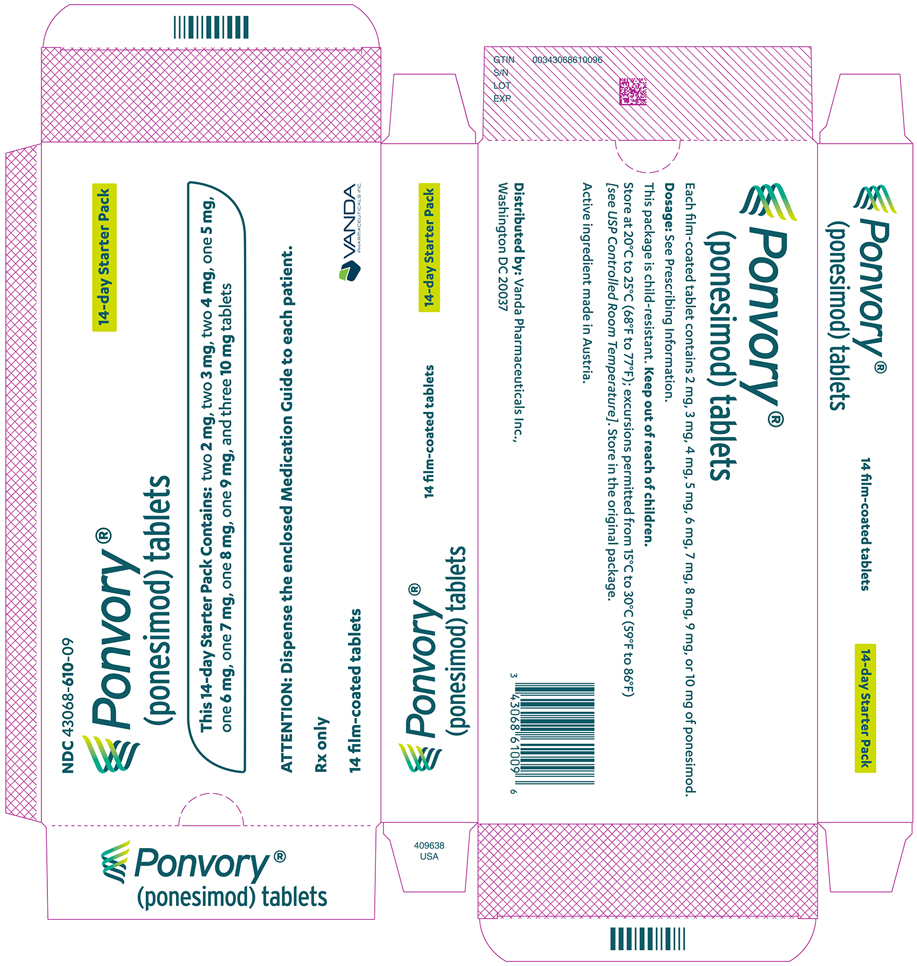
ponesimod 10 MG Oral Tabletponesimod 20 MG Oral Tabletponesimod 2 MG Oral Tabletponesimod 3 MG Oral Tabletponesimod 4 MG Oral Tabletponesimod 5 MG Oral Tabletponesimod 6 MG Oral Tabletponesimod 7 MG Oral Tabletponesimod 8 MG Oral Tabletponesimod 9 MG Oral Tabletponesimod 10 MG Oral Tablet [Ponvory]brandponesimod 20 MG Oral Tablet [Ponvory]brandponesimod 2 MG Oral Tablet [Ponvory]brandponesimod 3 MG Oral Tablet [Ponvory]brandponesimod 4 MG Oral Tablet [Ponvory]brandponesimod 5 MG Oral Tablet [Ponvory]brandponesimod 6 MG Oral Tablet [Ponvory]brandponesimod 7 MG Oral Tablet [Ponvory]brandponesimod 8 MG Oral Tablet [Ponvory]brandponesimod 9 MG Oral Tablet [Ponvory]brand
NDC examples
43068-61043068-62050458-70750458-720
Indicated ICD-10 codes
Treats these conditions
Assistance programs
AABD Cash AssistanceACL Assistive TechnologyACL Assistive Technology State Grants for Protection and AdvocacyACL Centers for Independent LivingACL Independent Living State GrantsAdult Day CareAdult Day Care ServicesAdult Day HealthAdult Day Health CareAdult Day/Health Care CentersAdult Day ServiceAdult Day Services
Source: openFDA + RxNorm · 2026
Look up another medication