Oxiconazole
Managing this medication for someone you care for? Eleplan keeps diagnoses, medications and appointments in one plan.
Start free with EleplanMedication reference
Oxiconazole
TOPICAL
Oxiconazole. INDICATIONS AND USAGE Oxiconazole nitrate cream is indicated for the topical treatment of the following dermal infections: tinea pedis, tinea…
Brand names
Oxiconazole NitrateOxistat
Active ingredients
OXICONAZOLE NITRATE
Indications
INDICATIONS AND USAGE Oxiconazole nitrate cream is indicated for the topical treatment of the following dermal infections: tinea pedis, tinea cruris, and tinea corporis due to Trichophyton rubrum , Trichophyton mentagrophytes , or Epidermophyton floccosum . Oxiconazole nitrate cream is indicated for the topical treatment of tinea (pityriasis) versicolor due to Malassezia furfur (see DOSAGE AND ADMINISTRATION and CLINICAL STUDIES ). Oxiconazole nitrate cream may be used in pediatric patients for tinea corporis, tinea cruris, tinea pedis, and tinea (pityriasis) versicolor; however, these indications for which oxiconazole nitrate cream has been shown to be effective rarely occur in children below the age of 12.
Dosage
DOSAGE AND ADMINISTRATION Oxiconazole nitrate cream should be applied to affected and immediately surrounding areas once to twice daily in patients with tinea pedis, tinea corporis, or tinea cruris. Oxiconazole nitrate cream should be applied once daily in the treatment of tinea (pityriasis) versicolor. Tinea corporis, tinea cruris, and tinea (pityriasis) versicolor should be treated for 2 weeks and tinea pedis for 1 month to reduce the possibility of recurrence. If a patient shows no clinical improvement after the treatment period, the diagnosis should be reviewed. Note: Tinea (pityriasis) versicolor may give rise to hyperpigmented or hypopigmented patches on the trunk that may extend to the neck, arms, and upper thighs. Treatment of the infection may not immediately result in restoration of pigment to the affected sites. Normalization of pigment following successful therapy is variable and may take months, depending on individual skin type and incidental sun exposure. Although tinea (pityriasis) versicolor is not contagious, it may recur because the organism that causes the disease is part of the normal skin flora.
Warnings
WARNINGS OXISTAT (oxiconazole nitrate) Lotion, 1% is for topical use only and not for oral, ophthalmic or intravaginal use.
Contraindications
CONTRAINDICATIONS Oxiconazole nitrate cream is contraindicated in individuals who have shown hypersensitivity to any of their components.
Drug interactions
Drug Interactions: Potential drug interactions between oxiconazole nitrate and other drugs have not been systematically evaluated. Drug Interactions: Potential drug interactions between oxiconazole nitrate and other drugs have not been systematically evaluated.
Adverse reactions
ADVERSE REACTIONS During clinical trials, of 955 patients treated with oxiconazole nitrate cream , 1%, 41 (4.3%) reported adverse reactions thought to be related to drug therapy. These reactions included pruritus (1.6%); burning (1.4%); irritation and allergic contact dermatitis (0.4% each); folliculitis (0.3%); erythema (0.2%); and papules, fissure, maceration, rash, stinging, and nodules (0.1% each). In a controlled, multicenter clinical trial of 269 patients treated with oxiconazole nitrate lotion , 1%, 7 (2.6%) reported adverse reactions thought to be related to drug therapy. These reactions included burning and stinging (0.7% each) and pruritus, scaling, tingling, pain, and dyshidrotic eczema (0.4% each).
Mechanism of action
CLINICAL PHARMACOLOGY Pharmacokinetics: The penetration of oxiconazole nitrate into different layers of the skin was assessed using an in vitro permeation technique with human skin. Five hours after application of 2.5 mg/cm 2 of oxiconazole nitrate cream onto human skin, the concentration of oxiconazole nitrate was demonstrated to be 16.2 μmol in the epidermis, 3.64 μmol in the upper corium, and 1.29 μmol in the deeper corium. Systemic absorption of oxiconazole nitrate is low. Using radiolabeled drug, less than 0.3% of the applied dose of oxiconazole nitrate was recovered in the urine of volunteer subjects up to 5 days after application of the cream formulation. Neither in vitro nor in vivo studies have been conducted to establish relative activity between the lotion and cream formulations. Microbiology: Oxiconazole nitrate is an imidazole derivative whose antifungal activity is derived primarily from the inhibition of ergosterol biosynthesis, which is critical for cellular membrane integrity. It has in vitro activity against a wide range of pathogenic fungi. Oxiconazole has been shown to be active against most strains of the following organisms both in vitro and in clinical infections at indicated body sites (see INDICATIONS AND USAGE ): Epidermophyton floccosum Trichophyton mentagrophytes Trichophyton rubrum Malassezia furfur The following in vitro data are available; however, their clinical significance is unknown . Oxiconazole exhibits satisfactory in vitro minimum inhibitory concentrations (MICs) against most strains of the following organisms; however, the safety and efficacy of oxiconazole in treating clinical infections due to these organisms have not been established in adequate and well-controlled clinical trials: Candida albicans Microsporum audouini Microsporum canis Microsporum gypseum Trichophyton tonsurans Trichophyton violaceum
Available forms (4)
NDC examples
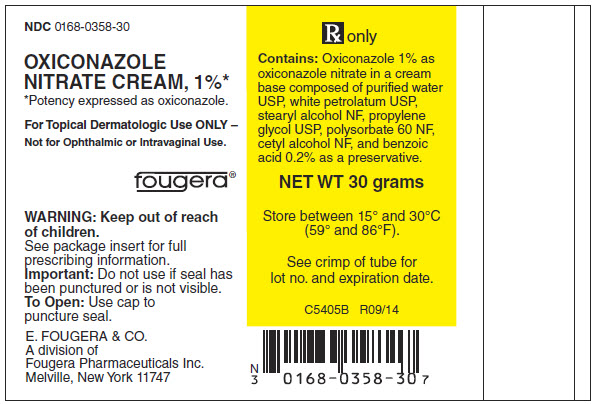
51672-135962559-2850168-0358
Treats these conditions
Source: openFDA + RxNorm · 2026
Look up another medication