Neomycin and Polymyxin B Sulfates and Hydrocortisone Otic
Managing this medication for someone you care for? Eleplan keeps diagnoses, medications and appointments in one plan.
Start free with EleplanMedication reference
Neomycin and Polymyxin B Sulfates and Hydrocortisone Otic
Corticosteroid [EPC] — AURICULAR (OTIC)
Neomycin and Polymyxin B Sulfates and Hydrocortisone Otic — Corticosteroid [EPC]. INDICATIONS AND USAGE For the treatment of superficial bacterial infections of the external auditory canal caused by organisms susceptible to the…
Brand names
Neomycin and Polymyxin B Sulfates and Hydrocortisone Otic Suspension
Active ingredients
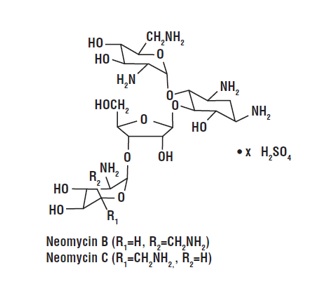
HYDROCORTISONENEOMYCIN SULFATEPOLYMYXIN B SULFATE
Indications
INDICATIONS AND USAGE For the treatment of superficial bacterial infections of the external auditory canal caused by organisms susceptible to the action of the antibiotics, and for the treatment of infections of mastoidectomy and fenestration cavities caused by organisms susceptible to the antibiotics.
Dosage
DOSAGE AND ADMINISTRATION Therapy with this product should be limited to 10 consecutive days. The external auditory canal should be thoroughly cleansed and dried with a sterile cotton applicator. For adults, 4 drops of the suspension should be instilled into the affected ear 3 or 4 times daily. For children, 3 drops are suggested because of the smaller capacity of the ear canal. The patient should lie with the affected ear upward and then the drops should be instilled. This position should be maintained for 5 minutes to facilitate penetration of the drops into the ear canal. Repeat, if necessary, for the opposite ear. If preferred, a cotton wick may be inserted into the canal and then the cotton may be saturated with the suspension. This wick should be kept moist by adding further suspension every 4 hours. The wick should be replaced at least once every 24 hours. SHAKE WELL BEFORE USING.
Warnings
WARNINGS Neomycin can induce permanent sensorineural hearing loss due to cochlear damage, mainly destruction of hair cells in the organ of Corti. The risk is greater with prolonged use. Therapy should be limited to 10 consecutive days (see PRECAUTIONS-General ). Patients being treated with eardrops containing neomycin should be under close clinical observation. Neomycin and Polymyxin B Sulfates and Hydrocortisone Otic Suspension should not be used in any patient with a perforated tympanic membrane. Discontinue promptly if sensitization or irritation occurs. Neomycin sulfate may cause cutaneous sensitization. A precise incidence of hypersensitivity reactions (primarily skin rash) due to topical neomycin is not known. When using neomycin-containing products to control secondary infection in the chronic dermatoses, such as chronic otitis externa or stasis dermatitis, it should be borne in mind that the skin in these conditions is more liable than is normal skin to become sensitized to many substances, including neomycin. The manifestation of sensitization to neomycin is usually a low-grade reddening with swelling, dry scaling, and itching; it may be manifest simply as a failure to heal. Periodic examination for such signs is advisable, and the patient should be told to discontinue the product if they are observed. These symptoms regress quickly on withdrawing the medication. Neomycin containing applications should be avoided for the patient thereafter.
Contraindications
CONTRAINDICATIONS This product is contraindicated in those individuals who have shown hypersensitivity to any of its components, and in herpes simplex, vaccinia, and varicella infections.
Adverse reactions
ADVERSE REACTIONS Neomycin occasionally causes skin sensitization. Ototoxicity and nephrotoxicity have also been reported (see WARNINGS ). Adverse reactions have occurred with topical use of antibiotic combinations including neomycin and polymyxin B. Exact incidence figures are not available since no denominator of treated patients is available. The reaction occurring most often is allergic sensitization. The following local adverse reactions have been reported with topical corticosteroids, especially under occlusive dressings: burning, itching, irritation, dryness, folliculitis, hypertrichosis, acneiform eruptions, hypopigmentation, perioral dermatitis, allergic contact dermatitis, maceration of the skin, secondary infection, skin atrophy, striae and miliaria. Stinging and burning have been reported rarely when this drug has gained access to the middle ear. To report SUSPECTED ADVERSE REACTIONS, contact Rising Pharma Holdings, Inc. at 1-844-874-7464 or FDA at 1-800-FDA-1088 or www.fda.gov/medwatch.
Mechanism of action
CLINICAL PHARMACOLOGY Corticoids suppress the inflammatory response to a variety of agents and they may delay healing. Since corticoids may inhibit the body's defense mechanism against infection, a concomitant antimicrobial drug may be used when this inhibition is considered to be clinically significant in a particular case. The anti-infective components in the combination are included to provide action against specific organisms susceptible to them. Neomycin sulfate and polymyxin B sulfate together are considered active against the following microorganisms: Staphylococcus aureus, Escherichia coli, Haemophilus influenzae, Klebsiella-Enterobacter species, Neisseria species, and Pseudomonas aeruginosa . This product does not provide adequate coverage against Serratia marcescens and streptococci, including Streptococcus pneumoniae . The relative potency of corticosteroids depends on the molecular structure, concentration, and release from the vehicle.
NDC examples
64980-44868788-7787
Treats these conditions
Source: openFDA + RxNorm · 2026
Look up another medication