Lurbinectedin
Managing this medication for someone you care for? Eleplan keeps diagnoses, medications and appointments in one plan.
Start free with EleplanMedication reference
Lurbinectedin
Alkylating Drug [EPC] — INTRAVENOUS
Lurbinectedin — Alkylating Drug [EPC]. INDICATIONS AND USAGE ZEPZELCA is an alkylating drug indicated: • in combination with atezolizumab or atezolizumab and hyaluronidase-tqjs, for the…
Brand names
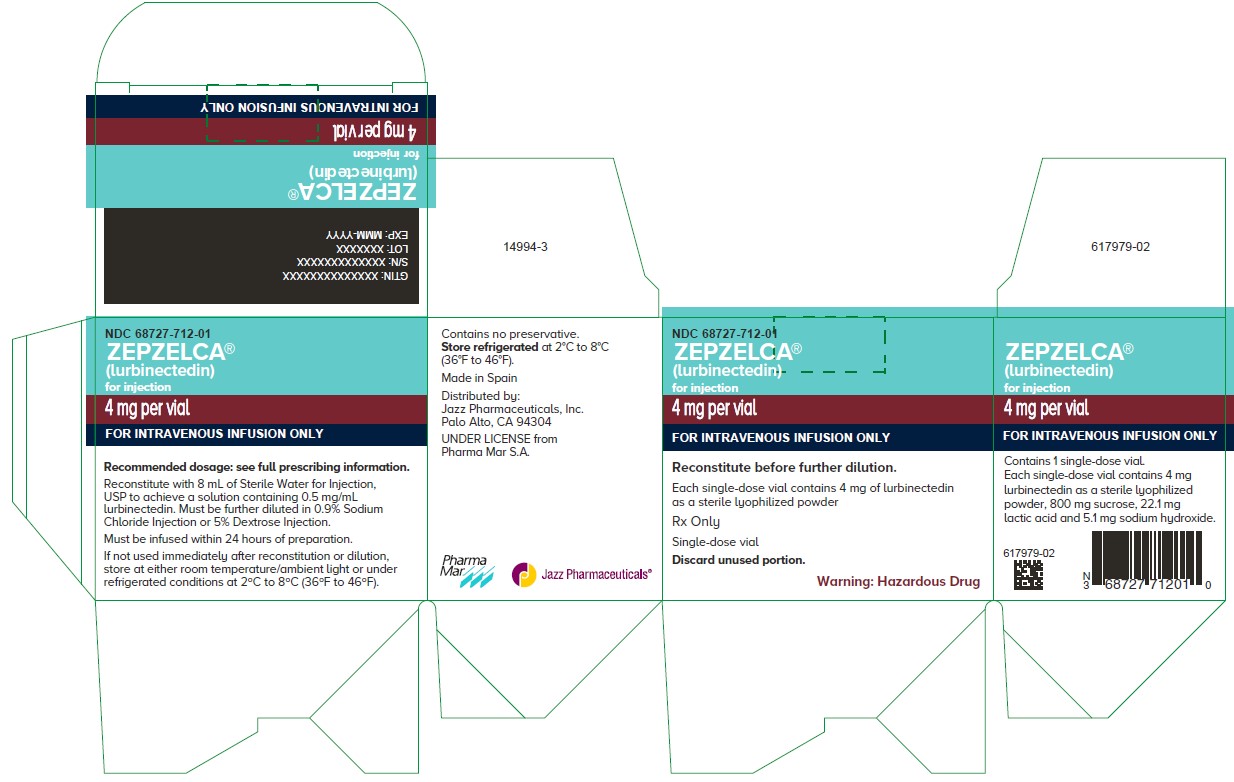
ZEPZELCA
Active ingredients
LURBINECTEDIN
Indications
INDICATIONS AND USAGE ZEPZELCA is an alkylating drug indicated: • in combination with atezolizumab or atezolizumab and hyaluronidase-tqjs, for the maintenance treatment of adult patients with extensive-stage small cell lung cancer whose disease has not progressed after first-line induction therapy with atezolizumab or atezolizumab and hyaluronidase-tqjs, carboplatin and etoposide. ( 1.1 ) • For the treatment of adult patients with metastatic small cell lung cancer (SCLC) with disease progression on or after platinum-based chemotherapy. ( 1.2 ) This indication is approved under accelerated approval based on overall response rate and duration of response. Continued approval for this indication may be contingent upon verification and description of clinical benefit in a confirmatory trial(s). ( 1.2 ) 1.1 Extensive-Stage Small Cell Lung Cancer ZEPZELCA, in combination with atezolizumab or atezolizumab and hyaluronidase-tqjs, is indicated for the maintenance treatment of adult patients with extensive-stage small cell lung cancer (ES-SCLC) whose disease has not progressed after first-line induction therapy with atezolizumab or atezolizumab and hyaluronidase-tqjs, carboplatin and etoposide. 1.2 Metastatic Small Cell Lung Cancer ZEPZELCA is indicated for the treatment of adult patients with metastatic small cell lung cancer (SCLC) with disease progression on or after platinum-based chemotherapy. This indication is approved under accelerated approval based on overall response rate and duration of response [see Clinical Studies (14) ] . Continued approval for this indication may be contingent upon verification and description of clinical benefit in a confirmatory trial(s).
Dosage
DOSAGE AND ADMINISTRATION • Recommended Dosage : 3.2 mg/m 2 administered intravenously every 21 days until disease progression or unacceptable toxicity. • Administration via a central venous line is recommended to reduce the risk of extravasation that can cause tissue necrosis requiring debridement ( 5.3 ) • Administer ZEPZELCA as an intravenous infusion over 60 minutes. • To reduce the risk of nausea, administer corticosteroids and serotonin agonists prior to Cycle 1 and consider use for subsequent cycles. ( 2.5 ) • To reduce the risk of febrile neutropenia during treatment with ZEPZELCA in combination with atezolizumab or atezolizumab and hyaluronidase-tqjs, administer granulocyte colony-stimulating factor (G-CSF) [Refer to Prescribing Information]. • Moderate Hepatic Impairment : Recommended dosage is 1.6 mg/m 2 administered intravenously every 21 days until disease progression or unacceptable toxicity. ( 2.4 , 8.6 ) • Severe Hepatic Impairment : Avoid use of ZEPZELCA. If use cannot be avoided, the recommended dosage is 1.6 mg/m 2 administered intravenously every 21 days until disease progression or unacceptable toxicity. ( 2.4 , 8.6 ) 2.1 Recommended Dosage The recommended dosage of ZEPZELCA as a single-agent and as a combination with atezolizumab or atezolizumab and hyaluronidase-tqjs is 3.2 mg/m 2 by intravenous infusion over 60 minutes every 21 days until disease progression or unacceptable toxicity [see Dosage and Administration (2.4) ]. Initiate treatment with ZEPZELCA only if absolute neutrophil count (ANC) is at least 1,500 cells/mm 3 and platelet count is at least 100,000/mm 3 . ZEPZELCA with Intravenous Atezolizumab or atezolizumab and hyaluronidase-tqjs When administering ZEPZELCA on the same day as atezolizumab or atezolizumab and hyaluronidase-tqjs, administer the chosen atezolizumab drug first. For the recommended dosage of atezolizumab or atezolizumab and hyaluronidase-tqjs refer to the respective Prescribing Information. If discontinuation of atezolizumab or atezolizumab and hyaluronidase-tqjs is required due to an immune-related severe adverse event, treatment with ZEPZELCA may be continued at the same dose as a single agent. If immune toxicity does not resolve or recurs despite discontinuation of atezolizumab, permanently discontinue ZEPZELCA. 2.2 Dosage Modifications for Adverse Reactions The recommended dose reductions for adverse reactions are listed in Table 1. Permanently discontinue ZEPZELCA in patients who require a dose interruption of greater than two weeks and in patients who are unable to tolerate 2 mg/m 2 every 21 days. Table 1: Dose Reduction for ZEPZELCA for Adverse Reactions Dose Reduction Total Dose First Second 2.6 mg/m 2 every 21 days 2 mg/m 2 every 21 days Dosage modifications for ZEPZELCA for adverse reactions are presented in Table 2. Table 2: Dosage Modifications for ZEPZELCA for Adverse Reactions a National Cancer Institute Common Terminology Criteria for Adverse Events (NCI CTCAE) version 4.0. b Patients who have not received primary prophylaxis of G-CSF with isolated Grade 4 neutropenia (neutrophil count less than 500 cells/mm 3 ) may receive G-CSF prophylaxis rather than undergo lurbinectedin dose reduction. Adverse Reaction Severity a Dosage Modification Neutropenia b [see Warnings and Precautions (5.1) ] Grade 4 or Any grade febrile neutropenia • Withhold ZEPZELCA until absolute neutrophil count (ANC) is ≥ 1500/mm 3 • Resume ZEPZELCA at a reduced dose Thrombocytopenia [see Warnings and Precautions (5.1) ] Grade 3 with bleeding or Grade 4 • Withhold ZEPZELCA until platelet ≥ 100,000/mm 3 • Resume ZEPZELCA at reduced dose Hepatotoxicity [see Warnings and Precautions (5.2) ] Grade 2 • Withhold ZEPZELCA until Grade ≤ 1 • Resume ZEPZELCA at same dose Grade ≥ 3 • Withhold ZEPZELCA until Grade ≤ 1 • Resume ZEPZELCA at reduced dose or permanently discontinue Rhabdomyolysis [see Warnings and Precautions (5.4) ] Grade 2 • Withhold ZEPZELCA until Grade ≤ 1 • Resume ZEPZELCA at same dose Grade ≥ 3 • Permanently discontinue ZEPZELCA Other Adverse Reactions [see Adverse Reactions (6.1) , Postmarketing (6.2) ] Grade 2 • Withhold ZEPZELCA until Grade ≤ 1 • Resume ZEPZELCA at same dose Grade ≥ 3 • Withhold ZEPZELCA until Grade ≤ 1 • Resume ZEPZELCA at reduced dose or permanently discontinue 2.3 Dosage Modifications for Use with Strong and Moderate CYP3A Inhibitors Avoid coadministration of ZEPZELCA with strong or moderate CYP3A inhibitors. If coadministration of ZEPZELCA with a strong or moderate CYP3A inhibitor cannot be avoided, reduce the dose of ZEPZELCA by 50% [see Drug Interactions (7.1) and Clinical Pharmacology (12.3) ] . After discontinuation of a strong or moderate CYP3A inhibitor for 5 half-lives of the inhibitor, increase the ZEPZELCA dose to the dose used before starting the inhibitor . 2.4 Dosage Modifications for Patients with Severe and Moderate Hepatic Impairment Avoid administration of ZEPZELCA in patients with severe hepatic impairment (total bilirubin > 3 × Upper Limit of Normal (ULN)). If administration of ZEPZELCA cannot be avoided, the recommended dosage is 1.6 mg/m 2 by intravenous infusion over 60 minutes every 21 days until disease progression or unacceptable toxicity [see Use In Specific Populations (8.6) and Clinical Pharmacology (12.3) ] . In patients with moderate hepatic impairment (total bilirubin > 1.5 to ≤ 3 × ULN and any AST), the recommended dosage of ZEPZELCA is 1.6 mg/m 2 by intravenous infusion over 60 minutes every 21 days until disease progression or unacceptable toxicity . 2.5 Recommended Prophylactic Medications ZEPZELCA as a Single Agent Consider administering the following pre-infusion medications for antiemetic prophylaxis [see Adverse Reactions (6.1) ] : • Corticosteroids (dexamethasone 8 mg intravenously or equivalent) • Serotonin antagonists (ondansetron 8 mg intravenously or equivalent) ZEPZELCA with Intravenous Atezolizumab or atezolizumab and hyaluronidase-tqjs • To reduce the risk of febrile neutropenia during treatment with ZEPZELCA in combination with atezolizumab or atezolizumab and hyaluronidase-tqjs, administer granulocyte colony-stimulating factor (G-CSF) [Refer to Prescribing Information] . • To reduce the risk of nausea, administer the following pre-infusion medications for antiemetic prophylaxis prior to Cycle 1 and consider administering for subsequent cycles [see Adverse Reactions (6.1) ] : ⸰ Corticosteroids (dexamethasone 8 mg or equivalent intravenously) ⸰ Serotonin antagonists (ondansetron 8 mg or equivalent intravenously) 2.6 Preparation, Administration and Storage ZEPZELCA is a hazardous drug. Follow applicable special handling and disposal procedures 1 . Preparation • Inject 8 mL of Sterile Water for Injection USP into the vial, yielding a solution containing 0.5 mg/mL lurbinectedin. Shake the vial until complete dissolution. • Visually inspect the solution for particulate matter and discoloration. The reconstituted solution is a clear, colorless or slightly yellowish solution, free of visible particles. • Calculate the required volume of reconstituted solution as follows: • For administration through a central venous line, withdraw the appropriate amount of reconstituted solution from the vial and add to an infusion container containing at least 100 mL of diluent (0.9% Sodium Chloride Injection USP or 5% Dextrose Injection USP). • For administration through a peripheral venous line, withdraw the appropriate amount of reconstituted solution from the vial and add to an infusion container containing at least 250 mL of diluent (0.9% Sodium Chloride Injection USP or 5% Dextrose Injection USP). Administration • Administration via a central venous line is recommended to reduce the risk of extravasation that can cause tissue necrosis requiring debridement [see Warnings and Precautions (5.3) ] . • Parenteral drug products should be inspected visually for particulate matter and discoloration prior to administration, whenever solution and container permit. I
Warnings
WARNINGS AND PRECAUTIONS • Myelosuppression : Monitor blood counts prior to each administration. Initiate treatment with ZEPZELCA only if baseline neutrophil count is ≥ 1,500 cells/mm 3 and platelet count is ≥ 100,000/mm 3 . For neutrophil count less than 500 cells/mm 3 or any value less than lower limit of normal, administer G-CSF. Withhold, reduce the dose, or permanently discontinue ZEPZELCA based on severity. ( 5.1 ) • Hepatotoxicity : Monitor liver function tests prior to initiating ZEPZELCA, periodically during treatment and as clinically indicated. Withhold, reduce the dose, or permanently discontinue ZEPZELCA based on severity. ( 5.2 ) • Extravasation Resulting in Tissue Necrosis : Consider use of a central venous catheter to reduce the risk of extravasation. Monitor patients for signs and symptoms of extravasation during the ZEPZELCA infusion. If extravasation occurs, immediately discontinue the infusion, remove the infusion catheter, and monitor for signs and symptoms of tissue necrosis. ( 5.3 ) • Rhabdomyolysis : Monitor creatine phosphokinase (CPK) prior to initiating ZEPZELCA and periodically during treatment as clinically indicated. Withhold, reduce the dose, or permanently discontinue ZEPZELCA based on severity. ( 5.4 ) • Embryo-Fetal Toxicity : Can cause fetal harm. Advise females and males of reproductive potential of the potential risk to a fetus and to use an effective method of contraception. ( 5.5 ) 5.1 Myelosuppression ZEPZELCA can cause severe and fatal myelosuppression including febrile neutropenia and sepsis, thrombocytopenia and anemia. Administer ZEPZELCA only to patients with baseline neutrophil count of at least 1,500 cells/mm 3 and platelet count of at least 100,000/mm 3 . To reduce the risk of febrile neutropenia during treatment with ZEPZELCA in combination with atezolizumab or atezolizumab and hyaluronidase-tqjs, administer granulocyte colony-stimulating factor (G-CSF) [refer to Prescribing Information] . Monitor blood counts including neutrophils, red blood cells and platelets prior to each ZEPZELCA administration. For neutrophil count less than 500 cells/mm 3 or any value less than lower limit of normal, administer G-CSF. Withhold, reduce the dose, or permanently discontinue ZEPZELCA based on severity [see Dosage and Administration (2.2) ] . ZEPZELCA with Intravenous Atezolizumab In the IMforte study [see Adverse Reactions (6.1) ] , primary prophylaxis of G-CSF was administered to 84% of patients. Based on laboratory values, decreased neutrophils occurred in 36%, including 18% Grade 3 or Grade 4 in patients who received ZEPZELCA in combination with atezolizumab. The median time to onset of Grade 3 and 4 decreased neutrophil cells was 31 days and a median duration of 10 days. Febrile neutropenia occurred in 1.7%. Sepsis occurred in 1%. There were 7 fatal infections: pneumonia (n=3), sepsis (n=3), and febrile neutropenia (n=1). Based on laboratory values, decreased platelets occurred in 54%, including 15% Grade 3 or Grade 4 in patients who received ZEPZELCA in combination with atezolizumab. The median time to onset of Grade 3 and 4 decreased platelet cells was 31 days and a median duration of 12 days. Based on laboratory values, decreased hemoglobin occurred in 51%, including 13% Grade 3 or Grade 4 in patients who received ZEPZELCA in combination with atezolizumab. The median time to onset of Grade 3 and 4 decreased hemoglobin was 64 days and a median duration of 8 days. ZEPZELCA as a Single Agent In clinical studies of 554 patients with advanced solid tumors receiving ZEPZELCA as a single agent [see Adverse Reactions (6.1) ] , Grade 3 or 4 neutropenia occurred in 41% of patients, with a median time to onset of 15 days and a median duration of 7 days. Febrile neutropenia occurred in 7% of patients. Sepsis occurred in 2% of patients and was fatal in 1% (all cases occurred in patients with solid tumors other than SCLC). Grade 3 or 4 thrombocytopenia occurred in 10%, with a median time to onset of 10 days and a median duration of 7 days. Grade 3 or 4 anemia occurred in 17% of patients. 5.2 Hepatotoxicity ZEPZELCA can cause hepatotoxicity which may be severe. Monitor liver function tests prior to initiating ZEPZELCA and periodically during treatment as clinically indicated. Withhold, reduce the dose, or permanently discontinue ZEPZELCA based on severity [see Dosage and Administration (2.2) ]. ZEPZELCA with Intravenous Atezolizumab In the IMforte study [see Adverse Reactions (6.1) ] , based on laboratory values, increased alanine aminotransferase (ALT) occurred in 25%, including 3% Grade 3 or Grade 4 in patients who received ZEPZELCA in combination with atezolizumab. Increased aspartate aminotransferase (AST) occurred in 24% including 3% Grade 3 or Grade 4. The median time to onset of Grade ≥ 3 elevation in transaminases was 52 days (range: 6 to 337). ZEPZELCA as a Single Agent In clinical studies of 554 patients with advanced solid tumors receiving ZEPZELCA as a single agent [see Adverse Reactions (6.1) ] , Grade 3 elevations of ALT and AST were observed in 6% and 3% of patients, respectively, and Grade 4 elevations of ALT and AST were observed in 0.4% and 0.5% of patients, respectively. The median time to onset of Grade ≥ 3 elevation in transaminases was 8 days (range: 3 to 49), with a median duration of 7 days. 5.3 Extravasation Resulting in Tissue Necrosis Extravasation of ZEPZELCA can cause skin and soft tissue injury, including necrosis requiring debridement. Consider use of a central venous catheter to reduce the risk of extravasation, particularly in patients with limited venous access. Monitor patients for signs and symptoms of extravasation during the ZEPZELCA infusion. If extravasation occurs, immediately discontinue the infusion, remove the infusion catheter, and monitor for signs and symptoms of tissue necrosis. The time to onset of necrosis after extravasation may vary. ZEPZELCA with Intravenous Atezolizumab In the IMforte study [see Adverse Reactions (6.1 )] , extravasation resulting in skin necrosis occurred in one patient who received ZEPZELCA in combination with atezolizumab. Administer supportive care and consult with an appropriate medical specialist as needed for signs and symptoms of extravasation. Administer subsequent infusions at a site that was not affected by extravasation. 5.4 Rhabdomyolysis Rhabdomyolysis has been reported in patients treated with ZEPZELCA. Monitor creatine phosphokinase (CPK) prior to initiating ZEPZELCA and periodically during treatment as clinically indicated. Withhold or reduce the dose based on severity [see Dosage and Administration (2.2) ] . ZEPZELCA with Intravenous Atezolizumab In the IMforte study [see Adverse Reactions (6.1 )] , among 235 patients who had a creatine phosphokinase laboratory evaluation, increased creatine phosphokinase occurred in 9% who received ZEPZELCA in combination with atezolizumab. 5.5 Embryo-Fetal Toxicity Based on animal data and its mechanism of action ZEPZELCA can cause fetal harm when administered to a pregnant woman. Intravenous administration of a single dose of lurbinectedin (approximately 0.2 times the 3.2 mg/m 2 clinical dose) to pregnant animals during the period of organogenesis caused 100% embryolethality in rats. Advise pregnant women of the potential risk to a fetus. Advise female patients of reproductive potential to use effective contraception during treatment with ZEPZELCA and for 7 months after the last dose. Advise male patients with female partners of reproductive potential to use effective contraception during treatment with ZEPZELCA and for 4 months after the last dose [see Use in Specific Populations (8.1 , 8.3 )] .
Contraindications
CONTRAINDICATIONS None. None. ( 4 )
Drug interactions
DRUG INTERACTIONS Effect of Other Drugs on ZEPZELCA : Avoid coadministration with strong or a moderate CYP3A inhibitors and strong CYP3A inducers. ( 7.1 ) 7.1 Effect of Other Drugs on ZEPZELCA Strong and Moderate CYP3A Inhibitors Coadministration of ZEPZELCA with a strong or a moderate CYP3A inhibitor increases lurbinectedin systemic exposure [see Clinical Pharmacology (12.3) ], which may increase the incidence and severity of adverse reactions to ZEPZELCA. Avoid grapefruit and Seville oranges during ZEPZELCA treatment, as these contain strong or moderate inhibitors of CYP3A. Avoid coadministration of ZEPZELCA with strong or moderate CYP3A inhibitors. If coadministration cannot be avoided, reduce the dose of ZEPZELCA [see Dosage and Administration (2.3) ] . Strong CYP3A Inducers Avoid coadministration of ZEPZELCA with strong CYP3A inducers. Coadministration of ZEPZELCA with a strong CYP3A inducer may decrease lurbinectedin systemic exposure, which may decrease the efficacy of ZEPZELCA [see Clinical Pharmacology (12.3) ].
Adverse reactions
ADVERSE REACTIONS The following clinically significant adverse reactions are described elsewhere in the labeling: • Myelosuppression [see Warnings and Precautions (5.1) ] • Hepatotoxicity [see Warnings and Precautions (5.2) ] • Extravasation Resulting in Tissue Necrosis [see Warnings and Precautions (5.3) ] • Rhabdomyolysis [see Warnings and Precautions (5.4) ] The most common adverse reactions for ZEPZELCA as a single agent, including laboratory abnormalities, (≥ 20%) are leukopenia, lymphopenia, fatigue, anemia, neutropenia, increased creatinine, increased alanine aminotransferase, increased glucose, thrombocytopenia, nausea, decreased appetite, musculoskeletal pain, decreased albumin, constipation, dyspnea, decreased sodium, increased aspartate aminotransferase, vomiting, cough, decreased magnesium and diarrhea. ( 6.1 ) The most common adverse reactions, for ZEPZELCA in combination with atezolizumab including laboratory abnormalities, (≥ 30%) are: decreased lymphocytes, decreased platelets, decreased hemoglobin, decreased neutrophils, nausea, and fatigue/asthenia. ( 6.1 ) To report SUSPECTED ADVERSE REACTIONS, contact Jazz Pharmaceuticals, Inc. at 1-800-520-5568 or FDA at 1-800-FDA-1088 or www.fda.gov/medwatch. 6.1 Clinical Trials Experience Because clinical trials are conducted under widely varying conditions, adverse reaction rates observed in the clinical trials of a drug cannot be directly compared to rates in the clinical trials of another drug and may not reflect the rates observed in practice. The safety population described in the WARNINGS AND PRECAUTIONS reflects exposure to ZEPZELCA in combination with intravenous atezolizumab in the IMforte study [see Clinical Studies (14.1) ] , in 242 patients with extensive stage small cell lung cancer (ES-SCLC) whose disease had not progressed after initial therapy with atezolizumab, carboplatin, and etoposide. Patients received ZEPZELCA 3.2 mg/m 2 intravenously (IV) in combination with atezolizumab 1200 mg IV every 21 days until disease progression or unacceptable toxicity. Among 242 patients who received ZEPZELCA in combination with intravenous atezolizumab, 34% were exposed for 6 months or longer and 8% were exposed for greater than one year. The most common adverse reactions (≥ 30%), including laboratory abnormalities, in patients who received ZEPZELCA with atezolizumab were decreased lymphocytes, decreased platelets, decreased hemoglobin, decreased neutrophils, nausea, and fatigue/asthenia. The pooled safety population described in the WARNINGS AND PRECAUTIONS also reflects exposure to ZEPZELCA as a single agent at a dose of 3.2 mg/m 2 intravenously every 21 days in 554 patients with advanced solid tumors. Among 554 patients who received ZEPZELCA, including 105 patients with small cell lung cancer (SCLC) in PM1183-B-005-14 (Study B-005), 24% were exposed for 6 months or longer and 5% were exposed for greater than one year. The most common adverse reactions for ZEPZELCA as a single agent, (Study B-005), including laboratory abnormalities, (≥ 20%) are leukopenia, lymphopenia, fatigue, anemia, neutropenia, increased creatinine, increased alanine aminotransferase, increased glucose, thrombocytopenia, nausea, decreased appetite, musculoskeletal pain, decreased albumin, constipation, dyspnea, decreased sodium, increased aspartate aminotransferase, vomiting, cough, decreased magnesium and diarrhea. Extensive-Stage Small Cell Lung Cancer (IMforte) The safety of ZEPZELCA in combination with intravenous (IV) atezolizumab was evaluated in IMforte [see Clinical Studies (14) ] . Patients received intravenous ZEPZELCA 3.2 mg/m 2 in combination with intravenous atezolizumab 1200 mg on Day 1 of each 21-day cycle until disease progression or unacceptable toxicity. Primary prophylaxis of G-CSF was administered to 84% of patients. Among 242 patients who received ZEPZELCA with atezolizumab, the median duration of exposure to lurbinectedin was 4.1 months, 33% were exposed for 6 months or longer and 8% were exposed for greater than one year. The median age of patients who received ZEPZELCA in combination with intravenous atezolizumab was 66 years (range: 35 to 85); 62% male; 82% White, 13% Asian, and 0.8% Black or African American. Serious adverse reactions occurred in 31% of patients receiving ZEPZELCA in combination with atezolizumab. Serious adverse reactions occurring in > 2% were pneumonia (2.5%), respiratory tract infection (2.1%), dyspnea (2.1%), and decreased platelet count (2.1%). Fatal adverse reactions occurred in 5% of patients receiving ZEPZELCA with atezolizumab including pneumonia (3 patients), sepsis (3 patients), cardio-respiratory arrest (2 patients), myocardial infarction (2 patients), and febrile neutropenia (1 patient). Permanent discontinuation of ZEPZELCA due to an adverse reaction occurred in 5% of patients. The adverse reaction resulting in permanent discontinuation in ≥ 1% of patients who received ZEPZELCA was decreased neutrophil count. Dosage interruptions of ZEPZELCA due to an adverse reaction occurred in 25%. Adverse reactions which required dosage interruption in ≥ 2% of patients included anemia, fatigue, decreased neutrophil count, and decreased platelet count. Dose reductions of ZEPZELCA due to an adverse reaction occurred in 15% of patients. Adverse reactions which required dosage reduction in ≥ 2% of patients included decreased platelet count, fatigue, nausea and vomiting. Table 3 summarizes the adverse reactions in IMforte. Table 3: Adverse Reactions (≥ 10%) in Patients with ES-SCLC Who Received ZEPZELCA in Combination with Intravenous Atezolizumab in IMforte Graded per NCI CTCAE v5.0 1 Includes diarrhea and colitis. 2 Includes fatigue and asthenia. 3 Includes arthralgia, arthritis, back pain, bone pain, musculoskeletal chest pain, musculoskeletal discomfort, musculoskeletal pain, myalgia, neck pain, non-cardiac chest pain, and pain in extremity. 4 Includes cough, productive cough, and upper-airway cough syndrome. 5 Includes dyspnea and dyspnea exertional. Adverse Reaction ZEPZELCA with Atezolizumab N = 242 Atezolizumab N = 240 All Grades (%) Grade 3 or 4 (%) All Grades (%) Grade 3 or 4 (%) Gastrointestinal Nausea 36 3 4 1 Diarrhea 1 15 0 8 0 Vomiting 14 1 3 0 Constipation 12 0 6 1 General disorders and administration site conditions Fatigue 2 32 5 13 2 Musculoskeletal and connective tissue disorders Musculoskeletal Pain 3 19 2 16 1 Metabolism and Nutrition Decreased appetite 17 0 7 0 Respiratory, thoracic and mediastinal disorders Cough 4 12 0 8 0 Dyspnea 5 11 2 10 2 Clinically relevant adverse reactions in < 10% of patients who received ZEPZELCA in combination with intravenous atezolizumab included pneumonia, phlebitis, extravasation resulting in skin necrosis, hypersensitivity, and increased creatine phosphokinase. Table 4 summarizes the laboratory abnormalities in IMforte. Table 4: Select Laboratory Abnormalities (≥ 20%) That Worsened from Baseline in Patients with ES‑SCLC Who Received ZEPZELCA in Combination with Intravenous Atezolizumab in IMforte Graded per NCI CTCAE v5.0. Laboratory Abnormality ZEPZELCA with Atezolizumab N = 242 Atezolizumab N = 240 All Grades (%) Grade 3 or 4 (%) All Grades (%) Grade 3 or 4 (%) Hematology Decreased lymphocytes 55 17 31 11 Decreased platelets 54 15 15 3 Decreased hemoglobin 51 13 12 3 Decreased neutrophils 36 18 7 4 Chemistry Increased alkaline phosphatase 29 1 14 0 Decreased sodium 27 4 30 5 Increased ALT 25 3 18 2 Increased AST 24 3 22 1 Decreased calcium 24 3 8 1 Increased creatinine 21 3 14 0 Metastatic Small Cell Lung Cancer (SCLC) (Study B-005) The safety of ZEPZELCA was evaluated in a cohort of 105 patients with previously treated SCLC in Study B-005 [ see Clinical Studies (14) ] . Patients received ZEPZELCA 3.2 mg/m 2 intravenously every 21 days. All patients in this study received a pre-specified anti-emetic regimen consisting of a corticosteroid and serotonin antagonist. Patients could receive G-CSF for secondary prophylaxis (i.
Mechanism of action
Mechanism of Action Lurbinectedin is an alkylating drug that binds guanine residues in the minor groove of DNA, forming adducts and resulting in a bending of the DNA helix towards the major groove. Adduct formation triggers a cascade of events that can affect the subsequent activity of DNA binding proteins, including some transcription factors, and DNA repair pathways, resulting in perturbation of the cell cycle and eventual cell death. Lurbinectedin inhibited human monocyte activity in vitro and reduced macrophage infiltration in implanted tumors in mice.
Available forms (2)
NDC examples
68727-712
Indicated ICD-10 codes
Treats these conditions
Source: openFDA + RxNorm · 2026
Look up another medication