Lidocaine Hydrochloride and Hydrocortisone Acetate
Managing this medication for someone you care for? Eleplan keeps diagnoses, medications and appointments in one plan.
Start free with EleplanMedication reference
Lidocaine Hydrochloride and Hydrocortisone Acetate
TOPICAL · RECTAL
Lidocaine Hydrochloride and Hydrocortisone Acetate. INDICATIONS: Product is used for the anti-inflammatory and anesthetic relief of pruritus, pruritic eczemas, abrasions, minor burns, insect bites…
Brand names
Lidocaine Hydrochloride and Hydrocortisone Acetate
Active ingredients
HYDROCORTISONE ACETATELIDOCAINE HYDROCHLORIDE
Indications
INDICATIONS: Product is used for the anti-inflammatory and anesthetic relief of pruritus, pruritic eczemas, abrasions, minor burns, insect bites, pain, soreness and discomfort due to pruritus ani, pruritus vulvae, hemorrhoids, anal fissures and similar conditions of the skin and mucous membranes.
Dosage
DOSAGE AND ADMINISTRATION: Apply product to the affected area(s) twice daily or as directed by a physician. Product should not be used in excess of recommendations or for prolonged use in the anal canal. If the condition does not respond to repeated courses of product or should worsen, discontinue use and seek the advice of your physician. Patient Directions for Rectal Administration: Remove moist wipe from box, tear open the package, gently clean the affected area and discard moist wipe. (Note: The moist wipe does not contain any of the prescribed active ingredients.) The cap and foil seal should be removed from the tube and the applicator tip firmly screwed onto the end of the tube and tightened. (Do not over tighten.) While holding the tube, gently squeeze the tube until a small amount of cream/gel comes out of the applicator openings. This will lubricate the applicator tip. Gently insert the applicator tip into anal area. Continue squeezing the body of the tube as you move it around the areas of discomfort, and lastly, around and in the anal opening (if directed by physician). Do not completely insert the applicator and tube into the anus or insert deep into the rectum. Do not insert a loose applicator tip into the anus or rectum. Once application is completed, the tube and applicator tip should be gently removed and discarded.
Warnings
WARNINGS: For external use only. Not for ophthalmic use. Product, applicators and moist wipes could harm small children if chewed or swallowed. Keep product, moist wipes and applicators out of the reach of children. Methemoglobinemia Cases of methemoglobinemia have been reported in association with local anesthetic use. Although all patients are at risk for methemoglobinemia, patients with glucose-6-phosphate dehydrogenase deficiency, congenital or idiopathic methemoglobinemia, cardiac or pulmonary compromise, infants under 6 months of age, and concurrent exposure to oxidizing agents or their metabolites are more susceptible to developing clinical manifestations of the condition. If local anesthetics must be used in these patients, close monitoring for symptoms and signs of methemoglobinemia is recommended. Signs and symptoms of methemoglobinemia may occur immediately or may be delayed some hours after exposure and are characterized by a cyanotic skin discoloration and abnormal coloration of the blood. Methemoglobin levels may continue to rise; therefore, immediate treatment is required to avert more serious central nervous system and cardiovascular adverse effects, including seizures, coma, arrhythmias, and death. Discontinue [the use of this product] and any other oxidizing agents. Depending on the severity of the symptoms, patients may respond to supportive care, i.e., oxygen therapy, hydration. More severe symptoms may require treatment with methylene blue, exchange transfusion, or hyperbaric oxygen.
Contraindications
CONTRAINDICATIONS: Product should not be used in patients with a history of sensitivity to any of its ingredients or adverse reactions to lidocaine or amide anesthetics, which usually do not cross-react with “caine” ester type anesthetics. If excessive irritation and significant worsening occur, discontinue use and seek the advice of your physician. Product and topical lidocaine should be used cautiously in those with impaired liver function, as well as the very ill or very elderly and those with significant liver disease. Product should be used with caution on patients receiving antiarrhythmic drugs of Class I since the adverse effects are additive and generally synergistic. This product is contraindicated for tuberculous or fungal lesions or skin vaccinia, varicella and acute herpes simplex. Topical corticosteroids are contraindicated in those patients with a history of hypersensitivity to any of the components of the preparation. structure structure2
Drug interactions
DRUG INTERACTIONS: Patients that are administered local anesthetics may be at increased risk of developing methemoglobinemia when concurrently exposed to the following oxidizing agents: CLASS EXAMPLES Nitrates/Nitrites nitroglycerin, nitroprusside, nitric oxide, nitrous oxide Local Anesthetics benzocaine, lidocaine, bupivacaine, mepivacaine, tetracaine, prilocaine, procaine, articaine, ropivacaine Antineoplastic agent cyclophosphamide, flutamide, rasburicase, ifosfamide, hydroxyurea Antibiotics dapsone, sulfonamides, nitrofurantoin, para-aminosalicylic acid Antimalarials chloroquine, primaquine Anticonvulsants phenytoin, sodium valproate, phenobarbital Other drugs acetaminophen, metoclopramide, sulfa drugs (i.e., sulfasalazine), quinine
Adverse reactions
ADVERSE REACTIONS: During, immediately, or following application of product, there may be transient stinging or burning from open areas of skin, or transient blanching (lightening), or erythema (redness) of the skin. CALL YOUR DOCTOR ABOUT SIDE EFFECTS. You may report side effects to the FDA at 1-800-FDA-1088.
Mechanism of action
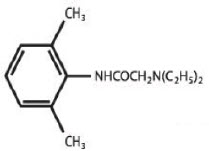
MECHANISM OF ACTION: Product releases lidocaine to stabilize the neuronal membrane by inhibiting the ionic fluxes required for initiation and conduction of impulses, thereby effecting local anesthetic action. Hydrocortisone acetate provides relief of inflammatory and pruritic manifestations of corticosteroid responsive dermatoses. Lidocaine is chemically designated as acetamide, 2-(diethylamino)-N-(2,6-dimethylphenyl), and has the following structure: Hydrocortisone acetate has a chemical name pregn-4-ene-3, 20-dione, 21-(acetyloxy)-11,17- dihydroxy-(11ß)-. It has the following structural formula: Lidocaine Hydrocortisone
NDC examples
69367-39713925-16513925-16013925-163
Treats these conditions
Source: openFDA + RxNorm · 2026
Look up another medication