Daptomycin
Managing this medication for someone you care for? Eleplan keeps diagnoses, medications and appointments in one plan.
Start free with EleplanMedication reference
Daptomycin
Lipopeptide Antibacterial [EPC] — INTRAVENOUS
Daptomycin — Lipopeptide Antibacterial [EPC]. INDICATIONS AND USAGE Daptomycin for injection is a lipopeptide antibacterial indicated for the treatment of: Complicated skin and skin structure…
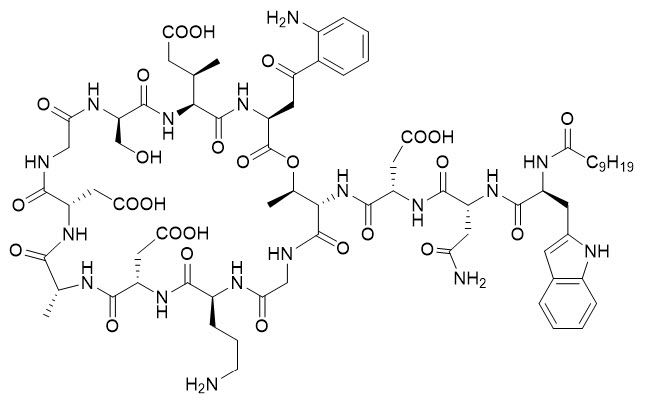
Brand names
DaptomycindaptomycinDAPTOMYCIN
Active ingredients
DAPTOMYCIN
Indications
INDICATIONS AND USAGE Daptomycin for injection is a lipopeptide antibacterial indicated for the treatment of: Complicated skin and skin structure infections (cSSSI) in adult and pediatric patients (1 to 17 years of age) ( 1.1 ) and, Staphylococcus aureus bloodstream infections (bacteremia), in adult patients including those with right-sided infective endocarditis ( 1.2) Staphylococcus aureus bloodstream infections (bacteremia) in pediatric patients (1 to 17 years of age). ( 1.3 ) Limitations of Use : Daptomycin for injection is not indicated for the treatment of pneumonia. ( 1.4 ) Daptomycin for injection is not indicated for the treatment of left-sided infective endocarditis due to S. aureus . ( 1.4) Daptomycin for injection is not recommended in pediatric patients younger than one year of age due to the risk of potential effects on muscular, neuromuscular, and/or nervous systems (either peripheral and/or central) observed in neonatal dogs. ( 1.4) To reduce the development of drug-resistant bacteria and maintain the effectiveness of daptomycin for injection and other antibacterial drugs, daptomycin for injection should be used to treat or prevent infections that are proven or strongly suspected to be caused by bacteria. ( 1.5 ) 1.1 Complicated Skin and Skin Structure Infections (cSSSI) Daptomycin for injection is indicated for the treatment of adult and pediatric patients (1 to 17 years of age) with complicated skin and skin structure infections (cSSSI) Daptomycin for injection is indicated for the treatment of adult patients with complicated skin and skin structure infections (cSSSI) caused by susceptible isolates of the following Gram-positive bacteria: Staphylococcus aureus (including methicillin-resistant isolates), Streptococcus pyogenes, Streptococcus agalactiae, Streptococcus dysgalactiae subsp. equisimilis , and Enterococcus faecalis (vancomycin-susceptible isolates only). 1.2 Staphylococcus aureus Bloodstream Infections (Bacteremia) in Adult Patients, Including those with Right-Sided Infective Endocarditis, Caused by Methicillin-Susceptible and Methicillin-Resistant Isolates Daptomycin for injection is indicated for the treatment of adult patients with Staphylococcus aureus bloodstream infections (bacteremia), including adult patients with right-sided infective endocarditis, caused by methicillin-susceptible and methicillin-resistant isolates. 1.3 Staphylococcus aureus Bloodstream Infections (Bacteremia) in Pediatric Patients (1 to 17 Years of Age) Daptomycin for injection is indicated for the treatment of pediatric patients (1 to 17 years of age) with Staphylococcus aureus bloodstream infections (bacteremia). 1.4 Limitations of Use Daptomycin for injection is not indicated for the treatment of pneumonia. Daptomycin for injection is not indicated for the treatment of left-sided infective endocarditis due to S. aureus . The clinical trial of daptomycin for injection in adult patients with S. aureus bloodstream infections included limited data from patients with left-sided infective endocarditis; outcomes in these patients were poor [see Clinical Trials ( 14.2 )]. Daptomycin for injection has not been studied in patients with prosthetic valve endocarditis. Daptomycin for injection is not recommended in pediatric patients younger than 1 year of age due to the risk of potential effects on muscular, neuromuscular, and/or nervous systems (either peripheral and/or central) observed in neonatal dogs [ see Warnings and Precautions ( 5.7 ) and Nonclinical Toxicology ( 13.2 )]. 1.5 Usage Appropriate specimens for microbiological examination should be obtained in order to isolate and identify the causative pathogens and to determine their susceptibility to daptomycin. To reduce the development of drug-resistant bacteria and maintain the effectiveness of daptomycin for injection and other antibacterial drugs, daptomycin for injection should be used only to treat or prevent infections that are proven or strongly suspected to be caused by susceptible bacteria. When culture and susceptibility information is available, it should be considered in selecting or modifying antibacterial therapy. In the absence of such data, local epidemiology and susceptibility patterns may contribute to the empiric selection of therapy. Empiric therapy may be initiated while awaiting test results.
Dosage
DOSAGE AND ADMINISTRATION Adult Patients · Administer to adult patients intravenously in 0.9% sodium chloride, either by injection over a 2-minute period or by infusion over a 30-minute period. ( 2.1 , 2.7 ) · Recommended dosage regimen for adult patients ( 2.2 , 2.4 , 2.6 ): Creatinine Clearance (CL CR ) Dosage Regimen cSSSI For 7 to 14 days S.aureus Bacteremia For 2 to 6 weeks ≥30 mL/min 4 mg/kg once every 24 hours 6 mg/kg once every 24 hours <30 mL/min, including hemodialysis and CAPD 4 mg/kg once every 48 hours* 6 mg/kg once every 48 hours* *Administered following hemodialysis on hemodialysis days. Pediatric Patients • Unlike in adults, do NOT administer by injection over a two (2) minute period to pediatric patients . ( 2.1 , 2.7 ) • Administer to pediatric patients intravenously in 0.9% sodium chloride, by infusion over a 30-or 60-minute period, based on age. ( 2.1 , 2.7 ) • Recommended dosage regimen for pediatric patients (1 to 17 years of age) with cSSSI, based on age ( 2.3 ): Age group Dosage* Duration of therapy 12 to 17 years 5 mg/kg once every 24 hours infused over 30 minutes Up to 14 days 7 to 11 years 7 mg/kg once every 24 hours infused over 30 minutes 2 to 6 years 9 mg/kg once every 24 hours infused over 60 minutes 1 to less than 2 years 10 mg/kg once every 24 hours infused over 60 minutes *Recommended dosage is for pediatric patients (1 to 17 years of age) with normal renal function. Dosage adjustment for pediatric patients with renal impairment has not been established. Recommended dosage regimen for pediatric patients (1 to 17 years of age) with S. aureus bacteremia, based on age ( 2.5 ): Age group Dosage* Duration of therapy 12 to 17 years 7 mg/kg once every 24 hours infused over 30 minutes Up to 42 days 7 to 11 years 9 mg/kg once every 24 hours infused over 30 minutes 1 to 6 years 12 mg/kg once every 24 hours infused over 60 minutes *Recommended dosage is for pediatric patients (1 to 17 years of age) with normal renal function. Dosage adjustment for pediatric patients with renal impairment has not been established. • There are other formulations of daptomycin that have differences concerning storage and reconstitution. Carefully follow the reconstitution and storage procedures in labeling. ( 2.7 ) • Do not use in conjunction with ReadyMED® elastomeric infusion pumps in adult and pediatric patients. ( 2.9 ) 2.1 Important Administration Duration Instructions Adults Administer the appropriate volume of the reconstituted daptomycin for injection (concentration of 50 mg per mL) to adult patients intravenously either by injection over a two (2) minute period or by intravenous infusion over a thirty (30) minute period [see Dosage and Administration ( 2.2 , 2.4 , 2.7 )] . Pediatric Patients (1 to 17 Years of Age) Unlike in adults, do NOT administer Daptomycin for Injection by injection over a two (2) minute period to pediatric patients. Pediatric Patients 7 to 17 years of Age : Administer daptomycin for injection intravenously by infusion over a 30-minute period [see Dosage and Administration ( 2.3 , 2.5 , 2.7 )] . Pediatric Patients 1 to 6 years of Age : Administer daptomycin for injection intravenously by infusion over a 60-minute period [see Dosage and Administration ( 2.3 , 2.5 , 2.7 )] . 2.2 Dosage in Adults for cSSSI Administer daptomycin for injection 4 mg/kg to adult patients intravenously in 0.9% sodium chloride injection once every 24 hours for 7 to 14 days. 2.3 Dosage in Pediatric Patients (1 to 17 Years of Age) for cSSSI The recommended dosage regimens based on age for pediatric patients with cSSSI are shown in Table 1. Administer daptomycin for injection intravenously in 0.9% sodium chloride injection once every 24 hours for up to 14 days. Table 1: Recommended Dosage of Daptomycin for Injection in Pediatric Patients (1 to 17 Years of Age) with cSSSI, Based on Age Age Range Dosage Regimen* Duration of therapy 12 to 17 years 5 mg/kg once every 24 hours infused over 30 minutes Up to 14 days 7 to 11 years 7 mg/kg once every 24 hours infused over 30 minutes 2 to 6 years 9 mg/kg once every 24 hours infused over 60 minutes 1 to less than 2 years 10 mg/kg once every 24 hours infused over 60 minutes *Recommended dosage regimen is for pediatric patients (1 to 17 years of age) with normal renal function. Dosage adjustment for pediatric patients with renal impairment has not been established. 2.4 Dosage in Adult Patients with Staphylococcus aureus Bloodstream Infections (Bacteremia), Including Those with Right-Sided Infective Endocarditis, Caused by Methicillin- Susceptible and Methicillin-Resistant Isolates Administer daptomycin for injection 6 mg/kg to adult patients intravenously in 0.9% sodium chloride injection once every 24 hours for 2 to 6 weeks. There are limited safety data for the use of daptomycin for injection for more than 28 days of therapy. In the Phase 3 trial, there were a total of 14 adult patients who were treated with daptomycin for more than 28 days. 2.5 Dosage in Pediatric Patients (1 to 17 Years of Age) with Staphylococcus aureus Bloodstream Infections (Bacteremia) The recommended dosage regimens based on age for pediatric patients with S. aureus bloodstream infections (bacteremia) are shown in Table 2. Administer daptomycin for injection intravenously in 0.9% sodium chloride injection once every 24 hours for up to 42 days. Table 2: Recommended Dosage of Daptomycin for Injection in Pediatric Patients (1 to 17 Years of Age) with S. aureus Bacteremia, Based on Age Age group Dosage* Duration of therapy 12 to 17 years 7 mg/kg once every 24 hours infused over 30 minutes Up to 42 days 7 to 11 years 9 mg/kg once every 24 hours infused over 30 minutes 1 to 6 years 12 mg/kg once every 24 hours infused over 60 minutes *Recommended dosage is for pediatric patients (1 to 17 years of age) with normal renal function. Dosage adjustment for pediatric patients with renal impairment has not been established. 2.6 Dosage in Patients with Renal Impairment Adult Patients No dosage adjustment is required in adult patients with creatinine clearance (CL CR ) greater than or equal to 30 mL/min. The recommended dosage regimen for daptomycin for injection in adult patients with CL CR less than 30 mL/min, including adult patients on hemodialysis or continuous ambulatory peritoneal dialysis (CAPD), is 4 mg/kg (cSSSI) or 6 mg/kg ( S. aureus bloodstream infections) once every 48 hours (Table 3). When possible, daptomycin for injection should be administered following the completion of hemodialysis on hemodialysis days [see Warnings and Precautions ( 5.2 , 5.10 ), Use in Specific Populations ( 8.6 ), and Clinical Pharmacology ( 12.3 )] . Table 3: Recommended Dosage of Daptomycin for Injection in Adult Patients Creatinine Clearance (CL CR ) Dosage Regimen in Adults cSSSI S. aureus Bloodstream Infections Greater than or equal to 30 mL/min 4 mg/kg once every 24 hours 6 mg/kg once every 24 hours Less than 30 mL/min, including hemodialysis and CAPD 4 mg/kg once every 48 hours* 6 mg/kg once every 48 hours* * When possible, administer daptomycin for injection following the completion of hemodialysis on hemodialysis days. Pediatric Patients The dosage regimen for daptomycin for injection in pediatric patients with renal impairment has not been established. 2.7 Preparation and Administration of Daptomycin for Injection There are other formulations of daptomycin that have differences concerning reconstitution and storage. Carefully follow the reconstitution and storage procedures described in this labeling. Reconstitution of Daptomycin for Injection Vial Daptomycin for injection is supplied in single-dose vials, each containing 350 mg daptomycin as a sterile, lyophilized powder. The contents of a daptomycin for injection vial should be reconstituted, using aseptic technique, to 50 mg per mL as follows: 1. To minimize foaming, AVOID vigorous agitation or shaking of the vial during or after reconstitution. 2. Remove the polypropylene flip-off cap from the
Warnings
WARNINGS AND PRECAUTIONS • Anaphylaxis/hypersensitivity reactions (including life-threatening): Discontinue daptomycin and treat signs/symptoms. ( 5.1 ) • Myopathy and rhabdomyolysis: Monitor CPK levels and follow muscle pain or weakness; if elevated CPK or myopathy occurs, consider discontinuation of daptomycin. ( 5.2 ) • Eosinophilic pneumonia: Discontinue daptomycin and consider treatment with systemic steroids. ( 5.3 ) • Drug Reaction with Eosinophilia and Systemic Symptoms (DRESS): Discontinue daptomycin and institute appropriate treatment. ( 5.4 ) • Tubulointerstitial Nephritis (TIN): Discontinue daptomycin and institute appropriate treatment. ( 5.5 ) • Peripheral neuropathy: Monitor for neuropathy and consider discontinuation. ( 5.6 ) • Potential nervous system and/or muscular system effects in pediatric patients younger than 12 months: Avoid use of daptomycin in this age group. ( 5.7 ) • Clostridioides difficile –associated diarrhea: Evaluate patients if diarrhea occurs. ( 5.8 ) • Persisting or relapsing S. aureus bacteremia/endocarditis: Perform susceptibility testing and rule out sequestered foci of infection. ( 5.9 ) • Decreased efficacy was observed in adult patients with moderate baseline renal impairment. ( 5.10 ) 5.1 Anaphylaxis/Hypersensitivity Reactions Anaphylaxis/hypersensitivity reactions have been reported with the use of antibacterial agents, including daptomycin for injection, and may be life-threatening. If an allergic reaction to daptomycin for injection occurs, discontinue the drug and institute appropriate therapy [see Adverse Reactions ( 6.2 )]. 5.2 Myopathy and Rhabdomyolysis Myopathy, defined as muscle aching or muscle weakness in conjunction with increases in creatine phosphokinase (CPK) values to greater than 10 times the upper limit of normal (ULN), has been reported with the use of daptomycin. Rhabdomyolysis, with or without acute renal failure, has been reported [see Adverse Reactions ( 6.2 )] . Patients receiving daptomycin for injection should be monitored for the development of muscle pain or weakness, particularly of the distal extremities. In patients who receive daptomycin for injection, CPK levels should be monitored weekly, and more frequently in patients who received recent prior or concomitant therapy with an HMG-CoA reductase inhibitor or in whom elevations in CPK occur during treatment with daptomycin for injection. In adult patients with renal impairment, both renal function and CPK should be monitored more frequently than once weekly [see Use in Specific Populations ( 8.6 ) and Clinical Pharmacology ( 12.3 )] . In Phase 1 studies and Phase 2 clinical trials in adults, CPK elevations appeared to be more frequent when daptomycin was dosed more than once daily. Therefore, daptomycin should not be dosed more frequently than once a day. Daptomycin should be discontinued in patients with unexplained signs and symptoms of myopathy in conjunction with CPK elevations to levels >1,000 U/L (~5× ULN), and in patients without reported symptoms who have marked elevations in CPK, with levels >2,000 U/L (≥10× ULN). In addition, consideration should be given to suspending agents associated with rhabdomyolysis, such as HMG-CoA reductase inhibitors, temporarily in patients receiving daptomycin [see Drug Interactions ( 7.1 )] . 5.3 Eosinophilic Pneumonia Eosinophilic pneumonia has been reported in patients receiving daptomycin [see Adverse Reactions ( 6.2 )] . In reported cases associated with daptomycin, patients developed fever, dyspnea with hypoxic respiratory insufficiency, and diffuse pulmonary infiltrates or organizing pneumonia. In general, patients developed eosinophilic pneumonia 2 to 4 weeks after starting daptomycin and improved when daptomycin was discontinued and steroid therapy was initiated. Recurrence of eosinophilic pneumonia upon re-exposure has been reported. Patients who develop these signs and symptoms while receiving daptomycin should undergo prompt medical evaluation, and daptomycin should be discontinued immediately. Treatment with systemic steroids is recommended. 5.4 Drug Reaction with Eosinophilia and Systemic Symptoms(DRESS) DRESS has been reported in post-marketing experience with daptomycin [see Adverse Reactions ( 6.2 )] . Patients who develop skin rash, fever, peripheral eosinophilia, and systemic organ (for example, hepatic, renal, pulmonary) impairment while receiving daptomycin should undergo medical evaluation. If DRESS is suspected, discontinue daptomycin promptly and institute appropriate treatment. 5.5 Tubulointerstitial Nephritis (TIN) TIN has been reported in post-marketing experience with daptomycin [see Adverse Reactions ( 6.2 )] . Patients who develop new or worsening renal impairment while receiving daptomycin should undergo medical evaluation. If TIN is suspected, discontinue daptomycin promptly and institute appropriate treatment. 5.6 Peripheral Neuropathy Cases of peripheral neuropathy have been reported during the daptomycin postmarketing experience [see Adverse Reactions ( 6.2 )]. Therefore, physicians should be alert to signs and symptoms of peripheral neuropathy in patients receiving daptomycin. Monitor for neuropathy and consider discontinuation. 5.7 Potential Nervous System and/or Muscular System Effects in Pediatric Patients Younger than 12 Months Avoid use of daptomycin in pediatric patients younger than 12 months due to the risk of potential effects on muscular, neuromuscular, and/or nervous systems (either peripheral and/or central) observed in neonatal dogs with intravenous daptomycin [see Nonclinical Toxicology ( 13.2 )] . 5.8 Clostridioides difficile–Associated Diarrhea Clostridioides difficile –associated diarrhea (CDAD) has been reported with the use of nearly all systemic antibacterial agents, including daptomycin, and may range in severity from mild diarrhea to fatal colitis [see Adverse Reactions ( 6.2 )] . Treatment with antibacterial agents alters the normal flora of the colon, leading to overgrowth of C. difficile. C. difficile produces toxins A and B, which contribute to the development of CDAD. Hypertoxin-producing strains of C. difficile cause increased morbidity and mortality, since these infections can be refractory to antimicrobial therapy and may require colectomy. CDAD must be considered in all patients who present with diarrhea following antibacterial use. Careful medical history is necessary because CDAD has been reported to occur more than 2 months after the administration of antibacterial agents. If CDAD is suspected or confirmed, ongoing antibacterial use not directed against C. difficile may need to be discontinued. Appropriate fluid and electrolyte management, protein supplementation, antibacterial treatment of C. difficile , and surgical evaluation should be instituted as clinically indicated. 5.9 Persisting or Relapsing S. aureus Bacteremia/Endocarditis Patients with persisting or relapsing S. aureus bacteremia/endocarditis or poor clinical response should have repeat blood cultures. If a blood culture is positive for S. aureus , minimum inhibitory concentration (MIC) susceptibility testing of the isolate should be performed using a standardized procedure, and diagnostic evaluation of the patient should be performed to rule out sequestered foci of infection. Appropriate surgical intervention (e.g., debridement, removal of prosthetic devices, valve replacement surgery) and/or consideration of a change in antibacterial regimen may be required. Failure of treatment due to persisting or relapsing S. aureus bacteremia/endocarditis may be due to reduced daptomycin susceptibility (as evidenced by increasing MIC of the S. aureus isolate) [see Clinical Studies ( 14.2 )] . 5.10 Decreased Efficacy in Patients with Moderate Baseline Renal Impairment Limited data are available from the two Phase 3 complicated skin and skin structure infection (cSSSI) trials regarding clinical efficacy of daptomycin treatment in adult patients with creatinine cleara
Contraindications
CONTRAINDICATIONS Daptomycin for injection is contraindicated in patients with known hypersensitivity to daptomycin. [see Warnings and Precautions ( 5.1 )]. • Known hypersensitivity to daptomycin ( 4 )
Drug interactions
DRUG INTERACTIONS 7.1 HMG-CoA Reductase Inhibitors In healthy adult subjects, concomitant administration of daptomycin for injection and simvastatin had no effect on plasma trough concentrations of simvastatin, and there were no reports of skeletal myopathy [see Clinical Pharmacology ( 12.3 )]. However, inhibitors of HMG-CoA reductase may cause myopathy, which is manifested as muscle pain or weakness associated with elevated levels of creatine phosphokinase (CPK). In the adult Phase 3 S. aureus bacteremia/endocarditis trial, some patients who received prior or concomitant treatment with an HMG-CoA reductase inhibitor developed elevated CPK [see Adverse Reactions ( 6.1 )] . Experience with the coadministration of HMG-CoA reductase inhibitors and daptomycin for injection in patients is limited; therefore, consideration should be given to suspending use of HMG-CoA reductase inhibitors temporarily in patients receiving daptomycin for injection. 7.2 Drug-Laboratory Test Interactions Clinically relevant plasma concentrations of daptomycin have been observed to cause a significant concentration-dependent false prolongation of prothrombin time (PT) and elevation of International Normalized Ratio (INR) when certain recombinant thromboplastin reagents are utilized for the assay. The possibility of an erroneously elevated PT/INR result due to interaction with a recombinant thromboplastin reagent may be minimized by drawing specimens for PT or INR testing near the time of trough plasma concentrations of daptomycin. However, sufficient daptomycin concentrations may be present at trough to cause interaction. If confronted with an abnormally high PT/INR result in a patient being treated with daptomycin for injection, it is recommended that clinicians: 1. Repeat the assessment of PT/INR, requesting that the specimen be drawn just prior to the next daptomycin for injection dose (i.e., at trough concentration). If the PT/INR value obtained at trough remains substantially elevated above what would otherwise be expected, consider evaluating PT/INR utilizing an alternative method. 2. Evaluate for other causes of abnormally elevated PT/INR results.
Adverse reactions
ADVERSE REACTIONS The following adverse reactions are described, or described in greater detail, in other sections: Anaphylaxis/Hypersensitivity Reactions [see Warnings and Precautions ( 5.1 )] Myopathy and Rhabdomyolysis [see Warnings and Precautions ( 5.2 )] Eosinophilic Pneumonia [see Warnings and Precautions ( 5.3 )] Drug Reaction with Eosinophilia and Systemic Symptoms [see Warnings and Precautions ( 5.4 )] Tubulointerstitial Nephritis [see Warnings and Precautions ( 5.5 )] Peripheral Neuropathy [see Warnings and Precautions ( 5.6 )] Increased International Normalized Ratio (INR)/Prolonged Prothrombin Time [see Warnings and Precautions ( 5.11 ) and Drug Interactions ( 7.2 )] • Adult cSSSI Patients : The most common adverse reactions that occurred in ≥2% of adult cSSSI patients receiving daptomycin 4 mg/kg were diarrhea, headache, dizziness, rash, abnormal liver function tests, elevated creatine phosphokinase (CPK), urinary tract infections, hypotension, and dyspnea. ( 6.1 ) • Pediatric cSSSI Patients : The most common adverse reactions that occurred in ≥2% of pediatric patients receiving daptomycin were diarrhea, vomiting, abdominal pain, pruritus, pyrexia, elevated CPK, and headache. ( 6.1 ) • Adult S. aureus bacteremia/endocarditis Patients : The most common adverse reactions that occurred in ≥5% of S. aureus bacteremia/endocarditis patients receiving daptomycin 6 mg/kg were sepsis, bacteremia, abdominal pain, chest pain, edema, pharyngolaryngeal pain, pruritus, increased sweating, insomnia, elevated CPK, and hypertension. ( 6.1 ) • Pediatric S. aureus bacteremia Patients : The most common adverse reactions that occurred in ≥5% of pediatric patients receiving daptomycin were vomiting and elevated CPK. ( 6.1 ) To report SUSPECTED ADVERSE REACTIONS, contact NorthStar Rx LLC at 1-800-206-7821 or FDA at 1-800-FDA-1088 or www.fda.gov/medwatch. 6.1 Clinical Trials Experience Because clinical trials are conducted under widely varying conditions, adverse reaction rates observed in the clinical trials of a drug cannot be directly compared with rates in the clinical trials of another drug and may not reflect the rates observed in practice. Clinical Trial Experience in Adult Patients Clinical trials enrolled 1,864 adult patients treated with daptomycin and 1,416 treated with comparator. Complicated Skin and Skin Structure Infection Trials in Adults In Phase 3 complicated skin and skin structure infection (cSSSI) trials in adult patients, daptomycin was discontinued in 15/534 (2.8%) patients due to an adverse reaction, while comparator was discontinued in 17/558 (3.0%) patients. The rates of the most common adverse reactions, organized by body system, observed in adult patients with cSSSI (receiving 4 mg/kg daptomycin) are displayed in Table 6. Table 6: Incidence of Adverse Reactions that Occurred in ≥2% of Adult Patients in the Daptomycin Treatment Group and ≥ the Comparator Treatment Group in Phase 3 cSSSI Trials Adverse Reaction Adult Patients (%) Daptomycin 4 mg/kg (N=534) Comparator* (N=558) Gastrointestinal disorders Diarrhea 5.2 4.3 Nervous system disorders Headache 5.4 5.4 Dizziness 2.2 2.0 Skin/subcutaneous disorders Rash 4.3 3.8 Diagnostic investigations Abnormal liver function tests 3.0 1.6 Elevated CPK 2.8 1.8 Infections Urinary tract infections 2.4 0.5 Vascular disorders Hypotension 2.4 1.4 Respiratory disorders Dyspnea 2.1 1.6 * Comparator: vancomycin (1 g IV q12h) or an anti-staphylococcal semi-synthetic penicillin (i.e., nafcillin, oxacillin, cloxacillin, or flucloxacillin; 4 to 12 g/day IV in divided doses). Drug-related adverse reactions (possibly or probably drug-related) that occurred in <1% of adult patients receiving daptomycin in the cSSSI trials are as follows: Body as a Whole: fatigue, weakness, rigors, flushing, hypersensitivity Blood/Lymphatic System: leukocytosis, thrombocytopenia, thrombocytosis, eosinophilia, increased International Normalized Ratio (INR) Cardiovascular System: supraventricular arrhythmia Dermatologic System: eczema Digestive System: abdominal distension, stomatitis, jaundice, increased serum lactate dehydrogenase Metabolic/Nutritional System: hypomagnesemia, increased serum bicarbonate, electrolyte disturbance Musculoskeletal System: myalgia, muscle cramps, muscle weakness, arthralgia Nervous System: vertigo, mental status change, paresthesia Special Senses: taste disturbance, eye irritation S. aureus Bacteremia/Endocarditis Trial in Adults In the S. aureus bacteremia/endocarditis trial involving adult patients, daptomycin was discontinued in 20/120 (16.7%) patients due to an adverse reaction, while comparator was discontinued in 21/116 (18.1%) patients. Serious Gram-negative infections (including bloodstream infections) were reported in 10/120 (8.3%) daptomycin-treated patients and 0/115 comparator-treated patients. Comparator-treated patients received dual therapy that included initial gentamicin for 4 days. Infections were reported during treatment and during early and late follow-up. Gram-negative infections included cholangitis, alcoholic pancreatitis, sternal osteomyelitis/mediastinitis, bowel infarction, recurrent Crohn’s disease, recurrent line sepsis, and recurrent urosepsis caused by a number of different Gram-negative bacteria. The rates of the most common adverse reactions, organized by System Organ Class (SOC), observed in adult patients with S. aureus bacteremia/endocarditis (receiving 6 mg/kg daptomycin) are displayed in Table 7. Table 7: Incidence of Adverse Reactions that Occurred in ≥5% of Adult Patients in the Daptomycin Treatment Group and ≥ the Comparator Treatment Group in the S. aureus Bacteremia/Endocarditis Trial Adverse Reaction* Adult Patients n (%) Daptomycin 6 mg/kg (N=120) Comparator † (N=116) Infections and infestations Sepsis NOS 6 (5%) 3 (3%) Bacteremia 6 (5%) 0 (0%) Gastrointestinal disorders Abdominal pain NOS 7 (6%) 4 (3%) General disorders and administration site conditions Chest pain 8 (7%) 7 (6%) Edema NOS 8 (7%) 5 (4%) Respiratory, thoracic and mediastinal disorders Pharyngolaryngeal pain 10 (8%) 2 (2%) Skin and subcutaneous tissue disorders Pruritus 7 (6%) 6 (5%) Sweating increased 6 (5%) 0 (0%) Psychiatric disorders Insomnia 11 (9%) 8 (7%) Investigations Blood creatine phosphokinase increased 8 (7%) 1 (1%) Vascular disorders Hypertension NOS 7 (6%) 3 (3%) * NOS, not otherwise specified. † Comparator: vancomycin (1 g IV q12h) or an anti-staphylococcal semi-synthetic penicillin (i.e., nafcillin, oxacillin, cloxacillin, or flucloxacillin; 2 g IV q4h), each with initial low-dose gentamicin. The following reactions, not included above, were reported as possibly or probably drug-related in the daptomycin-treated group: Blood and Lymphatic System Disorders: eosinophilia, lymphadenopathy, thrombocythemia, thrombocytopenia Cardiac Disorders: atrial fibrillation, atrial flutter, cardiac arrest Ear and Labyrinth Disorders: tinnitus Eye Disorders: vision blurred Gastrointestinal Disorders: dry mouth, epigastric discomfort, gingival pain, hypoesthesia oral Infections and Infestations: candidal infection NOS, vaginal candidiasis, fungemia, oral candidiasis, urinary tract infection fungal Investigations: blood phosphorous increased, blood alkaline phosphatase increased, INR increased, liver function test abnormal, alanine aminotransferase increased, aspartate aminotransferase increased, prothrombin time prolonged Metabolism and Nutrition Disorders: appetite decreased NOS Musculoskeletal and Connective Tissue Disorders: myalgia Nervous System Disorders: dyskinesia, paresthesia Psychiatric Disorders: hallucination NOS Renal and Urinary Disorders: proteinuria, renal impairment NOS Skin and Subcutaneous Tissue Disorders: pruritus generalized, rash vesicular Other Trials in Adults In Phase 3 trials of community-acquired pneumonia (CAP) in adult patients, the death rate and rates of serious cardiorespiratory adverse events were higher in daptomycin-treated patients than in comparator-t
Mechanism of action
Mechanism of Action Daptomycin is an antibacterial drug [see Clinical Pharmacology (12.4) ]. Mechanism of Action Daptomycin binds to bacterial cell membranes and causes a rapid depolarization of membrane potential. This loss of membrane potential causes inhibition of DNA, RNA, and protein synthesis, which results in bacterial cell death.
Available forms (8)
NDC examples
72603-14731722-21583090-01171288-0170409-01200409-01220143-944472572-15816714-89231722-2160143-945571288-016
Treats these conditions
Source: openFDA + RxNorm · 2026
Look up another medication