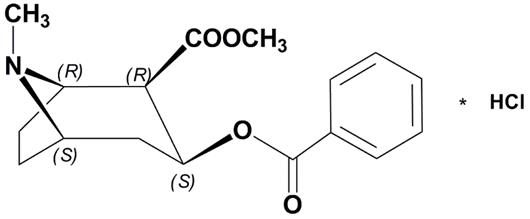
cocaine hydrochloride nasal is a brand of Cocaine →
cocaine hydrochloride nasal is a brand of Cocaine. INDICATIONS AND USAGE COCAINE HYDROCHLORIDE nasal solution is an ester local anesthetic indicated for the induction of local anesthesia of the…
Boxed warning
WARNING: ABUSE AND DEPENDENCE CNS stimulants, including cocaine hydrochloride, have a high potential for abuse and dependence [see Warning and Precautions (5.1) . ] WARNING: ABUSE AND DEPENDENCE See full prescribing information for complete boxed warning. CNS stimulants, including cocaine hydrochloride, have a high potential for abuse and dependence. (5.1)
INDICATIONS AND USAGE COCAINE HYDROCHLORIDE nasal solution is an ester local anesthetic indicated for the induction of local anesthesia of the mucous membranes when performing diagnostic procedures and surgeries on or through the nasal cavities in adults. COCAINE HYDROCHLORIDE nasal solution is an ester local anesthetic indicated for the induction of local anesthesia of the mucous membranes when performing diagnostic procedures and surgeries on or through the nasal cavities in adults. ( 1 )
Dosage
DOSAGE AND ADMINISTRATION For intranasal use only. ( 2.1 ) Do not apply to damaged nasal mucosa. ( 2.1 ) Cocaine hydrochloride should not be substituted for other nasal cocaine products unless determined by FDA to be substitutable. ( 2.1 ) The recommended dose of cocaine hydrochloride ranges from 40 mg to 160 mg, depending on the nasal surface area to be anesthetized and the procedure to be performed. ( 2.2 ) Cocaine hydrochloride should be administered by means of cotton or rayon applicator pledgets applied to the nasal mucosa. ( 2 ) One pledget will absorb one mL of cocaine hydrochloride nasal solution. ( 2.2 ) Preparation and Application: Draw up 4 mL cocaine hydrochloride 4% nasal solution into a syringe calibrated in mL. Apply 2 mL cocaine hydrochloride nasal solution to the top of four stacked pledgets. Turn the stacked pledgets over and apply 2 mL cocaine hydrochloride nasal solution to the other side. ( 2.3 ) Cocaine hydrochloride nasal solution should be evenly distributed on all pledgets. ( 2.3 ) Following soaking, place a maximum of two pledgets in each nasal cavity. ( 2.3 ) Leave pledgets in place for up to 20 minutes. ( 2.3 ) Pledgets should be removed immediately upon any sign or symptom of an adverse event. ( 2.2 ) 2.1 Important Dosage and Administration Instructions Cocaine hydrochloride is for intranasal use only. Do not apply cocaine hydrochloride to damaged nasal mucosa. Unless the FDA has determined that these products can be substituted, do not substitute cocaine hydrochloride for other intranasal cocaine products because this may result in different local and/or systemic exposures. 2.2 Dosing Recommendations The recommended dose of cocaine hydrochloride ranges from 40 mg to 160 mg, depending on the nasal mucosal area to be anesthetized and the procedure to be performed. Each pledget absorbs one mL of cocaine hydrochloride nasal solution. A maximum of two soaked cotton or rayon pledgets may be placed in each nasal cavity, for a total dose of 160 mg for cocaine hydrochloride nasal solution 4%. The total dose for any one procedure or surgery should not exceed 3 mg/kg cocaine hydrochloride. The recommended size of the cotton or rayon pledgets for use with cocaine hydrochloride measure ½ inch x 3 inch (sold separately). 2.3 Preparation and Administration of Cocaine Hydrochloride via Pledgets Draw up 4 mL cocaine hydrochloride into a syringe calibrated in mL. Stack four pledgets and apply 2 mL of solution to the top of the stacked pledgets. Turn the stacked pledgets over and apply 2 mL of solution to the other side. Cocaine hydrochloride should be evenly distributed on all pledgets. Following cocaine hydrochloride application to pledgets, place One (1) or two (2) pledgets in each nasal cavity, for a maximum of 2 pledgets used per nostril. Leave pledgets in place for up to 20 minutes. Remove pledgets and continue with the procedure. Discard pledgets, and dispose of any unused pledgets and remaining solution in accordance with institutional procedures for CII products. Pledgets should be removed immediately upon any sign or symptom of an adverse event.
Warnings
WARNINGS AND PRECAUTIONS Cocaine hydrochloride is for TOPICAL USE ONLY. NOT FOR INJECTION OR OPHTHALMIC USE. ( 5 ) Seizures: Cocaine hydrochloride may lower the convulsive threshold. Monitor patients for development of seizures. Blood Pressure and Heart Rate Increases: Monitor vital signs, including heart rate and rhythm, in patients after receiving cocaine hydrochloride. Avoid use of cocaine hydrochloride in patients with a recent or active history of myocardial infarction, coronary artery disease, congestive heart failure, irregular heart rhythm, abnormal ECG, uncontrolled hypertension, or thyrotoxicosis. 5.1 Potential for Abuse and Dependence Central nervous system (CNS) stimulants, including cocaine hydrochloride, have a high potential for abuse and dependence [see Drug Abuse and Dependence ( 9.2 , 9.3 )] . 5.2 Seizures It has been reported in the literature that cocaine hydrochloride may lower the convulsive threshold. The risk may be higher in patients with a history of seizures or in patients with prior electroencephalogram (EEG) abnormalities without seizures, but has been reported in patients with no prior history or EEG evidence of seizures. Monitor patients for development of seizures. 5.3 Blood Pressure and Heart Rate Increases As reported in the literature, cocaine hydrochloride causes an increase in observed blood pressure and heart rate. In the Phase 3 clinical studies with cocaine hydrochloride, increases in blood pressure and heart rate were observed following pledget removal. Monitor for changes in vital signs, including heart rate and rhythm, after administration of cocaine hydrochloride. Avoid use of cocaine hydrochloride in patients with a history of myocardial infarction, coronary artery disease, congestive heart failure, irregular heart rhythm, abnormal ECG, or uncontrolled hypertension. Avoid use of additional vasoconstrictor agents such as epinephrine or phenylephrine with cocaine hydrochloride. If concomitant use is unavoidable, prolonged vital sign and ECG monitoring may be required. Although not reported in the cocaine hydrochloride clinical trials, myocardial infarction has been reported in the literature, and can occur when the drug has been used as recommended [see Adverse Reactions ( 6 )] . 5.4 Toxicology Screening The time after cocaine administration for which cocaine and its metabolites can be detected in plasma and urine depends on the sensitivity of the utilized assay method. The cocaine hydrochloride and its metabolites in cocaine hydrochloride may be detected in plasma for up to one week after administration. Cocaine hydrochloride and its metabolites may be detected in urine toxicology screening for longer than one week after administration. 5.5 Known Hypersensitivity or Idiosyncrasy to the Sympathomimetic Amines Cocaine hydrochloride is contraindicated in patients with a known history of hypersensitivity to cocaine or to the components of the nasal solution. Cocaine is a sympathetic neuronal catecholamine reuptake inhibitor, which may potentiate the actions of concomitantly administered sympathomimetic amines. 5.6 Ophthalmic Use Cocaine hydrochloride is NOT FOR OPHTHALMIC USE. Cocaine can cause sloughing of the corneal epithelium and should not be used in the eyes. Pitting and ulceration of the cornea has been reported in the literature.
Contraindications
CONTRAINDICATIONS COCAINE HYDROCHLORIDE nasal solution is contraindicated in patients with a known history of hypersensitivity to cocaine hydrochloride, other ester-based anesthetics, or any other component of the product. Known hypersensitivity to cocaine hydrochloride, other ester-based anesthetics, or any other component of COCAINE HYDROCHLORIDE nasal solution. ( 4 )
Drug interactions
DRUG INTERACTIONS Epinephrine, Phenylephrine: There have been reports of myocardial ischemia, myocardial infarction, and ventricular arrhythmias with concomitant use during nasal surgery. Avoid use of additional vasoconstrictor agents with cocaine hydrochloride. If concomitant use is unavoidable, prolonged vital sign and ECG monitoring may be required. ( 5.3 , 7.2 ) Disulfiram: Disulfiram treatment increases plasma cocaine exposure. Avoid using cocaine hydrochloride in patients taking disulfiram. ( 7.3 ) CNS stimulants: Concomitant administration may result in nervousness, irritability, or possibly convulsions. ( 7.1 ) Cholinesterase inhibitors: Concomitant administration may increase the risk of cocaine toxicity. ( 7.4 ) Sympathomimetics, postganglionic blocking agents, and tricyclic antidepressants: Concomitant administration may increase the risk of cardiovascular adverse reactions. ( 7.5 , 7.6 ) Monoamine-oxidase inhibitors: Concomitant administration may potentiate the effects and toxicity of monoamine-oxidase inhibitors. ( 7.7 ) 7.1 Central Nervous System Stimulants Concurrent use of other central nervous system stimulants with cocaine may result in excessive stimulation, leading to nervousness, irritability, or possibly convulsions, or cardiac arrhythmias. 7.2 Epinephrine, Phenylephrine There are reports in the published literature of myocardial ischemia, myocardial infarction, and ventricular arrhythmias after concomitant administration of topical intranasal cocaine with epinephrine and phenylephrine during nasal and sinus surgery. Avoid use of additional vasoconstrictor agents such as epinephrine and phenylephrine with cocaine hydrochloride during nasal and sinus surgery. If concomitant use is unavoidable, prolonged vital sign and ECG monitoring may be required. 7.3 Disulfiram Published literature reported that disulfiram treatment increased plasma cocaine exposure (AUC and C max ), by several folds after acute intranasal cocaine administration. Another literature reported that co-administration of disulfiram increased AUC of plasma cocaine by several folds after intravenous cocaine administration [see Clinical Pharmacology ( 12.3 )] . Avoid using cocaine hydrochloride in patients taking disulfiram. Consider using other local anesthesia. 7.4 Cholinesterase Inhibitors Cocaine has been described in literature to be primarily metabolized and inactivated by non-enzymatic ester hydrolysis and hepatic carboxylesterase, and also by plasma cholinesterase, hepatic carboxylesterase, and CYP3A4. The pharmacokinetics of cocaine hydrochloride in patients with reduced plasma cholinesterase activity has not been studied. Plasma cholinesterase activity may be decreased by chronic administration of certain monoamine oxidase inhibitors, oral contraceptives, glucocorticoids, antimyasthenics (neostigmine), cyclophosphamide, and possibly thiotepa. It may also be diminished by administration of irreversible plasma cholinesterase inhibitors such as echothiophate, organophosphate insecticides, and certain antineoplastic agents. Patients with reduced plasma cholinesterase (pseudocholinesterase) activity may have reduced clearance and increased exposure of plasma cocaine after administration of cocaine hydrochloride. Because cocaine is metabolized by multiple enzymes, the effect of reduced plasma cholinesterase activity on cocaine exposure may be limited. No dosage adjustment of cocaine hydrochloride is needed in patients with reduced plasma cholinesterase. Monitor patients with reduced plasma cholinesterase activity for adverse reactions such as clinically-relevant increases in heart rate or blood pressure. 7.5 Postganglionic Blocking Agents Agents such as reserpine potentiate cocaine-induced sympathetic stimulation; concurrent use may increase the risk of hypertension and cardiac arrhythmias that may be life-threatening. 7.6 Tricyclic Antidepressants Tricyclic antidepressants may increase the activity of the sympathetic nervous system, which may also be increased by administration of cocaine hydrochloride. 7.7 Monoamine-Oxidase Inhibitors Cocaine hydrochloride may potentiate the effects and toxicity of MAO inhibitors.
Adverse reactions
ADVERSE REACTIONS The following treatment-emergent adverse events are discussed in more detailed in other sections of the labeling: Increases in Blood Pressure and Heart Rate [see Warnings and Precautions ( 5.3 )] The most common adverse reactions (> 1%) occurring in patients treated with cocaine hydrochloride were hypertension, tachycardia, and sinus tachycardia. ( 6.1 ) To report SUSPECTED ADVERSE REACTIONS, contact Omnivium Pharmaceuticals LLC at 1-888-807-1048 or FDA at 1-800-FDA-1088 or www.fda.gov/medwatch. 6.1 Clinical Trial Experience Because clinical trials are conducted under widely varying conditions, adverse reaction rates observed in the clinical trials of a drug cannot be directly compared to rates in the clinical trials of another drug and may not reflect the rates observed in practice. Cocaine hydrochloride nasal solution has been evaluated in one Phase 1 study, one QT study and two Phase 3 studies, which included 702 adult subjects who received a single application of cocaine hydrochloride nasal solution 4%, cocaine hydrochloride nasal solution 10%, or placebo. The randomized, double-blind, placebo controlled Phase 3 studies were conducted in adult patients undergoing diagnostic procedures and surgeries on or through the mucous membranes of the nasal cavities, of which 316 received cocaine hydrochloride nasal solution 4%, 318 received cocaine hydrochloride nasal solution 10%, and 168 received placebo. Safety was evaluated for up to 7 days after dosing. In a Phase 3 study, patients received a mean dose of 126 mg (80 to 160 mg, N=259) of cocaine hydrochloride using cocaine hydrochloride nasal solution 4% and a mean dose of 319 mg (200 to 400 mg, N=259) of cocaine hydrochloride using cocaine hydrochloride nasal solution 10% as a single application. The most common adverse reactions reported with cocaine hydrochloride 4% are included in Table 1 (preexisting nasal conditions are not included). There were two patients treated with cocaine hydrochloride nasal solution 4% who withdrew due to an adverse reaction. One patient developed anxiety and systolic hypertension and one patient developed intermittent paroxysmal tachycardia. Both patients developed symptoms within 10 minutes of nasal pledget application. Three patients treated with cocaine hydrochloride nasal solution 10% required premature removal of pledgets due to nausea and diastolic hypertension; mild intermittent paroxysmal hypertension and paroxysmal tachycardia; and vasovagal syncope with bradycardia. Table 1. Common Adverse Reactions with Cocaine Hydrochloride in > 1% of Treated Patients MedDRA System Organ Class and Preferred Term Cocaine Hydrochloride, 4% (N=259) n, % Cocaine Hydrochloride, 10% (N=259) n, % Placebo (N=128) n, % Vascular Disorders 203 (78) 224 (87) 86 (67) Hypertension 201 (78) 220 (85) 85 (66) Cardiac Disorders 31 (12) 47 (18) 10 (8) Tachycardia 12 (5) 28 (11) 1 (1) Bradycardia 8 (3) 1 (0.4) 5 (4) Sinus tachycardia 6 (2) 9 (4) 0 Investigations 13 (5) 30 (12) 8 (6) QRS prolonged 4 (2) 8 (3) 3 (2) QT interval prolonged 7 (3) 10 (4) 3 (2) 6.2 Postmarketing Experience The following adverse reactions have been identified during use of Cocaine Hydrochloride Nasal Solution. Because these reactions are reported voluntarily from a population of uncertain size, it is not always possible to reliably estimate their frequency or establish a causal relationship to drug exposure. Nervous system disorders: Headache, Seizure Cardiac disorders: Hypertension, tachycardia, atrial and ventricular arrhythmias, myocardial ischemia and infarction Psychiatric disorders: Anxiety
Mechanism of action
CLINICAL PHARMACOLOGY 12.1 Mechanism of Action Cocaine hydrochloride is a local anesthetic of the ester type. Cocaine hydrochloride prevents conduction in nerve fibers by reversibly blocking sodium channels and preventing the transient rise in sodium conductance necessary for generation of an action potential. 12.2 Pharmacodynamics Cardiac Electrophysiology The effect of COCAINE HYDROCHLORIDE nasal solution on the QTc interval was evaluated in a randomized, positive- and placebo-controlled four-period crossover thorough QTc study in 24 healthy subjects. No clinically relevant QTc prolongation was observed at the highest clinically relevant concentrations with a single therapeutic dose. 12.3 Pharmacokinetics Absorption The pharmacokinetics of COCAINE HYDROCHLORIDE nasal solution have been assessed in 74 healthy adult subjects across 4 studies. Following intranasal application of two 40 mg pledgets applied to each nasal cavity (160 mg cocaine hydrochloride total dose) for 20 minutes, the geometric mean (SD) cocaine Cmax was 43.2 (1.73) ng/mL. The median (range) time to peak plasma concentration (tmax) was 0.42 (0.25 – 1.75) hours after pledget application. Distribution Cocaine has been described in literature as approximately 84 – 92% bound to human plasma proteins, binding primarily to alpha-1-acid glycoprotein (AAG) and albumin. In studies with COCAINE HYDROCHLORIDE nasal solution, the apparent volume of distribution (Vd/F) of cocaine after intranasal administration is 3,877 ± 1,266 L. Elimination Metabolism Cocaine has been described in literature to be primarily metabolized and inactivated by non-enzymatic ester hydrolysis and hepatic carboxylesterase 1 to form benzoylecgonine (BE), and by plasma cholinesterase and hepatic carboxylesterase 2 to form ecgonine methyl ester (EME). In human liver microsomes, cocaine undergoes CYP3A4 mediated N-demethylation to produce a minor metabolite, norcocaine, which is pharmacologically active. Excretion Cocaine has been described in literature to be primarily eliminated by biotransformation to inactive metabolites, BE and EME. Less than 10% of the administered dose is excreted unchanged in the urine. BE and EME are both predominantly excreted by the kidneys. In studies with COCAINE HYDROCHLORIDE nasal solution, 0-32 hour urinary recoveries of cocaine, BE, and EME as a percentage of dose were approximately 0.1%, 2.0%, and 1.0%, respectively. The mean elimination half-life of cocaine was 1.0 to 1.7 hours; with longer plasma sampling (32 hours) and a highly sensitive assay, mean half-life values of 5.0 to 8.0 hours were observed at very low plasma concentrations. The apparent clearance of cocaine after intranasal administration of COCAINE HYDROCHLORIDE nasal solution (CL/F) is 3096 ± 1276 L/h. Specific Populations In studies with COCAINE HYDROCHLORIDE nasal solution, cocaine exposure (i.e., Cmax, AUClast, and AUCinf) was slightly higher in females than males whereas tmax and half-life were similar in males and females. COCAINE HYDROCHLORIDE nasal solution pharmacokinetics are not affected by age or weight. Renal Impairment In a pharmacokinetic study of COCAINE HYDROCHLORIDE nasal solution in subjects with normal and severe renal impairment (eGFR 15-29 mL/min/1.73 m2), mean AUC and Cmax were slightly higher in subjects with severe renal impairment compared to those with normal renal function and clearance was slightly lower [see Use in Specific Populations (8.6) ]. Hepatic Impairment In a pharmacokinetic study of COCAINE HYDROCHLORIDE nasal solution in subjects with normal, Child-Pugh Class B, and Child-Pugh Grade C hepatic impairment, there was a minimal effect of hepatic impairment on cocaine Cmax. In moderately impaired subjects (n=9) there was a higher than two-fold increase in AUC (79.2 ng.h/mL in normal subjects to 225 ng.h/mL in Child-Pugh Grade B subjects) and the clearance was reduced by more than half (1735 L/h in normal 629 L/h in Child-Pugh Grade B subjects). In severely impaired subjects (n=3) there was an eighty percent increase in AUC (79.2 ng.h/mL in normal subjects to 142 ng.h/mL in Child-Pugh Grade C subjects) and the clearance was reduced to half (1735 L/h in normal 959 L/h in Child-Pugh Grade C subjects) [see Use in Specific Populations (8.7) ]. Drug Interaction Studies Cocaine has been found to be a CYP2D6 inhibitor in in-vitro studies employing human liver microsomes. In vitro transporter inhibition studies also found cocaine to be an inhibitor of OCT2. However, the relatively low plasma concentrations of cocaine resulting from therapeutic doses of COCAINE HYDROCHLORIDE nasal solution are not expected to raise significant drug-drug interaction concerns. Disulfiram It has been reported in the published literature that disulfiram treatment increased plasma cocaine exposure, including both AUC and Cmax, by several fold after acute intranasal cocaine administration. Other published literature reported that co-administration of disulfiram increased AUC of plasma cocaine by several fold after intravenous cocaine administration [see Drug Interactions (7.1) ].
NDC examples
70839-35970839-36281665-301
Source: openFDA + RxNorm · 2026
Look up another medication
Powered by Eleplan
Bring an organized medication list to your next appointment.
Create a free care plan, then tell Ellie which medications belong on your list. Looking up a medication does not add it to your records.