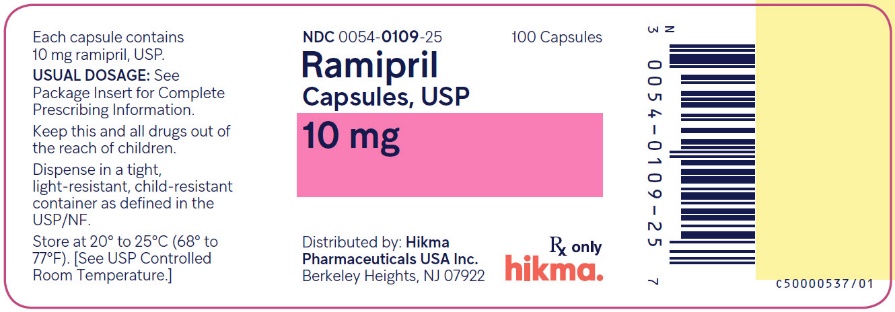
ramipril 1.25 MG Oral Capsule — ACE inhibitors, plain. INDICATIONS AND USAGE Ramipril Capsules are an angiotensin converting enzyme (ACE) inhibitor indicated for the treatment of hypertension, to lower…
Boxed warning
WARNING: FETAL TOXICITY • When pregnancy is detected, discontinue ramipril as soon as possible [see Warnings and Precautions (5.6) ]. • Drugs that act directly on the renin-angiotensin system can cause injury and death to the developing fetus [see Warnings and Precautions (5.6) ] . WARNING: FETAL TOXICITY See full prescribing information for complete boxed warning • When pregnancy is detected, discontinue ramipril as soon as possible (5.6) . • Drugs that act directly on the renin-angiotensin system can cause injury and death to the developing fetus (5.6) .
Ramipril has several documented drug interactions that may affect blood pressure and renal function.
majordiuretics — excessive hypotension
majorlithium — increased serum lithium levels and symptoms of lithium toxicity
moderategold — nitritoid reactions
majorNSAIDs — increased risk of renal impairment and loss of antihypertensive effect
Indications
INDICATIONS AND USAGE Ramipril Capsules are an angiotensin converting enzyme (ACE) inhibitor indicated for the treatment of hypertension, to lower blood pressure. Lowering blood pressure reduces the risk of fatal and nonfatal cardiovascular events, primarily strokes and myocardial infarctions. It may be used alone or in combination with thiazide diuretics. ( 1.1 ). In patients 55 years or older at high risk of developing a major cardiovascular event, Ramipril Capsules are indicated to reduce the risk of myocardial infarction, stroke, or death from cardiovascular causes (1.2). Ramipril Capsules indicated in stable patients who have demonstrated clinical signs of congestive heart failure post-myocardial infarction (1.3). 1.1 Hypertension Ramipril capsules are indicated for the treatment of hypertension, to lower blood pressure. Lowering blood pressure reduces the risk of fatal and nonfatal cardiovascular events, primarily strokes and myocardial infarctions. These benefits have been seen in controlled trials of antihypertensive drugs from a wide variety of pharmacologic classes including this drug. Control of high blood pressure should be part of comprehensive cardiovascular risk management, including, as appropriate, lipid control, diabetes management, antithrombotic therapy, smoking cessation, exercise, and limited sodium intake. Many patients will require more than one drug to achieve blood pressure goals. For specific advice on goals and management, see published guidelines, such as those of the National High Blood Pressure Education Program’s Joint National Committee on Prevention, Detection, Evaluation, and Treatment of High Blood Pressure (JNC). Numerous antihypertensive drugs, from a variety of pharmacologic classes and with different mechanisms of action, have been shown in randomized controlled trials to reduce cardiovascular morbidity and mortality, and it can be concluded that it is blood pressure reduction, and not some other pharmacologic property of the drugs, that is largely responsible for those benefits. The largest and most consistent cardiovascular outcome benefit has been a reduction in the risk of stroke, but reductions in myocardial infarction and cardiovascular mortality also have been seen regularly. Elevated systolic or diastolic pressure causes increased cardiovascular risk, and the absolute risk increase per mmHg is greater at higher blood pressures, so that even modest reductions of severe hypertension can provide substantial benefit. Relative risk reduction from blood pressure reduction is similar across populations with varying absolute risk, so the absolute benefit is greater in patients who are at higher risk independent of their hypertension (for example, patients with diabetes or hyperlipidemia), and such patients would be expected to benefit from more aggressive treatment to a lower blood pressure goal. Some antihypertensive drugs have smaller blood pressure effects (as monotherapy) in black patients, and many antihypertensive drugs have additional approved indications and effects (e.g., on angina, heart failure, or diabetic kidney disease). These considerations may guide selection of therapy. Ramipril capsules may be used alone or in combination with thiazide diuretics. 1.2 Reduction in the Risk of Myocardial Infarction, Stroke, and Death from Cardiovascular Causes Ramipril capsules are indicated in patients 55 years or older at high risk of developing a major cardiovascular event because of a history of coronary artery disease, stroke, peripheral vascular disease, or diabetes that is accompanied by at least one other cardiovascular risk factor (hypertension, elevated total cholesterol levels, low HDL levels, cigarette smoking, or documented microalbuminuria), to reduce the risk of myocardial infarction, stroke, or death from cardiovascular causes. Ramipril capsules can be used in addition to other needed treatment (such as antihypertensive, antiplatelet, or lipid-lowering therapy) [see Clinical Studies (14.2) ]. 1.3 Heart Failure Post-Myocardial Infarction Ramipril capsules are indicated in stable patients who have demonstrated clinical signs of congestive heart failure within the first few days after sustaining acute myocardial infarction. Administration of ramipril capsules to such patients has been shown to decrease the risk of death (principally cardiovascular death) and to decrease the risks of failure-related hospitalization and progression to severe/resistant heart failure [see Clinical Studies ( 14.3 )]. 1.1 Hypertension Ramipril capsules are indicated for the treatment of hypertension, to lower blood pressure. Lowering blood pressure reduces the risk of fatal and nonfatal cardiovascular events, primarily strokes and myocardial infarctions. These benefits have been seen in controlled trials of antihypertensive drugs from a wide variety of pharmacologic classes including this drug. Control of high blood pressure should be part of comprehensive cardiovascular risk management, including, as appropriate, lipid control, diabetes management, antithrombotic therapy, smoking cessation, exercise, and limited sodium intake. Many patients will require more than one drug to achieve blood pressure goals. For specific advice on goals and management, see published guidelines, such as those of the National High Blood Pressure Education Program’s Joint National Committee on Prevention, Detection, Evaluation, and Treatment of High Blood Pressure (JNC). Numerous antihypertensive drugs, from a variety of pharmacologic classes and with different mechanisms of action, have been shown in randomized controlled trials to reduce cardiovascular morbidity and mortality, and it can be concluded that it is blood pressure reduction, and not some other pharmacologic property of the drugs, that is largely responsible for those benefits. The largest and most consistent cardiovascular outcome benefit has been a reduction in the risk of stroke, but reductions in myocardial infarction and cardiovascular mortality also have been seen regularly. Elevated systolic or diastolic pressure causes increased cardiovascular risk, and the absolute risk increase per mmHg is greater at higher blood pressures, so that even modest reductions of severe hypertension can provide substantial benefit. Relative risk reduction from blood pressure reduction is similar across populations with varying absolute risk, so the absolute benefit is greater in patients who are at higher risk independent of their hypertension (for example, patients with diabetes or hyperlipidemia), and such patients would be expected to benefit from more aggressive treatment to a lower blood pressure goal. Some antihypertensive drugs have smaller blood pressure effects (as monotherapy) in black patients, and many antihypertensive drugs have additional approved indications and effects (e.g., on angina, heart failure, or diabetic kidney disease). These considerations may guide selection of therapy. Ramipril capsules may be used alone or in combination with thiazide diuretics. 1.2 Reduction in the Risk of Myocardial Infarction, Stroke, and Death from Cardiovascular Causes Ramipril capsules are indicated in patients 55 years or older at high risk of developing a major cardiovascular event because of a history of coronary artery disease, stroke, peripheral vascular disease, or diabetes that is accompanied by at least one other cardiovascular risk factor (hypertension, elevated total cholesterol levels, low HDL levels, cigarette smoking, or documented microalbuminuria), to reduce the risk of myocardial infarction, stroke, or death from cardiovascular causes. Ramipril capsules can be used in addition to other needed treatment (such as antihypertensive, antiplatelet, or lipid-lowering therapy) [see Clinical Studies (14.2) ]. 1.3 Heart Failure Post-Myocardial Infarction Ramipril capsules are indicated in stable patients who have demonstrated clinical signs of congestive heart failure within the first
Dosage
DOSAGE AND ADMINISTRATIO Hypertension: Initial dose is 2.5 mg to 20 mg once daily. Adjust dosage according to blood pressure response after 2 to 4 weeks of treatment. The usual maintenance dose following titration is 2.5 mg to 20 mg daily as a single dose or equally divided doses ( 2.1 ). Reduction in the risk of myocardial infarction, stroke, or death from cardiovascular causes: 2.5 mg once daily for 1 week, 5 mg once daily for 3 weeks, and increased as tolerated to a maintenance dose of 10 mg once daily (2.2). Heart failure post-myocardial infarction: Starting dose of 2.5 mg twice daily. If patient becomes hypotensive at this dose, decrease dosage to 1.25 mg twice daily. Increase dose as tolerated toward a target dose of 5 mg twice daily, with dosage increases about 3 weeks apart (2.3). Dosage adjustment: See respective sections pertaining to dosage adjustment in special situations ( 2.5 ). 2.1 Hypertension The recommended initial dose for patients not receiving a diuretic is 2.5 mg once a day. Adjust dose according to blood pressure response. The usual maintenance dosage range is 2.5 mg to 20 mg per day administered as a single dose or in two equally divided doses. In some patients treated once daily, the antihypertensive effect may diminish toward the end of the dosing interval. In such patients, consider an increase in dosage or twice daily administration. If blood pressure is not controlled with ramipril capsules alone, a diuretic can be added. 2.2 Reduction in Risk of Myocardial Infarction, Stroke, and Death from Cardiovascular Causes Initiate dosing at 2.5 mg once daily for 1 week, 5 mg once daily for the next 3 weeks, and then increase as tolerated, to a maintenance dose of 10 mg once daily. If the patient is hypertensive or recently post-myocardial infarction, ramipril capsules can also be given as a divided dose. 2.3 Heart Failure Post-Myocardial Infarction For the treatment of post-myocardial infarction patients who have shown signs of congestive heart failure, the recommended starting dose of ramipril capsules is 2.5 mg twice daily (5 mg per day). A patient who becomes hypotensive at this dose may be switched to 1.25 mg twice daily. After one week at the starting dose, increase dose (if tolerated) toward a target dose of 5 mg twice daily, with dosage increases being about 3 weeks apart. After the initial dose of ramipril capsules, observe the patient under medical supervision for at least two hours and until blood pressure has stabilized for at least an additional hour. If possible, reduce the dose of any concomitant diuretic as this may diminish the likelihood of hypotension. The appearance of hypotension after the initial dose of ramipril capsules does not preclude subsequent careful dose titration with the drug, following effective management of the hypotension [see Warnings and Precautions (5.5) , Drug Interactions (7.1) ]. 2.4 General Dosing Information Generally, swallow ramipril capsules whole. The ramipril capsule can also be opened and the contents sprinkled on a small amount (about 4 oz.) of applesauce or mixed in 4 oz. (120 mL) of water or apple juice. To be sure that ramipril is not lost when such a mixture is used, consume the mixture in its entirety. The described mixtures can be pre-prepared and stored for up to 24 hours at room temperature or up to 48 hours under refrigeration. Concomitant administration of ramipril capsules with potassium supplements, potassium salt substitutes, or potassium-sparing diuretics can lead to increases of serum potassium [see Warnings and Precautions (5.8) ]. 2.5 Dosage Adjustment Renal I mpairment Establish baseline renal function in patients initiating ramipril capsules. Usual regimens of therapy with ramipril capsules may be followed in patients with estimated creatinine clearance >40 mL/min. However, in patients with worse impairment, 25% of the usual dose of ramipril is expected to produce full therapeutic levels of ramiprilat [see Use in Specific Populations (8.6) ] . Hypertension For patients with hypertension and renal impairment, the recommended initial dose is 1.25 mg ramipril capsules once daily. Dosage may be titrated upward until blood pressure is controlled or to a maximum total daily dose of 5 mg. Heart Failure Post-Myocardial Infarction For patients with heart failure and renal impairment, the recommended initial dose is 1.25 mg ramipril capsules once daily. The dose may be increased to 1.25 mg twice daily, and up to a maximum dose of 2.5 mg twice daily depending on clinical response and tolerability. Volume Depletion or Renal Artery Stenosis Blood pressure decreases associated with any dose of ramipril capsules depend, in part, on the presence or absence of volume depletion (e.g., past and current diuretic use) or the presence or absence of renal artery stenosis. If such circumstances are suspected to be present, initiate dosing at 1.25 mg once daily. Adjust dosage according to blood pressure response. 2.1 Hypertension The recommended initial dose for patients not receiving a diuretic is 2.5 mg once a day. Adjust dose according to blood pressure response. The usual maintenance dosage range is 2.5 mg to 20 mg per day administered as a single dose or in two equally divided doses. In some patients treated once daily, the antihypertensive effect may diminish toward the end of the dosing interval. In such patients, consider an increase in dosage or twice daily administration. If blood pressure is not controlled with ramipril capsules alone, a diuretic can be added. 2.2 Reduction in Risk of Myocardial Infarction, Stroke, and Death from Cardiovascular Causes Initiate dosing at 2.5 mg once daily for 1 week, 5 mg once daily for the next 3 weeks, and then increase as tolerated, to a maintenance dose of 10 mg once daily. If the patient is hypertensive or recently post-myocardial infarction, ramipril capsules can also be given as a divided dose. 2.3 Heart Failure Post-Myocardial Infarction For the treatment of post-myocardial infarction patients who have shown signs of congestive heart failure, the recommended starting dose of ramipril capsules is 2.5 mg twice daily (5 mg per day). A patient who becomes hypotensive at this dose may be switched to 1.25 mg twice daily. After one week at the starting dose, increase dose (if tolerated) toward a target dose of 5 mg twice daily, with dosage increases being about 3 weeks apart. After the initial dose of ramipril capsules, observe the patient under medical supervision for at least two hours and until blood pressure has stabilized for at least an additional hour. If possible, reduce the dose of any concomitant diuretic as this may diminish the likelihood of hypotension. The appearance of hypotension after the initial dose of ramipril capsules does not preclude subsequent careful dose titration with the drug, following effective management of the hypotension [see Warnings and Precautions (5.5) , Drug Interactions (7.1) ]. 2.4 General Dosing Information Generally, swallow ramipril capsules whole. The ramipril capsule can also be opened and the contents sprinkled on a small amount (about 4 oz.) of applesauce or mixed in 4 oz. (120 mL) of water or apple juice. To be sure that ramipril is not lost when such a mixture is used, consume the mixture in its entirety. The described mixtures can be pre-prepared and stored for up to 24 hours at room temperature or up to 48 hours under refrigeration. Concomitant administration of ramipril capsules with potassium supplements, potassium salt substitutes, or potassium-sparing diuretics can lead to increases of serum potassium [see Warnings and Precautions (5.8) ]. 2.5 Dosage Adjustment Renal I mpairment Establish baseline renal function in patients initiating ramipril capsules. Usual regimens of therapy with ramipril capsules may be followed in patients with estimated creatinine clearance >40 mL/min. However, in patients with worse impairment, 25% of the usual dose of ramipril is expected to produce full therap
Warnings
5. WARNINGS AND PRECAUTIONS ACE inhibitor use has been associated with the following: • Angioedema, with increased risk in patients with a prior history ( 5.1 ) • Hypotension and hyperkalemia ( 5.5 , 5.8 ) • Renal impairment: monitor renal function during therapy ( 5.3 ) • Increased risk of renal impairment when combined with another blocker of the renin-angiotensin-aldosterone system ( 5.7 ) • Rare cholestatic jaundice and hepatic failure ( 5.2 ) • Rare neutropenia and agranulocytosis ( 5.4 ) 5.1 Anaphylactoid and Possibly Related Reactions Presumably because drugs that act directly on the renin-angiotensin-aldosterone system (e.g., ACE inhibitors) affect the metabolism of eicosanoids and polypeptides, including endogenous bradykinin, patients receiving these drugs (including ramipril) may be subject to a variety of adverse reactions, some of them serious. Angioedema Head and Neck Angioedema: Patients with a history of angioedema unrelated to ACE inhibitor therapy may be at increased risk of angioedema while receiving an ACE inhibitor. Angioedema of the face, extremities, lips, tongue, glottis, and larynx has been reported in patients treated with ACE inhibitors. Angioedema associated with laryngeal edema can be fatal. If laryngeal stridor or angioedema of the face, tongue, or glottis occurs, discontinue treatment with ramipril and institute appropriate therapy immediately. Where there is involvement of the tongue, glottis, or larynx likely to cause airway obstruction, administer appropriate therapy (e.g., subcutaneous epinephrine solution 1:1000 [0.3 mL to 0.5 mL]) promptly [see ADVERSE REACTIONS ( 6 ) ]. In considering the use of ramipril, note that in controlled clinical trials ACE inhibitors cause a higher rate of angioedema in Black patients than in non-Black patients. In a large U.S. post-marketing study, angioedema (defined as reports of angio, face, larynx, tongue, or throat edema) was reported in 3/1523 (0.20%) Black patients and in 8/8680 (0.09%) non-Black patients. These rates were not different statistically. Intestinal Angioedema: Intestinal angioedema has been reported in patients treated with ACE inhibitors. These patients presented with abdominal pain (with or without nausea or vomiting); in some cases there was no prior history of facial angioedema and C-1 esterase levels were normal. The angioedema was diagnosed by procedures including abdominal CT scan or ultrasound, or at surgery, and symptoms resolved after stopping the ACE inhibitor. Include intestinal angioedema in the differential diagnosis of patients on ACE inhibitors presenting with abdominal pain. Anaphylactoid Reactions During Desensitization Two patients undergoing desensitizing treatment with hymenoptera venom while receiving ACE inhibitors sustained life-threatening anaphylactoid reactions. In the same patients, these reactions were avoided when ACE inhibitors were temporarily withheld, but they reappeared upon inadvertent rechallenge. Anaphylactoid Reactions During Membrane Exposure Anaphylactoid reactions have been reported in patients dialyzed with high-flux membranes and treated concomitantly with an ACE inhibitor. Anaphylactoid reactions have also been reported in patients undergoing low-density lipoprotein apheresis with dextran sulfate absorption. 5.2 Hepatic Failure and Impaired Liver Function Rarely, ACE inhibitors, including ramipril, have been associated with a syndrome that starts with cholestatic jaundice and progresses to fulminant hepatic necrosis and sometimes death. The mechanism of this syndrome is not understood. Discontinue ramipril if patient develops jaundice or marked elevations of hepatic enzymes. As ramipril is primarily metabolized by hepatic esterases to its active moiety, ramiprilat, patients with impaired liver function could develop markedly elevated plasma levels of ramipril. No formal pharmacokinetic studies have been carried out in hypertensive patients with impaired liver function. 5.3 Renal Impairment As a consequence of inhibiting the renin-angiotensin-aldosterone system, changes in renal function may be anticipated in susceptible individuals. In patients with severe congestive heart failure whose renal function may depend on the activity of the renin-angiotensin-aldosterone system, treatment with ACE inhibitors, including ramipril, may be associated with oliguria or progressive azotemia and rarely with acute renal failure or death. In hypertensive patients with unilateral or bilateral renal artery stenosis, increases in blood urea nitrogen and serum creatinine may occur. Experience with another ACE inhibitor suggests that these increases would be reversible upon discontinuation of ramipril and/or diuretic therapy. In such patients, monitor renal function during the first few weeks of therapy. Some hypertensive patients with no apparent pre-existing renal vascular disease have developed increases in blood urea nitrogen and serum creatinine, usually minor and transient, especially when ramipril has been given concomitantly with a diuretic. This is more likely to occur in patients with pre-existing renal impairment. Dosage reduction of ramipril and/or discontinuation of the diuretic may be required. 5.4 Neutropenia and Agranulocytosis In rare instances, treatment with ACE inhibitors may be associated with mild reductions in red blood cell count and hemoglobin content, blood cell or platelet counts. In isolated cases, agranulocytosis, pancytopenia, and bone marrow depression may occur. Hematological reactions to ACE inhibitors are more likely to occur in patients with collagen-vascular disease (e.g., systemic lupus erythematosus, scleroderma) and renal impairment. Consider monitoring white blood cell counts in patients with collagen-vascular disease, especially if the disease is associated with impaired renal function. 5.5 Hypotension General Considerations Ramipril can cause symptomatic hypotension, after either the initial dose or a later dose when the dosage has been increased. Like other ACE inhibitors, ramipril, has been only rarely associated with hypotension in uncomplicated hypertensive patients. Symptomatic hypotension is most likely to occur in patients who have been volume- and/or salt-depleted as a result of prolonged diuretic therapy, dietary salt restriction, dialysis, diarrhea, or vomiting. Correct volume- and salt-depletion before initiating therapy with Ramipril. If excessive hypotension occurs, place the patient in a supine position and, if necessary, treat with intravenous infusion of physiological saline. Ramipril treatment usually can be continued following restoration of blood pressure and volume. Heart Failure Post-Myocardial Infarction In patients with heart failure post-myocardial infarction who are currently being treated with a diuretic, symptomatic hypotension occasionally can occur following the initial dose of ramipril. If the initial dose of 2.5 mg ramipril cannot be tolerated, use an initial dose of 1.25 mg ramipril to avoid excessive hypotension . Consider reducing the dose of concomitant diuretic to decrease the incidence of hypotension. Congestive Heart Failure In patients with congestive heart failure, with or without associated renal insufficiency, ACE inhibitor therapy may cause excessive hypotension, which may be associated with oliguria or azotemia and rarely, with acute renal failure and death. In such patients, initiate ramipril therapy under close medical supervision and follow patients closely for the first 2 weeks of treatment and whenever the dose of ramipril or diuretic is increased. Surgery and Anesthesia In patients undergoing surgery or during anesthesia with agents that produce hypotension, ramipril may block angiotensin II formation that would otherwise occur secondary to compensatory renin release. Hypotension that occurs as a result of this mechanism can be corrected by volume expansion. 5.6 Fetal Toxicity Pregnancy Category D Use of drugs that act on the renin-angiotensin system
Contraindications
CONTRAINDICATIONS Ramipril capsules are contraindicated in patients who are hypersensitive to this product or any other ACE inhibitor (e.g., a patient who has experienced angioedema during therapy with any other ACE inhibitor). Ramipril capsules are contraindicated in combination with a neprilysin inhibitor (e.g., sacubitril). Do not administer ramipril capsules within 36 hours of switching to or from sacubitril/valsartan, a neprilysin inhibitor [see Warnings and Precautions (5.1) ] . Do not co-administer ramipril capsules with aliskiren: • in patients with diabetes Angioedema related to previous treatment with an ACE inhibitor, or a history of hereditary or idiopathic angioedema (4) . Ramipril capsules are contraindicated in combination with a neprilysin inhibitor (e.g., sacubitril). Do not administer ramipril capsules within 36 hours of switching to or from sacubitril/valsartan, a neprilysin inhibitor ( 4 ). Do not co-administer aliskiren with ramipril capsules in patients with diabetes (4) .
Mechanism of action
Mechanism of Action Ramipril and ramiprilat inhibit ACE in human subjects and animals. Angiotensin converting enzyme is a peptidyl dipeptidase that catalyzes the conversion of angiotensin I to the vasoconstrictor substance, angiotensin II. Angiotensin II also stimulates aldosterone secretion by the adrenal cortex. Inhibition of ACE results in decreased plasma angiotensin II, which leads to decreased vasopressor activity and to decreased aldosterone secretion. The latter decrease may result in a small increase of serum potassium. In hypertensive patients with normal renal function treated with ramipril alone for up to 56 weeks, approximately 4% of patients during the trial had an abnormally high serum potassium and an increase from baseline greater than 0.75 mEq/L, and none of the patients had an abnormally low potassium and a decrease from baseline greater than 0.75 mEq/L. In the same study, approximately 2% of patients treated with ramipril and hydrochlorothiazide for up to 56 weeks had abnormally high potassium values and an increase from baseline of 0.75 mEq/L or greater; and approximately 2% had abnormally low values and decreases from baseline of 0.75 mEq/L or greater [see Warnings and Precautions ( 5.8 )] . Removal of angiotensin II negative feedback on renin secretion leads to increased plasma renin activity. The effect of ramipril on hypertension appears to result at least in part from inhibition of both tissue and circulating ACE activity, thereby reducing angiotensin II formation in tissue and plasma. Angiotensin converting enzyme is identical to kininase, an enzyme that degrades bradykinin. Whether increased levels of bradykinin, a potent vasopressor peptide, play a role in the therapeutic effects of ramipril remains to be elucidated. While the mechanism through which ramipril lowers blood pressure is believed to be primarily suppression of the renin-angiotensin-aldosterone system, ramipril has an antihypertensive effect even in patients with low-renin hypertension. Although ramipril was antihypertensive in all races studied, Black hypertensive patients (usually a low-renin hypertensive population) had a blood pressure lowering response to monotherapy, albeit a smaller average response, than non-Black patients.
A drug lookup is just the start. Eleplan keeps the whole care plan in one place.
Medications, diagnoses, documents, appointments, and the whole care team — organized and always in sync, with Ellie, your AI care assistant, on top of it. Free to start.