Polymyxin B Sulfate and Trimethoprim Sulfate
Managing this medication for someone you care for? Eleplan keeps diagnoses, medications and appointments in one plan.
Start free with EleplanMedication reference
Polymyxin B Sulfate and Trimethoprim Sulfate
Dihydrofolate Reductase Inhibitor Antibacterial [EPC] — OPHTHALMIC
Polymyxin B Sulfate and Trimethoprim Sulfate — Dihydrofolate Reductase Inhibitor Antibacterial [EPC]. INDICATIONS AND USAGE Polymyxin B Sulfate and Trimethoprim Ophthalmic Solution, USP is indicated in the treatment of surface ocular bacterial…
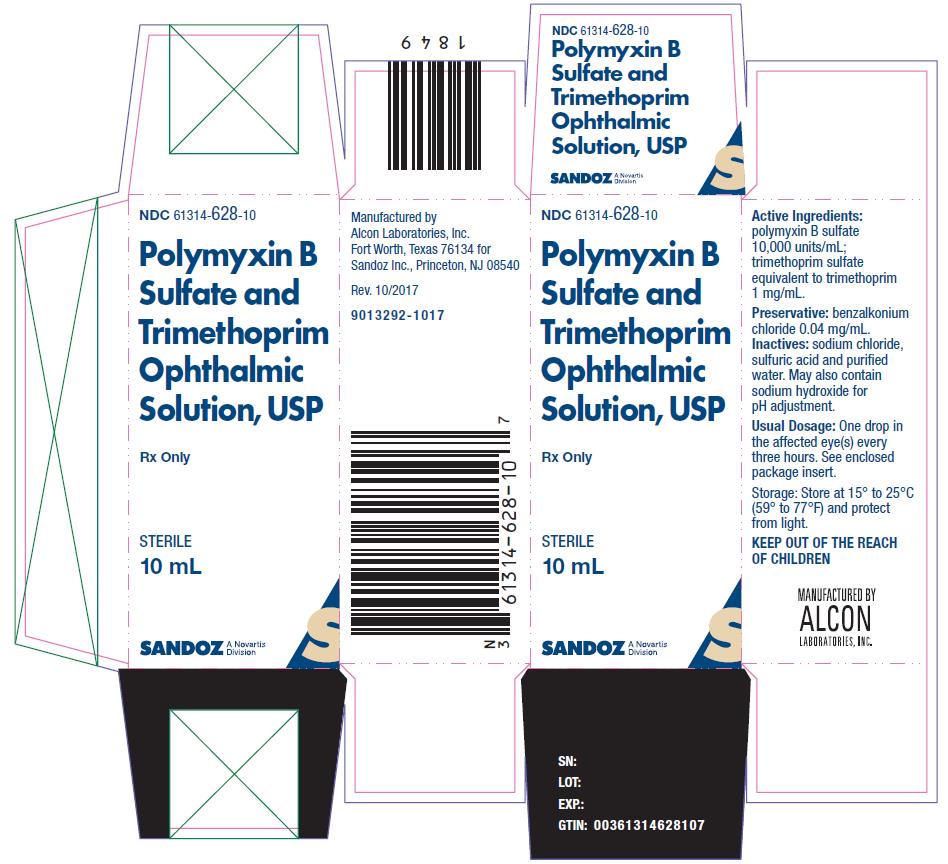
Brand names
Polymyxin B Sulfate and Trimethoprimpolymyxin b sulfate and trimethoprim sulfate
Active ingredients
POLYMYXIN B SULFATETRIMETHOPRIM SULFATETRIMETHOPRIM
Indications
INDICATIONS AND USAGE Polymyxin B Sulfate and Trimethoprim Ophthalmic Solution, USP is indicated in the treatment of surface ocular bacterial infections, including acute bacterial conjunctivitis, and blepharoconjunctivitis, caused by susceptible strains of the following microorganisms: Staphylococcus aureus, Staphylococcus epidermidis, Streptococcus pneumoniae, Streptococcus viridans, Haemophilus influenzae and Pseudomonas aeruginosa. * * Efficacy for this organism in this organ system was studied in fewer than 10 infections.
Dosage
DOSAGE AND ADMINISTRATION In mild to moderate infections, instill one drop in the affected eye(s) every three hours (maximum of 6 doses per day) for a period of 7 to 10 days.
Warnings
WARNINGS NOT FOR INJECTION INTO THE EYE. If a hypersensitivity reaction to polymyxin B sulfate and trimethoprim ophthalmic solution occurs, discontinue use. Polymyxin B sulfate and trimethoprim ophthalmic solution is not indicated for the prophylaxis or treatment of ophthalmia neonatorum.
Contraindications
CONTRAINDICATIONS Polymyxin B sulfate and trimethoprim ophthalmic solution is contraindicated in patients with known hypersensitivity to any of its components.
Adverse reactions
ADVERSE REACTIONS The most frequent adverse reaction to polymyxin B sulfate and trimethoprim ophthalmic solution is local irritation consisting of increased redness, burning, stinging, and/or itching. This may occur on instillation, within 48 hours, or at any time with extended use. There are also multiple reports of hypersensitivity reactions consisting of lid edema, itching, increased redness, tearing, and/or circumocular rash. Stevens-Johnson Syndrome/Toxic Epidermal Necrolysis (SJS/TEN) and anaphylaxis have been reported. Photosensitivity has been reported in patients taking oral trimethoprim. To report SUSPECTED ADVERSE REACTIONS, contact Bausch & Lomb Incorporated at 1-800-553-5340 or FDA at 1-800-FDA-1088 or www.fda.gov/medwatch .
Mechanism of action
CLINICAL PHARMACOLOGY Trimethoprim is a synthetic antibacterial drug active against a wide variety of aerobic gram-positive and gram-negative ophthalmic pathogens. Trimethoprim blocks the production of tetrahydrofolic acid from dihydrofolic acid by binding to and reversibly inhibiting the enzyme dihydrofolate reductase. This binding is stronger for the bacterial enzyme than for the corresponding mammalian enzyme and therefore selectively interferes with bacterial biosynthesis of nucleic acids and proteins. Polymyxin B, a cyclic lipopeptide antibiotic, is bactericidal for a variety of gram-negative organisms, especially Pseudomonas aeruginosa. It increases the permeability of the bacterial cell membrane by interacting with the phospholipid components of the membrane. Blood samples were obtained from 11 human volunteers at 20 minutes, 1 hour and 3 hours following instillation in the eye of 2 drops of ophthalmic solution containing 1 mg trimethoprim and 10,000 units polymyxin B per mL. Peak serum concentrations were approximately 0.03 mcg/mL trimethoprim and 1 unit/mL polymyxin B. Microbiology In vitro studies have demonstrated that the anti-infective components of trimethoprim sulfate and polymyxin B sulfate ophthalmic solution are active against the following bacterial pathogens that are capable of causing external infections of the eye: Trimethoprim: Staphylococcus aureus and Staphylococcus epidermidis, Streptococcus pyogenes, Streptococcus faecalis, Streptococcus pneumoniae, Haemophilus influenzae, Haemophilus aegyptius, Escherichia coli, Klebsiella pneumoniae, Proteus mirabilis (indole-negative) , Proteus vulgaris (indole-positive) , Enterobacter aerogenes and Serratia marcescens. Polymyxin B: Pseudomonas aeruginosa, Escherichia coli, Klebsiella pneumoniae, Enterobacter aerogenes and Haemophilus influenzae.
NDC examples
68788-815285766-14168071-165124208-31570069-311
Indicated ICD-10 codes
Treats these conditions
Source: openFDA + RxNorm · 2026
Look up another medication