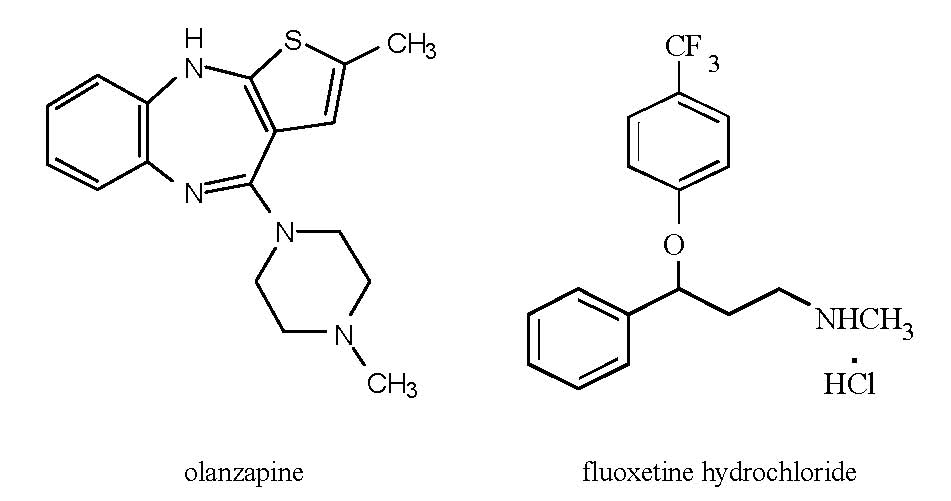
Olanzapine and Fuoxetine — Atypical Antipsychotic [EPC]. INDICATIONS AND USAGE Olanzapine and fluoxetine capsules are indicated for the treatment of: Acute depressive episodes in Bipolar I Disorder [see…
Boxed warning
WARNING: SUICIDAL THOUGHTS AND BEHAVIORS and INCREASED MORTALITY IN ELDERLY PATIENTS WITH DEMENTIA-RELATED PSYCHOSIS Suicidal Thoughts and Behaviors — Antidepressants increased the risk of suicidal thoughts and behavior in children, adolescents, and young adults in short-term studies. These studies did not show an increase in the risk of suicidal thoughts and behavior with antidepressant use in patients over age 24; there was a reduction in risk with antidepressant use in patients aged 65 and older. In patients of all ages who are started on antidepressant therapy, monitor closely for worsening and emergence of suicidal thoughts and behaviors. Advise families and caregivers of the need for close observation and communication with the healthcare provider. Olanzapine and fluoxetine capsules are not approved for use in children less than 10 years of age [see Warnings and Precautions ( 5.1 ), Use in Specific Populations ( 8.4 )] . Increased Mortality in Elderly Patients with Dementia-Related Psychosis — Elderly patients with dementia-related psychosis treated with antipsychotic drugs are at an increased risk of death. Olanzapine and fluoxetine capsules are not approved for the treatment of patients with dementia-related psychosis [see Warnings and Precautions ( 5.2 )] . WARNING: SUICIDAL THOUGHTS AND BEHAVIORS and INCREASED MORTALITY IN ELDERLY PATIENTS WITH DEMENTIA-RELATED PSYCHOSIS S e e full prescribing information for complete boxed warning. I ncreased risk of suicidal thinking and behavior in children, adolescents, and young adults taking antidepressants. Olanzapine and fluoxetine capsules are not approved for use in children less than 10 years of age. Monitor for worsening and emergence of suicidal thoughts and behaviors (5.1, 8.4). El derly patients with dementia-related psychosis treated with antipsychotic drugs are at an increased risk of death. Olanzapine and fluoxetine capsules are not approved for the treatment of patients with dementia-related psychosis (5.2).
INDICATIONS AND USAGE Olanzapine and fluoxetine capsules are indicated for the treatment of: Acute depressive episodes in Bipolar I Disorder [see Clinical Studies (14.1)] . Treatment resistant depression (Major Depressive Disorder in patient who do not respond to 2 separate trials of different antidepressants of adequate dose and duration in the current episode) [see Clinical Studies (14.2)] . Olanzapine and fluoxetine capsules combines olanzapine, an atypical antipsychotic and fluoxetine, a selective serotonin reuptake inhibitor, indicated for treatment of: Acute Depressive Episodes Associated with Bipolar I Disorder ( 1 ) Treatment Resistant Depression ( 1 )
Dosage
DOSAGE AND ADMINISTRATION Adult Starting Dose: 6 mg olanzapine with 25 mg fluoxetine (6 mg/25 mg, once daily in the evening ( 2.1 , 2.2 ) Adult Maximum Dose: 12 mg/50 mg once daily ( 2.1 , 2.2 ) Pediatric Bipolar Depression Starting Dose: 3 mg/25 mg once daily (for ages 10 to 17 years) ( 2.1 ) Pediatric Bipolar Depression Maximum Dose: 12 mg/50 mg ( 2.1 ) Starting dose in patients predisposed to hypotensive reactions, hepatic impairment, or with potential for slowed metabolism: 3 mg/25 mg to 6 mg/25 mg. Escalate dose cautiously ( 2.3 ) 2.1 Depressive Episodes Associated with Bipolar I Disorder Adults – Administer olanzapine and fluoxetine capsules once daily in the evening, generally beginning with the 6 mg/25 mg (mg olanzapine/mg equivalent fluoxetine) capsule. While food has no appreciable effect on the absorption of olanzapine and fluoxetine given individually, the effect of food on the absorption of olanzapine and fluoxetine capsules have not been studied. Make dosage adjustments, if indicated, according to efficacy and tolerability. Antidepressant efficacy was demonstrated with olanzapine and fluoxetine capsules in a dose range of olanzapine 6 mg to 12 mg and fluoxetine 25 mg to 50 mg [see Clinical Studies (14.1)] . The safety of doses above 18 mg of olanzapine and 75 mg of fluoxetine has not been evaluated in adult clinical studies. Periodically reexamine the need for continued pharmacotherapy. Children and Adolescents (10 to 17 years of age) – Administer olanzapine and fluoxetine capsules once daily in the evening, generally beginning with the 3 mg/25 mg capsule, without regard to meals, with a recommended target dose within the approved dosing range (6/25; 6/50; 12/25; 12/50 mg) [see Clinical Studies (14.1)] . The safety of doses above 12 mg of olanzapine and 50 mg of fluoxetine has not been evaluated in pediatric clinical studies. Periodically reexamine the need for continued pharmacotherapy. 2.2 Treatment Resistant Depression Administer olanzapine and fluoxetine capsules once daily in the evening, generally beginning with the 6 mg/25 mg capsule. While food has no appreciable effect on the absorption of olanzapine and fluoxetine given individually, the effect of food on the absorption of olanzapine and fluoxetine capsules have not been studied. Adjust dosage, if indicated, according to efficacy and tolerability. Antidepressant efficacy was demonstrated with olanzapine and fluoxetine capsules in a dose range of olanzapine 6 mg to 18 mg and fluoxetine 25 mg to 50 mg [see Clinical Studies (14.2)] . The safety of doses above 18 mg/75 mg has not been evaluated in clinical studies. Periodically reexamine the need for continued pharmacotherapy. 2.3 Specific Populations Start olanzapine and fluoxetine capsules at 3 mg/25 mg or 6 mg/25 mg in patients with a predisposition to hypotensive reactions, patients with hepatic impairment, or patients who exhibit a combination of factors that may slow the metabolism of olanzapine and fluoxetine capsules (female gender, geriatric age, nonsmoking status) or those patients who may be pharmacodynamically sensitive to olanzapine. Titrate slowly and adjust dosage as needed in patients who exhibit a combination of factors that may slow metabolism. Olanzapine and fluoxetine capsules have not been systematically studied in patients >65 years of age or in patients <10 years of age [see Use in Specific Populations (8.5) and Clinical Pharmacology (12.3, 12.4)] . 2.4 Switching a Patient To or From a Monoamine Oxidase Inhibitor (MAOI) Intended to Treat Psychiatric Disorders At least 14 days should elapse between discontinuation of an MAOI intended to treat psychiatric disorders and initiation of therapy with olanzapine and fluoxetine capsules. Conversely, at least 5 weeks should be allowed after stopping olanzapine and fluoxetine capsules before starting an MAOI intended to treat psychiatric disorders [see Contraindications (4.1)] . 2.5 Use of Olanzapine and Fluoxetine Capsules with Other MAOIs such as Linezolid or Methylene Blue Do not start olanzapine and fluoxetine capsules in a patient who is being treated with linezolid or intravenous methylene blue because there is an increased risk of serotonin syndrome. In a patient who requires more urgent treatment of a psychiatric condition, other interventions, including hospitalization, should be considered [see Contraindications (4.1)] . In some cases, a patient already receiving olanzapine and fluoxetine capsules therapy may require urgent treatment with linezolid or intravenous methylene blue. If acceptable alternatives to linezolid or intravenous methylene blue treatment are not available and the potential benefits of linezolid or intravenous methylene blue are judged to outweigh the risks of serotonin syndrome in a particular patient, olanzapine and fluoxetine capsules should be stopped promptly, and linezolid or intravenous methylene blue can be administered. The patient should be monitored for symptoms of serotonin syndrome for five weeks or until 24 hours after the last dose of linezolid or intravenous methylene blue, whichever comes first. Therapy with olanzapine and fluoxetine capsules may be resumed 24 hours after the last dose of linezolid or intravenous methylene blue [see Warnings and Precautions (5.6)] . The risk of administering methylene blue by non-intravenous routes (such as oral tablets or by local injection) or in intravenous doses much lower than 1 mg/kg with olanzapine and fluoxetine capsules is unclear. The clinician should, nevertheless, be aware of the possibility of emergent symptoms of serotonin syndrome with such use [see Warnings and Precautions (5.6)]. 2.6 Discontinuation of Treatment with Olanzapine and Fluoxetine Capsules Symptoms associated with discontinuation of fluoxetine, a component of olanzapine and fluoxetine capsules, SNRIs, and SSRIs, have been reported [see Warnings and Precautions (5.25)] .
Warnings
WARNINGS AND PRECAUTIONS Neuroleptic Malignant Syndrome : Manage with immediate discontinuation and close monitoring ( 5.3 ) Drug Reaction with Eosinophilia and Systemic Symptoms (DRESS) : Discontinue if DRESS is suspected ( 5.4 ) Metabolic Changes : Atypical antipsychotic drugs have been associated with metabolic changes including hyperglycemia, dyslipidemia, and weight gain ( 5.5 ) H y perg lycemia and Diabetes Mellitus : In some cases extreme and associated with ketoacidosis or hyperosmolar coma or death. Monitor for symptoms of hyperglycemia. Perform fasting blood glucose testing before beginning, and periodically during treatment. ( 5.5 ) D ys l ipidemia : Appropriate clinical monitoring is recommended, including fasting blood lipid testing before beginning, and periodically during, treatment ( 5.5 ) W e ight Gain : Consider potential consequences of weight gain. Monitor weight regularly ( 5.5 ) Serotonin Syndrome : Serotonin syndrome has been reported with SSRIs and SNRIs, including olanzapine and fluoxetine capsules, both when taken alone, but especially when co-administered with other serotonergic agents. If such symptoms occur, discontinue olanzapine and fluoxetine capsules and serotonergic agents and initiate supportive treatment. If concomitant use of olanzapine and fluoxetine capsules with other serotonergic drugs is clinically warranted, patients should be made aware of a potential increased risk for serotonin syndrome, particularly during treatment initiation and dose increases (5.6). Angle-Closure Glaucoma : Angle-closure glaucoma has occurred in patients with untreated anatomically narrow angles treated with antidepressants (5.7) Allergic Reactions and Rash : Discontinue upon appearance of rash or allergic phenomena (5.8) Activation of Mania/Hypomania : Screen for Bipolar Disorder and monitor for activation of mania/hypomania (5.9) Tardive Dyskinesia : Discontinue if clinically appropriate (5.10) Orthostatic Hypotension : Can be associated with bradycardia and syncope. Risk is increased during initial dose titration. Use caution in patients with cardiovascular disease or cerebrovascular disease, and those conditions that could affect hemodynamic responses (5.11) Leukopenia, Neutropenia, and Agranulocytosis : Has been reported with antipsychotics, including olanzapine and fluoxetine capsules. Patients with a history of a clinically significant low white blood cell count (WBC) or drug induced leukopenia/neutropenia should have their complete blood count (CBC) monitored frequently during the first few months of therapy. Consider discontinuing olanzapine and fluoxetine capsules at the first sign of a clinically significant decline in WBC in the absence of other causative factors (5.13) Seizures : Use cautiously in patients with a history of seizures or with conditions that lower the seizure threshold (5.15) Increased Risk of Bleeding : SSRIs increase the risk of bleeding. Use with NSAIDs, aspirin, warfarin, or other drugs that affect coagulation may potentiate the risk of gastrointestinal or other bleeding (5.16) Hyponatremia : Can occur in association with syndrome of inappropriate antidiuretic hormone (SIADH). Consider discontinuing olanzapine and fluoxetine capsules if symptomatic hyponatremia occurs (SIADH) (5.17) Potential for Cognitive and Motor Impairment : Has potential to impair judgment, thinking, and motor skills. Caution patients about operating machinery (5.18) QT Prolongation : QT prolongation and ventricular arrhythmia including Torsade de Pointes have been reported with fluoxetine. Use with caution in conditions that predispose to arrhythmias or increased fluoxetine exposure. Use cautiously in patients with risk factors for QT prolongation (4.2, 5.20) Anticholinergic (antimuscarinic) Effects : Use with caution with other anticholinergic drugs and in patients with urinary retention, prostatic hypertrophy, constipation, history of paralytic ileus or related conditions (5.21) Hyperprolactinemia : May elevate prolactin levels (5.22) Long Elimination Half-Life of Fluoxetine : Changes in dose will not be fully reflected in plasma for several weeks (5.24) Sexual Dysfunction : Olanzapine and fluoxetine capsules use may cause symptoms of sexual dysfunction (5.26) 5.1 Suicidal Thoughts and Behaviors in Children, Adolescents, and Young Adults Patients with Major Depressive Disorder (MDD), both adult and pediatric, may experience worsening of their depression and/or the emergence of suicidal ideation and behavior (suicidality) or unusual changes in behavior, whether or not they are taking antidepressant medications, and this risk may persist until significant remission occurs. Suicide is a known risk of depression and certain other psychiatric disorders, and these disorders themselves are the strongest predictors of suicide. There has been a long-standing concern, however, that antidepressants may have a role in inducing worsening of depression and the emergence of suicidality in certain patients during the early phases of treatment. Pooled analyses of short-term placebo-controlled trials of antidepressant drugs (SSRIs and others) showed that these drugs increase the risk of suicidal thinking and behavior (suicidality) in children, adolescents, and young adults (ages 18 to 24) with Major Depressive Disorder (MDD) and other psychiatric disorders. Short-term studies did not show an increase in the risk of suicidality with antidepressants compared to placebo in adults beyond age 24; there was a reduction with antidepressants compared to placebo in adults aged 65 and older. The pooled analyses of placebo-controlled trials in children and adolescents with MDD, Obsessive Compulsive Disorder (OCD), or other psychiatric disorders included a total of 24 short-term trials of 9 antidepressant drugs in over 4400 patients. The pooled analyses of placebo-controlled trials in adults with MDD or other psychiatric disorders included a total of 295 short-term trials (median duration of 2 months) of 11 antidepressant drugs in over 77,000 patients. There was considerable variation in risk of suicidality among drugs, but a tendency toward an increase in the younger patients for almost all drugs studied. There were differences in absolute risk of suicidality across the different indications, with the highest incidence in MDD. The risk differences (drug versus placebo), however, were relatively stable within age strata and across indications. These risk differences (drug-placebo difference in the number of cases of suicidality per 1000 patients treated) are provided in Table 1. Table 1: Suicidality per 1000 Patients Treated Age Range Drug-Placebo Difference in Number of Cases of Suicidality per 1000 Patients Treated Increases Compared to Placebo <18 14 additional cases 18 to 24 5 additional cases Decreases Compared to Placebo 25 to 64 1 fewer case ≥65 6 fewer cases No suicides occurred in any of the pediatric trials. There were suicides in the adult trials, but the number was not sufficient to reach any conclusion about drug effect on suicide. It is unknown whether the suicidality risk extends to longer-term use, i.e., beyond several months. However, there is substantial evidence from placebo-controlled maintenance trials in adults with depression that the use of antidepressants can delay the recurrence of depression. All patients being treated with antidepressants for any indication should be monitored appropriately and observed closely for clinical worsening, suicidality, and unusual changes in behavior, especially during the initial few months of a course of drug therapy, or at times of dose changes, either increases or decreases. The following symptoms, anxiety, agitation, panic attacks, insomnia, irritability, hostility, aggressiveness, impulsivity, akathisia (psychomotor restlessness), hypomania, and mania, have been reported in adult and pediatric patients being treated with antidepressants for Major Depressive Disorder as well as for other indicat
Contraindications
CONTRAINDICATIONS Monoamine Oxidase Inhibitors (MAOI) : Because of the risk of serotonin syndrome, do not use MAOIs intended to treat psychiatric disorders with olanzapine and fluoxetine capsules or within 5 weeks of stopping treatment with olanzapine and fluoxetine capsules. Do not use olanzapine and fluoxetine capsules within 14 days of stopping an MAOI intended to treat psychiatric disorders. In addition, do not start olanzapine and fluoxetine capsules in a patient who is being treated with linezolid or intravenous methylene blue. (4.1) P imozide : Do not use. Risk of QT interval prolongation (4.2, 5.20, 7.7, 7.8) Thioridazine : Do not use. Risk of QT interval prolongation. Do not use thioridazine within 5 weeks of discontinuing olanzapine and fluoxetine capsules (4.2, 5.20, 7.7, 7.8) 4.1 Monoamine Oxidase Inhibitors (MAOIs) The use of MAOIs intended to treat psychiatric disorders with olanzapine and fluoxetine capsules or within 5 weeks of stopping treatment with olanzapine and fluoxetine capsules is contraindicated because of an increased risk of serotonin syndrome. The use of olanzapine and fluoxetine capsules within 14 days of stopping an MAOI intended to treat psychiatric disorders is also contraindicated [see Dosage and Administration (2.4) and Warnings and Precautions (5.6)]. Starting olanzapine and fluoxetine capsules in a patient who is being treated with MAOIs such as linezolid or intravenous methylene blue is also contraindicated because of an increased risk of serotonin syndrome [see Dosage and Administration (2.5) and Warnings and Precautions (5.6)] . 4.2 Other Contraindications Pimozide [see Warnings and Precautions (5.20) and Drug Interactions (7.7, 7.8)] Thioridazine [see Warnings and Precautions (5.20) and Drug Interactions (7.7, 7.8)] Pimozide and thioridazine prolong the QT interval. Olanzapine and fluoxetine capsules can increase the levels of pimozide and thioridazine through inhibition of CYP2D6. Olanzapine and fluoxetine capsules can also prolong the QT interval.
Drug interactions
DRUG INTERACTIONS The risks of using olanzapine and fluoxetine capsules in combination with other drugs have not been extensively evaluated in systematic studies. The drug-drug interactions sections of fluoxetine and olanzapine are applicable to olanzapine and fluoxetine capsules. As with all drugs, the potential for interaction by a variety of mechanisms (e.g., pharmacodynamic, pharmacokinetic drug inhibition or enhancement, etc.) is a possibility. In evaluating individual cases, consideration should be given to using lower initial doses of the concomitantly administered drugs, using conservative titration schedules, and monitoring of clinical status [see Clinical Pharmacology (12.3)] . Monoamine Oxidase Inhibitor (MAOI) : (2.4, 2.5, 4.1, 5.6, 7.1) Drugs Metabolized by CYP2D6 : Fluoxetine is a potent inhibitor of CYP2D6 enzyme pathway (7.7) Tricyclic Antidepressants (TCAs) : Monitor TCA levels during coadministration with olanzapine and fluoxetine capsules or when olanzapine and fluoxetine capsules have been recently discontinued (5.6, 7.7) CN S Acting Drugs : Caution is advised if the concomitant administration of olanzapine and fluoxetine capsules and other CNS-active drugs is required (7.2) A n t ihypertensive Agent : Enhanced antihypertensive effect (7.7) Le v odopa and Dopa m ine Agonists : May antagonize levodopa/dopamine agonists (7.7) B e n z od iazepines : May potentiate orthostatic hypotension and sedation (7.6, 7.7) C lozapine : May elevate clozapine levels (7.7) Ha loperidol : Elevated haloperidol levels have been observed (7.7) Carba m a z ep ine : Potential for elevated carbamazepine levels and clinical anticonvulsant toxicity (7.7) P hen yt o in : Potential for elevated phenytoin levels and clinical anticonvulsant toxicity (7.7) A lcohol : May potentiate sedation and orthostatic hypotension (7.7) S ero t onerg ic Drugs : (2.4, 2.5, 4.1, 5.6, 7.3) Fluvoxamine : May increase olanzapine levels; a lower dose of the olanzapine component of olanzapine and fluoxetine capsules should be considered (7.6) Drugs t hat Interfere with Hemostasis : (e.g., NSAIDs, Aspirin, Warfarin, etc.): May potentiate the risk of bleeding (7.4) Drugs Tightly Bound to Plasma Proteins : Fluoxetine may cause shift in plasma concentrations (7.7) Drugs t hat Prolong the QT Interval : Do not use olanzapine and fluoxetine capsules in combination with thioridazine or pimozide. Use olanzapine and fluoxetine capsules with caution in combination with other drugs that prolong the QT interval (4.2, 5.20, 7.7, 7.8) 7.1 Monoamine Oxidase Inhibitors (MAOIs) [see Dosage and Administration (2.4, 2.5), Contraindications (4.1), and Warnings and Precautions (5.6)]. 7.2 CNS Acting Drugs Caution is advised if the concomitant administration of olanzapine and fluoxetine capsules and other CNS-active drugs is required. In evaluating individual cases, consideration should be given to using lower initial doses of the concomitantly administered drugs, using conservative titration schedules, and monitoring of clinical status [see Clinical Pharmacology (12.3)] . 7.3 Other Serotonergic Drugs The concomitant use of serotonergic drugs (including other SSRIs, SNRIs, triptans, tricyclic antidepressants, opioids, lithium, buspirone, amphetamines, tryptophan, and St. John's Wort) with olanzapine and fluoxetine capsules increases the risk of serotonin syndrome. Monitor patients for signs and symptoms of serotonin syndrome, particularly during treatment initiation and dosage increases. If serotonin syndrome occurs, consider discontinuation of olanzapine and fluoxetine and/or concomitant serotonergic drugs [see Warnings and Precautions (5.6)]. 7.4 Drugs that Interfere with Hemostasis (e.g., NSAIDs, Aspirin, Warfarin) Serotonin release by platelets plays an important role in hemostasis. Epidemiological studies of the case-control and cohort design that have demonstrated an association between use of psychotropic drugs that interfere with serotonin reuptake and the occurrence of upper gastrointestinal bleeding have also shown that concurrent use of an NSAID or aspirin may potentiate this risk of bleeding. Altered anticoagulant effects, including increased bleeding, have been reported when SNRIs or SSRIs are coadministered with warfarin [see Warnings and Precautions (5.16)] . Warfarin (20 mg single dose) did not affect olanzapine pharmacokinetics. Single doses of olanzapine did not affect the pharmacokinetics of warfarin. Patients receiving warfarin therapy should be carefully monitored when olanzapine and fluoxetine capsules are initiated or discontinued. 7.5 Electroconvulsive Therapy (ECT) There are no clinical studies establishing the benefit of the combined use of ECT and fluoxetine. There have been rare reports of prolonged seizures in patients on fluoxetine receiving ECT treatment [see Warnings and Precautions (5.15)] . 7.6 Potential for Other Drugs to Affect Olanzapine and Fluoxetine Capsules Benzodiazepines — Co-administration of diazepam with olanzapine potentiated the orthostatic hypotension observed with olanzapine [see Drug Interactions (7.7)] . Inducers of 1A2 — Carbamazepine therapy (200 mg BID) causes an approximate 50% increase in the clearance of olanzapine. This increase is likely due to the fact that carbamazepine is a potent inducer of CYP1A2 activity. Higher daily doses of carbamazepine may cause an even greater increase in olanzapine clearance [see Drug Interactions (7.7)] . Alcohol — Ethanol (45 mg/70 kg single dose) did not have an effect on olanzapine pharmacokinetics [see Drug Interactions (7.7)] . Inhibitors of CYP1A2 — Fluvoxamine decreases the clearance of olanzapine. This results in a mean increase in olanzapine C max following fluvoxamine administration of 54% in female nonsmokers and 77% in male smokers. The mean increase in olanzapine AUC is 52% and 108%, respectively. Lower doses of the olanzapine component of olanzapine and fluoxetine capsules should be considered in patients receiving concomitant treatment with fluvoxamine. The Effect of Other Drugs on Olanzapine — Fluoxetine, an inhibitor of CYP2D6, decreases olanzapine clearance a small amount [see Clinical Pharmacology (12.3)] . Agents that induce CYP1A2 or glucuronyl transferase enzymes, such as omeprazole and rifampin, may cause an increase in olanzapine clearance. The effect of CYP1A2 inhibitors, such as fluvoxamine and some fluoroquinolone antibiotics, on olanzapine and fluoxetine has not been evaluated. Although olanzapine is metabolized by multiple enzyme systems, induction or inhibition of a single enzyme may appreciably alter olanzapine clearance. Therefore, a dosage increase (for induction) or a dosage decrease (for inhibition) may need to be considered with specific drugs. 7.7 Potential for Olanzapine and Fluoxetine Capsules to Affect Other Drugs Pimozide — Concomitant use of olanzapine and fluoxetine capsules and pimozide is contraindicated. Pimozide can prolong the QT interval. Olanzapine and fluoxetine capsules can increase the level of pimozide through inhibition of CYP2D6. Olanzapine and fluoxetine capsules can also prolong the QT interval. Clinical studies of pimozide with other antidepressants demonstrate an increase in drug interaction or QT c prolongation. While a specific study with pimozide and olanzapine and fluoxetine capsules has not been conducted, the potential for drug interactions or QT c prolongation warrants restricting the concurrent use of pimozide and olanzapine and fluoxetine capsules [see Contraindications (4.2), Warnings and Precautions (5.20), and Drug Interactions (7.8)] . Carbamazepine — Patients on stable doses of carbamazepine have developed elevated plasma anticonvulsant concentrations and clinical anticonvulsant toxicity following initiation of concomitant fluoxetine treatment. Alcohol — The coadministration of ethanol with olanzapine and fluoxetine capsules may potentiate sedation and orthostatic hypotension [see Drug Interactions (7.6)] . Thioridazine — Thioridazine shoul
Adverse reactions
ADVERSE REACTIONS The following adverse reactions are discussed in more detail in other sections of the labeling: Suicidal Thoughts and Behaviors in Children, Adolescents, and Young Adults [see Boxed Warning and Warnings and Precautions (5.1)] Increased Mortality in Elderly Patients with Dementia-Related Psychosis [see Warnings and Precautions (5.2)] Neuroleptic Malignant syndrome (NMS) [see Warnings and Precautions (5.3)] Drug Reaction with Eosinophilia and Systemic Symptoms (DRESS) [see Warnings and Precautions (5.4)] Hyperglycemia [see Warnings and Precautions (5.5)] Dyslipidemia [see Warnings and Precautions (5.5)] Weight Gain [see Warnings and Precautions (5.5)] Serotonin Syndrome [see Warnings and Precautions (5.6)] Angle-Closure Glaucoma [see Warnings and Precautions (5.7)] Allergic Reactions and Rash [see Warnings and Precautions (5.8)] Activation of Mania/Hypomania [see Warnings and Precautions (5.9)] Tardive Dyskinesia [see Warnings and Precautions (5.10)] Orthostatic Hypotension [see Warnings and Precautions (5.11)] Falls [see Warnings and Precautions (5.12)] Leukopenia, Neutropenia, and Agranulocytosis [see Warnings and Precautions (5.13)] Dysphagia [see Warnings and Precautions (5.14)] Seizures [see Warnings and Precautions (5.15)] Increased Risk of Bleeding [see Warnings and Precautions (5.16)] Hyponatremia [see Warnings and Precautions (5.17)] Potential for Cognitive and Motor Impairment [see Warnings and Precautions (5.18)] Body Temperature Dysregulation [see Warnings and Precautions (5.19)] QT Prolongation [see Warnings and Precautions (5.20)] Anticholinergic (antimuscarinic) Effects [see Warnings and Precautions (5.21)] Hyperprolactinemia [see Warnings and Precautions (5.22)] Discontinuation Adverse Reactions [see Warnings and Precautions (5.25)] Sexual Dysfunction [see Warnings and Precautions (5.26)] Most common adverse reactions (≥5% and at least twice that for placebo) in adults: sedation, weight increased, appetite increased, dry mouth, fatigue, edema, tremor, disturbance in attention, blurred vision. Children and adolescents: sedation, weight increased, appetite increased, tremor, triglyceride increased, hepatic enzymes increased ( 6.1 ) To report SUSPECTED ADVERSE REACTIONS, contact Endo at 1-800-828-9393 or FDA at 1-800-FDA-1088 or www.fda.gov/medwatch 6.1 Clinical Trials Experience Because clinical trials are conducted under widely varying conditions, adverse reaction rates observed in the clinical trials of a drug cannot be directly compared to rates in the clinical trials of another drug and may not reflect or predict the rates observed in practice. The data in the tables represent the proportion of individuals who experienced, at least once, a treatment-emergent adverse reaction of the type listed. A reaction was considered treatment-emergent if it occurred for the first time or worsened while receiving therapy following baseline evaluation. Adults — The information below is derived from a clinical study database for olanzapine and fluoxetine capsules consisting of 2547 patients with treatment resistant depression, depressive episodes associated with Bipolar I Disorder, Major Depressive Disorder with psychosis, or sexual dysfunction with approximately 1085 patient-years of exposure. The conditions and duration of treatment with olanzapine and fluoxetine capsules varied greatly and included (in overlapping categories) open-label and double-blind phases of studies, inpatients and outpatients, fixed-dose and dose-titration studies, and short-term or long-term exposure. Adverse Reactions Associated with Discontinuation of Treatment in Short-Term, Controlled Studies Including Depressive Episodes Associated with Bipolar I Disorder and Treatment Resistant Depression - Overall, 11.3% of the 771 patients in the olanzapine and fluoxetine capsules group discontinued due to adverse reactions compared with 4.4% of the 477 patients for placebo. Adverse reactions leading to discontinuation associated with the use of olanzapine and fluoxetine capsules (incidence of at least 1% for olanzapine and fluoxetine capsules and greater than that for placebo) using MedDRA Dictionary coding were weight increased (2%) and sedation (1%) versus placebo patients which had 0% incidence of weight increased and sedation. Commonly Observed Adverse Reactions in Controlled Studies Including Depressive Episodes Associated with Bipolar I Disorder and Treatment Resistant Depression - In short-term studies, the most commonly observed adverse reactions associated with the use of olanzapine and fluoxetine capsules (incidence ≥5% and at least twice that for placebo in the olanzapine and fluoxetine capsules-controlled database) using MedDRA Dictionary coding were: disturbance in attention, dry mouth, fatigue, hypersomnia, increased appetite, peripheral edema, sedation, somnolence, tremor, vision blurred, and weight increased. Adverse reactions reported in clinical trials of olanzapine and fluoxetine in combination are generally consistent with treatment-emergent adverse reactions during olanzapine or fluoxetine monotherapy. In a 47-week maintenance study in adults with treatment resistant depression, adverse reactions associated with olanzapine and fluoxetine capsules use were generally similar to those seen in short-term studies. Weight gain, hyperlipidemia, and hyperglycemia were observed in olanzapine and fluoxetine capsules-treated patients throughout the study. Adverse Reactions Occurring at an Incidence of 2% or More in Short-Term Controlled Studies Including Depressive Episodes Associated with Bipolar I Disorder and Treatment Resistant Depression — Table 16 enumerates the treatment-emergent adverse reactions associated with the use of olanzapine and fluoxetine capsules (incidence of at least 2% for olanzapine and fluoxetine capsules and twice or more than for placebo). The olanzapine and fluoxetine capsules-controlled column includes patients with various diagnoses while the placebo column includes only patients with bipolar depression and major depression with psychotic features. Table 16: Adverse Reactions: Incidence in the Short-Term Controlled Clinical Studies in Adults System Organ Class Adverse Reaction Percentage of Patients Reporting Event Olanzapine and Fluoxetine Capsules-Controlled (N=771) Placebo (N=477) Eye disorders Vision blurred 5 2 Gastrointestinal disorders Dry mouth 15 6 Flatulence 3 1 Abdominal distension 2 0 General disorders and administration site conditions Fatigue 12 2 Edema a 15 2 Asthenia 3 1 Pain 2 1 Pyrexia 2 1 Infections and infestations Sinusitis 2 1 Investigations Weight increased 25 3 Metabolism and nutrition disorders Increased appetite 20 4 Musculoskeletal and connective tissue disorders Arthralgia 4 1 Pain in extremity 3 1 Musculoskeletal stiffness 2 1 Nervous system disorders Somnolence b 27 11 Tremor 9 3 Disturbance in attention 5 1 Psychiatric disorders Restlessness 4 1 Thinking abnormal 2 1 Nervousness 2 1 Reproductive system and breast disorders Erectile dysfunction 2 1 a Includes edema, edema peripheral, pitting edema, generalized edema, eyelid edema, face edema, gravitational edema, localized edema, periorbital edema, swelling, joint swelling, swelling face, and eye swelling. b Includes somnolence, sedation, hypersomnia, and lethargy. Extrapyramidal Symptoms Dystonia, Class Effect for Antipsychotics — Symptoms of dystonia, prolonged abnormal contractions of muscle groups, may occur in susceptible individuals during the first few days of treatment. Dystonic symptoms include: spasm of the neck muscles, sometimes progressing to tightness of the throat, swallowing difficulty, difficulty breathing, and/or protrusion of the tongue. While these symptoms can occur at low doses, the frequency and severity are greater with high potency and at higher doses of first generation antipsychotic drugs. In general, an elevated risk of acute dystonia may be observed in males and younger age groups receiving antipsychotics; however,
Mechanism of action
Mechanism of Action The mechanism of action of olanzapine and fluoxetine in the listed indications, is unclear. However, the combined effect of olanzapine and fluoxetine at the monoaminergic neural systems (serotonin, norepinephrine, and dopamine) could be responsible for the pharmacological effect.
A drug lookup is just the start. Eleplan keeps the whole care plan in one place.
Medications, diagnoses, documents, appointments, and the whole care team — organized and always in sync, with Ellie, your AI care assistant, on top of it. Free to start.