Lacosamide
Managing this medication for someone you care for? Eleplan keeps diagnoses, medications and appointments in one plan.
Start free with EleplanMedication reference
Lacosamide
INTRAVENOUS · ORAL
Lacosamide. INDICATIONS AND USAGE Lacosamide oral solution is indicated for: Treatment of partial-onset seizures in patients 4 years of age and older ( 1.1 )…
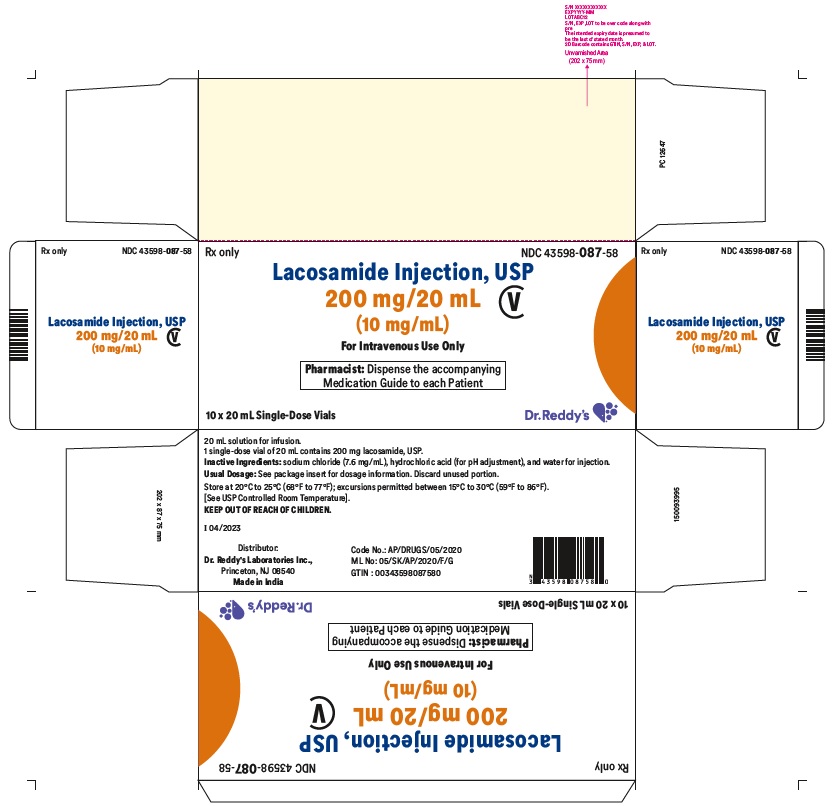
Brand names
LACOSAMIDELacosamidelacosamideLacosamide Oral SolutionVimpat
Active ingredients
LACOSAMIDE
Indications
INDICATIONS AND USAGE Lacosamide oral solution is indicated for: Treatment of partial-onset seizures in patients 4 years of age and older ( 1.1 ) Adjunctive therapy in the treatment of primary generalized tonic-clonic seizures in patients 4 years of age and older ( 1.2 ) 1.1 Partial-Onset Seizures Lacosamide oral solution is indicated for the treatment of partial-onset seizures in patients 4 years of age and older. 1.2 Primary Generalized Tonic-Clonic Seizures Lacosamide oral solution is indicated as adjunctive therapy in the treatment of primary generalized tonic-clonic seizures in patients 4 years of age and older. Additional pediatric use information is approved for UCB, Inc.’s VIMPAT ® (lacosamide) oral solution. However, due to UCB, Inc.’s marketing exclusivity rights, this drug product is not labeled with that pediatric information.
Dosage
DOSAGE AND ADMINISTRATION Adults (17 years and older): Initial dosage for monotherapy for the treatment of partial-onset seizures is 100 mg twice daily (2.1) Initial dosage for adjunctive therapy for the treatment of partial-onset seizures or primary generalized tonic-clonic seizures is 50 mg twice daily (2.1) Maximum recommended dosage for monotherapy and adjunctive therapy is 200 mg twice daily (2.1) Pediatric Patients 4 years to less than 17 years : The recommended dosage is based on body weight and is administered orally twice daily (2.1) Increase dosage based on clinical response and tolerability, no more frequently than once per week (2.1) Injection: for intravenous use only when oral administration is temporarily not feasible; the recommended dosage is based on body weight and is administered two or three times daily over 15 to 60 minutes; obtaining ECG before initiation is recommended in certain patients (2.7, 5.3) Dose adjustment is recommended for severe renal impairment (2.4, 12.3) Dose adjustment is recommended for mild or moderate hepatic impairment; use in patients with severe hepatic impairment is not recommended (2.5, 12.3) 2.1 Dosage Information The recommended dosage for monotherapy and adjunctive therapy for partial-onset seizures in patients 4 years of age and older and for adjunctive therapy for primary generalized tonic-clonic seizures in patients 4 years of age and older is included in Table 1. In pediatric patients 4 years to less than 17 years of age, the recommended dosing regimen is dependent upon body weight. Dosage should be increased based on clinical response and tolerability, no more frequently than once per week. Titration increments should not exceed those shown in Table 1. Table 1: Recommended Dosages for Partial-Onset Seizures (Monotherapy or Adjunctive Therapy) in Patients 4 years of age and Older, and for Primary Generalized Tonic-Clonic Seizures (Adjunctive Therapy) in Patients 4 Years of Age and Older* Age and Body Weight Initial Dosage Titration Regimen Maintenance Dosage Adults (17 years and older) Monotherapy**: 100 mg twice daily (200 mg per day) Increase by 50 mg twice daily (100 mg per day) every week Monotherapy**: 150 mg to 200 mg twice daily (300 mg to 400 mg per day) Adjunctive Therapy: 50 mg twice daily (100 mg per day) Adjunctive Therapy: 100 mg to 200 mg twice daily (200 mg to 400 mg per day) Pediatric patients weighing at least 50 kg 50 mg twice daily (100 mg per day) Increase by 50 mg twice daily (100 mg per day) every week Monotherapy**: 150 mg to 200 mg twice daily (300 mg to 400 mg per day) Adjunctive Therapy: 100 mg to 200 mg twice daily (200 mg to 400 mg per day) Pediatric patients weighing 30 kg to less than 50 kg 1 mg/kg twice daily (2 mg/kg/day) Increase by 1 mg/kg twice daily (2 mg/kg/day) every week 2 mg/kg to 4 mg/kg twice daily (4 mg/kg/day to 8 mg/kg/day) Pediatric patients weighing 11 kg to less than 30 kg 1 mg/kg twice daily (2 mg/kg/day) Increase by 1 mg/kg twice daily (2 mg/kg/day) every week 3 mg/kg to 6 mg/kg twice daily (6 mg/kg/day to 12 mg/kg/day) *when not specified, the dosage is the same for monotherapy for partial-onset seizures and adjunctive therapy for partial-onset seizures or primary generalized tonic-clonic seizures. Oral and intravenous dosages are the same unless specified. **Monotherapy for partial-onset seizures only In adjunctive clinical trials in adult patients with partial-onset seizures, a dosage higher than 200 mg twice daily (400 mg per day) was not more effective and was associated with a substantially higher rate of adverse reactions [see Adverse Reactions (6.1) and Clinical Studies (14.2)] . Lacosamide Injection Dosage L acosamide injection may be used when oral administration is temporarily not feasible [see Dosage and Administration (2.6) and Warnings and Precautions (5.3)]. L acosamide injection can be administered intravenously to adult and pediatric patients weighing 11 kg or more with the same dosing regimens described for oral dosing. For pediatric patients weighing less than 6 kg, L acosamide injection may be initiated with a dose of 0.66 mg/kg three times daily (see Table 1). The clinical study experience of intravenous L acosamide is limited to 5 days of consecutive treatment. Pediatric use information is approved for UCB, Inc.'s VIMPAT® (lacosamide) injection. However, due to UCB, Inc.'s marketing exclusivity rights, this drug product is not labeled with that information. 2.2 Alternate Initial Dosage Information to Achieve the Maintenance Dosage in a Shorter Timeframe For monotherapy and adjunctive therapy for partial-onset seizures in patients 17 years of age and older and for adjunctive therapy for primary generalized tonic-clonic seizures in patients 17 years of age and older, an alternate initial dosing regimen for week 1 (e.g., including a loading dose and/or a higher initial dosage) may be administered in patients for whom achieving the recommended maintenance dosage in a shorter timeframe is clinically indicated (see Table 2). The alternate initial dosage regimen should be continued for one week. Lacosamide injection may then be titrated based on clinical response and tolerability, no more frequently than once per week, if needed. The loading dose should be administered with medical supervision because of the possibility of increased incidence of adverse reactions, including central nervous system (CNS) and cardiovascular adverse reactions [see Warnings and Precautions (5.2, 5.3), Adverse Reactions (6.1), and Clinical Pharmacology (12.3)] . Titration increments should not exceed those shown in Table 2. Table 2: Alternate Initial Dosing Regimen to Achieve the Maintenance Dosage in a Shorter Timeframe if Clinically Indicated* Age and Body Weight Alternate Initial Dosage Titration Regimen Maintenance Dosage Adults (17 years and older) Single loading dose: 200 mg 12 hours later initiate: 100 mg twice daily (200 mg per day) Increase by 50 mg twice daily (100 mg per day) at weekly intervals, if needed Monotherapy**: 150 mg to 200 mg twice daily (300 mg to 400 mg per day) Adjunctive Therapy: 100 mg to 200 mg twice daily (200 mg to 400 mg per day) *when not specified, the dosage is the same for monotherapy for partial-onset seizures and adjunctive therapy for partial-onset seizures or primary generalized tonic-clonic seizures. Oral and intravenous dosages are the same unless specified. **Monotherapy for partial-onset seizures only Pediatric use information is approved for UCB, Inc.'s VIMPAT® (lacosamide) injection. However, due to UCB, Inc.'s marketing exclusivity rights, this drug product is not labeled with that information. 2.3 Converting From a Single Antiepileptic (AED) to Lacosamide Monotherapy for the Treatment of Partial-Onset Seizures For patients who are already on a single AED and will convert to lacosamide monotherapy, withdrawal of the concomitant AED should not occur until the therapeutic dosage of lacosamide is achieved and has been administered for at least 3 days. A gradual withdrawal of the concomitant AED over at least 6 weeks is recommended. 2.4 Dosage Information for Patients with Renal Impairment For patients with mild to moderate renal impairment, no dosage adjustment is necessary. For patients with severe renal impairment [creatinine clearance (CL CR ) less than 30 mL/min as estimated by the Cockcroft-Gault equation for adults; CL CR less than 30 mL/min/1.73m 2 as estimated by the Schwartz equation for pediatric patients] or end-stage renal disease, a reduction of 25% of the maximum dosage is recommended. In all patients with renal impairment, dose initiation and titration should be based on clinical response and tolerability. Hemodialysis Lacosamide is effectively removed from plasma by hemodialysis. Following a 4-hour hemodialysis treatment, dosage supplementation of up to 50% should be considered. Concomitant Strong CYP3A4 or CYP2C9 Inhibitors Dose reduction may be necessary in patients with renal impairment who
Warnings
WARNINGS AND PRECAUTIONS Monitor patients for suicidal behavior and ideation (5.1) Lacosamide may cause dizziness and ataxia (5.2) Cardiac Rhythm and Conduction Abnormalities: Obtaining ECG before beginning and after titration to steady-state maintenance is recommended in patients with underlying proarrhythmic conditions or on concomitant medications that affect cardiac conduction; closely monitor these patients (5.3, 7.2) Lacosamide may cause syncope (5.4) Lacosamide should be gradually withdrawn to minimize the potential of increased seizure frequency (5.5) Drug Reaction with Eosinophilia and Systemic Symptoms (DRESS)/ Multi-Organ Hypersensitivity: Discontinue if no alternate etiology (5.6) 5.1 Suicidal Behavior and Ideation Antiepileptic drugs (AEDs), including lacosamide, increase the risk of suicidal thoughts or behavior in patients taking these drugs for any indication. Patients treated with any AED for any indication should be monitored for the emergence or worsening of depression, suicidal thoughts or behavior, and/or any unusual changes in mood or behavior. Pooled analyses of 199 placebo-controlled clinical trials (mono- and adjunctive therapy) of 11 different AEDs showed that patients randomized to one of the AEDs had approximately twice the risk (adjusted Relative Risk 1.8, 95% CI:1.2, 2.7) of suicidal thinking or behavior compared to patients randomized to placebo. In these trials, which had a median treatment duration of 12 weeks, the estimated incidence of suicidal behavior or ideation among 27,863 AED-treated patients was 0.43%, compared to 0.24% among 16,029 placebo-treated patients, representing an increase of approximately one case of suicidal thinking or behavior for every 530 patients treated. There were four suicides in drug-treated patients in the trials and none in placebo-treated patients, but the number of events is too small to allow any conclusion about drug effect on suicide. The increased risk of suicidal thoughts or behavior with AEDs was observed as early as one week after starting treatment with AEDs and persisted for the duration of treatment assessed. Because most trials included in the analysis did not extend beyond 24 weeks, the risk of suicidal thoughts or behavior beyond 24 weeks could not be assessed. The risk of suicidal thoughts or behavior was generally consistent among drugs in the data analyzed. The finding of increased risk with AEDs of varying mechanisms of action and across a range of indications suggests that the risk applies to all AEDs used for any indication. The risk did not vary substantially by age (5-100 years) in the clinical trials analyzed. Table 3 shows absolute and relative risk by indication for all evaluated AEDs. Table 3: Risk by Indication for Antiepileptic Drugs in the Pooled Analysis Indication Placebo Patients with Events Per 1000 Patients Drug Patients with Events Per 1000 Patients Relative Risk: Incidence of Events in Drug Events in Drug Patients/Incidence in Patients/Incidence in Placebo Patients Risk Difference: Additional Drug Patients with Events Per 1000 Patients Epilepsy 1.0 3.4 3.5 2.4 Psychiatric 5.7 8.5 1.5 2.9 Other 1.0 1.8 1.9 0.9 Total 2.4 4.3 1.8 1.9 The relative risk for suicidal thoughts or behavior was higher in clinical trials for epilepsy than in clinical trials for psychiatric or other conditions, but the absolute risk differences were similar. Anyone considering prescribing lacosamide or any other AED must balance this risk with the risk of untreated illness. Epilepsy and many other illnesses for which antiepileptics are prescribed are themselves associated with morbidity and mortality and an increased risk of suicidal thoughts and behavior. Should suicidal thoughts and behavior emerge during treatment, the prescriber needs to consider whether the emergence of these symptoms in any given patient may be related to the illness being treated. 5.2 Dizziness and Ataxia Lacosamide may cause dizziness and ataxia in adult and pediatric patients. In adult patients with partial-onset seizures taking 1 to 3 concomitant AEDs, dizziness was experienced by 25% of patients randomized to the recommended doses (200 to 400 mg/day) of lacosamide (compared with 8% of placebo patients) and was the adverse reaction most frequently leading to discontinuation (3%). Ataxia was experienced by 6% of patients randomized to the recommended doses (200 to 400 mg/day) of lacosamide (compared to 2% of placebo patients). The onset of dizziness and ataxia was most commonly observed during titration. There was a substantial increase in these adverse reactions at doses higher than 400 mg/day [see Adverse Reactions (6.1)] . If a loading dose is clinically indicated, administer with medical supervision because of the possibility of increased incidence of adverse reactions, including CNS adverse reactions such as dizziness and ataxia. 5.3 Cardiac Rhythm and Conduction Abnormalities PR Interval Prolongation, Atrioventricular Block, and Ventricular Tachyarrhythmia Dose-dependent prolongations in PR interval with lacosamide have been observed in clinical studies in adult patients and in healthy volunteers [see Clinical Pharmacology (12.2)] . In adjunctive clinical trials in adult patients with partial-onset seizures, asymptomatic first-degree atrioventricular (AV) block was observed as an adverse reaction in 0.4% (4/944) of patients randomized to receive lacosamide and 0% (0/364) of patients randomized to receive placebo. One case of profound bradycardia was observed in a patient during a 15-minute infusion of 150 mg lacosamide. When lacosamide is given with other drugs that prolong the PR interval, further PR prolongation is possible. In the postmarketing setting, there have been reports of cardiac arrhythmias in patients treated with lacosamide, including bradycardia, AV block, and ventricular tachyarrhythmia, which have rarely resulted in asystole, cardiac arrest, and death. Most, although not all, cases have occurred in patients with underlying proarrhythmic conditions, or in those taking concomitant medications that affect cardiac conduction or prolong the PR interval. These events have occurred with both oral and intravenous routes of administration and at prescribed doses as well as in the setting of overdose [see Overdosage (10)] . In all patients for whom a loading dose is clinically indicated, administer the loading dose with medical supervision because of the possibility of increased incidence of adverse reactions, including cardiovascular adverse reactions. Lacosamide should be used with caution in patients with underlying proarrhythmic conditions such as known cardiac conduction problems (e.g., marked first-degree AV block, second-degree or higher AV block and sick sinus syndrome without pacemaker), severe cardiac disease (such as myocardial ischemia or heart failure, or structural heart disease), and cardiac sodium channelopathies (e.g., Brugada Syndrome). Lacosamide should also be used with caution in patients on concomitant medications that affect cardiac conduction, including sodium channel blockers, beta-blockers, calcium channel blockers, potassium channel blockers, and medications that prolong the PR interval [see Drug Interactions (7.2)] . In such patients, obtaining an ECG before beginning lacosamide, and after lacosamide is titrated to steady-state maintenance dose, is recommended. In addition, these patients should be closely monitored if they are administered lacosamide through the intravenous route [see Adverse Reactions (6.1) and Drug Interactions (7.2)]. Atrial Fibrillation and Atrial Flutter In the short-term investigational trials of lacosamide in adult patients with partial-onset seizures there were no cases of atrial fibrillation or flutter. Both atrial fibrillation and atrial flutter have been reported in open label partial-onset seizure trials and in postmarketing experience. In adult patients with diabetic neuropathy, for which lacosamide is not indicated, 0.5% of pati
Contraindications
CONTRAINDICATIONS None . None ( 4 )
Drug interactions
DRUG INTERACTIONS 7.1 Strong CYP3A4 or CYP2C9 Inhibitors Patients with renal or hepatic impairment who are taking strong inhibitors of CYP3A4 and CYP2C9 may have a significant increase in exposure to lacosamide. Dose reduction may be necessary in these patients. 7.2 Concomitant Medications that Affect Cardiac Conduction Lacosamide should be used with caution in patients on concomitant medications that affect cardiac conduction (sodium channel blockers, beta-blockers, calcium channel blockers, potassium channel blockers) including those that prolong PR interval (including sodium channel blocking AEDs), because of a risk of AV block, bradycardia, or ventricular tachyarrhythmia. In such patients, obtaining an ECG before beginning lacosamide, and after lacosamide is titrated to steady-state, is recommended. In addition, these patients should be closely monitored if they are administered lacosamide through the intravenous route [ see Warnings and Precautions ( 5.3 ) ]. Drug Interactions In Vitro Assessment of Drug Interactions In vitro metabolism studies indicate that lacosamide does not induce the enzyme activity of drug metabolizing cytochrome P450 isoforms CYP1A2, 2B6, 2C9, 2C19 and 3A4. Lacosamide did not inhibit CYP 1A1, 1A2, 2A6, 2B6, 2C8, 2C9, 2D6, 2E1, 3A4/5 at plasma concentrations observed in clinical studies. In vitro data suggest that lacosamide has the potential to inhibit CYP2C19 at therapeutic concentrations. However, an in vivo study with omeprazole did not show an inhibitory effect on omeprazole pharmacokinetics. Lacosamide was not a substrate or inhibitor for P-glycoprotein. Lacosamide is a substrate of CYP3A4, CYP2C9, and CYP2C19. Patients with renal or hepatic impairment who are taking strong inhibitors of CYP3A4 and CYP2C9 may have increased exposure to lacosamide. Since <15% of lacosamide is bound to plasma proteins, a clinically relevant interaction with other drugs through competition for protein binding sites is unlikely. In Vivo Assessment of Drug Interactions Drug interaction studies with AEDs o Effect of lacosamide on concomitant AEDs Lacosamide 400 mg/day had no influence on the pharmacokinetics of 600 mg/day valproic acid and 400 mg/day carbamazepine in healthy subjects. The placebo-controlled clinical studies in patients with partial-onset seizures showed that steady-state plasma concentrations of levetiracetam, carbamazepine, carbamazepine epoxide, lamotrigine, topiramate, oxcarbazepine monohydroxy derivative (MHD), phenytoin, valproic acid, phenobarbital, gabapentin, clonazepam, and zonisamide were not affected by concomitant intake of lacosamide at any dose. o Effect of concomitant AEDs on lacosamide Drug-drug interaction studies in healthy subjects showed that 600 mg/day valproic acid had no influence on the pharmacokinetics of 400 mg/day lacosamide. Likewise, 400 mg/day carbamazepine had no influence on the pharmacokinetics of lacosamide in a healthy subject study. Population pharmacokinetics results in patients with partial-onset seizures showed small reductions (15% to 20% lower) in lacosamide plasma concentrations when lacosamide was coadministered with carbamazepine, phenobarbital or phenytoin. Drug-drug interaction studies with other drugs o Digoxin There was no effect of lacosamide (400 mg/day) on the pharmacokinetics of digoxin (0.5 mg once daily) in a study in healthy subjects. o Metformin There were no clinically relevant changes in metformin levels following coadministration of lacosamide (400 mg/day). Metformin (500 mg three times a day) had no effect on the pharmacokinetics of lacosamide (400 mg/day). o Omeprazole Omeprazole is a CYP2C19 substrate and inhibitor. There was no effect of lacosamide (600 mg/day) on the pharmacokinetics of omeprazole (40 mg single dose) in healthy subjects. The data indicated that lacosamide had little in vivo inhibitory or inducing effect on CYP2C19. Omeprazole at a dose of 40 mg once daily had no effect on the pharmacokinetics of lacosamide (300 mg single dose). However, plasma levels of the O-desmethyl metabolite were reduced about 60% in the presence of omeprazole. o Midazolam Midazolam is a 3A4 substrate. There was no effect of lacosamide (200 mg single dose or repeat doses of 400 mg/day given as 200 mg BID) on the pharmacokinetics of midazolam (single dose, 7.5 mg), indicating no inhibitory or inducing effects on CYP3A4. o Oral Contraceptives There was no influence of lacosamide (400 mg/day) on the pharmacodynamics and pharmacokinetics of an oral contraceptive containing 0.03 mg ethinylestradiol and 0.15 mg levonorgestrel in healthy subjects, except that a 20% increase in ethinylestradiol C max was observed. o Warfarin Co-administration of lacosamide (400 mg/day) with warfarin (25 mg single dose) did not result in a clinically relevant change in the pharmacokinetic and pharmacodynamic effects of warfarin in a study in healthy male subjects.
Adverse reactions
ADVERSE REACTIONS The following serious adverse reactions are described below and elsewhere in the labeling: Suicidal Behavior and Ideation [see Warnings and Precautions (5.1) ] Dizziness and Ataxia [see Warnings and Precautions (5.2) ] Cardiac Rhythm and Conduction Abnormalities [see Warnings and Precautions (5.3) ] Syncope [see Warnings and Precautions (5.4) ] Drug Reaction with Eosinophilia and Systemic Symptoms (DRESS)/Multiorgan Hypersensitivity Reactions [see Warnings and Precautions (5.6) ] Adjunctive therapy: Most common adverse reactions in adults (≥10% and greater than placebo) are diplopia, headache, dizziness, nausea, and somnolence ( 6.1 ) Monotherapy: Most common adverse reactions are similar to those seen in adjunctive therapy studies ( 6.1 ) Pediatric patients: Adverse reactions are similar to those seen in adult patients ( 6.1 ) To report SUSPECTED ADVERSE REACTIONS, contact Novadoz Pharmaceuticals LLC at 1-855-668-2369 or FDA at 1-800-FDA-1088 or www.fda.gov/medwatch 6.1 Clinical Trials Experience Because clinical trials are conducted under widely varying conditions, adverse reaction rates observed in the clinical trials of a drug cannot be directly compared to rates in the clinical trials of another drug and may not reflect the rates observed in practice. Lacosamide Tablet and Oral Solution in Adults In the premarketing development of adjunctive therapy for partial-onset seizures, 1327 adult patients received lacosamide tablets in controlled and uncontrolled trials, of whom 1,000 were treated for longer than 6 months, and 852 for longer than 12 months. The monotherapy development program for partial-onset seizures included 425 adult patients, 310 of whom were treated for longer than 6 months, and 254 for longer than 12 months. Partial-Onset Seizures Monotherapy Historical-Control Trial (Study 1) In the monotherapy trial for partial-onset seizures, 16% of patients randomized to receive lacosamide at the recommended doses of 300 and 400 mg/day discontinued from the trial as a result of an adverse reaction. The adverse reaction most commonly (≥1% on lacosamide) leading to discontinuation was dizziness. Adverse reactions that occurred in this study were generally similar to those that occurred in adjunctive placebo-controlled studies. One adverse reaction, insomnia, occurred at a rate of ≥2% and was not reported at a similar rate in previous studies. This adverse reaction has also been observed in postmarketing experience [see Adverse Reactions (6.2) ]. Because this study did not include a placebo control group, causality could not be established. Dizziness, headache, nausea, somnolence, and fatigue all occurred at lower incidences during the AED Withdrawal Phase and Monotherapy Phase, compared with the Titration Phase [see Clinical Studies (14.1) ] . Adjunctive Therapy Controlled Trials (Studies 2, 3, and 4) In adjunctive therapy controlled clinical trials for partial-onset seizures, the rate of discontinuation as a result of an adverse reaction was 8% and 17% in patients randomized to receive lacosamide at the recommended doses of 200 and 400 mg/day, respectively, 29% at 600 mg/day (1.5 times greater than the maximum recommended dose), and 5% in patients randomized to receive placebo. The adverse reactions most commonly (>1% on lacosamide and greater than placebo) leading to discontinuation were dizziness, ataxia, vomiting, diplopia, nausea, vertigo, and blurred vision. Table 4 gives the incidence of adverse reactions that occurred in ≥2% of adult patients with partial-onset seizures in the lacosamide total group and for which the incidence was greater than placebo. Table 4: Adverse Reactions Incidence in Adjunctive Therapy Pooled, Placebo-Controlled Trials in Adult Patients with Partial-Onset Seizures (Studies 2, 3, and 4) Adverse Reaction Placebo N=364 % Lacosamide 200 mg/day N=270 % Lacosamide 400 mg/day N=471 % Lacosamide 600 mg/day* N=203 % Lacosamide Total N=944 % Ear and labyrinth disorder Vertigo 1 5 3 4 4 Eye disorders Diplopia 2 6 10 16 11 Blurred Vision 3 2 9 16 8 Gastrointestinal disorders Nausea 4 7 11 17 11 Vomiting 3 6 9 16 9 Diarrhea 3 3 5 4 4 General disorders and administration site conditions Fatigue 6 7 7 15 9 Gait disturbance <1 <1 2 4 2 Asthenia 1 2 2 4 2 Injury, poisoning and procedural complications Contusion 3 3 4 2 3 Skin laceration 2 2 3 3 3 Nervous system disorders Dizziness 8 16 30 53 31 Headache 9 11 14 12 13 Ataxia 2 4 7 15 8 Somnolence 5 5 8 8 7 Tremor 4 4 6 12 7 Nystagmus 4 2 5 10 5 Balance disorder 0 1 5 6 4 Memory impairment 2 1 2 6 2 Psychiatric disorders Depression 1 2 2 2 2 Skin and subcutaneous disorders Pruritus 1 3 2 3 2 *600 mg dose is 1.5 times greater than the maximum recommended dose. The overall adverse reaction rate was similar in male and female patients. Although there were few non-Caucasian patients, no differences in the incidences of adverse reactions compared to Caucasian patients were observed. Lacosamide Tablet and Oral Solution in Pediatric Patients Safety of lacosamide was evaluated in clinical studies of pediatric patients 1 month to less than 17 years of age for the treatment of partial-onset seizures. Across studies in pediatric patients with partial-onset seizures, 847 patients 1 month to less than 17 years of age received lacosamide oral solution or tablet, of whom 596 received lacosamide for at least 1 year. Adverse reactions reported in clinical studies of pediatric patients 1 month to less than 17 years of age were similar to those seen in adult patients. Primary Generalized Tonic-Clonic Seizures in Patients (4 Years of Age and Older) Adjunctive Therapy Trial (Study 5) In the adjunctive therapy placebo-controlled trial for primary generalized tonic-clonic seizures, adverse reactions that occurred in the study were generally similar to those that occurred in partial-onset seizure placebo-controlled studies. The most common adverse reactions (≥ 10% on lacosamide) reported in patients treated with lacosamide were dizziness (23%), somnolence (17%), headache (14%), and nausea (10%), compared to 7%, 14%, 10%, and 6%, respectively, of patients who received placebo. Additionally, an adverse reaction not previously reported of myoclonic epilepsy was reported in 3% of patients treated with lacosamide compared to 1% of patients who received placebo. It is also noted that 2 patients receiving lacosamide had acute worsening of seizures shortly after drug initiation, including one episode of status epilepticus, compared to no patients receiving placebo. Laboratory Abnormalities Abnormalities in liver function tests have occurred in controlled trials with lacosamide in adult patients with partial-onset seizures who were taking 1 to 3 concomitant anti-epileptic drugs. Elevations of ALT to ≥3x ULN occurred in 0.7% (7/935) of lacosamide patients and 0% (0/356) of placebo patients. One case of hepatitis with transaminases >20x ULN occurred in one healthy subject 10 days after lacosamide treatment completion, along with nephritis (proteinuria and urine casts). Serologic studies were negative for viral hepatitis. Transaminases returned to normal within one month without specific treatment. At the time of this event, bilirubin was normal. The hepatitis/nephritis was interpreted as a delayed hypersensitivity reaction to lacosamide. Other Adverse Reactions The following is a list of adverse reactions reported by patients treated with lacosamide in all clinical trials in adult patients, including controlled trials and long-term open-label extension trials. Adverse reactions addressed in other tables or sections are not listed here. Blood and lymphatic system disorders: neutropenia, anemia Cardiac disorders: palpitations Ear and labyrinth disorders: tinnitus Gastrointestinal disorders: constipation, dyspepsia, dry mouth, oral hypoaesthesia General disorders and administration site conditions: irritability, pyrexia, feeling drunk Injury, poisoning, and procedural complications: fall Musculoskel
Mechanism of action
CLINICAL PHARMACOLOGY 12.1 Mechanism of Action The precise mechanism by which lacosamide exerts its antiepileptic effects in humans remains to be fully elucidated. In vitro electrophysiological studies have shown that lacosamide selectively enhances slow inactivation of voltage-gated sodium channels, resulting in stabilization of hyperexcitable neuronal membranes and inhibition of repetitive neuronal firing. 12.2 Pharmacodynamics A pharmacokinetic-pharmacodynamic (efficacy) analysis was performed based on the pooled data from the 3 efficacy trials for partial-onset seizures. Lacosamide exposure is correlated with the reduction in seizure frequency. However, doses above 400 mg/day do not appear to confer additional benefit in group analyses. Cardiac Electrophysiology Electrocardiographic effects of lacosamide were determined in a double-blind, randomized clinical pharmacology trial of 247 healthy subjects. Chronic oral doses of 400 and 800 mg/day (equal to and two times the maximum daily recommended dose, respectively) were compared with placebo and a positive control (400 mg moxifloxacin). Lacosamide did not prolong QTc interval and did not have a dose-related or clinically important effect on QRS duration. Lacosamide produced a small, dose-related increase in mean PR interval. At steady-state, the time of the maximum observed mean PR interval corresponded with t max . The placebo-subtracted maximum increase in PR interval (at t max ) was 7.3 ms for the 400 mg/day group and 11.9 ms for the 800 mg/day group. For patients who participated in the controlled trials, the placebo-subtracted mean maximum increase in PR interval for a 400 mg/day lacosamide dose was 3.1 ms in patients with partial-onset seizures and 9.4 ms for patients with diabetic neuropathy. 12.3 Pharmacokinetics The pharmacokinetics of lacosamide have been studied in healthy adult subjects (age range 18 to 87), adults with partial-onset seizures, adults with diabetic neuropathy, and subjects with renal and hepatic impairment. The pharmacokinetics of lacosamide are similar in healthy subjects, patients with partial-onset seizures, and patients with primary generalized tonic-clonic seizures. Lacosamide is completely absorbed after oral administration with negligible first-pass effect with a high absolute bioavailability of approximately 100%. The maximum lacosamide plasma concentrations occur approximately 1-to-4-hour post-dose after oral dosing, and elimination half-life is approximately 13 hours. Steady-state plasma concentrations are achieved after 3 days of twice daily repeated administration. Pharmacokinetics of lacosamide are dose proportional (100 to 800 mg) and time invariant, with low inter- and intra-subject variability. Compared to lacosamide the major metabolite, O-desmethyl metabolite, has a longer T max (0.5 to 12 hours) and elimination half-life (15 to 23 hours). Absorption and Bioavailability Lacosamide is completely absorbed after oral administration. The oral bioavailability of lacosamide tablets is approximately 100%. Food does not affect the rate and extent of absorption. After intravenous administration, C max is reached at the end of infusion. The 30- and 60-minute intravenous infusions are bioequivalent to the oral tablet. For the 15-minute intravenous infusion, bioequivalence was met for AUC (0-tz) but not for C max . The point estimate of C max was 20% higher than C max for oral tablet and the 90% CI for C max exceeded the upper boundary of the bioequivalence range. In a trial comparing the oral tablet with an oral solution containing 10 mg/mL lacosamide, bioequivalence between both formulations was shown. A single loading dose of 200 mg approximates steady-state concentrations comparable to the 100 mg twice daily oral administration. Distribution The volume of distribution is approximately 0.6 L/kg and thus close to the volume of total body water. Lacosamide is less than 15% bound to plasma proteins. Metabolism and Elimination Lacosamide is primarily eliminated from the systemic circulation by renal excretion and biotransformation. After oral administration of 100 mg [14C]-lacosamide approximately 95% of radioactivity administered was recovered in the urine and less than 0.5% in the feces. The major compounds excreted were unchanged lacosamide (approximately 40% of the dose), its O-desmethyl metabolite (approximately 30%), and a structurally unknown polar fraction (~20%). The plasma exposure of the major human metabolite, O-desmethyl-lacosamide, is approximately 10% of that of lacosamide. This metabolite has no known pharmacological activity. The CYP isoforms mainly responsible for the formation of the major metabolite (O-desmethyl) are CYP3A4, CYP2C9, and CYP2C19. The elimination half-life of the unchanged drug is approximately 13 hours and is not altered by different doses, multiple dosing or intravenous administration. There is no enantiomeric interconversion of lacosamide. Specific Populations Renal Impairment Lacosamide and its major metabolite are eliminated from the systemic circulation primarily by renal excretion. The AUC of lacosamide was increased approximately 25% in mildly (CL CR 50 to 80 mL/min) and moderately (CL CR 30 to 50 mL/min) and 60% in severely (CL CR ≤ 30 mL/min) renally impaired patients compared to subjects with normal renal function (CL CR > 80 mL/min), whereas C max was unaffected. Lacosamide is effectively removed from plasma by hemodialysis. Following a 4-hour hemodialysis treatment, AUC of lacosamide is reduced by approximately 50% [see Dosage and Administration (2.4) ] . Hepatic Impairment Lacosamide undergoes metabolism. Subjects with moderate hepatic impairment (Child-Pugh B) showed higher plasma concentrations of lacosamide (approximately 50% to 60% higher AUC compared to healthy subjects). The pharmacokinetics of lacosamide have not been evaluated in severe hepatic impairment [see Dosage and Administration (2.5) ] . Pediatric Patients (4 to less than 17 Years of Age) The pediatric pharmacokinetic profile of lacosamide was determined in a population pharmacokinetic analysis using sparse plasma concentration data obtained in two open-label studies in 79 pediatric patients with epilepsy aged 4 years to less than 17 years who received oral solution or oral tablet formulations. A weight based dosing regimen is necessary to achieve lacosamide exposures in pediatric patients 4 years to less than 17 years of age similar to those observed in adults treated at effective doses of lacosamide [see Dosage and Administration (2.1) ] . For patients weighing 11 kg, 28.9 kg (the mean population body weight), and 70 kg, the typical plasma half-life (t 1/2 ) is 7.4 hours, 10.6 hours, and 14.8 hours, respectively. Steady-state plasma concentrations are achieved after 3 days of twice daily repeated administration. The pharmacokinetics of lacosamide in pediatric patients are similar when used as monotherapy or as adjunctive therapy for the treatment of partial-onset seizures and as adjunctive therapy for the treatment of primary generalized tonic-clonic seizures. Additional pediatric use information is approved for UCB, Inc.’s VIMPAT ® (lacosamide) tablets. However, due to UCB, Inc.’s marketing exclusivity rights, this drug product is not labeled with that information. Geriatric Patients In the elderly (> 65 years), dose and body-weight normalized AUC and C max is about 20% increased compared to young subjects (18 to 64 years). This may be related to body weight and decreased renal function in elderly subjects. Gender Lacosamide clinical trials indicate that gender does not have a clinically relevant influence on the pharmacokinetics of lacosamide. Race There are no clinically relevant differences in the pharmacokinetics of lacosamide between Asian, Black, and Caucasian subjects. CYP2C19 Polymorphism There are no clinically relevant differences in the pharmacokinetics of lacosamide between CYP2C19 poor metabolizers and extensive metabolizers. Results
Available forms (18)
20 ML lacosamide 10 MG/ML Injection24 HR lacosamide 100 MG Extended Release Oral Capsule24 HR lacosamide 150 MG Extended Release Oral Capsule24 HR lacosamide 200 MG Extended Release Oral Capsulelacosamide 100 MG Oral Tabletlacosamide 10 MG/ML Oral Solutionlacosamide 150 MG Oral Tabletlacosamide 200 MG Oral Tabletlacosamide 50 MG Oral Tablet20 ML lacosamide 10 MG/ML Injection [Vimpat]brand24 HR lacosamide 100 MG Extended Release Oral Capsule [Motpoly]brand24 HR lacosamide 150 MG Extended Release Oral Capsule [Motpoly]brand24 HR lacosamide 200 MG Extended Release Oral Capsule [Motpoly]brandlacosamide 100 MG Oral Tablet [Vimpat]brandlacosamide 10 MG/ML Oral Solution [Vimpat]brandlacosamide 150 MG Oral Tablet [Vimpat]brandlacosamide 200 MG Oral Tablet [Vimpat]brandlacosamide 50 MG Oral Tablet [Vimpat]brand
NDC examples
70069-47169543-45572162-263733342-30233342-30333342-30470710-135962332-17162332-17262332-17383090-01210135-799
Indicated ICD-10 codes
Assistance programs
AABD Cash AssistanceACL Assistive TechnologyACL Assistive Technology State Grants for Protection and AdvocacyACL Centers for Independent LivingACL Independent Living State GrantsAdult Day CareAdult Day Care ServicesAdult Day HealthAdult Day Health CareAdult Day/Health Care CentersAdult Day ServiceAdult Day Services
Source: openFDA + RxNorm · 2026
Look up another medication