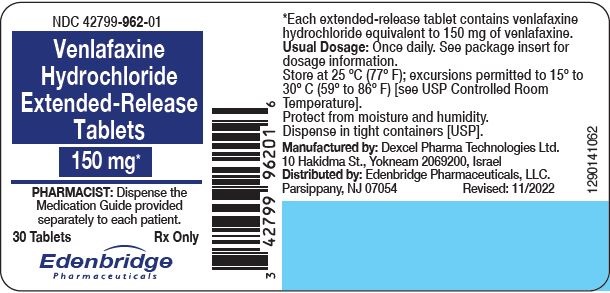
Venlafaxine Hydrochloride, Extended Release. INDICATIONS AND USAGE Venlafaxine Hydrochloride Extended-Release Tablets are a selective serotonin and norepinephrine reuptake inhibitor (SNRI)…
Boxed warning
BOXED WARNING WARNING: Suicidality and antidepressant drugs Antidepressants increased the risk compared to placebo of suicidal thinking and behavior (suicidality) in children, adolescents, and young adults in short-term studies of Major Depressive Disorder (MDD) and other psychiatric disorders. Anyone considering the use of Venlafaxine Hydrochloride Extended-Release Tablets or any other antidepressant in a child, adolescent, or young adult must balance this risk with the clinical need. Short-term studies did not show an increase in the risk of suicidality with antidepressants compared to placebo in adults beyond age 24; there was a reduction in risk with antidepressants compared to placebo in adults aged 65 and older. Depression and certain other psychiatric disorders are themselves associated with increases in the risk of suicide. Patients of all ages who are started on antidepressant therapy should be monitored appropriately and observed closely for clinical worsening, suicidality, or unusual changes in behavior. Families and caregivers should be advised of the need for close observation and communication with the prescriber. Venlafaxine Hydrochloride Extended-Release Tablets are not approved for use in pediatric patients. [See Warnings and Precautions ( 5.1 ) and Patient Counseling Information ( 17.1 )] WARNING: Suicidality and Antidepressants See full prescribing information for complete boxed warning. Increased risk of suicidal thinking and behavior in children, adolescents and young adults taking antidepressants for major depressive disorder (MDD) and other psychiatric disorders. Venlafaxine Hydrochloride Extended-Release Tablets are not approved for use in pediatric patients. ( 5.1 )
INDICATIONS AND USAGE Venlafaxine Hydrochloride Extended-Release Tablets are a selective serotonin and norepinephrine reuptake inhibitor (SNRI) indicated for: Major Depressive Disorder (MDD) ( 1.1 ) Social Anxiety Disorder (SAD) ( 1.2 ) 1.1 Major Depressive Disorder Venlafaxine Hydrochloride Extended-Release Tablets are indicated for the treatment of major depressive disorder (MDD). Efficacy of venlafaxine in MDD was shown in both short-term trials and a longer-term trial in MDD [see Clinical Studies ( 14.1 )] . A major depressive episode (DSM-IV) implies a prominent and relatively persistent (nearly every day for at least 2 weeks) depressed mood or the loss of interest or pleasure in nearly all activities, representing a change from previous functioning, and includes the presence of at least five of the following nine symptoms during the same two-week period: depressed mood, markedly diminished interest or pleasure in usual activities, significant change in weight and/or appetite, insomnia or hypersomnia, psychomotor agitation or retardation, increased fatigue, feelings of guilt or worthlessness, slowed thinking or impaired concentration, a suicide attempt or suicidal ideation. 1.2 Social Anxiety Disorder Venlafaxine Hydrochloride Extended-Release Tablets are indicated for the treatment of Social Anxiety Disorder (SAD), also known as Social Phobia, as defined in DSM-IV. Social Anxiety Disorder (DSM-IV) is characterized by a marked and persistent fear of 1 or more social or performance situations in which the person is exposed to unfamiliar people or to possible scrutiny by others. Exposure to the feared situation almost invariably provokes anxiety, which may approach the intensity of a panic attack. The feared situations are avoided or endured with intense anxiety or distress. The avoidance, anxious anticipation, or distress in the feared situation(s) interferes significantly with the person's normal routine, occupational or academic functioning, or social activities or relationships, or there is a marked distress about having the phobias. Lesser degrees of performance anxiety or shyness generally do not require psychopharmacological treatment. Efficacy of venlafaxine extended release in the treatment of SAD was established in short-term SAD trials [ see Clinical Studies ( 14.2 )] .
Dosage
DOSAGE AND ADMINISTRATION Venlafaxine Hydrochloride Extended-Release Tablets should be administered in a single dose with food either in the morning or in the evening at approximately the same time each day. Each tablet should be swallowed whole with fluid and not divided, crushed, chewed, or placed in water. Initial Treatment ( 2.1 ) Indication Starting Dose Dose Increase Maximum Dose Major Depressive Disorder 75 mg/day (in some patients, 37.5 mg/day for 4-7 days) 75 mg/day increments at intervals of 4 days or longer 225 mg/day Social Anxiety Disorder 75 mg/day No benefit at higher doses 75 mg/day Venlafaxine Hydrochloride Extended-Release Tablets should be taken as a single daily dose with food in either the morning or evening at the same time each day. ( 2 ) Discontinuation: Gradual; individualized as necessary. ( 2.4 ) 2.1 Initial Treatment Major Depressive Disorder For most patients, the recommended starting dose for Venlafaxine Hydrochloride Extended-Release Tablets is 75 mg/day, administered in a single dose. In the clinical trials establishing the efficacy of venlafaxine hydrochloride extended-release capsules in moderately depressed outpatients, the initial dose of venlafaxine was 75 mg/day. For some patients, it may be desirable to start at 37.5 mg/day for 4 to 7 days, to allow new patients to adjust to the medication before increasing to 75 mg/day. While the relationship between dose and antidepressant response for venlafaxine hydrochloride extended-release capsules has not been adequately explored, patients not responding to the initial 75 mg/day dose may benefit from dose increases to a maximum of approximately 225 mg/day. Dose increases should be in increments of up to 75 mg/day, as needed, and should be made at intervals of not less than 4 days, since steady state plasma levels of venlafaxine and its major metabolites are achieved in most patients by day 4. In the clinical trials establishing efficacy, upward titration was permitted at intervals of 2 weeks or more; the average doses were about 140 to 180 mg/day [ see Clinical Studies ( 14 )] . It should be noted that, while the maximum recommended dose for moderately depressed outpatients is also 225 mg/day for venlafaxine hydrochloride immediate-release tablets, more severely depressed inpatients in one study of the development program for that product responded to a mean dose of 350 mg/day (range of 150 to 375 mg/day). Whether or not higher doses of Venlafaxine Hydrochloride Extended-Release Tablets are needed for more severely depressed patients is unknown; however, the experience with venlafaxine hydrochloride extended-release capsule doses higher than 225 mg/day is very limited. Social Anxiety Disorder (Social Phobia) The recommended dose is 75 mg/day, administered in a single dose. There was no evidence that higher doses confer any additional benefit. 2.2 Maintenance Treatment There is no body of evidence available from controlled trials to indicate how long patients with major depressive disorder should be treated with Venlafaxine Hydrochloride Extended-Release Tablets. It is generally agreed that acute episodes of major depressive disorder require several months or longer of sustained pharmacological therapy beyond response to the acute episode. In one study, in which patients responding during 8 weeks of acute treatment with venlafaxine hydrochloride extended-release capsules were assigned randomly to placebo or to the same dose of venlafaxine hydrochloride extended-release capsules (75, 150, or 225 mg per day, qAM) during 26 weeks of maintenance treatment as they had received during the acute stabilization phase, longer-term efficacy was demonstrated. A second longer-term study has demonstrated the efficacy of venlafaxine hydrochloride immediate-release tablets in maintaining a response in patients with recurrent major depressive disorder who had responded and continued to be improved during an initial 26 weeks of treatment and were then randomly assigned to placebo or venlafaxine hydrochloride immediate-release tablets for periods of up to 52 weeks on the same dose (100 to 200 mg/day, on a b.i.d. schedule) [ see Clinical Studies (14)] . Based on these limited data, it is not known whether or not the dose of Venlafaxine Hydrochloride Extended-Release Tablets needed for maintenance treatment is identical to the dose needed to achieve an initial response. Patients should be periodically reassessed to determine the need for maintenance treatment and the appropriate dose for such treatment. 2.3 Special Populations Treatment of Pregnant Women During the Third Trimester Neonates exposed to venlafaxine hydrochloride extended-release capsules, other SNRIs, or SSRIs late in the third trimester have developed complications requiring prolonged hospitalization, respiratory support, and tube feeding [ see Use in Specific Populations ( 8.1 )] . When treating pregnant women with Venlafaxine Hydrochloride Extended-Release Tablets during the third trimester, the physician should carefully consider the potential risks and benefits of treatment. Patients with Hepatic Impairment Given the decrease in clearance and increase in elimination half-life for both venlafaxine and O‑desmethylvenlafaxine (ODV) that is observed in patients with hepatic cirrhosis and mild and moderate hepatic impairment compared with normal subjects [ see Use in Specific Populations ( 8.6 ) and Clinical Pharmacology ( 12.3 )] , it is recommended that the total daily dose be reduced by 50% in patients with mild to moderate hepatic impairment. Since there was much individual variability in clearance between patients with cirrhosis, it may be necessary to reduce the dose even more than 50%, and individualization of dosing may be desirable in some patients. Patients with Renal Impairment Given the decrease in clearance for venlafaxine and the increase in elimination half-life for both venlafaxine and ODV that is observed in patients with renal impairment (GFR = 10 to 70 mL/min) compared with normal subjects [ see Use in Specific Populations ( 8.7 ) and Clinical Pharmacology ( 12.3 )] , it is recommended that the total daily dose be reduced by 25% to 50%. In patients undergoing hemodialysis, it is recommended that the total daily dose be reduced by 50%. Because there was much individual variability in clearance between patients with renal impairment, individualization of dosage may be desirable in some patients. Elderly Patients No dose adjustment is recommended for elderly patients solely on the basis of age. As with any drug for the treatment of major depressive disorder or Social Anxiety Disorder, however, caution should be exercised in treating the elderly. When individualizing the dosage, extra care should be taken when increasing the dose. 2.4 Discontinuing Venlafaxine Hydrochloride Extended-Release Tablets Symptoms associated with discontinuation of venlafaxine hydrochloride extended-release capsules, other SNRIs, and SSRIs have been reported [ see Warnings and Precautions ( 5.5 )] . Patients should be monitored for these symptoms when discontinuing treatment. A gradual reduction in the dose, rather than abrupt cessation, is recommended whenever possible. If intolerable symptoms occur following a decrease in the dose or upon discontinuation of treatment, then resuming the previously prescribed dose may be considered. Subsequently, the physician may continue decreasing the dose but at a more gradual rate. In clinical trials with venlafaxine hydrochloride extended-release capsules, tapering was achieved by reducing the daily dose by 75 mg at 1 week intervals. Individualization of tapering may be necessary. 2.5 Switching Patients from Venlafaxine Hydrochloride Immediate-Release Tablets Depressed patients who are currently being treated at a therapeutic dose with venlafaxine hydrochloride immediate-release tablets may be switched to Venlafaxine Hydrochloride Extended-Release Tablets at the nearest equivalent dose (mg/day),
Warnings
WARNINGS AND PRECAUTIONS Serotonin Syndrome : Serotonin syndrome has been reported with SSRIs and SNRIs, including venlafaxine hydrochloride extended-release tablets, both when taken alone, but especially when co-administered with other serotonergic agents. If such symptoms occur, discontinue venlafaxine hydrochloride extended-release tablets and serotonergic agents and initiate supportive treatment. If concomitant use of Venlafaxine Hydrochloride Extended-Release Tablets with other serotonergic drugs is clinically warranted, patients should be made aware of a potential increased risk for serotonin syndrome, particularly during treatment initiation and dose increases ( 5.2 ). Suicidality: Monitor for clinical worsening and suicide risk. ( 5.1 ) Sustained hypertension may occur. Blood pressure monitoring recommended. ( 5.3 ) Angle Closure Glaucoma: Angle closure glaucoma has occurred in patients with untreated anatomically narrow angles treated with antidepressants. ( 5.4 ) Abrupt discontinuation or dose reduction: Discontinuation symptoms may occur (generally self-limiting; serious symptoms possible). Dose reduction recommended to be gradual. ( 5.5 ) Activation of Mania/Hypomania has occurred. ( 5.10 ) Symptomatic hyponatremia may occur. ( 5.11 ) Seizures have been reported. Use with caution in patients with seizure history. ( 5.12 ) Abnormal bleeding (most commonly ecchymosis) has been reported. ( 5.13 ) Serum cholesterol: Clinically relevant cholesterol increases may occur. Cholesterol measurements should be considered during long-term therapy. ( 5.14 ) Interstitial lung disease and eosinophilic pneumonia have been reported. ( 5.15 ) Sexual Dysfunction: Venlafaxine Hydrochloride Extended-Release Tablets may cause symptoms of sexual dysfunction. ( 5.18 ) 5.1 Clinical Worsening and Suicide Risk Patients with major depressive disorder (MDD), both adult and pediatric, may experience worsening of their depression and/or the emergence of suicidal ideation and behavior (suicidality) or unusual changes in behavior, whether or not they are taking antidepressant medications, and this risk may persist until significant remission occurs. Suicide is a known risk of depression and certain other psychiatric disorders, and these disorders themselves are the strongest predictors of suicide. There has been a long standing concern, however, that antidepressants may have a role in inducing worsening of depression and the emergence of suicidality in certain patients during the early phases of treatment. Pooled analyses of short-term placebo-controlled trials of antidepressant drugs (SSRIs and others) showed that these drugs increase the risk of suicidal thinking and behavior (suicidality) in children, adolescents, and young adults (ages 18-24) with major depressive disorder (MDD) and other psychiatric disorders. Short-term studies did not show an increase in the risk of suicidality with antidepressants compared to placebo in adults beyond age 24; there was a reduction with antidepressants compared to placebo in adults aged 65 and older. The pooled analyses of placebo-controlled trials in children and adolescents with MDD, obsessive compulsive disorder (OCD), or other psychiatric disorders included a total of 24 short-term trials of 9 antidepressant drugs in over 4,400 patients. The pooled analyses of placebo- controlled trials in adults with MDD or other psychiatric disorders included a total of 295 short-term trials (median duration of 2 months) of 11 antidepressant drugs in over 77,000 patients. There was considerable variation in risk of suicidality among drugs, but a tendency toward an increase in the younger patients for almost all drugs studied. There were differences in absolute risk of suicidality across the different indications, with the highest incidence in MDD. The risk differences (drug vs placebo), however, were relatively stable within age strata and across indications. These risk differences (drug-placebo difference in the number of cases of suicidality per 1,000 patients treated) are provided in Table 1. Table 1 Age Range Drug-Placebo Difference in Number of Cases of Suicidality per 1,000 Patients Treated Increases Compared to Placebo <18 14 additional cases 18-24 5 additional cases Decreases Compared to Placebo 25-64 1 fewer case ≥65 6 fewer cases No suicides occurred in any of the pediatric trials. There were suicides in the adult trials, but the number was not sufficient to reach any conclusion about drug effect on suicide. It is unknown whether the suicidality risk extends to longer-term use, i.e., beyond several months. However, there is substantial evidence from placebo-controlled maintenance trials in adults with depression that the use of antidepressants can delay the recurrence of depression. All patients being treated with antidepressants for any indication should be monitored appropriately and observed closely for clinical worsening, suicidality, and unusual changes in behavior, especially during the initial few months of a course of drug therapy, or at times of dose changes, either increases or decreases. The following symptoms, anxiety, agitation, panic attacks, insomnia, irritability, hostility, aggressiveness, impulsivity, akathisia (psychomotor restlessness), hypomania, and mania, have been reported in adult and pediatric patients being treated with antidepressants for major depressive disorder as well as for other indications, both psychiatric and nonpsychiatric. Although a causal link between the emergence of such symptoms and either the worsening of depression and/or the emergence of suicidal impulses has not been established, there is concern that such symptoms may represent precursors to emerging suicidality. Consideration should be given to changing the therapeutic regimen, including possibly discontinuing the medication, in patients whose depression is persistently worse, or who are experiencing emergent suicidality or symptoms that might be precursors to worsening depression or suicidality, especially if these symptoms are severe, abrupt in onset, or were not part of the patient's presenting symptoms. If the decision has been made to discontinue treatment, medication should be tapered, as rapidly as is feasible, but with recognition that abrupt discontinuation can be associated with certain symptoms [ see Dosage and Administration ( 2.5 ) and Warnings and Precautions ( 5.5 )] . Families and caregivers of patients being treated with antidepressants for major depressive disorder or other indications, both psychiatric and nonpsychiatric, should be alerted about the need to monitor patients for the emergence of agitation, irritability, unusual changes in behavior, and the other symptoms described above, as well as the emergence of suicidality, and to report such symptoms immediately to health care providers. Such monitoring should include daily observation by families and caregivers. Prescriptions for Venlafaxine Hydrochloride Extended-Release Tablets should be written for the smallest quantity of tablets consistent with good patient management, in order to reduce the risk of overdose. A major depressive episode may be the initial presentation of bipolar disorder. It is generally believed (though not established in controlled trials) that treating such an episode with an antidepressant alone may increase the likelihood of precipitation of a mixed/manic episode in patients at risk for bipolar disorder. Whether any of the symptoms described above represent such a conversion is unknown. However, prior to initiating treatment with an antidepressant, patients with depressive symptoms should be adequately screened to determine if they are at risk for bipolar disorder; such screening should include a detailed psychiatric history, including a family history of suicide, bipolar disorder, and depression. It should be noted that Venlafaxine Hydrochloride Extended-Release Tablets are not approved for use in treating bipolar depression. 5.2 Se
Contraindications
CONTRAINDICATIONS Serotonin Syndrome and MAOIs: Do not use MAOIs intended to treat psychiatric disorders with venlafaxine hydrochloride extended-release tablets or within 7 days of stopping treatment with Venlafaxine Hydrochloride Extended-Release Tablets. Do not use venlafaxine hydrochloride extended-release tablets within 14 days of stopping an MAOI intended to treat psychiatric disorders. In addition, do not start venlafaxine hydrochloride extended-release tablets in a patient who is being treated with linezolid or intravenous methylene blue ( 4.1 ). 4.1 Monoamine Oxidase Inhibitors (MAOIs) The use of MAOIs intended to treat psychiatric disorders with Venlafaxine Hydrochloride Extended-Release Tablets or within 7 days of stopping treatment with Venlafaxine Hydrochloride Extended-Release Tablets is contraindicated because of an increased risk of serotonin syndrome. The use of Venlafaxine Hydrochloride Extended-Release Tablets within 14 days of stopping, an MAOI intended to treat psychiatric disorders is also contraindicated [ see Dosage and Administration ( 2.6 ), and Warnings and Precautions ( 5.2 )] . Starting Venlafaxine Hydrochloride Extended-Release Tablets in a patient who is being treated with MAOIs such as linezolid or intravenous methylene blue is also contraindicated because of an increased risk of serotonin syndrome [ see Dosage and Administration ( 2.7 ) and Warnings and Precautions ( 5.2 )] .
Drug interactions
DRUG INTERACTIONS MAOIs: concomitant use contraindicated. ( 4 ) Avoid MAOIs 14 days before starting venlafaxine and 7 days after stopping venlafaxine. ( 5.2 ) Cimetidine: Caution in patients with pre-existing hypertension, in elderly patients and patients with hepatic dysfunction. ( 7.2 ) Haloperidol: Increase in haloperidol AUC and C max . ( 7.4 ) Ketoconazole: Increase in venlafaxine and O-desmethylvenlafaxine AUC and C max . Caution when using venlafaxine with substances that inhibit both CYP2D6 and CYP3A4. ( 7.7 ) Metoprolol: Possibly reduced blood pressure lowering effect despite increased metoprolol plasma levels. Caution should be exercised with co-administration of venlafaxine and metoprolol. ( 7.8 ) CNS-active drugs: Caution when using venlafaxine with such drugs. ( 7.10 ) Serotonergic drugs (e.g., triptans, SSRIs, other SNRIs, linezolid, lithium, tramadol, or St. John's Wort): Potential for serotonin syndrome. Careful patient observation advised. ( 7.10 ) Tryptophan supplements: Concomitant use not recommended. ( 7.10 ) 7.1 Alcohol A single dose of ethanol (0.5 g/kg) had no effect on the pharmacokinetics of venlafaxine or O‑desmethylvenlafaxine (ODV) when venlafaxine was administered at 150 mg/day in 15 healthy male subjects. Additionally, administration of venlafaxine in a stable regimen did not exaggerate the psychomotor and psychometric effects induced by ethanol in these same subjects when they were not receiving venlafaxine. 7.2 Cimetidine Concomitant administration of cimetidine and venlafaxine in a steady-state study for both drugs resulted in inhibition of first-pass metabolism of venlafaxine in 18 healthy subjects. The oral clearance of venlafaxine was reduced by about 43%, and the exposure (AUC) and maximum concentration (C max ) of the drug were increased by about 60%. However, coadministration of cimetidine had no apparent effect on the pharmacokinetics of ODV, which is present in much greater quantity in the circulation than venlafaxine. The overall pharmacological activity of venlafaxine plus ODV is expected to increase only slightly, and no dosage adjustment should be necessary for most normal adults. However, for patients with pre-existing hypertension, and for elderly patients or patients with hepatic dysfunction, the interaction associated with the concomitant use of venlafaxine and cimetidine is not known and potentially could be more pronounced. Therefore, caution is advised with such patients. 7.3 Diazepam Under steady-state conditions for venlafaxine administered at 150 mg/day, a single 10 mg dose of diazepam did not appear to affect the pharmacokinetics of either venlafaxine or ODV in 18 healthy male subjects. Venlafaxine also did not have any effect on the pharmacokinetics of diazepam or its active metabolite, desmethyldiazepam, or affect the psychomotor and psychometric effects induced by diazepam. 7.4 Haloperidol Venlafaxine administered under steady-state conditions at 150 mg/day in 24 healthy subjects decreased total oral-dose clearance (Cl/F) of a single 2 mg dose of haloperidol by 42%, which resulted in a 70% increase in haloperidol AUC. In addition, the haloperidol C max increased 88% when coadministered with venlafaxine, but the haloperidol elimination half-life (t 1/2 ) was unchanged. The mechanism explaining this finding is unknown. 7.5 Lithium The steady-state pharmacokinetics of venlafaxine administered at 150 mg/day were not affected when a single 600 mg oral dose of lithium was administered to 12 healthy male subjects. ODV also was unaffected. Venlafaxine had no effect on the pharmacokinetics of lithium (see also CNS-Active Drugs, below). 7.6 Drugs Highly Bound to Plasma Proteins Venlafaxine is not highly bound to plasma proteins; therefore, administration of Venlafaxine Hydrochloride Extended-Release Tablets to a patient taking another drug that is highly protein bound should not cause increased free concentrations of the other drug. 7.7 Drugs that Inhibit Cytochrome P450 Isoenzymes CYP2D6 Inhibitors: In vitro and in vivo studies indicate that venlafaxine is metabolized to its active metabolite, ODV, by CYP2D6, the isoenzyme that is responsible for the genetic polymorphism seen in the metabolism of many antidepressants. Therefore, the potential exists for a drug interaction between drugs that inhibit CYP2D6-mediated metabolism of venlafaxine, reducing the metabolism of venlafaxine to ODV, resulting in increased plasma concentrations of venlafaxine and decreased concentrations of the active metabolite. CYP2D6 inhibitors such as quinidine would be expected to do this, but the effect would be similar to what is seen in patients who are genetically CYP2D6 poor metabolizers [ see Clinical Pharmacology ( 12.3 )] . Therefore, no dosage adjustment is required when venlafaxine is coadministered with a CYP2D6 inhibitor. Ketoconazole: A pharmacokinetic study with ketoconazole 100 mg b.i.d. with a single dose of venlafaxine 50 mg in extensive metabolizers (EM; n=14) and 25 mg in poor metabolizers (PM; n=6) of CYP2D6 resulted in higher plasma concentrations of both venlafaxine and O-desmethylvenlafaxine (ODV) in most subjects following administration of ketoconazole. Venlafaxine C max increased by 26% in EM subjects and 48% in PM subjects. C max values for ODV increased by 14% and 29% in EM and PM subjects, respectively. Venlafaxine AUC increased by 21% in EM subjects and 70% in PM subjects (range in PM subjects: -2% to 206%), and AUC values for ODV increased by 23% and 33% in EM and PM (range in PM subjects: - 38% to 105%) subjects, respectively. Combined AUCs of venlafaxine and ODV increased on average by approximately 23% in EM subjects and 53% in PM subjects (range in PM subjects: 4% to 134%). Concomitant use of CYP3A4 inhibitors and venlafaxine may increase levels of venlafaxine and ODV. Therefore, caution is advised if a patient’s therapy includes a CYP3A4 inhibitor and venlafaxine concomitantly. 7.8 Drugs Metabolized by Cytochrome P450 Isoenzymes CYP2D6 In vitro studies indicate that venlafaxine is a relatively weak inhibitor of CYP2D6. These findings have been confirmed in a clinical drug interaction study comparing the effect of venlafaxine with that of fluoxetine on the CYP2D6-mediated metabolism of dextromethorphan to dextrorphan. Imipramine - Venlafaxine did not affect the pharmacokinetics of imipramine and 2-OH-imipramine. However, desipramine AUC, C max , and C min increased by about 35% in the presence of venlafaxine. The 2-OH-desipramine AUCs increased by at least 2.5 fold (with venlafaxine 37.5 mg q12h) and by 4.5 fold (with venlafaxine 75 mg q12h). Imipramine did not affect the pharmacokinetics of venlafaxine and ODV. The clinical significance of elevated 2-OH-desipramine levels is unknown. Metoprolol - Concomitant administration of venlafaxine (50 mg every 8 hours for 5 days) and metoprolol (100 mg every 24 hours for 5 days) to 18 healthy male subjects in a pharmacokinetic interaction study for both drugs resulted in an increase of plasma concentrations of metoprolol by approximately 30-40% without altering the plasma concentrations of its active metabolite, α‑hydroxymetoprolol. Metoprolol did not alter the pharmacokinetic profile of venlafaxine or its active metabolite, O-desmethylvenlafaxine. Venlafaxine appeared to reduce the blood pressure lowering effect of metoprolol in this study. The clinical relevance of this finding for hypertensive patients is unknown. Caution should be exercised with co-administration of venlafaxine and metoprolol. Venlafaxine treatment has been associated with dose-related increases in blood pressure in some patients. It is recommended that patients receiving Venlafaxine Hydrochloride Extended-Release Tablets have regular monitoring of blood pressure [ see Warnings and Precautions (5.3)] . Risperidone - Venlafaxine administered under steady-state conditions at 150 mg/day slightly inhibited the CYP2D6-mediated metabolism of risperidone (administered as a single 1 mg
Adverse reactions
ADVERSE REACTIONS Major Depressive Disorder - Adverse events in short-term studies that occurred in at least 5% of the patients receiving venlafaxine extended-release capsules and at a rate at least twice that of the placebo group were abnormal ejaculation, gastrointestinal complaints (nausea, dry mouth, and anorexia), CNS complaints (dizziness, somnolence, and abnormal dreams), and sweating. ( 6 ) Social Anxiety Disorder -Adverse events in short-term studies that occurred in at least 5% of the patients receiving venlafaxine extended-release capsules and at a rate at least twice that of the placebo group were asthenia, gastrointestinal complaints (anorexia, dry mouth, nausea), CNS complaints (anxiety, insomnia, libido decreased, nervousness, somnolence, dizziness), abnormalities of sexual function (abnormal ejaculation, orgasmic dysfunction, impotence), yawn, sweating, and abnormal vision. ( 6 ) To report SUSPECTED ADVERSE REACTIONS, contact Edenbridge Pharmaceuticals, LLC at 1-877-381-3336 or FDA at 1-800-FDA-1088 or www.fda.gov/medwatch . 6.1 Clinical Studies Experience Data Sources The information included in subsection "Adverse Findings Observed in Short-Term, Placebo-Controlled Studies with Venlafaxine Hydrochloride Extended-Release Capsules" is based on data from a pool of three 8- and 12-week controlled clinical trials in major depressive disorder (includes two U.S. trials and one European trial), and on data up to 12 weeks from a pool of two controlled clinical trials in Social Anxiety Disorder. Information on additional adverse reactions associated with venlafaxine hydrochloride extended-release capsules in the entire development program for the formulation and with venlafaxine hydrochloride immediate-release tablets is included in the subsection "Other Adverse Reactions Observed During the Premarketing Evaluation of Venlafaxine Hydrochloride Immediate-Release Tablets and Venlafaxine Hydrochloride Extended-Release Capsules" [ see also Warnings and Precautions ( 5 )] . Because clinical trials are conducted under widely varying conditions, adverse reaction rates observed in the clinical trials of a drug cannot be directly compared to rates in the clinical trials of another drug and may not reflect the rates observed in practice. Adverse Findings Observed in Short-Term, Placebo-Controlled Studies with Venlafaxine Hydrochloride Extended-Release Capsules Adverse Reactions Associated with Discontinuation of Treatment Major Depressive Disorder : Approximately 11% of the 357 patients who received venlafaxine hydrochloride extended-release capsules in placebo-controlled clinical trials for major depressive disorder discontinued treatment due to an adverse reaction, compared with 6% of the 285 placebo-treated patients in those studies. Adverse reactions that led to treatment discontinuation in a least 2% of drug-treated patients were nausea, dizziness, and somnolence. Social Anxiety Disorder : Approximately 17% of the 277 patients who received venlafaxine hydrochloride extended-release capsules in placebo-controlled clinical trials for Social Anxiety Disorder discontinued treatment due to an adverse reaction, compared with 5% of the 274 placebo-treated patients in those studies. Adverse reactions that led to treatment discontinuation in a least 2% of drug-treated patients were nausea, insomnia, impotence, headache, dizziness, and somnolence. Adverse Reactions Occurring at an Incidence of 5% or More Major Depressive Disorder : Note in particular the following adverse reactions that occurred in at least 5% of the patients receiving venlafaxine hydrochloride extended-release capsules and at a rate at least twice that of the placebo group for all placebo-controlled trials for the major depressive disorder indication (see Table 6): Abnormal ejaculation, gastrointestinal complaints (nausea, dry mouth, and anorexia), CNS complaints (dizziness, somnolence, and abnormal dreams), and sweating. In the two U.S. placebo-controlled trials, the following additional reactions occurred in at least 5% of patients treated with venlafaxine hydrochloride extended-release capsules (n = 192) and at a rate at least twice that of the placebo group: Abnormalities of sexual function (impotence in men, anorgasmia in women, and libido decreased), gastrointestinal complaints (constipation and flatulence), CNS complaints (insomnia, nervousness, and tremor), problems of special senses (abnormal vision), cardiovascular effects (hypertension and vasodilatation), and yawning. Social Anxiety Disorder : Note in particular the following adverse reactions that occurred in at least 5% of the patients receiving venlafaxine hydrochloride extended-release capsules and at a rate at least twice that of the placebo group for the 2 placebo-controlled trials for the Social Anxiety Disorder indication (see Table 7): Asthenia, gastrointestinal complaints (anorexia, constipation, dry mouth, nausea), CNS complaints (dizziness, insomnia, libido decreased, nervousness, somnolence), abnormalities of sexual function (abnormal ejaculation, impotence, libido decreased, orgasmic dysfunction), yawn, sweating, and abnormal vision. Adverse Reactions Occurring at an Incidence of 2% or More Among Patients Treated with Venlafaxine Hydrochloride Extended-Release Capsules Tables 6 and 7 enumerate the incidence, rounded to the nearest percent, of adverse reactions that occurred during acute therapy of major depressive disorder (up to 12 weeks; dose range of 75 to 225 mg/day) and of Social Anxiety Disorder (up to 12 weeks; dose range of 75 to 225 mg/day), respectively, in 2% or more of patients treated with venlafaxine hydrochloride extended-release capsules where the incidence in patients treated with venlafaxine hydrochloride extended-release capsules was greater than the incidence for the respective placebo-treated patients. The table shows the percentage of patients in each group who had at least one episode of a reaction at some time during their treatment. Reported adverse reactions were classified using a standard COSTART-based Dictionary terminology. The prescriber should be aware that these figures cannot be used to predict the incidence of adverse reactions in the course of usual medical practice where patient characteristics and other factors differ from those which prevailed in the clinical trials. Similarly, the cited frequencies cannot be compared with figures obtained from other clinical investigations involving different treatments, uses and investigators. The cited figures, however, do provide the prescribing physician with some basis for estimating the relative contribution of drug and nondrug factors to the adverse reaction incidence rate in the population studied. Table 6: Treatment-Emergent Adverse Reaction Incidence in Short-Term Placebo-Controlled Clinical Trials with Venlafaxine Hydrochloride Extended-Release Capsules in Patients with Major Depressive Disorder 1,2 % Reporting Reaction Body System Preferred Term Venlafaxine Hydrochloride Extended-Release Capsules (n = 357) Placebo (n = 285) Body as a Whole Asthenia 8% 7% Cardiovascular System Vasodilatation 3 Hypertension 4% 4% 2% 1% Digestive System Nausea Constipation Anorexia Vomiting Flatulence 31% 8% 8% 4% 4% 12% 5% 4% 2% 3% Metabolic/Nutritional Weight Loss 3% 0% Nervous System Dizziness Somnolence Insomnia Dry Mouth Nervousness Abnormal Dreams 4 Tremor Depression Paresthesia Libido Decreased Agitation 20% 17% 17% 12% 10% 7% 5% 3% 3% 3% 3% 9% 8% 11% 6% 5% 2% 2% <1% 1% <1% 1% Respiratory System Pharyngitis Yawn 7% 3% 6% 0% Skin Sweating 14% 3% Special Senses Abnormal Vision 5 4% <1% Urogenital System Abnormal Ejaculation (male) 6,7 Impotence 7 Anorgasmia (female) 8,9 16% 4% 3% <1% <1% <1% 1 Incidence, rounded to the nearest %, for reactions reported by at least 2% of patients treated with venlafaxine hydrochloride extended-release capsules, except for reactions which had an incidence equal to or less than placebo. 2 <1% indicates an incide
Mechanism of action
Mechanism of Action The mechanism of the antidepressant action of venlafaxine in humans is believed to be associated with its potentiation of neurotransmitter activity in the CNS. Preclinical studies have shown that venlafaxine and its active metabolite, O-desmethylvenlafaxine (ODV), are potent inhibitors of neuronal serotonin and norepinephrine reuptake and weak inhibitors of dopamine reuptake.