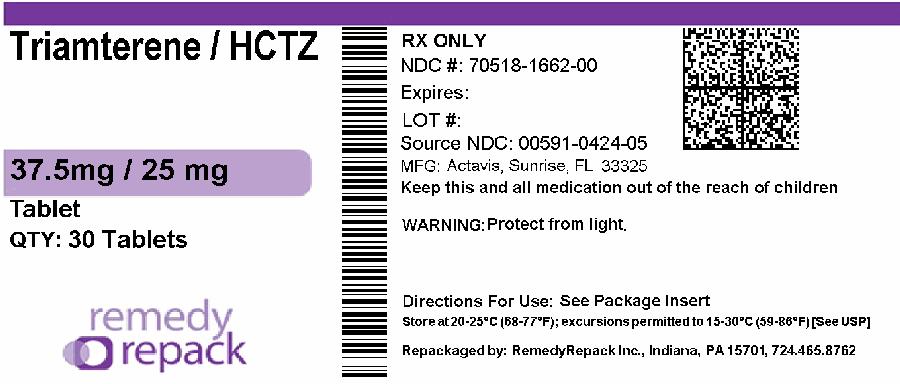
Triamterene and Hydrochlorothiazide — Thiazide Diuretic [EPC]. INDICATIONS AND USAGE This fixed combination drug is not indicated for the initial therapy of edema or hypertension except in individuals in whom…
Boxed warning
Hyperkalemia: Abnormal elevation of serum potassium levels (greater than or equal to 5.5 mEq/liter) can occur with all potassium-sparing diuretic combinations, including triamterene and hydrochlorothiazide capsules, USP. Hyperkalemia is more likely to occur in patients with renal impairment and diabetes (even without evidence of renal impairment) and in the elderly or severely ill. Since uncorrected hyperkalemia may be fatal, serum potassium levels must be monitored at frequent intervals especially in patients first receiving triamterene and hydrochlorothiazide capsules, USP, when dosages are changed, or with any illness that may influence renal function.
Brand names
Triamterene and Hydrochlorothiazidetriamterene and hydrochlorothiazideTRIAMTERENE AND HYDROCHLOROTHIAZIDE
INDICATIONS AND USAGE This fixed combination drug is not indicated for the initial therapy of edema or hypertension except in individuals in whom the development of hypokalemia cannot be risked. Triamterene and hydrochlorothiazide tablets, USP are indicated for the treatment of hypertension or edema in patients who develop hypokalemia on hydrochlorothiazide alone. Triamterene and hydrochlorothiazide tablets, USP are also indicated for those patients who require a thiazide diuretic and in whom the development of hypokalemia cannot be risked (e.g., patients on concomitant digitalis preparations, or with a history of cardiac arrhythmias, etc.). Triamterene and hydrochlorothiazide tablets, USP may be used alone or in combination with other antihypertensive drugs, such as beta-blockers. Since triamterene and hydrochlorothiazide tablets, USP may enhance the actions of these drugs, dosage adjustments may be necessary. Usage in Pregnancy The routine use of diuretics in an otherwise healthy woman is inappropriate and exposes mother and fetus to unnecessary hazard. Diuretics do not prevent development of toxemia of pregnancy, and there is no satisfactory evidence that they are useful in the treatment of developed toxemia. Edema during pregnancy may arise from pathological causes or from the physiologic and mechanical consequences of pregnancy. Thiazides are indicated in pregnancy when edema is due to pathologic causes, just as they are in the absence of pregnancy. Dependent edema in pregnancy, resulting from restriction of venous return by the expanded uterus, is properly treated through elevation of the lower extremities and use of support hose; use of diuretics to lower intravascular volume in this case is illogical and unnecessary. There is hypervolemia during normal pregnancy which is harmful to neither the fetus nor the mother (in the absence of cardiovascular disease), but which is associated with edema, including generalized edema, in the majority of pregnant women. If this edema produces discomfort, increased recumbency will often provide relief. In rare instances, this edema may cause extreme discomfort which is not relieved by rest. In these cases, a short course of diuretics may provide relief and may be appropriate.
Dosage
DOSAGE AND ADMINISTRATION The usual dose of triamterene and hydrochlorothiazide tablets, 37.5 mg/25 mg is one or two tablets daily, given as a single dose, with appropriate monitoring of serum potassium ( see WARNINGS ). The usual dose of triamterene and hydrochlorothiazide tablets, 75 mg/50 mg is one tablet daily, with appropriate monitoring of serum potassium ( see WARNINGS ). There is no experience with the use of more than one 75 mg/50 mg (75 mg triamterene and 50 mg hydrochlorothiazide) tablet daily or more than two 37.5 mg/25 mg (37.5 mg triamterene and 25 mg hydrochlorothiazide) tablets daily. Clinical experience with the administration of two 37.5 mg/25 mg (37.5 mg triamterene and 25 mg hydrochlorothiazide) tablets daily in divided doses (rather than as a single dose) suggests an increased risk of electrolyte imbalance and renal dysfunction. Patients receiving 50 mg of hydrochlorothiazide who become hypokalemic may be transferred to triamterene and hydrochlorothiazide tablets, 75 mg/50 mg directly. Patients receiving 25 mg hydrochlorothiazide who become hypokalemic may be transferred to triamterene and hydrochlorothiazide tablets, 37.5 mg/25 mg directly. In patients requiring hydrochlorothiazide therapy and in whom hypokalemia cannot be risked therapy may be initiated with triamterene and hydrochlorothiazide tablets, 37.5 mg/25 mg. If an optimal blood pressure response is not obtained with triamterene and hydrochlorothiazide tablets, 37.5 mg/25 mg, the dose should be increased to two 37.5 mg/25 mg (37.5 mg triamterene and 25 mg hydrochlorothiazide) tablets daily as a single dose, or one triamterene and hydrochlorothiazide tablets, 75 mg/50 mg daily. If blood pressure still is not controlled, another antihypertensive agent may be added ( see PRECAUTIONS: Drug Interactions ). Clinical studies have shown that patients taking less bioavailable formulations of triamterene and hydrochlorothiazide in daily doses of 25 mg to 50 mg hydrochlorothiazide and 50 mg to 100 mg triamterene may be safely changed to one triamterene and hydrochlorothiazide tablets, 37.5 mg/25 mg daily. All patients changed from less bioavailable formulations to triamterene and hydrochlorothiazide tablets, 75 mg/50 mg should be monitored clinically and for serum potassium after the transfer.
Warnings
WARNINGS: Hyperkalemia: Abnormal elevation of serum potassium levels (greater than or equal to 5.5 mEq/liter) can occur with all potassium-conserving diuretic combinations, including triamterene and hydrochlorothiazide. Hyperkalemia is more likely to occur in patients with renal impairment, diabetes (even without evidence of renal impairment), or elderly or severely ill patients. Since uncorrected hyperkalemia may be fatal, serum potassium levels must be monitored at frequent intervals especially in patients first receiving triamterene and hydrochlorothiazide, when dosages are changed or with any illness that may influence renal function. If hyperkalemia is suspected, (warning signs include paresthesias, muscular weakness, fatigue, flaccid paralysis of the extremities, bradycardia and shock), an electrocardiogram (ECG) should be obtained. However, it is important to monitor serum potassium levels because mild hyperkalemia may not be associated with ECG changes. If hyperkalemia is present, triamterene and hydrochlorothiazide should be discontinued immediately and a thiazide alone should be substituted. If the serum potassium exceeds 6.5 mEq/liter, more vigorous therapy is required. The clinical situation dictates the procedures to be employed. These include the intravenous administration of calcium chloride solution, sodium bicarbonate solution and/or the oral or parenteral administration of glucose with a rapid-acting insulin preparation. Cationic exchange resins such as sodium polystyrene sulfonate may be orally or rectally administered. Persistent hyperkalemia may require dialysis. The development of hyperkalemia associated with potassium-sparing diuretics is accentuated in the presence of renal impairment (see CONTRAINDICATIONS ). Patients with mild renal functional impairment should not receive this drug without frequent and continuing monitoring of serum electrolytes. Cumulative drug effects may be observed in patients with impaired renal function. The renal clearances of hydrochlorothiazide and the pharmacologically active metabolite of triamterene, the sulfate ester of hydroxytriamterene, have been shown to be reduced and the plasma levels increased following triamterene and hydrochlorothiazide administration to elderly patients and patients with impaired renal function. Hyperkalemia has been reported in diabetic patients with the use of potassium-conserving agents even in the absence of apparent renal impairment. Accordingly, triamterene and hydrochlorothiazide should be avoided in diabetic patients. If it is employed, serum electrolytes must be frequently monitored. Because of the potassium-sparing properties of angiotensin-converting enzyme (ACE) inhibitors, triamterene and hydrochlorothiazide should be used cautiously, if at all, with these agents (see PRECAUTIONS : Drug Interactions ). Metabolic or Respiratory Acidosis: Potassium-conserving therapy should also be avoided in severely ill patients in whom respiratory or metabolic acidosis may occur. Acidosis may be associated with rapid elevations in serum potassium levels. If triamterene and hydrochlorothiazide is employed, frequent evaluations of acid/base balance and serum electrolytes are necessary. Acute Myopia and Secondary Angle-Closure Glaucoma: Hydrochlorothiazide, a sulfonamide, can cause an idiosyncratic reaction, resulting in acute transient myopia and acute angle-closure glaucoma. Symptoms include acute onset of decreased visual acuity or ocular pain and typically occur within hours to weeks of drug initiation. Untreated acute angle-closure glaucoma can lead to permanent vision loss. The primary treatment is to discontinue hydrochlorothiazide as rapidly as possible. Prompt medical or surgical treatments may need to be considered if the intraocular pressure remains uncontrolled. Risk factors for developing acute angle-closure glaucoma may include a history of sulfonamide or penicillin allergy.
Contraindications
CONTRAINDICATIONS Antikaliuretic Therapy and Potassium Supplementation: Triamterene and hydrochlorothiazide capsules, USP should not be given to patients receiving other potassium-sparing agents such as spironolactone, amiloride, or other formulations containing triamterene. Concomitant potassium-containing salt substitutes should also not be used. Potassium supplementation should not be used with triamterene and hydrochlorothiazide capsules, USP except in severe cases of hypokalemia. Such concomitant therapy can be associated with rapid increases in serum potassium levels. If potassium supplementation is used, careful monitoring of the serum potassium level is necessary. Impaired Renal Function: Triamterene and hydrochlorothiazide capsules, USP are contraindicated in patients with anuria, acute and chronic renal insufficiency, or significant renal impairment. Hypersensitivity: Hypersensitivity to either drug in the preparation or to other sulfonamide-derived drugs is a contraindication. Hyperkalemia: Triamterene and hydrochlorothiazide capsules, USP should not be used in patients with pre-existing elevated serum potassium.
Drug interactions
Drug Interactions Angiotensin-Converting Enzyme Inhibitors Potassium-sparing agents should be used with caution in conjunction with angiotensin-converting enzyme (ACE) inhibitors due to an increased risk of hyperkalemia. Oral Hypoglycemic Drugs Concurrent use with chlorpropamide may increase the risk of severe hyponatremia. Nonsteroidal Anti-Inflammatory Drugs A possible interaction resulting in acute renal failure has been reported in a few patients on triamterene and hydrochlorothiazide when treated with indomethacin, a nonsteroidal anti-inflammatory agent. Caution is advised in administering nonsteroidal anti-inflammatory agents with triamterene and hydrochlorothiazide. Lithium Lithium generally should not be given with diuretics because they reduce its renal clearance and increase the risk of lithium toxicity. Read prescribing information for lithium preparations before use of such concomitant therapy with triamterene and hydrochlorothiazide. Surgical Considerations Thiazides have been shown to decrease arterial responsiveness to norepinephrine (an effect attributed to loss of sodium). This diminution is not sufficient to preclude effectiveness of the pressor agent for therapeutic use. Thiazides have also been shown to increase the paralyzing effect of nondepolarizing muscle relaxants such as tubocurarine (an effect attributed to potassium loss); consequently, caution should be observed in patients undergoing surgery. Other Considerations Concurrent use of hydrochlorothiazide with amphotericin B or corticosteroids or corticotropin (ACTH) may intensify electrolyte imbalance, particularly hypokalemia, although the presence of triamterene minimizes the hypokalemic effect. Thiazides may add to or potentiate the action of other antihypertensive drugs. See INDICATIONS AND USAGE for concomitant use with other antihypertensive drugs. The effect of oral anticoagulants may be decreased when used concurrently with hydrochlorothiazide; dosage adjustments may be necessary. Triamterene and hydrochlorothiazide may raise the level of blood uric acid; dosage adjustments of antigout medication may be necessary to control hyperuricemia and gout. The following agents given together with triamterene may promote serum potassium accumulation and possibly result in hyperkalemia because of the potassium-sparing nature of triamterene, especially in patients with renal insufficiency: blood from blood bank (may contain potassium up to 30 mEq/L of plasma or up to 65 mEq/L of whole blood when stored for more than 10 days); low-salt milk (may contain potassium up to 60 mEq/L); potassium-containing medications (such as parenteral penicillin G potassium); salt substitutes (most contain substantial amounts of potassium). Exchange resins, such as sodium polystyrene sulfonate, whether administered orally or rectally, reduce serum potassium levels by sodium replacement of the potassium; fluid retention may occur in some patients because of the increased sodium intake. Chronic or overuse of laxatives may reduce serum potassium levels by promoting excessive potassium loss from the intestinal tract; laxatives may interfere with the potassium-retaining effects of triamterene. The effectiveness of methenamine may be decreased when used concurrently with hydrochlorothiazide because of alkalinization of the urine. Information for Patients Non-Melanoma Skin Cancer Instruct patients taking hydrochlorothiazide to protect skin from the sun and undergo regular skin cancer screening.
Adverse reactions
ADVERSE REACTIONS: Side effects observed in association with the use of triamterene and hydrochlorothiazide tablets, other combination products containing triamterene and hydrochlorothiazide, and products containing triamterene or hydrochlorothiazide include the following: Gastrointestinal: jaundice (intrahepatic cholestatic jaundice), pancreatitis, nausea, appetite disturbance, taste alteration, vomiting, diarrhea, constipation, anorexia, gastric irritation, cramping. Central Nervous System: drowsiness and fatigue, insomnia, headache, dizziness, dry mouth, depression, anxiety, vertigo, restlessness, paresthesias. Cardiovascular: tachycardia, shortness of breath and chest pain, orthostatic hypotension (may be aggravated by alcohol, barbiturates or narcotics). Renal: acute renal failure, acute interstitial nephritis, renal stones composed of triamterene in association with other calculus materials, urine discoloration. Hematologic: leukopenia, agranulocytosis, thrombocytopenia, aplastic anemia, hemolytic anemia and megaloblastosis. Ophthalmic: xanthopsia, transient blurred vision. Hypersensitivity: anaphylaxis, photosensitivity, rash, urticaria, purpura, necrotizing angiitis (vasculitis, cutaneous vasculitis), fever, respiratory distress including pneumonitis. Other: muscle cramps and weakness, decreased sexual performance and sialadenitis. Whenever adverse reactions are moderate to severe, therapy should be reduced or withdrawn. Altered Laboratory Findings: Serum Electrolytes: hyperkalemia, hypokalemia, hyponatremia, hypomagnesemia, hypochloremia (see WARNINGS and PRECAUTIONS ). Creatinine, Blood Urea Nitrogen: Reversible elevations in BUN and serum creatinine have been observed in hypertensive patients treated with triamterene and hydrochlorothiazide tablets. Glucose: hyperglycemia, glycosuria and diabetes mellitus (see PRECAUTIONS ). Serum Uric Acid, PBI and Calcium: (see PRECAUTIONS ). Other: Elevated liver enzymes have been reported in patients receiving triamterene and hydrochlorothiazide tablets. Postmarketing Experience: Non-melanoma Skin Cancer: Hydrochlorothiazide is associated with an increased risk of non-melanoma skin cancer. In a study conducted in the Sentinel System, increased risk was predominantly for squamous cell carcinoma (SCC) and in white patients taking large cumulative doses. The increased risk for SCC in the overall population was approximately 1 additional case per 16,000 patients per year, and for white patients taking a cumulative dose of ≥ 50,000 mg the risk increase was approximately 1 additional SCC case for every 6,700 patients per year. To report SUSPECTED ADVERSE EVENTS, contact Actavis at 1-888-838-2872 or FDA at 1-800-FDA-1088 or http://www.fda.gov/medwatch for voluntary reporting of adverse reactions.
Mechanism of action
CLINICAL PHARMACOLOGY The triamterene and hydrochlorothiazide capsule is a diuretic/antihypertensive drug product that combines natriuretic and antikaliuretic effects. Each component complements the action of the other. The hydrochlorothiazide component blocks the reabsorption of sodium and chloride ions, and thereby increases the quantity of sodium traversing the distal tubule and the volume of water excreted. A portion of the additional sodium presented to the distal tubule is exchanged there for potassium and hydrogen ions. With continued use of hydrochlorothiazide and depletion of sodium, compensatory mechanisms tend to increase this exchange and may produce excessive loss of potassium, hydrogen, and chloride ions. Hydrochlorothiazide also decreases the excretion of calcium and uric acid, may increase the excretion of iodide, and may reduce glomerular filtration rate. The exact mechanism of the antihypertensive effect of hydrochlorothiazide is not known. The triamterene component of triamterene and hydrochlorothiazide capsules, USP exerts its diuretic effect on the distal renal tubule to inhibit the reabsorption of sodium in exchange for potassium and hydrogen ions. Its natriuretic activity is limited by the amount of sodium reaching its site of action. Although it blocks the increase in this exchange that is stimulated by mineralocorticoids (chiefly aldosterone), it is not a competitive antagonist of aldosterone and its activity can be demonstrated in adrenalectomized rats and patients with Addison’s disease. As a result, the dose of triamterene required is not proportionally related to the level of mineralocorticoid activity but is dictated by the response of the individual patients and the kaliuretic effect of concomitantly administered drugs. By inhibiting the distal tubular exchange mechanism, triamterene maintains or increases the sodium excretion and reduces the excess loss of potassium, hydrogen, and chloride ions induced by hydrochlorothiazide. As with hydrochlorothiazide, triamterene may reduce glomerular filtration and renal plasma flow. Via this mechanism, it may reduce uric acid excretion although it has no tubular effect on uric acid reabsorption or secretion. Triamterene does not affect calcium excretion. No predictable antihypertensive effect has been demonstrated for triamterene. Duration of diuretic activity and effective dosage range of the hydrochlorothiazide and triamterene components of triamterene and hydrochlorothiazide capsules, USP are similar. Onset of diuresis with triamterene and hydrochlorothiazide capsules, USP takes place within 1 hour, peaks at 2 to 3 hours, and tapers off during the subsequent 7 to 9 hours. Triamterene and hydrochlorothiazide capsules, USP are well absorbed. Upon administration of a single oral dose to fasted normal male volunteers, mean pharmacokinetic parameters were determined (Table 1). Table 1. Mean Pharmacokinetic Parameters after Single Oral Dose in Fasted Male Volunteers a AUC (0-48) ng*h/mL (± SD) C max ng/mL (± SD) Median T max h Ae Mg (± SD) Triamterene 148.7 (87.9) 46.4 (29.4) 1.1 2.7 (1.4) Hydroxytriamterene sulfate 1,865 (471) 720 (364) 1.3 19.7 (6.1) Hydrochlorothiazide 834 (177) 135.1 (35.7) 2.0 14.3 (3.8) a AUC (0-48) , C max , T max , and Ae represent area under the plasma concentration versus time plot, maximum plasma concentration, time to reach C max , and amount excreted in urine over 48 hours. A capsule of triamterene and hydrochlorothiazide is bioequivalent to a single entity 25-mg hydrochlorothiazide tablet and 37.5-mg triamterene capsule used in the double-blind clinical trial below (see Clinical Trials ). In a limited study involving 12 subjects, coadministration of triamterene and hydrochlorothiazide capsules, USP with a high-fat meal resulted in: (1) an increase in the mean bioavailability of triamterene by about 67% (90% confidence interval = 0.99, 1.90), p-hydroxytriamterene sulfate by about 50% (90% confidence interval = 1.06, 1.77), hydrochlorothiazide by about 17% (90% confidence interval = 0.90, 1.34); (2) increases in the peak concentrations of triamterene and p-hydroxytriamterene; and (3) a delay of up to 2 hours in the absorption of the active constituents. CLINICAL TRIALS A placebo-controlled, double-blind trial was conducted to evaluate the efficacy of triamterene and hydrochlorothiazide capsules, USP. This trial demonstrated that triamterene and hydrochlorothiazide capsules, USP (37.5 mg triamterene/25 mg hydrochlorothiazide) were effective in controlling blood pressure while reducing the incidence of hydrochlorothiazide-induced hypokalemia. This trial involved 636 patients with mild to moderate hypertension controlled by hydrochlorothiazide 25 mg daily and who had hypokalemia (serum potassium <3.5 mEq/L) secondary to the hydrochlorothiazide. Patients were randomly assigned to 4 weeks’ treatment with once-daily regimens of 25 mg hydrochlorothiazide plus placebo, or 25 mg hydrochlorothiazide combined with one of the following doses of triamterene: 25 mg, 37.5 mg, 50 mg, or 75 mg. Blood pressure and serum potassium were monitored at baseline and throughout the trial. All 5 treatment groups had similar mean blood pressure and serum potassium concentrations at baseline (mean systolic blood pressure range: 137 ± 14 mmHg to 140 ± 16 mmHg; mean diastolic blood pressure range: 86 ± 9 mmHg to 88 ± 8 mmHg; mean serum potassium range: 2.3 to 3.4 mEq/L with the majority of patients having values between 3.1 and 3.4 mEq/L). While all triamterene regimens reversed hypokalemia, at Week 4 the 37.5-mg regimen proved optimal compared with the other tested regimens. On this regimen, 81% of the patients had a significant ( P <0.05) reversal of hypokalemia vs. 59% of patients on the placebo/hydrochlorothiazide regimen. The mean serum potassium concentration on 37.5-mg triamterene went from 3.2 ± 0.2 mEq/L at baseline to 3.7 ± 0.3 mEq/L at Week 4, a significantly greater ( P <0.05) improvement than that achieved with placebo/hydrochlorothiazide (i.e., 3.2 ± 0.2 mEq/L at baseline and 3.5 ± 0.4 mEq/L at Week 4). Also, 51% of patients in the 37.5-mg triamterene group had an increase in serum potassium of ≥0.5 mEq/L at Week 4 vs. 33% in the placebo group. The 37.5-mg triamterene/25-mg hydrochlorothiazide regimen also maintained control of blood pressure; mean supine systolic blood pressure at Week 4 was 138 ± 21 mmHg while mean supine diastolic blood pressure was 87 ± 13 mmHg.
A drug lookup is just the start. Eleplan keeps the whole care plan in one place.
Medications, diagnoses, documents, appointments, and the whole care team — organized and always in sync, with Ellie, your AI care assistant, on top of it. Free to start.