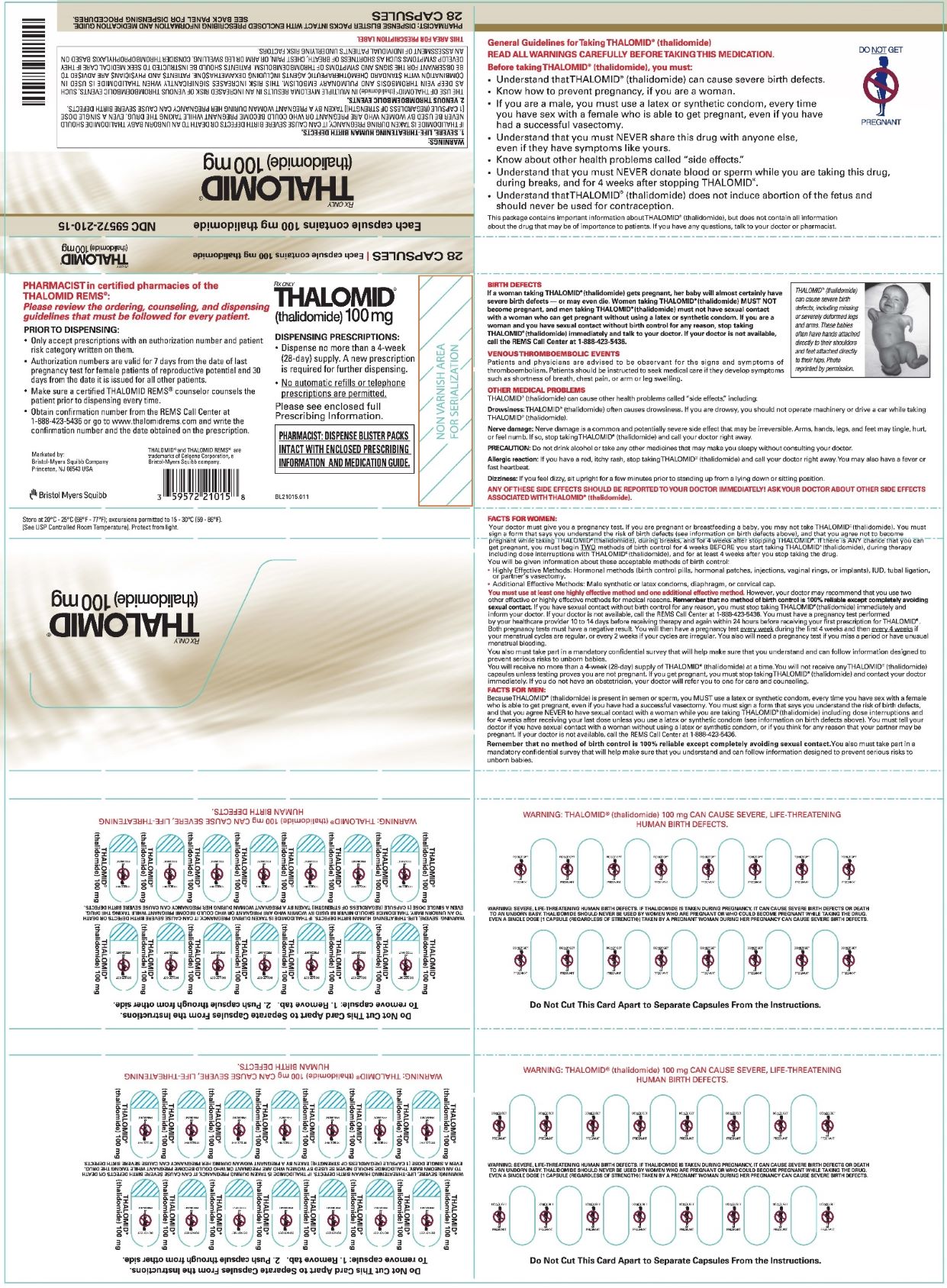
Thalidomide. INDICATIONS AND USAGE • THALOMID in combination with dexamethasone is indicated for the treatment of patients with newly diagnosed multiple myeloma…
Boxed warning
WARNING: EMBRYO-FETAL TOXICITY AND VENOUS THROMBOEMBOLISM WARNING: EMBRYO-FETAL TOXICITY AND VENOUS THROMBOEMBOLISM See full prescribing information for complete boxed warning. EMBRYO -FETAL TOXICITY • If THALOMID is taken during pregnancy, it can cause severe birth defects or embryo-fetal death. THALOMID should never be used by females who are pregnant or who could be pregnant while taking the drug. Even a single dose [1 capsule (regardless of strength)] taken by a pregnant woman during her pregnancy can cause severe birth defects. • Pregnancy must be excluded before start of treatment. Prevent pregnancy thereafter by the use of two reliable methods of contraception. ( 5.1 , 8.3 ) THALOMID is only available through a restricted distribution program, the THALOMID REMS ® program ( 5.2 ). VENOUS THROMBOEMBOLISM • Significant increased risk of deep vein thrombosis (DVT) and pulmonary embolism (PE) in patients with multiple myeloma receiving THALOMID with dexamethasone ( 5.3 ). EMBRYO-FETAL TOXICITY If THALOMID is taken during pregnancy, it can cause severe birth defects or embryo-fetal death. THALOMID should never be used by females who are pregnant or who could become pregnant while taking the drug. Even a single dose [1 capsule (regardless of strength)] taken by a pregnant woman during her pregnancy can cause severe birth defects. Because of this toxicity and in an effort to make the chance of embryo-fetal exposure to THALOMID as negligible as possible, THALOMID is approved for marketing only through a special restricted distribution program: THALOMID REMS program, approved by the Food and Drug Administration. Information about THALOMID and the THALOMID REMS program is available at www.thalomidrems.com or by calling the REMS Call Center at 1-888-423-5436. VENOUS THROMBOEMBOLISM The use of THALOMID in multiple myeloma results in an increased risk of venous thromboembolism, such as deep venous thrombosis and pulmonary embolism. This risk increases significantly when THALOMID is used in combination with standard chemotherapeutic agents including dexamethasone. In one controlled trial, the rate of venous thromboembolism was 22.5% in patients receiving THALOMID in combination with dexamethasone compared to 4.9% in patients receiving dexamethasone alone (p = 0.002). Patients and physicians are advised to be observant for the signs and symptoms of thromboembolism. Instruct patients to seek medical care if they develop symptoms such as shortness of breath, chest pain, or arm or leg swelling. Consider thromboprophylaxis based on an assessment of individual patients' underlying risk factors.
INDICATIONS AND USAGE • THALOMID in combination with dexamethasone is indicated for the treatment of patients with newly diagnosed multiple myeloma (MM). ( 1.1 ) • THALOMID is indicated for the acute treatment of the cutaneous manifestations of moderate to severe erythema nodosum leprosum (ENL). THALOMID is not indicated as monotherapy for such ENL treatment in the presence of moderate to severe neuritis. THALOMID is also indicated as maintenance therapy for prevention and suppression of the cutaneous manifestations of ENL recurrence. ( 1.2 ) 1.1 Multiple Myeloma THALOMID in combination with dexamethasone is indicated for the treatment of patients with newly diagnosed multiple myeloma (MM) [see Clinical Studies (14.1) ] . 1.2 Erythema Nodosum Leprosum THALOMID is indicated for the acute treatment of the cutaneous manifestations of moderate to severe erythema nodosum leprosum (ENL). THALOMID is not indicated as monotherapy for such ENL treatment in the presence of moderate to severe neuritis. THALOMID is also indicated as maintenance therapy for prevention and suppression of the cutaneous manifestations of ENL recurrence [see Clinical Studies (14.2) ].
Dosage
DOSAGE AND ADMINISTRATION • MM: 200 mg orally once daily. The recommended dose of dexamethasone is 40 mg/day on days 1-4, 9-12, and 17-20 every 28 days. ( 2.2 ) • ENL: 100 to 300 mg/day for an episode of cutaneous ENL. Up to 400 mg/day for severe cutaneous ENL. ( 2.3 ) 2.1 Required Baseline Testing Drug prescribing to females of reproductive potential is contingent upon initial and continued negative results of pregnancy testing [see Warnings and Precautions (5.1 and 5.2) ] . THALOMID must only be administered in compliance with all of the terms outlined in the THALOMID REMS program. THALOMID may only be prescribed by prescribers certified with the THALOMID REMS program and may only be dispensed by pharmacists certified with the THALOMID REMS program. 2.2 Recommended Dosage for Multiple Myeloma The recommended dose of THALOMID in combination with dexamethasone is 200 mg once daily (in 28-day treatment cycles) orally with water, preferably at bedtime and at least 1 hour after the evening meal. The dose of dexamethasone is 40 mg daily administered orally on days 1-4, 9-12, and 17-20 every 28 days. 2.3 Recommended Dosage for Erythema Nodosum Leprosum The recommended dose of THALOMID for an episode of cutaneous ENL is 100 to 300 mg/day once daily orally with water, preferably at bedtime and at least 1 hour after the evening meal. Initiate dosing for patients weighing less than 50 kilograms at the low end of the dose range. Consider dosing in the higher dosage range for patients with a severe cutaneous ENL reaction, or in those who have previously required higher doses to control the reaction (possibly up to 400 mg/day) once daily at bedtime or in divided doses with water, at least 1 hour after meals. Consider concomitant use of corticosteroids in patients with moderate to severe neuritis associated with a severe ENL reaction. Steroid usage can be tapered and discontinued when the neuritis has ameliorated. Continue dosing with THALOMID until signs and symptoms of active reaction have subsided, usually a period of at least 2 weeks. Patients may then be tapered off medication in 50 mg decrements every 2 to 4 weeks. Patients who have a documented history of requiring prolonged maintenance treatment to prevent the recurrence of cutaneous ENL or who flare during tapering should be maintained on the minimum dose necessary to control the reaction. Tapering off medication should be attempted every 3 to 6 months, in decrements of 50 mg every 2 to 4 weeks. 2.4 Dosage Modifications for Adverse Reactions Interrupt THALOMID for constipation, somnolence, or peripheral neuropathy. Consider a reduced dose upon resumption of treatment. Consider dose reduction, delay, or discontinuation in patients who develop National Cancer Institute Common Toxicity Criteria (NCI CTC) Grade 3 or 4 adverse reactions and/or based on clinical judgment. Permanently discontinue THALOMID for angioedema, anaphylaxis, Grade 4 rash, skin exfoliation, bullae, or any other severe dermatologic reactions [see Warnings and Precautions (5.12 and 5.16) ] .
Warnings
WARNINGS AND PRECAUTIONS • Ischemic heart disease (including myocardial infarction) and stroke have been observed in patients treated with THALOMID in combination with dexamethasone. ( 5.3 ) • Increased Mortality: Observed in patients with MM when pembrolizumab was added to dexamethasone and a thalidomide analogue. ( 5.4 ) • Drowsiness and Somnolence: Instruct patients to avoid situations where drowsiness may be a problem and not to take other medications that may cause drowsiness. ( 5.5 ) • Peripheral Neuropathy: Monitor patients for signs or symptoms of peripheral neuropathy during treatment. Discontinue THALOMID if symptoms of drug-induced peripheral neuropathy occur, if clinically appropriate. ( 5.6 ) • Dizziness and Orthostatic Hypotension: Advise patients to sit upright for a few minutes prior to standing up from a recumbent position. ( 5.7 ) • Neutropenia and Thrombocytopenia: Patients may require dose interruption and/or dose reduction. ( 5.8 , 5.9 ) • Increased HIV Viral Load: Measure viral load during treatment. ( 5.10 ) • Bradycardia: Monitor patients for bradycardia and possible syncope. Dose reduction or discontinuation may be required. ( 5.11 ) • Severe Cutaneous Reactions: Discontinue THALOMID for severe reactions. ( 5.12 ) • Seizures: Monitor patients with a history of seizures or other risk factors for acute seizure activity. ( 5.13 ) • Tumor Lysis Syndrome: Monitor patients at risk (e.g., those with high tumor burden prior to treatment) and take appropriate precautions. ( 5.14 ) • Hypersensitivity: Monitor patients for potential hypersensitivity. Discontinue THALOMID for angioedema and anaphylaxis. ( 5.16 ) 5.1 Embryo-Fetal Toxicity THALOMID is a powerful human teratogen that induces a high frequency of severe and life-threatening birth defects, even after a single dose. Mortality at or shortly after birth has been reported in about 40% of infants. When there is no satisfactory alternative treatment, females of reproductive potential may be treated with THALOMID provided adequate precautions are taken to avoid pregnancy. THALOMID is only available through the THALOMID REMS program [see Warnings and Precautions (5.2) ] . Oral ingestion is the only type of maternal THALOMID exposure known to result in drug-associated birth defects. There are no specific data available regarding the reproductive risks of cutaneous absorption or inhalation of THALOMID; however, females of reproductive potential should avoid contact with THALOMID Capsules. THALOMID Capsules should be stored in blister packs until ingestion. If there is contact with non-intact THALOMID capsules or the powder contents, the exposed area should be washed with soap and water. If healthcare providers or other care givers are exposed to body fluids from patients receiving THALOMID, the exposed area should be washed with soap and water. Appropriate precautions should be utilized, such as wearing gloves to prevent the potential cutaneous exposure to THALOMID. Females of Reproductive Potential Females of reproductive potential must avoid pregnancy for at least 4 weeks before beginning THALOMID therapy, during therapy, during dose interruptions and for at least 4 weeks after completing therapy. Females must commit either to abstain continuously from heterosexual sexual intercourse or to use two methods of reliable birth control, beginning 4 weeks prior to initiating treatment with THALOMID, during therapy, during dose interruptions and continuing for 4 weeks following discontinuation of THALOMID therapy. Two negative pregnancy tests must be obtained prior to initiating therapy. The first test should be performed within 10-14 days and the second test within 24 hours prior to prescribing THALOMID therapy and then weekly during the first month, then monthly thereafter in females with regular menstrual cycles or every 2 weeks in females with irregular menstrual cycles [see Use in Specific Populations (8.3) ]. Males Thalidomide is present in the semen of patients receiving THALOMID. Therefore, males must always use a latex or synthetic condom during any sexual contact with females of reproductive potential while taking THALOMID and for up to 4 weeks after discontinuing THALOMID, even if they have undergone a successful vasectomy. Male patients taking THALOMID must not donate sperm [see Use in Specific Populations (8.3) ] . Blood Donation Patients must not donate blood during treatment with THALOMID and for 4 weeks following discontinuation of the drug because the blood might be given to a pregnant female patient whose fetus must not be exposed to THALOMID. 5.2 THALOMID REMS Program Because of the embryo-fetal risk [see Warnings and Precautions (5.1) ], THALOMID is available only through a restricted program under a Risk Evaluation and Mitigation Strategy (REMS), the THALOMID REMS program. Required components of the THALOMID REMS program include the following: • Prescribers must be certified with the THALOMID REMS program by enrolling and complying with the REMS requirements. • Patients must sign a Patient-Physician Agreement Form and comply with the REMS requirements. In particular, female patients of reproductive potential who are not pregnant must comply with the pregnancy testing and contraception requirements [see Use in Specific Populations (8.3) ] and males must comply with contraception requirements [see Use in Specific Populations (8.3) ]. • Pharmacies must be certified with the THALOMID REMS program, must only dispense to patients who are authorized to receive THALOMID and comply with REMS requirements. Further information about the THALOMID REMS program is available at www.thalomidrems.com or by telephone at 1-888-423-5436. 5.3 Venous and Arterial Thromboembolism The use of THALOMID in patients with MM results in an increased risk of venous thromboembolism, such as deep venous thrombosis and pulmonary embolism. This risk increases significantly when THALOMID is used in combination with standard chemotherapeutic agents including dexamethasone. In one controlled trial, the rate of venous thromboembolism was 22.5% in patients receiving THALOMID in combination with dexamethasone compared to 4.9% in patients receiving dexamethasone alone (p = 0.002). Ischemic heart disease (11.1%), including myocardial infarction (1.3%), and stroke (cerebrovascular accident, 2.6%) have also occurred in patients with previously untreated MM treated with THALOMID and dexamethasone compared to placebo and dexamethasone (4.7%, 1.7%, and 0.9%, respectively) in one clinical trial [see Adverse Reactions (6.1) ]. Consider thromboprophylaxis based on an assessment of individual patients' underlying risk factors. Patients and physicians should be observant for the signs and symptoms of thromboembolism. Advise patients to seek immediate medical care if they develop symptoms such as shortness of breath, chest pain, or arm or leg swelling [see Boxed Warning ] . Agents that also may increase the risk of thromboembolism should be used with caution in patients receiving THALOMID [see Drug Interactions (7.7) ]. 5.4 Increased Mortality in Patients with MM When Pembrolizumab Is Added to a Thalidomide Analogue and Dexamethasone In two randomized clinical trials in patients with MM, the addition of pembrolizumab to a thalidomide analogue plus dexamethasone, a use for which no PD-1 or PD-L1 blocking antibody is indicated, resulted in increased mortality. Treatment of patients with MM with a PD-1 or PD-L1 blocking antibody in combination with a thalidomide analogue plus dexamethasone is not recommended outside of controlled clinical trials. 5.5 Drowsiness and Somnolence THALOMID frequently causes drowsiness and somnolence. Patients should be instructed to avoid situations where drowsiness may be a problem and not to take other medications that may cause drowsiness without adequate medical advice [see Drug Interactions (7.1) ]. Advise patients as to the possible impairment of mental and/or physical abilities required fo
Contraindications
CONTRAINDICATIONS • Pregnancy ( Boxed Warning , 4.1 , 5.1 , 5.2 , 8.1 , 17 ) • Demonstrated hypersensitivity to the drug or its components ( 4.2 , 5.16 , 6.2 ) 4.1 Pregnancy THALOMID is contraindicated in females who are pregnant. THALOMID can cause fetal harm when administered to a pregnant female [see Boxed Warning , Warnings and Precautions (5.1) and Use in Specific Populations (8.1) ] . THALOMID is a powerful human teratogen, inducing a high frequency of severe and life-threatening birth defects, even after a single dose [see Boxed Warning ] . Mortality at or shortly after birth has been reported in about 40% of infants. If this drug is used during pregnancy, or if the patient becomes pregnant while taking this drug, the patient should be apprised of the potential risk to a fetus. If pregnancy occurs during THALOMID treatment, the drug should be discontinued immediately. 4.2 Hypersensitivity THALOMID is contraindicated in patients who have demonstrated hypersensitivity to the drug or its components [see Warnings and Precautions (5.16) ].
Drug interactions
DRUG INTERACTIONS • Use caution if other drugs which have sedative and hypnotic properties, slow cardiac conduction and/or cause peripheral neuropathy must be used. ( 7.1 , 7.2 , 7.3 ) • It is not known whether concomitant use of hormonal contraceptives further increases the risk of thromboembolism with THALOMID. ( 5.15 , 7.4 ) • Patients taking concomitant therapies such as erythropoietin stimulating agents or estrogen containing therapies may have an increased risk of thromboembolism. ( 7.7 ) 7.1 Opioids, Antihistamines, Antipsychotics, Anti-anxiety Agents, or Other CNS Depressants (Including Alcohol) The use of opioids, antihistamines, antipsychotics, anti-anxiety agents, or other CNS depressants concomitantly with THALOMID may cause an additive sedative effect and should be avoided. 7.2 Drugs which Cause Bradycardia The use of drugs which slow cardiac conduction concomitantly with THALOMID may cause an additive bradycardic effect and should be used with caution. Cardiovascular medications which may cause bradycardia include calcium channel blockers, beta blockers, alpha/beta-adrenergic blockers, and digoxin. Non-cardiac drugs that may cause bradycardia include H2 blockers (e.g., famotidine, cimetidine), lithium, tricyclic antidepressants and neuromuscular blockers (succinylcholine). In 16 healthy men, the pharmacokinetic profile of a single 0.5 mg digoxin dose was similar with and without the coadministration of THALOMID 200 mg/day at steady state levels. The single dose of digoxin had no effect on the pharmacokinetic profile of THALOMID. The safety of long-term concomitant use of THALOMID and digoxin has not been evaluated. 7.3 Drugs which Cause Peripheral Neuropathy The use of drugs which cause peripheral neuropathy (e.g., bortezomib, amiodarone, cisplatin, docetaxel, paclitaxel, vincristine, disulfiram, phenytoin, metronidazole, alcohol) can cause an additive effect and should be used with caution. 7.4 Hormonal Contraceptives Hormonal contraceptives increase the risk of thromboembolism. It is not known whether concomitant use of hormonal contraceptives further increases the risk of thromboembolism with THALOMID. In 10 healthy women, the pharmacokinetic profiles of norethindrone and ethinyl estradiol following administration of a single dose containing 1.0 mg of norethindrone acetate and 75 mcg of ethinyl estradiol were studied. The results were similar with and without coadministration of THALOMID 200 mg/day to steady-state levels. 7.5 Warfarin In 13 healthy men, the pharmacokinetic profile and international normalized ratio (INR) of prothrombin time for warfarin, following a single oral dose of 25 mg, were similar with and without the coadministration of THALOMID 200 mg/day at steady-state levels. The single dose of warfarin had no effect on the pharmacokinetic profile of thalidomide. 7.6 Drugs that Interfere with Hormonal Contraceptives Concomitant use of HIV-protease inhibitors, griseofulvin, modafinil, penicillins, rifampin, rifabutin, phenytoin, carbamazepine, or certain herbal supplements such as St. John's Wort with hormonal contraceptive agents may reduce the effectiveness of the contraception up to one month after discontinuation of these concomitant therapies. Therefore, females requiring treatment with one or more of these drugs must use two OTHER effective or highly effective methods of contraception while taking THALOMID. 7.7 Concomitant Therapies that may Increase the Risk of Thromboembolism Erythropoietic agents, or other agents that may increase the risk of thromboembolism, such as estrogen containing therapies, should be used with caution in multiple myeloma patients receiving THALOMID with dexamethasone [see Warnings and Precautions (5.3) ].
Adverse reactions
ADVERSE REACTIONS The following clinically significant adverse reactions are described in detail in other labeling sections: • Teratogenicity [see Boxed Warning , Warnings and Precautions (5.1 , 5.2) , and Patient Counseling Information (17) ] • Venous and Arterial Thromboembolism [see Boxed Warning , Warnings and Precautions (5.3) , and Patient Counseling Information (17) ] • Increased Mortality in Patients with MM When Pembrolizumab Is Added to a Thalidomide Analogue and Dexamethasone [see Warnings and Precautions (5.4) ] • Drowsiness and Somnolence [see Warnings and Precautions (5.5) ] • Peripheral Neuropathy [see Warnings and Precautions (5.6) ] • Dizziness and Orthostatic Hypotension [see Warnings and Precautions (5.7) ] • Neutropenia [see Warnings and Precautions (5.8) ] • Thrombocytopenia [see Warnings and Precautions (5.9) ] • Increased HIV Viral Load [see Warnings and Precautions (5.10) ] • Bradycardia [see Warnings and Precautions (5.11) ] • Severe Cutaneous Reactions [see Warnings and Precautions (5.12) ] • Seizures [see Warnings and Precautions (5.13) ] • Tumor Lysis Syndrome [see Warnings and Precautions (5.14) ] • Hypersensitivity [see Warnings and Precautions (5.16) ] • MM: The most common adverse reactions (≥ 20%) are fatigue, hypocalcemia, edema, constipation, neuropathy-sensory, dyspnea, muscle weakness, leukopenia, neutropenia, rash/desquamation, confusion, anorexia, nausea, anxiety/agitation, asthenia, tremor, fever, weight loss, thrombosis/embolism, neuropathy-motor, weight gain, dizziness, and dry skin. ( 6.1 ) • ENL: The most common adverse reactions (≥ 10%) are somnolence, rash, and headache. ( 6.1 ) To report SUSPECTED ADVERSE REACTIONS or embryo-fetal exposure: contact Bristol Myers Squibb at 1-800-721-5072 or 1-888-423-5436, respectively, or FDA at 1-800-FDA-1088 or www.fda.gov/medwatch. 6.1 Clinical Trials Experience Because clinical trials are conducted under widely varying conditions, adverse reaction rates observed in the clinical trials of a drug cannot be directly compared to rates in the clinical trials of another drug and may not reflect the rates observed in practice. Most patients taking THALOMID can be expected to experience adverse reactions. Adverse Reactions in Multiple Myeloma Controlled Clinical Trials The safety analyses were conducted in two controlled clinical studies (Study 1 and Study 2). The safety analysis in Study 1 was conducted on 204 patients who received treatment. Table 1 lists the most common adverse reactions (≥ 10%). The most frequently reported adverse reactions were fatigue, hypocalcemia, edema, constipation, sensory neuropathy, dyspnea, muscle weakness, leukopenia, neutropenia, rash/desquamation, confusion, anorexia, nausea, anxiety/agitation, tremor, fever, weight loss, thrombosis/embolism, neuropathy-motor, weight gain, dizziness, and dry skin. Twenty-three percent of patients (47/204) discontinued due to adverse reactions; 30% (31/102) from the THALOMID/dexamethasone arm and 16% (16/102) from the dexamethasone alone arm. Table 1: Adverse Reactions Reported in ≥10% of Patients in the THALOMID/Dexamethasone Arm (Study 1 - Safety Population; N=204) Body System Adverse Reaction Thal + Dex* (N=102) Dex Alone* (N=102) All Grades n (%) Grade 3/4 n (%) All Grades n (%) Grade 3/4 n (%) * Treatment-emergent adverse reactions reported in ≥10% of patients in THALOMID/dexamethasone arm and with a ≥1% difference in the THALOMID/dexamethasone arm compared to the dexamethasone alone arm. Metabolic/Laboratory 97 (95) 33 (32) 96 (94) 30 (29) Hypocalcemia 73 (72) 11 (11) 60 (59) 5 (5) Neurology 92 (90) 30 (29) 76 (74) 18 (18) Neuropathy-sensory 55 (54) 4 (4) 28 (28) 1 (1) Confusion 29 (28) 9 (9) 12 (12) 3 (3) Anxiety/agitation 26 (26) 1 (1) 14 (14) 3 (3) Tremor 26 (26) 1 (1) 6 (6) 0 (0) Neuropathy-motor 22 (22) 8 (8) 16 (16) 5 (5) Dizziness/ lightheadedness 20 (20) 1 (1) 14 (14) 0 (0) Depressed level of consciousness 16 (16) 3 (3) 3 (3) 3 (3) Constitutional Symptoms 91 (89) 19 (19) 84 (82) 16 (16) Fatigue 81 (79) 17 (17) 72 (71) 13 (13) Fever 24 (24) 1 (1) 20 (20) 3 (3) Weight loss 23 (23) 1 (1) 21 (21) 2 (2) Weight gain 22 (22) 1 (1) 13 (13) 0 (0) Blood/Bone Marrow 88 (86) 29 (29) 96 (94) 19 (19) Leukocytes (decreased) 36 (35) 6 (6) 30 (29) 3 (3) Neutrophils (decreased) 32 (31) 10 (10) 24 (24) 10 (10) Gastrointestinal 83 (81) 22 (22) 70 (69) 8 (8) Constipation 56 (55) 8 (8) 29 (28) 1 (1) Anorexia 29 (28) 4 (4) 25 (24) 2 (2) Nausea 29 (28) 5 (5) 23 (22) 1 (1) Mouth dryness 12 (12) 1 (1) 6 (6) 0 (0) Cardiovascular 70 (69) 37 (36) 60 (59) 21 (21) Edema 58 (56) 6 (6) 47 (46) 4 (4) Thrombosis/embolism 23 (22) 21 (21) 5 (5) 5 (5) Pain 64 (63) 10 (10) 66 (65) 15 (15) Myalgia 17 (17) 0 (0) 14 (14) 1 (1) Arthralgia 13 (13) 0 (0) 10 (10) 2 (2) Pulmonary 52 (51) 19 (19) 51 (50) 20 (20) Dyspnea 43 (42) 13 (13) 32 (31) 15 (15) Dermatology/Skin 48 (47) 5 (5) 35 (34) 2 (2) Rash/desquamation 31 (30) 4 (4) 18 (18) 2 (2) Dry skin 21 (21) 0 (0) 11 (11) 0 (0) Hepatic 47 (46) 7 (7) 45 (44) 4 (4) Bilirubin 14 (14) 2 (2) 10 (10) 2 (2) Musculoskeletal 42 (41) 9 (9) 41 (40) 14 (14) Muscle weakness 41 (40) 6 (6) 38 (37) 13 (13) The safety analysis in Study 2 was conducted on 466 patients who received treatment. Table 2 lists the most common adverse reactions (≥10%) that were observed. Table 3 lists the most common Grade 3/4 adverse reactions (occurring at >2%) that were observed. The adverse reactions most often reported by patients treated with THALOMID/dexamethasone were constipation, peripheral edema, tremor, asthenia, dizziness and fatigue. Adverse reactions with a frequency at least 2-fold higher in the THALOMID/dexamethasone group than in the placebo/dexamethasone group include constipation, tremor, deep vein thrombosis and peripheral sensory neuropathy. Twenty-six percent of patients (121/466) discontinued due to adverse reactions; 37% (86/234) from the THALOMID/dexamethasone arm and 15% (35/232) from the placebo/dexamethasone arm. Table 2: Adverse Reactions Reported in ≥10% of Patients in the THALOMID/Dexamethasone Arm (Study 2 - Safety Population; N=466) Body System Adverse Reaction Thal/Dex (N=234)* n (%) Placebo/Dex (N=232)* n (%) *All adverse reactions reported in ≥10% of patients in THALOMID/dexamethasone arm and with a ≥1% difference in proportion of patients between the THALOMID/dexamethasone arm compared to the placebo/dexamethasone arm. NOS = not otherwise specified. Patients with at least 1 Adverse Reaction 233 (99) 230 (99) General Disorders and Administration Site Conditions 176 (75) 149 (64) Edema peripheral 80 (34) 57 (25) Asthenia 56 (24) 47 (20) Fatigue 50 (21) 36 (16) Edema NOS 31 (13) 19 (8) Gastrointestinal Disorders 162 (69) 149 (64) Constipation 116 (50) 49 (21) Nausea 30 (13) 27 (12) Dyspepsia 27 (11) 21 (9) Nervous System Disorders 161 (69) 138 (60) Tremor 62 (26) 29 (12) Dizziness 51 (23) 32 (14) Paresthesia 27 (12) 15 (6) Peripheral sensory neuropathy 24 (10) 12 (5) Infections and Infestations 139 (59) 138 (60) Pneumonia NOS 35 (15) 28 (12) Psychiatric Disorders 90 (38) 97 (42) Anxiety 27 (12) 22 (10) Depression 24 (10) 19 (8) Metabolism and Nutrition Disorders 96 (41) 89 (38) Hyperglycemia NOS 36 (15) 32 (14) Vascular Disorders 92 (39) 53 (23) Deep vein thrombosis 30 (13) 4 (2) Table 3: Grade 3/4 Adverse Reactions Reported in >2% of Patients in the THALOMID/Dexamethasone Arm (Study 2 - Safety Population; N=466) Body System Adverse Reaction THALOMID/Dex (N=234)* n (%) Placebo/Dex (N=232)* n (%) * All Grade 3/4 adverse reactions with >2% of patients in THALOMID/dexamethasone arm and with a higher frequency in the THALOMID/dexamethasone arm compared to the placebo/dexamethasone arm. NOS = not otherwise specified. Infections and Infestations 50 (21) 36 (16) Pneumonia NOS 17 (7) 14 (6) Bronchopneumonia NOS 7 (3) 3 (1) General Disorders and Administration Site Conditions 44 (19) 26 (11) Asthenia 11 (5) 4 (2) Metabolism and Nutrition Disorders 33 (14) 34 (15) Hypokalemia 7 (3) 3 (1) Nervous System Dis
Mechanism of action
Mechanism of Action The mechanism of action of THALOMID is not fully understood. Cellular activities of thalidomide are mediated through its target cereblon, a component of a cullin ring E3 ubiquitin ligase enzyme complex. THALOMID possesses immunomodulatory, anti-inflammatory and antiangiogenic properties. Available data from in vitro studies and clinical trials suggest that the immunologic effects of this compound can vary substantially under different conditions, but may be related to suppression of excessive tumor necrosis factor-alpha (TNF-α) production and down-modulation of selected cell surface adhesion molecules involved in leukocyte migration. For example, administration of thalidomide has been reported to decrease circulating levels of TNF-α in patients with erythema nodosum leprosum (ENL); however, it has also been shown to increase plasma TNF-α levels in HIV-seropositive patients. Other anti-inflammatory and immunomodulatory properties of thalidomide may include suppression of macrophage involvement in prostaglandin synthesis, and modulation of interleukin-10 and interleukin-12 production by peripheral blood mononuclear cells. Thalidomide treatment of multiple myeloma patients is accompanied by an increase in the number of circulating natural killer cells, and an increase in plasma levels of interleukin-2 and interferon-gamma (T cell-derived cytokines associated with cytotoxic activity). Thalidomide was found to inhibit angiogenesis in a human umbilical artery explant model in vitro . The cellular processes of angiogenesis inhibited by thalidomide may include the proliferation of endothelial cells.
A drug lookup is just the start. Eleplan keeps the whole care plan in one place.
Medications, diagnoses, documents, appointments, and the whole care team — organized and always in sync, with Ellie, your AI care assistant, on top of it. Free to start.