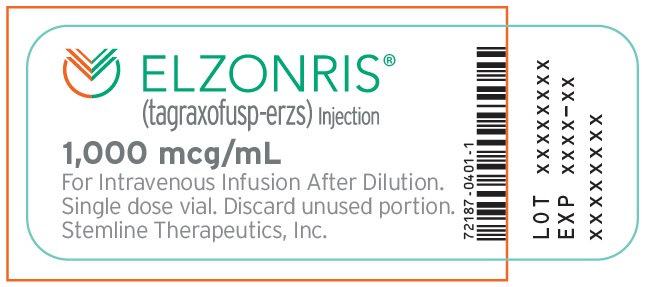
Tagraxofusp — CD123 Interaction [EPC]. INDICATIONS AND USAGE ELZONRIS is indicated for the treatment of blastic plasmacytoid dendritic cell neoplasm (BPDCN) in adults and in pediatric…
Boxed warning
WARNING: CAPILLARY LEAK SYNDROME Capillary Leak Syndrome (CLS) which may be life-threatening or fatal, can occur in patients receiving ELZONRIS. Monitor for signs and symptoms of CLS and take actions as recommended [see Warnings and Precautions ( 5.1 )] . WARNING: CAPILLARY LEAK SYNDROME See full prescribing information for complete boxed warning. Capillary Leak Syndrome (CLS), which may be life-threatening or fatal if not properly managed, can occur in patients receiving ELZONRIS. ( 5.1 )
INDICATIONS AND USAGE ELZONRIS is indicated for the treatment of blastic plasmacytoid dendritic cell neoplasm (BPDCN) in adults and in pediatric patients 2 years and older. ELZONRIS is a CD123-directed cytotoxin indicated for the treatment of blastic plasmacytoid dendritic cell neoplasm (BPDCN) in adults and in pediatric patients 2 years and older ( 1 )
Dosage
DOSAGE AND ADMINISTRATION Premedicate with an H1-histamine antagonist, acetaminophen, corticosteroid and H2-histamine antagonist prior to each ELZONRIS infusion. ( 2.1 ) Administer ELZONRIS intravenously at 12 mcg/kg over 15 minutes once daily on days 1 to 5 of a 21-day cycle. ( 2.1 ) Administer the first cycle of ELZONRIS in the inpatient setting. Subsequent cycles may be administered in the inpatient or appropriate outpatient setting. ( 2.1 ) Additional important preparation and administration information is in full prescribing information. See full prescribing information for instructions on preparation and administration. ( 2.3 , 2.4 ) 2.1 Recommended Dosage Administer ELZONRIS at 12 mcg/kg intravenously over 15 minutes once daily on days 1 to 5 of a 21-day cycle. The dosing period may be extended for dose delays up to day 10 of the cycle. Continue treatment with ELZONRIS until disease progression or unacceptable toxicity. The dose is calculated based on the patient’s actual weight. Prior to the first dose of the first cycle, ensure serum albumin is greater than or equal to 3.2 g/dL before administering ELZONRIS. Premedicate patients with an H1-histamine antagonist (e.g., diphenhydramine hydrochloride), H2-histamine antagonist (e.g., famotidine), corticosteroid (e.g., 50 mg intravenous methylprednisolone or equivalent) and acetaminophen (or paracetamol) approximately 60 minutes prior to each ELZONRIS infusion. Administer Cycle 1 of ELZONRIS in the inpatient setting with patient observation through at least 24 hours after the last infusion. Administer subsequent cycles of ELZONRIS in the inpatient setting or in a suitable outpatient ambulatory care setting that is equipped with appropriate monitoring for patients with hematopoietic malignancies undergoing treatment. Observe patients for a minimum of 4 hours following each infusion. 2.2 Dosage Modifications Monitor vital signs and check albumin, transaminases, and creatinine prior to preparing each dose of ELZONRIS. See Table 1 for recommended dose modifications and Table 2 for CLS management guidelines. Table 1. Recommended ELZONRIS Dosage Modifications Parameter Severity Criteria Dosage Modification Serum albumin Serum albumin < 3.5 g/dL or reduced ≥ 0.5 g/dL from value measured prior to initiation of the current cycle See CLS Management Guidelines ( Table 2 ) Body weight Body weight increase ≥ 1.5 kg over pretreatment weight on prior treatment day See CLS Management Guidelines ( Table 2 ) Aspartate aminotransferase (AST) or alanine aminotransferase (ALT) ALT or AST increase > 5 times the upper limit of normal Withhold ELZONRIS until transaminase elevations are ≤ 2.5 times the upper limit of normal. Serum creatinine Serum creatinine > 1.8 mg/dL (159 micromol/L) or creatinine clearance < 60 mL/minute Withhold ELZONRIS until serum creatinine resolves to ≤ 1.8 mg/dL (159 micromol/L) or creatinine clearance ≥ 60 mL/minute. Systolic blood pressure Systolic blood pressure ≥ 160 mmHg or ≤ 80 mmHg Withhold ELZONRIS until systolic blood pressure is < 160 mmHg or > 80 mmHg. Heart rate Heart rate ≥ 130 bpm or ≤ 40 bpm Withhold ELZONRIS until heart rate is < 130 bpm or > 40 bpm. Body temperature Body temperature ≥ 38°C Withhold ELZONRIS until body temperature is < 38°C. Hypersensitivity reactions Mild or moderate Withhold ELZONRIS until resolution of any mild or moderate hypersensitivity reaction. Resume ELZONRIS at the same infusion rate. Severe or life-threatening Discontinue ELZONRIS permanently. Table 2. CLS Management Guidelines 1 If ELZONRIS dose is held: ELZONRIS administration may resume in the same cycle if all CLS signs/symptoms have resolved and the patient did not require measures to treat hemodynamic instability ELZONRIS administration should be held for the remainder of the cycle if CLS signs/symptoms have not resolved or the patient required measures to treat hemodynamic instability (e.g., required administration of intravenous fluids and/or vasopressors to treat hypotension) (even if resolved), and ELZONRIS administration may only resume in the next cycle if all CLS signs/symptoms have resolved, and the patient is hemodynamically stable. Time of Presentation CLS Sign/Symptom Recommended Action ELZONRIS Dosing Management Prior to first dose of ELZONRIS in cycle 1 Serum albumin < 3.2 g/dL Administer ELZONRIS when serum albumin ≥ 3.2 g/dL. During ELZONRIS dosing Serum albumin < 3.5 g/dL Administer 25g intravenous albumin (q12h or more frequently as practical) until serum albumin is ≥ 3.5 g/dL AND not more than 0.5 g/dL lower than the value measured prior to dosing initiation of the current cycle. Interrupt ELZONRIS dosing until the relevant CLS sign/symptom has resolved 1 . Serum albumin reduced by ≥ 0.5 g/dL from the albumin value measured prior to ELZONRIS dosing initiation of the current cycle A predose body weight that is increased by ≥ 1.5 kg over the previous day’s predose weight Administer 25g intravenous albumin (q12h or more frequently as practical), and manage fluid status as indicated clinically (e.g., generally with intravenous fluids and vasopressors if hypotensive and with diuretics if normotensive or hypertensive), until body weight increase has resolved (i.e. the increase is no longer ≥ 1.5 kg greater than the previous day’s predose weight). Edema, fluid overload and/or hypotension Administer 25g intravenous albumin (q12h, or more frequently as practical) until serum albumin is ≥ 3.5 g/dL. Administer 1 mg/kg of methylprednisolone (or an equivalent) per day, until resolution of CLS sign/symptom or as indicated clinically. Aggressive management of fluid status and hypotension if present, which could include intravenous fluids and/or diuretics or other blood pressure management, until resolution of CLS sign/symptom or as clinically indicated. 2.3 Preparation for Administration Assure the following components required for dose preparation and administration are available prior to thawing ELZONRIS: One infusion syringe pump One empty 10 mL sterile vial 0.9% Sodium Chloride Injection, USP Three 10 mL sterile syringes One 1 mL sterile syringe One mini-bifuse Y-connector Microbore tubing One 0.2 micron polyethersulfone in-line filter Parenteral drug products should be inspected visually for particulate matter and discoloration prior to administration, whenever solution and container permit. Thawed ELZONRIS appearance should be a clear, colorless liquid that may contain a few white to translucent particles. Prior to dose preparation thaw at room temperature, between 15°C and 25°C (59°F and 77°F), for 15 to 30 minutes in original carton, and verify thaw visually. Thawed vials may be held at room temperature for approximately 1 hour prior to dosage preparation. Do not force thaw. Do not refreeze vial once thawed. Use aseptic technique for preparation of the ELZONRIS dose. A 2-step process is required for preparation of the final ELZONRIS dose: - Step 1 - Prepare 10 mL of 100 mcg/mL ELZONRIS - Using a sterile 10 mL syringe, transfer 9 mL of 0.9% Sodium Chloride Injection, USP to an empty sterile 10 mL vial. - Gently swirl the ELZONRIS vial to mix the contents, remove the cap, and using a sterile 1 mL syringe, withdraw 1 mL of thawed ELZONRIS from the product vial. - Transfer the 1 mL of ELZONRIS into the 10 mL vial containing the 0.9% Sodium Chloride Injection, USP. Gently invert the vial at least 3 times to mix the contents. Do not shake vigorously. - Following dilution the final concentration of ELZONRIS is 100 mcg/mL. - Step 2 – Prepare the ELZONRIS infusion set. - Calculate the required volume of diluted ELZONRIS (100 mcg/mL) according to patient’s weight. - Draw up the required volume into a new syringe (if more than 10 mL of diluted ELZONRIS (100 mcg/mL) is required for the calculated patient dose, repeat step 1 with a second vial of ELZONRIS). Label the ELZONRIS syringe. - Prepare a separate syringe with at least 3 mL of 0.9% Sodium Chloride Injection, USP to be used to flush the ad
Warnings
WARNINGS AND PRECAUTIONS Hypersensitivity: Monitor patients for signs/symptoms and treat appropriately. ( 5.2 ) Hepatotoxicity: Monitor ALT and AST. Interrupt ELZONRIS if the transaminases rise to greater than 5 times the upper limit of normal. ( 5.3 ) 5.1 Capillary Leak Syndrome Capillary leak syndrome (CLS), including life-threatening and fatal cases, has been reported among patients treated with ELZONRIS. In patients receiving ELZONRIS in clinical trials, the overall incidence of CLS was 53% (65/122), including Grade 1 or 2 in 43% (52/122) of patients, Grade 3 in 7% (8/122) of patients, Grade 4 in 1% (1/122) of patients, and four fatalities (3%) [see Adverse Reactions (6.1) ] . The median time to onset was 4 days (range - 1 to 46 days), and all but 5 patients experienced an event in Cycle 1. Before initiating therapy with ELZONRIS, ensure that the patient has adequate cardiac function and serum albumin is greater than or equal to 3.2 g/dL. During treatment with ELZONRIS, monitor serum albumin levels prior to the initiation of each dose of ELZONRIS and as indicated clinically thereafter, and assess patients for other signs or symptoms of CLS, including weight gain, new onset or worsening edema, including pulmonary edema, hypotension or hemodynamic instability [see Dosage and Administration (2.2) ]. 5.2 Hypersensitivity Reactions ELZONRIS can cause severe hypersensitivity reactions. In patients receiving ELZONRIS in clinical trials, hypersensitivity reactions were reported in 43% (53/122) of patients treated with ELZONRIS and were Grade ≥ 3 in 7% (9/122) [see Adverse Reactions (6.1) ] . Manifestations of hypersensitivity reported in ≥ 5% of patients include rash, pruritus, and stomatitis. Monitor patients for hypersensitivity reactions during treatment with ELZONRIS. Interrupt ELZONRIS infusion and provide supportive care as needed if a hypersensitivity reaction should occur [see Dosage and Administration (2.2) ] . 5.3 Hepatotoxicity Treatment with ELZONRIS was associated with elevations in liver enzymes. In patients receiving ELZONRIS in clinical trials, elevations in ALT occurred in 79% (96/122) and elevations in AST occurred in 76% (93/122) [see Adverse Reactions (6.1) ] . Grade 3 ALT elevations were reported in 26% (32/122) of patients. Grade 3 AST elevations were reported in 30% (36/122) and Grade 4 AST elevations were reported in 3% (4/122) of patients. Elevated liver enzymes occurred in the majority of patients in Cycle 1 and were reversible following dose interruption. Monitor alanine aminotransferase (ALT) and aspartate aminotransferase (AST) prior to each infusion with ELZONRIS. Withhold ELZONRIS temporarily if the transaminases rise to greater than 5 times the upper limit of normal and resume treatment upon normalization or when resolved [see Dosage and Administration (2.2) ] .
Contraindications
CONTRAINDICATIONS None. None ( 4 )
Adverse reactions
ADVERSE REACTIONS The following serious adverse drug reactions are described elsewhere in the labeling: Capillary Leak Syndrome [see Warnings and Precautions ( 5.1 ) ] Hypersensitivity Reactions [see Warnings and Precautions ( 5.2 ) ] Hepatotoxicity [see Warnings and Precautions ( 5.3 ) ] Most common adverse reactions (incidence ≥ 30%) are capillary leak syndrome, nausea, fatigue, pyrexia, peripheral edema, and weight increase. Most common laboratory abnormalities (incidence ≥ 50%) are decreases in albumin, platelets, hemoglobin, calcium, and sodium, and increases in glucose, ALT and AST. ( 6.1 ) To report SUSPECTED ADVERSE REACTIONS, contact Stemline Therapeutics, Inc. at 1-877-332-7961 or FDA at 1-800-FDA-1088 or www.fda.gov/medwatch . 6.1 Clinical Trials Experience Because clinical trials are conducted under widely varying conditions, adverse reaction rates observed in the clinical trials of a drug cannot be directly compared to rates in the clinical trials of another drug and may not reflect the rates observed in practice. Safety of ELZONRIS was assessed in a single-arm clinical trial that included 122 adults with newly diagnosed or relapsed/refractory myeloid malignancies, including 86 with BPDCN, treated with ELZONRIS 12 mcg/kg daily for 5 days of a 21-day cycle. The overall median number of cycles started was 2.5 (range, 1-76), and 4 in patients with BPDCN (range, 1-76). Four (3%) patients (4/122) had fatal adverse reactions, all of which were related to capillary leak syndrome. Overall, 8% (10/122) of patients discontinued treatment with ELZONRIS due to an adverse reaction; the most common adverse reactions resulting in treatment discontinuation were hepatic toxicities, hypoalbuminemia and CLS (2% each). Table 3 summarizes the common (≥ 10%) adverse reactions with ELZONRIS in patients with myeloid malignancies. The rate of any given adverse reaction or lab abnormality was derived from all the reported events of that type. Table 3. Adverse Reactions in ≥ 10% of Patients Receiving 12 mcg/kg of ELZONRIS 1 Capillary leak syndrome defined as any event reported as CLS during treatment with ELZONRIS or the occurrence of at least 2 of the following CLS manifestations within 7 days of each other: hypoalbuminemia (including albumin value less than 3.0 g/dL), edema (including weight increase of 5 kg or more), hypotension (including systolic blood pressure less than 90 mmHg). N=122 All Grades % Grade ≥ 3 % Vascular disorders Capillary leak syndrome 1 53 11 Hypotension 25 7 Hypertension 14 6 General disorders and administration site conditions Fatigue 45 7 Pyrexia 43 0 Peripheral edema 39 1 Chills 26 1 Gastrointestinal disorders Nausea 45 0 Constipation 24 0 Diarrhea 21 0 Vomiting 19 0 Investigations Weight increase 31 0 Nervous system disorders Headache 28 0 Dizziness 21 0 Metabolism and nutrition disorders Decreased appetite 22 0 Respiratory, thoracic and mediastinal disorders Dyspnea 20 3 Epistaxis 12 1 Cough 12 0 Blood and lymphatic system disorders Febrile neutropenia 19 16 Musculoskeletal and connective tissue disorders Back pain 19 2 Pain in extremity 10 2 Cardiac disorders Tachycardia 17 0 Psychiatric disorders Insomnia 16 0 Anxiety 15 0 Skin and subcutaneous tissue disorders Pruritus 10 0 Clinically relevant adverse reactions occurring in less than 10% of patients treated with ELZONRIS included tumor lysis syndrome. Table 4 summarizes the clinically important laboratory abnormalities that occurred in ≥ 10% patients with myeloid malignancies treated with ELZONRIS. Table 4. Selected Laboratory Abnormalities in Patients Receiving 12 mcg/kg of ELZONRIS Treatment-Emergent Laboratory Abnormalities All Grades % Grade ≥ 3 % Hematology Platelets decrease 68 49 Hemoglobin decrease 61 30 Neutrophils decrease 38 29 Chemistry Glucose increase 89 21 ALT increase 79 26 AST increase 76 33 Albumin decrease 72 1 Calcium decrease 57 2 Sodium decrease 52 9 Potassium decrease 36 6 Phosphate decrease 32 10 Creatinine increase 26 0 Magnesium decrease 25 0 Alkaline phosphatase increase 22 1 Potassium increase 20 3 Magnesium increase 13 4 Bilirubin increase 11 0 Glucose decrease 10 0
Mechanism of action
Mechanism of Action Tagraxofusp-erzs is a CD123-directed cytotoxin composed of recombinant human interleukin-3 (IL-3) and truncated diphtheria toxin (DT) fusion protein that inhibits protein synthesis and causes cell death in CD123-expressing cells. 12.2 Pharmacodynamics The exposure-response relationships and the time course of pharmacodynamic response for ELZONRIS have not been fully characterized. 12.6 Immunogenicity The detection of antibody formation is highly dependent on the sensitivity and specificity of the assay. Additionally, the observed incidence of antibody (including neutralizing antibody) positivity in an assay may be influenced by several factors including assay methodology, sample handling, timing of sample collection, concomitant medications, and underlying disease. For these reasons, comparison of the incidence of antibodies to ELZONRIS with the incidences of antibodies to other products may be misleading. Immune response to ELZONRIS was evaluated by assessment of serum binding reactivity against ELZONRIS (anti-drug antibodies; ADA) and neutralizing antibodies by inhibition of functional activity. Immune response to ELZONRIS was assessed using two immunoassays. The first assay detected reactivity directed against ELZONRIS (ADA), and the second assay detected reactivity against the interleukin-3 (IL-3) portion of ELZONRIS. Two cell-based assays were used to investigate the presence of neutralizing antibodies by inhibition of a cell-based functional activity. In 130 patients treated with ELZONRIS in 4 clinical trials: 96% (115/120) of patients evaluable for the presence of pre-existing ADA at baseline before treatment were confirmed positive with 21% being positive for the presence of neutralizing antibodies. The high prevalence of ADA at baseline was anticipated due to diphtheria immunization. 99% (107/108) of patients evaluable for treatment-emergent ADA tested positive with most patients showing an increase in ADA titer by the end of Cycle 2 of ELZONRIS. 85% (86/101) of ADA-positive patients evaluable for the presence of neutralizing antibodies were neutralizing antibody-positive. 68% (73/108) of patients evaluable for treatment-emergent anti-IL-3 antibodies tested positive with most patients testing positive by Cycle 3 of ELZONRIS. Anti-Product Antibody Effects on Pharmacokinetics The presence of ADA had a clinically significant effect on the pharmacokinetics of tagraxofusp-erzs. Pharmacokinetic data obtained following doses given in Cycle 3 showed increased titers of anti-drug antibodies and reduced free ELZONRIS concentration in most plasma samples. Following administration of tagraxofusp-erzs 12 mcg/kg via 15-minute infusion in patients with pre-existing anti-drug antibodies, the mean (SD) volume of distribution of tagraxofusp-erzs is 21.2 (25.4) L, clearance is 13.9 (19.4) L/hr, AUC is 151 (89.2) hr·mcg/L and Cmax is 80.0 (82.2) mcg/L.
A drug lookup is just the start. Eleplan keeps the whole care plan in one place.
Medications, diagnoses, documents, appointments, and the whole care team — organized and always in sync, with Ellie, your AI care assistant, on top of it. Free to start.