Solifenacin
Managing this medication for someone you care for? Eleplan keeps diagnoses, medications and appointments in one plan.
Start free with EleplanMedication reference
Solifenacin
ORAL
Solifenacin. INDICATIONS AND USAGE Solifenacin succinate tablets are indicated for the treatment of adults with overactive bladder with symptoms of urge urinary…
Boxed warning
BOXED WARNING
Brand names
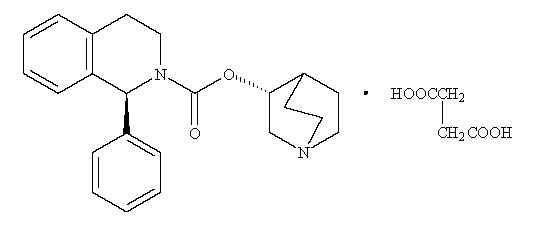
solifenacin succinateSolifenacin succinateSolifenacin SuccinateSOLIFENACIN SUCCINATEVESIcare
Active ingredients
SOLIFENACIN SUCCINATE
Indications
INDICATIONS AND USAGE Solifenacin succinate tablets are indicated for the treatment of adults with overactive bladder with symptoms of urge urinary incontinence, urgency, and urinary frequency. Solifenacin succinate tablets are a muscarinic antagonist indicated for the treatment of adults with overactive bladder with symptoms of urge urinary incontinence, urgency, and urinary frequency ( 1 ).
Dosage
DOSAGE AND ADMINISTRATION 5 mg tablet taken once daily, and if well tolerated may be increased to 10 mg once daily (2.1). Do not exceed 5 mg tablet once daily in patients with: severe renal impairment [Creatinine Clearance] (CL cr <30 mL/min) (2.2). moderate hepatic impairment (Child-Pugh B) (2.3). concomitant use of potent CYP3A4 inhibitors (2.4). Use of solifenacin succinate tablet is not recommended in patients with severe hepatic impairment (Child-Pugh C) (2.3). 2.1 Dosing Information The recommended dose of solifenacin succinate tablet is 5 mg once daily. If the 5 mg dose is well tolerated, the dose may be increased to 10 mg once daily. Solifenacin succinate tablets should be taken with water and swallowed whole. Solifenacin succinate tablets can be administered with or without food. 2.2 Dose Adjustment in Patients with Renal Impairment For patients with severe renal impairment (CL cr <30 mL/min), a daily dose of solifenacin succinate tablets greater than 5 mg is not recommended [see Warnings and Precautions (5.7) and Use in Specific Populations (8.6)] . 2.3 Dose Adjustment in Patients with Hepatic Impairment For patients with moderate hepatic impairment (Child-Pugh B), a daily dose of solifenacin succinate tablets greater than 5 mg is not recommended. Use of solifenacin succinate tablets in patients with severe hepatic impairment (Child-Pugh C) is not recommended [see Warnings and Precautions (5.6) and Use in Specific Populations (8.7)] . 2.4 Dose Adjustment in Patients Taking CYP3A4 Inhibitors When administered with potent CYP3A4 inhibitors such as ketoconazole, a daily dose of solifenacin succinate tablets greater than 5 mg is not recommended [see Drug Interactions (7.1)] .
Warnings
WARNINGS AND PRECAUTIONS • Angioedema and Anaphylactic Reactions : Promptly discontinue Solifenacin Succinate Tablets and provide appropriate therapy. ( 5.1 ) • Urinary Retention : Solifenacin Succinate Tablets are not recommended for use in patients with clinically significant bladder outlet obstruction. ( 5.2 ) • Gastrointestinal Disorders : Solifenacin Succinate Tablets are not recommended for use in patients with decreased gastrointestinal motility. ( 5.3 ) • Central Nervous System Effects : Somnolence has been reported with Solifenacin Succinate Tablets. Advise patients not to drive or operate heavy machinery until they know how Solifenacin Succinate Tablets affect them. ( 5.4 ) • Controlled Narrow-Angle Glaucoma : Use Solifenacin Succinate Tablets with caution in patients being treated for narrow-angle glaucoma. ( 5.5 ) • QT Prolongation in Patients at High Risk of QT Prolongation : Solifenacin Succinate Tablets are not recommended for use in patients at high risk of QT prolongation, including patients with a known history of QT prolongation and patients taking medications known to prolong the QT interval. ( 5.6 ) 5.1 Angioedema and Anaphylactic Reactions Angioedema of the face, lips, tongue, and/or larynx have been reported with solifenacin succinate. In some cases, angioedema occurred after the first dose, however, cases have been reported to occur hours after the first dose or after multiple doses. Anaphylactic reactions have also been reported in patients treated with solifenacin succinate. Angioedema associated with upper airway swelling and anaphylactic reactions may be life-threatening. Solifenacin Succinate Tablets are contraindicated in patients with a known or suspected hypersensitivity to solifenacin succinate [see Contraindications ( 4 )] . If involvement of the tongue, hypopharynx, or larynx occurs, promptly discontinue Solifenacin Succinate Tablets and provide appropriate therapy and/or measures necessary to ensure a patent airway. 5.2 Urinary Retention The use of Solifenacin Succinate Tablets, like other antimuscarinic drugs, in patients with clinically significant bladder outlet obstruction including patients with urinary retention, may result in further urinary retention and kidney injury. The use of Solifenacin Succinate Tablets is not recommended in patients with clinically significant bladder outlet obstruction and is contraindicated in patients with urinary retention [see Contraindications ( 4 )] . 5.3 Gastrointestinal Disorders The use of Solifenacin Succinate Tablets, like other antimuscarinic drugs, in patients with conditions associated with decreased gastrointestinal motility may result in further decreased gastrointestinal motility. Solifenacin Succinate Tablets are contraindicated in patients with gastric retention [see Contraindications ( 4 )] . The use of Solifenacin Succinate Tablets is not recommended in patients with conditions associated with decreased gastrointestinal motility. 5.4 Central Nervous System Effects Solifenacin Succinate Tablets are associated with antimuscarinic central nervous system (CNS) adverse reactions [see Adverse Reactions ( 6.2 )] . A variety of CNS antimuscarinic adverse reactions have been reported, including headache, confusion, hallucinations, and somnolence. Monitor patients for signs of antimuscarinic CNS adverse reactions, particularly after beginning treatment or increasing the dose. Advise patients not to drive or operate heavy machinery until they know how Solifenacin Succinate Tablets affect them. If a patient experiences antimuscarinic CNS adverse reactions, consider dose reduction or drug discontinuation. 5.5 Controlled Narrow-Angle Glaucoma Solifenacin Succinate Tablets should be used with caution in patients being treated for narrow-angle glaucoma [see Contraindications ( 4 )] . 5.6 QT Prolongation in Patients at High Risk of QT Prolongation In a study of the effect of solifenacin succinate on the QT interval conducted in 76 healthy women [see Clinical Pharmacology ( 12.2 )] , solifenacin succinate 30 mg (three times the largest maximum recommended dose in adult patients) was associated with a mean increase in the Fridericia-corrected QT interval of 8 msec (90% CI, 4, 13). The QT prolonging effect appeared less with solifenacin succinate 10 mg than with solifenacin succinate 30 mg, and the effect of solifenacin succinate 30 mg did not appear as large as that of the positive control moxifloxacin at its therapeutic dose. The use of Solifenacin Succinate Tablets is not recommended in patients at high risk of QT prolongation, including patients with a known history of QT prolongation and patients who are taking medications known to prolong the QT interval.
Contraindications
CONTRAINDICATIONS Solifenacin succinate tablets are contraindicated in patients: • With urinary retention [ see Warnings and Precautions ( 5.2 ) ], • With gastric retention [ see Warnings and Precautions ( 5.3 ) ], • With uncontrolled narrow-angle glaucoma [ see Warnings and Precautions ( 5.5 ) ], and • Who have demonstrated hypersensitivity to solifenacin succinate or the inactive ingredients in solifenacin succinate tablets. Reported adverse reactions have included anaphylaxis and angioedema [ see Adverse Reactions ( 6.2 ) ]. • Urinary retention ( 4 , 5.2 ). • Gastric retention ( 4 , 5.3 ). • Uncontrolled narrow-angle glaucoma ( 4 , 5.5 ). • Hypersensitivity to this product or any of its components ( 4 , 5.1 , 6.2 ).
Drug interactions
DRUG INTERACTIONS Inhibitors of CYP3A4 may increase the concentration of solifenacin succinate tablets (7.1). Inducers of CYP3A4 may decrease the concentration of solifenacin succinate tablets (7.2). 7.1 Potent CYP3A4 Inhibitors Following the administration of 10 mg of solifenacin succinate tablets in the presence of 400 mg of ketoconazole, a potent inhibitor of CYP3A4, the mean C max and AUC of solifenacin increased by 1.5 and 2.7-fold, respectively. Therefore, it is recommended not to exceed a 5 mg daily dose of solifenacin succinate tablets when administered with therapeutic doses of ketoconazole or other potent CYP3A4 inhibitors [see Dosage and Administration (2.4) and Clinical Pharmacology (12.3)]. The effects of weak or moderate CYP3A4 inhibitors were not examined. 7.2 CYP3A4 Inducers There were no in vivo studies conducted to evaluate the effect of CYP3A4 inducers on solifenacin succinate tablets. In vitro drug metabolism studies have shown that solifenacin is a substrate of CYP3A4. Therefore, inducers of CYP3A4 may decrease the concentration of solifenacin. 7.3 Drugs Metabolized by Cytochrome P450 At therapeutic concentrations, solifenacin does not inhibit CYP1A1/2, 2C9, 2C19, 2D6, or 3A4 derived from human liver microsomes. 7.4 Warfarin Solifenacin has no significant effect on the pharmacokinetics of R -warfarin or S -warfarin [see Clinical Pharmacology (12.3)]. 7.5 Oral Contraceptives In the presence of solifenacin there are no significant changes in the plasma concentrations of combined oral contraceptives (ethinyl estradiol/levonorgestrel) [see Clinical Pharmacology (12.3)]. 7.6 Digoxin Solifenacin had no significant effect on the pharmacokinetics of digoxin (0.125 mg/day) in healthy subjects [see Clinical Pharmacology (12.3)].
Adverse reactions
ADVERSE REACTIONS The most common adverse reactions (> 4% in solifenacin succinate-treated patients and > placebo-treated patients) were dry mouth and constipation at both 5 mg and 10 mg doses; and urinary tract infection, and blurred vision at the 10 mg dose. ( 6.1 ) To report SUSPECTED ADVERSE REACTIONS, contact Ajanta Pharma USA Inc. at 855-664-7744 or FDA at 1-800-FDA-1088 or www.fda.gov/medwatch . 6.1 Clinical Trials Experience Because clinical trials are conducted under widely varying conditions, adverse reaction rates observed in the clinical trials of a drug cannot be directly compared to rates in the clinical trials of another drug and may not reflect the rates observed in practice. Solifenacin succinate tablets have been evaluated for safety in 1,811 adult patients in four randomized, placebo-controlled trials (Studies 1-4) [see Clinical Studies ( 14 )] . Expected adverse reactions of antimuscarinic agents are dry mouth, constipation, blurred vision (accommodation abnormalities), urinary retention, and dry eyes. The incidence of dry mouth and constipation in patients treated with solifenacin succinate tablets was higher in the 10 mg dose group compared to the 5 mg dose group. In the four 12-week double-blind clinical trials, severe fecal impaction, colonic obstruction, and intestinal obstruction were reported in one patient each, all in the solifenacin succinate tablets 10 mg group. Angioneurotic edema was reported in one patient taking solifenacin succinate tablets 5 mg. Compared to 12 weeks of treatment with solifenacin succinate tablets, the incidence and severity of adverse reactions were similar in patients who remained on drug for up to 12 months in Study 5 [see Clinical Studies ( 14 )] . The most frequent adverse reaction leading to study discontinuation was dry mouth (1.5%). Table 1 lists the rates of identified adverse reactions, in the four randomized, placebo-controlled trials at an incidence greater than placebo and in 1% or more of patients treated with solifenacin succinate tablets 5 mg or 10 mg once daily for up to 12 weeks. Table 1: Adverse Reactions Reported by ≥ 1% of Patients and Exceeding Placebo in Studies 1, 2, 3 and 4 Placebo (%) Solifenacin succinate tablets 5 mg (%) Solifenacin succinate tablets 10 mg (%) Number of Patients 1,216 578 1,233 GASTROINTESTINAL DISORDERS Dry Mouth 4.2 10.9 27.6 Constipation 2.9 5.4 13.4 Nausea 2.0 1.7 3.3 Dyspepsia 1.0 1.4 3.9 Abdominal Pain Upper 1.0 1.9 1.2 Vomiting NOS 0.9 0.2 1.1 INFECTIONS AND INFESTATIONS Urinary Tract Infection NOS 2.8 2.8 4.8 Influenza 1.3 2.2 0.9 Pharyngitis NOS 1.0 0.3 1.1 NERVOUS SYSTEM DISORDERS Dizziness 1.8 1.9 1.8 EYE DISORDERS Vision Blurred 1.8 3.8 4.8 Dry Eyes NOS 0.6 0.3 1.6 RENAL AND URINARY DISORDERS Urinary Retention 0.6 0 1.4 GENERAL DISORDERS AND ADMINISTRATION SITE CONDITIONS Edema Lower Limb 0.7 0.3 1.1 Fatigue 1.1 1.0 2.1 PSYCHIATRIC DISORDERS Depression NOS 0.8 1.2 0.8 RESPIRATORY, THORACIC AND MEDIASTINAL DISORDERS Cough 0.2 0.2 1.1 VASCULAR DISORDERS Hypertension NOS 0.6 1.4 0.5 6.2 Postmarketing Experience The following adverse reactions have been identified during post-approval use of solifenacin succinate in the U.S. and/or outside of the U.S. Because these reactions are reported voluntarily from a population of uncertain size, it is not always possible to reliably estimate their frequency or establish a causal relationship to drug exposure. General disorders and administration site conditions: peripheral edema, hypersensitivity reactions (including angioedema with airway obstruction, rash, pruritus, urticaria, anaphylactic reaction); Nervous system disorders : dizziness, headache, confusion, hallucinations, delirium, somnolence; Cardiac disorders : QT prolongation, Torsade de Pointes, atrial fibrillation, tachycardia, palpitations; Hepatobiliary disorders : liver disorders mostly characterized by abnormal liver function tests, AST (aspartate aminotransferase), ALT (alanine aminotransferase), GGT (gamma-glutamyl transferase); Renal and urinary disorders : renal impairment, urinary retention; Metabolism and nutrition disorders : decreased appetite, hyperkalemia; Skin and subcutaneous tissue disorders : exfoliative dermatitis, erythema multiforme, dry skin; Eye disorders : glaucoma; Gastrointestinal disorders : gastroesophageal reflux disease, ileus, vomiting, abdominal pain, dysgeusia, sialadenitis; Respiratory, thoracic and mediastinal disorders: dysphonia, nasal dryness; Musculoskeletal and connective tissue disorders : muscular weakness
Mechanism of action
Mechanism of Action Solifenacin is a competitive muscarinic receptor antagonist. Muscarinic receptors play an important role in several major cholinergically mediated functions, including contractions of urinary bladder smooth muscle and stimulation of salivary secretion.
Available forms (6)
NDC examples
68462-38668462-3870591-37950591-379682804-26660505-470260505-470363629-887063629-886772162-184862332-19262332-193
Indicated ICD-10 codes
Treats these conditions
Source: openFDA + RxNorm · 2026
Look up another medication