Risedronate
Managing this medication for someone you care for? Eleplan keeps diagnoses, medications and appointments in one plan.
Start free with EleplanMedication reference
Risedronate
ORAL
Risedronate. INDICATIONS AND USAGE Risedronate sodium tablets, USP are a bisphosphonate indicated for: Treatment and prevention of postmenopausal osteoporosis (…
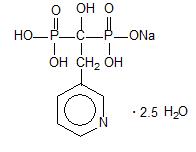
Brand names
RISEDRONATE SODIUMActonelRisedronate Sodium
Active ingredients
RISEDRONATE SODIUMRISEDRONATE SODIUM HEMIPENTAHYDRATERISEDRONATE SODIUM MONOHYDRATE
Indications
INDICATIONS AND USAGE Risedronate sodium tablets, USP are a bisphosphonate indicated for: Treatment and prevention of postmenopausal osteoporosis ( 1.1 ) Treatment to increase bone mass in men with osteoporosis ( 1.2 ) • Treatment and prevention of glucocorticoid-induced osteoporosis ( 1.3 ) • Treatment of Paget's disease ( 1.4 ) Limitations of Use Optimal duration of use has not been determined. For patients at low-risk for fracture, consider drug discontinuation after 3 to 5 years of use. ( 1.5 ) 1.1 Postmenopausal Osteoporosis Risedronate sodium tablets, USP are indicated for the treatment and prevention of osteoporosis in postmenopausal women. In postmenopausal women with osteoporosis, risedronate sodium tablets, USP reduce the incidence of vertebral fractures and a composite endpoint of nonvertebral osteoporosis-related fractures [ see Clinical Studies ( 14.1 , 14.2 ) ]. 1.2 Osteoporosis in Men Risedronate sodium tablets, USP are indicated for treatment to increase bone mass in men with osteoporosis. 1.3 Glucocorticoid-Induced Osteoporosis Risedronate sodium tablets, USP are indicated for the treatment and prevention of glucocorticoid-induced osteoporosis in men and women who are either initiating or continuing systemic glucocorticoid treatment (daily dosage of greater than or equal to 7.5 mg of prednisone or equivalent) for chronic diseases. Patients treated with glucocorticoids should receive adequate amounts of calcium and vitamin D. 1.4 Paget's Disease Risedronate sodium tablets, USP are indicated for treatment of Paget’s disease of bone in men and women. 1.5 Important Limitations of Use The optimal duration of use has not been determined. The safety and effectiveness of risedronate sodium tablets, USP for the treatment of osteoporosis are based on clinical data of three years duration. All patients on bisphosphonate therapy should have the need for continued therapy re-evaluated on a periodic basis. Patients at low-risk for fracture should be considered for drug discontinuation after 3 to 5 years of use. Patients who discontinue therapy should have their risk for fracture re-evaluated periodically.
Dosage
DOSAGE AND ADMINISTRATION Treatment of Postmenopausal Osteoporosis: 5 mg daily, 35 mg once-a-week, 75 mg two consecutive days each month, 150 mg once-a-month ( 2.1 ) Prevention of Postmenopausal Osteoporosis: 5 mg daily, 35 mg once-a-week ( 2.2 ) Men with Osteoporosis: 35 mg once-a-week ( 2.3 ) Glucocorticoid-Induced Osteoporosis: 5 mg daily ( 2.4 ) Paget's Disease: 30 mg daily for 2 months ( 2.5 ) Instruct patients to: • Swallow tablet whole with 6 to 8 ounces of plain water, at least 30 minutes before the first food, beverage, or medication of the day. • Avoid lying down for 30 minutes ( 2 ) • Take supplemental calcium and vitamin D if dietary intake is inadequate ( 2.7 ) 2.1 Treatment of Postmenopausal Osteoporosis [see Indications and Usage (1.1)] The recommended regimen is: • one 5 mg tablet orally, taken daily or • one 35 mg tablet orally, taken once-a-week or • one 75 mg tablet orally, taken on two consecutive days for a total of two tablets each month or • one 150 mg tablet orally, taken once-a-month 2.2 Prevention of Postmenopausal Osteoporosis [see Indications and Usage (1.1)] The recommended regimen is: • one 5 mg tablet orally, taken daily or • one 35 mg tablet orally, taken once-a-week or • alternatively, one 75 mg tablet orally, taken on two consecutive days for a total of two tablets each month may be considered or • alternatively, one 150 mg tablet orally, taken once-a-month may be considered 2.3 Treatment to Increase Bone Mass in Men with Osteoporosis [see Indications and Usage (1.2)] The recommended regimen is: • one 35 mg tablet orally, taken once-a-week 2.4 Treatment and Prevention of Glucocorticoid-Induced Osteoporosis [see Indications and Usage (1.3)] The recommended regimen is: • one 5 mg tablet orally, taken daily 2.5 Treatment of Paget's Disease [see Indications and Usage (1.4)] The recommended treatment regimen is 30 mg orally once daily for 2 months. Retreatment may be considered (following post-treatment observation of at least 2 months) if relapse occurs, or if treatment fails to normalize serum alkaline phosphatase. For retreatment, the dose and duration of therapy are the same as for initial treatment. No data are available on more than 1 course of retreatment. 2.6 Important Administration Instructions Instruct patients to do the following: • Take risedronate sodium tablets at least 30 minutes before the first food or drink of the day other than water, and before taking any oral medication or supplementation, including calcium, antacids, or vitamins to maximize absorption and clinical benefit, [ see Drug Interactions ( 7.1 ) ]. Avoid the use of water with supplements, including mineral water, because they may have a higher concentration of calcium. • Swallow risedronate sodium tablets whole with a full glass of plain water (6 to 8 ounces). Avoid lying down for 30 minutes after taking the medication [ see Warnings and Precautions ( 5.1 ) ]. Do not chew or suck the tablet because of a potential for oropharyngeal ulceration. • Do not eat or drink anything except plain water, or take other medications for at least 30 minutes after taking risedronate sodium tablets. 2.7 Recommendations for Calcium and Vitamin D Supplementation Instruct patients to take supplemental calcium and vitamin D if their dietary intake is inadequate; and to take calcium supplements, antacids, magnesium-based supplements or laxatives, and iron preparations at a different time of the day as they interfere with the absorption of risedronate sodium tablets. 2.8 Administration Instructions for Missed Doses Instruct patients about missing risedronate sodium tablet doses as follows: • If a dose of risedronate sodium tablet 35 mg once-a-week is missed: o Take 1 tablet on the morning after they remember and return to taking 1 tablet once-a-‑week, as originally scheduled on their chosen day. o Do not take 2 tablets on the same day. • If one or both tablets of risedronate sodium tablets 75 mg on two consecutive days per month are missed, and the next month’s scheduled doses are more than 7 days away: o If both tablets are missed, take one risedronate sodium 75 mg tablet in the morning after the day it is remembered and then the other tablet on the next consecutive morning. o If only one risedronate sodium 75 mg tablet is missed, take the missed tablet in the morning after the day it is remembered o Return to taking their risedronate sodium 75 mg tablets on two consecutive days per month as originally scheduled. o Do not take more than two 75 mg tablets within 7 days. • If one or both tablets of risedronate sodium 75 mg tablets on two consecutive days per month are missed, and the next month's scheduled doses are within 7 days: o Wait until their next month’s scheduled doses and then continue taking risedronate sodium 75 mg tablets on two consecutive days per month as originally scheduled. • If the dose of risedronate sodium tablets 150 mg once-a-month is missed, and the next month’s scheduled dose is more than 7 days away: o Take the missed tablet in the morning after the day it is remembered and then return to taking their risedronate sodium tablet 150 mg once-a-month as originally scheduled. o Do not take more than one 150 mg tablet within 7 days. • If the dose of risedronate sodium 150 mg tablet once-a-month is missed, and the next month's scheduled dose is within 7 days: o Wait until their next month’s scheduled dose and then continue taking risedronate sodium 150 mg tablets once-a-month as originally scheduled.
Warnings
WARNINGS AND PRECAUTIONS • Products Containing Same Active Ingredient: Patients receiving Atelvia should not be treated with risedronate sodium tablets ( 5.1 ) • Upper Gastrointestinal Adverse Reactions can occur. Instruct patients to follow dosing instructions. Discontinue use if new or worsening symptoms occur ( 5.2 ) • Hypocalcemia may worsen and must be corrected prior to use ( 5.3 ) • Osteonecrosis of the Jaw has been reported ( 5.4 ) • Severe Bone, Joint, Muscle Pain may occur. Discontinue use if severe symptoms develop ( 5.5 , 6.2 ) • Atypical Fractures Including Femoral Fractures have been reported. Patients with new thigh or groin pain should be evaluated to rule out a femoral fracture. Risk/benefit of continuing bisphosphonate therapy should be re-evaluated in these patients and interruption of bisphosphonate therapy should be considered ( 5.6 ) 5.1 Drug Products with the Same Active Ingredient Risedronate sodium tablet contains the same active ingredient found in Atelvia ® . A patient being treated with Atelvia should not receive risedronate sodium tablets. 5.2 Upper Gastrointestinal Adverse Reactions Risedronate sodium, like other bisphosphonates administered orally, may cause local irritation of the upper gastrointestinal mucosa. Because of these possible irritant effects and a potential for worsening of the underlying disease, caution should be used when risedronate sodium is given to patients with active upper gastrointestinal problems (such as known Barrett’s esophagus, dysphagia, other esophageal diseases, gastritis, duodenitis or ulcers) [ see Contraindications ( 4 ), Adverse Reactions ( 6.1 ), Information for Patients ( 17.1 ) ]. Esophageal adverse experiences, such as esophagitis, esophageal ulcers and esophageal erosions, occasionally with bleeding and rarely followed by esophageal stricture or perforation, have been reported in patients receiving treatment with oral bisphosphonates. In some cases, these have been severe and required hospitalization. Physicians should therefore be alert to any signs or symptoms signaling a possible esophageal reaction and patients should be instructed to discontinue risedronate sodium and seek medical attention if they develop dysphagia, odynophagia, retrosternal pain or new or worsening heartburn. The risk of severe esophageal adverse experiences appears to be greater in patients who lie down after taking oral bisphosphonates and/or who fail to swallow it with the recommended full glass (6 to 8 ounces) of water, and/or who continue to take oral bisphosphonates after developing symptoms suggestive of esophageal irritation. Therefore, it is very important that the full dosing instructions are provided to, and understood by, the patient [ see Dosage and Administration ( 2 ) ]. In patients who cannot comply with dosing instructions due to mental disability, therapy with risedronate sodium should be used under appropriate supervision. There have been post-marketing reports of gastric and duodenal ulcers with oral bisphosphonate use, some severe and with complications, although no increased risk was observed in controlled clinical trials. 5.3 Mineral Metabolism Hypocalcemia has been reported in patients taking risedronate sodium. Treat hypocalcemia and other disturbances of bone and mineral metabolism before starting risedronate sodium therapy. Instruct patients to take supplemental calcium and vitamin D if their dietary intake is inadequate. Adequate intake of calcium and vitamin D is important in all patients, especially in patients with Paget’s disease in whom bone turnover is significantly elevated [ see Contraindications ( 4 ), Adverse Reactions ( 6.1 ), Information for Patients ( 17 ) ]. 5.4 Jaw Osteonecrosis Osteonecrosis of the jaw (ONJ), which can occur spontaneously, is generally associated with tooth extraction and/or local infection with delayed healing, and has been reported in patients taking bisphosphonates, including risedronate sodium. Known risk factors for osteonecrosis of the jaw include invasive dental procedures (for example, tooth extraction, dental implants, boney surgery), diagnosis of cancer, concomitant therapies (for example, chemotherapy, corticosteroids, angiogenesis inhibitors), poor oral hygiene, and co-morbid disorders (for example, periodontal and/or other pre-existing dental disease, anemia, coagulopathy, infection, ill-fitting dentures). The risk of ONJ may increase with duration of exposure to bisphosphonates. For patients requiring invasive dental procedures, discontinuation of bisphosphonate treatment may reduce the risk for ONJ. Clinical judgment of the treating physician and/or oral surgeon should guide the management plan of each patient based on individual benefit/risk assessment. Patients who develop osteonecrosis of the jaw while on bisphosphonate therapy should receive care by an oral surgeon. In these patients, extensive dental surgery to treat ONJ may exacerbate the condition. Discontinuation of bisphosphonate therapy should be considered based on individual benefit/risk assessment [ see Adverse Reactions ( 6.2 ) ]. 5.5 Musculoskeletal Pain In postmarketing experience, there have been reports of severe and occasionally incapacitating bone, joint, and/or muscle pain in patients taking bisphosphonates [ see Adverse Reactions ( 6.2 ) ]. The time to onset of symptoms varied from one day to several months after starting the drug. Most patients had relief of symptoms after stopping medication. A subset had recurrence of symptoms when rechallenged with the same drug or another bisphosphonate. Consider discontinuing use if severe symptoms develop. 5.6 Atypical Fractures Including Femoral Fractures Atypical, low-energy, or low trauma fractures of the femoral shaft have been reported during treatment with bisphosphonates, including risedronate, in patients with osteoporosis. Atypical femur and other fractures most commonly occur with minimal or no trauma to the affected area. These fractures occurred anywhere in the femoral shaft from just below the lesser trochanter to above the supracondylar flare and are traverse or short oblique in orientation without evidence of comminution. Atypical fractures of other bones have also been reported. They may be bilateral. These fractures can also occur in osteoporotic patients who have not been treated with bisphosphonates. Concomitant treatment with glucocorticoids may also induce these fractures. Prodromal pain in the affected area, usually presenting as dull, aching thigh pain, weeks to months before a complete fracture occurs was reported by patients. Any patient with a history of bisphosphonate exposure who presents with thigh or groin pain should be suspected of having an atypical fracture and should be evaluated to rule out an incomplete femur fracture. Bony pain in other locations should also be considered for evaluation of atypical fracture. Patients presenting with an atypical fracture should also be assessed for symptoms and signs of fracture in the contralateral limb. Risk/benefit of continuing bisphosphonate therapy should be re-evaluated in these patients and interruption of bisphosphonate therapy should be considered. 5.7 Renal Impairment Risedronate sodium is not recommended for use in patients with severe renal impairment (creatinine clearance less than 30 mL/min). 5.8 Glucocorticoid-Induced Osteoporosis Before initiating risedronate sodium treatment for the treatment and prevention of glucocorticoid-induced osteoporosis, the sex steroid hormonal status of both men and women should be ascertained and appropriate replacement considered. 5.9 Laboratory Test Interactions Bisphosphonates are known to interfere with the use of bone-imaging agents. Specific studies with risedronate sodium have not been performed.
Contraindications
CONTRAINDICATIONS Risedronate sodium tablets are contraindicated in patients with the following conditions: • Abnormalities of the esophagus which delay esophageal emptying such as stricture or achalasia [see Warnings and Precautions ( 5.1 )] • Inability to stand or sit upright for at least 30 minutes [see Dosage and Administration ( 2 ), Warnings and Precautions ( 5.1 )] • Hypocalcemia [see Warnings and Precautions ( 5.2 )] • Known hypersensitivity to risedronate sodium tablets or any of its excipients. Angioedema, generalized rash, bullous skin reactions, Stevens-Johnson syndrome and toxic epidermal necrolysis have been reported [see Adverse Reactions ( 6.2 )] Abnormalities of the esophagus which delay esophageal emptying such as stricture or achalasia ( 4 , 5.1 ) Inability to stand or sit upright for at least 30 minutes ( 4 , 5.1 ) Hypocalcemia ( 4 , 5.2 ) Known hypersensitivity to any component of this product ( 4 , 6.2 )
Drug interactions
DRUG INTERACTIONS Risedronate is not metabolized and does not induce or inhibit hepatic microsomal drug-metabolizing enzymes (for example, Cytochrome P450). Calcium supplements, antacids, proton pump inhibitors (PPIs), H 2 blockers, magnesium-based supplements or laxatives, and iron preparations interfere with the absorption of risedronate sodium (7.1, 7.2) 7.1 Calcium Supplements/Antacids When risedronate sodium was administered following breakfast, the co-administration of a tablet containing 600 mg of elemental calcium and 400 international units vitamin D reduced risedronate bioavailability by approximately 38% [ see Clinical Pharmacology (12.3) ]. Calcium supplements, antacids, magnesium-based supplements or laxatives, and iron preparations interfere with the absorption of risedronate sodium and should not be taken together. 7.2 Histamine 2 (H 2 ) Blockers and Proton Pump Inhibitors (PPIs) Drugs that raise stomach pH (for example, PPIs or H 2 blockers) may cause faster drug release from enteric coated (delayed-release) drug products such as risedronate sodium. Co-administration of risedronate sodium with the PPI, esomeprazole, increased risedronate bioavailability. The maximum plasma concentration (C max ) and the area under the plasma concentration (AUC) were increased by 60 percent and 22 percent, respectively. Concomitant administration of risedronate sodium and H 2 blockers or PPIs is not recommended. 7.3 Hormone Therapy Concomitant use of risedronate sodium with estrogens and estrogen agonist/antagonists has not been studied. 7.4 Aspirin/Nonsteroidal Anti-Inflammatory Drugs In the Phase 3 study comparing risedronate sodium 35 mg once-a-week immediately following breakfast and risedronate sodium 5 mg daily, 18% of NSAID users (any use) in both groups developed upper gastrointestinal adverse reactions. Among non-users, 13% of patients taking risedronate sodium 35 mg once-a-week immediately following breakfast developed upper gastrointestinal adverse reactions, compared to 12% taking risedronate sodium 5 mg daily.
Adverse reactions
ADVERSE REACTIONS Most common adverse reactions (greater than 5%) include: diarrhea, influenza, arthralgia, back pain, and abdominal pain (6.1) Hypersensitivity reactions (angioedema, generalized rash, bullous skin reactions, Stevens-Johnson syndrome, and toxic epidermal necrolysis), and eye inflammation (iritis, uveitis) have been reported rarely (6.2) To report SUSPECTED ADVERSE REACTIONS, contact Sun Pharmaceutical Industries Inc. at 1-800-818-4555 or FDA at 1-800-FDA-1088 or www.fda.gov/medwatch. 6.1 Clinical Studies Experience Because clinical trials are conducted under widely varying conditions, adverse reaction rates observed in the clinical trials of a drug cannot be directly compared to rates in the clinical trials of another drug and may not reflect the rates observed in practice. Treatment of Postmenopausal Osteoporosis Once-a-Week Dosing with Risedronate Sodium Delayed-Release tablets The safety of risedronate sodium delayed-release 35 mg once-a-week in the treatment of postmenopausal osteoporosis was assessed in a 1-year, double-blind, multicenter study comparing risedronate sodium delayed-release 35 mg once-a-week to risedronate sodium immediate-release 5 mg daily in postmenopausal women 50 years of age or older. Risedronate sodium delayed-release was administered either at least 30 minutes before (N = 308) or immediately following (N = 307) breakfast, and risedronate sodium immediate-release 5 mg daily (N = 307) was administered at least 30 minutes before breakfast. Patients with pre-existing gastrointestinal disease and concomitant use of non-steroidal anti-inflammatory drugs, proton pump inhibitors, and H 2 antagonists were included in this clinical trial. All women received daily supplementation with 1000 mg of elemental calcium plus 800 to 1000 international units vitamin D. As treatment with risedronate sodium resulted in a significantly higher incidence of abdominal pain when administered before breakfast under fasting conditions, safety results that follow refer only to risedronate sodium delayed-release 35 mg once-a-week immediately following breakfast and risedronate sodium immediate-release 5 mg daily. The incidence of all-cause mortality was 0.0% in the risedronate sodium delayed-release 35 mg once-a-week group and 0.3% in the risedronate sodium immediate-release 5 mg daily group. The incidence of serious adverse reactions was 6.5% in the risedronate sodium delayed-release 35 mg once-a-week group and 7.2% in the risedronate sodium immediate-release 5 mg daily group. The percentage of patients who withdrew from the study due to adverse reactions was 9.1% in the risedronate sodium delayed-release 35 mg once-a-week group and 8.1% in the risedronate sodium immediate-release 5 mg daily group. The overall safety and tolerability profiles of the two dosing regimens were similar. Table 1 lists adverse reactions reported in greater than or equal to 2% of patients. Adverse reactions are shown without attribution of causality. Table 1 Adverse Reactions Occurring at a Frequency of greater than or equal to 2% in Either Treatment Group System Organ Class Preferred Term 35 mg Risedronate sodium Delayed-release Weekly N = 307% 5 mg Risedronate sodium Immediate-release Daily N = 307% Gastrointestinal disorders Diarrhea 8.8 4.9 Abdominal pain 5.2 2.9 Constipation 4.9 2.9 Vomiting 4.9 1.6 Dyspepsia 3.9 3.9 Nausea 3.6 3.9 Abdominal pain upper 2.9 2.3 Infections and infestations Influenza 7.2 6.2 Bronchitis 3.9 4.2 Upper respiratory tract infection 3.6 2.6 Musculoskeletal and connective tissue disorders Arthralgia 6.8 7.8 Back pain 6.8 5.9 Pain in extremity 3.9 2.3 Musculoskeletal pain 2.0 1.6 Muscle spasms 1.0 2.3 Nervous system disorders Dizziness 2.6 3.3 Headache 2.6 4.9 Acute Phase Reactions: Symptoms consistent with acute phase reaction have been reported with bisphosphonate use. The overall incidence of acute phase reaction was 2.3% in the risedronate sodium delayed-release 35 mg once-a-week group and 1.3% in the risedronate sodium immediate-release 5 mg daily group. These incidence rates are based on reporting of one or more pre-specified acute phase reaction-like symptoms within 3 days of the first dose and for a duration of 7 days or less. Gastrointestinal Adverse Reactions : Adverse reactions related to the upper gastrointestinal tract occurred in 16% of subjects treated with risedronate sodium delayed-release 35 mg once-a-week and 15% of subjects treated with risedronate sodium immediate-release 5 mg daily. The incidence of upper gastrointestinal tract adverse reactions in the risedronate sodium delayed-release 35 mg once-a-week and risedronate sodium immediate-release 5 mg daily groups were: abdominal pain (5.2% versus 2.9%), dyspepsia (3.9% versus 3.9%), upper abdominal pain (2.9% versus 2.3%), gastritis (1.0% versus 1.0%), and gastroesophageal reflux disease (1.0% versus 1.6%). Study discontinuation due to abdominal pain occurred in 1.3% of the risedronate sodium delayed-release 35 mg once-a-week group and 0.7% of the risedronate sodium immediate-release 5 mg daily group. Musculoskeletal Adverse Reactions: Selected musculoskeletal adverse reactions were reported in 16% of subjects treated with risedronate sodium delayed-release 35 mg once-a-week and 15% of subjects treated with risedronate sodium immediate-release 5 mg daily. The incidence of musculoskeletal adverse reactions in the risedronate sodium delayed-release 35 mg once-a-week and risedronate sodium immediate-release 5 mg daily groups were: arthralgia (6.8% versus 7.8%), back pain (6.8% versus 5.9%), musculoskeletal pain (2.0% versus 1.6%), and myalgia (1.3% versus 1.0%). Laboratory Test Findings : Parathyroid hormone: The effect of risedronate sodium delayed-release 35 mg once-a-week and risedronate sodium immediate-release 5 mg daily on parathyroid hormone was evaluated in postmenopausal women with osteoporosis. At week 52, in subjects with normal levels at baseline, PTH levels greater than 65 pg/mL (upper limit of normal) were noted in 9% of subjects receiving risedronate sodium delayed-release 35 mg once-a-week and 8% of subjects receiving risedronate sodium immediate-release 5 mg daily. In subjects with normal levels at baseline, PTH levels greater than 97 pg/mL (1.5 times the upper limit of normal) were seen in 2% of subjects receiving risedronate sodium delayed-release 35 mg once-a-week and no subjects receiving risedronate sodium immediate-release 5 mg daily. There were no clinically significant differences between treatment groups for levels of calcium, phosphorus and magnesium. Daily Dosing with Risedronate Sodium Immediate-Release 5 mg tablets The safety of risedronate sodium immediate-release 5 mg once daily in the treatment of postmenopausal osteoporosis was assessed in four randomized, double-blind, placebo-controlled multinational trials of 3232 women aged 38 to 85 years with postmenopausal osteoporosis. The duration of the trials was up to three years, with 1619 patients exposed to placebo and 1613 patients exposed to risedronate sodium immediate-release 5 mg daily. Patients with pre-existing gastrointestinal disease and concomitant use of non-steroidal anti-inflammatory drugs, proton pump inhibitors (PPIs), and H 2 antagonists were included in these clinical trials. All women received 1000 mg of elemental calcium plus vitamin D supplementation up to 500 international units per day if their 25-hydroxyvitamin D 3 level was below normal at baseline. The incidence of all-cause mortality was 2.0% in the placebo group and 1.7% in the risedronate sodium immediate-release 5 mg daily group. The incidence of serious adverse reactions was 24.6% in the placebo group and 27.2% in the risedronate sodium immediate-release 5 mg daily group. The percentage of patients who withdrew from the study due to adverse reactions was 15.6% in the placebo group and 14.8% in the risedronate sodium immediate-release 5 mg daily group. The most common adverse reactions reported in great
Mechanism of action
Mechanism of Action Risedronate sodium has an affinity for hydroxyapatite crystals in bone and acts as an antiresorptive agent. At the cellular level, risedronate sodium inhibits osteoclasts. The osteoclasts adhere normally to the bone surface, but show evidence of reduced active resorption (for example, lack of ruffled border). Histomorphometry in rats, dogs, and minipigs showed that risedronate sodium treatment reduces bone turnover (activation frequency, that is, the rate at which bone remodeling sites are activated) and bone resorption at remodeling sites.
Available forms (10)
risedronate sodium 150 MG Oral Tabletrisedronate sodium 30 MG Oral Tabletrisedronate sodium 35 MG Delayed Release Oral Tabletrisedronate sodium 35 MG Oral Tabletrisedronate sodium 5 MG Oral Tabletrisedronate sodium 75 MG Oral Tabletrisedronate sodium 150 MG Oral Tablet [Actonel]brandrisedronate sodium 30 MG Oral Tablet [Actonel]brandrisedronate sodium 35 MG Oral Tablet [Actonel]brandrisedronate sodium 5 MG Oral Tablet [Actonel]brand
NDC examples
63304-4400430-04720430-04710430-047033342-10733342-10833342-10971205-71465862-51765862-51865862-51965862-870
Treats these conditions
Source: openFDA + RxNorm · 2026
Look up another medication