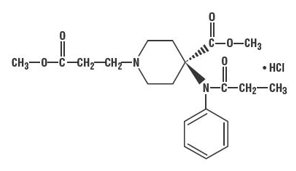
Remifentanil. INDICATIONS AND USAGE Remifentanil hydrochloride (HCl) for injection is indicated for intravenous (IV) administration: • As an analgesic agent for…
Boxed warning
WARNING: ADDICTION, ABUSE, AND MISUSE WARNING: SERIOUS AND LIFE-THREATENING RISKS FROM USE OF REMIFENTANIL HYDROCHLORIDE FOR INJECTION Addiction, Abuse, and Misuse Because the use of Remifentanil Hydrochloride for injection exposes patients and other users to the risks of opioid addiction, abuse, and misuse, which can lead to overdose and death, assess each patient’s risk prior to prescribing and reassess all patients regularly for the development of these behaviors and conditions [see Warnings and Precautions ( 5.1 )] . Life-Threatening Respiratory Depression Serious, life-threatening, or fatal respiratory depression may occur with use of Remifentanil Hydrochloride for injection, especially during initiation or following a dosage increase. To reduce the risk of respiratory depression, proper dosing and titration of Remifentanil Hydrochloride for injection are essential [see Warnings and Precautions ( 5.2 )] . Risks From Concomitant Use With Benzodiazepines Or Other CNS Depressants Concomitant use of opioids with benzodiazepines or other central nervous system (CNS) depressants, including alcohol, may result in profound sedation, respiratory depression, coma, and death. Reserve concomitant prescribing of Remifentanil Hydrochloride for injection and benzodiazepines or other CNS depressants for use in patients for whom alternative treatment options are inadequate [see Warnings and Precautions ( 5.3 ), Drug Interactions ( 7 )] . WARNING: SERIOUS AND LIFE-THREATENING RISKS FROM USE OF REMIFENTANIL HYDROCHLORIDE FOR INJECTION See full prescribing information for complete boxed warning. Remifentanil Hydrochloride for injection exposes users to the risks of addiction, abuse, and misuse. Assess patient’s risk before prescribing and reassess regularly for the development of these behaviors and conditions. ( 5.1 ) Serious, life-threatening, or fatal respiratory depression may occur with use of Remifentanil Hydrochloride for injection, especially during initiation or following a dosage increase. To reduce the risk of respiratory depression, proper dosing and titration of Remifentanil Hydrochloride for injection are essential. ( 5.2 ) Concomitant use of opioids with benzodiazepines or other central nervous system (CNS) depressants, including alcohol, may result in profound sedation, respiratory depression, coma, and death. Reserve concomitant prescribing for use in patients for whom alternative treatment options are inadequate. ( 5.3 , 7 )
INDICATIONS AND USAGE Remifentanil hydrochloride (HCl) for injection is indicated for intravenous (IV) administration: • As an analgesic agent for use during the induction and maintenance of general anesthesia for inpatient and outpatient procedures. • For continuation as an analgesic into the immediate postoperative period in adult patients under the direct supervision of an anesthesia practitioner in a postoperative anesthesia care unit or intensive care setting. • As an analgesic component of monitored anesthesia care in adult patients. Remifentanil hydrochloride for injection is an opioid agonist indicated for intravenous administration: • As an analgesic agent for use during the induction and maintenance of general anesthesia for inpatient and outpatient procedures. ( 1 ) • For continuation as an analgesic into the immediate postoperative period in adult patients under the direct supervision of an anesthesia practitioner in a postoperative anesthesia care unit or intensive care setting. ( 1 ) • As an analgesic component of monitored anesthesia care in adult patients. ( 1 )
Dosage
DOSAGE AND ADMINISTRATION • Monitor patients closely for respiratory depression when initiating therapy and following dosage increases and adjust the dosage accordingly. ( 2.1 ) • Initial Dosage in Adults : See full prescribing information for recommended doses in adult patients. ( 2.2 , 2.3 ) • Initial Dosage in Pediatric Patients : See full prescribing information for recommended doses in pediatric patients. ( 2.2 ) • Geriatric Patients : The starting doses should be decreased by 50% in elderly patients (> 65 years). ( 2.6 ) 2.1 Important Dosage and Administration Instructions Monitor patients closely for respiratory depression when initiating therapy and following dosage increases with ULTIVA and adjust the dosage accordingly [see Warnings and Precautions (5.2) ]. ULTIVA is for IV use only. Continuous infusions of ULTIVA should be administered only by an infusion device. The injection site should be close to the venous cannula and all IV tubing should be cleared at the time of discontinuation of infusion. ULTIVA should not be administered without dilution. Consider an alternative to ULTIVA for patients taking mixed agonist/antagonist and partial agonist opioid analgesics due to reduced analgesic effect or potential withdrawal symptoms. If concomitant use is warranted, carefully observe the patient, particularly during treatment initiation and dose adjustment. Discontinue ULTIVA if patient is not responding appropriately to treatment. Discard unused portion. 2.2 General Anesthesia ULTIVA is not recommended as the sole agent in general anesthesia because loss of consciousness cannot be assured and because of a high incidence of apnea, muscle rigidity, and tachycardia. ULTIVA is synergistic with other anesthetics; therefore, clinicians may need to reduce doses of thiopental, propofol, isoflurane, and midazolam by up to 75% with the coadministration of ULTIVA. The administration of ULTIVA must be individualized based on the patient's response. Induction of Anesthesia ULTIVA should be administered at an infusion rate of 0.5 to 1 mcg/kg/min with a hypnotic or volatile agent for the induction of anesthesia. If endotracheal intubation is to occur less than 8 minutes after the start of the infusion of ULTIVA, then an initial dose of 1 mcg/kg may be administered over 30 to 60 seconds. ULTIVA should not be used as a sole agent for induction of anesthesia because loss of consciousness cannot be assured and because of a high incidence of apnea, muscle rigidity, and tachycardia. Maintenance of Anesthesia After endotracheal intubation, the infusion rate of ULTIVA should be decreased in accordance with the dosing guidelines in Tables 1 (adults, predominately ASA physical status I, II, or III) and 2 (pediatric patients). • Due to the fast onset and short duration of action of ULTIVA, the rate of administration during anesthesia can be titrated upward in 25% to 100% increments in adult patients or up to 50% increments in pediatric patients, or downward in 25% to 50% decrements every 2 to 5 minutes to attain the desired level of µ-opioid effect. • In response to light anesthesia or transient episodes of intense surgical stress, supplemental bolus doses of 1 mcg/kg may be administered every 2 to 5 minutes. • At infusion rates > 1 mcg/kg/min, increases in the concomitant anesthetic agents should be considered to increase the depth of anesthesia. [See Clinical Pharmacology: Specific Populations: Pediatric Population (12.3) and Dosage and Administration, Table 2 (2.2) .] Table 1: Dosing Guidelines in Adults – General Anesthesia and Continuing as an Analgesic into the Postoperative Care Unit or Intensive Care Setting An initial dose of 1 mcg/kg may be administered over 30 to 60 seconds. Phase Continuous IV Infusion of ULTIVA (mcg/kg/min) Range of Infusion Dose ULTIVA (mcg/kg/min) Supplemental IV Bolus Dose of ULTIVA (mcg/kg) Induction of Anesthesia (through intubation) 0.5 – 1 Maintenance of anesthesia with: Nitrous oxide (66%) 0.4 0.1 – 2 1 Isoflurane (0.4 to 1.5 MAC) 0.25 0.05 – 2 1 Propofol (100 to 200 mcg/kg/min) 0.25 0.05 – 2 1 Continuation as an analgesic into the immediate postoperative period 0.1 0.025 – 0.2 not recommended Table 2 summarizes the recommended doses in pediatric patients, predominantly ASA physical status I, II, or III. In pediatric patients, remifentanil was administered with nitrous oxide or nitrous oxide in combination with halothane, sevoflurane, or isoflurane. The use of atropine may blunt the potential for bradycardia that can occur upon administration of ULTIVA. Table 2: Dosing Guidelines in Pediatric Patients – Maintenance of Anesthesia Phase Continuous IV Infusion of ULTIVA (mcg/kg/min) Range of Infusion Dose ULTIVA (mcg/kg/min) Supplemental IV Bolus Dose of ULTIVA (mcg/kg) Maintenance of anesthesia in patients aged 1 to 12 years old with An initial dose of 1 mcg/kg may be administered over 30 to 60 seconds. : Halothane (0.3 to 1.5 MAC) 0.25 0.05 – 1.3 1 Sevoflurane (0.3 to 1.5 MAC) 0.25 0.05 – 1.3 1 Isoflurane (0.4 to 1.5 MAC) 0.25 0.05 – 1.3 1 Maintenance of anesthesia for patients from birth to 2 months of age with: Nitrous oxide (70%) The clearance rate in neonates is highly variable, on average two times higher than in the young healthy adult population. Therefore, an increased infusion rate may be necessary to maintain adequate surgical anesthesia, and additional bolus doses may be required. The use of atropine may blunt the potential for bradycardia that can occur upon administration of ULTIVA. [See Clinical Pharmacology: Specific Populations: Pediatric Population (12.3) and Clinical Studies (14.4) .] 0.4 0.4 – 1.0 1 Boluses of 1 mcg/kg were studied in ASA 1 and 2, full-term patients weighing at least 2500 gm, undergoing pyloromyotomy who received pretreatment with atropine. Neonates receiving supplementation with potent inhalation agents or neuraxial anesthesia, those with significant co-morbidities or undergoing significant fluid shifts, or those who have not been pretreated with atropine, may require smaller bolus doses to avoid hypotension and/or bradycardia. 2.3 Continuation as an Analgesic into the Immediate Postoperative Period Under the Direct Supervision of an Anesthesia Practitioner Infusions of ULTIVA may be continued into the immediate postoperative period for select patients for whom later transition to longer acting analgesics may be desired. • ULTIVA has not been studied in pediatric patients for use in the immediate postoperative period. • The use of bolus injections of ULTIVA to treat pain during the postoperative period is not recommended. • When used as an IV analgesic in the immediate postoperative period, ULTIVA should be initially administered by continuous infusion at a rate of 0.1 mcg/kg/min. • The infusion rate may be adjusted every 5 minutes in 0.025 mcg/kg/min increments to balance the patient's level of analgesia and respiratory rate. • Infusion rates greater than 0.2 mcg/kg/min are associated with respiratory depression (respiratory rate less than 8 breaths/min). Due to the rapid offset of action of ULTIVA, no residual analgesic activity will be present within 5 to 10 minutes after discontinuation. For patients undergoing surgical procedures where postoperative pain is generally anticipated, alternative analgesics should be administered prior to discontinuation of ULTIVA. The choice of analgesic should be appropriate for the patient's surgical procedure and the level of follow-up care [see Clinical Studies (14) ] . 2.4 Analgesic Component of Monitored Anesthesia Care It is strongly recommended that supplemental oxygen be supplied to the patient whenever ULTIVA is administered. • ULTIVA has not been studied for use in children in monitored anesthesia care. Single Dose A single IV dose of 0.5 to 1 mcg/kg over 30 to 60 seconds of ULTIVA may be given 90 seconds before the placement of the local or regional anesthetic block [see Warnings and Precautions (5.7) ] . Continuous Infusion When used alone as an IV
Warnings
WARNINGS AND PRECAUTIONS • Life-Threatening Respiratory Depression : Monitor closely, particularly during initiation and titration. ( 5.2 ) • Risks from Use as Postoperative Analgesia with Concomitant Benzodiazepines or other CNS Depressants : Hypotension, profound sedation, respiratory depression, coma, and death may result from the concomitant use of ULTIVA with benzodiazepines or other CNS depressants ( 5.3 ) • Opioid-Induced Hyperalgesia and Allodynia : Opioid-Induced Hyperalgesia (OIH) occurs when an opioid analgesic paradoxically causes an increase in pain, or an increase in sensitivity to pain. If OIH is suspected, carefully consider appropriately decreasing the dose of the current opioid analgesic or opioid rotation. ( 5.4 ) • Serotonin Syndrome : Potentially life-threatening condition could result from concomitant serotonergic drug administration. Discontinue ULTIVA if serotonin syndrome is suspected. ( 5.5 ) • Administration : Continuous infusions of ULTIVA should be administered only by an infusion device. ( 5.6 ) • Skeletal Muscle Rigidity: is related to the dose and speed of administration. Muscle rigidity induced by ULTIVA should be managed in the context of the patient's clinical condition. ( 5.7 ) • Potential Inactivation by Nonspecific Esterases in Blood Products : ULTIVA should not be administered into the same IV tubing with blood due to potential inactivation by nonspecific esterases in blood products. ( 5.8 ) • Bradycardia : Monitor heart rate during dosage initiation and titration. It is responsive to ephedrine or anticholinergic drugs ( 5.9 ) • Hypotension : Monitor blood pressure during dosage initiation and titration. It is responsive to decreases in the administration of ULTIVA or to IV fluids or catecholamine administration ( 5.10 ) • Intraoperative Awareness : Inoperative awareness has been reported in patients under 55 years of age when ULTIVA has been administered with propofol infusion rates of ≤ 75 mcg/kg/min ( 5.11 ) • Risks of Use in Spontaneously Breathing Patients with Increased Intracranial Pressure, Brain Tumors, Head Injury, or Impaired Consciousness : Monitor for sedation and respiratory depression. ( 5.12 ) • Risks of Use in Patients with Biliary Tract Disease : Monitor patients with biliary tract disease, including acute pancreatitis, for worsening symptoms. ( 5.13 ) • Increased Risk of Seizures in Patients with Seizure Disorders : Monitor patients with a history of seizure disorders for worsened seizure control during ULTIVA therapy. ( 5.14 ) • Rapid Offset of Action : Standard monitoring should be maintained in the postoperative period to ensure adequate recovery without stimulation. ( 5.15 ) 5.1 Addiction, Abuse, and Misuse ULTIVA contains remifentanil, a Schedule II controlled substance. As an opioid, ULTIVA exposes users to the risks of addiction, abuse, and misuse [see Drug Abuse and Dependence (9) ]. Opioids are sought for nonmedical use and are subject to diversion from legitimate prescribed use. Consider these risks when handling ULTIVA. Strategies to reduce these risks include proper product storage and control practices for a C-II drug. Contact local state professional licensing board or state-controlled substances authority for information on how to prevent and detect abuse or diversion of this product. 5.2 Life-Threatening Respiratory Depression Serious, life-threatening, or fatal respiratory depression has been reported with the use of opioids, even when used as recommended. Respiratory depression, if not immediately recognized and treated, may lead to respiratory arrest and death. ULTIVA should be administered only by persons specifically trained in the use of anesthetic drugs and the management of the respiratory effects of potent opioids, including respiration and cardiac resuscitation of patients in the age group being treated. Such training must include the establishment and maintenance of a patent airway and assisted ventilation. Resuscitative and intubation equipment, oxygen, and opioid antagonists must be readily available. Respiratory depression in spontaneously breathing patients is generally managed by decreasing the rate of the infusion of ULTIVA by 50% or by temporarily discontinuing the infusion [see Overdosage (10) ] . Carbon dioxide (CO 2 ) retention from opioid-induced respiratory depression can exacerbate the sedating effects of opioids. While serious, life-threatening, or fatal respiratory depression can occur at any time during the use of ULTIVA, the risk is greatest during the initiation of therapy or following a dosage increase. Monitor patients closely for respiratory depression, especially when initiating therapy with and following dosage increases of ULTIVA. ULTIVA should not be used in diagnostic or therapeutic procedures outside the monitored anesthesia care setting. Patients receiving monitored anesthesia care should be continuously monitored by persons not involved in the conduct of the surgical or diagnostic procedure. Oxygen saturation should be monitored on a continuous basis. Patients with significant chronic obstructive pulmonary disease or cor pulmonale, and those with a substantially decreased respiratory reserve, hypoxia, hypercapnia, or pre-existing respiratory depression are at increased risk of decreased respiratory drive including apnea, even at recommended dosages of ULTIVA. Elderly, cachectic, or debilitated patients may have altered pharmacokinetics or altered clearance compared to younger, healthier patients resulting in greater risk for respiratory depression. Monitor such patients closely including vital signs, particularly when initiating and titrating ULTIVA and when ULTIVA is given concomitantly with other drugs that depress respiration. To reduce the risk of respiratory depression, proper dosing and titration of ULTIVA are essential [see Dosage and Administration (2.11) ] . 5.3 Risks from Use as Postoperative Analgesia with Concomitant Benzodiazepines or Other CNS Depressants When benzodiazepines or other CNS depressants are used with ULTIVA, pulmonary arterial pressure may be decreased. This fact should be considered by those who conduct diagnostic and surgical procedures where interpretation of pulmonary arterial pressure measurements might determine final management of the patient. When high dose or anesthetic dosages of ULTIVA are employed, even relatively small dosages of diazepam may cause cardiovascular depression. When ULTIVA is used with CNS depressants, hypotension can occur. If it occurs, consider the possibility of hypovolemia and manage with appropriate parenteral fluid therapy. When operative conditions permit, consider repositioning the patient to improve venous return to the heart. Exercise care in moving and repositioning of patients because of the possibility of orthostatic hypotension. If volume expansion with fluids plus other countermeasures do not correct hypotension, consider administration of pressor agents other than epinephrine. Epinephrine may paradoxically decrease blood pressure in patients treated with a neuroleptic that blocks alpha adrenergic activity. Hypotension, profound sedation, respiratory depression, coma, and death may result from the concomitant use of ULTIVA with benzodiazepines and/or other CNS depressants, including alcohol (e.g., non-benzodiazepine sedatives/hypnotics, anxiolytics, tranquilizers, muscle relaxants, general anesthetics, antipsychotics, other opioids). Patients should be advised to avoid alcohol for 24 hours after surgery [see Drug Interactions (7) ] . Observational studies have demonstrated that concomitant use of opioid analgesics and benzodiazepines increases the risk of drug-related mortality compared to use of opioid analgesics alone. Because of similar pharmacological properties, it is reasonable to expect similar risk with the concomitant use of other CNS depressant drugs with opioid analgesics [see Drug Interactions (7) ] . If the decision is made to manage postoperative pain w
Contraindications
CONTRAINDICATIONS Remifentanil Hydrochloride for injection is contraindicated: For epidural or intrathecal administration due to the presence of glycine in the formulation [see Nonclinical Toxicology (13) ] . In patients with hypersensitivity to remifentanil (e.g., anaphylaxis) [see Adverse Reactions (6.2 )] . Remifentanil Hydrochloride for injection is contraindicated: For epidural or intrathecal administration due to the presence of glycine in the formulation. ( 4 ) In patients with hypersensitivity to remifentanil (e.g., anaphylaxis). ( 4 )
Drug interactions
DRUG INTERACTIONS Table 18 includes clinically significant drug interactions with remifentanil Hydrochloride for injection. Table 18: Clinically Significant Drug Interactions with Remifentanil Hydrochloride for Injection Benzodiazepines and other Central Nervous System (CNS) Depressants Clinical Impact: Due to additive pharmacologic effect, the concomitant use of benzodiazepines or other CNS depressants including alcohol, increases the risk of hypotension, respiratory depression, profound sedation, coma, and death. Intervention: Limit dosages and durations to the minimum required. Follow patients closely for signs of respiratory depression and sedation. Patients should be advised to avoid alcohol for 24 hours after surgery [see Warnings and Precautions (5.3) ] . Examples: Benzodiazepines and other sedatives/hypnotics, anxiolytics, tranquilizers, muscle relaxants, general anesthetics, antipsychotics, other opioids, alcohol. Serotonergic Drugs Clinical Impact: The concomitant use of opioids with other drugs that affect the serotonergic neurotransmitter system has resulted in serotonin syndrome [see Warnings and Precautions (5.5) ] . Intervention: If concomitant use is warranted, carefully observe the patient, particularly during treatment initiation and dose adjustment. Discontinue Remifentanil Hydrochloride for injection if serotonin syndrome is suspected. Examples: Selective serotonin reuptake inhibitors (SSRIs), serotonin and norepinephrine reuptake inhibitors (SNRIs), tricyclic antidepressants (TCAs), triptans, 5-HT3 receptor antagonists, drugs that effect the serotonin neurotransmitter system (e.g., mirtazapine, trazodone, tramadol), certain muscle relaxants (i.e., cyclobenzaprine, metaxalone), monoamine oxidase (MAO) inhibitors (those intended to treat psychiatric disorders and also others, such as linezolid and intravenous methylene blue). Monoamine Oxidase Inhibitors (MAOIs) Clinical Impact: MAOI interactions with opioids may manifest as serotonin syndrome [see Warnings and Precautions (5.5) ] or opioid toxicity (e.g., respiratory depression, coma) [see Warnings and Precautions (5.2) ]. If urgent use of Remifentanil Hydrochloride for injection is necessary, use test doses and frequent titration of small doses while closely monitoring blood pressure and signs and symptoms of CNS and respiratory depression. Intervention: The use of Remifentanil Hydrochloride for injection is not recommended for patients taking MAOIs or within 14 days of stopping such treatment. Mixed Agonist/Antagonist and Partial Agonist Opioid Analgesics Clinical Impact: May reduce the analgesic effect of Remifentanil Hydrochloride for injection and/or precipitate withdrawal symptoms. Intervention: If concomitant use is warranted, carefully observe the patient, particularly during treatment initiation and dose adjustment. Consider discontinuing Remifentanil Hydrochloride for injection if patient is not responding appropriately to treatment and institute alternative analgesic treatment. Examples: butorphanol, nalbuphine, pentazocine, buprenorphine Mixed Agonist/Antagonist and Partial Agonist Opioid Analgesics: May reduce the analgesic effect of Remifentanil Hydrochloride for injection and/or precipitate withdrawal symptoms. If concomitant use is warranted, carefully observe the patient, particularly during treatment initiation and dose adjustment. ( 7 ) Drug Interactions In animals the duration of muscle paralysis from succinylcholine is not prolonged by remifentanil.
Adverse reactions
ADVERSE REACTIONS The following serious adverse reactions are described, or described in greater detail, in other sections: • Addiction, Abuse, and Misuse [see Warnings and Precautions (5.1) ] • Life-Threatening Respiratory Depression [see Warnings and Precautions (5.2) ] • Interactions with Benzodiazepines or other CNS Depressants [see Warnings and Precautions (5.3) ] • Opioid-Induced Hyperalgesia and Allodynia [see Warnings and Precautions (5.4) ] • Serotonin Syndrome [see Warnings and Precautions (5.5) ] • Skeletal Muscle Rigidity [see Warnings and Precautions (5.7) ] • Bradycardia [see Warnings and Precautions (5.9) ] • Hypotension [see Warnings and Precautions (5.10) ] • Biliary Tract Disease [see Warnings and Precautions (5.13) ] • Seizures [see Warnings and Precautions (5.14) ] Most common adverse reactions (incidence ≥ 1%) were respiratory depression, bradycardia, hypotension, and skeletal muscle rigidity. ( 6 ) To report SUSPECTED ADVERSE REACTIONS, contact Mylan at 1-877-446-3679 (1-877-4-INFO-RX) or FDA at 1-800-FDA-1088 or www.fda.gov/medwatch. 6.1 Clinical Trials Experience Because clinical trials are conducted under widely varying conditions, adverse reaction rates observed in the clinical trials of a drug cannot be directly compared to rates in the clinical trials of another drug and may not reflect the rates observed in practice. Adverse event information is derived from controlled clinical studies that were conducted in a variety of surgical procedures of varying duration, using a variety of premedications and other anesthetics, and in patient populations with diverse characteristics including underlying disease. Adults Approximately 2,770 adult patients were exposed to ULTIVA in controlled clinical studies. The frequencies of adverse events during general anesthesia with the recommended doses of ULTIVA are given in Table 11. Each patient was counted once for each type of adverse event. Table 11: Adverse Events Reported in ≥ 1% of Adult Patients in General Anesthesia Studies Does not include adverse events from cardiac studies or the neonatal study. See Tables 14, 15, and 16 for cardiac information. at the Recommended Doses See Table 1 for recommended doses. Not all doses of ULTIVA were equipotent to the comparator opioid. Administration of ULTIVA in excess of the recommended dose (i.e., doses > 1 and up to 20 mcg/kg) resulted in a higher incidence of some adverse events: muscle rigidity (37%), bradycardia (12%), hypertension (4%), and tachycardia (4%). of ULTIVA Adverse Event Induction/Maintenance Postoperative Analgesia After Discontinuation ULTIVA (n = 921) Alfentanil/Fentanyl (n = 466) ULTIVA (n = 281) Morphine (n = 98) ULTIVA (n = 929) Alfentanil/Fentanyl (n = 466) Nausea 8 (< 1%) 0 61 (22%) 15 (15%) 339 (36%) 202 (43%) Hypotension 178 (19%) 30 (6%) 0 0 16 (2%) 9 (2%) Vomiting 4 (< 1%) 1 (< 1%) 22 (8%) 5 (5%) 150 (16%) 91 (20%) Muscle rigidity 98 (11%) Included in the muscle rigidity incidence is chest wall rigidity (5%). The overall muscle rigidity incidence is < 1% when remifentanil is administered concurrently or after a hypnotic induction agent. 37 (8%) 7 (2%) 0 2 (< 1%) 1 (< 1%) Bradycardia 62 (7%) 24 (5%) 3 (1%) 3 (3%) 11 (1%) 6 (1%) Shivering 3 (< 1%) 0 15 (5%) 9 (9%) 49 (5%) 10 (2%) Fever 1 (< 1%) 0 2 (< 1%) 0 44 (5%) 9 (2%) Dizziness 0 0 1 (< 1%) 0 27 (3%) 9 (2%) Visual disturbance 0 0 0 0 24 (3%) 14 (3%) Headache 0 0 1 (< 1%) 1 (1%) 21 (2%) 8 (2%) Respiratory depression 1 (< 1%) 0 19 (7%) 4 (4%) 17 (2%) 20 (4%) Apnea 0 1 (< 1%) 9 (3%) 2 (2%) 2 (< 1%) 1 (< 1%) Pruritus 2 (< 1%) 0 7 (2%) 1 (1%) 22 (2%) 7 (2%) Tachycardia 6 (< 1%) 7 (2%) 0 0 10 (1%) 8 (2%) Postoperative pain 0 0 7 (2%) 0 4 (< 1%) 5 (1%) Hypertension 10 (1%) 7 (2%) 5 (2%) 3 (3%) 12 (1%) 8 (2%) Agitation 2 (< 1%) 0 3 (1%) 1 (1%) 6 (< 1%) 1 (< 1%) Hypoxia 0 0 1 (< 1%) 0 10 (1%) 7 (2%) In the elderly population (> 65 years), the incidence of hypotension is higher, whereas the incidence of nausea and vomiting is lower. Table 12: Incidence (%) of Most Common Adverse Events by Gender in General Anesthesia Studies Does not include adverse events from cardiac studies or the neonatal study. at the Recommended Doses See Table 1 for recommended doses. Not all doses of ULTIVA were equipotent to the comparator opioid. of ULTIVA Adverse Event n Induction Maintenance Postoperative Analgesia After Discontinuation ULTIVA Alfentanil/Fentanyl ULTIVA Morphine ULTIVA Alfentanil/Fentanyl Male 326 Female 595 Male 183 Female 283 Male 85 Female 196 Male 36 Female 62 Male 332 Female 597 Male 183 Female 283 Nausea 2% < 1% 0 0 12% 26% 8% 19% 22% 45% 30% 52% Hypotension 29% 14% 7% 6% 0 0 0 0 2% 2% 2% 2% Vomiting < 1% < 1% 0 < 1% 4% 10% 0 8% 5% 22% 8% 27% Muscle rigidity 17% 7% 14% 4% 6% 1% 0 0 < 1% < 1% 0 < 1% The frequencies of adverse events from the clinical studies at the recommended doses of ULTIVA in monitored anesthesia care are given in Table 13. Table 13: Adverse Events Reported in ≥ 1% of Adult Patients in Monitored Anesthesia Care Studies at the Recommended Doses See Table 3 for recommended doses. Administration of ULTIVA in excess of the recommended infusion rate (i.e., starting doses > 0.1 mcg/kg/min) resulted in a higher incidence of some adverse events: nausea (60%), apnea (8%), and muscle rigidity (5%). of ULTIVA Adverse Event ULTIVA (n = 159) ULTIVA + 2 mg Midazolam With higher midazolam doses, higher incidences of respiratory depression and apnea were observed. (n = 103) Propofol (0.5 mg/kg then 50 mcg/kg/min) (n = 63) Nausea 70 (44%) 19 (18%) 20 (32%) Vomiting 35 (22%) 5 (5%) 13 (21%) Pruritus 28 (18%) 16 (16%) 0 Headache 28 (18%) 12 (12%) 6 (10%) Sweating 10 (6%) 0 1 (2%) Shivering 8 (5%) 1 (< 1%) 1 (2%) Dizziness 8 (5%) 5 (5%) 1 (2%) Hypotension 7 (4%) 0 6 (10%) Bradycardia 6 (4%) 0 7 (11%) Respiratory depression 4 (3%) 1 (< 1%) 0 Muscle rigidity 4 (3%) 0 1 (2%) Chills 2 (1%) 0 2 (3%) Flushing 2 (1%) 0 0 Warm sensation 2 (1%) 0 0 Pain at study IV site 2 (1%) 0 11 (17%) Other Adverse Events in Adult Patients The frequencies of less commonly reported adverse clinical events from all controlled general anesthesia and monitored anesthesia care studies are presented below. Event frequencies are calculated as the number of patients who were administered ULTIVA and reported an event divided by the total number of patients exposed to ULTIVA in all controlled studies including cardiac dose-ranging and neurosurgery studies (n = 1,883 general anesthesia, n = 609 monitored anesthesia care). Incidence Less than 1% Digestive: constipation, abdominal discomfort, xerostomia, gastro-esophageal reflux, dysphagia, diarrhea, ileus. Cardiovascular: various atrial and ventricular arrhythmias, heart block, ECG change consistent with myocardial ischemia, elevated CPK-MB level, syncope. Musculoskeletal: muscle stiffness, musculoskeletal chest pain. Respiratory: cough, dyspnea, bronchospasm, laryngospasm, rhonchi, stridor, nasal congestion, pharyngitis, pleural effusion, hiccup(s), pulmonary edema, rales, bronchitis, rhinorrhea. Nervous: anxiety, involuntary movement, prolonged emergence from anesthesia, confusion, awareness under anesthesia without pain, rapid awakening from anesthesia, tremors, disorientation, dysphoria, nightmare(s), hallucinations, paresthesia, nystagmus, twitch, seizure, amnesia. Body as a Whole: decreased body temperature, anaphylactic reaction, delayed recovery from neuromuscular block. Skin: rash, urticaria. Urogenital: urine retention, oliguria, dysuria, urine incontinence. Infusion Site Reaction: erythema, pruritus, rash. Metabolic and Nutrition: abnormal liver function, hyperglycemia, electrolyte disorders, increased CPK level. Hematologic and Lymphatic: anemia, lymphopenia, leukocytosis, thrombocytopenia. The frequencies of adverse events from the clinical studies at the recommended doses of ULTIVA in cardiac surgery are given in Tables 14, 15, and 16. These tables represent adverse events collected during discrete phases of cardiac surgery. Any event should
Mechanism of action
Mechanism of Action Remifentanil Hydrochloride for injection is a μ-opioid agonist with rapid onset and peak effect, and short duration of action. The μ- opioid activity of Remifentanil Hydrochloride for injection is antagonized by opioid antagonists such as naloxone. Unlike other opioids, Remifentanil Hydrochloride for injection is rapidly metabolized by hydrolysis of the propanoic acid-methyl ester linkage by nonspecific blood and tissue esterases. Remifentanil Hydrochloride for injection is not a substrate for plasma cholinesterase (pseudocholinesterase) and, therefore, patients with atypical cholinesterase are expected to have a normal duration of action.
A drug lookup is just the start. Eleplan keeps the whole care plan in one place.
Medications, diagnoses, documents, appointments, and the whole care team — organized and always in sync, with Ellie, your AI care assistant, on top of it. Free to start.