Clinical drug
zafirlukast 10 MG Oral Tablet
10 MG · Oral Tablet · oral
A form of zafirlukast →
zafirlukast 10 MG Oral Tablet — Leukotriene receptor antagonists. INDICATIONS AND USAGE Zafirlukast tablets are indicated for the prophylaxis and chronic treatment of asthma in adults and children 5 years of age and
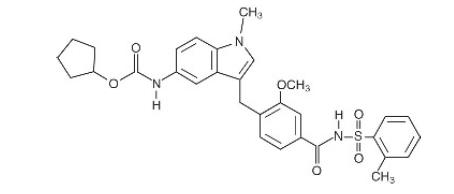
Active ingredient
Classification
Leukotriene receptor antagonistsLeukotriene Receptor Antagonist
Drug interactions
Zafirlukast has several documented interactions with other drugs, particularly affecting their plasma levels and therapeutic effects.
- majorwarfarin — increased prothrombin time and anticoagulant effect
- moderateerythromycin — decreased plasma levels of zafirlukast
- moderatetheophylline — increased theophylline levels in rare cases
- moderateaspirin — increased plasma levels of zafirlukast
- moderatefluconazole — increased plasma levels of zafirlukast
- moderateitraconazole — no change in plasma levels of zafirlukast
Indications
INDICATIONS AND USAGE Zafirlukast tablets are indicated for the prophylaxis and chronic treatment of asthma in adults and children 5 years of age and older.
Dosage
DOSAGE AND ADMINISTRATION Because food can reduce the bioavailability of zafirlukast, zafirlukast tablets should be taken at least 1 hour before or 2 hours after meals. Adults and Children 12 years of age and older The recommended dose of zafirlukast tablets in adults and children 12 years and older is 20 mg twice daily. Pediatric Patients 5 through 11 years of age The recommended dose of zafirlukast tablets in children 5 through 11 years of age is 10 mg twice daily. Elderly Patients Based on cross-study comparisons, the clearance of zafirlukast is reduced in elderly patients (65 years of age and older), such that C max and AUC are approximately twice those of younger adults. In clinical trials, a dose of 20 mg twice daily was not associated with an increase in the overall incidence of adverse events or withdrawals because of adverse events in elderly patients. Patients with Hepatic Impairment Zafirlukast tablets are contraindicated in patients with hepatic impairment including hepatic cirrhosis (see Contraindications ). The clearance of zafirlukast is reduced in patients with stable alcoholic cirrhosis such that the C max and AUC are approximately 50 to 60% greater than those of normal adults. Zafirlukast tablets has not been evaluated in patients with hepatitis or in long-term studies of patients with cirrhosis. Patients with Renal Impairment Dosage adjustment is not required for patients with renal impairment.
Warnings
WARNINGS Hepatotoxicity: Cases of life-threatening hepatic failure have been reported in patients treated with zafirlukast. Cases of liver injury without other attributable cause have been reported from post-marketing adverse event surveillance of patients who have received the recommended dose of zafirlukast (40 mg/day). In most, but not all post-marketing reports, the patient’s symptoms abated and the liver enzymes returned to normal or near normal after stopping zafirlukast. In rare cases, patients have either presented with fulminant hepatitis or progressed to hepatic failure, liver transplantation and death. In extremely rare post-marketing cases, no clinical symptoms or signs suggestive of liver dysfunction were reported to precede the latter observations. Physicians may consider the value of liver function testing. Periodic serum transaminase testing has not proven to prevent serious injury but it is generally believed that early detection of drug-induced hepatic injury along with immediate withdrawal of the suspect drug enhances the likelihood for recovery. Patients should be advised to be alert for signs and symptoms of liver dysfunction (eg, right upper quadrant abdominal pain, nausea, fatigue, lethargy, pruritus, jaundice, flu-like symptoms, and anorexia) and to contact their physician immediately if they occur. Ongoing clinical assessment of patients should govern physician interventions, including diagnostic evaluations and treatment. If liver dysfunction is suspected based upon clinical signs or symptoms (eg, right upper quadrant abdominal pain, nausea, fatigue, lethargy, pruritus, jaundice, flu-like symptoms, anorexia, and enlarged liver), zafirlukast should be discontinued. Liver function tests, in particular serum ALT, should be measured immediately and the patient managed accordingly. If liver function tests are consistent with hepatic dysfunction, zafirlukast therapy should not be resumed. Patients in whom zafirlukast was withdrawn because of hepatic dysfunction where no other attributable cause is identified should not be re-exposed to zafirlukast (see PRECAUTIONS, Information for Patients and ADVERSE REACTIONS ). Bronchospasm: Zafirlukast tablets are not indicated for use in the reversal of bronchospasm in acute asthma attacks, including status asthmaticus. Therapy with zafirlukast can be continued during acute exacerbations of asthma. Concomitant Warfarin Administration: Coadministration of zafirlukast with warfarin results in a clinically significant increase in prothrombin time (PT). Patients on oral warfarin anticoagulant therapy and zafirlukast should have their prothrombin times monitored closely and anticoagulant dose adjusted accordingly (see PRECAUTIONS, Drug Interactions ).
Contraindications
CONTRAINDICATIONS Zafirlukast tablets are contraindicated in patients who are hypersensitive to zafirlukast or any of its inactive ingredients. Zafirlukast tablets are contraindicated in patients with hepatic impairment including hepatic cirrhosis.
Mechanism of action
CLINICAL PHARMACOLOGY Mechanism of Action Zafirlukast is a selective and competitive receptor antagonist of leukotriene D 4 and E 4 (LTD 4 and LTE 4 ), components of slow-reacting substance of anaphylaxis (SRSA). Cysteinyl leukotriene production and receptor occupation have been correlated with the pathophysiology of asthma, including airway edema, smooth muscle constriction, and altered cellular activity associated with the inflammatory process, which contribute to the signs and symptoms of asthma. Patients with asthma were found in one study to be 25 to 100 times more sensitive to the bronchoconstricting activity of inhaled LTD 4 than nonasthmatic subjects. In vitro studies demonstrated that zafirlukast antagonized the contractile activity of three leukotrienes (LTC 4 , LTD 4 and LTE 4 ) in conducting airway smooth muscle from laboratory animals and humans. Zafirlukast prevented intradermal LTD 4 -induced increases in cutaneous vascular permeability and inhibited inhaled LTD 4 -induced influx of eosinophils into animal lungs. Inhalational challenge studies in sensitized sheep showed that zafirlukast suppressed the airway responses to antigen; this included both the early-and late-phase response and the nonspecific hyperresponsiveness. In humans, zafirlukast inhibited bronchoconstriction caused by several kinds of inhalational challenges. Pretreatment with single oral doses of zafirlukast inhibited the bronchoconstriction caused by sulfur dioxide and cold air in patients with asthma. Pretreatment with single doses of zafirlukast attenuated the early-and late-phase reaction caused by inhalation of various antigens such as grass, cat dander, ragweed, and mixed antigens in patients with asthma. Zafirlukast also attenuated the increase in bronchial hyperresponsiveness to inhaled histamine that followed inhaled allergen challenge. Clinical Pharmacokinetics and Bioavailability Absorption Zafirlukast is rapidly absorbed following oral administration. Peak plasma concentrations are generally achieved 3 hours after oral administration. The absolute bioavailability of zafirlukast is unknown. In two separate studies, one using a high fat and the other a high protein meal, administration of zafirlukast with food reduced the mean bioavailability by approximately 40%. Distribution Zafirlukast is more than 99% bound to plasma proteins, predominantly albumin. The degree of binding was independent of concentration in the clinically relevant range. The apparent steady-state volume of distribution (Vss/F) is approximately 70 L, suggesting moderate distribution into tissues. Studies in rats using radiolabeled zafirlukast indicate minimal distribution across the blood-brain barrier. Metabolism Zafirlukast is extensively metabolized. The most common metabolic products are hydroxylated metabolites which are excreted in the feces. The metabolites of zafirlukast identified in plasma are at least 90 times less potent as LTD 4 receptor antagonists than zafirlukast in a standard in vitro test of activity. In vitro studies using human liver microsomes showed that the hydroxylated metabolites of zafirlukast excreted in the feces are formed through the cytochrome P450 2C9 (CYP2C9) pathway. Additional in vitro studies utilizing human liver microsomes show that zafirlukast inhibits the cytochrome P450 CYP3A4 and CYP2C9 isoenzymes at concentrations close to the clinically achieved total plasma concentrations ( see Drug Interactions ). Excretion The apparent oral clearance (CL/f) of zafirlukast is approximately 20 L/h. Studies in the rat and dog suggest that biliary excretion is the primary route of excretion. Following oral administration of radiolabeled zafirlukast to volunteers, urinary excretion accounts for approximately 10% of the dose and the remainder is excreted in feces. Zafirlukast is not detected in urine. In the pivotal bioequivalence study, the mean terminal half-life of zafirlukast is approximately 10 hours in both normal adult subjects and patients with asthma. In other studies, the mean plasma half-life of zafirlukast ranged from approximately 8 to 16 hours in both normal subjects and patients with asthma. The pharmacokinetics of zafirlukast are approximately linear over the range from 5 mg to 80 mg. Steady-state plasma concentrations of zafirlukast are proportional to the dose and predictable from single-dose pharmacokinetic data. Accumulation of zafirlukast in the plasma following twice-daily dosing is approximately 45%. The pharmacokinetic parameters of zafirlukast 20 mg administered as a single dose to 36 male volunteers are shown with the table below. Mean (% Coefficient of Variation) pharmacokinetic parameters of zafirlukast following single 20 mg oral dose administration to male volunteers (n=36) C max ng/ml t max 1 h AUC ng•h/mL t 1/2 h CL/f L/h 326 (31.0) 2 (0.5 to 5.0) 1137 (34) 13.3 (75.6) 19.4 (32) 1. Median and range Special Populations Gender: The pharmacokinetics of zafirlukast are similar in males and females. Weight-adjusted apparent oral clearance does not differ due to gender. Race: No differences in the pharmacokinetics of zafirlukast due to race have been observed. Elderly: The apparent oral clearance of zafirlukast decreases with age. In patients above 65 years of age, there is an approximately 2 to 3 fold greater C max and AUC compared to young adult patients. Children: Following administration of a single 20 mg dose of zafirlukast to 20 boys and girls between 7 and 11 years of age, and in a second study, to 29 boys and girls between 5 and 6 years of age, the following pharmacokinetic parameters were obtained: Parameter Children age 5 to 6 years Mean (% Coefficient of Variation) Children age 7 to 11 years Mean (% Coefficient of Variation) Cmax (ng/mL) 756 (39%) 601 (45%) AUC (ng•h/mL) 2458 (34%) 2027 (38%) tmax (h) 2.1 (61%) 2.5 (55%) CL/f (L/h) 9.2 (37%) 11.4 (42%) Weight unadjusted apparent clearance was 11.4 L/h (42%) in the 7 to 11 year old children and 9.2 L/h (37%) in the 5 to 6 year old children, which resulted in greater systemic drug exposures than that obtained in adults for an identical dose. To maintain similar exposure levels in children compared to adults, a dose of 10 mg twice daily is recommended in children 5 to 11 years of age (see DOSAGE AND ADMINISTRATION ). Zafirlukast disposition was unchanged after multiple dosing (20 mg twice daily) in children and the degree of accumulation in plasma was similar to that observed in adults. Hepatic Insufficiency: In a study of patients with hepatic impairment (biopsy-proven cirrhosis), there was a reduced clearance of zafirlukast resulting in a 50 to 60% greater C max and AUC compared to normal subjects. Renal Insufficiency: Based on a cross-study comparison, there are no apparent differences in the pharmacokinetics of zafirlukast between renally-impaired patients and normal subjects. Drug-Drug Interactions The following drug interaction studies have been conducted with zafirlukast (see PRECAUTIONS, Drug Interactions ). • Coadministration of multiple doses of zafirlukast (160 mg/day) to steady-state with a single 25 mg dose of warfarin (a substrate of CYP2C9) resulted in a significant increase in the mean AUC (+63%) and half-life (+36%) of S-warfarin. The mean prothrombin time increased by approximately 35%. The pharmacokinetics of zafirlukast were unaffected by coadministration with warfarin. • Coadministration of zafirlukast (80 mg/day) at steady-state with a single dose of a liquid theophylline preparation (6 mg/kg) in 13 asthmatic patients, 18 to 44 years of age, resulted in decreased mean plasma concentrations of zafirlukast by approximately 30%, but no effect on plasma theophylline concentrations was observed. • Coadministration of zafirlukast (20 mg/day) or placebo at steady-state with a single dose of sustained release theophylline preparation (16 mg/kg) in 16 healthy boys and girls (6 through 11 years of age) resulted in no significant differences in the pharmacokinetic parame
Indicated ICD-10 codes
Source: RxNorm + openFDA + RxClass + FAERS · 2026
Look up another medication