vardenafil 5 MG Oral Tablet
Managing this medication for someone you care for? Eleplan keeps diagnoses, medications and appointments in one plan.
Start free with EleplanClinical drug
vardenafil 5 MG Oral Tablet
5 MG · Oral Tablet · oral
A form of vardenafil →
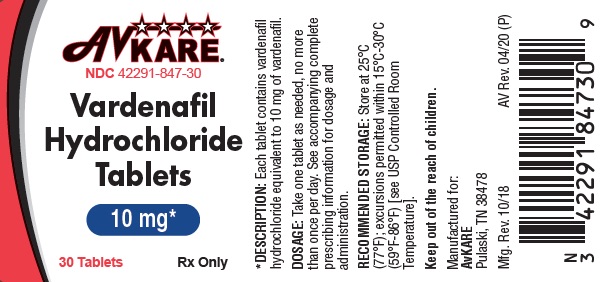
vardenafil 5 MG Oral Tablet — Drugs used in erectile dysfunction. INDICATIONS AND USAGE Vardenafil hydrochloride orally disintegrating tablets are indicated for the treatment of erectile dysfunction. • Vardenafil…
Active ingredient
Classification
Drugs used in erectile dysfunctionPhosphodiesterase 5 Inhibitor
Drug interactions
Vardenafil has several significant interactions with other drugs, particularly those affecting blood pressure and CYP3A4 metabolism.
- majornitrates — potentiation of hypotensive effects
- moderatealpha-blockers — additive blood pressure lowering effects
- moderateantihypertensives — additive blood pressure lowering effects
- majorketoconazole — increased vardenafil exposure
- majorindinavir — increased vardenafil exposure
- majorritonavir — increased vardenafil exposure
- majorcobicistat — increased vardenafil exposure
- moderateerythromycin — increased vardenafil exposure
- moderategrapefruit juice — likely increased vardenafil exposure
Indications
INDICATIONS AND USAGE Vardenafil hydrochloride orally disintegrating tablets are indicated for the treatment of erectile dysfunction. • Vardenafil hydrochloride orally disintegrating tablets are phosphodiesterase 5 (PDE5) inhibitor indicated for the treatment of erectile dysfunction. ( 1 ).
Dosage
DOSAGE AND ADMINISTRATION Vardenafil hydrochloride tablets are taken as needed: For most patients, the starting dose is 10 mg, up to once daily. Increase to 20 mg or decrease to 5 mg based on efficacy/tolerability. ( 2.1 ) A starting dose of vardenafil hydrochloride tablets, 5 mg should be considered in patients ≥65 years of age. ( 2.3 ) Vardenafil hydrochloride tablets are taken orally, approximately 60 minutes before sexual activity. ( 2.1 ) The maximum recommended dosing frequency is one tablet per day. ( 2.1 ) Vardenafil hydrochloride tablets may be taken with or without food. ( 2.2 ) If taking strong or moderate inhibitors of CYP3A4, the dose of vardenafil hydrochloride tablets should be adjusted as follows ( 2.4 , 5.2 , 7.2 ): Ritonavir: No more than 2.5 mg in a 72-hour period Cobicistat: No more than 2.5 mg in a 72-hour period Indinavir, saquinavir, atazanavir, ketoconazole 400 mg daily, itraconazole 400 mg daily, clarithromycin: No more than 2.5 mg in a 24-hour period Ketoconazole 200 mg daily, itraconazole 200 mg daily, erythromycin: No more than 5 mg in a 24-hour period. In patients on stable alpha-blocker therapy the recommended starting dose of vardenafil hydrochloride tablets is 5 mg ( 2.4 , 5.6 ) The recommended starting dose of vardenafil hydrochloride tablets is 5 mg in patients with moderate hepatic impairment (Child-Pugh B). The maximum dose in patients with moderate hepatic impairment should not exceed 10 mg. ( 2.3 , 8.6 ) 2.1 General Dose Information For most patients, the recommended starting dose of vardenafil hydrochloride tablets is 10 mg, taken orally, as needed, approximately 60 minutes before sexual activity. The dose may be increased to a maximum recommended dose of 20 mg or decreased to 5 mg based on efficacy and side effects. The maximum recommended dosing frequency is once per day. Sexual stimulation is required for a response to treatment. 2.2 Use with Food Vardenafil hydrochloride tablets can be taken with or without food. 2.3 Use in Specific Populations Geriatrics: A starting dose of vardenafil hydrochloride tablets, 5 mg should be considered in patients ≥65 years of age [see Use in Specific Populations ( 8.5 )] . Hepatic Impairment: For patients with moderate hepatic impairment (Child-Pugh B), a starting dose of vardenafil hydrochloride tablets, 5 mg is recommended. The maximum dose in patients with moderate hepatic impairment should not exceed 10 mg. Do not use vardenafil hydrochloride tablets in patients with severe hepatic impairment (Child-Pugh C) [see Warnings and Precautions ( 5.8 ), Use in Specific Populations ( 8.6 ) and Clinical Pharmacology ( 12.3 )] . Renal Impairment: Do not use vardenafil hydrochloride tablets in patients on renal dialysis [see Warnings and Precautions ( 5.9 ), Use in Specific Populations ( 8.7 ) and Clinical Pharmacology ( 12.3 )] . 2.4 Concomitant Medications Nitrates: Concomitant use with nitrates and nitric oxide donors in any form is contraindicated [see Contraindications ( 4.1 )] . Guanylate Cyclase (GC) Stimulators, such as riociguat: Concomitant use is contraindicated [see Contraindications ( 4.2 )] . CYP3A4 Inhibitors: The dosage of vardenafil hydrochloride tablets may require adjustment in patients receiving strong CYP3A4 inhibitors such as ketoconazole, itraconazole, ritonavir, indinavir, saquinavir, atazanavir, cobicistat, and clarithromycin as well as in other patients receiving moderate CYP3A4 inhibitors such as erythromycin [see Drug Interactions ( 7.2 )]. If taking strong or moderate inhibitors of CYP3A4, the dose of vardenafil hydrochloride tablets should be adjusted as follows: Ritonavir: No more than 2.5 mg in a 72-hour period. Indinavir, saquinavir, atazanavir, ketoconazole 400 mg daily, itraconazole 400 mg daily, clarithromycin: No more than 2.5 mg in a 24-hour period. Ketoconazole 200 mg daily, itraconazole 200 mg daily, erythromycin: No more than 5 mg in a 24-hour period. Cobicistat: No more than 2.5 mg in a 72 hour period. Alpha-Blockers: In those patients who are stable on alpha-blocker therapy, phosphodiesterase type 5 (PDE5) inhibitors should be initiated at the lowest recommended starting dose. Concomitant treatment should be initiated only if the patient is stable on his alpha-blocker therapy. Stepwise increase in alpha-blocker dose may be associated with further lowering of blood pressure in patients taking a phosphodiesterase (PDE5) inhibitor including vardenafil. In those patients who are stable on alpha-blocker therapy, vardenafil hydrochloride tablets should be initiated at a dose of 5 mg (2.5 mg when used concomitantly with certain CYP3A4 inhibitors) [see Warnings and Precautions ( 5.6 ) and Drug Interactions ( 7.1 )] . A time interval between dosing should be considered when vardenafil hydrochloride tablets are prescribed concomitantly with alpha-blocker therapy [see Clinical Pharmacology ( 12.2 )] .
Warnings
WARNINGS AND PRECAUTIONS The evaluation of erectile dysfunction should include a medical assessment, a determination of potential underlying causes and the identification of appropriate treatment. Before prescribing vardenafil hydrochloride tablets, it is important to note the following: Cardiovascular Effects : Patients should not use vardenafil hydrochloride tablets if sex is inadvisable due to cardiovascular status. ( 5.1 ) Risk of Priapism : In the event that an erection lasts more than 4 hours, the patient should seek immediate medical assistance. ( 5.3 ) Effects on the Eye: Patients should stop use of vardenafil hydrochloride tablets, and seek medical attention in the event of sudden loss of vision in one or both eyes, which could be a sign of nonarteritic anterior ischemic optic neuropathy (NAION). Vardenafil hydrochloride tablets should be used with caution, and only when the anticipated benefits outweigh the risks, in patients with a history of NAION. Patients with a "crowded" optic disc may also be at an increased risk of NAION. ( 5.4 , 6.2 ) Sudden Hearing Loss : Patients should stop vardenafil hydrochloride tablets and seek medical attention in the event of sudden decrease or loss in hearing. ( 5.5 , 6.2 ) Alpha-Blockers : Caution is advised when PDE5 inhibitors are co-administered with alpha-blockers. In some patients, concomitant use of these two drug classes can lower blood pressure significantly leading to symptomatic hypotension (for example, fainting). ( 2.4 , 5.6 ) QT Prolongation : Patients with congenital QT syndrome or taking class IA or III antiarrhythmics should avoid using vardenafil hydrochloride tablets. ( 5.7 , 12.2 ) Phenylketonurics : Contains Phenylalanine ( 5.13 ) 5.1 Cardiovascular Effects General Physicians should consider the cardiovascular status of their patients, since there is a degree of cardiac risk associated with sexual activity. Therefore, treatment for erectile dysfunction, including vardenafil hydrochloride tablets, should not be used in men for whom sexual activity is not recommended because of their underlying cardiovascular status. There are no controlled clinical data on the safety or efficacy of vardenafil in the following patients; and therefore its use is not recommended until further information is available: unstable angina; hypotension (resting systolic blood pressure of <90 mmHg); uncontrolled hypertension (>170/110 mmHg); recent history of stroke, life-threatening arrhythmia, or myocardial infarction (within the last 6 months); severe cardiac failure. Left Ventricular Outflow Obstruction Patients with left ventricular outflow obstruction, (for example, aortic stenosis and idiopathic hypertrophic subaortic stenosis) can be sensitive to the action of vasodilators including PDE5 inhibitors. Blood Pressure Effects Vardenafil hydrochloride tablets have systemic vasodilatory properties that resulted in transient decreases in supine blood pressure in healthy volunteers (mean maximum decrease of 7 mmHg systolic and 8 mmHg diastolic) [see Clinical Pharmacology (12.2) ] . While this normally would be expected to be of little consequence in most patients, prior to prescribing vardenafil hydrochloride tablets, physicians should carefully consider whether their patients with underlying cardiovascular disease could be affected adversely by such vasodilatory effects. 5.2 Potential for Drug Interactions with Strong or Moderate CYP3A4 Inhibitors Concomitant administration with strong CYP3A4 inhibitors (such as ritonavir, indinavir, cobicistat, ketoconazole) or moderate CYP3A4 inhibitors (such as erythromycin) increases plasma concentrations of vardenafil. Dosage adjustment is necessary when vardenafil hydrochloride tablets are administered with certain CYP3A4 inhibitors [see Dosage and Administration (2.4) , and Drug Interactions (7.2) ]. Long-term safety information is not available on the concomitant administration of vardenafil with HIV protease inhibitors. 5.3 Risk of Priapism There have been rare reports of prolonged erections greater than 4 hours and priapism (painful erections greater than 6 hours in duration) for this class of compounds, including vardenafil. In the event that an erection persists longer than 4 hours, the patient should seek immediate medical assistance. If priapism is not treated immediately, penile tissue damage and permanent loss of potency may result. Vardenafil hydrochloride tablets should be used with caution by patients with anatomical deformation of the penis (such as angulation, cavernosal fibrosis, or Peyronie's disease) or by patients who have conditions that may predispose them to priapism (such as sickle cell anemia, multiple myeloma, or leukemia). 5.4 Effects on the Eye Physicians should advise patients to stop use of all phosphodiesterase type 5 (PDE5) inhibitors, including vardenafil hydrochloride tablets, and seek medical attention in the event of sudden loss of vision in one or both eyes. Such an event may be a sign of non-arteritic anterior ischemic optic neuropathy (NAION), a rare condition and a cause of decreased vision, including permanent loss of vision, that has been reported rarely postmarketing in temporal association with the use of all PDE5 inhibitors. Based on published literature, the annual incidence of NAION is 2.5–11.8 cases per 100,000 in males aged ≥50. An observational case-crossover study evaluated the risk of NAION when PDE5 inhibitor use, as a class, occurred immediately before NAION onset (within 5 half-lives), compared to PDE5 inhibitor use in a prior time period. The results suggest an approximate 2-fold increase in the risk of NAION, with a risk estimate of 2.15 (95% CI 1.06, 4.34). A similar study reported a consistent result, with a risk estimate of 2.27 (95% CI 0.99, 5.20). Other risk factors for NAION, such as the presence of “crowded” optic disc, may have contributed to the occurrence of NAION in these studies. Neither the rare postmarketing reports, nor the association of PDE5 inhibitor use and NAION in the observational studies, substantiate a causal relationship between PDE5 inhibitor use and NAION [see Adverse Reactions (6.2) ] . Physicians should consider whether their patients with underlying NAION risk factors could be adversely affected by use of PDE5 inhibitors. Individuals who have already experienced NAION are at increased risk of NAION recurrence. Therefore, PDE5 inhibitors, including vardenafil hydrochloride tablets, should be used with caution in these patients and only when the anticipated benefits outweigh the risks. Individuals with "crowded" optic disc are also considered at greater risk for NAION compared to the general population, however, evidence is insufficient to support screening of prospective users of PDE5 inhibitors, including vardenafil hydrochloride tablets, for this uncommon condition. Vardenafil hydrochloride tablets have not been evaluated in patients with known hereditary degenerative retinal disorders, including retinitis pigmentosa, therefore its use is not recommended until further information is available in those patients. 5.5 Sudden Hearing Loss Physicians should advise patients to stop taking all PDE5 inhibitors, including vardenafil hydrochloride tablets, and seek prompt medical attention in the event of sudden decrease or loss of hearing. These events, which may be accompanied by tinnitus and dizziness, have been reported in temporal association to the intake of PDE5 inhibitors, including vardenafil. It is not possible to determine whether these events are related directly to the use of PDE5 inhibitors or to other factors [see Adverse Reactions (6.2) ]. 5.6 Alpha-Blockers Caution is advised when PDE5 inhibitors are co-administered with alpha-blockers. PDE5 inhibitors, including vardenafil hydrochloride tablets, and alpha-adrenergic blocking agents are both vasodilators with blood-pressure lowering effects. When vasodilators are used in combination, an additive effect on blood pressure may be a
Contraindications
CONTRAINDICATIONS Administration with nitrates and nitric oxide donors ( 2.4 , 4.1 ) Administration with guanylate cyclase (GC) stimulators, such as riociguat ( 2.4 , 4.2 ) 4.1 Nitrates Administration of vardenafil hydrochloride orally disintegrating tablets with nitrates (either regularly and/or intermittently) and nitric oxide donors is contraindicated [see Clinical Pharmacology (12.2)] . Consistent with the effects of PDE5 inhibition on the nitric oxide/cyclic guanosine monophosphate pathway, PDE5 inhibitors, including vardenafil hydrochloride orally disintegrating tablets, may potentiate the hypotensive effects of nitrates. A suitable time interval following vardenafil hydrochloride orally disintegrating tablets dosing for the safe administration of nitrates or nitric oxide donors has not been determined. 4.2 Guanylate Cyclase (GC) Stimulators Do not use vardenafil hydrochloride orally disintegrating tablets in patients who are using a GC stimulator, such as riociguat. PDE5 inhibitors, including vardenafil hydrochloride orally disintegrating tablets may potentiate the hypotensive effects of GC stimulators.
Mechanism of action
CLINICAL PHARMACOLOGY 12.1 Mechanism of Action Penile erection is a hemodynamic process initiated by the relaxation of smooth muscle in the corpus cavernosum and its associated arterioles. During sexual stimulation, nitric oxide is released from nerve endings and endothelial cells in the corpus cavernosum. Nitric oxide activates the enzyme guanylate cyclase resulting in increased synthesis of cyclic guanosine monophosphate (cGMP) in the smooth muscle cells of the corpus cavernosum. The cGMP in turn triggers smooth muscle relaxation, allowing increased blood flow into the penis, resulting in erection. The tissue concentration of cGMP is regulated by both the rates of synthesis and degradation via phosphodiesterases (PDEs). The most abundant PDE in the human corpus cavernosum is the cGMP-specific phosphodiesterase type 5 (PDE5); therefore, the inhibition of PDE5 enhances erectile function by increasing the amount of cGMP. Because sexual stimulation is required to initiate the local release of nitric oxide, the inhibition of PDE5 has no effect in the absence of sexual stimulation. In vitro studies have shown that vardenafil is a selective inhibitor of PDE5. The inhibitory effect of vardenafil is more selective on PDE5 than for other known phosphodiesterases (>15-fold relative to PDE6, >130-fold relative to PDE1, >300-fold relative to PDE11, and >1,000-fold relative to PDE2, 3, 4, 7, 8, 9, and 10). 12.2 Pharmacodynamics Effects on Blood Pressure In a clinical pharmacology study of patients with erectile dysfunction, single doses of vardenafil 20 mg caused a mean maximum decrease in supine blood pressure of 7 mmHg systolic and 8 mmHg diastolic (compared to placebo), accompanied by a mean maximum increase of heart rate of 4 beats per minute. The maximum decrease in blood pressure occurred between 1 and 4 hours after dosing. Following multiple dosing for 31 days, similar blood pressure responses were observed on Day 31 as on Day 1. Vardenafil may add to the blood pressure lowering effects of antihypertensive agents [see Drug Interactions (7) ] . Effects on Blood Pressure and Heart Rate when Vardenafil Hydrochloride Tablets are Combined with Nitrates A study was conducted in which the blood pressure and heart rate response to 0.4 mg nitroglycerin (NTG) sublingually was evaluated in 18 healthy subjects following pretreatment with vardenafil hydrochloride tablets 20 mg at various times before NTG administration. Vardenafil hydrochloride tablets 20 mg caused an additional time-related reduction in blood pressure and increase in heart rate in association with NTG administration. The blood pressure effects were observed when vardenafil hydrochloride tablets 20 mg were dosed 1 or 4 hours before NTG and the heart rate effects were observed when 20 mg was dosed 1, 4, or 8 hours before NTG. Additional blood pressure and heart rate changes were not detected when vardenafil hydrochloride tablets 20 mg were dosed 24 hours before NTG. (See Figure 1) Figure 1: Placebo-subtracted point estimates (with 90% CI) of mean maximal blood pressure and heart rate effects of pre-dosing with vardenafil 20 mg at 24, 8, 4, and 1 hour before 0.4 mg NTG sublingually Because the disease state of patients requiring nitrate therapy is anticipated to increase the likelihood of hypotension, the use of vardenafil by patients on nitrate therapy or on nitric oxide donors is contraindicated [see Contraindications (4.1) ] . Blood Pressure Effects in Patients on Stable Alpha-Blocker Treatment Three clinical pharmacology studies were conducted in patients with benign prostatic hyperplasia (BPH) on stable-dose alpha-blocker treatment, consisting of alfuzosin, tamsulosin or terazosin. Study 1: This study was designed to evaluate the effect of 5 mg vardenafil compared to placebo when administered to BPH patients on chronic alpha-blocker therapy in two separate cohorts: tamsulosin 0.4 mg daily (cohort 1, n=21) and terazosin 5 or 10 mg daily (cohort 2, n=21). The design was a randomized, double blind, cross-over study with four treatments: vardenafil 5 mg or placebo administered simultaneously with the alpha-blocker and vardenafil 5 mg or placebo administered 6 hours after the alpha-blocker. Blood pressure and pulse were evaluated over the 6-hour interval after vardenafil dosing. For blood pressure (BP) results see Table 2 . One patient after simultaneous treatment with 5 mg vardenafil and 10 mg terazosin exhibited symptomatic hypotension with standing blood pressure of 80/60 mmHg occurring one hour after administration and subsequent mild dizziness and moderate lightheadedness lasting for 6 hours. For vardenafil and placebo, five and two patients, respectively, experienced a decrease in standing systolic blood pressure (SBP) of >30 mmHg following simultaneous administration of terazosin. Hypotension was not observed when vardenafil 5 mg and terazosin were administered 6 hours apart. Following simultaneous administration of vardenafil 5 mg and tamsulosin, two patients had a standing SBP of <85 mmHg. A decrease in standing SBP of >30 mmHg was observed in two patients on tamsulosin receiving simultaneous vardenafil and in one patient receiving simultaneous placebo treatment. When tamsulosin and vardenafil 5 mg were separated by 6 hours, two patients had a standing SBP <85 mmHg and one patient had a decrease in SBP of >30 mmHg. There were no severe adverse events related to hypotension reported during the study. There were no cases of syncope. Table 2: Mean (95% C.I.) maximal change from baseline in systolic blood pressure (mmHg) following vardenafil 5 mg in BPH patients on stable alpha-blocker therapy (Study 1) Alpha-Blocker Simultaneous dosing of Vardenafil 5 mg and Alpha-Blocker, Placebo-Subtracted Dosing of Vardenafil 5 mg and Alpha-Blocker Separated by 6 Hours, Placebo-Subtracted Terazosin Standing SBP -3 (-6.7, 0.1) -4 (-7.4, -0.5) 5 or 10 mg daily Supine SBP -4 (-6.7, -0.5) -4 (-7.1, -0.7) Tamsulosin Standing SBP -6 (-9.9, -2.1) -4 (-8.3, -0.5) 0.4 mg daily Supine SBP -4 (-7, -0.8) -5 (-7.9, -1.7) Blood pressure effects (standing SBP) in normotensive men on stable dose of tamsulosin 0.4 mg following simultaneous administration of vardenafil 5 mg or placebo, or following administration of vardenafil 5 mg or placebo separated by 6 hours are shown in Figure 2. Blood pressure effects (standing SBP) in normotensive men on stable dose terazosin (5 or 10 mg) following simultaneous administration of vardenafil 5 mg or placebo, or following administration of vardenafil 5 mg or placebo separated by 6 hours, are shown in Figure 3. Figure 2: Mean change from baseline in standing systolic blood pressure (mmHg) over 6 hour interval following simultaneous or 6 hr separation administration of vardenafil 5 mg or placebo with stable dose tamsulosin 0.4 mg in normotensive BPH patients (Study 1) Figure 3: Mean change from baseline in standing systolic blood pressure (mmHg) over 6 hour interval following simultaneous or 6 hr separation administration of vardenafil 5 mg or placebo with stable dose terazosin (5 or 10 mg) in normotensive BPH patients (Study 1) Study 2: This study was designed to evaluate the effect of 10 mg vardenafil (stage 1) and 20 mg vardenafil (stage 2) compared to placebo, when administered to a single cohort of BPH patients (n=23) on stable therapy with tamsulosin 0.4 mg or 0.8 mg daily for at least four weeks. The design was a randomized, double blind, two-period cross-over study. Vardenafil or placebo was given simultaneously with tamsulosin. Blood pressure and pulse were evaluated over the 6 hour interval after vardenafil dosing. For BP results see Table 3 . One patient experienced a decrease from baseline in standing SBP of >30 mmHg following vardenafil 10 mg. There were no other instances of outlier blood pressure values (standing SBP <85 mmHg or decrease from baseline in standing SBP of >30 mmHg). Three patients reported dizziness following vardenafil 20 mg. There were no cases of syncope. T
Indicated ICD-10 codes
Source: RxNorm + openFDA + RxClass + FAERS · 2026
Look up another medication