tiotropium 0.018 MG Inhalation Powder
Managing this medication for someone you care for? Eleplan keeps diagnoses, medications and appointments in one plan.
Start free with EleplanClinical drug
tiotropium 0.018 MG Inhalation Powder
0.018 MG · Inhalation Powder · inhalation
A form of tiotropium →
tiotropium 0.018 MG Inhalation Powder — Anticholinergics. INDICATIONS AND USAGE SPIRIVA RESPIMAT is an anticholinergic indicated for: The long-term, once-daily, maintenance treatment of bronchospasm…
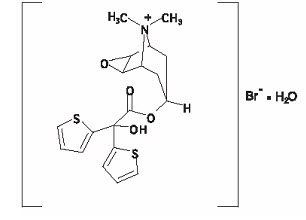
Active ingredient
Classification
AnticholinergicsAnticholinergic
Drug interactions
Tiotropium has several potential drug interactions that may affect its efficacy and safety.
- moderateother adrenergic drugs — may potentiate effect
- moderatexanthine derivatives, steroids, diuretics, non-potassium sparing diuretics — may potentiate hypokalemia or ECG changes
- majorMAO inhibitors, tricyclic antidepressants, drugs that prolong QTc interval — may potentiate effect on cardiovascular system
- moderatebeta-blockers — may decrease effectiveness
- majorother anticholinergic medications — may lead to an increase in anticholinergic adverse effects
- moderatestrong dual CYP and P-gp inhibitors (e.g., ketoconazole) — may increase olodaterol plasma concentrations
Indications
INDICATIONS AND USAGE SPIRIVA RESPIMAT is an anticholinergic indicated for: The long-term, once-daily, maintenance treatment of bronchospasm associated with chronic obstructive pulmonary disease (COPD), and for reducing COPD exacerbations ( 1.1 ) The long-term, once-daily, maintenance treatment of asthma in patients 6 years of age and older ( 1.2 ) Limitation of Use: Not indicated for relief of acute bronchospasm ( 1.1 , 1.2 , 5.1 ) 1.1 Maintenance Treatment of Chronic Obstructive Pulmonary Disease SPIRIVA RESPIMAT (tiotropium bromide) is indicated for the long-term, once-daily, maintenance treatment of bronchospasm associated with chronic obstructive pulmonary disease (COPD), including chronic bronchitis and emphysema. SPIRIVA RESPIMAT is indicated to reduce exacerbations in COPD patients. Important Limitation of Use: SPIRIVA RESPIMAT is NOT indicated for the relief of acute bronchospasm. 1.2 Maintenance Treatment of Asthma SPIRIVA RESPIMAT is a bronchodilator indicated for the long-term, once-daily, maintenance treatment of asthma in patients 6 years of age and older . Important Limitation of Use: SPIRIVA RESPIMAT is NOT indicated for the relief of acute bronchospasm.
Dosage
DOSAGE AND ADMINISTRATION To receive the full dosage of medication, SPIRIVA RESPIMAT must be administered as two inhalations once-daily. Do not take more than one dose (2 inhalations) in 24 hours. Prior to first use, the SPIRIVA RESPIMAT cartridge is inserted into the SPIRIVA RESPIMAT inhaler and the unit is primed. When using the unit for the first time, patients are to actuate the inhaler toward the ground until an aerosol cloud is visible and then repeat the process three more times. The unit is then considered primed and ready for use. If not used for more than 3 days, patients are to actuate the inhaler once to prepare the inhaler for use. If not used for more than 21 days, patients are to actuate the inhaler until an aerosol cloud is visible and then repeat the process three more times to prepare the inhaler for use [see Patient Counseling Information (17) ]. For oral inhalation only. To receive the full dose of medication, SPIRIVA RESPIMAT must be administered as two inhalations once-daily. Treatment of COPD: 2 inhalations of SPIRIVA RESPIMAT 2.5 mcg once-daily. ( 2 ) Treatment of asthma patients 6 years and older: 2 inhalations of SPIRIVA RESPIMAT 1.25 mcg once-daily. ( 2 ) 2.1 Chronic Obstructive Pulmonary Disease The recommended dosage for patients with COPD is 2 inhalations of SPIRIVA RESPIMAT 2.5 mcg per actuation once-daily; total dose equals 5 mcg of SPIRIVA RESPIMAT. 2.2 Asthma The recommended dosage for patients with asthma is 2 inhalations of SPIRIVA RESPIMAT 1.25 mcg per actuation once-daily; total dose equals 2.5 mcg of SPIRIVA RESPIMAT. In the treatment of asthma, the maximum benefits in lung function may take up to 4 to 8 weeks of dosing [see Patient Counseling Information (17) ]. 2.3 Special Populations No dosage adjustment is required for geriatric, hepatically-impaired, or renally-impaired patients. However, patients with moderate to severe renal impairment given SPIRIVA RESPIMAT should be monitored closely for anticholinergic effects [see Warnings and Precautions (5.6) , Use in Specific Populations (8.5 , 8.6 , 8.7) , and Clinical Pharmacology (12.3) ] .
Warnings
WARNINGS AND PRECAUTIONS Not for acute use: Not a rescue medication ( 5.1 ) Immediate hypersensitivity reactions: Discontinue tiotropium bromide inhalation powder at once and consider alternatives if immediate hypersensitivity reactions, including angioedema, urticaria, rash, bronchospasm, or anaphylaxis, occur. Use with caution in patients with severe hypersensitivity to milk proteins. ( 5.2 ) Paradoxical bronchospasm: Discontinue tiotropium bromide inhalation powder and consider other treatments if paradoxical bronchospasm occurs ( 5.3 ) Worsening of narrow-angle glaucoma may occur. Use with caution in patients with narrow-angle glaucoma and instruct patients to consult a physician immediately if this occurs. ( 5.4 ) Worsening of urinary retention may occur. Use with caution in patients with prostatic hyperplasia or bladder-neck obstruction and instruct patients to consult a physician immediately if this occurs. ( 5.5 ) 5.1 Not for Acute Use Tiotropium bromide inhalation powder is intended as a once-daily maintenance treatment for COPD and should not be used for relief of acute symptoms, i.e., as rescue therapy for the treatment of acute episodes of bronchospasm. 5.2 Immediate Hypersensitivity Reactions Immediate hypersensitivity reactions, including urticaria, angioedema (including swelling of the lips, tongue, or throat), rash, bronchospasm, anaphylaxis, or itching, may occur after administration of tiotropium bromide inhalation powder. If such a reaction occurs, therapy with tiotropium bromide inhalation powder should be stopped at once and alternative treatments should be considered. Given the similar structural formula of atropine to tiotropium, patients with a history of hypersensitivity reactions to atropine or its derivatives should be closely monitored for similar hypersensitivity reactions to tiotropium bromide inhalation powder. In addition, tiotropium bromide inhalation powder should be used with caution in patients with severe hypersensitivity to milk proteins. 5.3 Paradoxical Bronchospasm Inhaled medicines, including tiotropium bromide inhalation powder, may cause paradoxical bronchospasm. If this occurs, it should be treated immediately with an inhaled short- acting beta 2 -agonist such as albuterol. Treatment with tiotropium bromide inhalation powder should be stopped and other treatments considered. 5.4 Worsening of Narrow-Angle Glaucoma Tiotropium bromide inhalation powder should be used with caution in patients with narrow-angle glaucoma. Prescribers and patients should be alert for signs and symptoms of acute narrow-angle glaucoma (e.g., eye pain or discomfort, blurred vision, visual halos or colored images in association with red eyes from conjunctival congestion and corneal edema). Instruct patients to consult a physician immediately should any of these signs or symptoms develop. 5.5 Worsening of Urinary Retention Tiotropium bromide inhalation powder should be used with caution in patients with urinary retention. Prescribers and patients should be alert for signs and symptoms of urinary retention (e.g., difficulty passing urine, painful urination), especially in patients with prostatic hyperplasia or bladder-neck obstruction. Instruct patients to consult a physician immediately should any of these signs or symptoms develop. 5.6 Renal Impairment As a predominantly renally excreted drug, patients with moderate to severe renal impairment (creatinine clearance of <60 mL/min) treated with tiotropium bromide inhalation powder should be monitored closely for anticholinergic side effects [see Clinical Pharmacology ( 12.3 )].
Contraindications
CONTRAINDICATIONS Tiotropium bromide inhalation powder is contraindicated in patients with a hypersensitivity to tiotropium, ipratropium, or any components of this product [see Warnings and Precautions ( 5.2 )] . In clinical trials and postmarketing experience with tiotropium bromide inhalation powder, immediate hypersensitivity reactions, including angioedema (including swelling of the lips, tongue, or throat), itching, or rash have been reported [see Warnings and Precautions ( 5.2 )] . Hypersensitivity to tiotropium, ipratropium, or any components of tiotropium bromide inhalation powder capsules ( 4 )
Mechanism of action
Mechanism of Action Tiotropium is a long-acting, antimuscarinic agent, which is often referred to as an anticholinergic. It has similar affinity to the subtypes of muscarinic receptors, M 1 to M 5 . In the airways, it exhibits pharmacological effects through inhibition of M 3 -receptors at the smooth muscle leading to bronchodilation. The competitive and reversible nature of antagonism was shown with human and animal origin receptors and isolated organ preparations. In preclinical in vitro as well as in vivo studies, prevention of methacholine-induced bronchoconstriction effects was dose-dependent and lasted longer than 24 hours. The bronchodilation following inhalation of tiotropium is predominantly a site-specific effect.
Source: RxNorm + openFDA + RxClass + FAERS · 2026
Look up another medication