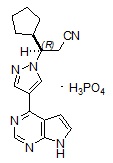
ruxolitinib 25 MG Oral Tablet — Agents for dermatitis, excluding corticosteroids. INDICATIONS AND USAGE OPZELURA is a Janus kinase (JAK) inhibitor indicated for: the topical short-term and non-continuous chronic treatment of mild…
Boxed warning
WARNING: SERIOUS INFECTIONS, MORTALITY, MALIGNANCY, MAJOR ADVERSE CARDIOVASCULAR EVENTS, AND THROMBOSIS SERIOUS INFECTIONS Patients treated with oral Janus kinase inhibitors for inflammatory conditions are at risk for developing serious infections that may lead to hospitalization or death [see Warnings and Precautions ( 5.1 ) and Adverse Reactions ( 6.1 )] . Reported infections include: Active tuberculosis, which may present with pulmonary or extrapulmonary disease. Invasive fungal infections, including cryptococcosis, and pneumocystosis. Bacterial, viral, including herpes zoster, and other infections due to opportunistic pathogens. Avoid use of OPZELURA in patients with an active, serious infection, including localized infections. If a serious infection develops, interrupt OPZELURA until the infection is controlled. The risks and benefits of treatment with OPZELURA should be carefully considered prior to initiating therapy in patients with chronic or recurrent infection. Patients should be closely monitored for the development of signs and symptoms of infection during and after treatment with OPZELURA [see Warnings and Precautions ( 5.1 )] . MORTALITY In a large, randomized, postmarketing safety study in rheumatoid arthritis (RA) patients 50 years of age and older with at least one cardiovascular risk factor comparing an oral JAK inhibitor to tumor necrosis factor (TNF) blocker treatment, a h igher rate of all-cause mortality, including sudden cardiovascular death, was observed with the JAK inhibitor [see Warnings and Precautions ( 5.2 )] . MALIGNANCIES Malignancies were reported in patients treated with OPZELURA. Lymphoma and other malignancies have been observed in patients receiving JAK inhibitors used to treat inflammatory conditions. In RA patients treated with an oral JAK inhibitor, a higher rate of malignancies (excluding non-melanoma skin cancer (NMSC)) was observed when compared with TNF blockers. Patients who are current or past smokers are at additional increased risk [see Warnings and Precautions ( 5.3 )] . MAJOR ADVERSE CARDIOVASCULAR EVENTS (MACE) In RA patients 50 years of age and older with at least one cardiovascular risk factor treated with an oral JAK inhibitor, a higher rate of major adverse cardiovascular events ( MACE) ( defined as cardiovascular death, myocardial infarction, and stroke) , was observed when compared with TNF blockers. Patients who are current or past smokers are at additional increased risk. Discontinue OPZELURA in patients who have experienced a myocardial infarction or stroke [see Warnings and Precautions ( 5.4 )] . THROMBOSIS Thromboembolic events were observed in trials with OPZELURA. Thrombosis, including pulmonary embolism (PE), deep venous thrombosis (DVT), and arterial thrombosis have been reported in patients receiving JAK inhibitors used to treat inflammatory conditions. Many of these adverse reactions were serious and some resulted in death. In RA patients 50 years of age and older with at least one cardiovascular risk factor treated with an oral JAK inhibitor, a higher rate of thrombosis was observed when compared with TNF blockers. Avoid OPZELURA in patients at risk. If symptoms of thrombosis occur, discontinue OPZELURA and treat appropriately [see Warnings and Precautions ( 5.5 )] . WARNING: SERIOUS INFECTIONS, MORTALITY, MALIGNANCY, MAJOR ADVERSE CARDIOVASCULAR EVENTS (MACE), AND THROMBOSIS See full prescribing information for complete boxed warning. Serious infections leading to hospitalization or death, including tuberculosis and bacterial, invasive fungal, viral, and other opportunistic infections, have occurred in patients receiving Janus kinase inhibitors for inflammatory conditions. ( 5.1 ) Higher rate of all-cause mortality, including sudden cardiovascular death have been observed in patients treated with Janus kinase inhibitors for inflammatory conditions. ( 5.2 ) Lymphoma and other malignancies have been observed in patients treated with Janus kinase inhibitors for inflammatory conditions. ( 5.3 ) Higher rate of MACE (including cardiovascular death, myocardial infarction, and stroke) has been observed in patients treated with Janus kinase inhibitors for inflammatory conditions. ( 5.4 ) Thrombosis, including deep venous thrombosis, pulmonary embolism, and arterial thrombosis, some fatal, have occurred in patients treated with Janus kinase inhibitors for inflammatory conditions. ( 5.5 )
Agents for dermatitis, excluding corticosteroidsKinase Inhibitor
Drug interactions
Ruxolitinib is affected by CYP3A4 inhibitors and inducers, which can alter its systemic concentrations.
majorCYP3A4 inhibitors — increased systemic concentrations of ruxolitinib
moderateCYP3A4 inducers — decreased systemic concentrations of ruxolitinib
Indications
INDICATIONS AND USAGE OPZELURA is a Janus kinase (JAK) inhibitor indicated for: the topical short-term and non-continuous chronic treatment of mild to moderate atopic dermatitis in non-immunocompromised adult and pediatric patients 2 years of age and older whose disease is not adequately controlled with topical prescription therapies or when those therapies are not advisable. ( 1.1 ) the topical treatment of nonsegmental vitiligo in adult and pediatric patients 12 years of age and older. ( 1.2 ) Limitations of Use Use of OPZELURA in combination with therapeutic biologics, other JAK inhibitors or potent immunosuppressants such as azathioprine or cyclosporine is not recommended. ( 1.3 ) 1.1 Atopic Dermatitis OPZELURA is indicated for the topical short-term and non-continuous chronic treatment of mild to moderate atopic dermatitis in non-immunocompromised adult and pediatric patients 2 years of age and older whose disease is not adequately controlled with topical prescription therapies or when those therapies are not advisable. 1.2 Nonsegmental Vitiligo OPZELURA is indicated for the topical treatment of nonsegmental vitiligo in adult and pediatric patients 12 years of age and older. 1.3 Limitations of Use Use of OPZELURA in combination with therapeutic biologics, other Janus kinase (JAK) inhibitors, or potent immunosuppressants such as azathioprine or cyclosporine is not recommended.
Dosage
DOSAGE AND ADMINISTRATION Atopic Dermatitis Apply a thin layer of OPZELURA topically twice daily to affected areas of up to 20% body surface area. ( 2.1 ) Do not use OPZELURA with occlusive dressings. ( 2.1 ) Adult and Pediatric Patients 12 Years of Age and Older Do not use more than one 60 gram tube of OPZELURA per week or one 100 gram tube per 2 weeks. ( 2.1 ) Pediatric Patients 2 to 11 Years of Age Do not use more than one 60 gram tube of OPZELURA per 2 weeks. ( 2.1 ) Nonsegmental Vitiligo Apply a thin layer of OPZELURA topically twice daily to affected areas of up to 10% body surface area. ( 2.2 ) Do not use more than one 60 gram tube of OPZELURA per week or one 100 gram tube per 2 weeks. ( 2.2 ) 2.1 Recommended Dosage and Administration for Atopic Dermatitis OPZELURA is for topical use only. OPZELURA is not for ophthalmic, oral, or intravaginal use. Instruct patients to apply a thin layer of OPZELURA twice daily to affected areas of up to 20% body surface area. Do not use OPZELURA with occlusive dressings. Stop using when signs and symptoms (e.g., itch, rash, and redness) of atopic dermatitis resolve. If signs and symptoms do not improve within 8 weeks, patients should be re-examined by their healthcare provider [see Clinical Studies ( 14.1 )] . Adult and Pediatric Patients 12 Years of Age and Older Do not use more than one 60 gram tube of OPZELURA per week or one 100 gram tube per 2 weeks. Pediatric Patients 2 to 11 Years of Age Do not use more than one 60 gram tube of OPZELURA per 2 weeks. 2.2 Recommended Dosage and Administration for Nonsegmental Vitiligo OPZELURA is for topical use only. OPZELURA is not for ophthalmic, oral, or intravaginal use. Instruct patients to apply a thin layer of OPZELURA twice daily to affected areas of up to 10% body surface area. Do not use more than one 60 gram tube of OPZELURA per week or one 100 gram tube per 2 weeks. Satisfactory patient response may require treatment with OPZELURA for more than 24 weeks. If the patient does not find the repigmentation meaningful by 24 weeks, the patient should be re‑evaluated by the healthcare provider [see Clinical Studies ( 14.2 )] .
Warnings
WARNINGS AND PRECAUTIONS Serious Infections: Serious bacterial, mycobacterial, fungal and viral infections have occurred. Regularly monitor patients for infection and manage it promptly. ( 5.1 ) Non-melanoma Skin Cancers . Basal cell and squamous cell carcinoma have occurred. Perform periodic skin examinations during treatment and following treatment as appropriate. ( 5.3 ) Thrombosis. Thromboembolic events have occurred. ( 5.5 ) Cytopenias: Thrombocytopenia, anemia, neutropenia, lymphopenia, and leukopenia have occurred. Perform CBC monitoring as clinically indicated. ( 5.6 ) 5.1 Serious Infections Serious and sometimes fatal infections due to bacterial, mycobacterial, invasive fungal, viral, or other opportunistic pathogens have been reported in patients receiving oral JAK inhibitors. Serious lower respiratory tract infections were reported in the clinical development program with topical ruxolitinib. Avoid use of OPZELURA in patients with an active, serious infection, including localized infections. Consider the risks and benefits of treatment prior to initiating OPZELURA in patients: with chronic or recurrent infection with a history of a serious or an opportunistic infection who have been exposed to tuberculosis who have resided or traveled in areas of endemic tuberculosis or endemic mycoses; or with underlying conditions that may predispose them to infection. Closely monitor patients for the development of signs and symptoms of infection during and after treatment with OPZELURA. Interrupt OPZELURA if a patient develops a serious infection, an opportunistic infection, or sepsis. Do not resume OPZELURA until the infection is controlled. Tuberculosis No cases of active tuberculosis (TB) were reported in clinical trials with OPZELURA. Cases of active TB were reported in clinical trials of oral JAK inhibitors used to treat inflammatory conditions. Consider evaluating patients for latent and active TB infection prior to administration of OPZELURA. During OPZELURA use, monitor patients for the development of signs and symptoms of TB. Viral Reactivation Viral reactivation, including cases of herpes virus reactivation (e.g., herpes zoster), were reported in clinical trials with JAK inhibitors used to treat inflammatory conditions including OPZELURA. If a patient develops herpes zoster, consider interrupting OPZELURA treatment until the episode resolves. Hepatitis B and C The impact of JAK inhibitors used to treat inflammatory conditions including OPZELURA on chronic viral hepatitis reactivation is unknown. Patients with a history of hepatitis B or C infection were excluded from clinical trials. Hepatitis B viral load (HBV-DNA titer) increases, with or without associated elevations in alanine aminotransferase and aspartate aminotransferase, have been reported in patients with chronic HBV infections taking oral ruxolitinib. OPZELURA initiation is not recommended in patients with active hepatitis B or hepatitis C. 5.2 Mortality In a large, randomized, postmarketing safety study of an oral JAK inhibitor in rheumatoid arthritis (RA) patients 50 years of age and older with at least one cardiovascular risk factor, a higher rate of all-cause mortality, including sudden cardiovascular death, was observed in patients treated with the JAK inhibitor compared with TNF blockers. Consider the benefits and risks for the individual patient prior to initiating or continuing therapy with OPZELURA. 5.3 Malignancy and Lymphoproliferative Disorders Malignancies, including lymphomas, were observed in clinical trials of oral JAK inhibitors used to treat inflammatory conditions. Patients who are current or past smokers are at additional increased risk. Malignancies, including lymphomas, have occurred in patients receiving JAK inhibitors used to treat inflammatory conditions. In a large, randomized, postmarketing safety study of an oral JAK inhibitor in RA patients, a higher rate of malignancies (excluding non-melanoma skin cancer) was observed in patients treated with the JAK inhibitor compared to those treated with TNF blockers. A higher rate of lymphomas was observed in patients treated with the JAK inhibitor compared to those treated with TNF blockers. A higher rate of lung cancers was observed in current or past smokers treated with the JAK inhibitor compared to those treated with TNF blockers. In this study, current or past smokers had an additional increased risk of overall malignancies. Consider the benefits and risks for the individual patient prior to initiating or continuing therapy with OPZELURA, particularly in patients with a known malignancy (other than successfully treated non-melanoma skin cancers), patients who develop a malignancy when on treatment, and patients who are current or past smokers. Non-melanoma Skin Cancers Non-melanoma skin cancers including basal cell and squamous cell carcinoma have occurred in patients treated with OPZELURA. Perform periodic skin examinations during OPZELURA treatment and following treatment as appropriate. Exposure to sunlight and UV light should be limited by wearing protective clothing and using broad-spectrum sunscreen. 5.4 Major Adverse Cardiovascular Events (MACE) In a large, randomized, postmarketing safety study of an oral JAK inhibitor in RA patients 50 years of age and older with at least one cardiovascular risk factor, a higher rate of major adverse cardiovascular events (MACE) defined as cardiovascular death, non-fatal myocardial infarction (MI), and non-fatal stroke was observed with the JAK inhibitor compared to those treated with TNF blockers. Patients who are current or past smokers are at additional increased risk. Consider the benefits and risks for the individual patient prior to initiating or continuing therapy with OPZELURA, particularly in patients who are current or past smokers and patients with other cardiovascular risk factors. Patients should be informed about the symptoms of serious cardiovascular events and the steps to take if they occur. Discontinue OPZELURA in patients that have experienced a myocardial infarction or stroke. 5.5 Thrombosis Thromboembolic events were observed in clinical trials with OPZELURA. Thrombosis, including deep vein thrombosis (DVT), pulmonary embolism (PE), and arterial thrombosis have been reported in patients receiving JAK inhibitors used to treat inflammatory conditions. Many of these adverse reactions were serious and some resulted in death. In a large, randomized, postmarketing safety study of an oral JAK inhibitor in RA patients 50 years of age and older with at least one cardiovascular risk factor, higher rates of overall thrombosis, DVT, and PE were observed compared to those treated with TNF blockers. Avoid OPZELURA in patients who may be at increased risk of thrombosis. If symptoms of thrombosis occur, discontinue OPZELURA and evaluate and treat patients appropriately. 5.6 Cytopenias Thrombocytopenia, anemia, neutropenia, lymphopenia, and leukopenia were reported in the clinical trials with OPZELURA. Consider the benefits and risks for individual patients who have a known history of these events prior to initiating therapy with OPZELURA. Perform CBC monitoring as clinically indicated. Discontinue OPZELURA if signs and/or symptoms associated with clinically significant decreases in laboratory values occur. 5.7 Lipid Elevations Treatment with oral ruxolitinib has been associated with increases in lipid parameters including total cholesterol, low-density lipoprotein (LDL) cholesterol, and triglycerides.
Contraindications
CONTRAINDICATIONS None. None. ( 4 )
Mechanism of action
Mechanism of Action Ruxolitinib, a Janus kinase (JAK) inhibitor, inhibits JAK1 and JAK2 which mediate the signaling of a number of cytokines and growth factors that are important for hematopoiesis and immune function. JAK signaling involves recruitment of STATs (signal transducers and activators of transcription) to cytokine receptors, activation and subsequent localization of STATs to the nucleus leading to modulation of gene expression. The relevance of inhibition of specific JAK enzymes to therapeutic effectiveness is not currently known.
A drug lookup is just the start. Eleplan keeps the whole care plan in one place.
Medications, diagnoses, documents, appointments, and the whole care team — organized and always in sync, with Ellie, your AI care assistant, on top of it. Free to start.