ripretinib 50 MG Oral Tablet
Managing this medication for someone you care for? Eleplan keeps diagnoses, medications and appointments in one plan.
Start free with EleplanClinical drug
ripretinib 50 MG Oral Tablet
50 MG · Oral Tablet · oral
A form of ripretinib →
ripretinib 50 MG Oral Tablet — Other protein kinase inhibitors. INDICATIONS AND USAGE QINLOCK is indicated for the treatment of adult patients with advanced gastrointestinal stromal tumor (GIST) who have received…
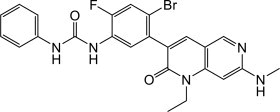
Active ingredient
Classification
Other protein kinase inhibitorsKinase Inhibitor
Drug interactions
Ripretinib has significant interactions with CYP3A inhibitors and inducers that affect its pharmacokinetics and clinical efficacy.
- moderatestrong CYP3A inhibitors — increased exposure of ripretinib and its active metabolite, which may increase the risk of adverse reactions
- majorstrong CYP3A inducers — decreased exposure of ripretinib and its active metabolite, which may decrease anti-tumor activity
- majormoderate CYP3A inducers — decreased exposure of ripretinib and its active metabolite, which may decrease anti-tumor activity
Indications
INDICATIONS AND USAGE QINLOCK is indicated for the treatment of adult patients with advanced gastrointestinal stromal tumor (GIST) who have received prior treatment with 3 or more kinase inhibitors, including imatinib. QINLOCK is a kinase inhibitor indicated for the treatment of adult patients with advanced gastrointestinal stromal tumor (GIST) who have received prior treatment with 3 or more kinase inhibitors, including imatinib. ( 1 )
Dosage
DOSAGE AND ADMINISTRATION Recommended Dosage : 150 mg orally once daily with or without food. ( 2.1 ) 2.1 Recommended Dosage The recommended dosage of QINLOCK is 150 mg orally once daily with or without food until disease progression or unacceptable toxicity. Instruct patients to swallow tablets whole. Advise patients to take QINLOCK at the same time each day. Advise patients to take a missed dose if less than 8 hours have passed since the missed scheduled dose. Advise patients not to take an additional dose if vomiting occurs after taking QINLOCK and to continue with their next scheduled dose. 2.2 Dosage Modifications for Adverse Reactions The recommended dose reduction for adverse reactions is: QINLOCK 100 mg orally once daily. Permanently discontinue QINLOCK in patients who are unable to tolerate 100 mg orally once daily. The recommended dosage modifications of QINLOCK for adverse reactions are provided in Table 1 . Table 1: Recommended Dosage Modifications for QINLOCK for Adverse Reactions Adverse Reaction Severity a QINLOCK Dosage Modifications a Graded per National Cancer Institute Common Terminology Criteria for Adverse Events version 4.03 (NCI CTCAE v4.03). Palmar-Plantar Erythrodysesthesia Syndrome (PPES) [see Warnings and Precautions ( 5.1 )] Grade 2 Withhold QINLOCK until Grade ≤1 or baseline. If recovered within 7 days, resume QINLOCK at same dose; otherwise resume at reduced dose. Consider re-escalating QINLOCK if maintained at Grade ≤1 or baseline for at least 28 days. If PPES recurs, withhold QINLOCK until Grade ≤1 or baseline and then resume QINLOCK at a reduced dose regardless of time to improvement. Grade 3 Withhold QINLOCK for at least 7 days or until Grade ≤1 or baseline (maximum 28 days). Resume QINLOCK at a reduced dose. Consider re-escalating QINLOCK if maintained at Grade ≤1 or baseline for at least 28 days. Hypertension [see Warnings and Precautions ( 5.3 )] Grade 3 If symptomatic, withhold QINLOCK until symptoms have resolved and blood pressure is controlled. If blood pressure is controlled to Grade ≤1 or baseline, resume QINLOCK at the same dose; otherwise, resume QINLOCK at reduced dose. If Grade 3 hypertension recurs, withhold QINLOCK until symptoms have resolved and blood pressure is controlled. Resume QINLOCK at a reduced dose. Grade 4 Permanently discontinue QINLOCK. Left Ventricular Systolic Dysfunction [see Warnings and Precautions ( 5.4 )] Grade 3 or 4 Permanently discontinue QINLOCK. Arthralgia or Myalgia [see Adverse Reactions ( 6.1 )] Grade 2 Withhold QINLOCK until Grade ≤1 or baseline. If recovered within 7 days, resume QINLOCK at same dose; otherwise resume QINLOCK at reduced dose. Consider re-escalating QINLOCK if maintained at Grade ≤1 or baseline for at least 28 days. If arthralgia or myalgia recurs, withhold QINLOCK until Grade ≤1 or baseline and then resume QINLOCK at a reduced dose regardless of time to improvement. Grade 3 Withhold QINLOCK for at least 7 days or until Grade ≤1 or baseline (maximum of 28 days). Resume QINLOCK at a reduced dose. Consider re-escalating QINLOCK if maintained at Grade ≤1 or baseline for at least 28 days. Other Adverse Reactions [see Adverse Reactions ( 6.1 )] Grade 3 or 4 Withhold QINLOCK until Grade ≤1 or baseline (maximum 28 days), and then resume QINLOCK at a reduced dose; otherwise permanently discontinue. Consider re-escalating QINLOCK if no recurrence of the adverse reaction for at least 28 days. If Grade 3 or 4 recurs, permanently discontinue QINLOCK. 2.3 Dose Modifications for Moderate CYP3A Inducers Avoid concomitant use of moderate CYP3A inducers during QINLOCK treatment. If a moderate CYP3A inducer cannot be avoided, increase the QINLOCK dosing frequency from the recommended dose of 150 mg once daily to 150 mg twice daily during the co-administration period. Monitor for clinical response and tolerability. If the concomitant moderate CYP3A inducer is discontinued, resume QINLOCK dosage back to 150 mg once daily 14 days after the discontinuation of the moderate CYP3A inducer [see Drug Interactions ( 7.1 ) and Clinical Pharmacology ( 12.3 )] . For patients concomitantly using a moderate CYP3A inducer with QINLOCK (taking QINLOCK twice daily) who missed a dose: If less than 4 hours have passed since the missed scheduled dose, advise the patient to take the missed dose as soon as possible and then take the next dose at the regularly scheduled time. If more than 4 hours have passed since the missed scheduled dose, advise the patient to skip the missed dose and then take the next dose at the regularly scheduled time. [see Drug Interactions ( 7.1 )] .
Warnings
WARNINGS AND PRECAUTIONS Palmar-Plantar Erythrodysesthesia Syndrome : Based on severity, withhold QINLOCK and resume at same or reduced dose. ( 2.2 , 5.1 ) New Primary Cutaneous Malignancies : Perform dermatologic evaluations when initiating QINLOCK and routinely during treatment. ( 5.2 ) Hypertension : Do not initiate QINLOCK in patients with uncontrolled hypertension and monitor blood pressure during treatment. Based on severity, withhold QINLOCK and then resume at same or reduced dose or permanently discontinue. ( 2.2 , 5.3 ) Cardiac Dysfunction : Assess ejection fraction by echocardiogram or MUGA scan prior to initiating QINLOCK and during treatment, as clinically indicated. Permanently discontinue QINLOCK for Grade 3 or 4 left ventricular systolic dysfunction. ( 2.2 , 5.4 ) Risk of Impaired Wound Healing : Withhold QINLOCK for at least 1 week prior to elective surgery. Do not administer for at least 2 weeks after major surgery and until adequate wound healing. The safety of resumption of QINLOCK after resolution of wound healing complications has not been established. ( 5.5 ) Photosensitivity : May cause photosensitivity reactions. Advise patients to limit direct ultraviolet exposure. ( 5.6 ) Embryo-Fetal Toxicity : Can cause fetal harm. Advise females of reproductive potential of the potential risk to a fetus and to use effective contraception. ( 5.7 , 8.1 , 8.3 ) 5.1 Palmar-Plantar Erythrodysesthesia Syndrome In INVICTUS, Grade 1-2 palmar-plantar erythrodysesthesia syndrome (PPES) occurred in 21% of the 85 patients who received QINLOCK [see Adverse Reactions ( 6.1 )]. PPES led to dose discontinuation in 1.2% of patients, dose interruption in 2.4% of patients, and dose reduction in 1.2% of patients. Based on severity, withhold QINLOCK and then resume at same or reduced dose [see Dosage and Administration ( 2.2 )] . 5.2 New Primary Cutaneous Malignancies In INVICTUS, cutaneous squamous cell carcinoma (cuSCC) occurred in 4.7% of the 85 patients who received QINLOCK, with a median time to event of 4.6 months (range: 3.8 to 6 months). In the pooled safety population, cuSCC and keratoacanthoma occurred in 7% and 1.9% of patients, respectively. In INVICTUS, melanoma occurred in 2.4% of the 85 of patients who received QINLOCK. In the pooled safety population, melanoma occurred in 0.9% of patients. Perform dermatologic evaluations when initiating QINLOCK and routinely during treatment. Manage suspicious skin lesions with excision and dermatopathologic evaluation. Continue QINLOCK at the same dose. 5.3 Hypertension In INVICTUS, Grade 1-3 hypertension occurred in 14% of the 85 patients who received QINLOCK, including Grade 3 hypertension in 7% [see Adverse Reactions ( 6.1 )] . Do not initiate QINLOCK in patients with uncontrolled hypertension. Adequately control blood pressure prior to initiating QINLOCK. Monitor blood pressure as clinically indicated during treatment with QINLOCK, and initiate or adjust antihypertensive therapy as appropriate. Based on severity, withhold QINLOCK and then resume at same or reduced dose or permanently discontinue [see Dosage and Administration ( 2.2 )] . 5.4 Cardiac Dysfunction In INVICTUS, cardiac failure occurred in 1.2% of the 85 patients who received QINLOCK. In the pooled safety population, cardiac dysfunction (including cardiac failure, acute left ventricular failure, diastolic dysfunction, and ventricular hypertrophy) occurred in 1.7% of patients, including Grade 3 adverse reactions in 1.1%. In INVICTUS, Grade 3 decreased ejection fraction occurred in 1.3% of the 77 patients who received QINLOCK and who had a baseline and at least one post-baseline echocardiogram. In the pooled safety population, Grade 3 decreased ejection fraction occurred in 1.9% of the 263 patients who received QINLOCK and who had a baseline and at least one post-baseline echocardiogram. In INVICTUS, cardiac dysfunction led to dose discontinuation in 1.2% of the 85 patients who received QINLOCK. The safety of QINLOCK has not been assessed in patients with a baseline ejection fraction below 50%. Assess ejection fraction by echocardiogram or MUGA scan prior to initiating QINLOCK and during treatment, as clinically indicated. Permanently discontinue QINLOCK for Grade 3 or 4 left ventricular systolic dysfunction [see Dosage and Administration ( 2.2 )] . 5.5 Risk of Impaired Wound Healing Impaired wound healing complications can occur in patients who receive drugs that inhibit the vascular endothelial growth factor (VEGF) signaling pathway. Therefore, QINLOCK has the potential to adversely affect wound healing. Withhold QINLOCK for at least 1 week prior to elective surgery. Do not administer for at least 2 weeks following major surgery and until adequate wound healing. The safety of resumption of QINLOCK after resolution of wound healing complications has not been established. 5.6 Photosensitivity QINLOCK may cause photosensitivity reactions. In all patients treated with QINLOCK in clinical trials (n=621), photosensitivity reactions occurred in 0.6% of patients. Advise patients to limit direct ultraviolet exposure during treatment with QINLOCK and for at least one week after discontinuation of treatment. 5.7 Embryo-Fetal Toxicity Based on findings from animal studies and its mechanism of action, QINLOCK can cause fetal harm when administered to a pregnant woman. Oral administration of ripretinib to pregnant rats and rabbits during the period of organogenesis resulted in malformations primarily associated with the cardiovascular and skeletal systems, anatomic variations, decreased fetal body weight, and increased post-implantation loss at exposures approximately one half of the recommended dose of 150 mg once daily based on area under the curve (AUC). Advise pregnant women of the potential risk to a fetus. Advise females of reproductive potential to use effective contraception during treatment with QINLOCK and for 1 week after the last dose. Advise males with female partners of reproductive potential to use effective contraception during treatment with QINLOCK and for 1 week after the last dose [see Use in Specific Populations ( 8.1 , 8.3 ), Nonclinical Toxicology ( 13.1 )].
Contraindications
CONTRAINDICATIONS None. None. ( 4 )
Mechanism of action
Mechanism of Action Ripretinib is a tyrosine kinase inhibitor that inhibits KIT proto-oncogene receptor tyrosine kinase (KIT) and platelet derived growth factor receptor A (PDGFRA) kinase, including wild type, primary, and secondary mutations. Ripretinib also inhibits other kinases in vitro, such as PDGFRB, TIE2, VEGFR2, and BRAF.
Indicated ICD-10 codes
Source: RxNorm + openFDA + RxClass + FAERS · 2026
Look up another medication