rifaximin 200 MG Oral Tablet
Managing this medication for someone you care for? Eleplan keeps diagnoses, medications and appointments in one plan.
Start free with EleplanClinical drug
rifaximin 200 MG Oral Tablet
200 MG · Oral Tablet · oral
A form of rifaximin →
rifaximin 200 MG Oral Tablet — Antibiotics. INDICATIONS AND USAGE To reduce the development of drug-resistant bacteria and maintain the effectiveness of XIFAXAN and other antibacterial drugs…
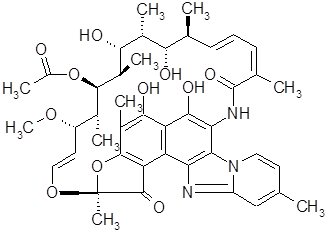
Active ingredient
Classification
AntibioticsRifamycin Antibacterial
Drug interactions
Rifaximin has several documented drug interactions that require monitoring and potential dose adjustments.
- majorwarfarin — Changes in INR have been reported; dose adjustment may be needed.
- moderateP-glycoprotein inhibitors (e.g., cyclosporine) — Increased systemic exposure to rifaximin.
- moderateCYP3A4 substrates — Potential unknown effect on pharmacokinetics of CYP3A4 substrates.
Indications
INDICATIONS AND USAGE To reduce the development of drug-resistant bacteria and maintain the effectiveness of XIFAXAN and other antibacterial drugs, XIFAXAN when used to treat infection should be used only to treat or prevent infections that are proven or strongly suspected to be caused by susceptible bacteria. When culture and susceptibility information are available, they should be considered in selecting or modifying antibacterial therapy. In the absence of such data, local epidemiology and susceptibility patterns may contribute to the empiric selection of therapy. XIFAXAN is a rifamycin antibacterial indicated for: • Treatment of travelers’ diarrhea (TD) caused by noninvasive strains of Escherichia coli in adult and pediatric patients 12 years of age and older. ( 1.1 ) • Reduction in risk of overt hepatic encephalopathy (HE) recurrence in adults. ( 1.2 ) • Treatment of irritable bowel syndrome with diarrhea (IBS-D) in adults. ( 1.3 ) Limitations of Use TD: Should not use in patients with diarrhea complicated by fever or blood in the stool or diarrhea due to pathogens other than Escherichia coli. ( 1.1, 5.1 ) 1.1 Travelers’ Diarrhea XIFAXAN is indicated for the treatment of travelers’ diarrhea (TD) caused by noninvasive strains of Escherichia coli in adults and pediatric patients 12 years of age and older. Limitations of Use XIFAXAN should not be used in patients with diarrhea complicated by fever or blood in the stool or diarrhea due to pathogens other than Escherichia coli [see Warnings and Precautions ( 5.1 ), Clinical Pharmacology ( 12.4 ), Clinical Studies ( 14.1 )]. 1.2 Hepatic Encephalopathy XIFAXAN is indicated for reduction in risk of overt hepatic encephalopathy (HE) recurrence in adults. In the placebo-controlled trial of XIFAXAN for HE, 91% of the patients were using lactulose concomitantly. Differences in the treatment effect of those patients not using lactulose concomitantly could not be assessed. XIFAXAN has not been studied in patients with MELD (Model for End-Stage Liver Disease) scores >25, and only 8.6% of patients in the placebo-controlled trial had MELD scores over 19. There is increased systemic exposure in patients with more severe hepatic dysfunction [see Warnings and Precautions ( 5.4 ), Use in Specific Populations ( 8.7 ), Clinical Pharmacology ( 12.3 )]. 1.3 Irritable Bowel Syndrome with Diarrhea XIFAXAN is indicated for the treatment of irritable bowel syndrome with diarrhea (IBS-D) in adults.
Dosage
DOSAGE AND ADMINISTRATION Condition Recommended Oral Dosage TD ( 2.1 ) 200 mg 3 times a day for 3 days HE ( 2.2 ) 550 mg 2 times a day IBS-D ( 2.3 ) 550 mg 3 times a day for 14 days. Patients who experience recurrence can be retreated up to 2 times with the same regimen. XIFAXAN can be taken with or without food. ( 2.4 ) 2.1 Dosage for Travelers’ Diarrhea The recommended dosage of XIFAXAN is 200 mg taken orally three times a day for 3 days. 2.2 Dosage for Hepatic Encephalopathy The recommended dosage of XIFAXAN is 550 mg taken orally two times a day. 2.3 Dosage for Irritable Bowel Syndrome with Diarrhea The recommended dosage of XIFAXAN is 550 mg taken orally three times a day for 14 days. Patients who experience a recurrence of symptoms can be retreated up to two times with the same dosage regimen. 2.4 Administration XIFAXAN can be taken with or without food [see Clinical Pharmacology ( 12.3 )].
Warnings
WARNINGS AND PRECAUTIONS • Travelers’ Diarrhea Not Caused by E. coli : XIFAXAN was not effective in diarrhea complicated by fever and/or blood in the stool or diarrhea due to pathogens other than E. coli . If diarrhea symptoms get worse or persist for more than 24 to 48 hours, discontinue XIFAXAN and consider alternative antibiotics. ( 5.1 ) • Clostridium difficile -Associated Diarrhea: Evaluate if diarrhea occurs after therapy or does not improve or worsens during therapy. ( 5.2 ) • Hepatic Impairment: Use with caution in patients with severe (Child-Pugh Class C) hepatic impairment. ( 5.4 , 8.7 ) • Concomitant P-glycoprotein (P-gp) inhibitors (e.g., cyclosporine): Caution should be exercised when concomitant use of XIFAXAN and a P-glycoprotein inhibitor is needed. ( 5.5, 7.1 ) 5.1 Travelers’ Diarrhea Not Caused by Escherichia coli XIFAXAN was not found to be effective in patients with diarrhea complicated by fever and/or blood in the stool or diarrhea due to pathogens other than Escherichia coli. Discontinue XIFAXAN if diarrhea symptoms get worse or persist more than 24 to 48 hours and alternative antibiotic therapy should be considered. XIFAXAN is not effective in cases of travelers’ diarrhea due to Campylobacter jejuni . The effectiveness of XIFAXAN in travelers’ diarrhea caused by Shigella spp. and Salmonella spp. has not been proven. XIFAXAN should not be used in patients where Campylobacter jejuni, Shigella spp., or Salmonella spp. may be suspected as causative pathogens [ see Indications and Usage ( 1.1 )]. 5.2 Clostridium difficile- Associated Diarrhea Clostridium difficile- associated diarrhea (CDAD) has been reported with use of nearly all antibacterial agents, including XIFAXAN, and may range in severity from mild diarrhea to fatal colitis. Treatment with antibacterial agents alters the normal flora of the colon which may lead to overgrowth of C. difficile. C. difficile produces toxins A and B which contribute to the development of CDAD. Hypertoxin producing strains of C. difficile cause increased morbidity and mortality, as these infections can be refractory to antimicrobial therapy and may require colectomy. CDAD must be considered in all patients who present with diarrhea following antibiotic use. Careful medical history is necessary since CDAD has been reported to occur over two months after the administration of antibacterial agents. If CDAD is suspected or confirmed, ongoing antibiotic use not directed against C. difficile may need to be discontinued. Appropriate fluid and electrolyte management, protein supplementation, antibiotic treatment of C . difficile, and surgical evaluation should be instituted as clinically indicated. 5.3 Development of Drug-Resistant Bacteria Prescribing XIFAXAN for travelers’ diarrhea in the absence of a proven or strongly suspected bacterial infection or a prophylactic indication is unlikely to provide benefit to the patient and increases the risk of the development of drug-resistant bacteria. 5.4 Severe (Child-Pugh Class C) Hepatic Impairment There is increased systemic exposure in patients with severe hepatic impairment. The clinical trials were limited to patients with MELD scores <25. Therefore, caution should be exercised when administering XIFAXAN to patients with severe hepatic impairment (Child-Pugh Class C) [ see Use in Specific Populations ( 8.7 ), Clinical Studies ( 14.2 )]. 5.5 Concomitant Use with P-glycoprotein Inhibitors Concomitant administration of drugs that are P-glycoprotein (P-gp) inhibitors with XIFAXAN can substantially increase the systemic exposure to rifaximin. Caution should be exercised when concomitant use of XIFAXAN and a P-gp inhibitor such as cyclosporine is needed. In patients with hepatic impairment, a potential additive effect of reduced metabolism and concomitant P-gp inhibitors may further increase the systemic exposure to rifaximin [see Drug Interactions ( 7.1 ), Clinical Pharmacology ( 12.3 )].
Contraindications
CONTRAINDICATIONS XIFAXAN is contraindicated in patients with a hypersensitivity to rifaximin, any of the rifamycin antimicrobial agents, or any of the components in XIFAXAN. Hypersensitivity reactions have included exfoliative dermatitis, angioneurotic edema, and anaphylaxis [see Adverse Reactions ( 6.2 )] . History of hypersensitivity to rifaximin, rifamycin antimicrobial agents, or any of the components of XIFAXAN. ( 4) )
Mechanism of action
Mechanism of Action Rifaximin is an antibacterial drug [see Clinical Pharmacology ( 12.4 )].
Source: RxNorm + openFDA + RxClass + FAERS · 2026
Look up another medication