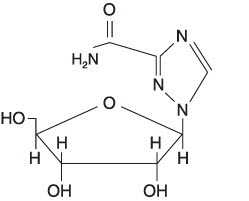
ribavirin 200 MG Oral Capsule — Antivirals for treatment of HCV infections. INDICATIONS AND USAGE Ribavirin for inhalation solution, USP is indicated for the treatment of hospitalized infants and young children with severe…
Boxed warning
WARNING: EMBRYO-FETAL TOXICITY, HEMOLYTIC ANEMIA, and MONOTHERAPY NOT RECOMMENDED Significant teratogenic and embryocidal effects have been demonstrated in all animal species exposed to ribavirin. In addition, ribavirin has a multiple-dose half-life of 12 days and may persist in non-plasma compartments for as long as 6 months. Therefore, ribavirin therapy is contraindicated in women who are pregnant and in the male partners of women who are pregnant. Avoid pregnancy and use effective contraception during therapy and for 9 months after completion of treatment in female patients and for 6 months in female partners of male patients who are taking ribavirin therapy. [see Contraindications (4) , Warnings and Precautions (5.1) , Use in Specific Populations (8.1, 8.3 ), and Nonclinical Toxicology (13.1) ]. Hemolytic anemia has been reported with ribavirin therapy. The anemia associated with ribavirin therapy may result in worsening of cardiac disease that has led to fatal and nonfatal myocardial infarctions. Patients with a history of significant or unstable cardiac disease should not be treated with ribavirin [see Dosage and Administration (2.5) , Warnings and Precautions (5.2) , and Adverse Reactions (6.1) ]. Ribavirin monotherapy is not effective for the treatment of chronic hepatitis C virus infection and should not be used alone for this indication [see Warnings and Precautions (5.10) ]. WARNING: EMBRYO-FETAL TOXICITY, HEMOLYTIC ANEMIA, and MONOTHERAPY NOT RECOMMENDED See full prescribing information for complete boxed warning. Significant teratogenic and embryocidal effects have been demonstrated in all animal species exposed to ribavirin. Therefore, ribavirin therapy is contraindicated in women who are pregnant and in the male partners of women who are pregnant. Avoid pregnancy during therapy and for 9 months after completion of treatment in female patients and for 6 months in female partners of male patients who are taking ribavirin therapy. ( 4 , 5.1 , 8.1 , 8.3 , 13.1 ) The hemolytic anemia associated with ribavirin therapy may result in worsening of cardiac disease that has led to fatal and nonfatal myocardial infarctions. Patients with a history of significant or unstable cardiac disease should not be treated with ribavirin. ( 2.5 , 5.2 , 6.1 ) Ribavirin monotherapy is not effective for the treatment of chronic hepatitis C. ( 5.10 )
Antivirals for treatment of HCV infectionsNucleoside Analog Antiviral
Indications
INDICATIONS AND USAGE Ribavirin for inhalation solution, USP is indicated for the treatment of hospitalized infants and young children with severe lower respiratory tract infections due to respiratory syncytial virus. Treatment early in the course of severe lower respiratory tract infection may be necessary to achieve efficacy. Only severe RSV lower respiratory tract infection should be treated with ribavirin for inhalation solution, USP. The vast majority of infants and children with RSV infection have disease that is mild, self-limited, and does not require hospitalization or antiviral treatment. Many children with mild lower respiratory tract involvement will require shorter hospitalization than would be required for a full course of ribavirin for inhalation solution, USP aerosol (3 to 7 days) and should not be treated with the drug. Thus the decision to treat with ribavirin for inhalation solution, USP should be based on the severity of the RSV infection. The presence of an underlying condition such as prematurity, immunosuppression or cardiopulmonary disease may increase the severity of clinical manifestations and complications of RSV infection. Use of aerosolized ribavirin for inhalation solution, USP in patients requiring mechanical ventilator assistance should be undertaken only by physicians and support staff familiar with this mode of administration and the specific ventilator being used (see WARNINGS , and DOSAGE AND ADMINISTRATION ). Diagnosis RSV infection should be documented by a rapid diagnostic method such as demonstration of viral antigen in respiratory tract secretions by immunofluorescence 3,4 or ELISA 5 before or during the first 24 hours of treatment. Treatment may be initiated while awaiting rapid diagnostic test results. However, treatment should not be continued without documentation of RSV infection. Non-culture antigen detection techniques may have false positive or false negative results. Assessment of the clinical situation, the time of year and other parameters may warrant reevaluation of the laboratory diagnosis. Description of Studies Non-Mechanically-Ventilated Infants: In two placebo controlled trials in infants hospitalized with RSV lower respiratory tract infection, aerosolized ribavirin for inhalation solution, USP treatment had a therapeutic effect, as judged by the reduction in severity of clinical manifestations of disease by treatment day 3. 3,4 Treatment was most effective when instituted within the first 3 days of clinical illness. Virus titers in respiratory secretions were also significantly reduced with ribavirin for inhalation solution, USP in one of these original studies. 4 Additional controlled studies conducted since these initial trials of aerosolized ribavirin for inhalation solution, USP in the treatment of RSV infection have supported these data. Mechanically-Ventilated Infants : A randomized, double-blind, placebo-controlled evaluation of aerosolized ribavirin for inhalation solution, USP at the recommended dose was conducted in 28 infants requiring mechanical ventilation for respiratory failure caused by documented RSV infection. 6 Mean age was 1.4 months (SD, 1.7 months). Seven patients had underlying diseases predisposing them to severe infection and 21 were previously normal. Aerosolized ribavirin for inhalation solution, USP treatment significantly decreased the duration of mechanical ventilation required (4.9 vs. 9.9 days, p=0.01) and duration of required supplemental oxygen (8.7 vs. 13.5 days, p=0.01). Intensive patient management and monitoring techniques were employed in this study. These included endotracheal tube suctioning every 1 to 2 hours; recording of proximal airway pressure, ventilatory rate, and F l O 2 every hour; and arterial blood gas monitoring every 2 to 6 hours. To reduce the risk of ribavirin for inhalation solution, USP precipitation and ventilator malfunction, heated wire tubing, two bacterial filters connected in series in the expiratory limb of the ventilator (with filter changes every 4 hours), and water column pressure release valves to monitor internal ventilator pressures were used in connecting ventilator circuits to the SPAG-2. Employing these techniques, no technical difficulties with ribavirin for inhalation solution, USP administration were encountered during the study. Adverse events consisted of bacterial pneumonia in one case, staphyloccus bacteremia in one case and two cases of post-extubation stridor. None were felt to be related to ribavirin for inhalation solution, USP administration.
Dosage
DOSAGE AND ADMINISTRATION Ribavirin capsules are administered according to body weight. ( 2.1 , 2.2 , 2.3 ) Dose reduction or discontinuation is recommended in patients experiencing certain adverse reactions or renal dysfunction. ( 2.5 , 2.6 , 12.3 ) 2.1 General Dosing Information Do not open, crush or break ribavirin capsules. Ribavirin capsules should be taken with food [see Clinical Pharmacology (12.3) ]. 2.2 Ribavirin capsules/PegIntron Combination Therapy Adult Patients The recommended dose of ribavirin capsules when used in combination with PegIntron is 800 mg to 1,400 mg based on patient body weight in two divided doses (see Table 1). Refer to PegIntron labeling for PegIntron dosing information. Duration of Treatment – Interferon Alpha-naïve Patients The treatment duration for patients with genotype 1 is 48 weeks. Discontinuation of therapy should be considered in patients who do not achieve at least a 2 log 10 drop or loss of hepatitis C virus (HCV)-RNA at 12 weeks, or if HCV-RNA remains detectable after 24 weeks of therapy. Patients with genotype 2 and 3 should be treated for 24 weeks. Duration of Treatment – Re-treatment with PegIntron/Ribavirin capsules of Prior Treatment Failures The treatment duration for patients who previously failed therapy is 48 weeks, regardless of HCV genotype. Re-treated patients who fail to achieve undetectable HCV-RNA at Week 12 of therapy, or whose HCV-RNA remains detectable after 24 weeks of therapy, are highly unlikely to achieve SVR and discontinuation of therapy should be considered [see Clinical Studies (14.1) ]. Table 1: Recommended Adult Dosing for Ribavirin capsules in Combination with PegIntron Body Weight (kg) Ribavirin capsules Daily Dose Ribavirin Number of Capsules Less than 66 800 mg/day 2 x 200 mg capsules AM 2 x 200 mg capsules PM 66 to 80 1,000 mg/day 2 x 200 mg capsules AM 3 x 200 mg capsules PM 81 to 105 1,200 mg/day 3 x 200 mg capsules AM 3 x 200 mg capsules PM Greater than 105 1,400 mg/day 3 x 200 mg capsules AM 4 x 200 mg capsules PM Pediatric Patients Dosing of ribavirin in pediatric patients is determined by body weight. The recommended dose of ribavirin when used in combination with PegIntron in pediatric patients ages 3 to 17 years is 15 mg/kg/day in two divided doses (see Table 2). Refer to PegIntron labeling for PegIntron dosing information. The treatment duration for patients with genotype 1 is 48 weeks. Patients with genotype 2 and 3 should be treated for 24 weeks. Table 2: Recommended Pediatric Ribavirin Dosing in Combination with PegIntron * Ribavirin Oral Solution may be used in any patient regardless of body weight. Body Weight (kg) Ribavirin Daily Dose Ribavirin Number of Capsules Less than 47 15 mg/kg/day Use Ribavirin Oral Solution* 47 to 59 800 mg/day 2 x 200 mg capsules AM 2 x 200 mg capsules PM 60 to 73 1,000 mg/day 2 x 200 mg capsules AM 3 x 200 mg capsules PM Greater than 73 1,200 mg/day 3 x 200 mg capsules AM 3 x 200 mg capsules PM 2.3 Ribavirin capsules/INTRON A Combination Therapy Adults Duration of Treatment – Interferon Alpha-naïve Patients The recommended dose of ribavirin capsules when used in combination with INTRON A depends on the patient’s body weight (see Table 3). Refer to Intron A labeling for interferon dosing information. The recommended duration of treatment for patients previously untreated with interferon is 24 to 48 weeks. The duration of treatment should be individualized to the patient depending on baseline disease characteristics, response to therapy, and tolerability of the regimen [see Indications and Usage (1.1), Adverse Reactions (6.1) , and Clinical Studies (14) ]. After 24 weeks of treatment, virologic response should be assessed. Treatment discontinuation should be considered in any patient who has not achieved an HCV-RNA below the limit of detection of the assay by 24 weeks. There are no safety and efficacy data for treatment duration lasting longer than 48 weeks in the previously untreated patient population. Duration of Treatment – Re-treatment with INTRON A/Ribavirin capsules in Relapse Patients In patients who relapse following nonpegylated interferon monotherapy, the recommended duration of treatment is 24 weeks. Table 3: Recommended Ribavirin capsules Dosing in Combination with INTRON A Body Weight Ribavirin Capsules At least 75 kg 2 x 200 mg capsules AM 3 x 200 mg capsules PM daily orally Greater than 75 kg 3 x 200 mg capsules AM 3 x 200 mg capsules PM daily orally Pediatrics The recommended dose of ribavirin when used in combination with INTRON A is 15 mg/kg per day orally in two divided doses (see Table 2). Refer to Intron A labeling for interferon dosing information. The recommended duration of treatment is 48 weeks for pediatric patients with genotype 1. After 24 weeks of treatment, virologic response should be assessed. Treatment discontinuation should be considered in any patient who has not achieved an HCV-RNA below the limit of detection of the assay by this time. The recommended duration of treatment for pediatric patients with genotype 2 and 3 is 24 weeks. 2.4 Testing Prior to Initiation of Ribavirin capsules The following laboratory tests are recommended in all patients treated with ribavirin capsules prior to initiation of treatment and periodically thereafter. Standard hematologic tests - including hemoglobin (pretreatment, Week 2 and Week 4 of therapy, and as clinically appropriate [see Warnings and Precautions (5.2 , 5.6) ], complete and differential white blood cell counts, and platelet count. Blood chemistries - liver function tests and TSH. Pregnancy - in women of childbearing potential. ECG [see Warnings and Precautions (5.2) ]. 2.5 Dose Modifications If severe adverse reactions or laboratory abnormalities develop during ribavirin capsules combination therapy, modify or discontinue the dose until the adverse reaction abates or decreases in severity (see Table 4) [see Warnings and Precautions (5) ]. If intolerance persists after dose adjustment, combination therapy should be discontinued. Refer to PegIntron labeling for additional information regarding dose reduction of PegIntron. Dose reduction in pediatric patients is accomplished by modifying the recommended ribavirin capsules dose from the original starting dose of 15 mg/kg daily in a two-step process to 12 mg/kg/day, then to 8 mg/kg/day, if needed (see Table 4). Ribavirin capsules are contraindicated in patients with creatinine clearance less than 50 mL/min [see Contraindications (4) ] . Patients with impaired renal function and those over the age of 50 should be carefully monitored with respect to development of anemia [see Warnings and Precautions (5.2) , Use in Specific Populations (8.5) , and Clinical Pharmacology (12.3) ] . Ribavirin capsules should be administered with caution to patients with pre-existing cardiac disease. Assess cardiovascular status before initiation of treatment and during therapy. If there is any deterioration of cardiovascular status, discontinue combination therapy [see Warnings and Precautions (5.2) ]. In patients with a history of stable cardiovascular disease, a permanent dose reduction is required if the hemoglobin decreases by 2 g/dL or more during any 4-week period. If the hemoglobin level remains below 12 g/dL after 4 weeks on a reduced dose, discontinue combination therapy. Modify or discontinue ribavirin capsules dosing in any patient whose hemoglobin level falls below 10 g/dL (see Table 4) [see Warnings and Precautions (5.2) ]. Table 4: Guidelines for Dose Modification and Discontinuation of Ribavirin capsules in combination with PegIntron or INTRON A Based on Laboratory Parameters in Adults and Pediatrics Laboratory Parameters Reduce Ribavirin capsules Daily Dose (see note 1) if: Reduce PegIntron or INTRON A Dose (see note 2) if: Discontinue Therapy if: Note 1: Adult patients: 1 st dose reduction of ribavirin is by 200 mg/day (except in patients receiving the 1,400 mg, dose reduction should be by 400 mg/day). If needed
Warnings
WARNINGS AND PRECAUTIONS Embryo-Fetal Toxicity: May cause fetal harm. Patients should have a negative pregnancy test prior to therapy and use effective contraception and undergo periodic pregnancy tests. ( 5.1 , 8.1 , 8.3 ) Patients exhibiting the following conditions should be closely monitored and may require dose reduction or discontinuation of therapy: Hemolytic anemia may occur with a significant initial drop in hemoglobin. ( 5.2 ) Pancreatitis. ( 5.3 ) Pulmonary infiltrates or pulmonary function impairment. ( 5.4 ) New or worsening ophthalmologic disorders. ( 5.5 ) Severe decreases in neutrophil and platelet counts, and hematologic, endocrine (e.g., TSH), and hepatic abnormalities. ( 5.6 ) Dental/periodontal disorders reported with combination therapy. ( 5.7 ) Concomitant administration of azathioprine. ( 5.8 ) Weight loss and growth inhibition reported during combination therapy in pediatric patients. Long-term growth inhibition (height) reported in some patients. ( 5.9 ) Monotherapy with ribavirin is not permitted. ( 5.10 ) 5.1 Embryo-Fetal Toxicity Ribavirin capsules may cause birth defects, miscarriage or stillbirth. Ribavirin therapy should not be started until a report of a negative pregnancy test has been obtained immediately prior to planned initiation of therapy. Female patients should use effective contraception and have periodic monitoring with pregnancy tests during treatment and during the 9-month period after treatment has been stopped. Male patients and their female partners should use effective contraception during treatment and during the 6-month period after treatment has been stopped. Extreme care must be taken to avoid pregnancy in female patients and in female partners of male patients. Ribavirin has demonstrated significant teratogenic and embryocidal effects in all animal species tested. These effects occurred at doses as low as one twentieth of the recommended human dose of ribavirin. [see Boxed Warning , Contraindications (4) , and Use in Specific Populations (8.1 , 8.3) ]. 5.2 Anemia Hemolytic anemia was observed in approximately 10% of ribavirin/INTRON A-treated subjects in clinical trials. The anemia associated with ribavirin occurs within 1 to 2 weeks of initiation of therapy. Because the initial drop in hemoglobin may be significant, obtain hemoglobin or hematocrit levels before the start of treatment and at Week 2 and Week 4 of therapy, or more frequently if clinically indicated. Patients should then be followed as clinically appropriate [see Dosage and Administration (2.5 , 2.6) ]. Fatal and nonfatal myocardial infarctions have been reported in patients with anemia caused by ribavirin. Patients should be assessed for underlying cardiac disease before initiation of ribavirin therapy. Patients with pre-existing cardiac disease should have electrocardiograms administered before treatment and should be appropriately monitored during therapy. If there is any deterioration of cardiovascular status, therapy should be suspended or discontinued [see Dosage and Administration (2.5 , 2.6) ]. Because cardiac disease may be worsened by drug-induced anemia, patients with a history of significant or unstable cardiac disease should not use ribavirin. 5.3 Pancreatitis Suspend ribavirin and INTRON A or PegIntron combination therapy in patients with signs and symptoms of pancreatitis and discontinue in patients with confirmed pancreatitis. 5.4 Pulmonary Disorders Pulmonary symptoms, including dyspnea, pulmonary infiltrates, pneumonitis, pulmonary hypertension, and pneumonia, have been reported during ribavirin with alpha interferon combination therapy; occasional cases of fatal pneumonia have occurred. In addition, sarcoidosis or the exacerbation of sarcoidosis has been reported. If there is evidence of pulmonary infiltrates or pulmonary function impairment, closely monitor the patient, and if appropriate, discontinue combination therapy. 5.5 Ophthalmologic Disorders Ribavirin is used in combination therapy with INTRON A or PegIntron. Refer to labeling for PegIntron for additional information. 5.6 Laboratory Tests PegIntron in combination with ribavirin may cause severe decreases in neutrophil and platelet counts, and hematologic, endocrine (e.g., TSH), and hepatic abnormalities. Obtain hematology and blood chemistry testing in patients on PegIntron/ribavirin combination therapy before the start of treatment and then periodically thereafter. In the adult clinical trial, complete blood counts (including hemoglobin, neutrophil, and platelet counts) and chemistries (including AST, ALT, bilirubin, and uric acid) were measured during the treatment period at Weeks 2, 4, 8, 12, and then at 6-week intervals, or more frequently if abnormalities developed. In pediatric subjects, the same laboratory parameters were evaluated with additional assessment of hemoglobin at treatment Week 6. TSH levels were measured every 12 weeks during the treatment period. HCV-RNA should be measured periodically during treatment [see Dosage and Administration (2) ]. 5.7 Dental and Periodontal Disorders Dental and periodontal disorders have been reported in patients receiving ribavirin and interferon or peginterferon combination therapy. In addition, dry mouth could have a damaging effect on teeth and mucous membranes of the mouth during long-term treatment with the combination of ribavirin and pegylated or nonpegylated interferon alfa-2b. Advise patients to brush their teeth thoroughly twice daily and have regular dental examinations. If vomiting occurs, advise patients to rinse out their mouth thoroughly afterwards. 5.8 Concomitant Administration of Azathioprine Pancytopenia (marked decreases in red blood cells, neutrophils, and platelets) and bone marrow suppression have been reported in the literature to occur within 3 to 7 weeks after the concomitant administration of pegylated interferon/ribavirin and azathioprine. In this limited number of patients (n=8), myelotoxicity was reversible within 4 to 6 weeks upon withdrawal of both HCV antiviral therapy and concomitant azathioprine and did not recur upon reintroduction of either treatment alone. Discontinue PegIntron, ribavirin, and azathioprine for pancytopenia, and do not reintroduce pegylated interferon/ribavirin with concomitant azathioprine [see Drug Interactions (7.4) ]. 5.9 Impact on Growth in Pediatric Patients Data on the effects of PegIntron and ribavirin on growth come from an open-label study in subjects 3 through 17 years of age, in which weight and height changes were compared to U.S. normative population data. In general, the weight and height gain of pediatric subjects treated with PegIntron and ribavirin lagged behind that predicted by normative population data for the entire length of treatment. Severely inhibited growth velocity (less than 3 rd percentile) was observed in 70% of the subjects while on treatment. Following treatment, rebound growth and weight gain occurred in most subjects. Long-term follow-up data in pediatric subjects, however, indicates that PegIntron in combination therapy with ribavirin may induce a growth inhibition that results in reduced adult height in some patients [see Adverse Reactions (6.1) ]. Similarly, an impact on growth was seen in subjects after treatment with ribavirin and INTRON A combination therapy for one year. In a long-term follow-up trial of a limited number of these subjects, combination therapy resulted in reduced final adult height in some subjects [see Adverse Reactions (6.1) ] . 5.10 Not Recommended for Monotherapy and Risks Associated with Combination Therapy Based on results of clinical trials, ribavirin monotherapy is not effective for the treatment of chronic hepatitis C virus infection; therefore, ribavirin capsules must not be used alone. The safety and efficacy of ribavirin capsules have only been established when used together with INTRON A or PegIntron (not other interferons) as combination therapy. The safety and efficacy of ribavirin
Contraindications
CONTRAINDICATIONS Ribavirin capsules combination therapy is contraindicated in: pregnancy. Ribavirin capsules may cause fetal harm when administered to a pregnant woman. Ribavirin capsules are contraindicated in women who are pregnant or planning to become pregnant. If a patient becomes pregnant while taking ribavirin capsules, the patient should be apprised of the potential hazard to the fetus [see Warnings and Precautions (5.1) , and Use in Specific Populations (8.1, 8.3) ]. men whose female partners are pregnant [see Use in Specific Populations (8.3) ] patients with known hypersensitivity reactions such as Stevens-Johnson syndrome, toxic, epidermal necrolysis, and erythema multiforme to ribavirin or any component of the product patients with autoimmune hepatitis patients with hemoglobinopathies (e.g., thalassemia major, sickle-cell anemia) patients with creatinine clearance less than 50 mL/min [see Clinical Pharmacology (12.3) ] when coadministered with didanosine because exposure to the active metabolite of didanosine (dideoxyadenosine 5’-triphosphate) is increased. Fatal hepatic failure, as well as peripheral neuropathy, pancreatitis, and symptomatic hyperlactatemia/lactic acidosis, has been reported in patients receiving didanosine in combination with ribavirin [see Drug Interactions (7.1) ]. Pregnancy and men whose female partners are pregnant ( 4 , 5.1 , 8.1 , 8.3 ) Known hypersensitivity reactions such as Stevens-Johnson syndrome, toxic, epidermal necrolysis, and erythema multiforme to ribavirin or any component of the product ( 4 ) Autoimmune hepatitis ( 4 ) Hemoglobinopathies ( 4 ) Creatinine clearance less than 50 mL/min ( 4 , 12.3 ) Coadministration with didanosine ( 4 , 7.1 )
Mechanism of action
Mechanism of Action In cell cultures the inhibitory activity of ribavirin for respiratory syncytial virus (RSV) is selective. The mechanism of action is unknown. Reversal of the in vitro antiviral activity by guanosine or xanthosine suggests ribavirin may act as an analogue of these cellular metabolites.
A drug lookup is just the start. Eleplan keeps the whole care plan in one place.
Medications, diagnoses, documents, appointments, and the whole care team — organized and always in sync, with Ellie, your AI care assistant, on top of it. Free to start.