ranitidine 75 MG Oral Tablet
Managing this medication for someone you care for? Eleplan keeps diagnoses, medications and appointments in one plan.
Start free with EleplanClinical drug
ranitidine 75 MG Oral Tablet
75 MG · Oral Tablet · oral
A form of ranitidine →
ranitidine 75 MG Oral Tablet — H2-receptor antagonists. INDICATIONS AND USAGE Ranitidine Tablets are indicated in: Short- term treatment of active duodenal ulcer. Most patients heal within 4 weeks…
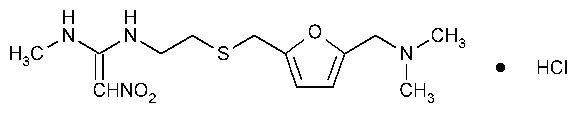
Active ingredient
Classification
H2-receptor antagonistsHistamine-2 Receptor Antagonist
Drug interactions
Ranitidine has several documented interactions with other drugs, primarily affecting their bioavailability and clearance.
- moderateprocainamide — increased plasma levels of procainamide
- unknownwarfarin — altered prothrombin time
- moderatetriazolam — increased exposure by approximately 30%
- moderatemidazolam — increased exposure by up to 65%
- moderateglipizide — increased exposure by 34%
- moderateketoconazole — reduced exposure by up to 95%
- moderateatazanavir — impaired absorption
- moderatedelavirdine — impaired absorption
- moderategefitinib — reduced exposure by 44%
Indications
INDICATIONS AND USAGE Ranitidine Tablets are indicated in: Short- term treatment of active duodenal ulcer. Most patients heal within 4 weeks. Studies available to date have not assessed the safety of Ranitidine in uncomplicated duodenal ulcer for periods of more than 8 weeks. Maintenance therapy for duodenal ulcer patients at reduced dosage after healing of acute ulcers. No placebo- controlled comparative studies have been carried out for periods of longer than 1 year. The treatment of pathological hypersecretory conditions (e.g., Zollinger-Ellison syndrome and systemic mastocytosis). Short-term treatment of active, benign gastric ulcers. Most patients heal within 6 weeks and the usefulness of further treatment has not been demonstrated. Studies available to date have not assessed the safety of ranitidine in uncomplicated, benign gastric ulcer for periods of more than 6 weeks. Maintenance therapy for gastric ulcer patients at reduced dosage after healing of acute ulcers. Placebo-controlled studies have been carried out for 1 year. Treatment of GERD. Symptomatic relief commonly occurs within 24 hours after starting therapy with Ranitidine Tablets USP, 150 mg twice daily. Treatment of endoscopically diagnosed erosive esophagitis. Symptomatic relief of heartburn commonly occurs within 24 hours of therapy initiation with Ranitidine Tablets USP, 150 mg 4 times daily. Maintenance of healing of erosive esophagitis. Placebo-controlled trials have been carried out for 48 weeks. Concomitant antacids should be given as needed for pain relief to patients with active duodenal ulcer; active, benign gastric ulcer; hypersecretory states; GERD; and erosive esophagitis.
Dosage
DOSAGE AND ADMINISTRATION Active Duodenal Ulcer: The current recommended adult oral dosage of Ranitidine Tablets, USP for duodenal ulcer is 150 mg twice daily. An alternative dosage of 300 mg once daily after the evening meal or at bedtime can be used for patients in whom dosing convenience is important. The advantages of one treatment regimen compared to the other in a particular patient population have yet to be demonstrated (see Clinical Trials: Active Duodenal Ulcer ). Smaller doses have been shown to be equally effective in inhibiting gastric acid secretion in US studies, and several foreign trials have shown that 100 mg twice daily is as effective as the 150-mg dose. Antacid should be given as needed for relief of pain (see CLINICAL PHARMACOLOGY: Pharmacokinetics ). Maintenance of Healing of Duodenal Ulcers: The current recommended adult oral dosage is 150 mg at bedtime. Pathological Hypersecretory Conditions (such as Zollinger-Ellison syndrome): The current recommended adult oral dosage is 150 mg twice daily. In some patients it may be necessary to administer Ranitidine Tablets, USP 150-mg doses more frequently. Dosages should be adjusted to individual patient needs, and should continue as long as clinically indicated. Dosages up to 6 g/day have been employed in patients with severe disease. Benign Gastric Ulcer: The current recommended adult oral dosage is 150 mg twice daily. Maintenance of Healing of Gastric Ulcers: The current recommended adult oral dosage is 150 mg at bedtime. GERD: The current recommended adult oral dosage is 150 mg twice daily. Erosive Esophagitis: The current recommended adult oral dosage is 150 mg four times daily. Maintenance of Healing of Erosive Esophagitis: The current recommended adult oral dosage is 150 mg twice daily. Pediatric Use: The safety and effectiveness of Ranitidine Tablets, USP have been established in the age-group of 1 month to 16 years. There is insufficient information about the pharmacokinetics of Ranitidine Tablets, USP in neonatal patients (less than 1 month of age) to make dosing recommendations. The following 3 subsections provide dosing information for each of the pediatric indications. Treatment of Duodenal and Gastric Ulcers: The recommended oral dose for the treatment of active duodenal and gastric ulcers is 2 to 4 mg/kg twice daily to a maximum of 300 mg/day. This recommendation is derived from adult clinical studies and pharmacokinetic data in pediatric patients. Maintenance of Healing of Duodenal and Gastric Ulcers: The recommended oral dose for the maintenance of healing of duodenal and gastric ulcers is 2 to 4 mg/kg once daily to a maximum of 150 mg/day. This recommendation is derived from adult clinical studies and pharmacokinetic data in pediatric patients. Treatment of GERD and Erosive Esophagitis: Although limited data exist for these conditions in pediatric patients, published literature supports a dosage of 5 to 10 mg/kg/day, usually given as two divided doses. Dosage Adjustment for Patients With Impaired Renal Function: On the basis of experience with a group of subjects with severely impaired renal function treated with Ranitidine Tablets, USP, the recommended dosage in patients with a creatinine clearance <50 mL/min is 150 mg every 24 hours. Should the patient's condition require, the frequency of dosing may be increased to every 12 hours or even further with caution. Hemodialysis reduces the level of circulating ranitidine. Ideally, the dosing schedule should be adjusted so that the timing of a scheduled dose coincides with the end of hemodialysis. Elderly patients are more likely to have decreased renal function, therefore caution should be exercised in dose selection, and it may be useful to monitor renal function (see CLINICAL PHARMACOLOGY: Pharmacokinetics: Geriatrics and PRECAUTIONS: Geriatric Use ).
Contraindications
CONTRAINDICATIONS Ranitidine Tablets, USP are contraindicated for patients known to have hypersensitivity to the drug or any of the ingredients (see PRECAUTIONS ).
Mechanism of action
CLINICAL PHARMACOLOGY Ranitidine Tablets are a competitive, reversible inhibitor of the action of histamine at the histamine H 2 -receptors, including receptors on the gastric cells. Ranitidine Tablets do not lower serum Ca++ in hypercalcemic states. Ranitidine Tablets are not an anticholinergic agent. Pharmacokinetics Absorption: Ranitidine Tablets are 50% absorbed after oral administration, compared to an intravenous (IV) injection with mean peak levels of 440 to 545 ng/mL occurring 2 to 3 hours after a 150 mg dose. Absorption is not significantly impaired by the administration of food or antacids. Propantheline slightly delays and increases peak blood levels of ranitidine, probably by delaying gastric emptying and transit time. In one study, simultaneous administration of high-potency antacid (150 mmol) in fasting subjects has been reported to decrease the absorption of Ranitidine Tablets. Distribution: The volume of distribution is about 1.4 L/kg. Serum protein binding averages 15%. Metabolism: In humans, the N-oxide is the principal metabolite in the urine; however, this amounts to < 4% of the dose. Other metabolites are the S-oxide (1%) and the desmethyl ranitidine (1%). The remainder of the administered dose is found in the stool. Studies in patients with hepatic dysfunction (compensated cirrhosis) indicate that there are minor, but clinically insignificant, alterations in ranitidine half-life, distribution, clearance, and bioavailability. Excretion: The principal route of excretion is the urine, with approximately 30% of the orally administered dose collected in the urine as unchanged drug in 24 hours. Renal clearance is about 410 mL/min, indicating active tubular excretion. The elimination half-life is 2.5 to 3 hours. Four patients with clinically significant renal function impairment (creatinine clearance 25 to 35 mL/min) administered 50 mg of ranitidine intravenously had an average plasma half-life of 4.8 hours, a ranitidine clearance of 29 mL/min, and a volume of distribution of 1.76 L/kg. In general, these parameters appear to be altered in proportion to creatinine clearance (see DOSAGE AND ADMINISTRATION ). Geriatrics: The plasma half-life is prolonged and total clearance is reduced in the elderly population due to a decrease in renal function. The elimination half-life is 3 to 4 hours. Peak levels average 526 ng/mL following a 150-mg twice-daily dose and occur in about 3 hours (see PRECAUTIONS: Geriatric Use and DOSAGE AND ADMINISTRATION: Dosage Adjustment for Patients with Impaired Renal Function ). Pediatrics: There are no significant differences in the pharmacokinetic parameter values for ranitidine in pediatric patients (from one month up to 16 yrs of age) and healthy adults when correction is made for body weight. The average bioavailability of Ranitidine is given orally to pediatric patients is 48%, which is comparable to the bioavailability of Ranitidine in the adult population. All other pharmacokinetic parameter values (t 1/2 , Vd, and CL) are similar to those observed with intravenous Ranitidine use in pediatric patients. Estimates of C max and T max are displayed in Table 1. Plasma clearance measured in 2 neonatal patients (less than 1 month of age) was considerably lower (3 mL/min/kg) than children or adults and is likely due to reduced renal function observed in this population (see PRECAUTIONS: Pediatric Use and DOSAGE AND ADMINISTRATION: Pediatric Use ). Pharmacodynamics: Serum concentrations necessary to inhibit 50% of stimulated gastric acid secretion are estimated to be 36 to 94 ng/mL. Following a single oral dose of 150 mg, serum concentrations of Ranitidine are in this range up to 12 hours. However, blood levels bear no consistent relationship to dose or degree of acid inhibition. Antisecretory Activity: 1. Effects on Acid Secretion: Ranitidine Tablets inhibits both daytime and nocturnal basal gastric acid secretions as well as gastric acid secretion stimulated by food, betazole, and pentagastrin, as shown in below Table 2. It appears that basal-, nocturnal-, and betazole-stimulated secretions are most sensitive to inhibition by Ranitidine Tablets, responding almost completely to doses of 100 mg or less, while pentagastrin- and food-stimulated secretions are more difficult to suppress. 2. Effects on Other Gastrointestinal Secretions: Pepsin: Oral Ranitidine Tablets do not affect pepsin secretion. Total pepsin output is reduced in proportion to the decrease in volume of gastric juice. Intrinsic Factor: Oral Ranitidine Tablets have no significant effect on pentagastrin-stimulated intrinsic factor secretion. Serum Gastrin: Ranitidine Tablets have little or no effect on fasting or postprandial serum gastrin. Other Pharmacologic Actions : Gastric bacterial flora - increase in nitrate-reducing organisms, significance not known. Prolactin levels - no effect in recommended oral or IV dosage, but small, transient, dose-related increases in serum prolactin have been reported after IV bolus injections of 100 mg or more. Other pituitary hormones - no effect on serum gonadotropins, TSH, or GH. Possible impairment of vasopressin release. No change in cortisol, aldosterone, androgen, or estrogen levels. No antiandrogenic action. No effect on count, motility, or morphology of sperm. Pediatrics: Oral doses of 6 to 10 mg/kg/day in 2 or 3 divided doses maintain gastric pH >4 throughout most of the dosing interval. Clinical Trials: Active Duodenal Ulcer: In a multicenter, double-blind, controlled, US study of endoscopically diagnosed duodenal ulcers, earlier healing was seen in the patients treated with Ranitidine Tablets as shown in Table 3. In these studies, patients treated with Ranitidine Tablets reported a reduction in both daytime and nocturnal pain, and they also consumed less antacid than the placebo-treated patients. Foreign studies have shown that patients heal equally well with 150 mg twice daily and 300 mg at bed time (85% versus 84%, respectively) during a usual 4-week course of therapy. If patients require extended therapy of 8 weeks, the healing rate may be higher for 150 mg twice daily as compared to 300 mg at bed time (92% versus 87%, respectively). Studies have been limited to short-term treatment of acute duodenal ulcer. Patients whose ulcers healed during therapy had recurrences of ulcers at the usual rates. Maintenance Therapy in Duodenal Ulcer: Ranitidine has been found to be effective as a maintenance therapy for patients, following healing of acute duodenal ulcers. In 2 independent, double-blind, multi-center, controlled trials, the number of duodenal ulcers observed was significantly less in patients treated with Ranitidine Tablets (150 mg at bed time) than in patients treated with placebo over a 12-month period. As with other H 2 -antagonists, the factors responsible for the significant reduction in the prevalence of duodenal ulcers include prevention of recurrence of ulcers, more rapid healing of ulcers that may occur during maintenance therapy, or both. Gastric Ulcer: In a multicenter, double-blind, controlled, US study of endoscopically diagnosed gastric ulcers, earlier healing was seen in the patients treated with Ranitidine Tablets as shown in Table 6. In this multicenter trial, significantly more patients treated with Ranitidine Tablets became painfree during therapy. Maintenance of Healing of Gastric Ulcers: In 2 multicenter, double-blind, randomized, placebo-controlled, 12-month trials conducted in patients whose gastric ulcers had been previously healed, Ranitidine Tablets 150 mg at bed time was significantly more effective than placebo in maintaining healing of gastric ulcers. Pathological Hypersecretory Conditions (such as Zollinger-Ellison syndrome): Ranitidine Tablets inhibits gastric acid secretion and reduces occurrence of diarrhea, anorexia, and pain in patients with pathological hypersecretion associated with Zollinger-Ellison syndrome, systemic mastocytosis, and other pathological hypersecr
Source: RxNorm + openFDA + RxClass + FAERS · 2026
Look up another medication