pegvisomant 15 MG Injection
Managing this medication for someone you care for? Eleplan keeps diagnoses, medications and appointments in one plan.
Start free with EleplanClinical drug
pegvisomant 15 MG Injection
15 MG · Injection · injection
A form of pegvisomant →
pegvisomant 15 MG Injection — Other anterior pituitary lobe hormones and analogues. INDICATIONS AND USAGE SOMAVERT is indicated for the treatment of acromegaly in patients who have had an inadequate response to surgery or radiation…
Active ingredient
Classification
Other anterior pituitary lobe hormones and analoguesGrowth Hormone Receptor Antagonist
Drug interactions
Pegvisomant has known interactions with certain drugs used in diabetes management and opioids.
- moderateInsulin and/or Oral hypoglycemic Agents — Patients may require careful monitoring and dose reductions.
- unknownOpioids — Patients may need higher SOMAVERT doses to achieve appropriate IGF-1 suppression.
Indications
INDICATIONS AND USAGE SOMAVERT is indicated for the treatment of acromegaly in patients who have had an inadequate response to surgery or radiation therapy, or for whom these therapies are not appropriate. The goal of treatment is to normalize serum insulin-like growth factor-1 (IGF-1) levels. SOMAVERT is a growth hormone receptor antagonist indicated for the treatment of acromegaly in patients who have had an inadequate response to surgery or radiation therapy, or for whom these therapies are not appropriate. The goal of treatment is to normalize serum insulin-like growth factor-1 (IGF-1) levels. ( 1 )
Dosage
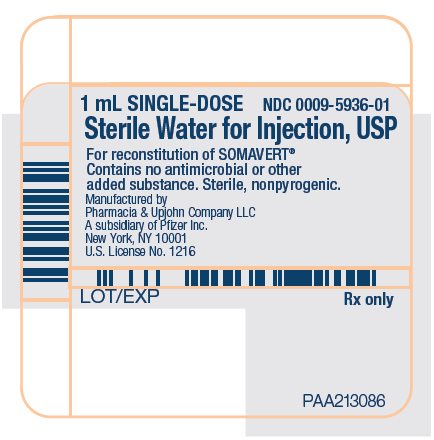
DOSAGE AND ADMINISTRATION • Administer a 40 mg loading dose subcutaneously under physician supervision. ( 2.1 ) • After proper injection instruction, on day after loading dose, patients or caregivers begin daily subcutaneous injections of 10 mg. ( 2.1 ) • Adjust dosage in 5 mg increments or decrements until serum IGF-1 concentrations are maintained within age-adjusted normal range. Do not adjust dosage based on growth hormone (GH) levels or signs or symptoms of acromegaly. ( 2.1 ) • Dosage range is 10 mg to 30 mg once daily. ( 2.1 ) • Perform liver tests prior to first dosage and if greater than 3 times upper limit of normal should work-up prior to SOMAVERT administration. ( 2.2 ) • Follow reconstitution and injection procedures. ( 2.3 , 2.4 ) 2.1 Dosage Information The recommended loading dose of SOMAVERT is 40 mg given subcutaneously, under healthcare provider supervision. Provide proper training in subcutaneous injection technique to patients or their caregivers so they can receive once daily subcutaneous injections. On the next day following the loading dose, instruct patients or their caregivers to begin daily subcutaneous injections of 10 mg of SOMAVERT. Titrate the dosage to normalize serum IGF-1 concentrations (serum IGF-1 concentrations should be measured every four to six weeks). The dosage should not be based on growth hormone (GH) concentrations or signs and symptoms of acromegaly. It is unknown whether patients who remain symptomatic while achieving normalized IGF-1 concentrations would benefit from increased SOMAVERT dosage. • Increase the dosage by 5 mg increments every 4–6 weeks if IGF-1 concentrations are elevated. • Decrease the dosage by 5 mg decrements every 4–6 weeks if IGF-1 concentrations are below the normal range. • IGF-1 levels should also be monitored when a SOMAVERT dose given in multiple injections is converted to a single daily injection [see Clinical Pharmacology (12) ] . The recommended dosage range is between 10 mg to 30 mg given subcutaneously once daily and the maximum daily dosage is 30 mg given subcutaneously once daily. 2.2 Assess Liver Tests Prior to Initiation of SOMAVERT Prior to the start of SOMAVERT, patients should have an assessment of baseline levels of liver tests [serum alanine aminotransferase (ALT), aspartate aminotransferase (AST), serum total bilirubin (TBIL), and alkaline phosphatase (ALP)]. For recommendations regarding initiation of SOMAVERT based on baseline liver tests and recommendations for monitoring of liver tests while on SOMAVERT, refer to Table 1 in Warning and Precautions (5.2) . 2.3 Loading Dose Injection Procedure The following instructions are for the healthcare provider to reconstitute and prepare the 40 mg loading dose. The healthcare provider will need to reconstitute 2 vials of lyophilized powder of SOMAVERT each containing 20 mg of pegvisomant with supplied diluent [two vials of lyophilized powder and two syringes containing 1 mL of diluent (Sterile Water for Injection, USP) will be needed for the 40 mg loading dose]. The healthcare provider will also need to inject the reconstituted SOMAVERT solution twice into the patient's upper arm, upper thigh, abdomen, or buttocks (each injection in a different area). a) Before administering the loading dose, remove 1 vial of lyophilized powder of SOMAVERT containing 20 mg of pegvisomant and one syringe containing 1 mL of diluent from the refrigerator, if refrigerated, about 10 minutes prior to the planned injection time. b) Reconstitute the first 20 mg vial of lyophilized powder of SOMAVERT containing 20 mg of pegvisomant with diluent. When using the diluent in the syringe, inject the contents of the syringe slowly onto the sides of the vial containing lyophilized powder of SOMAVERT. Do not inject the diluent directly on the powder. c) Do not invert the vial or shake the solution as this may cause denaturation of the pegvisomant protein. Slowly swirl the solution to ensure that all of the lyophilized powder has gone into solution. If foaming of the reconstituted SOMAVERT solution is seen, the solution is likely damaged and therefore inappropriate to inject. d) Visually inspect the reconstituted SOMAVERT solution for particulate matter and discoloration prior to administration. The reconstituted solution should be clear. If the solution is cloudy, do not use it. Once reconstituted, the solution will contain 20 mg of pegvisomant in 1 mL of solution. e) Withdraw the 1 mL reconstituted SOMAVERT solution. The solution must be administered immediately after reconstitution. f) Inject the first reconstituted SOMAVERT solution (20 mg/mL) subcutaneously into the patient's upper arm, upper thigh, abdomen, or buttocks using a 90-degree angle. g) Repeat steps (a) to (e) to reconstitute the second SOMAVERT dose of 20mg. h) Finally, inject the second reconstituted SOMAVERT solution (20 mg/mL) subcutaneously into the patient's upper arm, upper thigh, abdomen, or buttocks using a 90-degree angle (different area than the first injection). 2.4 Maintenance Dose Injection Procedure For patient or caregiver instructions for reconstitution and administration of daily doses (10 mg to 30 mg), see the Patient's Instructions for Use . a) Before administering the dose, remove 1 vial of lyophilized powder of SOMAVERT containing 10 mg, 15 mg, 20 mg, 25 mg or 30 mg of pegvisomant and one syringe containing 1 mL of diluent from the refrigerator, if refrigerated, about 10 minutes prior to the planned injection time. b) Reconstitute the lyophilized powder of SOMAVERT with diluent. When using the diluent in the 2.25 mL syringe, inject the contents of the syringe slowly onto the sides of the vial containing lyophilized powder of SOMAVERT. Do not inject the diluent directly on the powder. c) Do not invert the vial or shake the solution as this may cause denaturation of the pegvisomant protein. Slowly swirl the solution to ensure that all of the lyophilized powder has gone into solution. If foaming of the reconstituted SOMAVERT solution is seen, the solution is likely damaged and therefore inappropriate to inject. d) Visually inspect the reconstituted SOMAVERT solution for particulate matter and discoloration prior to administration. The reconstituted solution should be clear. If the solution is cloudy, do not use it. Once reconstituted, the solution will contain 10 mg, 15 mg, 20 mg, 25 mg or 30 mg of pegvisomant in 1 mL of solution. e) Withdraw the 1 mL reconstituted SOMAVERT solution. The solution must be administered immediately after reconstitution. f) Inject the reconstituted SOMAVERT solution subcutaneously into the upper arm, upper thigh, abdomen, or buttocks using a 90-degree angle.
Warnings
WARNINGS AND PRECAUTIONS • Hypoglycemia : Monitor blood glucose in patients with diabetes mellitus and reduce anti-diabetic drug therapy as necessary. ( 5.1 ) • Liver Toxicity: Should have more frequent liver tests and/or discontinue SOMAVERT. ( 5.2 ) • Systemic Hypersensitivity : Monitor closely when re-initiating SOMAVERT in patients with systemic hypersensitivity. ( 5.5 ) 5.1 Hypoglycemia Associated With GH Lowering in Patients With Diabetes Mellitus GH opposes the effects of insulin on carbohydrate metabolism by decreasing insulin sensitivity; thus, glucose tolerance may improve in some patients treated with SOMAVERT. Patients should be carefully monitored and doses of anti-diabetic drugs reduced as necessary to avoid hypoglycemia in patients with diabetes mellitus. 5.2 Liver Toxicity Baseline serum alanine aminotransferase (ALT), aspartate aminotransferase (AST), serum total bilirubin (TBIL), and alkaline phosphatase (ALP) levels should be obtained prior to initiating therapy with SOMAVERT. Table 1 lists recommendations regarding initiation of treatment with SOMAVERT, based on the results of these liver tests (LTs). Asymptomatic, transient elevations in transaminases up to 15 times ULN have been observed in <2% of subjects among two open-label trials (with a total of 147 patients). These reports were not associated with an increase in bilirubin. Transaminase elevations normalized with time, most often after suspending treatment. Postmarketing reports have identified elevations in serum hepatic transaminases up to greater than 20 times ULN associated with elevation in total bilirubin greater than 2 times ULN. In many of these cases, discontinuation of SOMAVERT therapy resulted in improvement or resolution of hepatic laboratory abnormalities. SOMAVERT should be used in accordance with the information presented in Table 2 with respect to liver test abnormalities while on SOMAVERT treatment. Table 1. Recommendations of Initiating SOMAVERT Based on Baseline LTs and Periodic Monitoring of LTs During SOMAVERT Treatment Baseline LT Levels Recommendations Normal • May treat with SOMAVERT. • Monitor LTs at monthly intervals during the first 6 months of treatment, quarterly for the next 6 months and then bi-annually for the next year. Elevated, but less than or equal to 3 times ULN May treat with SOMAVERT; however, monitor LTs monthly for at least one year after initiation of therapy and then bi-annually for the next year. Greater than 3 times ULN • Do not treat with SOMAVERT until a comprehensive workup establishes the cause of the patient's liver dysfunction. • Determine if cholelithiasis or choledocholithiasis is present, particularly in patients with a history of prior therapy with somatostatin analogs. • Based on the workup, consider initiation of therapy with SOMAVERT. • If the decision is to treat, LTs and clinical symptoms should be monitored very closely. If a patient develops LT elevations, or any other signs or symptoms of liver dysfunction while receiving SOMAVERT, the following patient management is recommended (Table 2). Table 2. Clinical Recommendations Based on Liver Test Results While on SOMAVERT LT Levels and Clinical Signs/Symptoms Recommendations Greater than or equal to 3 but less than 5 times ULN (without signs/symptoms of hepatitis or other liver injury, or increase in serum TBIL) • May continue therapy with SOMAVERT. However, monitor LTs weekly to determine if further increases occur (see below). • Perform a comprehensive hepatic workup to discern if an alternative cause of liver dysfunction is present. At least 5 times ULN, or transaminase elevations at least 3 times ULN associated with any increase in serum TBIL (with or without signs/symptoms of hepatitis or other liver injury) • Discontinue SOMAVERT immediately. • Perform a comprehensive hepatic workup, including serial LTs, to determine if and when serum levels return to normal. • If LTs normalize (regardless of whether an alternative cause of the liver dysfunction is discovered), consider cautious re-initiation of therapy with SOMAVERT, with frequent LT monitoring. Signs or symptoms suggestive of hepatitis or other liver injury (e.g., jaundice, bilirubinuria, fatigue, nausea, vomiting, right upper quadrant pain, ascites, unexplained edema, easy bruisability) • Immediately perform a comprehensive hepatic workup. • If liver injury is confirmed, SOMAVERT should be discontinued. 5.3 Cross-Reactivity With GH Assays SOMAVERT has significant structural similarity to growth hormone (GH) which causes it to cross-react in commercially available GH assays. Since serum concentrations of therapeutically effective doses of SOMAVERT are generally 100 to 1000 times higher than the actual serum GH concentrations seen in patients with acromegaly, measurements of serum GH concentrations will appear falsely elevated. 5.4 Lipohypertrophy There have been cases of lipohypertrophy in patients treated with SOMAVERT. In a double-blind, 12-week, placebo-controlled study, there was one case (1.3%) of injection site lipohypertrophy reported in a subject receiving 10 mg/day. The subject recovered while on treatment. Among two open-label trials (with a total of 147 patients), there were two subjects, both receiving 10 mg/day, who developed lipohypertrophy. One case recovered while on treatment, and one case resulted in a discontinuation of treatment. Injection sites should be rotated daily to help prevent lipohypertrophy (different area than the last injection). 5.5 Systemic Hypersensitivity In patients with systemic hypersensitivity reactions, caution and close monitoring should be exercised when re-initiating SOMAVERT therapy [see Adverse Reactions (6.2) ] .
Contraindications
CONTRAINDICATIONS None. None. ( 4 )
Mechanism of action
Mechanism of Action Pegvisomant selectively binds to growth hormone (GH) receptors on cell surfaces, where it blocks the binding of endogenous GH, and thus interferes with GH signal transduction. Inhibition of GH action results in decreased serum concentrations of IGF-1, as well as other GH-responsive serum proteins such as free IGF-1, the acid-labile subunit of IGF-1 (ALS), and insulin-like growth factor binding protein-3 (IGFBP-3).
Indicated ICD-10 codes
Source: RxNorm + openFDA + RxClass + FAERS · 2026
Look up another medication