nitisinone 2 MG Oral Capsule
Managing this medication for someone you care for? Eleplan keeps diagnoses, medications and appointments in one plan.
Start free with EleplanClinical drug
nitisinone 2 MG Oral Capsule
2 MG · Oral Capsule · oral
A form of nitisinone →
nitisinone 2 MG Oral Capsule — Various alimentary tract and metabolism products. INDICATIONS AND USAGE Nitisinone capsules are indicated for the treatment of adult and pediatric patients with hereditary tyrosinemia type 1 (HT-1)…
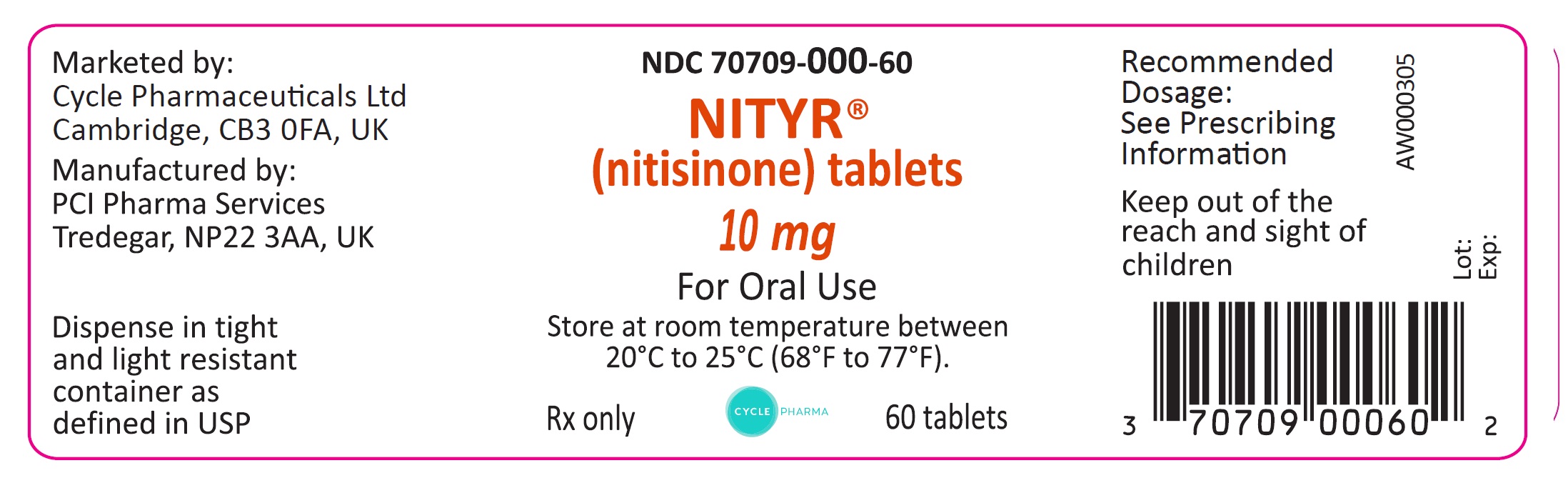
Active ingredient
Classification
Various alimentary tract and metabolism products4-Hydroxyphenyl-Pyruvate Dioxygenase Inhibitor
Drug interactions
Nitisinone has clinically relevant interactions with certain drugs metabolized by CYP2C9 and OAT1/OAT3.
- moderateCYP2C9 substrates (e.g., celecoxib, tolbutamide, phenytoin, warfarin) — Increased exposure of the co-administered drugs metabolized by CYP2C9.
- moderateOAT1/OAT3 substrates (e.g., adefovir, ganciclovir, methotrexate) — Increased exposure of the interacting drug.
Indications
INDICATIONS AND USAGE Nitisinone capsules are indicated for the treatment of adult and pediatric patients with hereditary tyrosinemia type 1 (HT-1) in combination with dietary restriction of tyrosine and phenylalanine. Nitisinone capsules are a hydroxy-phenylpyruvate dioxygenase inhibitor indicated for the treatment of adult and pediatric patients with hereditary tyrosinemia type 1 (HT-1) in combination with dietary restriction of tyrosine and phenylalanine. ( 1 )
Dosage
DOSAGE AND ADMINISTRATION The recommended starting dosage is 0.5 mg/kg (actual body weight) administered orally twice daily. ( 2.1 ) Administer NITYR with or without food. ( 2.1 ) Maintain dietary restriction of tyrosine and phenylalanine when administering NITYR. ( 2.1 ) The recommended maintenance dosage of NITYR in patients 5 years of age and older who have undetectable serum and urine succinylacetone concentrations after a minimum of 4 weeks on a stable dosage of nitisinone, is 1 to 2 mg/kg once daily. ( 2.1 ) See the full prescribing information for dosage titration and monitoring. ( 2.2 ) See the full prescribing information for preparation and administration instructions. ( 2.2 ) 2.1 Recommended Dosage The recommended starting dosage of NITYR is 0.5 mg/kg (actual body weight) administered orally twice daily. Titrate the dose in each individual patient based on biochemical and/or clinical response. Administer NITYR with or without food [see Clinical Pharmacology ( 12.3 )] . Maintain dietary restriction of tyrosine and phenylalanine when administering NITYR. Maintenance Dosage The recommended maintenance dosage of NITYR in patients 5 years of age and older who have undetectable serum and urine succinylacetone concentrations after a minimum of 4 weeks on a stable dosage of nitisinone, is 1 to 2 mg/kg once daily [see Clinical Pharmacology ( 12.2 )] . A maximum total daily dosage of 2 mg/kg may be needed based on the evaluation of all biochemical parameters. Missed Dose If a dose of NITYR is missed, do not administer two doses at once to make up for a missed dose. Take the next dose at the scheduled time. 2.2 Dosage Titration and Monitoring Monitor plasma and/or urine succinylacetone concentrations, liver function parameters and alpha-fetoprotein levels. Monitor all biochemical parameters more closely (i.e. plasma and/or urine succinylacetone, urine 5-aminolevulinate (ALA), and erythrocyte porphobilinogen (PBG)-synthase activity during initiation of therapy, when switching from twice daily to once daily dosing, or if there is a deterioration in the patient’s condition. If succinylacetone is still detectable in blood or urine 4 weeks after the start of nitisinone treatment, increase the NITYR dosage to 0.75 mg/kg twice daily. If the biochemical response is satisfactory (undetectable blood and/or urine succinylacetone), the dosage should be adjusted only according to body weight gain and not according to plasma tyrosine levels. Maintain plasma tyrosine levels below 500 micromol/L by dietary restriction of tyrosine and phenylalanine intake [see Warnings and Precautions ( 5.1 )] . In patients who develop plasma tyrosine levels above 500 micromol/L, assess dietary tyrosine and phenylalanine intake. Do not adjust the NITYR dosage in order to lower the plasma tyrosine concentration. 2.3 Preparation and Administration Instructions For patients who have difficulty swallowing intact tablets, disintegrate NITYR in water and administer using an oral syringe. For patients who can swallow semi-solid foods, NITYR tablets can be crushed and mixed with applesauce. Administration of NITYR with other liquids or foods has not been studied and is not recommended. Preparation and Administration of NITYR with Water in an Oral Syringe: Do not prepare more than two tablets at once within the same oral syringe. If patient’s dosage requires more than two tablets, follow the steps below using multiple oral syringes and prescribed number of tablets to achieve the required dose. One Tablet 1. Remove the plunger from the 5-mL oral syringe and insert a single, intact tablet. 2. Replace the plunger and draw up 2.6 mL of room temperature water. 3. Cap the oral syringe and leave the oral syringe for at least the length of time below: • 15 minutes for a 2 mg tablet • 60 minutes for a 5 mg or 10 mg tablet 4. Turn the oral syringe up and down for at least 30 seconds to suspend the material. 5. Inspect the syringe to ensure the tablet has fully disintegrated. If the tablet is not fully disintegrated, leave the oral syringe for an additional 10 minutes. Do not administer unless the tablet has fully disintegrated. Before administration of the suspension, turn the oral syringe up and down for 30 seconds to ensure the particles are suspended. 6. Uncap the oral syringe and administer all the suspension into the patient's mouth. To facilitate full administration, avoid depressing the plunger to the end of the oral syringe and leave a gap between the plunger and the oral syringe. 7. Fill the oral syringe by drawing up 2 mL of water. Shake well and administer while this time fully depressing the plunger. If particles are still present in the syringe, repeat this step. Two Tablets 1. Remove the plunger from the 5-mL oral syringe and insert two intact tablets. 2. Replace the plunger and draw up 5 mL of room temperature water. 3. Cap the oral syringe and leave it for at least the length of time below: • 15 minutes for 2 mg tablets • 60 minutes for 5 mg or 10 mg tablets 4. Turn the oral syringe up and down for at least 30 seconds to suspend the material. 5. Inspect the syringe to ensure the tablets have fully disintegrated. If the tablet is not fully disintegrated, leave the oral syringe for an additional 10 minutes. Do not administer unless the tablet has fully disintegrated. Before administration of the suspension, turn the oral syringe up and down for 30 seconds to ensure the particles are suspended. 6. Uncap the oral syringe and administer all the suspension into the patient's mouth. To facilitate full administration, avoid depressing the plunger to the end of the oral syringe and leave a gap between the plunger and the oral syringe. 7. Fill the oral syringe by drawing up 2 mL of water. Shake well and administer while this time fully depressing the plunger. If particles are still present in the syringe, repeat this step. Storage Instructions for the NITYR with water in an Oral Syringe The suspension can be stored at room temperature in the capped oral syringe, protected from direct sunlight for up to 24 hours after adding water to the tablets. Discard after 24 hours. Preparation and Administration of NITYR Mixed in Applesauce For patients who can swallow semi-solid food, NITYR can be crushed and mixed with applesauce. 1. Measure approximately one teaspoon of applesauce and transfer it into a clean container (e.g., clean glass). 2. Crush only 1 tablet at a time between two teaspoons forming a fine powder. Repeat this step if more than 1 tablet is needed. 3. Transfer the powder to the applesauce container ensuring all the powder is transferred and no powder residue remains on the teaspoon. 4. Mix the powder into the applesauce until the powder is well dispersed. 5. Administer the entire NITYR-applesauce mixture to the patient immediately or within 2 hours of mixing. 6. To ensure that there is not any remaining NITYR-applesauce mixture, add approximately one teaspoon of applesauce to the same container and administer to the patient. Storage Instructions for NITYR Mixed in Apple Sauce The mixture can be stored at room temperature, out of direct sunlight, for up to 2 hours after adding the crushed tablets to the applesauce. Discard after 2 hours.
Warnings
WARNINGS AND PRECAUTIONS Elevated Plasma Tyrosine Levels, Ocular Symptoms, Developmental Delay and Hyperkeratotic Plaques : Inadequate restriction of tyrosine and phenylalanine intake can lead to elevations in plasma tyrosine, which at levels above 500 micromol/L can result in symptoms, intellectual disability and developmental delay or painful hyperkeratotic plaques on the soles and palms; do not adjust ORFADIN dosage in order to lower the plasma tyrosine concentration. Obtain slit-lamp examination prior to treatment, regularly during treatment; Reexamine patients if symptoms develop or tyrosine levels are > 500 micromol/L. Assess plasma tyrosine levels in patients with an abrupt change in neurologic status. ( 5.1 ) Leukopenia and Severe Thrombocytopenia : Monitor platelet and white blood cell counts. ( 5.2 ) Risk of Adverse Reactions Due to Glycerol Content of ORFADIN Oral Suspension : Doses of 20 mL of ORFADIN oral suspension may cause headache, upset stomach and diarrhea due to the glycerol content. Consider switching patients to ORFADIN capsules. ( 5.3 ) 5.1 Elevated Plasma Tyrosine Levels, Ocular Symptoms, Developmental Delay and Hyperkeratotic Plaques Nitisinone is an inhibitor of 4-hydroxyphenyl-pyruvate dioxygenase, an enzyme in the tyrosine metabolic pathway [see Clinical Pharmacology ( 12.1 )] . Therefore, treatment with ORFADIN may cause an increase in plasma tyrosine levels in patients with HT-1. Maintain concomitant reduction in dietary tyrosine and phenylalanine while on ORFADIN treatment. Do not adjust ORFADIN dosage in order to lower the plasma tyrosine concentration. Maintain plasma tyrosine levels below 500 micromol/L. Inadequate restriction of tyrosine and phenylalanine intake can lead to elevations in plasma tyrosine levels and levels greater than 500 micromol/L may lead to the following: Ocular signs and symptoms including corneal ulcers, corneal opacities, keratitis, conjunctivitis, eye pain, and photophobia have been reported in patients treated with ORFADIN [see Adverse Reactions ( 6.1 )] . In a clinical study in a non HT-1 population without dietary restriction and reported tyrosine levels >500 micromol/L both symptomatic and asymptomatic keratopathies have been observed. Therefore, perform a baseline ophthalmologic examination including slit-lamp examination prior to initiating ORFADIN treatment and regularly thereafter. Patients who develop photophobia, eye pain, or signs of inflammation such as redness, swelling, or burning of the eyes or tyrosine levels are > 500 micromol/L during treatment with ORFADIN should undergo slit-lamp reexamination and immediate measurement of the plasma tyrosine concentration. Variable degrees of intellectual disability and developmental delay. In patients treated with ORFADIN who exhibit an abrupt change in neurologic status, perform a clinical laboratory assessment including plasma tyrosine levels. Painful hyperkeratotic plaques on the soles and palms In patients with HT-1 treated with dietary restrictions and ORFADIN who develop elevated plasma tyrosine levels, assess dietary tyrosine and phenylalanine intake. 5.2 Leukopenia and Severe Thrombocytopenia In clinical trials, patients treated with ORFADIN and dietary restriction developed transient leukopenia (3%), thrombocytopenia (3%), or both (1.5%) [see Adverse Reactions ( 6.1 )] . No patients developed infections or bleeding as a result of the episodes of leukopenia and thrombocytopenia. Monitor platelet and white blood cell counts during ORFADIN therapy. 5.3 Risk of Adverse Reactions Due to Glycerol Content of ORFADIN Oral Suspension Oral doses of glycerol of 10 grams or more have been reported to cause headache, upset stomach and diarrhea. ORFADIN oral suspension contains 500 mg/mL of glycerol. Patients receiving more than 20 mL of ORFADIN oral suspension (10 grams glycerol) as a single dose are at increased risk of these adverse reactions. Consider switching patients who are unable to tolerate the oral suspension to ORFADIN capsules.
Contraindications
CONTRAINDICATIONS None. None. ( 4 )
Mechanism of action
Mechanism of Action Nitisinone is a competitive inhibitor of 4-hydroxyphenyl-pyruvate dioxygenase, an enzyme upstream of fumarylacetoacetate hydrolase (FAH) in the tyrosine catabolic pathway. By inhibiting the normal catabolism of tyrosine in patients with HT-1, nitisinone prevents the accumulation of the catabolic intermediates maleylacetoacetate and fumarylacetoacetate. In patients with HT-1, these catabolic intermediates are converted to the toxic metabolites succinylacetone and succinylacetoacetate, which are responsible for the observed liver and kidney toxicity. Succinylacetone can also inhibit the porphyrin synthesis pathway leading to the accumulation of 5-aminolevulinate, a neurotoxin responsible for the porphyric crises characteristic of HT-1.
Indicated ICD-10 codes
Source: RxNorm + openFDA + RxClass + FAERS · 2026
Look up another medication