neostigmine 15 MG Oral Tablet
Managing this medication for someone you care for? Eleplan keeps diagnoses, medications and appointments in one plan.
Start free with EleplanClinical drug
neostigmine 15 MG Oral Tablet
15 MG · Oral Tablet · oral
A form of neostigmine →
neostigmine 15 MG Oral Tablet — Anticholinesterases. INDICATIONS AND USAGE Neostigmine methylsulfate injection USP, a cholinesterase inhibitor, is indicated for the reversal of the effects of…
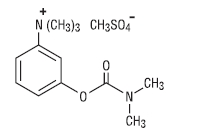
Active ingredient
Classification
AnticholinesterasesCholinesterase Inhibitor
Indications
INDICATIONS AND USAGE Neostigmine methylsulfate injection USP, a cholinesterase inhibitor, is indicated for the reversal of the effects of non-depolarizing neuromuscular blocking agents (NMBAs) after surgery ( 1 ). Neostigmine methylsulfate injection USP is a cholinesterase inhibitor indicated for the reversal of the effects of non depolarizing neuromuscular blocking agents after surgery.
Dosage
DOSAGE AND ADMINISTRATION Dosage Should be administered by trained healthcare providers ( 2.1 ) Recommend use of a peripheral nerve stimulator to determine whether neostigmine methylsulfate should be administered and to monitor recovery from neuromuscular blockade ( 2.1 ). Recommended dosage range is 0.03 mg/kg to 0.07mg/kg for reversing nondepolarizing neuromuscular block when administered with an anticholinergic agent (atropine or glycopyrrolate) ( 2.2 , 2.3 , 2.4 ) For reversal of NMBAs with shorter half-lives, when first twitch response is substantially greater than 10% of baseline, or when a second twitch is present: 0.03 mg/kg by intravenous route ( 2.2 ) For reversal of NMBAs with longer half-lives or when first twitch response is close to 10% of baseline: 0.07 mg/kg by intravenous route ( 2.2 ) Maximum total dosage is 0.07 mg/kg or up to a total of 5 mg (whichever is less) ( 2.2 ) An anticholinergic agent, e.g., atropine sulfate or glycopyrrolate, should be administered prior to or concomitantly with neostigmine methylsulfate ( 2.4 ) Dose of Anticholinergic Agent (atropine or glycopyrrolate) Administer atropine sulfate (~15 mcg/kg) or glycopyrrolate (~10 mcg/kg) intravenously either several minutes before or concomitantly with neostigmine methylsulfate (using separate syringes) ( 2.4 ) 2.1 Important Dosage and Administration Instructions Neostigmine should be administered by trained healthcare providers familiar with the use, actions, characteristics, and complications of neuromuscular blocking agents (NMBA) and neuromuscular block reversal agents. Prior to Neostigmine Methylsulfate Injection administration and up until complete recovery of normal ventilation, the patient should be well ventilated and a patent airway maintained. Use a peripheral nerve stimulator capable of delivering a train-of-four (TOF) stimulus to evaluate the extent of recovery of neuromuscular function, and to determine the time of the first dose and the need for additional doses of Neostigmine Methylsulfate Injection. Prior to the administration of Neostigmine Methylsulfate Injection, there must be a twitch response to the first stimulus in the TOF of at least 10% of its baseline level (i.e., the response prior to NMBA administration). Dose selection should be based on the extent of spontaneous recovery at time of injection, half-life of the neuromuscular blocking agent (NMBA) to be reversed, and need for rapid NMBA reversal. Patients should continue to be monitored for adequacy of reversal of the effect of NMBAs for a period of time that would assure full recovery based on the patient’s medical condition and the pharmacokinetics of neostigmine and the NMBA used. Neostigmine Methylsulfate Injection is administered by intravenous bolus injection. Additional, carefully adjusted bolus doses are administered according to the patient’s response. An anticholinergic agent (e.g., atropine or glycopyrrolate) should be administered prior to or concomitantly with Neostigmine Methylsulfate Injection [ see Dosage and Administration ( 2.4 ), Warnings and Precautions ( 5.5 ) ]. TOF monitoring alone should not be relied upon to determine the adequacy of reversal of neuromuscular blockade. Satisfactory recovery should be judged by the patient's ability to maintain a patent airway, adequacy of ventilation, and skeletal muscle tone. 2.2 Recommended Dosage in Adults The recommended dose range of Neostigmine Methylsulfate Injection is 0.03 mg/kg to 0.07 mg/kg administered as an intravenous bolus. A dose less than 0.04 mg/kg is recommended for reversal of the effect of NMBAs with shorter half-lives (e.g., rocuronium), or when the first twitch response to the TOF stimulus is substantially greater than 10% of baseline, or when a second twitch is present. A dose of 0.07 mg/kg is recommended for the reversal of the effect of NMBAs with longer half-lives (e.g., vecuronium or pancuronium), or when first twitch response is not substantially greater than 10% of baseline, or if there is need for more rapid recovery. Additional doses may be required. The recommended maximum total dose is 0.07 mg/kg or up to a total of 5 mg, whichever is less. 2.3 Recommended Dosage in Pediatric Patients including Neonates Adult guidelines should be followed when Neostigmine Methylsulfate Injection is administered to pediatric patients. Pediatric patients require Neostigmine Methylsulfate Injection doses similar to those for adult patients. 2.4 Concomitant or Pre-Administration of Anticholinergic Agents An anticholinergic agent (e.g., atropine sulfate or glycopyrrolate) should be administered intravenously several minutes prior to or with Neostigmine Methylsulfate Injection administration using separate syringes. For bradycardic patients, the anticholinergic agent should be administered prior to Neostigmine Methylsulfate Injection. 2.1 Important Dosage and Administration Instructions Neostigmine should be administered by trained healthcare providers familiar with the use, actions, characteristics, and complications of neuromuscular blocking agents (NMBA) and neuromuscular block reversal agents. Prior to Neostigmine Methylsulfate Injection administration and up until complete recovery of normal ventilation, the patient should be well ventilated and a patent airway maintained. Use a peripheral nerve stimulator capable of delivering a train-of-four (TOF) stimulus to evaluate the extent of recovery of neuromuscular function, and to determine the time of the first dose and the need for additional doses of Neostigmine Methylsulfate Injection. Prior to the administration of Neostigmine Methylsulfate Injection, there must be a twitch response to the first stimulus in the TOF of at least 10% of its baseline level (i.e., the response prior to NMBA administration). Dose selection should be based on the extent of spontaneous recovery at time of injection, half-life of the neuromuscular blocking agent (NMBA) to be reversed, and need for rapid NMBA reversal. Patients should continue to be monitored for adequacy of reversal of the effect of NMBAs for a period of time that would assure full recovery based on the patient’s medical condition and the pharmacokinetics of neostigmine and the NMBA used. Neostigmine Methylsulfate Injection is administered by intravenous bolus injection. Additional, carefully adjusted bolus doses are administered according to the patient’s response. An anticholinergic agent (e.g., atropine or glycopyrrolate) should be administered prior to or concomitantly with Neostigmine Methylsulfate Injection [ see Dosage and Administration ( 2.4 ), Warnings and Precautions ( 5.5 ) ]. TOF monitoring alone should not be relied upon to determine the adequacy of reversal of neuromuscular blockade. Satisfactory recovery should be judged by the patient's ability to maintain a patent airway, adequacy of ventilation, and skeletal muscle tone. 2.2 Recommended Dosage in Adults The recommended dose range of Neostigmine Methylsulfate Injection is 0.03 mg/kg to 0.07 mg/kg administered as an intravenous bolus. A dose less than 0.04 mg/kg is recommended for reversal of the effect of NMBAs with shorter half-lives (e.g., rocuronium), or when the first twitch response to the TOF stimulus is substantially greater than 10% of baseline, or when a second twitch is present. A dose of 0.07 mg/kg is recommended for the reversal of the effect of NMBAs with longer half-lives (e.g., vecuronium or pancuronium), or when first twitch response is not substantially greater than 10% of baseline, or if there is need for more rapid recovery. Additional doses may be required. The recommended maximum total dose is 0.07 mg/kg or up to a total of 5 mg, whichever is less. 2.3 Recommended Dosage in Pediatric Patients including Neonates Adult guidelines should be followed when Neostigmine Methylsulfate Injection is administered to pediatric patients. Pediatric patients require Neostigmine Methylsulfate Injection doses similar to those for adult patients. 2.4 Co
Warnings
WARNINGS AND PRECAUTIONS Bradycardia : Atropine or glycopyrrolate should be administered prior to administration of neostigmine methylsulfate injection to lessen risk of bradycardia ( 5.1 ) Coexisting Conditions : patients with known cardiac disease, cardiac arrhythmias, or recent coronary artery occlusion may be particularly sensitive to the hemodynamic effects of neostigmine; their blood pressure and electrocardiogram should be continuously monitored with the initiation of neostigmine treatment and for a duration sufficient to assure hemodynamic stability. ( 5.2 ) Neuromuscular Dysfunction : Can occur if large doses of neostigmine methylsulfate are administered when there is minimal neuromuscular blockade; reduce the dose if recovery from neuromuscular blockade is nearly complete. ( 5.4 ) 5.1 Bradycardia Neostigmine has been associated with bradycardia. An anticholinergic agent, (e.g., atropine sulfate or glycopyrrolate) should be administered prior to Neostigmine Methylsulfate Injection administration to lessen the risk of bradycardia [ see Dosage and Administration ( 2.4 ) ]. 5.2 Cardiovascular Complications Cardiac arrhythmias, nonspecific electrocardiogram changes, cardiac arrest, syncope and hypotension have been reported with neostigmine methylsulfate. In patients with certain cardiovascular conditions such as coronary artery disease, cardiac arrhythmias or recent acute coronary syndrome, the risk of blood pressure and heart rate complications may be increased. Risk of these complications may also be increased in patients with myasthenia gravis. Standard antagonism with anticholinergics (e.g., atropine) is generally successful to mitigate the risk of cardiovascular complications. 5.3 Hypersensitivity (Anaphylaxis) Hypersensitivity reactions including anaphylaxis have been reported with neostigmine. Ensure that appropriate medical support measures, including atropine, cardiopulmonary resuscitation equipment, and medications to treat anaphylaxis are readily available. 5.4 Neuromuscular Dysfunction Neuromuscular dysfunction has been associated with administration of large doses of neostigmine when neuromuscular blockade is minimal. To mitigate the risk of neuromuscular dysfunction, consider reducing the dose of neostigmine if recovery from neuromuscular blockade is nearly complete. 5.5 Cholinergic Crisis Overdosage of neostigmine may cause cholinesterase inhibitor toxicity or cholinergic crisis which may be difficult to differentiate from myasthenia crisis since both conditions present with similar symptoms. Both conditions result in extreme muscle weakness but require radically different treatments. Cholinergic crisis requires immediate withdrawal of all anticholinergic medication and immediate use of atropine [ see Overdosage ( 10 ) ].
Contraindications
CONTRAINDICATIONS Neostigmine Methylsulfate Injection, USP, is contraindicated in patients with: known hypersensitivity to neostigmine methylsulfate (known hypersensitivity reactions have included urticaria, angioedema, erythema multiforme, generalized rash, facial swelling, peripheral edema, pyrexia, flushing, hypotension, bronchospasm, bradycardia and anaphylaxis). with peritonitis or mechanical obstruction of the intestinal or urinary tract. Hypersensitivity to neostigmine ( 4 ) Peritonitis or mechanical obstruction of the intestinal or urinary tract ( 4 )
Mechanism of action
CLINICAL PHARMACOLOGY 12.1. Mechanism of Action Neostigmine methylsulfate is a competitive cholinesterase inhibitor. By reducing the breakdown of acetylcholine, neostigmine methylsulfate induces an increase in acetylcholine in the synaptic cleft which competes for the same binding site as nondepolarizing neuromuscular blocking agents, and reverses the neuromuscular blockade. 12.2. Pharmacodynamics Neostigmine methylsulfate-induced increases in acetylcholine levels results in the potentiation of both muscarinic and nicotinic cholinergic activity. The resulting elevation of acetylcholine competes with nondepolarizing neuromuscular blocking agents to reverse neuromuscular blockade. Neostigmine methylsulfate does not readily cross the blood-brain barrier and, therefore, does not significantly affect cholinergic function in the central nervous system. 12.3. Pharmacokinetics Distribution: Following intravenous injection, the observed neostigmine methylsulfate volume of distribution is reported between 0.12 and 1.4 L/kg. Protein binding of neostigmine methylsulfate to human serum albumin ranges from 15 to 25%. Metabolism: Neostigmine methylsulfate is metabolized by microsomal enzymes in the liver. Elimination: Following intravenous injection, the reported elimination half-life of neostigmine methylsulfate is between 24 and 113 minutes. Total body clearance of neostigmine methylsulfate is reported between 1.14 and 16.7 mL/min/kg. Renal impairment: Elimination half-life of neostigmine methylsulfate was prolonged in anephric patients compared to normal subjects; elimination half-life for normal, transplant and anephric patients were 79.8 ± 48.6, 104.7 ± 64 and 181 ± 54 min (mean ± SD), respectively. Hepatic impairment: The pharmacokinetics of neostigmine methylsulfate in patients with hepatic impairment has not been studied. Pediatrics: Elimination half-life of neostigmine methylsulfate in infants (2 to 10 months), children (1 to 6 years) and adults (29 to 48 years) were 39 ± 5 min, 48 ± 16 min, and 67 ± 8 min (mean ± SD), respectively. Observed neostigmine methylsulfate clearance for infants, children and adults were 14 ± 3, 11 ± 3 and 10 ± 2 mL/min/kg (mean ± SD), respectively. Drug Interaction Studies: The pharmacokinetic interaction between neostigmine methylsulfate and other drugs has not been studied.
Indicated ICD-10 codes
Source: RxNorm + openFDA + RxClass + FAERS · 2026
Look up another medication