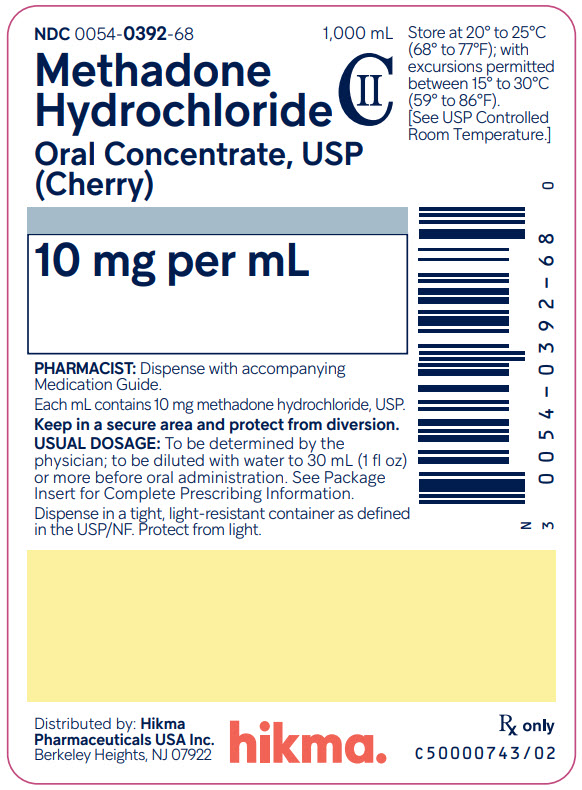
methadone hydrochloride 40 MG Tablet for Oral Suspension — Drugs used in opioid dependence. INDICATIONS AND USAGE Methadone Hydrochloride Injection is indicated for the management of severe and persistent pain that requires an extended…
Boxed warning
WARNING: ADDICTION, ABUSE, AND MISUSE; RISK EVALUATION AND MITIGATION STRATEGY (REMS); LIFE-THREATENING RESPIRATORY DEPRESSION; ACCIDENTAL INGESTION; LIFE-THREATENING QT PROLONGATION; NEONATAL OPIOID WITHDRAWAL SYNDROME; INTERACTIONS WITH DRUGS AFFECTING CYTOCHROME P450 ISOENZYMES; RISKS FROM CONCOMITANT USE WITH BENZODIAZEPINES OR OTHER CNS DEPRESSANTS AND TREATMENT FOR OPIOID ADDICTION Addiction, Abuse, and Misuse Methadone hydrochloride tablets, USP expose patients and other users to the risks of opioid addiction, abuse, and misuse, which can lead to overdose and death. Assess each patient’s risk prior to prescribing methadone hydrochloride tablets, USP and monitor all patients regularly for the development of these behaviors and conditions [see Warnings and Precautions (5.1)] . Opioid Analgesic Risk Evaluation and Mitigation Strategy (REMS) To ensure that the benefits of opioid analgesics outweigh the risks of addiction, abuse, and misuse, the Food and Drug Administration (FDA) has required a REMS for these products [see Warnings and Precautions ( 5.2 )]. Under the requirements of the REMS, drug companies with approved opioid analgesic products must make REMS-compliant education programs available to healthcare providers. Healthcare providers are strongly encouraged to • complete a REMS-compliant education program, • counsel patients and/or their caregivers, with every prescription, on safe use, serious risks, storage, and disposal of these products, • emphasize to patients and their caregivers the importance of reading the Medication Guide every time it is provided by their pharmacist, and • consider other tools to improve patient, household, and community safety. Life-Threatening Respiratory Depression Serious, life-threatening, or fatal respiratory depression may occur with use of methadone hydrochloride tablets, USP. The peak respiratory depressant effect of methadone occurs later, and persists longer than the peak analgesic effect, especially during the initial dosing period. Monitor for respiratory depression, especially during initiation of methadone hydrochloride tablets, USP or following a dose increase [see Warnings and Precautions (5.3)] . Accidental Ingestion Accidental ingestion of even one dose of methadone hydrochloride tablets, especially by children, can result in a fatal overdose of methadone [see Warnings and Precautions (5.3)] . Life-Threatening QT Prolongation QT interval prolongation and serious arrhythmia (torsades de pointes) have occurred during treatment with methadone. Most cases involve patients being treated for pain with large, multiple daily doses of methadone, although cases have been reported in patients receiving doses commonly used for maintenance treatment of opioid addiction. Closely monitor patients with risk factors for development of prolonged QT interval, a history of cardiac conduction abnormalities, and those taking medications affecting cardiac conduction for changes in cardiac rhythm during initiation and titration of methadone hydrochloride tablets [see Warnings and Precautions (5.4)] . Neonatal Opioid Withdrawal Syndrome Neonatal opioid withdrawal syndrome (NOWS) is an expected and treatable outcome of use of methadone hydrochloride tablets, during pregnancy. NOWS may be life-threatening if not recognized and treated in the neonate. The balance between the risks of NOWS and the benefits of maternal methadone hydrochloride tablets use may differ based on the risks associated with the mother’s underlying condition, pain, or addiction. Advise the patient of the risk of NOWS so that appropriate planning for management of the neonate can occur [see Warnings and Precautions (5.5)] . Cytochrome P450 Interaction The concomitant use of methadone hydrochloride tablets, with all cytochrome P450 3A4, 2B6, 2C19, 2C9 or 2D6 inhibitors may result in an increase in methadone plasma concentrations, which could cause potentially fatal respiratory depression. In addition, discontinuation of concomitantly used cytochrome P450 3A4 2B6, 2C19, or 2C9 inducers may also result in an increase in methadone plasma concentration. Follow patients closely for respiratory depression and sedation, and consider dosage reduction with any changes of concomitant medications that can result in an increase in methadone levels [see Warnings and Precautions (5.6), Drug interactions (7)] . Risks From Concomitant Use With Benzodiazepines Or Other CNS Depressants Concomitant use of opioids with benzodiazepines or other central nervous system (CNS) depressants, including alcohol, may result in profound sedation, respiratory depression, coma, and death [see Warnings and Precautions (5.7, Drug Interactions (7)] . Reserve concomitant prescribing of methadone hydrochloride tablets, and benzodiazepines or other CNS depressants for use in patients for whom alternatives to benzodiazepines or other CNS depressants are inadequate. Limit dosages and durations to the minimum required for patients being treated for pain. Follow patients for signs and symptoms of respiratory depression and sedation. If the patient is visibly sedated, evaluate the cause of sedation, and consider delaying or omitting the daily methadone dose. Conditions For Distribution And Use Of Methadone Products For The Treatment Of Opioid Addiction For detoxification and maintenance of opioid dependence, methadone should be administered in accordance with the treatment standards cited in 42 CFR Section 8, including limitations on unsupervised administration [see Indications and Usage (1), Dosage and Administration (2.1)] WARNING: ADDICTION, ABUSE, AND MISUSE; RISK EVALUATION AND MITIGATION STRATEGY (REMS); LIFE-THREATENING RESPIRATORY DEPRESSION; ACCIDENTAL INGESTION; LIFE-THREATENING QT PROLONGATION; NEONATAL OPIOID WITHDRAWAL SYNDROME; INTERACTIONS WITH DRUGS AFFECTING CYTOCHROME P450 ISOENZYMES; RISKS FROM CONCOMITANT USE WITH BENZODIAZEPINES OR OTHER CNS DEPRESSANTS; and TREATMENT FOR OPIOID ADDICTION See full prescribing information for complete boxed warning. Methadone hydrochloride tablets exposes users to risks of addiction, abuse, and misuse, which can lead to overdose and death. Assess each patient’s risk before prescribing, and monitor regularly for development of these behaviors and conditions. (5.1) To ensure that the benefits of opioid analgesics outweigh the risks of addiction, abuse, and misuse, the Food and Drug Administration (FDA) has required a Risk Evaluation and Mitigation Strategy (REMS) for these products. (5.2) Serious, life-threatening, or fatal respiratory depression may occur. The peak respiratory depressant effect of methadone occurs later, and persists longer than the peak analgesic effect. Monitor closely, especially upon initiation or following a dose increase. (5.3) Accidental ingestion of methadone hydrochloride tablets, especially by children, can result in fatal overdose of methadone. (5.3) QT interval prolongation and serious arrhythmia (torsades de pointes) have occurred during treatment with methadone. Closely monitor patients with risk factors for development of prolonged QT interval, a history of cardiac conduction abnormalities, and those taking medications affecting cardiac conduction (5.4) Neonatal opioid withdrawal syndrome (NOWS) is an expected and treatable outcome of use of methadone hydrochloride tablets during pregnancy. NOWS may be life-threatening if not recognized and treated in the neonate. The balance between the risks of NOWS and the benefits of maternal methadone hydrochloride tablets use may differ based on the risks associated with the mother’s underlying condition, pain, or addiction. Advise the patient of the risk of NOWS so that appropriate planning for management of the neonate can occur. (5.5) Concomitant use with CYP3A4, 2B6, 2C19, 2C9 or 2D6 inhibitors or discontinuation of concomitantly used CYP3A4 2B6, 2C19, or 2C9 inducers can result in a fatal overdose of methadone (5.6, 7) Concomitant use of opioids with benzodiazep
Methadone has several clinically significant drug interactions that can affect its efficacy and safety.
majorCYP3A4 inhibitors — increased plasma concentration of methadone, resulting in increased or prolonged opioid effects and potential fatal overdose
majorCYP2B6 inhibitors — increased plasma concentration of methadone, resulting in increased or prolonged opioid effects and potential fatal overdose
majorCYP2C19 inhibitors — increased plasma concentration of methadone, resulting in increased or prolonged opioid effects and potential fatal overdose
majorCYP2C9 inhibitors — increased plasma concentration of methadone, resulting in increased or prolonged opioid effects and potential fatal overdose
majorCYP2D6 inhibitors — increased plasma concentration of methadone, resulting in increased or prolonged opioid effects and potential fatal overdose
majorCYP3A4 inducers — decreased plasma concentration of methadone, resulting in decreased efficacy or onset of withdrawal symptoms
majorCYP2B6 inducers — decreased plasma concentration of methadone, resulting in decreased efficacy or onset of withdrawal symptoms
majorCYP2C19 inducers — decreased plasma concentration of methadone, resulting in decreased efficacy or onset of withdrawal symptoms
majorCYP2C9 inducers — decreased plasma concentration of methadone, resulting in decreased efficacy or onset of withdrawal symptoms
majorbenzodiazepines — increased risk of hypotension, respiratory depression, profound sedation, coma, and death
majorCNS depressants — increased risk of hypotension, respiratory depression, profound sedation, coma, and death
unknownpotentially arrhythmogenic agents — pharmacodynamic interactions may occur
majorserotonergic drugs — risk of serotonin syndrome
majorMonoamine Oxidase Inhibitors (MAOIs) — may manifest as serotonin syndrome or opioid toxicity
moderatemixed agonist/antagonist and partial agonist opioid analgesics — may reduce the analgesic effect of methadone and/or precipitate withdrawal symptoms
Indications
INDICATIONS AND USAGE Methadone Hydrochloride Injection is indicated for the management of severe and persistent pain that requires an extended treatment period with a daily opioid analgesic and for which alternative treatment options are inadequate. Limitations of Use Because of the risks of addiction, abuse, and misuse with opioids, which can occur at any dosage or duration, and because of the greater risks of overdose and death with extended-release/long-acting opioid formulations, (see WARNINGS ) reserve Methadone Hydrochloride Injection for use in patients for whom alternative treatment options (e.g., nonopioid analgesics or immediate-release opioids) are ineffective, not tolerated, or would be otherwise inadequate to provide sufficient management of pain. Methadone Hydrochloride Injection is not indicated as an as-needed (prn) analgesic. For use in temporary treatment of opioid dependence in patients unable to take oral medication. Limitations of Use Injectable methadone products are not approved for the outpatient treatment of opioid dependence. In this patient population, parenteral methadone is to be used only for patients unable to take oral medication, such as hospitalized patients. Conditions for Distribution and Use of Methadone Products for the Treatment of Opioid Addiction Code of Federal Regulations, Title 42, Sec 8. Methadone products when used for the treatment of opioid addiction in detoxification or maintenance programs, shall be dispensed only by opioid treatment programs (and agencies, practitioners or institutions by formal agreement with the program sponsor) certified by the Substance Abuse and Mental Health Services Administration and approved by the designated state authority. Certified treatment programs shall dispense and use methadone in oral form only and according to the treatment requirements stipulated in the Federal Opioid Treatment Standards (42 CFR 8.12). See below for important regulatory exceptions to the general requirement for certification to provide opioid agonist treatment. Failure to abide by the requirements in these regulations may result in criminal prosecution, seizure of the drug supply, revocation of the program approval, and injunction precluding operation of the program. Regulatory Exceptions to the General Requirement for Certification to Provide Opioid Agonist Treatment: During inpatient care, when the patient was admitted for any condition other than concurrent opioid addiction (pursuant to 21CFR 1306.07(c)), to facilitate the treatment of the primary admitting diagnosis. During an emergency period of no longer than 3 days while definitive care for the addiction is being sought in an appropriately licensed facility (pursuant to 21CFR 1306.07(b)).
Dosage
DOSAGE AND ADMINISTRATION Important General Information Consider the following important factors that differentiate methadone from other opioids: • The peak respiratory depressant effect of methadone occurs later and persists longer than its peak pharmacologic effect. • A high degree of opioid tolerance does not eliminate the possibility of methadone overdose, iatrogenic or otherwise. Deaths have been reported during conversion to methadone from chronic, high-dose treatment with other opioid agonists and during initiation of methadone treatment of addiction in subjects previously abusing high doses of other opioid agonists. • There is high interpatient variability in absorption, metabolism, and relative analgesic potency. Population-based conversion ratios between methadone and other opioids are not accurate when applied to individuals. • With repeated dosing, methadone is retained in the liver and then slowly released, prolonging the duration of potential toxicity. • Steady-state plasma concentrations are not attained until 3 to 5 days after initiation of dosing . • Methadone has a narrow therapeutic index, especially when combined with other drugs. It is safer to underestimate a patient’s 24-hour methadone dosage and provide rescue medication (e.g., immediate-release opioid) than to overestimate the 24-hour methadone dosage and manage an adverse reaction due to an overdose. While useful tables of opioid equivalents are readily available, there is substantial inter-patient variability in the relative potency of different opioid drugs and products. Frequently reevaluate patients for signs and symptoms of opioid withdrawal and for signs of oversedation/toxicity after converting patients to methadone. Methadone Hydrochloride Injection for Management of Pain Methadone Hydrochloride Injection should be prescribed only by healthcare professionals who are knowledgeable about the use of extended-release/long-acting opioids and how to mitigate the associated risks. Consider the following important factors that differentiate methadone from other opioid analgesics: • There is high interpatient variability in absorption, metabolism, and relative analgesic potency. Population-based equianalgesic conversion ratios between methadone and other opioids are not accurate when applied to individuals. • The duration of analgesic action of methadone is 4 to 8 hours (based on single-dose studies) but the plasma elimination half-life is 8 to 59 hours. • With repeated dosing, the potency of methadone increases due to systemic accumulation. • Steady-state plasma concentrations, and full analgesic effects, are not attained until at least 3 to 5 days on a dose and may take longer in some patients. Use the lowest effective dosage for the shortest duration of time consistent with individual patient treatment goals (see WARNINGS ). Because the risk of overdose increases as opioid doses increase, reserve titration to higher doses of Methadone Hydrochloride Injection for patients in whom lower doses are insufficiently effective and in whom the expected benefits of using a higher dose opioid clearly outweigh the substantial risks. Initiate the dosing regimen for each patient individually, taking into account the patient’s underlying cause and severity of pain, prior analgesic treatment and response, and risk factors for addiction, abuse, and misuse (see WARNINGS ). Respiratory depression can occur at any time during opioid therapy, especially when initiating and following dosage increases with Methadone Hydrochloride Injection. Consider this risk when selecting an initial dose and when making dose adjustments (see WARNINGS ). Methadone Hydrochloride Injection multiple-dose vials may be administered intravenously, subcutaneously or intramuscularly. The absorption of subcutaneous and intramuscular methadone has not been well characterized and appears to be unpredictable. Local tissue reactions may occur. Parenteral products should be inspected visually for particulate matter and discoloration prior to administration, whenever solution and container permit. Use of Parenteral Methadone in Patients who are not Opioid Tolerant When parenteral methadone is used in patients who are not tolerant to opioids, the usual intravenous methadone starting dose is 2.5 mg to 10 mg every 8 to 12 hours, slowly titrated to effect. More frequent administration may be required during methadone initiation in order to maintain adequate analgesia, and extreme caution is necessary to avoid overdosage, taking into account methadone's long elimination half-life. Conversion from Oral Methadone to Parenteral Methadone Conversion from oral methadone to parenteral methadone should initially use a 2:1 dose ratio (e.g., 10 mg oral methadone to 5 mg parenteral methadone). Conversion from other Opioid Analgesics to Parenteral Methadone Switching a patient from another opioid analgesic to methadone requires caution due to the uncertainty of dose conversion ratios and incomplete cross-tolerance. Deaths have occurred in opioid tolerant patients during conversion to methadone. The potency of methadone relative to other opioid analgesics is nonlinear and increases with increasing dose. Table 1 provides an estimated conversion factor for use when converting patients from another opioid to methadone. Because of the high inter-patient variability in absorption, metabolism, and relative potency, it is critical to avoid overestimating the methadone dose which can lead to fatal respiratory depression. The dose conversion scheme below is derived from various consensus guidelines for converting patients to methadone from morphine. The guidelines used to construct this table, however, were all designed for converting patients from oral morphine to oral methadone. The third column assumes a 2:1 ratio for converting from oral to intravenous methadone. Clinicians should consult published conversion guidelines to determine the equivalent morphine dose for patients converting from other opioids. Consider the following when using the information in Table 1: • This is not a table of equianalgesic doses. • The conversion factors in this table are only for the conversion from another oral opioid analgesic to methadone hydrochloride tablets. • The table cannot be used to convert from methadone hydrochloride tablets to another opioid. Doing so will result in an overestimation of the dose of the new opioid and may result in fatal overdose. Table 1. Oral Morphine to Intravenous Methadone Conversion Total Daily Baseline Oral Morphine Dose Estimated Daily Oral Methadone Requirement as Percent of Total Daily Morphine Dose Estimated Daily Intravenous Methadone as Percent of Total Daily Oral Morphine Dose The total daily methadone dose derived from the table above may then be divided to reflect the intended dosing schedule (i.e., for administration every 8 hours, divide total daily methadone dose by 3). Less than 100 mg 20% to 30% 10% to 15% 100 mg to 300 mg 10% to 20% 5% to 10% 300 mg to 600 mg 8% to 12% 4% to 6% 600 mg to 1000 mg 5% to 10% 3% to 5% Greater than 1000 mg Less than 5% Less than 3% Table 2. Parenteral Morphine to Intravenous Methadone Conversion (Derived from Table 1, Assuming a 3:1 Oral:Parenteral Morphine Ratio) Total Daily Baseline Parenteral Morphine Dose Estimated Daily Parenteral Methadone Requirement as Percent of Total Daily Morphine Dose The total daily methadone dose derived from the table above may then be divided to reflect the intended dosing schedule (i.e., for administration every 8 hours, divide total daily methadone dose by 3). 10 mg to 30 mg 40% to 66% 30 mg to 50 mg 27% to 66% 50 mg to 100 mg 22% to 50% 100 mg to 200 mg 15% to 34% 200 mg to 500 mg 10% to 20% Note: Equianalgesic methadone dosing varies not only between patients, but also within the same patient, depending on baseline morphine (or other opioid) dose. Tables 1 and 2 have been included in order to illustrate this concept and to provide a safe starting p
Warnings
WARNINGS Addiction, Abuse and Misuse Methadone Hydrochloride Injection contains methadone, a Schedule II controlled substance. As an opioid, Methadone Hydrochloride Injection exposes users to the risks of addiction, abuse, and misuse. Although the risk of addiction in any individual is unknown, it can occur in patients appropriately prescribed Methadone Hydrochloride Injection. Addiction can occur at recommended doses and if the drug is misused or abused. The risk of opioid-related overdose or overdose-related death is increased with higher opioid doses, and this risk persists over the course of therapy. In postmarketing studies, addiction, abuse, misuse, and fatal and non-fatal opioid overdose were observed in patients with long-term opioid use (see ADVERSE REACTIONS ; Postmarketing Experience). Assess each patient’s risk for opioid addiction, abuse, or misuse prior to prescribing Methadone Hydrochloride Injection, and reassess all patients receiving Methadone Hydrochloride Injection for the development of these behaviors and conditions. Risks are increased in patients with a personal or family history of substance abuse (including drug or alcohol addiction or abuse) or mental illness (e.g., major depression). The potential for these risks should not, however, prevent the prescribing of Methadone Hydrochloride Injection for the proper management of pain in any given patient. Opioids are sought for nonmedical use and are subject to diversion from legitimate prescribed use. Consider these risks when prescribing or dispensing Methadone Hydrochloride Injection. Strategies to reduce these risks include proper product storage and control practices for a C-II drug. Contact local state professional licensing board or state-controlled substances authority for information on how to prevent and detect abuse or diversion of this product. Life-Threatening Respiratory Depression Serious, life-threatening, or fatal respiratory depression has been reported with the use of opioids, even when used as recommended. Respiratory depression, if not immediately recognized and treated, may lead to respiratory depression and death. Management of respiratory depression may include close observation, supportive measures, and use of opioid overdose reversal agents (e.g., naloxone, nalmefene), depending on the patient’s clinical status. Carbon dioxide (CO 2 ) retention from opioid-induced respiratory depression can exacerbate the sedating effects of opioids. While serious, life-threatening, or fatal respiratory depression can occur at any time during the use of Methadone Hydrochloride Injection, the risk is greatest during the initiation of therapy or following a dosage increase. To reduce the risk of respiratory depression, proper dosing and titration of Methadone Hydrochloride Injection are essential. Overestimating the Methadone Hydrochloride Injection dosage when converting patients from another opioid product can result in a fatal overdose with the first dose. Methadone Hydrochloride Injection should be administered with extreme caution to patients with conditions accompanied by hypoxia, hypercapnia, or decreased respiratory reserve such as; asthma, chronic obstructive pulmonary disease or cor pulmonale, severe obesity, sleep apnea syndrome, myxedema, kyphoscoliosis, CNS depression or coma. In these patients even usual therapeutic doses of methadone may decrease respiratory drive while simultaneously increasing airway resistance to the point of apnea. Alternative non-opioid analgesics should be considered, and methadone should be employed only under careful medical supervision at the lowest effective dose. Methadone's peak respiratory depressant effects typically occur later, and persist longer than its peak analgesic effects, in the short-term use setting. These characteristics can contribute to cases of iatrogenic overdose, particularly during treatment initiation and dose titration. Opioids can cause sleep-related breathing disorders including central sleep apnea (CSA) and sleep-related hypoxemia. Opioid use increases the risk of CSA in a dose-dependent fashion. In patients who present with CSA, consider decreasing the opioid dosage using best practices for opioid taper (see DOSAGE AND ADMINISTRATION ). Life-Threatening QT Prolongation Cases of QT interval prolongation and serious arrhythmia (torsades de pointes) have been observed during treatment with methadone. These cases appear to be more commonly associated with, but not limited to, higher dose treatment (> 200 mg/day). Most cases involve patients being treated for pain with large, multiple daily doses of methadone, although cases have been reported in patients receiving doses commonly used for maintenance treatment of opioid addiction. In most patients on the lower doses typically used for maintenance, concomitant medications and/or clinical conditions such as hypokalemia were noted as contributing factors. However, the evidence strongly suggests that methadone possesses the potential for adverse cardiac conduction effects in some patients. The effects of methadone on the QT interval have been confirmed in in vivo laboratory studies, and methadone has been shown to inhibit cardiac potassium channels in in vitro studies. Closely monitor patients with risk factors for development of prolonged QT interval (e.g., cardiac hypertrophy, concomitant diuretic use, hypokalemia and hypomagnesemia), a history of cardiac conduction abnormalities, and those taking medications affecting cardiac conduction. QT prolongation has also been reported in patients with no prior cardiac history who have received high doses of methadone. Evaluate patients developing QT prolongation while on methadone treatment for the presence of modifiable risk factors, such as concomitant medications with cardiac effects, drugs that might cause electrolyte abnormalities, and drugs that might act as inhibitors of methadone metabolism. Only initiate methadone hydrochloride tablets therapy for pain in patients for whom the anticipated benefit outweighs the risk of QT prolongation and development of dysrhythmias that have been reported with high doses of methadone. The use of methadone in patients already known to have a prolonged QT interval has not been systematically studied. Managing Risks from Concomitant Use with Benzodiazepines or Other CNS Depressants Profound sedation, respiratory depression, coma, and death may result from the concomitant use of Methadone Hydrochloride Injection with benzodiazepines and/or other CNS depressants (e.g., alcohol, non-benzodiazepine sedatives/hypnotics, anxiolytics, tranquilizers, muscle relaxants, general anesthetics, antipsychotics, gabapentinoids [gabapentin or pregabalin], and other opioids). Because of these risks, reserve concomitant prescribing of these drugs for use in patients for whom alternative treatment options are inadequate. Observational studies have demonstrated that concomitant use of opioid analgesics and benzodiazepines increases the risk of drug-related mortality compared to use of opioid analgesics alone. Because of similar pharmacological properties, it is reasonable to expect similar risk with the concomitant use of other CNS depressant drugs with opioid analgesics (see PRECAUTIONS: Drug Interactions ). If the decision is made to prescribe a benzodiazepine or other CNS depressant concomitantly with an opioid analgesic, prescribe the lowest effective dosages and minimum durations of concomitant use. In patients already receiving an opioid analgesic, prescribe a lower initial dose of the benzodiazepine or other CNS depressant than indicated in the absence of an opioid, and titrate based on clinical response. If an opioid analgesic is initiated in a patient already taking a benzodiazepine or other CNS depressant, prescribe a lower initial dose of the opioid analgesic, and titrate based on clinical response. Follow patients closely for signs and symptoms of respiratory depression and sedation. Ne
Contraindications
CONTRAINDICATIONS Methadone Hydrochloride Tablets are contraindicated in patients with: • Significant respiratory depression [see Warnings and Precautions ( 5.2 )]. • Acute or severe bronchial asthma in an unmonitored setting or in the absence of resuscitative equipment [see Warnings and Precautions ( 5.10 )]. • Known or suspected gastrointestinal obstruction, including paralytic ileus [see Warnings and Precautions ( 5.14 )]. • Hypersensitivity (e.g., anaphylaxis) to methadone [see Adverse Reactions ( 6 )]. • Significant respiratory depression ( 4 ) • Acute or severe bronchial asthma in an unmonitored setting or in the absence of resuscitative equipment ( 4 ) • Known or suspected gastrointestinal obstruction, including paralytic ileus ( 4 ) • Hypersensitivity to methadone ( 4 )
Mechanism of action
Mechanism of Action Methadone hydrochloride is a mu-agonist; a synthetic opioid analgesic with multiple actions qualitatively similar to those of morphine, the most prominent of which involves the central nervous system and organs composed of smooth muscle. The principal therapeutic uses for methadone are for analgesia and for detoxification or maintenance in opioid addiction. The methadone withdrawal syndrome, although qualitatively similar to that of morphine, differs in that the onset is slower, the course is more prolonged, and the symptoms are less severe. Some data also indicate that methadone acts as an antagonist at the N-methyl-D-aspartate (NMDA) receptor. The contribution of NMDA receptor antagonism to methadone's efficacy is unknown.
A drug lookup is just the start. Eleplan keeps the whole care plan in one place.
Medications, diagnoses, documents, appointments, and the whole care team — organized and always in sync, with Ellie, your AI care assistant, on top of it. Free to start.