granisetron 1 MG/ML Injectable Solution
Managing this medication for someone you care for? Eleplan keeps diagnoses, medications and appointments in one plan.
Start free with EleplanClinical drug
granisetron 1 MG/ML Injectable Solution
1 MG/ML · Injectable Solution · injection
A form of granisetron →
granisetron 1 MG/ML Injectable Solution — Serotonin (5HT3) antagonists. INDICATIONS AND USAGE Granisetron hydrochloride injection is a serotonin-3 (5-HT 3 ) receptor antagonist indicated for: • The prevention of nausea…
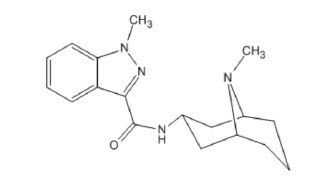
Active ingredient
Classification
Serotonin (5HT3) antagonistsSerotonin-3 Receptor Antagonist
Drug interactions
Granisetron may interact with certain drugs and conditions, particularly those affecting the cytochrome P-450 enzyme system and QT interval.
- moderateketoconazole — inhibition of granisetron metabolism
- moderatephenobarbital — increased plasma clearance of granisetron
- majordrugs known to prolong the QT interval — potential for QT prolongation
Indications
INDICATIONS AND USAGE Granisetron hydrochloride injection is a serotonin-3 (5-HT 3 ) receptor antagonist indicated for: • The prevention of nausea and/or vomiting associated with initial and repeat courses of emetogenic cancer therapy, including high-dose cisplatin. • The prevention and treatment of postoperative nausea and vomiting in adults. As with other antiemetics, routine prophylaxis is not recommended in patients in whom there is little expectation that nausea and/or vomiting will occur postoperatively. In patients where nausea and/or vomiting must be avoided during the postoperative period, granisetron hydrochloride injection is recommended even where the incidence of postoperative nausea and/or vomiting is low. Granisetron hydrochloride injection is a serotonin-3 (5-HT3) receptor antagonist indicated for: • Prevention of nausea and/or vomiting associated with initial and repeat courses of emetogenic cancer therapy, including high-dose cisplatin. ( 1 ) • Prevention and treatment of postoperative nausea and vomiting in adults. ( 1 )
Dosage
DOSAGE AND ADMINISTRATION Prevention of chemotherapy-induced nausea and vomiting ( 2.1 ): Recommended dosage is 10 mcg/kg intravenously within 30 minutes before initiation of chemotherapy Pediatric patients (2 to 16 years): Recommended dosage is 10 mcg/kg Prevention of postoperative nausea and vomiting ( 2.2 ): Recommended dosage is 1 mg, undiluted, administered intravenously over 30 seconds, before anesthetic induction or immediately before reversal of anesthesia. Treatment of postoperative nausea and vomiting ( 2.2 ): Recommended dosage is 1 mg, undiluted, administered intravenously over 30 seconds. 2.1 Prevention of Chemotherapy-Induced Nausea and Vomiting Adult Patients The recommended dosage for granisetron hydrochloride injection, is 10 mcg/kg administered intravenously within 30 minutes before initiation of chemotherapy, and only on the day(s) chemotherapy is given. Infusion Preparation Granisetron hydrochloride injection, may be administered intravenously either undiluted over 30 seconds, or diluted with 0.9% Sodium Chloride or 5% Dextrose and infused over 5 minutes. Stability Intravenous infusion of granisetron hydrochloride injection, should be prepared at the time of administration. However, granisetron hydrochloride injection, has been shown to be stable for at least 24 hours when diluted in 0.9% Sodium Chloride or 5% Dextrose and stored at room temperature under normal lighting conditions. As a general precaution, granisetron hydrochloride injection, should not be mixed in solution with other drugs. Parenteral drug products should be inspected visually for particulate matter and discoloration before administration whenever solution and container permit. Pediatric Patients The recommended dose in pediatric patients 2 to 16 years of age is 10 mcg/kg [see Clinical Studies (14) ] . Pediatric patients under 2 years of age have not been studied. 2.2 Prevention and Treatment of Postoperative Nausea and Vomiting Adult Patients The recommended dosage for prevention of postoperative nausea and vomiting is 1 mg of granisetron hydrochloride injection, undiluted, administered intravenously over 30 seconds, before induction of anesthesia or immediately before reversal of anesthesia. The recommended dosage for the treatment of nausea and/or vomiting after surgery is 1 mg of granisetron hydrochloride injection, undiluted, administered intravenously over 30 seconds.
Warnings
WARNINGS AND PRECAUTIONS Progressive Ileus and Gastric Distention : Granisetron may mask a progressive ileus and/or gastric distention; consider before use in patients with abdominal surgery. Monitor for decreased bowel activity, particularly in patients with risk factors for gastrointestinal obstruction. ( 5.1 ) Serotonin Syndrome : Serotonin syndrome has been reported with 5-HT 3 receptor antagonists alone but particularly with concomitant use of serotonergic drugs. If such symptoms occur, discontinue SANCUSO and initiate supportive treatment. If concomitant use of SANCUSO with other serotonergic drugs is clinically warranted, patients should be aware of a potential increased risk of serotonin syndrome. ( 5.2 , 7.1 ) Skin Reactions : Mild application site reactions have occurred; remove SANCUSO transdermal system if severe reactions or a generalized skin reaction occur. ( 5.3 ) Increased Drug Exposure with Use of External Heat Sources: Avoid exposing SANCUSO transdermal system and surrounding area to direct external heat sources, such as heating pads ( 5.4 ). Phototoxicity with Ultraviolet Light Exposure : Avoid direct exposure of application site to natural or artificial sunlight, including sunlamps, by covering with clothing throughout the period of wear and for 10 days after removal. ( 5.5 ) 5.1 Progressive Ileus and Gastric Distention SANCUSO may mask a progressive ileus and/or gastric distention. This should be particularly considered before use of SANCUSO in patients who have had recent abdominal surgery. Monitor for decreased bowel activity, particularly in patients with risk factors for gastrointestinal obstruction. 5.2 Serotonin Syndrome The development of serotonin syndrome has been reported with 5-HT 3 receptor antagonists. Most reports have been associated with concomitant use of serotonergic drugs (e.g., selective serotonin reuptake inhibitors (SSRIs), serotonin and norepinephrine reuptake inhibitors (SNRIs), monoamine oxidase inhibitors, mirtazapine, fentanyl, lithium, tramadol, and intravenous methylene blue). Some of the reported cases were fatal. Serotonin syndrome occurring with overdose of another 5-HT 3 receptor antagonist alone has also been reported. The majority of reports of serotonin syndrome related to 5-HT 3 receptor antagonist use occurred in a post-anesthesia care unit or an infusion center. Symptoms associated with serotonin syndrome may include the following combination of signs and symptoms: mental status changes (e.g., agitation, hallucinations, delirium, and coma), autonomic instability (e.g., tachycardia, labile blood pressure, dizziness, diaphoresis, flushing, hyperthermia), neuromuscular symptoms (e.g., tremor, rigidity, myoclonus, hyperreflexia, incoordination), seizures, with or without gastrointestinal symptoms (e.g., nausea, vomiting, diarrhea). Patients should be monitored for the emergence of serotonin syndrome, especially with concomitant use of SANCUSO and other serotonergic drugs. If symptoms of serotonin syndrome occur, discontinue SANCUSO and initiate supportive treatment. Patients should be informed of the increased risk of serotonin syndrome, especially if SANCUSO is used concomitantly with other serotonergic drugs. [see Drug Interactions ( 7 )]. 5.3 Skin Reactions In clinical trials with SANCUSO, application site reactions were reported that were generally mild in intensity and did not lead to discontinuation of use. The incidence of reactions was comparable with placebo. If severe reactions, or a generalized skin reaction occur (e.g., allergic rash, including erythematous, macular, papular rash or pruritus), remove the SANCUSO transdermal system. 5.4 Increased Drug Exposure with Use of External Heat Sources Prolonged exposure to heat results in increasing plasma concentrations of granisetron during the period of heat exposure [see Clinical Pharmacology ( 12.3 )] . Do not apply a heat pad or heat lamp over or in the vicinity of the SANCUSO transdermal system and avoid extended exposure to heat [see Dosage and Administration ( 2 )]. 5.5 Phototoxicity with Ultraviolet Light Exposure Granisetron may be affected by direct natural or artificial sunlight, including sunlamps. An in vitro study using Chinese hamster ovary cells suggests that granisetron has the potential for photogenotoxicity [see Nonclinical Toxicology ( 13.3 )] . To avoid a potential skin reaction, advise patients to cover the application site of the transdermal system with clothing if there is a risk of exposure to direct natural or artificial sunlight throughout the period of wear and for 10 days following its removal.
Contraindications
CONTRAINDICATIONS Granisetron hydrochloride injection is contraindicated in patients with known hypersensitivity (eg. anaphylaxis, shortness of breath, hypotension, urticaria) to the drug or to any of its components. • Hypersensitivity to granisetron or to any of its components. ( 4 )
Mechanism of action
CLINICAL PHARMACOLOGY Granisetron is a selective 5-hydroxytryptamine 3 (5-HT 3 ) receptor antagonist with little or no affinity for other serotonin receptors, including 5-HT 1 ; 5-HT 1A ; 5-HT 1B/C ; 5-HT 2 ; for α 1- , α 2- , or β-adrenoreceptors; for dopamine-D 2 ; or for histamine-H 1 ; benzodiazepine; picrotoxin or opioid receptors. Serotonin receptors of the 5-HT 3 type are located peripherally on vagal nerve terminals and centrally in the chemoreceptor trigger zone of the area postrema. During chemotherapy that induces vomiting, mucosal enterochromaffin cells release serotonin, which stimulates 5-HT 3 receptors. This evokes vagal afferent discharge, inducing vomiting. Animal studies demonstrate that, in binding to 5-HT 3 receptors, granisetron blocks serotonin stimulation and subsequent vomiting after emetogenic stimuli such as cisplatin. In the ferret animal model, a single granisetron injection prevented vomiting due to high-dose cisplatin or arrested vomiting within 5 to 30 seconds. In most human studies, granisetron has had little effect on blood pressure, heart rate or ECG. No evidence of an effect on plasma prolactin or aldosterone concentrations has been found in other studies. Following single and multiple oral doses, granisetron hydrochloride tablets slowed colonic transit in normal volunteers. However, granisetron hydrochloride had no effect on oro-cecal transit time in normal volunteers when given as a single intravenous (IV) infusion of 50 mcg/kg or 200 mcg/kg. Pharmacokinetics In healthy volunteers and adult cancer patients undergoing chemotherapy, administration of granisetron hydrochloride tablets produced mean pharmacokinetic data shown in Table 1 . Table 1 Pharmacokinetic Parameters (Median [range]) Following Granisetron Hydrochloride Tablets Peak Plasma Concentration (ng/mL) Terminal Phase Plasma Half-Life (h) Volume of Distribution (L/kg) Total Clearance (L/h/kg) Cancer Patients 1 mg twice a day, 7 days (n=27) 5.99 [0.63 to 30.9] N.D. 1 N.D. 0.52 [0.09 to 7.37] Volunteers single 1 mg dose (n=39) 3.63 [0.27 to 9.14] 6.23 [0.96 to 19.9] 3.94 [1.89 to 39.4] 0.41 [0.11 to 24.6] 1 Not determined after oral administration; following a single intravenous dose of 40 mcg/kg, terminal phase half-life was determined to be 8.95 hours. N.D. Not determined. Absorption When granisetron hydrochloride tablets were administered with food, AUC was decreased by 5% and C max increased by 30% in non-fasted healthy volunteers who received a single dose of 10 mg. Distribution Plasma protein binding is approximately 65% and granisetron distributes freely between plasma and red blood cells. Metabolism Granisetron metabolism involves N-demethylation and aromatic ring oxidation followed by conjugation. In vitro liver microsomal studies show that granisetron's major route of metabolism is inhibited by ketoconazole, suggestive of metabolism mediated by the cytochrome P-450 3A subfamily. Animal studies suggest that some of the metabolites may also have 5-HT 3 receptor antagonist activity. Elimination Clearance is predominantly by hepatic metabolism. In normal volunteers, approximately 11% of the orally administered dose is eliminated unchanged in the urine in 48 hours. The remainder of the dose is excreted as metabolites, 48% in the urine and 38% in the feces. Subpopulations Gender The effects of gender on the pharmacokinetics of granisetron hydrochloride tablets have not been studied. However, after intravenous infusion of granisetron hydrochloride, no difference in mean AUC was found between males and females, although males had a higher C max generally. In elderly and pediatric patients and in patients with renal failure or hepatic impairment, the pharmacokinetics of granisetron was determined following administration of intravenous granisetron hydrochloride. Elderly The ranges of the pharmacokinetic parameters in elderly volunteers (mean age 71 years), given a single 40 mcg/kg intravenous dose of granisetron hydrochloride injection, were generally similar to those in younger healthy volunteers; mean values were lower for clearance and longer for half-life in the elderly. Renal Failure Patients Total clearance of granisetron was not affected in patients with severe renal failure who received a single 40 mcg/kg intravenous dose of granisetron hydrochloride injection. Hepatically Impaired Patients A pharmacokinetic study with intravenous granisetron hydrochloride in patients with hepatic impairment due to neoplastic liver involvement showed that total clearance was approximately halved compared to patients without hepatic impairment. Given the wide variability in pharmacokinetic parameters noted in patients, dosage adjustment in patients with hepatic functional impairment is not necessary. Pediatric Patients A pharmacokinetic study in pediatric cancer patients (2 to 16 years of age), given a single 40 mcg/kg intravenous dose of granisetron hydrochloride injection, showed that volume of distribution and total clearance increased with age. No relationship with age was observed for peak plasma concentration or terminal phase plasma half-life. When volume of distribution and total clearance are adjusted for body weight, the pharmacokinetics of granisetron are similar in pediatric and adult cancer patients.
Indicated ICD-10 codes
Source: RxNorm + openFDA + RxClass + FAERS · 2026
Look up another medication