gemtuzumab ozogamicin 4.5 MG Injection — Other monoclonal antibodies and antibody drug conjugates. INDICATIONS AND USAGE MYLOTARG is a CD33-directed antibody and cytotoxic drug conjugate indicated for: • treatment of newly-diagnosed CD33-positive…
Boxed warning
WARNING: HEPATOTOXICITY Hepatotoxicity, including severe or fatal hepatic veno-occlusive disease (VOD), also known as sinusoidal obstruction syndrome (SOS), has been reported in association with the use of MYLOTARG as a single agent, and as part of a combination chemotherapy regimen. Monitor frequently for signs and symptoms of VOD after treatment with MYLOTARG. ( 5.1 and 6.1 ) WARNING: HEPATOTOXICITY See full prescribing information for complete boxed warning. Hepatotoxicity, including severe or fatal hepatic veno-occlusive disease (VOD), also known as sinusoidal obstruction syndrome (SOS), has been reported in association with the use of MYLOTARG. ( 5.1 , 6.1 )
Other monoclonal antibodies and antibody drug conjugatesCD33-directed Immunoconjugate
Indications
INDICATIONS AND USAGE MYLOTARG is a CD33-directed antibody and cytotoxic drug conjugate indicated for: • treatment of newly-diagnosed CD33-positive acute myeloid leukemia (AML) in adults and pediatric patients 1 month and older ( 1.1 ). • treatment of relapsed or refractory CD33-positive AML in adults and pediatric patients 2 years and older ( 1.2 ). 1.1 Newly-Diagnosed CD33-positive Acute Myeloid Leukemia (AML) MYLOTARG is indicated for the treatment of newly-diagnosed CD33-positive acute myeloid leukemia in adults and pediatric patients 1 month and older. 1.2 Relapsed or Refractory CD33-positive AML MYLOTARG is indicated for the treatment of relapsed or refractory CD33-positive acute myeloid leukemia in adults and pediatric patients 2 years and older.
Dosage
DOSAGE AND ADMINISTRATION • Newly-diagnosed, de novo AML (combination regimen) Adults : - Induction: 3 mg/m 2 (up to one 4.5 mg vial) on Days 1, 4, and 7 in combination with daunorubicin and cytarabine ( 2.2 ). - Consolidation: 3 mg/m 2 on Day 1 (up to one 4.5 mg vial) in combination with daunorubicin and cytarabine ( 2.2 ). Pediatric patients 1 month and older : - 3 mg/m 2 for patients with body surface area (BSA) 0.6 m 2 or greater ( 2.2 ). - 0.1 mg/kg for patients with BSA less than 0.6 m 2 ( 2.2 ). - See Full Prescribing Information for complete dosing information ( 2.2 ). • Newly-diagnosed AML (single-agent regimen): Adults : - Induction: 6 mg/m 2 (not limited to one 4.5 mg vial) on Day 1 and 3 mg/m 2 (not limited to one 4.5 mg vial) on Day 8 ( 2.2 ). - Continuation: For patients without evidence of disease progression following induction, up to 8 continuation courses of MYLOTARG 2 mg/m 2 (not limited to one 4.5 mg vial) on Day 1 every 4 weeks ( 2.2 ). • Relapsed or refractory AML (single-agent regimen): Adults and pediatric patients 2 years and older: - 3 mg/m 2 (up to one 4.5 mg vial) on Days 1, 4, and 7 ( 2.2 ). • Premedicate with a corticosteroid, antihistamine, and acetaminophen ( 2.1 ). 2.1 Premedication and Special Considerations • Premedicate adults with acetaminophen 650 mg orally and diphenhydramine 50 mg orally or intravenously 1 hour prior to MYLOTARG dosing and 1 mg/kg methylprednisolone or an equivalent dose of an alternative corticosteroid within 30 minutes prior to infusion of MYLOTARG. • Premedicate pediatric patients 1 month and older with acetaminophen 15 mg/kg (maximum of 650 mg) and diphenhydramine 1 mg/kg (maximum of 50 mg) 1 hour prior to MYLOTARG dosing, and 1 mg/kg methylprednisolone orally or intravenously within 30 minutes prior to infusion of MYLOTARG; additional doses of acetaminophen and diphenhydramine may be administered every 4 hours after the initial pretreatment dose. Repeat with the same dose of methylprednisolone or an equivalent corticosteroid for any sign of an infusion reaction, such as fever, chills, hypotension, or dyspnea during the infusion or within 4 hours afterwards [see Warnings and Precautions (5.2) ] . • Use appropriate measures to prevent tumor lysis syndrome. • For patients with hyperleukocytosis (leukocyte count greater than or equal to 30 Gi/L), cytoreduction is recommended prior to administration of MYLOTARG. 2.2 Recommended Dosage Newly-Diagnosed De Novo CD33-positive AML (Combination Regimen) Adults The recommended dose of MYLOTARG in adults is 3 mg/m 2 . A treatment course including MYLOTARG in combination therapy for adults with newly-diagnosed de novo CD33-positive AML consists of 1 induction cycle and 2 consolidation cycles [see Clinical Studies (14.1) ] . For the induction cycle, the recommended dose of MYLOTARG is 3 mg/m 2 (up to one 4.5 mg vial) on Days 1, 4, and 7 in combination with daunorubicin and cytarabine . For patients requiring a second induction cycle, do NOT administer MYLOTARG during the second induction cycle. For the consolidation cycles, the recommended dose of MYLOTARG is 3 mg/m 2 on Day 1 (up to one 4.5 mg vial) in combination with daunorubicin and cytarabine. Pediatric Patients 1 Month and Older The recommended dose of MYLOTARG in pediatric patients 1 month and older is: • 3 mg/m 2 for patients with body surface area (BSA) greater than or equal to 0.6 m 2 • 0.1 mg/kg for patients with BSA less than 0.6 m 2 For Induction 1, MYLOTARG is given once in combination with standard chemotherapy. No MYLOTARG is given in the second induction cycle [see Clinical Studies (14.1) ]. No MYLOTARG is given in the first or third intensification cycles. For Intensification 2, MYLOTARG is given once in combination with standard chemotherapy. Consider the risks and potential benefits before giving MYLOTARG during Intensification 2 [see Adverse Reactions (6.1) ] . Newly-Diagnosed CD33-positive AML (Single-agent Regimen) A treatment course of MYLOTARG as a single agent for adults with newly-diagnosed CD33-positive AML consists of 1 cycle of induction and up to 8 cycles of continuation therapy [see Clinical Studies (14.1) ]. For the induction cycle, the recommended dose of MYLOTARG is 6 mg/m 2 (not limited to one 4.5 mg vial) as a single agent on Day 1, and 3 mg/m 2 (not limited to one 4.5 mg vial) on Day 8. For continuation, the recommended dose of MYLOTARG is 2 mg/m 2 (not limited to one 4.5 mg vial) as a single agent on Day 1 every 4 weeks. Relapsed or Refractory CD33-positive AML (Single-agent Regimen) The recommended dose of MYLOTARG as a single agent for treatment for adults and pediatric patients 2 years and older with relapsed or refractory CD33-positive AML is 3 mg/m 2 (up to one 4.5 mg vial) on Days 1, 4, and 7. Treatment in the relapsed or refractory setting consists of a single course of MYLOTARG [see Clinical Studies (14.2) ] . 2.3 Dosage Modifications for Toxicities Monitor blood counts frequently through resolution of cytopenias. Monitor blood counts and chemistries at least three times per week through recovery from treatment-related toxicities. Management of some adverse reactions [see Warnings and Precautions (5) , Adverse Reactions (6) ] may require dose interruptions or permanent discontinuation of MYLOTARG. Table 1 shows the dose modification guidelines for hematologic and nonhematologic toxicities. Table 1. Dosage Modifications for Hematologic and Nonhematologic Toxicities Hematologic and Nonhematologic Toxicities Recommended Action Abbreviations: ALT=alanine aminotransferase; AST=aspartate aminotransferase; VOD=veno-occlusive disease; ULN=upper limit of normal. For patients receiving MYLOTARG in combination therapy Persistent thrombocytopenia • Adults: If platelet count does not recover to greater than or equal to 100 Gi/L within 14 days following the planned start date of the consolidation cycle (14 days after hematologic recovery following previous cycle), discontinue MYLOTARG (do not administer MYLOTARG in the consolidation cycles). • Pediatrics: Patients should have a platelet count of 75 Gi/L before the next cycle (induction or intensification). Persistent neutropenia • Adults: If neutrophil count does not recover to greater than 0.5 Gi/L within 14 days following the planned start date of the consolidation cycle (14 days after hematologic recovery following previous cycle), discontinue MYLOTARG (do not administer MYLOTARG in the consolidation cycles). • Pediatrics: Patients should have a neutrophil count of 1 Gi/L before the next cycle (induction or intensification). For all patients receiving MYLOTARG (Monotherapy or in Combination) VOD • Discontinue MYLOTARG [see Warnings and Precautions (5.1) ] . Total bilirubin greater than 2 × ULN, or AST and/or ALT greater than 2.5 × ULN • Delay treatment with MYLOTARG until recovery of total bilirubin to less than or equal to 2 × ULN and AST and ALT to less than or equal to 2.5 × ULN prior to each dose. • Omit scheduled dose if delayed more than 2 days between sequential infusions. Infusion-related reactions • Interrupt the infusion and institute appropriate medical management. • Administer acetaminophen, diphenhydramine and/or methylprednisolone, if needed [see Dosage and Administration (2.1) ] • Provide supportive care measures as needed. • For mild, moderate or severe infusion-related reactions, once symptoms resolve, consider resuming the infusion at no more than half the rate at which the reaction occurred. Repeat the procedure above in the event of recurrence of symptoms. • Permanently discontinue MYLOTARG upon occurrence of a severe infusion reaction or for any life-threatening infusion reaction [see Warnings and Precautions (5.2) ] . Other severe or life-threatening non-hematologic toxicities • Delay treatment with MYLOTARG until recovery to a severity of no more than mild. • Omit scheduled dose if delayed more than 2 days between sequential infusions. 2.4 Instructions for Reconstitution, Dilution, and Administ
Warnings
WARNINGS AND PRECAUTIONS • Infusion-related reactions (including anaphylaxis): Premedicate with a corticosteroid, acetaminophen, and diphenhydramine. Monitor patients during and for at least 1 hour after the end of the infusion. Interrupt the infusion, administer steroids or antihistamines, or permanently discontinue treatment as necessary ( 2.1 , 5.2 , 6 ). • Hemorrhage: Severe, including fatal, hemorrhage may occur when MYLOTARG is used at recommended doses. Monitor platelet counts frequently ( 5.3 , 6.1 ). • Embryo-fetal toxicity: Can cause fetal harm. Advise patients of reproductive potential of the potential risk to a fetus and to use effective contraception ( 5.6 , 8.1 , 8.3 ). 5.1 Hepatotoxicity, Including Veno-occlusive Liver Disease (VOD) Hepatotoxicity, including life-threatening and sometimes fatal hepatic VOD events, have been reported in patients receiving MYLOTARG as a single agent or as part of a combination chemotherapy regimen [see Adverse Reactions (6) ]. In ALFA-0701, VOD events were reported in 6/131 (5%) adult patients during or following treatment with MYLOTARG, or following later hematopoietic stem cell transplantation (HSCT). The median time from the MYLOTARG dose to onset of VOD was 9 days (range: 2–298 days), with 5 events occurring within 28 days of any dose of MYLOTARG and 1 event occurring greater than 28 days after the last dose of MYLOTARG. Three of the 6 VOD events were fatal. VOD was also reported in 2 patients in the control arm of ALFA-0701 after receiving MYLOTARG as a therapy for relapsed AML. In MyloFrance-1 (MYLOTARG 3 mg/m 2 on Days 1, 4 and 7), VOD events were reported in none of the 57 patients during or following treatment, or following HSCT after completion of MYLOTARG treatment. In AAML0531, VOD events were reported in 25/520 (5%) pediatric patients in the MYLOTARG arm. VOD was fatal in 2 patients. Among 187 pediatric patients who underwent HSCT in the MYLOTARG arm, VOD occurred within 30 days post-HSCT in 20 (11%) patients. Based on an analysis across trials, the risk of VOD was higher in adult patients who received higher doses of MYLOTARG as monotherapy, in patients with moderate or severe hepatic impairment prior to receiving MYLOTARG, in patients treated with MYLOTARG after HSCT, and in patients who underwent HSCT after treatment with MYLOTARG. Patients who had moderate/severe hepatic impairment prior to treatment with MYLOTARG were 8.7 times more likely to develop VOD compared to patients without moderate/severe hepatic impairment at baseline. Patients treated with MYLOTARG for relapse after HSCT were 2.6 times more likely to develop VOD compared to patients without prior HSCT. Patients who underwent HSCT following MYLOTARG treatment were 2.9 times more likely to develop VOD after HSCT compared to patients without HSCT following MYLOTARG treatment. Although no relationship was found between VOD and time of HSCT relative to higher MYLOTARG monotherapy doses, the ALFA-0701 study recommended an interval of 2 months between the last dose of MYLOTARG and HSCT. In MyloFrance-1, no patients underwent HSCT within 3.5 months of MYLOTARG therapy. Assess ALT, AST, total bilirubin, and alkaline phosphatase prior to each dose of MYLOTARG. After treatment with MYLOTARG, monitor frequently for signs and symptoms of VOD; these may include elevations in ALT, AST, total bilirubin, hepatomegaly (which may be painful), rapid weight gain, and ascites. Monitoring only total bilirubin may not identify all patients at risk of VOD. For patients who develop abnormal liver tests, more frequent monitoring of liver tests and clinical signs and symptoms of hepatotoxicity is recommended. For patients who proceed to HSCT, monitor liver tests frequently during the post-HSCT period, as appropriate. Manage signs or symptoms of hepatic toxicity by dose interruption or discontinuation of MYLOTARG [see Dosage and Administration (2.3) ] . In patients who experience VOD, discontinue MYLOTARG and treat according to standard medical practice. 5.2 Infusion-Related Reactions (Including Anaphylaxis) Life-threatening or fatal infusion-related-reactions can occur during or within 24 hours following infusion of MYLOTARG [see Adverse Reactions (6) ] . Signs and symptoms of infusion-related reactions may include fever, chills, hypotension, tachycardia, hypoxia and respiratory failure. Premedicate prior to MYLOTARG infusion [see Dosage and Administration (2.1) ] . Monitor vital signs frequently during infusion. Interrupt infusion immediately for patients who develop evidence of infusion reaction, especially dyspnea, bronchospasm, or hypotension. Monitor patients during and for at least 1 hour after the end of the infusion or until signs and symptoms completely resolve. Discontinue use of MYLOTARG in patients who develop signs or symptoms of anaphylaxis, including severe respiratory symptoms or clinically significant hypotension [see Dosage and Administration (2.2) ] . 5.3 Hemorrhage MYLOTARG is myelosuppressive and can cause fatal or life-threatening hemorrhage due to prolonged thrombocytopenia. In ALFA-0701, (MYLOTARG in combination with chemotherapy), all grades and Grade 3–4 bleeding events were reported in 118/131 (90%) and 27/131 (21%) patients, respectively. Fatal bleeding events (including cerebral hematoma, intracranial hematoma, and subdural hematoma) occurred in 4/131 (3%) patients. Thrombocytopenia with platelet counts less than 50 Gi/L persisting more than 42 days occurred in 19 (19%) patients in the induction phase [see Adverse Reactions (6) ] . The proportion of patients with persistent thrombocytopenia increased with progressive treatment phases and was higher in patients treated with MYLOTARG plus chemotherapy than with chemotherapy alone [see Adverse Reactions (6) ] . In AAML0531, fatal bleeding occurred in 3/520 (<1%) of the pediatric patients. Grade 3 or 4 bleeding was reported in 66/520 (13%) of the pediatric patients in the MYLOTARG arm. In AML-19 (MYLOTARG monotherapy at 6 mg/m 2 Day 1 and 3 mg/m 2 Day 8), all grades and Grade 3 or higher bleeding were reported in 28/111 (25%) and 14/111 (13%) patients, respectively. Fatal bleeding occurred in 1/111 (1%). In MyloFrance-1 (MYLOTARG 3 mg/m 2 as monotherapy), Grade 3 bleeding was reported in 4/57 (7%) patients, but no patient experienced Grade 4 hemorrhage. Assess blood counts prior to each dose of MYLOTARG and monitor blood counts frequently after treatment with MYLOTARG until resolution of cytopenias. Monitor patients for signs and symptoms of bleeding during treatment with MYLOTARG. Manage severe bleeding, hemorrhage or persistent thrombocytopenia using dose delay or permanent discontinuation of MYLOTARG [see Dosage and Administration (2.2) ] , and provide supportive care per standard practice. 5.4 QT Interval Prolongation QT interval prolongation has been observed in patients treated with other drugs containing calicheamicin. When administering MYLOTARG to patients who have a history of or predisposition for QTc prolongation, who are taking medicinal products that are known to prolong QT interval, and in patients with electrolyte disturbances, obtain electrocardiograms (ECGs) and electrolytes prior to the start of treatment and as needed during administration. 5.5 Use in AML with Adverse-Risk Cytogenetics In subgroup analyses in ALFA-0701, the addition of MYLOTARG to standard combination chemotherapy did not improve event-free survival in the subgroup of patients having adverse-risk cytogenetics (HR 1.11; 95% CI: 0.63, 1.95). For patients being treated with MYLOTARG in combination with daunorubicin and cytarabine for newly-diagnosed de novo AML, when cytogenetics testing results become available consider whether the potential benefit of continuing treatment with MYLOTARG outweighs the risks for the individual patient. 5.6 Embryo-Fetal Toxicity Based on its mechanism of action and findings from animal studies, MYLOTARG can cause embryo-fetal harm when administered to a pregnan
Contraindications
CONTRAINDICATIONS MYLOTARG is contraindicated in patients with a history of hypersensitivity to the active substance in MYLOTARG or any of its components or to any of the excipients. Reactions have included anaphylaxis [see Warnings and Precautions (5.2) , Adverse Reactions (6) ] . Hypersensitivity to MYLOTARG or any of its components ( 4 ).
Mechanism of action
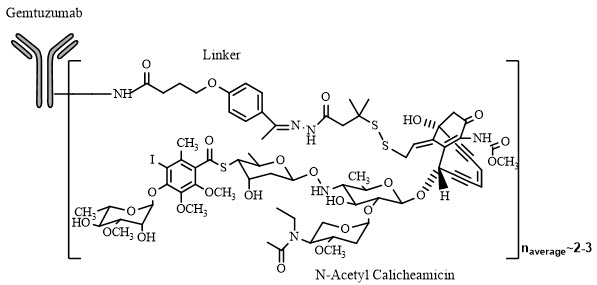
Mechanism of Action Gemtuzumab ozogamicin is a CD33-directed antibody-drug conjugate (ADC). The antibody portion (hP67.6) recognizes human CD33 antigen. The small molecule, N-acetyl gamma calicheamicin, is a cytotoxic agent that is covalently attached to the antibody via a linker. Nonclinical data suggest that the anticancer activity of gemtuzumab ozogamicin is due to the binding of the ADC to CD33-expressing tumor cells, followed by internalization of the ADC-CD33 complex, and the intracellular release of N-acetyl gamma calicheamicin dimethyl hydrazide via hydrolytic cleavage of the linker. Activation of N-acetyl gamma calicheamicin dimethyl hydrazide induces double-strand DNA breaks, subsequently inducing cell cycle arrest and apoptotic cell death.
A drug lookup is just the start. Eleplan keeps the whole care plan in one place.
Medications, diagnoses, documents, appointments, and the whole care team — organized and always in sync, with Ellie, your AI care assistant, on top of it. Free to start.