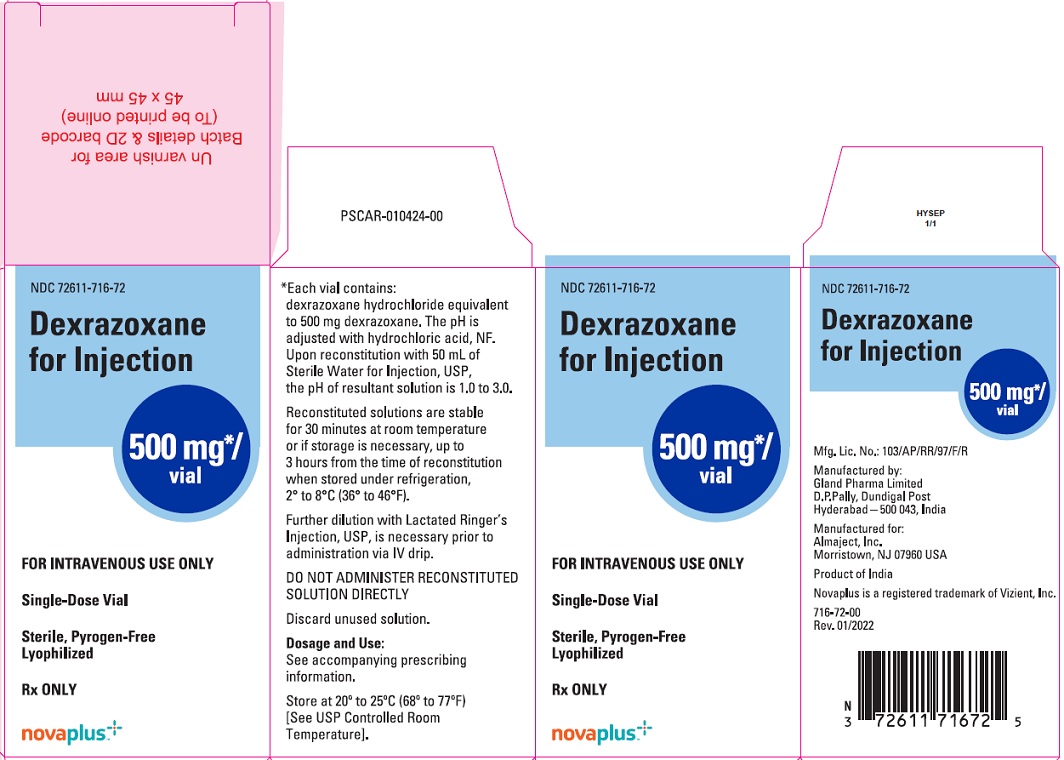
dexrazoxane 250 MG Injection
Managing this medication for someone you care for? Eleplan keeps diagnoses, medications and appointments in one plan.
Start free with EleplanClinical drug
dexrazoxane 250 MG Injection
250 MG · Injection · injection
A form of dexrazoxane →
dexrazoxane 250 MG Injection — Detoxifying agents for antineoplastic treatment. INDICATIONS AND USAGE Dexrazoxane for injection is indicated for reducing the incidence and severity of cardiomyopathy associated with doxorubicin…
Active ingredient
Classification
Detoxifying agents for antineoplastic treatmentCytoprotective Agent
Indications
INDICATIONS AND USAGE Dexrazoxane for injection is indicated for reducing the incidence and severity of cardiomyopathy associated with doxorubicin administration in women with metastatic breast cancer who have received a cumulative doxorubicin dose of 300 mg/m 2 and who will continue to receive doxorubicin therapy to maintain tumor control. Do not use with the initiation of doxorubicin therapy [see Warnings and Precautions (5.2) ]. Dexrazoxane for injection is a cytoprotective agent indicated for reducing the incidence and severity of cardiomyopathy associated with doxorubicin administration in women with metastatic breast cancer who have received a cumulative doxorubicin dose of 300 mg/m 2 and who will continue to receive doxorubicin therapy to maintain tumor control. Do not use dexrazoxane for injection with doxorubicin initiation. ( 1 )
Dosage
DOSAGE AND ADMINISTRATION Reconstitute vial contents and dilute before use. (2.3) Administer Dexrazoxane for injection by intravenous infusion over 15 minutes. DO NOT ADMINISTER VIA AN INTRAVENOUS PUSH. ( 2.1 , 2.3 ) The recommended dosage ratio of dexrazoxane for injection to doxorubicin is 10:1 (e.g., 500 mg/m 2 dexrazoxane for injection to 50 mg/m 2 doxorubicin). Do not administer doxorubicin before dexrazoxane for injection. ( 2.1 ) Reduce dose by 50% for patients with creatinine clearance <40 mL/min. ( 2.2 , 8.7 ) 2.1 Recommended Dose Administer dexrazoxane for injection via intravenous infusion over 15 minutes. DO NOT ADMINISTER VIA AN INTRAVENOUS PUSH. The recommended dosage ratio of dexrazoxane for injection to doxorubicin is 10:1 (e.g., 500 mg/m 2 dexrazoxane for injection to 50 mg/m 2 doxorubicin). Do not administer doxorubicin before dexrazoxane for injection. Administer doxorubicin within 30 minutes after the completion of dexrazoxane for injection infusion. 2.2 Dose Modifications Dosing in Patients with Renal Impairment Reduce dexrazoxane for injection dosage in patients with moderate to severe renal impairment (creatinine clearance values less than 40 mL/min) by 50% (dexrazoxane for injection to doxorubicin ratio reduced to 5:1; such as 250 mg/m 2 dexrazoxane for injection to 50 mg/m 2 doxorubicin) [see Use in Specific Populations (8.6 ) and Clinical Pharmacology (12.3 )] . Dosing in Patients with Hepatic Impairment Since a doxorubicin dose reduction is recommended in the presence of hyperbilirubinemia, reduce the dexrazoxane for injection dosage proportionately (maintaining the 10:1 ratio) in patients with hepatic impairment. 2.3 Preparation and Administration Preparation and Handling of Infusion Solution Reconstitute dexrazoxane for injection with Sterile Water for Injection, USP. Reconstitute with 25 mL for a dexrazoxane for injection 250 mg vial and 50 mL for a dexrazoxane for injection 500 mg vial to give a concentration of 10 mg/mL. Dilute the reconstituted solution further with Lactated Ringer’s Injection, USP to a concentration of 1.3 to 3.0 mg/mL in intravenous infusion bags for intravenous infusion. Following reconstitution with Sterile Water for Injection, USP, dexrazoxane for injection is stable for 30 minutes at room temperature or if storage is necessary, up to 3 hours from the time of reconstitution when stored under refrigeration, 2° to 8°C (36° to 46°F). The pH of the resultant solution is 1.0 to 3.0. DISCARD UNUSED SOLUTIONS. The diluted infusion solutions are stable for one hour at room temperature or if storage is necessary, up to 4 hours when stored under refrigeration, 2° to 8°C (36° to 46°F). The infusion solutions have a pH of 3.5 to 5.5. DISCARD UNUSED SOLUTIONS. Parenteral drug products should be inspected visually for particulate matter and discoloration prior to administration, whenever solution and container permit. Solutions containing a precipitate should be discarded. Use caution when handling and preparing the reconstituted solution. The use of gloves is recommended. If dexrazoxane for injection powder or solutions contact the skin or mucosae, wash exposed area immediately and thoroughly with soap and water. Follow special handling and disposal procedures. 1 Administration Do not mix dexrazoxane for injection with other drugs. Administer the final diluted solution of dexrazoxane for injection by intravenous infusion over 15 minutes before the administration of doxorubicin. DO NOT ADMINISTER VIA AN INTRAVENOUS PUSH. Administer doxorubicin within 30 minutes after the completion of dexrazoxane for injection infusion. 2.1 Recommended Dose Administer dexrazoxane for injection via intravenous infusion over 15 minutes. DO NOT ADMINISTER VIA AN INTRAVENOUS PUSH. The recommended dosage ratio of dexrazoxane for injection to doxorubicin is 10:1 (e.g., 500 mg/m 2 dexrazoxane for injection to 50 mg/m 2 doxorubicin). Do not administer doxorubicin before dexrazoxane for injection. Administer doxorubicin within 30 minutes after the completion of dexrazoxane for injection infusion. 2.2 Dose Modifications Dosing in Patients with Renal Impairment Reduce dexrazoxane for injection dosage in patients with moderate to severe renal impairment (creatinine clearance values less than 40 mL/min) by 50% (dexrazoxane for injection to doxorubicin ratio reduced to 5:1; such as 250 mg/m 2 dexrazoxane for injection to 50 mg/m 2 doxorubicin) [see Use in Specific Populations (8.6 ) and Clinical Pharmacology (12.3 )] . Dosing in Patients with Hepatic Impairment Since a doxorubicin dose reduction is recommended in the presence of hyperbilirubinemia, reduce the dexrazoxane for injection dosage proportionately (maintaining the 10:1 ratio) in patients with hepatic impairment. 2.3 Preparation and Administration Preparation and Handling of Infusion Solution Reconstitute dexrazoxane for injection with Sterile Water for Injection, USP. Reconstitute with 25 mL for a dexrazoxane for injection 250 mg vial and 50 mL for a dexrazoxane for injection 500 mg vial to give a concentration of 10 mg/mL. Dilute the reconstituted solution further with Lactated Ringer’s Injection, USP to a concentration of 1.3 to 3.0 mg/mL in intravenous infusion bags for intravenous infusion. Following reconstitution with Sterile Water for Injection, USP, dexrazoxane for injection is stable for 30 minutes at room temperature or if storage is necessary, up to 3 hours from the time of reconstitution when stored under refrigeration, 2° to 8°C (36° to 46°F). The pH of the resultant solution is 1.0 to 3.0. DISCARD UNUSED SOLUTIONS. The diluted infusion solutions are stable for one hour at room temperature or if storage is necessary, up to 4 hours when stored under refrigeration, 2° to 8°C (36° to 46°F). The infusion solutions have a pH of 3.5 to 5.5. DISCARD UNUSED SOLUTIONS. Parenteral drug products should be inspected visually for particulate matter and discoloration prior to administration, whenever solution and container permit. Solutions containing a precipitate should be discarded. Use caution when handling and preparing the reconstituted solution. The use of gloves is recommended. If dexrazoxane for injection powder or solutions contact the skin or mucosae, wash exposed area immediately and thoroughly with soap and water. Follow special handling and disposal procedures. 1 Administration Do not mix dexrazoxane for injection with other drugs. Administer the final diluted solution of dexrazoxane for injection by intravenous infusion over 15 minutes before the administration of doxorubicin. DO NOT ADMINISTER VIA AN INTRAVENOUS PUSH. Administer doxorubicin within 30 minutes after the completion of dexrazoxane for injection infusion.
Warnings
WARNINGS AND PRECAUTIONS Myelosuppression: Dexrazoxane for injection may increase the myelosuppresive effects of chemotherapeutic agents. Perform hematological monitoring. (5.1) Embryo-Fetal Toxicity: Can cause fetal harm. Advise female patients of reproductive potential of the potential hazard to the fetus. ( 5.5 , 8.1 ) 5.1 Myelosuppression Dexrazoxane for injection may add to the myelosuppression caused by chemotherapeutic agents. Obtain a complete blood count prior to and during each course of therapy, and administer dexrazoxane for injection and chemotherapy only when adequate hematologic parameters are met. 5.2 Concomitant Chemotherapy Only use dexrazoxane for injection in those patients who have received a cumulative doxorubicin dose of 300 mg/m 2 and are continuing with doxorubicin therapy. Do not use with chemotherapy initiation as dexrazoxane for injection may interfere with the antitumor activity of the chemotherapy regimen. In a trial conducted in patients with metastatic breast cancer who were treated with fluorouracil, doxorubicin, and cyclophosphamide (FAC) with or without dexrazoxane for injection starting with their first cycle of FAC therapy, patients who were randomized to receive dexrazoxane for injection had a lower response rate (48% vs. 63%) and shorter time to progression than patients who were randomized to receive placebo. 5.3 Cardiac Toxicity Treatment with dexrazoxane for injection does not completely eliminate the risk of anthracycline-induced cardiac toxicity. Monitor cardiac function before and periodically during therapy to assess left ventricular ejection fraction (LVEF). In general, if test results indicate deterioration in cardiac function associated with doxorubicin, the benefit of continued therapy should be carefully evaluated against the risk of producing irreversible cardiac damage. 5.4 Secondary Malignancies Secondary malignancies such as acute myeloid leukemia (AML) and myelodysplastic syndrome (MDS) have been reported in studies of pediatric patients who have received dexrazoxane for injection in combination with chemotherapy. Dexrazoxane for injection is not indicated for use in pediatric patients. Some adult patients who received dexrazoxane for injection in combination with anti-cancer agents known to be carcinogenic have also developed secondary malignancies, including AML and MDS. Razoxane is the racemic mixture, of which dexrazoxane is the S(+)-enantiomer. Secondary malignancies (primarily acute myeloid leukemia) have been reported in patients treated chronically with oral razoxane. In these patients, the total cumulative dose of razoxane ranged from 26 to 480 grams and the duration of treatment was from 42 to 319 weeks. One case of T- cell lymphoma, one case of B-cell lymphoma, and six to eight cases of cutaneous basal cell or squamous cell carcinoma have also been reported in patients treated with razoxane. Long-term administration of razoxane to rodents was associated with the development of malignancies [see Nonclinical Toxicology (13.1 )] . 5.5 Embryo-Fetal Toxicity Dexrazoxane for injection can cause fetal harm when administered to pregnant women. Dexrazoxane administration during the period of organogenesis resulted in maternal toxicity, embryotoxicity and teratogenicity in rats and rabbits at doses significantly lower than the clinically recommended dose [see Use in Specific Populations (8.1)] . If this drug is used during pregnancy, or if the patient becomes pregnant while taking this drug, the patient should be apprised of the potential hazard to a fetus. Advise female patients of reproductive potential to avoid becoming pregnant and to use highly effective contraception during treatment [see Use in Specific Populations (8.6 )] . 5.1 Myelosuppression Dexrazoxane for injection may add to the myelosuppression caused by chemotherapeutic agents. Obtain a complete blood count prior to and during each course of therapy, and administer dexrazoxane for injection and chemotherapy only when adequate hematologic parameters are met. 5.2 Concomitant Chemotherapy Only use dexrazoxane for injection in those patients who have received a cumulative doxorubicin dose of 300 mg/m 2 and are continuing with doxorubicin therapy. Do not use with chemotherapy initiation as dexrazoxane for injection may interfere with the antitumor activity of the chemotherapy regimen. In a trial conducted in patients with metastatic breast cancer who were treated with fluorouracil, doxorubicin, and cyclophosphamide (FAC) with or without dexrazoxane for injection starting with their first cycle of FAC therapy, patients who were randomized to receive dexrazoxane for injection had a lower response rate (48% vs. 63%) and shorter time to progression than patients who were randomized to receive placebo. 5.4 Secondary Malignancies Secondary malignancies such as acute myeloid leukemia (AML) and myelodysplastic syndrome (MDS) have been reported in studies of pediatric patients who have received dexrazoxane for injection in combination with chemotherapy. Dexrazoxane for injection is not indicated for use in pediatric patients. Some adult patients who received dexrazoxane for injection in combination with anti-cancer agents known to be carcinogenic have also developed secondary malignancies, including AML and MDS. Razoxane is the racemic mixture, of which dexrazoxane is the S(+)-enantiomer. Secondary malignancies (primarily acute myeloid leukemia) have been reported in patients treated chronically with oral razoxane. In these patients, the total cumulative dose of razoxane ranged from 26 to 480 grams and the duration of treatment was from 42 to 319 weeks. One case of T- cell lymphoma, one case of B-cell lymphoma, and six to eight cases of cutaneous basal cell or squamous cell carcinoma have also been reported in patients treated with razoxane. Long-term administration of razoxane to rodents was associated with the development of malignancies [see Nonclinical Toxicology (13.1 )] . 5.5 Embryo-Fetal Toxicity Dexrazoxane for injection can cause fetal harm when administered to pregnant women. Dexrazoxane administration during the period of organogenesis resulted in maternal toxicity, embryotoxicity and teratogenicity in rats and rabbits at doses significantly lower than the clinically recommended dose [see Use in Specific Populations (8.1)] . If this drug is used during pregnancy, or if the patient becomes pregnant while taking this drug, the patient should be apprised of the potential hazard to a fetus. Advise female patients of reproductive potential to avoid becoming pregnant and to use highly effective contraception during treatment [see Use in Specific Populations (8.6 )] .
Contraindications
CONTRAINDICATIONS Do not use dexrazoxane for injection with non-anthracycline chemotherapy regimens. Dexrazoxane for injection should not be used with non-anthracycline chemotherapy regimens. (4)
Mechanism of action
Mechanism of Action The mechanism by which dexrazoxane for injection exerts its cytoprotective activity is not fully understood. Dexrazoxane is a cyclic derivative of EDTA that penetrates cell membranes. Results of laboratory studies suggest that dexrazoxane is converted intracellularly to a ring-opened chelating agent that interferes with iron-mediated free radical generation thought to be responsible, in part, for anthracycline-induced cardiomyopathy.
Indicated ICD-10 codes
Source: RxNorm + openFDA + RxClass + FAERS · 2026
Look up another medication