dexlansoprazole 60 MG Delayed Release Oral Capsule
Managing this medication for someone you care for? Eleplan keeps diagnoses, medications and appointments in one plan.
Start free with EleplanClinical drug
dexlansoprazole 60 MG Delayed Release Oral Capsule
60 MG · Delayed Release Oral Capsule · oral
A form of dexlansoprazole →
dexlansoprazole 60 MG Delayed Release Oral Capsule — Proton pump inhibitors. INDICATIONS AND USAGE Dexlansoprazole delayed-release capsules are a proton pump inhibitor (PPI) indicated in patients 12 years of age and older…
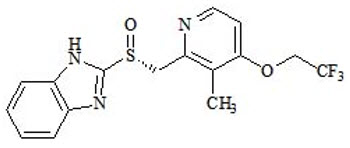
Active ingredient
Classification
Proton pump inhibitorsProton Pump Inhibitor
Drug interactions
Dexlansoprazole has several clinically relevant drug interactions that may affect the efficacy and safety of concomitantly used medications.
- majorrilpivirine — Contraindicated due to reduced antiviral effect and potential for drug resistance.
- moderateatazanavir — Dosing adjustments may be necessary due to variable effects on drug levels.
- majornelfinavir — Avoid concomitant use due to reduced antiviral effect.
- majorsaquinavir — Increased toxicity may occur; monitoring is advised.
- majorwarfarin — Increased INR and prothrombin time may lead to abnormal bleeding.
- majormethotrexate — Potential for elevated and prolonged serum concentrations leading to toxicity.
- moderatedigoxin — Potential for increased exposure; monitoring is advised.
- moderatemycophenolate mofetil — Reduced exposure to the active metabolite may affect organ rejection.
- moderatetacrolimus — Potentially increased exposure; monitoring is advised.
- moderateCYP2C19 or CYP3A4 inducers — Decreased exposure of dexlansoprazole.
- moderateCYP2C19 or CYP3A4 inhibitors — Increased exposure of dexlansoprazole is expected.
Indications
INDICATIONS AND USAGE Dexlansoprazole delayed-release capsules are a proton pump inhibitor (PPI) indicated in patients 12 years of age and older for: • Healing of all grades of erosive esophagitis (EE). ( 1.1 ) • Maintenance of healed EE and relief of heartburn. ( 1.2 ) • Treatment of symptomatic non-erosive gastroesophageal reflux disease (GERD). ( 1.3 ) 1.1 Healing of Erosive Esophagitis Dexlansoprazole delayed-release capsules are indicated in patients 12 years of age and older for healing of all grades of erosive esophagitis (EE) for up to eight weeks. 1.2 Maintenance of Healed Erosive Esophagitis and Relief of Heartburn Dexlansoprazole delayed-release capsules are indicated in patients 12 years of age and older to maintain healing of EE and relief of heartburn for up to six months in adults and 16 weeks in patients 12 to 17 years of age. 1.3 Treatment of Symptomatic Non-Erosive Gastroesophageal Reflux Disease Dexlansoprazole delayed-release capsules are indicated in patients 12 years of age and older for the treatment of heartburn associated with symptomatic non-erosive gastroesophageal reflux disease (GERD) for four weeks.
Dosage
DOSAGE AND ADMINISTRATION Recommended dosage in patients 12 years of age and older: • See full prescribing information for complete dosing information for dexlansoprazole delayed-release capsules by indication and age group and dosage adjustment in patients with hepatic impairment. ( 2.1 , 2.2 ) Administration Instructions ( 2.3 ) : • Take without regard to food. • Swallow whole; do not chew. • See full prescribing information for alternative administration options. 2.1 Recommended Dosage in Patients 12 Years of Age and Older Table 1. Recommended Dexlansoprazole Delayed-Release Capsules Dosage Regimen by Indication in Patients 12 Years of Age and Older Indication Dosage of Dexlansoprazole Delayed-Release Capsules Duration Healing of EE One 60 mg capsule once daily. Up to 8 weeks. Maintenance of Healed EE and Relief of Heartburn One 30 mg capsule once daily. Controlled studies did not extend beyond 6 months in adults and 16 weeks in patients 12 to 17 years of age. Symptomatic Non-Erosive GERD One 30 mg capsule once daily. 4 weeks. 2.2 Dosage Adjustment in Patients with Hepatic Impairment for the Healing of Erosive Esophagitis For patients with moderate hepatic impairment (Child-Pugh Class B), the recommended dosage is 30 mg dexlansoprazole delayed-release capsules once daily for up to eight weeks. Dexlansoprazole delayed-release capsules are not recommended in patients with severe hepatic impairment (Child-Pugh Class C) [see Use in Specific Populations (8.6) ] . 2.3 Important Administration Information • Take without regard to food. • Missed doses: If a dose is missed, administer as soon as possible. However, if the next scheduled dose is due, do not take the missed dose, and take the next dose on time. Do not take two doses at one time to make up for a missed dose. • Swallow whole; do not chew. • For patients who have trouble swallowing capsules, dexlansoprazole delayed-release capsules can be opened and administered with applesauce as follows: 1. Place one tablespoonful of applesauce into a clean container. 2. Open capsule. 3. Sprinkle intact pellets on applesauce. 4. Swallow applesauce and pellets immediately. Do not chew pellets. Do not save the applesauce and pellets for later use. • Alternatively, the capsule can be administered with water via oral syringe or nasogastric (NG) tube. Administration with Water in an Oral Syringe 1. Open the capsule and empty the pellets into a clean container with 20 mL of water. 2. Withdraw the entire mixture into a syringe. 3. Gently swirl the syringe in order to keep pellets from settling. 4. Administer the mixture immediately into the mouth. Do not save the water and pellet mixture for later use. 5. Refill the syringe with 10 mL of water, swirl gently, and administer. 6. Refill the syringe again with 10 mL of water, swirl gently, and administer. Administration with Water via a NG Tube (≥ 16 French) 1. Open the capsule and empty the pellets into a clean container with 20 mL of water. 2. Withdraw the entire mixture into a catheter-tip syringe. 3. Swirl the catheter-tip syringe gently in order to keep the pellets from settling, and immediately inject the mixture through the NG tube into the stomach. Do not save the water and pellet mixture for later use. 4. Refill the catheter-tip syringe with 10 mL of water, swirl gently, and flush the tube. 5. Refill the catheter-tip syringe again with 10 mL of water, swirl gently, and administer.
Warnings
WARNINGS AND PRECAUTIONS • Gastric Malignancy: In adults, symptomatic response with dexlansoprazole does not preclude the presence of gastric malignancy. Consider additional follow-up and diagnostic testing. ( 5.1 ) • Acute Tubulointerstitial Nephritis : Discontinue treatment and evaluate patients. ( 5.2 ) • Clostridium difficile -Associated Diarrhea: PPI therapy may be associated with increased risk. ( 5.3 ) • Bone Fracture: Long-term and multiple daily dose PPI therapy may be associated with an increased risk for osteoporosis-related fractures of the hip, wrist or spine. ( 5.4 ) • Severe Cutaneous Adverse Reactions: Discontinue at the first signs or symptoms of severe cutaneous adverse reactions or other signs of hypersensitivity and consider further evaluation. ( 5.5 ) • Cutaneous and Systemic Lupus Erythematosus: Mostly cutaneous; new onset or exacerbation of existing disease; discontinue dexlansoprazole and refer to specialist for evaluation. ( 5.6 ) • Cyanocobalamin (Vitamin B12) Deficiency: Daily long-term use (e.g., longer than 3 years) may lead to malabsorption or a deficiency of cyanocobalamin. ( 5.7 ) • Hypomagnesemia and Mineral Metabolism: Reported rarely with prolonged treatment with PPIs. ( 5.8 ) • Interactions with Investigations for Neuroendocrine Tumors: Increases in intragastric pH may result in hypergastrinemia and enterochromaffin-like cell hyperplasia and increased chromogranin A levels which may interfere with diagnostic investigations for neuroendocrine tumors. ( 5.9 , 7 ) • Interaction with Methotrexate: Concomitant use with PPIs may elevate and/or prolong serum concentrations of methotrexate and/or its metabolite, possibly leading to toxicity. With high-dose methotrexate administration, consider a temporary withdrawal of dexlansoprazole. ( 5.10 , 7 ) • Fundic Gland Polyps: Risk increases with long-term use, especially beyond 1 year. Use the shortest duration of therapy. ( 5.11 ) • Risk of Heart Valve Thickening in Pediatric Patients Less than Two Years of Age: Dexlansoprazole is not recommended in pediatric patients less than 2 years of age. ( 5.12 , 8.4 ) 5.1 Presence of Gastric Malignancy In adults, symptomatic response to therapy with dexlansoprazole does not preclude the presence of gastric malignancy. Consider additional follow-up and diagnostic testing in adult patients who have a suboptimal response or an early symptomatic relapse after completing treatment with a PPI. In older patients, also consider an endoscopy. 5.2 Acute Tubulointerstitial Nephritis Acute tubulointerstitial nephritis (TIN) has been observed in patients taking PPIs and may occur at any point during PPI therapy. Patients may present with varying signs and symptoms from symptomatic hypersensitivity reactions to non-specific symptoms of decreased renal function (e.g., malaise, nausea, anorexia). In reported case series, some patients were diagnosed on biopsy and in the absence of extra-renal manifestations (e.g., fever, rash or arthralgia). Discontinue dexlansoprazole and evaluate patients with suspected acute TIN [see Contraindications (4)]. 5.3 Clostridium difficile-Associated Diarrhea Published observational studies suggest that PPI therapy like dexlansoprazole may be associated with an increased risk of Clostridium difficile -associated diarrhea, especially in hospitalized patients. This diagnosis should be considered for diarrhea that does not improve [see Adverse Reactions (6.2)]. Patients should use the lowest dose and shortest duration of PPI therapy appropriate to the condition being treated. 5.4 Bone Fracture Several published observational studies suggest that PPI therapy may be associated with an increased risk for osteoporosis-related fractures of the hip, wrist or spine. The risk of fracture was increased in patients who received high-dose, defined as multiple daily doses, and long-term PPI therapy (a year or longer). Patients should use the lowest dose and shortest duration of PPI therapy appropriate to the conditions being treated. Patients at risk for osteoporosis-related fractures should be managed according to established treatment guidelines [see Dosage and Administration (2), Adverse Reactions (6.2)]. 5.5 Severe Cutaneous Adverse Reactions Severe cutaneous adverse reactions, including Stevens-Johnson syndrome (SJS) and toxic epidermal necrolysis (TEN), drug reaction with eosinophilia and systemic symptoms (DRESS), and acute generalized exanthematous pustulosis (AGEP) have been reported in association with the use of PPIs [see Adverse Reactions (6.2)] . Discontinue dexlansoprazole at the first signs or symptoms of severe cutaneous adverse reactions or other signs of hypersensitivity and consider further evaluation. 5.6 Cutaneous and Systemic Lupus Erythematosus Cutaneous lupus erythematosus (CLE) and systemic lupus erythematosus (SLE) have been reported in patients taking PPIs. These events have occurred as both new onset and an exacerbation of existing autoimmune disease. The majority of PPI-induced lupus erythematosus cases were CLE. The most common form of CLE reported in patients treated with PPIs was subacute CLE (SCLE) and occurred within weeks to years after continuous drug therapy in patients ranging from infants to the elderly. Generally, histological findings were observed without organ involvement. Systemic lupus erythematosus (SLE) is less commonly reported than CLE in patients receiving PPIs. PPI-associated SLE is usually milder than nondrug induced SLE. Onset of SLE typically occurred within days to years after initiating treatment primarily in patients ranging from young adults to the elderly. The majority of patients presented with rash; however, arthralgia and cytopenia were also reported. Avoid administration of PPIs for longer than medically indicated. If signs or symptoms consistent with CLE or SLE are noted in patients receiving dexlansoprazole, discontinue the drug and refer the patient to the appropriate specialist for evaluation. Most patients improve with discontinuation of the PPI alone in four to 12 weeks. Serological testing (e.g., ANA) may be positive and elevated serological test results may take longer to resolve than clinical manifestations. 5.7 Cyanocobalamin (Vitamin B12) Deficiency Daily treatment with any acid-suppressing medications over a long period of time (e.g., longer than three years) may lead to malabsorption of cyanocobalamin (Vitamin B12) caused by hypo-or achlorhydria. Rare reports of cyanocobalamin deficiency occurring with acid-suppressing therapy have been reported in the literature. This diagnosis should be considered if clinical symptoms consistent with cyanocobalamin deficiency are observed in patients treated with dexlansoprazole. 5.8 Hypomagnesemia and Mineral Metabolism Hypomagnesemia, symptomatic and asymptomatic, has been reported rarely in patients treated with PPIs for at least three months, in most cases after a year of therapy. Serious adverse events include tetany, arrhythmias, and seizures. Hypomagnesemia may lead to hypocalcemia and/or hypokalemia and may exacerbate underlying hypocalcemia in at-risk patients. In most patients, treatment of hypomagnesemia required magnesium replacement and discontinuation of the PPI. For patients expected to be on prolonged treatment or who take PPIs with medications such as digoxin or drugs that may cause hypomagnesemia (e.g., diuretics), health care professionals may consider monitoring magnesium levels prior to initiation of PPI treatment and periodically [see Adverse Reactions (6.2)] . Consider monitoring magnesium and calcium levels prior to initiation of dexlansoprazole and periodically while on treatment in patients with a preexisting risk of hypocalcemia (e.g., hypoparathyroidism). Supplement with magnesium and/or calcium as necessary. If hypocalcemia is refractory to treatment, consider discontinuing the PPI. 5.9 Interactions with Investigations for Neuroendocrine Tumors Serum chromogranin A (CgA) levels increase secondary
Contraindications
CONTRAINDICATIONS • Dexlansoprazole extended-release capsules are contraindicated in patients with known hypersensitivity to any component of the formulation [see Description (11) ] . Hypersensitivity reactions may include anaphylaxis, anaphylactic shock, angioedema, bronchospasm, acute tubulointerstitial nephritis and urticaria [see Warnings and Precautions (5.2) , Adverse Reactions (6) ] . • PPIs, including dexlansoprazole delayed-release capsules, are contraindicated with rilpivirine-containing products [see Drug Interactions (7) ] . • Patients with known hypersensitivity to any component of the formulation. ( 4 ) • Patients receiving rilpivirine-containing products. ( 4 , 7 )
Mechanism of action
Mechanism of Action Dexlansoprazole belongs to a class of antisecretory compounds, the substituted benzimidazoles, that suppress gastric acid secretion by specific inhibition of the (H + , K + )-ATPase at the secretory surface of the gastric parietal cell. Because this enzyme is regarded as the acid (proton) pump within the parietal cell, dexlansoprazole has been characterized as a gastric proton-pump inhibitor, in that it blocks the final step of acid production.
Source: RxNorm + openFDA + RxClass + FAERS · 2026
Look up another medication