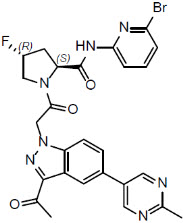
danicopan 50 MG Oral Tablet — Complement inhibitors. INDICATIONS AND USAGE VOYDEYA is indicated as add-on therapy to ravulizumab or eculizumab for the treatment of extravascular hemolysis (EVH) in…
Boxed warning
WARNING: SERIOUS INFECTIONS CAUSED BY ENCAPSULATED BACTERIA VOYDEYA, a complement inhibitor, increases the risk of serious infections, especially those caused by encapsulated bacteria, such as Neisseria meningitidis , Streptococcus pneumoniae , and Haemophilus influenzae type B [ see Warnings and Precautions (5.1) ]. Life-threatening and fatal infections with encapsulated bacteria have occurred in patients treated with complement inhibitors. These infections may become rapidly life-threatening or fatal if not recognized and treated early. Complete or update vaccination for encapsulated bacteria specifically, Neisseria meningitidis and Streptococcus pneumoniae at least 2 weeks prior to the first dose of VOYDEYA, unless the risks of delaying therapy with VOYDEYA outweigh the risk of developing a serious infection. Comply with the most current Advisory Committee on Immunization Practices (ACIP) recommendations for vaccinations against encapsulated bacteria in patients receiving a complement inhibitor. See Warnings and Precautions (5.1) for additional guidance on the management of the risk of serious infections caused by encapsulated bacteria. Patients receiving VOYDEYA are at increased risk for invasive disease caused by encapsulated bacteria, even if they develop antibodies following vaccination. Monitor patients for early signs and symptoms of serious infections and evaluate immediately if infection is suspected. Because of the risk of serious infections caused by encapsulated bacteria, VOYDEYA is available only through a restricted program under a Risk Evaluation and Mitigation Strategy (REMS) called the VOYDEYA REMS [see Warnings and Precautions (5.2) ] . WARNING: SERIOUS INFECTIONS CAUSED BY ENCAPSULATED BACTERIA See full prescribing information for complete boxed warning. VOYDEYA increases the risk of serious and life-threatening infections, caused by encapsulated bacteria, including Neisseria meningitidis , Streptococcus pneumoniae , and Haemophilus influenzae type B ( 5.1 ). Complete or update vaccination for encapsulated bacteria at least 2 weeks prior to the first dose of VOYDEYA, unless the risks of delaying VOYDEYA outweigh the risk of developing a serious infection. Comply with the most current Advisory Committee on Immunization Practices (ACIP) recommendations for vaccinations against encapsulated bacteria in patients receiving a complement inhibitor ( 5.1 ). Patients receiving VOYDEYA are at increased risk for invasive disease caused by encapsulated bacteria, even if they develop antibodies following vaccination. Monitor patients for early signs and symptoms of serious infections and evaluate immediately if infection is suspected ( 5.1 ). VOYDEYA is available only through a restricted program called VOYDEYA REMS ( 5.2 ).
INDICATIONS AND USAGE VOYDEYA is indicated as add-on therapy to ravulizumab or eculizumab for the treatment of extravascular hemolysis (EVH) in adults with paroxysmal nocturnal hemoglobinuria (PNH). VOYDEYA is a complement factor D inhibitor indicated as add-on therapy to ravulizumab or eculizumab for the treatment of extravascular hemolysis (EVH) in adults with paroxysmal nocturnal hemoglobinuria (PNH) ( 1 ). Limitations of Use VOYDEYA has not been shown to be effective as monotherapy and should only be prescribed as an add-on to ravulizumab or eculizumab. Limitations of Use VOYDEYA has not been shown to be effective as monotherapy and should only be prescribed as an add-on to ravulizumab or eculizumab.
Dosage
DOSAGE AND ADMINISTRATION Start 150 mg three times a day orally, with or without food. Depending on clinical response, can increase to 200 mg three times a day. See Full Prescribing Information for instructions on dosage and administration ( 2.1 , 2.2 ). 2.1 Recommended Vaccination and Prophylaxis for Encapsulated Bacterial Infections Vaccinate patients against encapsulated bacteria, including Neisseria meningitidis (serogroups A, C, W, Y, and B) and Streptococcus pneumoniae according to current ACIP recommendations at least 2 weeks prior to initiation of VOYDEYA. If urgent VOYDEYA therapy is indicated in a patient who is not up to date with vaccines for Neisseria meningitidis and Streptococcus pneumoniae according to ACIP recommendations, provide the patient with antibacterial drug prophylaxis and administer these vaccines as soon as possible [see Warnings and Precautions (5.1) ] . Healthcare professionals who prescribe VOYDEYA must enroll in the VOYDEYA REMS [see Warnings and Precautions (5.2) ] . 2.2 Recommended Dosage Starting Dose: The recommended dosage of VOYDEYA is 150 mg three times a day administered orally. VOYDEYA can be taken with or without food. VOYDEYA doses should be taken around the same time every day. Dose Adjustment: The dose can be increased to 200 mg three times a day if the patient's hemoglobin (Hgb) level has not increased by greater than 2 g/dL after 4 weeks of therapy, if the patient required a transfusion during the previous 4 weeks, or to achieve an appropriate Hgb response based on clinical judgement. Missed Doses A patient who misses a dose of VOYDEYA should take it as soon as they remember unless it is within 3 hours prior to their next dose, in which case the patient should skip the missed dose and take VOYDEYA at the next regularly scheduled time. Patients should not take two or more doses of VOYDEYA at the same time.
Warnings
WARNINGS AND PRECAUTIONS Hepatic Enzyme Increases: Assess liver enzymes before treatment initiation and periodically during treatment. Consider treatment interruption or discontinuation if elevations are clinically significant or if the patient becomes symptomatic ( 5.3 ). Hyperlipidemia: Monitor serum lipids periodically during treatment and initiate cholesterol-lowering medication if indicated ( 5.4 ). 5.1 Serious Infections Caused by Encapsulated Bacteria VOYDEYA, a complement inhibitor, increases a patient's susceptibility to serious, life-threatening, or fatal infections caused by encapsulated bacteria including Neisseria meningitidis (caused by any serogroup, including non-groupable strains), Streptococcus pneumoniae , and Haemophilus influenzae type B. Life-threatening and fatal infections with encapsulated bacteria have occurred in both vaccinated and unvaccinated patients treated with complement inhibitors. The initiation of VOYDEYA treatment is contraindicated in patients with unresolved serious infections caused by encapsulated bacteria. Complete or update vaccination against encapsulated bacteria, specifically Neisseria meningitidis and Streptococcus pneumoniae at least 2 weeks prior to administration of the first dose of VOYDEYA, according to the current ACIP recommendations for patients receiving a complement inhibitor. Revaccinate patients in accordance with ACIP recommendations considering the duration of therapy with VOYDEYA. Note that ACIP recommends an administration schedule in patients receiving complement inhibitors that differs from the administration schedule in the vaccine prescribing information. If urgent VOYDEYA therapy is indicated in a patient who is not up to date with vaccines against encapsulated bacteria according to ACIP recommendations, provide the patient with antibacterial drug prophylaxis and administer these vaccines as soon as possible. Various durations and regimens of antibacterial drug prophylaxis have been considered, but the optimal durations and drug regimens for prophylaxis and their efficacy have not been studied in unvaccinated or vaccinated patients receiving complement inhibitors, including VOYDEYA. The benefits and risks of treatment with VOYDEYA, as well as the benefits and risks of antibacterial drug prophylaxis in unvaccinated or vaccinated patients, must be considered against the known risks for serious infections caused by encapsulated bacteria. Vaccination does not eliminate the risk of serious encapsulated bacterial infections, despite development of antibodies following vaccination. Closely monitor patients for early signs and symptoms of serious infection and evaluate patients immediately if an infection is suspected. Inform patients of these signs and symptoms and instruct patients to seek immediate medical care if these signs and symptoms occur. Promptly treat known infections. Serious infection may become rapidly life-threatening or fatal if not recognized and treated early. Consider interruption of VOYDEYA in patients who are undergoing treatment for serious infections. VOYDEYA is available only through a restricted program under a REMS [see Warnings and Precautions (5.2) ] . 5.2 VOYDEYA REMS VOYDEYA is available only through a restricted program under a REMS called VOYDEYA REMS, because of the risk of serious infections caused by encapsulated bacteria [see Warnings and Precautions (5.1) ] . Notable requirements of the VOYDEYA REMS include the following: Prescribers must enroll in the REMS. Prescribers must counsel patients about the risk of serious infections caused by encapsulated bacteria. Prescribers must provide patients with the REMS educational materials. Prescribers must assess patient vaccination status for vaccines against encapsulated bacteria and vaccinate if needed according to current ACIP recommendations two weeks prior to the first dose of VOYDEYA. Prescribers must provide a prescription for antibacterial drug prophylaxis if treatment must be started urgently, and the patient is not up to date with vaccines against encapsulated bacteria according to current ACIP recommendations at least two weeks prior to the first dose of VOYDEYA. Pharmacies that dispense VOYDEYA must be certified in the VOYDEYA REMS and must verify prescribers are certified. Patients must receive counseling from the prescriber about the need to receive vaccinations against encapsulated bacteria per ACIP recommendations, the need to take antibiotics as directed by the prescriber, and the early signs and symptoms of serious infections. Patients must be instructed to carry the Patient Safety Card with them at all times during treatment and for 1 week following the last dose of VOYDEYA. Further information is available by telephone: 1-888-765-4747 or online at www.VoydeyaREMS.com. 5.3 Hepatic Enzyme Increases Hepatic enzyme elevations have been observed in patients treated with VOYDEYA [see Adverse Reactions (6.1) ] . Fourteen percent of patients receiving VOYDEYA in Study ALXN2040-PNH-301 had elevations in serum alanine aminotransferase (ALT). ALT elevations > 3 × the upper limit of normal (ULN) and ≤ 5 × ULN occurred in 9% of VOYDEYA-treated patients, and ALT elevations > 5 × ULN and ≤ 10 × ULN occurred in 5% of VOYDEYA-treated patients. Assess liver enzyme test results prior to the initiation of VOYDEYA and periodically during treatment. Consider treatment interruption or discontinuation if elevations are clinically significant or if the patient becomes symptomatic. VOYDEYA has not been studied in patients with severe hepatic impairment [see Use in Specific Populations (8.7)] . 5.4 Monitoring of PNH Manifestations After VOYDEYA Discontinuation After discontinuing treatment with VOYDEYA, closely monitor patients for at least 2 weeks after the last dose for signs and symptoms of hemolysis. If discontinuation of VOYDEYA is necessary, continue background treatment with ravulizumab or eculizumab or consider alternative therapy if necessary. The signs and symptoms of hemolysis may include a sudden decrease in hemoglobin or fatigue. If hemolysis occurs after discontinuation of VOYDEYA, consider restarting treatment with VOYDEYA if appropriate. 5.5 Hyperlipidemia VOYDEYA increases total cholesterol and LDL-cholesterol. Of the 50 VOYDEYA-treated patients who had a normal total cholesterol level at baseline in Study ALXN2040-PNH-301, 30% developed Grade 1 hypercholesterolemia. Of the 6 VOYDEYA treated patients who had Grade 1 hypercholesterolemia at baseline in Study ALXN2040-PNH-301, 1 patient experienced increased total cholesterol that worsened to Grade 2. Of the 54 VOYDEYA-treated patients who had LDL-cholesterol ≤130 mg/dL at baseline in Study ALXN2040-PNH-301, 13% developed LDL-cholesterol >130-160 mg/dL and 9% developed LDL-cholesterol >160-190 mg/dL. Some patients required cholesterol-lowering medications. Monitor serum lipid parameters periodically during treatment with VOYDEYA and initiate cholesterol lowering medication, if indicated.
Contraindications
CONTRAINDICATIONS VOYDEYA is contraindicated for initiation in patients with unresolved serious infection caused by encapsulated bacteria, including Neisseria meningitidis , Streptococcus pneumoniae , or Haemophilus influenzae type B [see Warnings and Precautions (5.1) ] . Initiation in patients with unresolved serious infection caused by encapsulated bacteria ( 4 ).
Mechanism of action
Mechanism of Action Danicopan binds reversibly to complement Factor D and selectively inhibits the alternative complement pathway. Danicopan prevents the cleavage of complement Factor B into the Ba and Bb fragments which are required for the formation of the alternative pathway (AP) complement component C3 convertase (C3bBb), the generation of downstream effectors including C3 fragment opsonization, and the amplification of the terminal pathway. In PNH, intravascular hemolysis (IVH) is mediated by the terminal membrane attack complex (MAC), while extravascular hemolysis (EVH) is facilitated by C3 fragment opsonization. Danicopan acts proximally in the alternative pathway of the complement cascade to control preferentially C3 fragment-mediated EVH, while co-administered ravulizumab or eculizumab is anticipated to maintain control over MAC-mediated IVH.
A drug lookup is just the start. Eleplan keeps the whole care plan in one place.
Medications, diagnoses, documents, appointments, and the whole care team — organized and always in sync, with Ellie, your AI care assistant, on top of it. Free to start.