crizotinib 50 MG Oral Pellet
Managing this medication for someone you care for? Eleplan keeps diagnoses, medications and appointments in one plan.
Start free with EleplanClinical drug
crizotinib 50 MG Oral Pellet
50 MG · Oral Pellet · oral
A form of crizotinib →
crizotinib 50 MG Oral Pellet — Anaplastic lymphoma kinase (ALK) inhibitors. INDICATIONS AND USAGE XALKORI is a kinase inhibitor indicated for the treatment of • adult patients with metastatic non-small cell lung cancer…
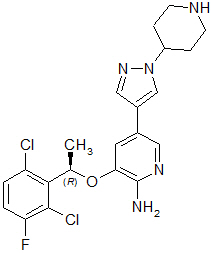
Active ingredient
Classification
Anaplastic lymphoma kinase (ALK) inhibitorsKinase Inhibitor
Drug interactions
Crizotinib has several significant drug interactions that may affect its plasma concentrations and efficacy.
- majorstrong CYP3A inhibitors — increases crizotinib plasma concentrations, increasing the risk of adverse reactions
- majorstrong CYP3A inducers — decreases crizotinib plasma concentrations, decreasing the efficacy of XALKORI
- majorCYP3A substrates — increases plasma concentrations of CYP3A substrates, increasing the risk of adverse reactions
- majordrugs that prolong the QT interval — prolongs the QT/QTc interval
- majordrugs that cause bradycardia — can cause bradycardia
- majorgrapefruit juice — increases plasma concentrations of crizotinib
Indications
INDICATIONS AND USAGE XALKORI is a kinase inhibitor indicated for the treatment of • adult patients with metastatic non-small cell lung cancer (NSCLC) whose tumors are anaplastic lymphoma kinase (ALK) or ROS1-positive as detected by an FDA-approved test. ( 1.1 , 2.1 ) • pediatric patients 1 year of age and older and young adults with relapsed or refractory, systemic anaplastic large cell lymphoma (ALCL) that is ALK-positive. ( 1.2 , 2.3 ) o Limitations of Use: The safety and efficacy of XALKORI have not been established in older adults with relapsed or refractory, systemic ALK-positive ALCL. • adult and pediatric patients 1 year of age and older with unresectable, recurrent, or refractory inflammatory myofibroblastic tumor (IMT) that is ALK-positive. ( 1.3 , 2.3 ) 1.1 ALK- or ROS1-Positive Metastatic Non-Small Cell Lung Cancer XALKORI is indicated for the treatment of adult patients with metastatic non-small cell lung cancer (NSCLC) whose tumors are anaplastic lymphoma kinase (ALK) or ROS1-positive as detected by an FDA-approved test [see Dosage and Administration (2.1) ] . 1.2 Relapsed or Refractory, Systemic ALK-Positive Anaplastic Large Cell Lymphoma XALKORI is indicated for the treatment of pediatric patients 1 year of age and older and young adults with relapsed or refractory, systemic anaplastic large cell lymphoma (ALCL) that is ALK-positive . Limitations of Use : The safety and efficacy of XALKORI have not been established in older adults with relapsed or refractory, systemic ALK-positive ALCL. 1.3 Unresectable, Recurrent, or Refractory ALK-Positive Inflammatory Myofibroblastic Tumor XALKORI is indicated for the treatment of adult and pediatric patients 1 year of age and older with unresectable, recurrent, or refractory inflammatory myofibroblastic tumor (IMT) that is ALK-positive.
Dosage
DOSAGE AND ADMINISTRATION • Metastatic NSCLC: The recommended dosage is 250 mg orally twice daily. ( 2.3 ) • Systemic ALCL: The recommended dosage is 280 mg/m 2 orally twice daily based on body surface area. ( 2.3 ) • Unresectable IMT: o Adult: The recommended dosage is 250 mg orally twice daily. ( 2.3 ) o Pediatric: The recommended dosage is 280 mg/m 2 orally twice daily based on body surface area. ( 2.3 ) • See full prescribing information for dosage adjustments by indication for patients with moderate or severe hepatic impairment or severe renal impairment. ( 2.7 , 2.8 ) 2.1 Patient Selection Select patients for the treatment of metastatic NSCLC with XALKORI based on the presence of ALK or ROS1 positivity in tumor specimens [see Clinical Studies (14.1 , 14.2 , 14.3) ] . Information on FDA-approved tests for the detection of ALK and ROS1 rearrangements in NSCLC is available at http://www.fda.gov/companiondiagnostics . 2.2 Recommended Testing During Treatment with XALKORI • Monitor liver function tests, including alanine aminotransferase (ALT), aspartate aminotransferase (AST), and total bilirubin, every 2 weeks during the first 2 months of treatment, then once a month, and as clinically indicated, with more frequent repeat testing for increased liver transaminases, alkaline phosphatase, or total bilirubin in patients who develop increased transaminases [see Warnings and Precautions (5.1) ] . • Monitor complete blood counts including differential weekly for the first month of therapy and then at least monthly, with more frequent monitoring if Grade 3 or 4 abnormalities, fever, or infection occur [see Adverse Reactions (6.1) ] . • For pediatric and young adult patients with ALCL or pediatric patients with IMT, obtain baseline and follow-up ophthalmologic examinations including retinal examination within 1 month of starting XALKORI and every 3 months thereafter [see Warnings and Precautions (5.5) ] . 2.3 Recommended Dosage The recommended dosage of XALKORI is provided in Table 1. Table 1. Recommended Dosage of XALKORI Indication Recommended Dosage of XALKORI ALK- or ROS1-Positive Metastatic NSCLC Adults : 250 mg orally twice daily Relapsed or Refractory, Systemic ALK-Positive ALCL Pediatric Patients and Young Adults : 280 mg/m 2 orally twice daily See Table 2 for Recommended Dosage based on body surface area for pediatric patients and young adults with ALCL for the capsules and oral pellets. Unresectable, Recurrent, or Refractory ALK-Positive IMT Adults : 250 mg orally twice daily Pediatric Patients : 280 mg/m 2 orally twice daily See Table 3 for Recommended Dosage based on body surface area for pediatric patients with IMT for the capsules and oral pellets. Recommended Dosage for Adult Patients with ALK- or ROS1-Positive Metastatic NSCLC • The recommended dosage for adult patients with ALK- or ROS1-positive metastatic NSCLC is XALKORI capsules 250 mg orally, twice daily, with or without food until disease progression or unacceptable toxicity occurs. • For adults who cannot swallow capsules, the recommended dosage of XALKORI pellets is 250 mg (2 x 50 mg + 1 x 150 mg) orally, twice daily, with or without food until disease progression or unacceptable toxicity occurs. Recommended Dosage for Pediatric and Young Adult Patients with ALK-Positive ALCL • The recommended dosage for pediatric patients 1 year of age and older and young adults with relapsed or refractory, systemic ALK-positive ALCL is based on body surface area (BSA) and is provided in Table 2. • Administer XALKORI capsules or pellets orally, twice daily, with or without food until disease progression or unacceptable toxicity occurs. Table 2 provides the dosage based on body surface area (BSA) for XALKORI capsules or pellets. Table 2. Recommended XALKORI Dosage for Pediatric Patients 1 Year of Age and Older and Young Adults With ALK-Positive ALCL Using Either XALKORI Capsules or Pellets Body Surface Area (BSA) Recommended XALKORI Dosage to Achieve 280 mg/m 2 Twice Daily Dose Strength Combinations of XALKORI Pellets to Administer No more than 4 oral pellet shells are to be used for a single dose. Dose Strength Combinations of XALKORI Capsules to Administer 0.38 to 0.46 m 2 120 mg twice daily 1 x 20 mg + 2 x 50 mg --- 0.47 to 0.51 m 2 140 mg twice daily 2 x 20 mg + 2 x 50 mg --- 0.52 to 0.61 m 2 150 mg twice daily 1 x 150 mg --- 0.62 to 0.80 m 2 200 mg twice daily 1 x 50 mg + 1 x 150 mg --- 0.81 to 0.97 m 2 250 mg twice daily 2 x 50 mg + 1 x 150 mg --- 0.98 to 1.16 m 2 300 mg twice daily 2 x 150 mg --- 1.17 to 1.33 m 2 350 mg twice daily 1 x 50 mg + 2 x 150 mg --- 1.34 to 1.51 m 2 400 mg twice daily 2 x 50 mg + 2 x 150 mg 2 x 200 mg 1.52 to 1.69 m 2 450 mg twice daily 3 x 150 mg 1 x 200 mg + 1 x 250 mg 1.7 m 2 or greater 500 mg twice daily 1 x 50 mg + 3 x 150 mg 2 x 250 mg Recommended Dosage for Pediatric and Adult Patients with ALK-Positive IMT • The recommended dosage for adult patients with unresectable, recurrent, or refractory ALK-positive IMT is provided in Table 1. • The recommended dosage for pediatric patients 1 year of age and older with unresectable, recurrent, or refractory ALK-positive IMT is based on BSA and is provided in Table 3. • Administer XALKORI capsules or pellets orally twice daily, with or without food, until disease progression or unacceptable toxicity occurs. Table 3 provides the dosage based on BSA for XALKORI capsules or pellets. Table 3. Recommended XALKORI Dosage for Pediatric Patients 1 Year of Age and Older with ALK-positive IMT Using Either XALKORI Capsules or Pellets Body Surface Area (BSA) Recommended XALKORI Dosage to Achieve 280 mg/m 2 Twice Daily Dose Strength Combinations of XALKORI Pellets to Administer No more than 4 oral pellet shells are to be used for a single dose. Dose Strength Combinations of XALKORI Capsules to Administer 0.38 to 0.46 m 2 120 mg twice daily 1 x 20 mg + 2 x 50 mg --- 0.47 to 0.51 m 2 140 mg twice daily 2 x 20 mg + 2 x 50 mg --- 0.52 to 0.61 m 2 150 mg twice daily 1 x 150 mg --- 0.62 to 0.80 m 2 200 mg twice daily 1 x 50 mg + 1 x 150 mg --- 0.81 to 0.97 m 2 250 mg twice daily 2 x 50 mg + 1 x 150 mg --- 0.98 to 1.16 m 2 300 mg twice daily 2 x 150 mg --- 1.17 to 1.33 m 2 350 mg twice daily 1 x 50 mg + 2 x 150 mg --- 1.34 to 1.51 m 2 400 mg twice daily 2 x 50 mg + 2 x 150 mg 2 x 200 mg 1.52 to 1.69 m 2 450 mg twice daily 3 x 150 mg 1 x 200 mg + 1 x 250 mg 1.7 m 2 or greater 500 mg twice daily 1 x 50 mg + 3 x 150 mg 2 x 250 mg 2.4 Administration • Administer XALKORI capsules or pellets orally, twice daily, with or without food. • If a dose of XALKORI capsules or pellets is missed, make up that dose unless the next dose is due within 6 hours. • If vomiting occurs after taking a dose of XALKORI capsules or pellets, do not take an additional dose. Take the next dose at the regular scheduled time. XALKORI Capsules • Swallow XALKORI capsules whole, with or without food twice daily. • Do not chew, crush or split XALKORI capsules. XALKORI Pellets • XALKORI pellets are supplied encapsulated in shells. • Do not chew or crush XALKORI pellets. • Do not swallow XALKORI pellets encapsulated in the shell. • XALKORI pellets can be administered by 2 options: 1. Open shell(s) containing XALKORI pellets and empty the contents directly into the patient’s mouth. 2. Open shell(s) containing XALKORI pellets and empty the contents into a consumer-supplied oral dosing aid (e.g., spoon, medicine cup). Administer XALKORI pellets via the dosing aid directly into the patient’s mouth. • Immediately after administration, give a sufficient amount of water to ensure that all medication is swallowed. 2.5 Concomitant Treatments for Pediatric and Young Adult Patients with ALCL or Pediatric Patients with IMT Antiemetics are recommended prior to and during treatment with XALKORI to prevent nausea and vomiting. Provide standard antiemetic and antidiarrheal agents for gastrointestinal toxicities. Consider intravenous or oral hydration for patients at risk of dehydration, and r
Warnings
WARNINGS AND PRECAUTIONS • Hepatotoxicity: Fatal hepatotoxicity has occurred. Monitor with periodic liver testing. Temporarily suspend, dose reduce, or permanently discontinue XALKORI. ( 2.2 , 2.6 , 5.1 ) • Interstitial Lung Disease (ILD)/Pneumonitis: Permanently discontinue in patients with ILD/pneumonitis. ( 2.6 , 5.2 ) • QT Interval Prolongation: Monitor electrocardiograms and electrolytes in patients who have a history of or predisposition for QTc prolongation, or who are taking medications that prolong QT. Temporarily suspend, dose reduce, or permanently discontinue XALKORI. ( 2.6 , 5.3 ) • Bradycardia: XALKORI can cause bradycardia. Monitor heart rate and blood pressure regularly. Temporarily suspend, dose reduce, or permanently discontinue XALKORI. ( 2.6 , 5.4 ) • Severe Visual Loss: XALKORI can cause visual changes including severe visual loss. Monitor and evaluate for ocular toxicity throughout treatment. Discontinue XALKORI in patients with severe visual loss. ( 2.2 , 2.6 , 5.5 ) • Gastrointestinal Toxicity in Pediatric and Young Adult Patients with ALCL or Pediatric Patients with IMT: XALKORI can cause severe nausea, vomiting, diarrhea, and stomatitis. Provide standard antiemetic and antidiarrheal agents. Temporarily suspend, dose reduce, or permanently discontinue XALKORI. ( 2.6 , 5.6 ) • Embryo-Fetal Toxicity: Can cause fetal harm. Advise females of reproductive potential of the potential risk to a fetus and use of effective contraception. ( 5.7 , 8.1 , 8.3 ) 5.1 Hepatotoxicity Drug-induced hepatotoxicity with fatal outcome occurred in 0.1% of the 1719 patients treated with XALKORI for NSCLC across clinical trials [see Adverse Reactions (6.1) ] . Concurrent elevations in ALT or AST ≥3 times the ULN and total bilirubin ≥2 times the ULN, with normal alkaline phosphatase, occurred in <1% of patients treated with XALKORI. Increased ALT or AST >5 times the ULN occurred in 11% and 6% of patients, respectively. One percent (1.0%) of patients required permanent discontinuation due to elevated transaminases. Increased transaminases generally occurred within the first 2 months of treatment. In Study ADVL0912, of 121 patients ages 1 to ≤21 years treated with XALKORI for relapsed or refractory tumors including ALCL and IMT, 71% and 79% had increases of AST and ALT, respectively, with increased ALT or AST >5 times the ULN in 6% each. Of the 26 patients with ALCL treated with XALKORI, 65% and 81% had increases of AST and ALT, respectively, with increases >5 times the ULN in 4% each. Of the 14 pediatric patients with IMT treated with XALKORI, 71% had increases of AST and 71% had increases of ALT. In Study A8081013, of the 7 adult patients with IMT treated with XALKORI, 57% and 43% had increases of AST and ALT, respectively. Monitor liver function tests, including ALT, AST, and total bilirubin, every 2 weeks during the first 2 months of treatment, then once a month, and as clinically indicated, with more frequent repeat testing for increased liver transaminases, alkaline phosphatase, or total bilirubin in patients who develop increased transaminases. Withhold, reduce dose, or permanently discontinue XALKORI for hepatotoxicity as recommended [see Dosage and Administration (2.6) ] . 5.2 Interstitial Lung Disease/Pneumonitis Severe, life-threatening, or fatal interstitial lung disease (ILD)/pneumonitis can occur in patients treated with XALKORI. Across clinical trials in patients with NSCLC (n=1719), 2.9% of XALKORI-treated patients had ILD of any grade, 1% had Grade 3 or 4 ILD, and 0.5% had fatal ILD [see Adverse Reactions (6.1) ] . Interstitial lung disease generally occurred within 3 months after the initiation of XALKORI. In Study ADVL0912, among 121 patients ages 1 to ≤21 years with relapsed or refractory tumors, including ALCL and IMT, ILD occurred in 0.8% of patients. Monitor patients for pulmonary symptoms indicative of ILD/pneumonitis. Exclude other potential causes of ILD/pneumonitis, and permanently discontinue XALKORI in patients diagnosed with drug-related ILD/pneumonitis [see Dosage and Administration (2.6) ] . 5.3 QT Interval Prolongation QTc prolongation can occur in patients treated with XALKORI. Across clinical trials in patients with NSCLC, 2.1% of 1616 patients had QTcF (corrected QT for heart rate by the Fridericia method) greater than or equal to 500 ms and 5% of 1582 patients had an increase from baseline QTcF greater than or equal to 60 ms by automated machine-read evaluation of ECGs. In Study ADVL0912, QTc prolongation was reported as an adverse reaction in 4.1% of patients, including 8% of patients with ALCL and 7% of pediatric patients with IMT. Avoid use of XALKORI in patients with congenital long QT syndrome. Monitor ECGs and electrolytes in patients with congestive heart failure, bradyarrhythmias, electrolyte abnormalities, or who are taking medications that are known to prolong the QT interval. Withhold, reduce dose, or permanently discontinue XALKORI for QT/QTc interval prolongation as recommended [see Dosage and Administration (2.6) , Clinical Pharmacology (12.2) ] . 5.4 Bradycardia Symptomatic bradycardia can occur in patients receiving XALKORI. Across clinical trials in patients with NSCLC, bradycardia occurred in 13% of 1719 patients treated with XALKORI. Grade 3 syncope occurred in 2.4% of XALKORI-treated patients and in 0.6% of the chemotherapy-treated patients [see Adverse Reactions (6.1) ] . In Study ADVL0912, among 121 patients ages 1 to ≤21 years treated with XALKORI, bradycardia was reported in 14%, including Grade 3 bradycardia in 0.8% of patients. Of the 26 patients with ALCL treated with XALKORI, bradycardia (all Grade 1) was reported in 19%. Of the 14 pediatric patients with IMT treated with XALKORI, bradycardia was reported in 14% of patients, including Grade 3 bradycardia in 7% of patients. Avoid using XALKORI in combination with other medications known to cause bradycardia (e.g., beta-blockers, nondihydropyridine-calcium channel blockers, clonidine, and digoxin) to the extent possible. Monitor heart rate and blood pressure regularly. If bradycardia occurs, re-evaluate for the use of concomitant medications known to cause bradycardia. Withhold, reduce dose, or permanently discontinue XALKORI for bradycardia as recommended [see Dosage and Administration (2.6) ] . 5.5 Severe Visual Loss Across all clinical trials in patients with NSCLC, the incidence of Grade 4 visual field defect with visual loss was 0.2% of 1719 patients [see Adverse Reactions (6.1) ] . Optic atrophy and optic nerve disorder have been reported as potential causes of visual loss. In Study ADVL0912, visual disorders occurred in 46% of 121 patients with XALKORI, including 65% of 26 patients with ALCL and 50% of 14 patients with IMT. Of the 56 patients who experienced visual disorders, one pediatric patient with IMT experienced Grade 3 myopic optic nerve disorder. The most common visual symptoms were blurred vision and visual impairment. Assessment of visual symptoms for all patients is recommended monthly during treatment. Report new visual symptoms to an eye specialist. For pediatric and young adult patients with ALCL or pediatric patients with IMT, obtain baseline and follow-up ophthalmologic examinations including retinal examination within 1 month of starting XALKORI and every 3 months thereafter. The ophthalmological evaluation should consist of best corrected visual acuity, retinal photographs, visual fields, optical coherence tomography (OCT), and other evaluations as appropriate [see Dosage and Administration (2.6) , Adverse Reactions (6.1) ] . Permanently discontinue XALKORI for Grade 3 or 4 ocular disorders or severe visual loss (best corrected vision less than 20/200 in one or both eyes) unless another cause is identified [see Dosage and Administration (2.6) ] . There is insufficient information to characterize the risks of resumption of XALKORI in patients who develop visual symptoms or visual loss. A decision to resume XALKORI sh
Contraindications
CONTRAINDICATIONS None. None. ( 4 )
Mechanism of action
Mechanism of Action Crizotinib is an inhibitor of receptor tyrosine kinases including ALK, Hepatocyte Growth Factor Receptor (HGFR, c-Met), ROS1 (c-ros), and Recepteur d'Origine Nantais (RON). Translocations can affect the ALK gene resulting in the expression of oncogenic fusion proteins. The formation of ALK fusion proteins results in activation and dysregulation of the gene's expression and signaling which can contribute to increased cell proliferation and survival in tumors expressing these proteins. Crizotinib demonstrated concentration-dependent inhibition of ALK, ROS1, and c-Met phosphorylation in cell-based assays using tumor cell lines and demonstrated antitumor activity in mice bearing tumor xenografts that expressed echinoderm microtubule-associated protein-like 4 (EML4)- or nucleophosmin (NPM)-ALK fusion proteins or c-Met. In vitro, crizotinib induced apoptosis and inhibited proliferation and ALK-mediated signaling in ALCL-derived cell lines (containing NPM-ALK) at clinically achievable exposures. In vivo data obtained in an ALCL-derived mouse model showed complete regression of the tumor at a dose of 100 mg/kg once daily.
Source: RxNorm + openFDA + RxClass + FAERS · 2026
Look up another medication